Not Enough Light on ZZ Plant: Causes, Checks & Fixes
Quick answer
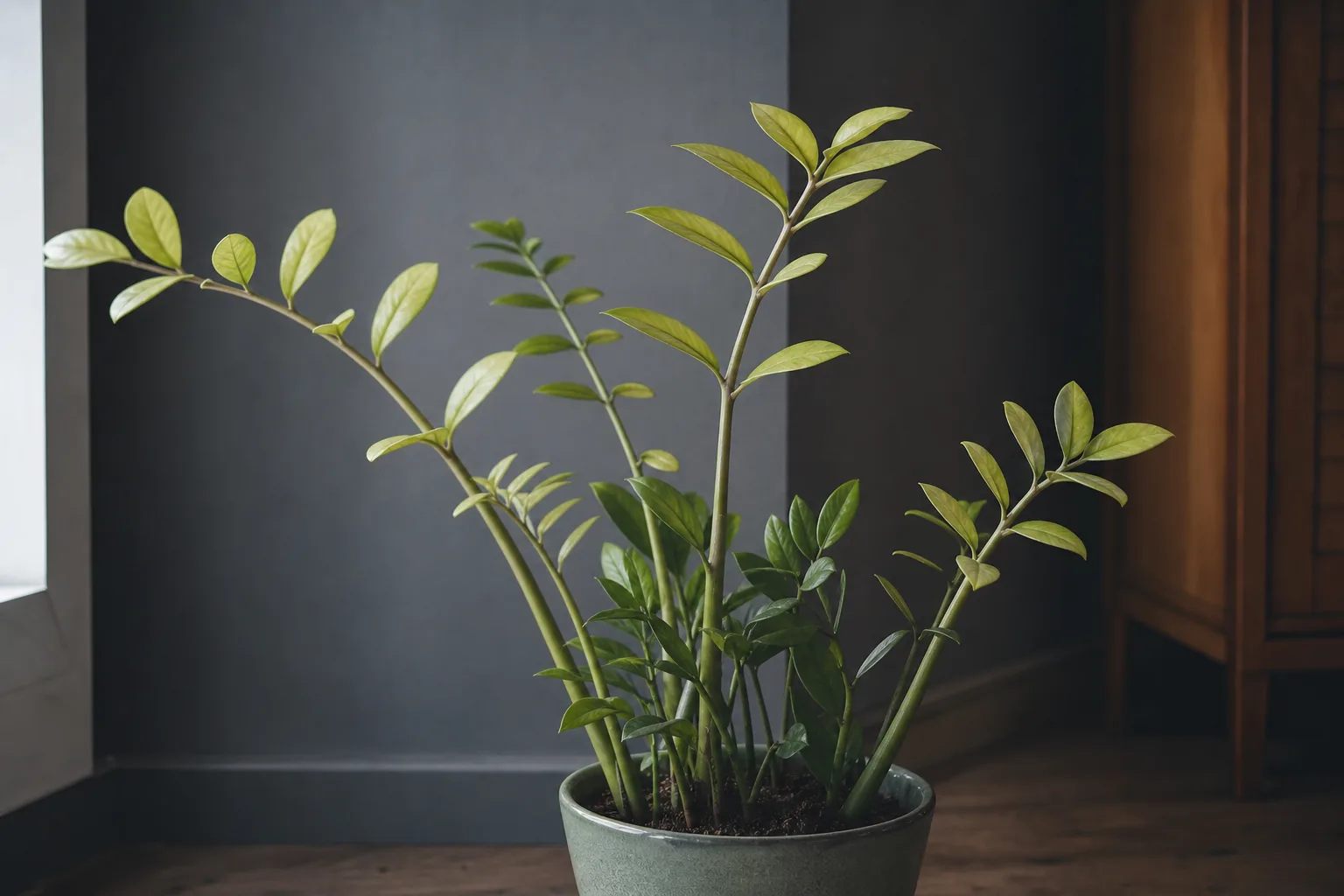
ZZ Plant tolerates low light but grows slowly with leggy, sparse stems when light is too dim. First step: move it to the brightest indirect spot you have-near an east or north window or several feet back from south glass-then cut watering to match slower dry-down.
Not Enough Light on ZZ Plant: Causes, Checks & Fixes
This guide covers not enough light on ZZ Plant. See also the general Not Enough Light guide, watering, and light pages for this plant.
Not Enough Light on ZZ Plant: Causes, Checks & Fixes
Quick answer
ZZ Plant is one of the most low-light tolerant houseplants, surviving fluorescent office light and dim hallways where many tropicals fail. That tolerance has a tradeoff: in deep shade, arching petioles stretch, leaflets space farther apart, and new shoots appear rarely-sometimes only once or twice a year.
First step: move the pot to your brightest indirect location-near an east- or north-facing window, or set back several feet from south or west glass so leaflets never sit in direct sun. Do not blast a dim-adapted ZZ with hot afternoon rays on day one; gradual acclimation over one to two weeks prevents scorch.
After you improve light, reduce watering until you learn how slowly the mix dries in the new spot. Low light slows water use; keeping the same watering calendar in a darker corner is how healthy-looking ZZs develop mushy rhizomes.
What not enough light looks like on ZZ Plant
Low light on Zamioculcas zamiifolia shows up as growth habit changes, not dramatic color collapse. The glossy green leaflets often stay green while stems change shape-unlike sunburn, which bleaches or browns tissue facing the window.
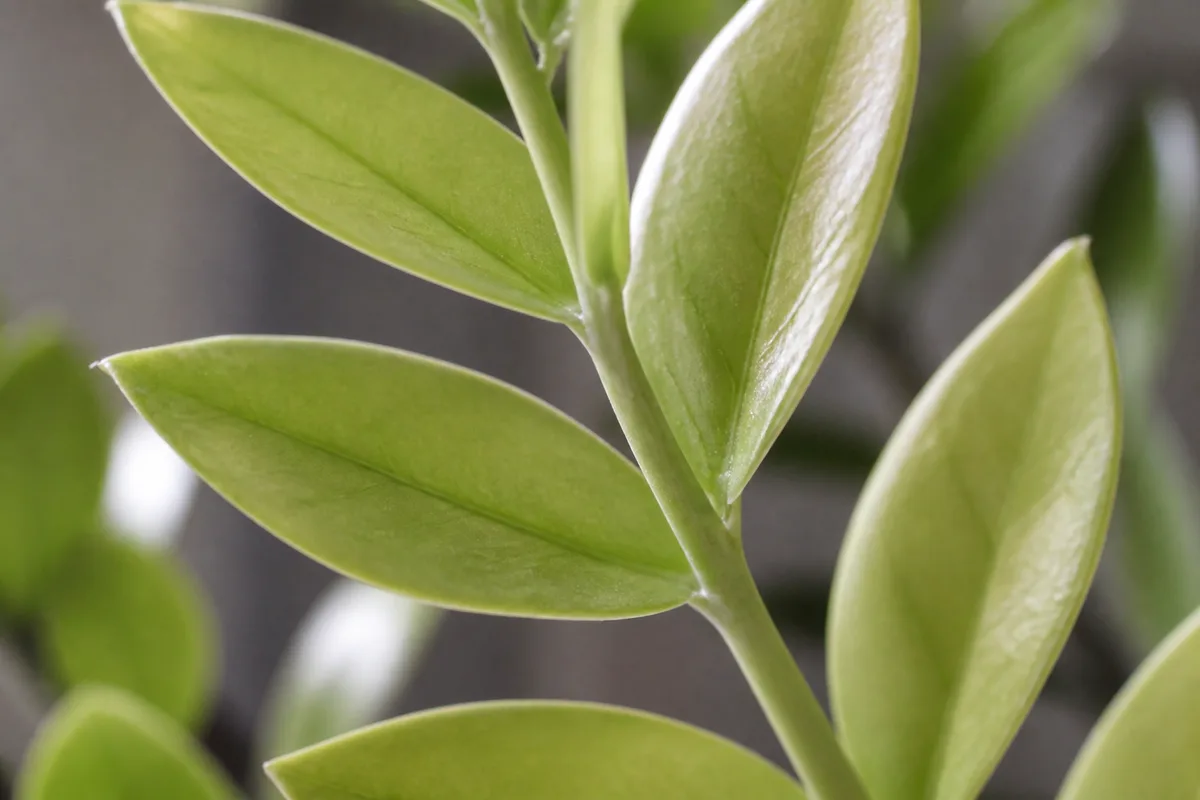
Not Enough Light symptoms on ZZ Plant - compare with healthy tissue on the same plant.
Typical low-light signs:
- Leggy petioles - arching stems grow longer and thinner between soil and leaflets, with bare lower sections
- Wide leaflet spacing - fewer leaflets per stem, spaced farther apart along the rachis
- Leaning or twisting - the whole plant or individual stems reach toward the brightest patch in the room
- Sparse canopy - fewer upright shoots compared with a compact ZZ in brighter indirect light
- Very slow or absent new growth - no fresh glossy shoots for many months, even through spring and summer
- Soil that stays damp - mix remains moist for weeks because the plant is using little water
What a healthy slow-growing ZZ in acceptable office light looks like:
- Stems stay relatively upright with moderate arch, not extreme stretch
- Leaflets remain evenly spaced along each petiole
- One or two new shoots per year is normal for a dim but tolerable spot
- Soil dries completely between waterings on your normal schedule
ZZ is inherently slow-growing even in good conditions. The diagnostic question is whether stems are stretching toward light and spacing out-not whether the plant pushes new growth every month.
Why ZZ Plant struggles in too little light
ZZ evolved on the forest floor in eastern Africa, where dappled shade is the norm. UF/IFAS describes rhizomatous roots that store water, letting the plant survive periodic drought and dim interiors. Survival mechanisms, however, are not the same as optimal growth.
In very low light, photosynthesis cannot fuel dense new tissue. The plant stretches petioles-etiolation-to reach brighter zones. Because ZZ leaflets stay green during etiolation, the problem is easy to miss until stems look sparse and architectural rather than full.
Low light also slows transpiration and metabolism. A ZZ in a dark corner uses far less water than one near a bright window. If you water on the same schedule as a sunnier plant, rhizomes sit in wet mix for extended periods. Root rot follows poorly drained soil with excessive water-and low light makes that combination more likely even when total water volume seems modest.
Office fluorescent light often keeps ZZs alive. UF commercial production research shows plants can add leaves under roughly 25 foot-candles for extended periods. That is survival lighting, not the brighter indirect conditions that produce tighter, faster growth.
How to confirm insufficient light
Work through these checks before ZZ Plant repotting guide, fertilizing, or pruning heavily:
- Light at the plant, not the room - Stand where the pot sits. If you cannot read comfortably without artificial light during daytime, the ZZ is in very low light. Bright indirect usually means clearly lit by a window but no sunbeams hitting leaflets.
- Stem pattern - Measure or compare petiole length on older stems versus any newer shoots. Progressive lengthening with wider leaflet gaps confirms etiolation.
- Directional lean - Stems pointing toward a single window or lamp strongly suggest the current spot is too dim on the shaded side.
- New shoot timeline - Note the last time a fresh glossy stem emerged from soil level. No new growth through an entire growing season in a spot with some daylight points to insufficient energy.
- Soil dry-down speed - Push a finger deep into the mix. If soil stays moist for three weeks or more while you water monthly, metabolism is slow-often from low light, not necessarily from overwatering on ZZ Plant yet.
- Rhizome firmness - If soil is chronically wet, gently unpot and squeeze rhizomes. Firm white tissue supports a light diagnosis. Soft brown mush means pivot to root rot treatment, not just a brighter window.
If stems are yellowing, mushy at the base, or smell sour, prioritize drainage and rot checks. Those symptoms overlap with low-light overwatering but need different urgency.
First fix for ZZ Plant
Move the pot to the brightest indirect location available in your home.
Good targets:
- Near an east-facing window where morning sun is soft and brief
- A few feet back from a south or west window so leaflets receive bright reflected light without direct beams
- A north window in a bright room
- Under office fluorescents if that is brighter than the current corner-but add a desk grow lamp if stems are already leggy
Clemson HGIC notes that bright, indirect light speeds ZZ’s very slow growth rate, while the plant still tolerates darker rooms. Your goal is the upper end of that range without crossing into direct sun.
Do not place the pot in direct afternoon sun to fix legginess quickly. Direct sunlight scorches ZZ leaflets, causing bleached or brown crispy patches. A dim-adapted plant is especially vulnerable.
After moving, wait to water until the potting mix is fully dry-often longer than before. Match irrigation to dry-down in the new spot, not the old calendar.
Step-by-step recovery
Once the pot is in brighter indirect light:
- Acclimate if the jump is large - Shift the plant closer to the window over seven to fourteen days if it came from a very dark interior. Watch for pale bleaching on leaflets facing glass.
- Rotate weekly - Turn the pot a quarter turn each week so all sides receive similar light and stems grow upright instead of one-sided.
- Hold fertilizer - Do not feed a stressed ZZ hoping to force compact growth in a still-dim spot. Fertilizer without adequate light cannot fix etiolation and can salt-stress dry rhizomes.
- Prune leggy stems if needed - Cut bare elongated petioles at soil level once new tighter shoots appear. Old stretched stems will not fill in with more leaflets.
- Add supplemental light if windows are insufficient - A full-spectrum LED positioned above the canopy for ten to twelve hours daily supports offices with no natural light. Keep fixtures several inches above leaflets to avoid heat stress.
- Reassess watering monthly - As light increases, dry-down accelerates. Check soil with your finger rather than assuming the old low-light schedule still applies.
Isolate the plant only if you unpot for rot inspection-not for light correction alone.
Recovery timeline
ZZ recovery is measured in new shoots, not overnight fullness. Expect weeks to months before a fresh glossy stem emerges, even after light improves, because growth rate depends on light received.
Within two to four weeks after a modest light increase, you may see a new petiole beginning at soil level if the plant has stored energy. A ZZ moved from a very dark spot may take an entire season to push its first new shoot while it acclimates.
Old leggy petioles remain long permanently. Judge success by tighter new growth, faster soil dry-down, and upright stems-not by shrinking existing stretch.
If no new growth appears after three to four months in clearly brighter indirect light, verify rhizome health and confirm the new spot truly receives ZZ Plant light guide rather than medium shade farther from the window.
Lookalike symptoms to rule out
Overwatering and root rot - Yellowing stems, mushy petiole bases, sour soil smell, and wilt despite wet mix. Low light contributes by slowing dry-down, but mushy rhizomes mean rot treatment takes priority over light alone.
underwatering on ZZ Plant - Leaflets wrinkle and feel thin, but stems stay relatively upright without extreme stretch. Soil is bone dry for weeks. A deep soak plumps leaflets within days.
Sunburn - Brown, bleached, or crispy patches on leaflets facing the window after a sudden move into direct sun. Distinct from etiolation, which keeps leaflets green while stems lengthen.
Natural slow growth - A compact ZZ in moderate office light may add only one or two shoots yearly. Without leggy stretch or strong lean, that may be normal-not a light emergency.
Nutrient deficiency - Rare on ZZ with minimal feeding needs. Pale uniform yellowing without stretch points to other causes before fertilizer.
Mistakes to avoid
Do not equate “low-light tolerant” with “prefers darkness.” ZZ grows best in bright indirect light and merely survives dimmer conditions.
Do not water on the same schedule after moving to a darker room-or keep the same frequency after moving to a brighter one without checking soil.
Do not place the pot in direct south or west window sun to fix legginess instantly. Scorched leaflets do not recover.
Do not fertilize heavily in low light hoping to stimulate growth. That can burn rhizomes without solving stretch.
Do not expect old leggy stems to compact after light improves. Prune or live with the architecture; new growth carries the fix.
Do not ignore wet soil in dim corners. Low light plus moisture is the classic setup for rhizome rot on ZZ Plant overview.
ZZ Plant care cross-check
Light and water move together on Zamioculcas zamiifolia. NC State recommends watering routinely but letting soil dry between waterings, treating ZZ similarly to succulents. In low light, “dry between” takes longer-sometimes several weeks.
Missouri Botanical Garden notes ZZ performs well in bright indirect light indoors and in part shade to full shade outdoors. Indoors, that translates to bright reflected window light, not a closed closet.
Temperature matters at the margins: ZZ prefers typical room temperatures and should stay above about 60°F. Cool dim rooms slow growth further, compounding a light problem.
Humidity is rarely the limiting factor. ZZ tolerates standard indoor air; focus on light and dry-down first.
How to prevent low-light problems
Place new ZZ plants in bright indirect light from the start when aesthetics matter. Reserve dim corners for specimens you accept will grow slowly and sparsely.
Rotate pots weekly in any asymmetric light environment-especially near single windows.
Adjust watering when seasons change. Winter short days reduce light even in the same window; extend dry periods accordingly.
Clean windows and remove obstructions that cut light more than you realize-sheers, tall furniture, and dirty glass all lower intensity at the pot.
Use grow lights in offices with no windows if you want compact growth rather than bare survival.
When buying, choose plants with tight leaflet spacing and upright stems. Severely leggy stock in a shop may have been light-starved for months.
When to worry
Low light alone is rarely an emergency on ZZ Plant. Escalate when:
- Soil stays wet for weeks and rhizomes feel soft-inspect for rot immediately
- Stems yellow and collapse at the base despite corrective light
- Leaflets bleach or brown after a sudden move into direct sun
- No new growth appears after four months in verified bright indirect light-check rhizome health and true light levels
A sparse but firm, green ZZ in a dark office that you water sparingly may be fine for years. Worry when stretch accelerates, wet soil persists, or tissue turns mushy.
Conclusion
Not enough light on ZZ Plant shows up as stretched petioles, sparse glossy leaflets, and glacial growth-not always as yellow leaves. The plant survives dim interiors thanks to water-storing rhizomes, but thriving means brighter indirect light and watering matched to slower dry-down in shade. Move to the best indirect spot you have, acclimate carefully, cut water until the mix truly dries, and judge recovery by new tight shoots-not by old leggy stems that will never compact.
When to use this page vs other ZZ Plant guides
- ZZ Plant watering guide - Use for routine moisture checks before assuming not enough light is the main issue.
- ZZ Plant problems hub - Browse all 27 common issues on this species.
- Leggy Growth on ZZ Plant - Different entry point when symptoms overlap with not enough light.
- Slow Growth on ZZ Plant - Different entry point when symptoms overlap with not enough light.
- Yellow Leaves on ZZ Plant - Different entry point when symptoms overlap with not enough light.