Leggy Growth on ZZ Plant: Causes, Checks & Fixes
Quick answer
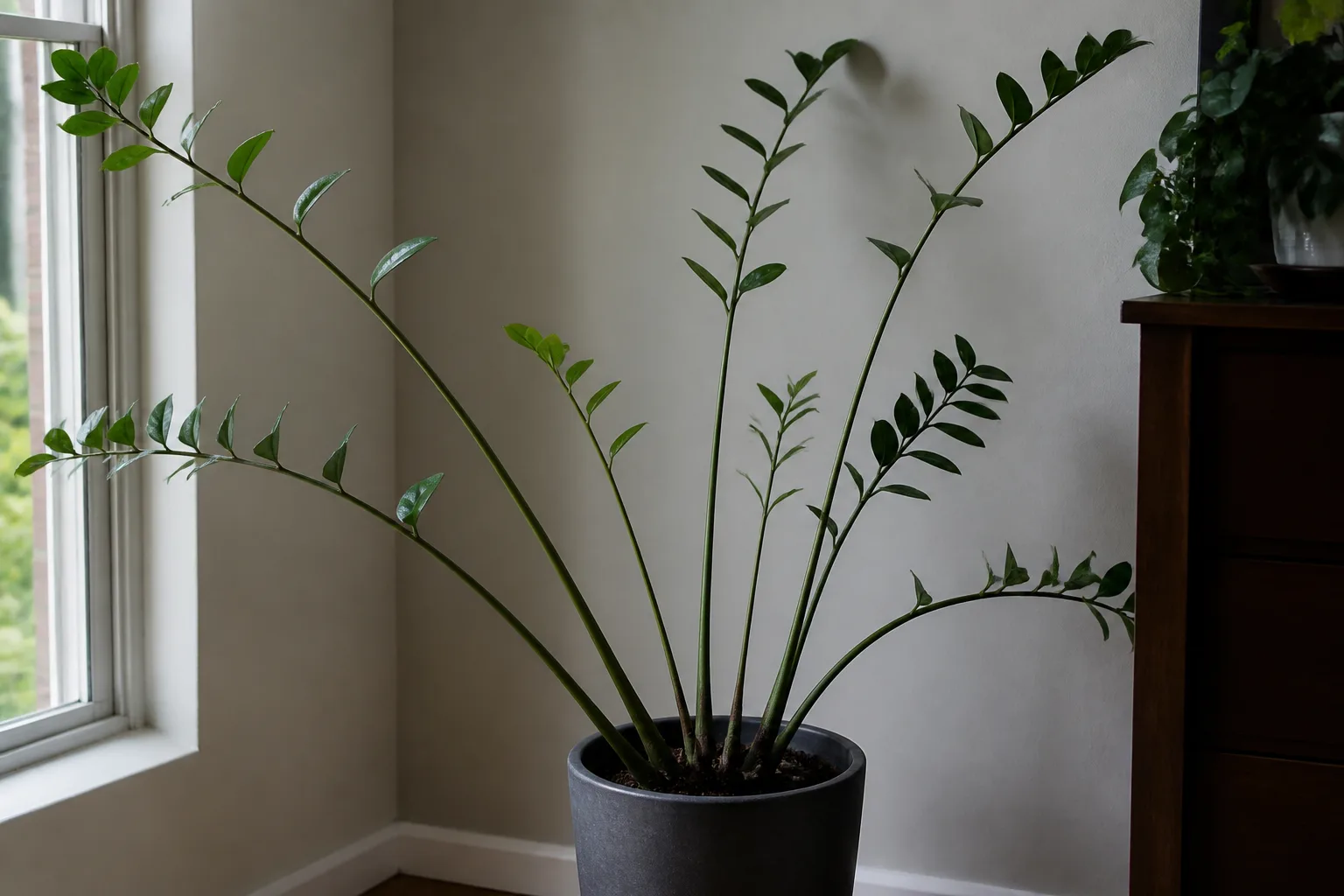
Leggy growth on ZZ Plant means long thin petioles with widely spaced leaflets stretching toward light. ZZ survives dim corners but etiolates without enough brightness. First step: move gradually to brighter indirect light and rotate the pot weekly.
Leggy Growth on ZZ Plant: Causes, Checks & Fixes
This guide covers leggy growth on ZZ Plant. See also the general Leggy Growth guide, watering, and light pages for this plant.
Leggy Growth on ZZ Plant: Causes, Checks & Fixes
Quick answer
Leggy ZZ Plant (Zamioculcas zamiifolia) stems are almost always a light problem, not a watering or nutrient defect. ZZ is famous for surviving dim offices and north-facing rooms, but survival and compact growth are different outcomes. In deep shade, petioles stretch toward any available brightness-producing long arching stems with leaflets clustered at the tips and bare lower sections.
First step: move the pot gradually to brighter indirect light over about one week. Do not jump from a dark hallway to a hot south window. Once new petioles emerge with tighter leaflet spacing, prune the worst stretched stems at the soil line if you want a denser silhouette.
What leggy growth looks like on ZZ Plant
Healthy ZZ plants carry thick, upright to arching petioles with glossy elliptical leaflets spaced evenly along the rachis. Leggy ZZ looks different:
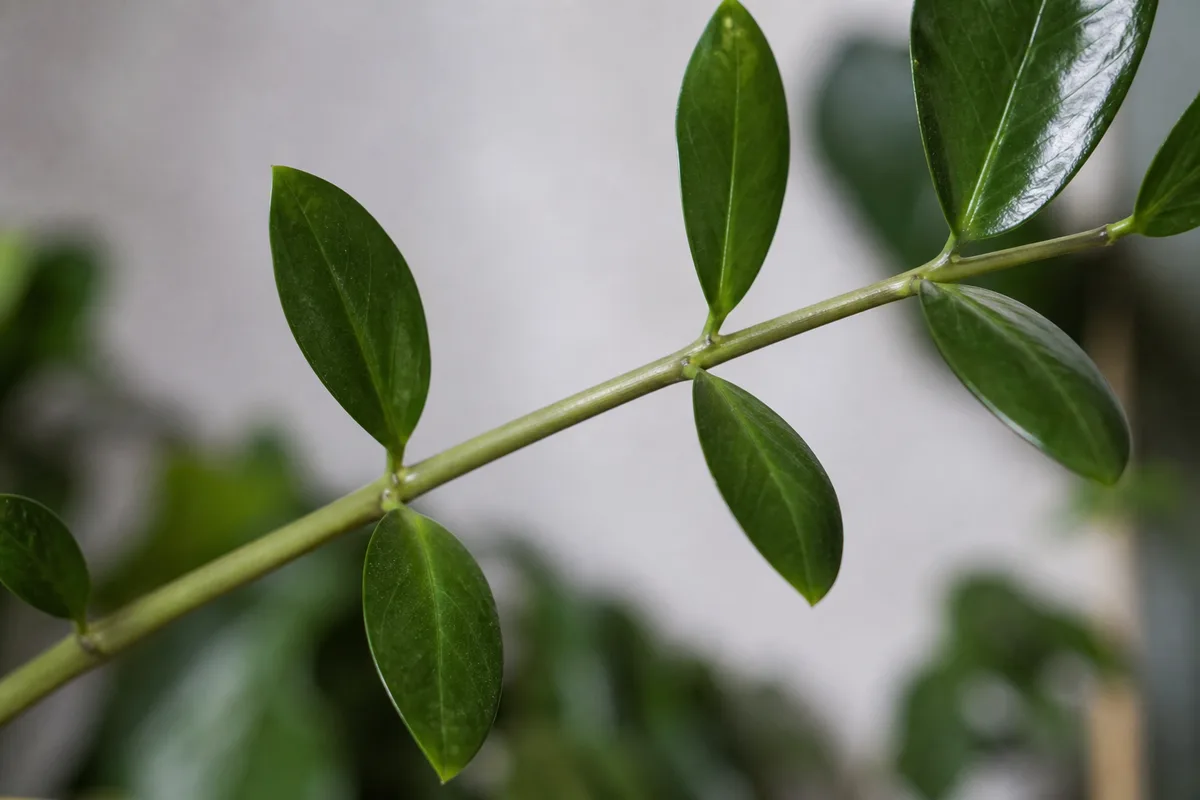
Leggy Growth symptoms on ZZ Plant - compare with healthy tissue on the same plant.
- Long internodes - visible gaps between leaflets along the petiole, wider than on older compact growth
- Thin, weak petioles - new stems feel floppier and arch farther than mature ones
- One-sided lean - the whole plant angles toward the brightest window or light source
- Sparse new shoots - fresh petioles emerge with fewer leaflets or smaller leaflets than earlier growth
- Leaflets clustered at tips - lower portions of stretched petioles stay bare
Unlike some houseplants that turn pale when etiolating, ZZ often keeps its green color while stretching. That makes legginess easy to miss-you may think the plant is simply “growing tall” when it is actually reaching for light.
Leggy ZZ is not the same as a drooping, collapsing plant. Rot-related droop usually comes with yellow stems, mushy rhizomes, sour soil, or wet mix that never dries. Leggy etiolation pairs with firm rhizomes and soil that may stay damp longer because the plant uses water slowly in low light.
Why ZZ Plant gets leggy
ZZ evolved in the open woodland savannah of eastern Africa, where it tolerates shade but still receives filtered daylight. Indoors, the marketing label “low-light plant” encourages placement in corners that receive only ambient room light-often 25–100 footcandles, the range extension guides classify as low light where ZZ can survive but not thrive.
Insufficient light intensity is the primary cause. When photosynthesis drops, the plant elongates petioles to intercept more photons-a response called etiolation. Stems stretch faster than leaf tissue can expand, producing weak architecture.
Short daylight hours worsen the problem in winter. Even a reasonably bright summer window delivers fewer hours in December, and ZZ’s already slow growth rate stalls further before stretching resumes.
One-sided exposure creates directional lean. Petioles on the shaded side grow longer trying to reach the window, while the lit side looks relatively normal.
Overfertilizing in dim light can push weak elongated shoots. ZZ is a slow feeder; heavy nitrogen without matching light produces soft growth that cannot support itself.
Crowded shelves where another plant or furniture blocks half the canopy produce uneven legginess on the shaded side only.
ZZ’s rhizome-based drought strategy compounds the risk indirectly. In low light the plant drinks slowly, so soil stays wet longer. Owners who keep watering on a summer schedule in a dim corner invite root stress-legginess and overwatering on ZZ Plant often share the same dark placement.
How to confirm the cause
Work through these checks before pruning or ZZ Plant repotting guide:
- Light level at the leaves - Can you read comfortably without a lamp at the plant’s position? If not, light is likely too low for compact growth. East or west windows a few feet back, or north windows close to the glass, usually qualify as bright indirect; interior corners often do not.
- Growth direction - Stems leaning strongly toward one window confirm phototropism from low light, not random weakness.
- Rhizome firmness - Press the soil surface near petiole bases. Firm rhizomes support an etiolation diagnosis. Soft, dented tissue with damp soil points to rot-treat that first.
- Leaflet spacing pattern - Compare newest petioles to older ones from when the plant looked fuller. Increasing gaps between leaflets on new growth confirm ongoing stretch.
- Soil dry-down speed - Soil wet for three or more weeks in a cool dim room fits low-light metabolism, not necessarily overwatering-though you should still reduce watering frequency.
- Season timing - Legginess that worsens through winter and improves slightly in summer suggests seasonal light drop rather than disease.
If petioles are firm, rhizomes are hard, and the plant leans toward light, you have confirmed etiolation. Proceed with a light upgrade-not fertilizer, not repotting.
First fix for ZZ Plant
Move the pot to the brightest indirect location available, acclimating over five to seven days.
Each day, shift the plant one step closer to an east- or west-facing window, or farther from a south window until leaflets receive bright reflected light without direct midday sun on the glass. ZZ scorches in hot direct sun; the goal is brighter indirect exposure, not a windowsill bake.
This single step addresses the root cause. After relocation:
- Rotate the pot 90 degrees weekly so all sides receive similar light and new growth stays balanced.
- Reduce watering frequency to match slower uptake in the brighter spot-check that the top two inches of mix dry before watering again.
- Wait for new growth before heavy pruning. ZZ is slow; a new upright petiole may take several weeks to months.
Once you see a fresh petiole with tighter leaflet spacing, cut the most stretched old stems cleanly at the soil line with sterilized shears. Old elongated internodes will not compact on their own-only new tissue grows dense.
If natural light is inadequate, add a full-spectrum grow light 12–16 inches above the canopy for 10–12 hours daily. Even low-light-tolerant species produce more compact growth under supplemental lighting.
Step-by-step recovery
Week 1: Relocate gradually. Stop fertilizing until new growth looks healthy. Note which stems lean most.
Weeks 2–8: Rotate weekly. Water only when mix is dry deep down. Watch for a new petiole emerging from the rhizome-that is your proof light is sufficient.
After new compact growth appears: Prune one or two of the leggiest petioles at the base. Stagger removal if the plant is small; ZZ recovers slowly and needs some foliage to photosynthesize.
Months 3–12: Continue ZZ Plant light guide and patient watering. The silhouette fills in as new upright petioles replace pruned ones. Mature ZZ may add only a handful of new stems per year even in good light-do not expect instant bushiness.
Recovery timeline
ZZ is inherently slow-growing. Expect four to twelve weeks before the first new petiole after a light upgrade, and several months to a year before pruned areas look filled in. Cool rooms below about 60°F (15°C) extend the timeline further.
Signs recovery is working:
- New petioles emerge upright with smaller gaps between leaflets
- Existing leaflets stay glossy and firm
- Rhizomes remain hard at the soil line
- Lean stops worsening once rotation and brighter light are consistent
Signs the problem is worsening or misdiagnosed:
- Yellowing stems with wet soil and soft rhizomes-switch to a rot protocol, not more light
- New growth still sparse after eight weeks in clearly brighter light-verify the location or add a grow light
- Leaflets browning or bleaching after a sudden sun move-pull back from direct glass and acclimate slower
Lookalike symptoms
Not enough light vs. drooping from overwatering: Both can involve weak arching stems. Rot adds yellow petioles, mushy rhizomes, and sour-smelling wet mix. Leggy etiolation keeps green firm tissue and often dry or slow-drying soil.
Leggy growth vs. normal slow growth: A healthy ZZ in acceptable office fluorescent light may add few new stems per year without dramatic stretch. Worry when internode gaps on new growth clearly exceed older petioles or the plant leans heavily.
Leggy growth vs. pot too large: Oversized pots stay wet and stall growth, but they do not usually cause directional lean or long internodes. Check pot size only after confirming light.
Mistakes to avoid
- Assuming stretch equals healthy vigor - Fast upward reach in dim light is etiolation, not strength.
- Pruning before improving light - Cut stems regrow just as leggy if brightness stays low.
- Moving straight to direct sun - ZZ leaflets scald quickly on hot glass. Acclimate to indirect brightness first.
- Watering on a calendar in dim corners - Slow dry-down means less frequent drinks, not the same schedule as a bright window plant.
- Heavy fertilizing to “wake up” the plant - Extra nitrogen without light produces soft weak shoots and salt buildup.
- Ignoring one-sided lean - Rotation matters as much as relocation.
ZZ Plant care cross-check
Leggy growth often signals a placement mismatch with how ZZ actually grows:
- Light: Tolerates low light for survival; compact form needs bright indirect exposure.
- Water: Rhizomes store moisture-allow soil to dry between waterings, especially in dim rooms where uptake is slow.
- Soil: Gritty, well-draining mix prevents rot when metabolism is sluggish.
- Temperature: Keep above 60°F (15°C) for active growth.
- Feeding: Light balanced fertilizer once or twice per growing season-only after light and watering are stable.
How to prevent leggy growth
Position new ZZ plants in bright indirect light from the start rather than the darkest acceptable corner. If you must use a low-light spot for design reasons, accept a sparser silhouette or plan for a grow light.
Rotate the pot every week or two. Supplement winter light when days shorten. Match watering to the pot’s dry-down rate in that specific location-dimmer spots need longer intervals between drinks.
When buying, choose specimens with evenly spaced leaflets along petioles, not only at the tips. A young compact plant in adequate light stays manageable longer than rescuing a severely etiolated mature specimen.
When to worry
Legginess alone is cosmetic. Escalate when:
- Weak floppy stems sit in soil that stays wet for weeks-inspect rhizomes for rot
- Yellowing spreads while soil remains damp-stop watering and unpot
- Multiple petioles collapse at the base despite a light upgrade-confirm rot is not the primary issue
For most owners, leggy ZZ is a reversible placement problem. Firm rhizomes, a brighter indirect location, patient pruning, and realistic expectations for this slow species will produce a tighter plant over time-without the emergency response that watering or fungal issues demand.
When to use this page vs other ZZ Plant guides
- ZZ Plant watering guide - Use for routine moisture checks before assuming leggy growth is the main issue.
- ZZ Plant problems hub - Browse all 27 common issues on this species.
- Not Enough Light on ZZ Plant - Different entry point when symptoms overlap with leggy growth.
- Slow Growth on ZZ Plant - Different entry point when symptoms overlap with leggy growth.
- Yellow Leaves on ZZ Plant - Different entry point when symptoms overlap with leggy growth.