Slow Growth on ZZ Plant: Causes, Checks & Fixes
Quick answer
Slow growth on ZZ Plant is often normal-this species is inherently slow even when healthy. If you want more new stems, move to bright indirect light first; deep shade, cool rooms below about 60°F, and wet soil stall growth further.
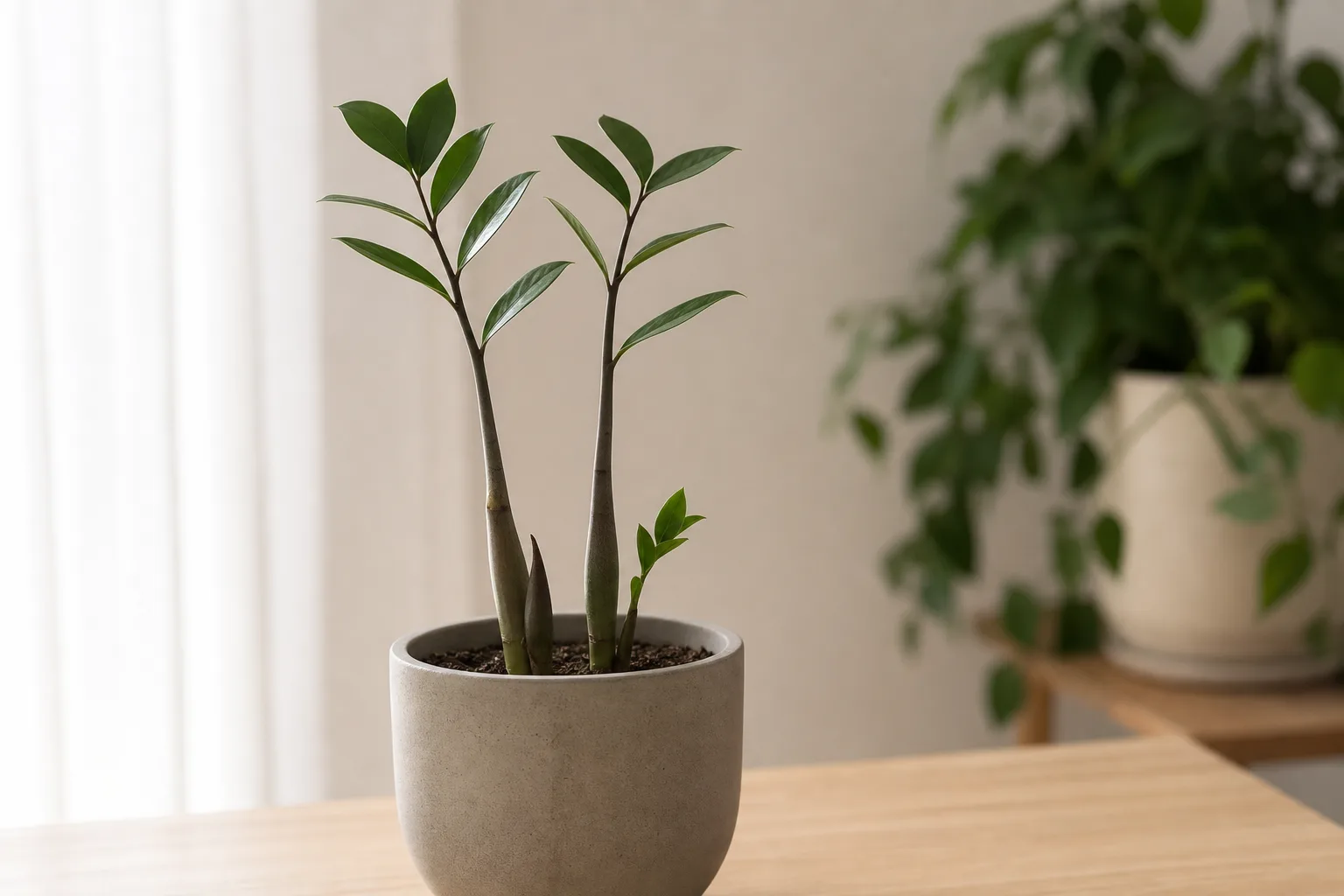
Slow Growth on ZZ Plant: Causes, Checks & Fixes
This guide covers slow growth on ZZ Plant. See also the general Slow Growth guide, watering, and light pages for this plant.
Slow Growth on ZZ Plant: Causes, Checks & Fixes
Quick answer
ZZ Plant (Zamioculcas zamiifolia) is slow-growing by nature-a healthy plant may push out only a handful of new upright stems per year. That pace is normal, not a sign your plant is failing. Eastern African rhizomes store water and the species evolved for dry shade, so it does not behave like a fast tropical foliage plant.
If growth feels even slower than usual, move the pot to brighter indirect light first. ZZ survives dim corners and low-light interiors in homes and offices, but bright indirect light will help speed up their very slow growth rate. Deep shade, cool rooms, and wet soil are the usual reasons a ZZ stalls beyond its already leisurely baseline.
What slow growth looks like on ZZ Plant
Normal slow growth means firm rhizomes under the soil, glossy existing leaflets, and occasional new petioles emerging as tight upright shoots. The plant may look visually static for months, then suddenly produce one or two new stems. NC State lists a slow growth rate as a defining trait-reaching two to four feet can take years indoors.
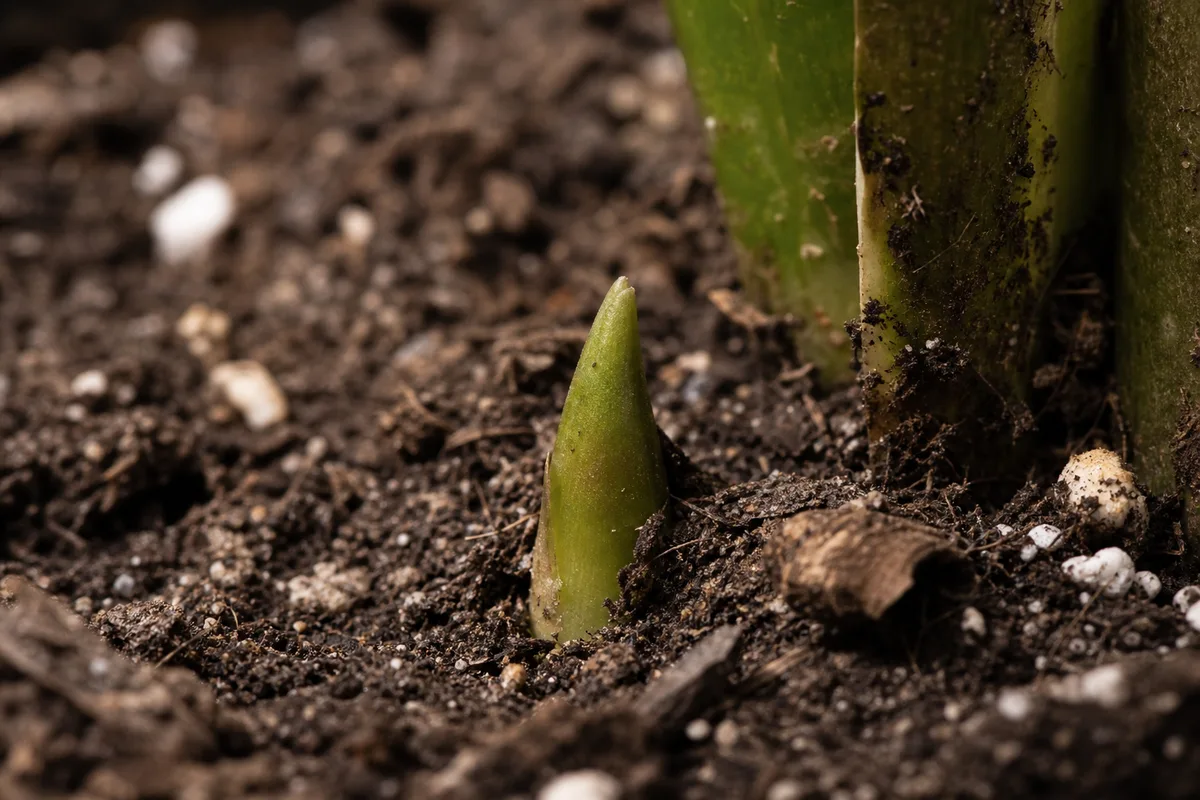
Slow Growth symptoms on ZZ Plant - compare with healthy tissue on the same plant.
Problem slow growth adds warning signs:
- No new shoots through an entire warm season (spring through early fall)
- Pale, thin, or widely spaced leaflets on long stretched petioles
- Soil that stays damp for weeks because the plant uses little water in dim light
- Yellowing leaflets or soft stems alongside stalled growth
- Rhizomes that feel mushy when you unpot to investigate
Healthy ZZ slow growth is quiet and stable. Problem slow growth usually comes with another stress pattern-most often too little light, too much water, or temperatures below what the plant prefers.
Why ZZ Plant grows slowly
Evolution set the pace. Rhizomatous roots store water so ZZ survives periodic drought in eastern African grassland and open forest. That storage system favors survival over rapid leaf production. UF/IFAS is explicit: ZZ is a slow-growing plant, even under favorable conditions.
Common bottlenecks that slow ZZ further:
Insufficient light. ZZ tolerates very low light-including fluorescent office fixtures-but photosynthesis drops in deep shade. Less energy means fewer new stems. Leggy stretched petioles are the visible clue that light, not fertilizer, is the limit.
Cool temperatures. Clemson HGIC notes ZZ should be kept above 60 °F. UF/IFAS lists a warm tropical range of 65°F–90°F. Drafty windows, AC vents, and unheated rooms in winter suppress metabolism and pause new growth.
overwatering on ZZ Plant and poor drainage. Wet rhizomes cannot function well. Missouri Botanical Garden notes that stunted slow growth with yellowing leaves is a symptom of over-watering. ZZ in soggy mix may stop producing shoots while roots decline-a very different situation from normal patience.
Seasonal pause. NC State recommends watering only once a month in winter when the plant is not actively growing. Most ZZ plants push little or no new tissue through short winter days even in warm rooms. Expecting summer growth rates in December leads to overwatering, not faster stems.
Root congestion. A severely root-bound rhizome clump can slow uptake, though ZZ tolerates snug pots better than many houseplants. ZZ Plant repotting guide helps only when rhizomes circle densely and the pot dries within a day or two of watering.
Recent repotting or division. ZZ often pauses for several weeks after root disturbance while rhizomes re-establish. That stall is temporary if the new mix drains well and you withhold water until the root zone dries.
How to confirm the cause
Work through these checks before changing multiple variables at once:
- Season and timeline - Has the plant gone through a full warm season with zero new shoots? One quiet winter is normal. Six months of nothing from spring through fall is worth investigating.
- Light level - Is the pot more than a few feet from any window, or in a north-facing room with no supplemental light? Can you read comfortably without a lamp at the plant’s location? If not, light is likely limiting growth.
- Stem and leaflet pattern - Tight glossy leaflets on upright stems suggest acceptable light. Long gaps between leaflets and leaning toward windows confirm etiolation from shade.
- Pot weight and soil moisture - Lift the pot. Heavy, damp mix weeks after watering means slow dry-down-often low light plus overwatering. Bone-dry mix with slightly wrinkled leaflets may mean underwatering on ZZ Plant is limiting new tissue.
- Rhizome firmness - Unpot only if you suspect rot or need to assess root congestion. Firm white or tan rhizomes support normal slow growth. Soft brown mushy tissue means rot, not a growth-rate issue.
- Temperature - Note placement near exterior doors, single-pane windows, or AC vents. Sustained exposure below about 60°F stalls ZZ.
- Feeding history - Heavy fertilizer does not fix shade. Salt buildup from overfeeding can burn leaflet edges and stress the plant.
If rhizomes are firm, soil dries appropriately between waterings, and the plant simply adds one stem every few months in moderate light, you likely have a healthy ZZ-not a problem to fix.
First fix for ZZ Plant
Move the pot to the brightest indirect light available in your home.
Pick a spot near an east-facing window, set back from a south or west window, or under bright office fluorescents. Avoid direct midday sun on the glass, which can scald and brown leaves. Shift the plant gradually over a week if it has lived in deep shade for years-a sudden jump to intense light can stress leaflets.
Do not fertilize, repot, or increase watering on day one. Light is the single change most likely to produce visible new petioles within one growing season. Once the plant sits in brighter indirect light, adjust watering to match faster dry-down: water only when the entire potting mix is completely dry.
Step-by-step recovery
After the light move, follow this sequence based on what your checks revealed:
- Adjust watering to dry-down - In brighter light, the pot may lighten faster. Allow soils to dry between waterings. Never let ZZ sit in a full saucer.
- Rotate the pot weekly - Even growth prevents lopsided leaning in the new bright spot.
- Feed lightly once in spring - After light and watering look stable, apply a balanced houseplant fertilizer at half or quarter strength. Clemson recommends fertilizing only once or twice during the growing season. UF/IFAS suggests low-dose liquid fertilizer twice per year.
- Repot only if root-bound or mix stays wet - Move up one pot size in spring using coarse, well-draining mix. Oversized pots stay wet and stall growth indirectly through root stress.
- Address rot before expecting new growth - If rhizomes are soft, stop watering, trim decay, and repot dry. New shoots cannot resume until the storage organ is firm again.
- Warm the plant - Move away from cold drafts. Stable indoor warmth in the 65–79°F range supports the metabolism ZZ needs for new stems.
Recovery timeline
Expect gradual change, not overnight results. After a light improvement, the first new petiole may take four to eight weeks to emerge during active season. A full flush of two or three stems may take an entire growing season. Winter months often bring no visible progress even after good fixes-that is normal dormancy, not failure.
Signs improvement is working:
- New upright shoots with tight leaflet spacing
- Glossier green on fresh leaflets compared with older foliage
- Pot weight dropping predictably between waterings
- Firm rhizomes on spot checks
Signs the problem is worsening:
- Yellow leaflets spreading while soil stays wet
- Soft stems at the soil line
- No new growth plus sour-smelling mix
- Leaflets dropping faster than replacements appear
Lookalike symptoms
Leggy growth vs. slow growth. Leggy ZZ produces long thin petioles with sparse leaflets but may still add stems slowly. That pattern is light-related stretching. Slow growth with compact existing foliage and no new shoots may be seasonal normalcy or root stress.
Winter rest vs. chronic stall. A ZZ that adds nothing from November through February but pushes a stem in March is behaving normally. A plant that adds nothing from April through October needs diagnosis.
root rot on ZZ Plant vs. patience. Rot shows yellow leaves, soft rhizomes, and wet soil-not simply a quiet plant with firm roots and dry mix. Do not repot a healthy slow ZZ hoping to jump-start it; unnecessary disturbance can pause growth for weeks.
Underwatering vs. slow growth. Extended drought shrivels leaflets and can pause new tissue, but ZZ rhizomes store water for weeks. Severely dry mix with wrinkled leaflets needs a deep drink-not more light or fertilizer.
Mistakes to avoid
- Overfertilizing to force speed. ZZ needs minimal feeding. Excess salts scorch leaflet edges and stress rhizomes.
- Overwatering because nothing is happening. A static ZZ in low light uses very little water. Wet soil causes rot, not growth.
- Repotting into a much larger container. Extra soil holds moisture ZZ rhizomes cannot use quickly.
- Expecting pothos-like growth rates. Comparing ZZ to fast climbers sets unrealistic expectations and leads to overcare.
- Placing in direct hot sun. Burned leaflets set the plant back further.
- Stacking fixes on day one. Changing light, soil, pot, and fertilizer simultaneously makes it impossible to read what helped.
ZZ care cross-check
Slow growth often improves when the baseline routine matches how ZZ Plant overview actually lives indoors:
- Light: Bright indirect when you want faster stems; low light is survivable but slow.
- Water: Dry-down only-treat ZZ like cactus and other succulent plants regarding wet feet.
- Soil: Coarse, well-draining, low-nutrient mix.
- Temperature: Above 60°F; avoid cold drafts.
- Feeding: Once or twice per growing season at low strength.
- Safety: ZZ Plant is toxic to cats and dogs if ingested-keep elevated away from pets regardless of growth rate.
How to prevent slow growth next time
Match expectations to the species before you buy. ZZ is a low-maintenance survivor, not a rapid screen plant. Place new plants where bright indirect light is realistic if you want to see regular new stems. Learn your pot’s dry-down rhythm before setting a calendar schedule. Refresh chunky mix every two to three years before soil collapses and holds moisture too long. Scout rhizome firmness during occasional unpotting in spring rather than waiting for yellow leaves.
When to worry
Investigate promptly if slow growth pairs with yellowing leaflets, soft rhizomes, sour soil odor, or collapsing stems-that pattern points to rot or chronic overwatering, not normal ZZ patience. Also worry if no new shoots appear through an entire warm season despite bright indirect light, appropriate dry-down watering, and stable warmth above 60°F. In that case, unpot to check for hidden rhizome decay or severe root binding.
A quiet ZZ with firm rhizomes, glossy leaves, and one new stem every few months in moderate light is doing exactly what this plant is built to do.
When to use this page vs other ZZ Plant guides
- ZZ Plant watering guide - Use for routine moisture checks before assuming slow growth is the main issue.
- ZZ Plant problems hub - Browse all 27 common issues on this species.
- Not Enough Light on ZZ Plant - Different entry point when symptoms overlap with slow growth.
- Leggy Growth on ZZ Plant - Different entry point when symptoms overlap with slow growth.
- Yellow Leaves on ZZ Plant - Different entry point when symptoms overlap with slow growth.