Drooping Leaves on ZZ Plant: Causes, Checks & Fixes
Quick answer
Drooping ZZ petioles usually mean water stress at the rhizome-wet, heavy soil points to rot; bone-dry soil with firm rhizomes points to thirst. First step: lift the pot and check moisture deep in the mix before you water, unpot, or prune.
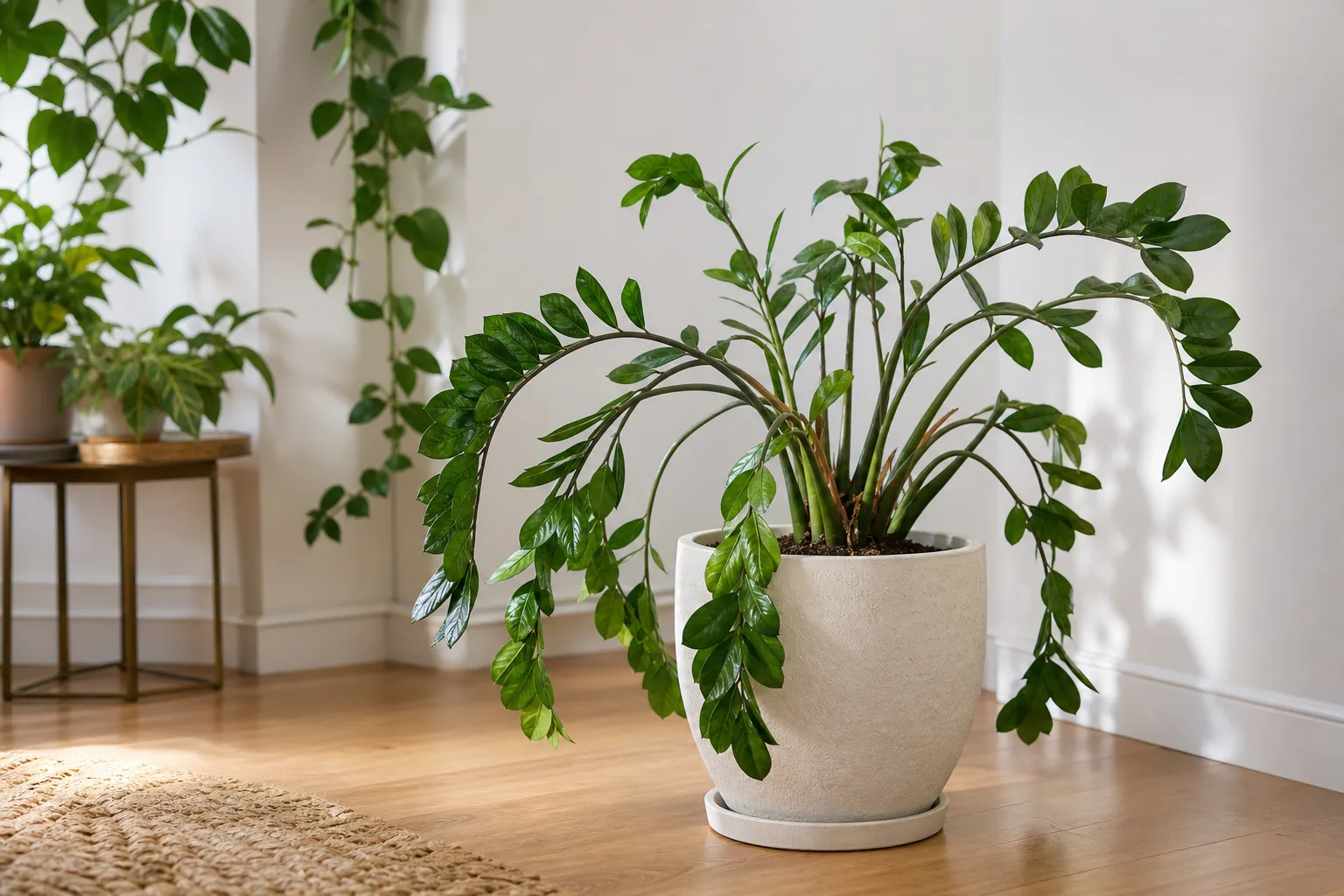
Drooping Leaves on ZZ Plant: Causes, Checks & Fixes
This guide covers drooping leaves on ZZ Plant. See also the general Drooping Leaves guide, watering, and light pages for this plant.
Drooping Leaves on ZZ Plant: Causes, Checks & Fixes
Quick answer
Drooping on a ZZ plant (Zamioculcas zamiifolia) almost always traces to how much water is reaching-or trapped around-the rhizomes, not to a mysterious leaf disease. Thick petioles arch when turgor drops because roots and rhizomes cannot supply water, or because decay has destroyed the tissue that stores it.
First step: lift the pot and check moisture deep in the mix before you water, unpot, or prune. A heavy, damp pot means stop watering and inspect rhizomes-not add more water. A light, dry pot with firm rhizomes means a single thorough drink may be all that is needed.
What drooping leaves look like on ZZ Plant
Healthy ZZ petioles rise stiffly from the soil and arch slightly under their own weight as the plant matures. Trouble shows when multiple petioles lose rigidity at once:
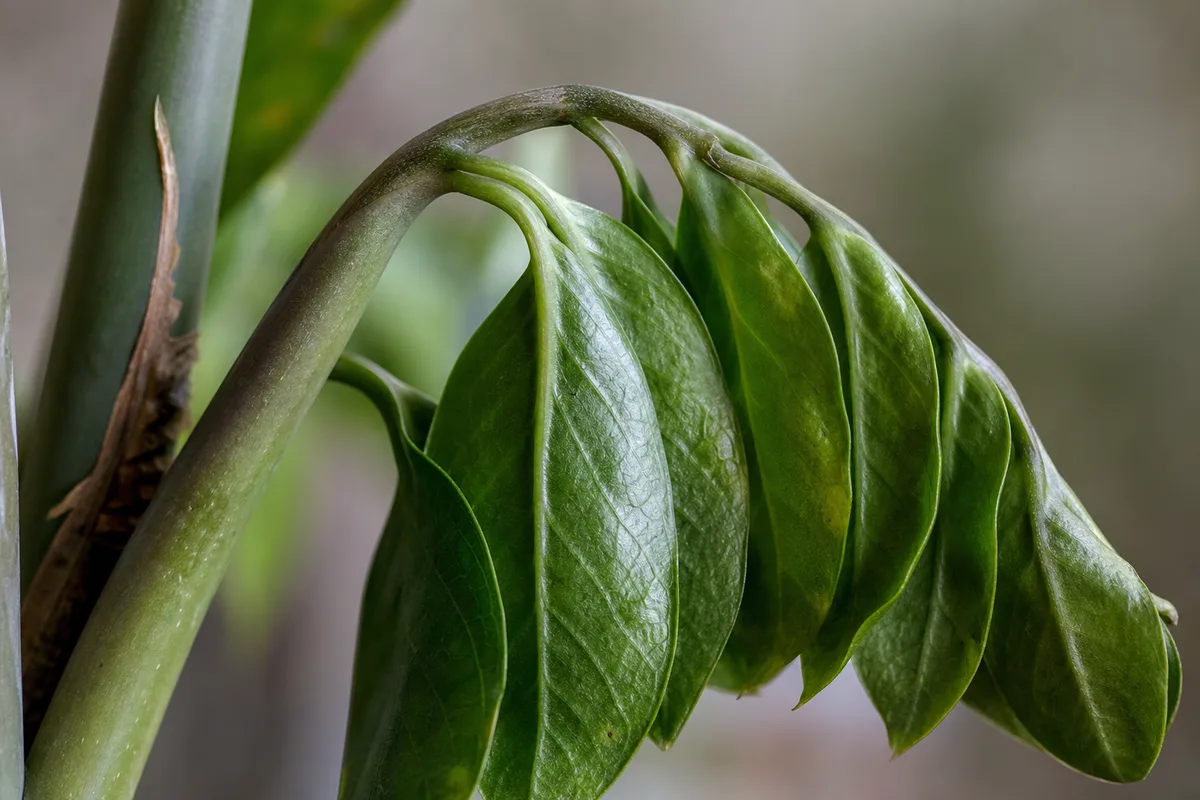
Drooping Leaves symptoms on ZZ Plant - compare with healthy tissue on the same plant.
- Petioles hang downward instead of holding their usual curve
- Stems may bend or kink just above the soil line when rhizome support fails
- Leaflets stay glossy green at first, then yellow or drop as stress continues
- The whole plant looks collapsed rather than one outer petiole naturally leaning
Because ZZ stores water in rhizomes and thick stems rather than in leaf tissue alone, droop develops slowly during drought but can accelerate once rot undermines the base. Do not rely on leaflet color alone-firmness at soil level matters more.
Normal vs. alarming:
- One or two older outer petioles leaning on a large plant is often age and spread, not crisis
- All stems softening together, especially with damp soil, is a red flag
- Yellowing that spreads up petioles while soil stays wet strongly suggests rot, not simple thirst
Why ZZ Plant gets drooping leaves
overwatering on ZZ Plant and rhizome rot (most common)
ZZ evolved for dry spells between rains. Its bulbous rhizomes hold reserves-but they rot quickly in waterlogged mix. UF/IFAS notes root rot occurs when ZZ sits in poorly drained soil with excessive water, and Clemson lists overwatering as the main path to root rot.
When rhizomes decay, they cannot anchor petioles. Stems go limp even though the soil feels wet-damaged roots cannot move water upward. This is the classic ZZ trap: the plant looks thirsty while it is actually drowning.
Common triggers:
- Watering on a calendar instead of when mix is dry
- Dense peat-heavy potting soil with no perlite or bark
- Pots without drainage or saucers left full
- Oversized pots that stay wet for weeks
- Low light plus frequent watering-slow growth uses little water
underwatering on ZZ Plant (less common but real)
ZZ tolerates drought well, but extended dryness eventually drains rhizome reserves. NC State describes ZZ as highly drought tolerant yet requiring routine watering with full dry-down between drinks. Leaflets may look slightly shrunken; petioles lose stiffness over weeks, not hours.
Underwatering droop usually comes with very light pots, cracked dry surface, and firm-not mushy-rhizomes when you finally unpot.
Other causes to consider
- Recent ZZ Plant repotting guide - disturbed roots can temporarily reduce uptake; droop should stabilize within one to two weeks if mix is appropriate and watering is restrained
- Cold exposure - UF/IFAS reports injury below 50°F; chill plus wet soil accelerates rot
- Very low light - stems stretch and weaken over months; droop here is gradual legginess, not sudden collapse
- Physical damage - snapped petioles at the base droop immediately; check for bumps or breaks
How to confirm the cause
Work through these checks in order:
- Pot weight - Lift the container. Heavy and damp suggests overwatering; light and dusty suggests drought.
- Deep moisture probe - Push a finger or dry skewer to the bottom third. Surface dryness with wet depths still means rot risk-do not water yet.
- Stem firmness at soil line - Press petiole bases gently. Soft, squishy tissue means rot until proven otherwise.
- Smell - Sour or fermented odor from drainage holes points to anaerobic, rotting mix.
- Rhizome inspection - If soil is wet and stems are soft, unpot carefully. Healthy rhizomes are firm and pale; rot is brown, mushy, and collapses under pressure.
- Pattern and timing - Did droop follow a heavy watering week, a month without water, or a recent move to a dark corner?
Wilted leaves may indicate soil is too dry or too wet-rotting roots cannot take up water, so the visual symptom overlaps. Context from steps 1–5 separates the two paths.
First fix for ZZ Plant
Stop guessing and match your action to moisture status.
If the pot is heavy and soil is damp: Do not water. Move the plant to ZZ Plant light guide, empty any saucer, and unpot within 24 hours if stems feel soft at the base. You need to see rhizome condition before the next step.
If the pot is light and mix is dry throughout with firm rhizomes: Water once until a little runs from drainage holes, then let the pot drain fully. Do not water again until the mix is completely dry.
Do not prune all drooping petioles on day one, fertilize a stressed plant, or repot into fresh wet mix before inspecting rhizomes when rot is suspected.
Step-by-step recovery
Path A - Overwatering / rhizome rot
- Unpot and gently shake away wet mix.
- Trim all soft, brown, or mushy rhizomes and roots with clean scissors-cut back to firm white tissue.
- Let trimmed rhizomes air-dry on a towel for several hours to overnight.
- Repot remaining firm tissue in dry, gritty cactus or succulent mix with open drainage.
- Do not allow the plant to sit in water-wait at least one to two weeks before the first post-rescue drink.
- Resume watering only when the new mix is dry throughout; in winter this may mean monthly or less.
Path B - Underwatering
- Water thoroughly until runoff, ensuring the entire root ball rewets.
- If mix was hydrophobic and water ran straight through, bottom-soak the pot for 20–30 minutes, then drain completely.
- Wait for full dry-down before the next watering-ZZ prefers underwatering to overwatering.
- Watch for plump leaflets within several days; petioles may take longer to stiffen fully.
Path C - Repot or environmental stress
Hold watering steady, keep bright indirect light, and avoid further moves. If mix drains well and rhizomes stay firm, droop usually eases as roots re-establish.
Recovery timeline
| Situation | What to expect |
|---|---|
| Mild underwatering | Leaflets plump within 2–5 days; petioles stiffen within a week |
| Corrected overwatering, firm rhizomes intact | New petiole tips emerge in 3–6 weeks; old bent stems may not fully straighten |
| Rhizome surgery with partial loss | Slow recovery over 2–3 months; one or two new stems may be all you get |
| All rhizomes mushy | Plant is unlikely to recover-salvage firm leaf cuttings if any tissue remains healthy |
Judge recovery by new firm growth at soil level, not by old petioles returning to their original angle.
Lookalike symptoms
- Leggy stretch in low light - sparse, long petioles over months; stems stay firm, soil cycles normally
- Natural aging - outer petioles lean and yellow slowly while inner new growth stays upright
- Yellow leaves without droop - may be salt burn or old leaf senescence; check fertilizer history and whether only lower leaflets are involved
- Wilting with wet soil on ZZ Plant - functionally the same as drooping from rot; treat as Path A
Mistakes to avoid
- Watering because leaves look limp without checking whether soil is already wet
- Leaving the plant in a decorative pot that holds standing water
- Repotting into a much larger container “to help it recover”
- Fertilizing during acute stress-ZZ needs minimal feeding even when healthy
- Removing every drooping petiole before confirming rhizomes are firm
- Misting leaflets instead of fixing root-zone moisture-surface moisture does not restore turgor
How to prevent drooping next time
- Allow soil to dry between waterings-for many homes that means every two to four weeks, less in winter
- Use coarse, well-draining mix; avoid wet soils entirely
- Size pots to the rhizome clump-extra soil holds extra water
- Confirm drainage holes stay open and saucers empty after each drink
- Match watering to light-plants in dim offices dry slower and need fewer drinks
- Keep temperatures above 60°F and away from cold drafty windows in winter
When to worry
Treat as urgent when:
- All petioles collapse within days
- Bases feel soft, oozing, or smell sour
- Soil has stayed wet more than 10 days despite no recent watering
- Yellowing spreads rapidly up multiple stems
You can wait and observe when only one or two outer petioles lean, the pot is appropriately dry, rhizomes feel firm on a spot-check, and the plant recently received a normal single watering.
If every rhizome is mushy after inspection, recovery is unlikely. Save any firm rhizome sections or healthy leaf cuttings rather than continuing to water a collapsed plant.
Conclusion
Drooping ZZ petioles look alarming but the diagnosis is straightforward once you read the root zone. Wet heavy pots demand a dry rescue and rhizome triage; light dry pots with firm storage tissue need a single deep drink and patience. Get that moisture read right first, and most ZZ plants recover without a cascade of extra interventions.
When to use this page vs other ZZ Plant guides
- ZZ Plant watering guide - Use for routine moisture checks before assuming drooping leaves is the main issue.
- ZZ Plant problems hub - Browse all 27 common issues on this species.
- Underwatering on ZZ Plant - Different entry point when symptoms overlap with drooping leaves.
- Overwatering on ZZ Plant - Different entry point when symptoms overlap with drooping leaves.
- Root Rot on ZZ Plant - Different entry point when symptoms overlap with drooping leaves.