Brown Tips on ZZ Plant: Causes, Checks & Fixes
Quick answer
Brown tips on ZZ Plant are usually cosmetic and come from tap-water minerals, overfertilizing, very dry indoor air, or direct sun scorch-not from needing more water. First step: switch to filtered or rainwater and review your last feeding before changing anything else.
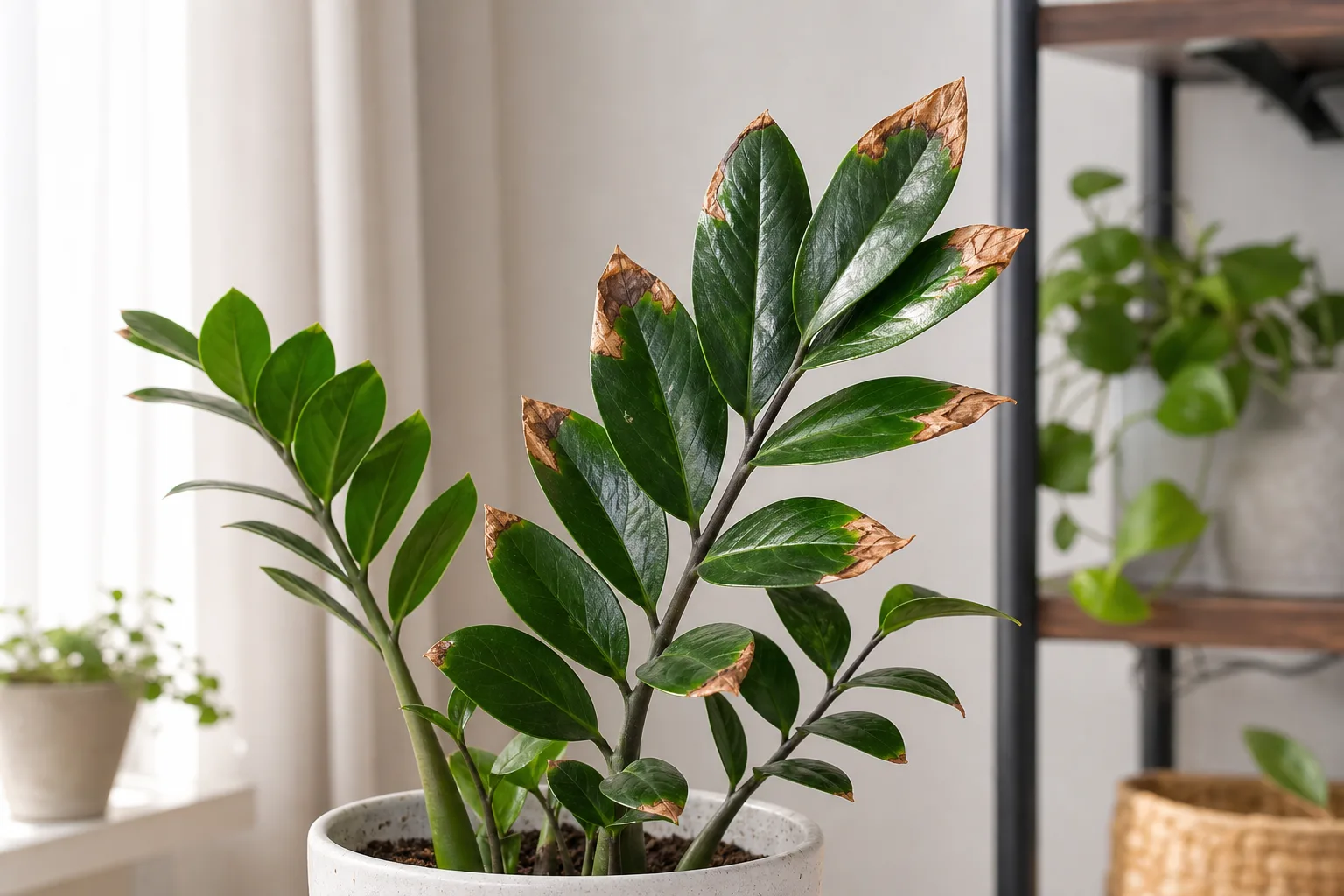
Brown Tips on ZZ Plant: Causes, Checks & Fixes
This guide covers brown tips on ZZ Plant. See also the general Brown Tips guide, watering, and light pages for this plant.
Brown Tips on ZZ Plant: Causes, Checks & Fixes
Quick answer
Brown leaflet tips on ZZ Plant (Zamioculcas zamiifolia) are almost always environmental stress, not disease. The glossy pinnate leaflets lose moisture at their farthest point first when water quality, feeding, humidity, or light is off-but the rhizomes below are often still healthy.
First step: switch to filtered, reverse-osmosis, or rainwater for the next several waterings and note whether you recently fertilized or moved the plant to a sunnier spot. ZZ stores water in thick underground rhizomes and needs infrequent drinks; adding water to fix brown tips usually makes real problems worse.
What brown tips look like on ZZ Plant
On ZZ, tip burn shows as dry, tan-to-dark-brown crispy edges at the very end of individual leaflets-the small oval segments arranged in pairs along each arching stem. The damage typically:
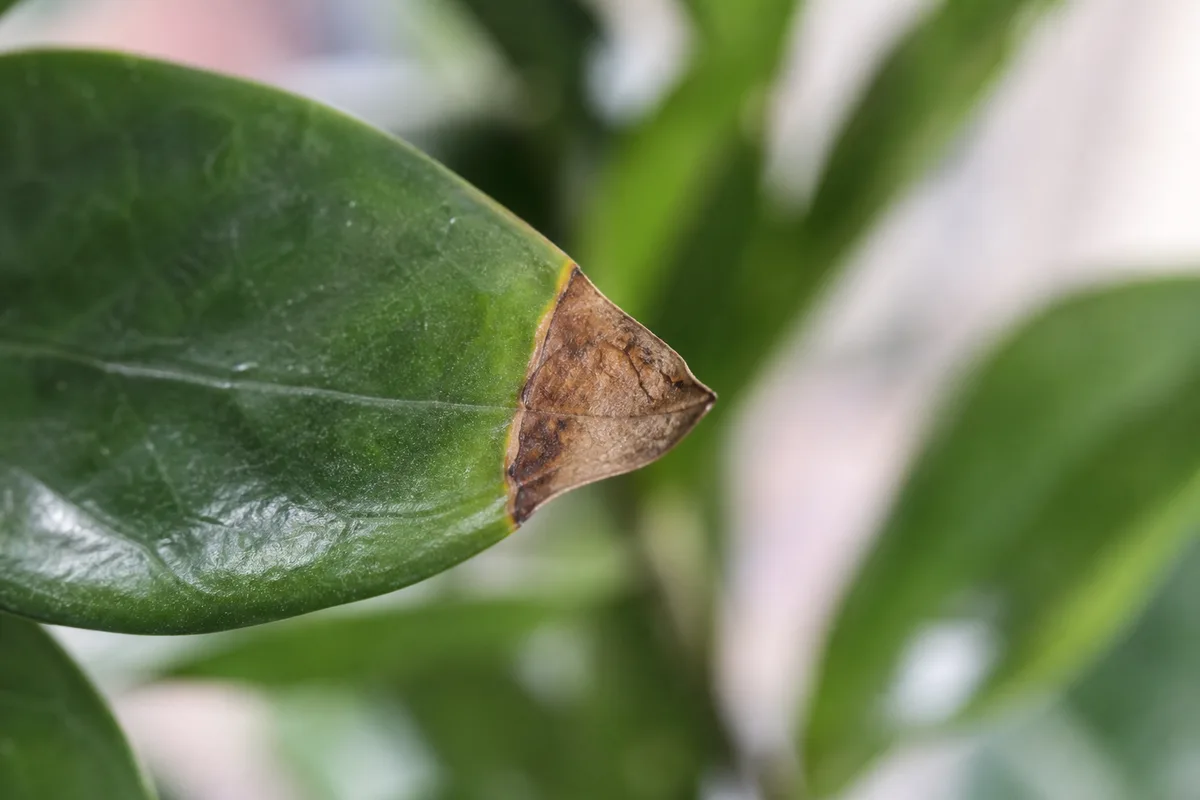
Brown Tips symptoms on ZZ Plant - compare with healthy tissue on the same plant.
- Starts at the leaflet tip and may creep a few millimeters inward along the margin
- Affects scattered leaflets while the rest of each compound leaf stays glossy green
- Leaves the central leaflet tissue firm, not soft or wet
- Appears without yellowing of whole stems (that pattern suggests overwatering on ZZ Plant instead)
Because ZZ leaflets are thick and waxy, tip necrosis looks papery and sharp-edged rather than mushy. You may also see a white or tan crust on the soil surface when fertilizer salts or hard-water minerals have built up-a clue that salts, not pests, are browning tips.
New leaflets emerging from the rhizome should open fully green. If only older leaflets at the outer edges of each frond show tips, aging plus environmental stress may both be involved. If every new leaflet opens already browned, look hard at water quality and recent feeding.
Why ZZ Plant gets brown tips
ZZ evolved in dry African woodland with seasonal drought. Its rhizomes hoard water, leaflets transpire slowly, and the plant is fed and watered far less often than tropical foliage plants. That slow metabolism means minerals from tap water and fertilizer concentrate in the root zone over weeks rather than flushing out quickly-salt and fluoride stress often appear at leaflet margins first.
Tap water minerals and salt buildup
Hard tap water leaves calcium and magnesium deposits in potting mix. Combined with any fertilizer, salts pull moisture away from fine roots and scorch the leaf edges furthest from the vascular supply. ZZ is less famously fluoride-sensitive than dracaena or spider plant, but repeated watering with very hard or heavily treated municipal water can still brown tips on any slow-growing houseplant when salts accumulate because you water infrequently and rarely flush the pot.
Overfertilizing
ZZ is a light feeder. Heavy or frequent fertilizer pushes salts into rhizomes and mix faster than ZZ Plant overview uses them. Tip burn after a spring feeding binge is a classic pattern-especially if a white crust appeared on the soil afterward.
Very dry indoor air
ZZ tolerates normal office and home humidity, but heated winter rooms with forced-air vents can desiccate leaflet tips on plants near radiators or HVAC outlets. This looks similar to salt burn but often follows a dry season rather than a feeding event.
Direct sun scorch
ZZ handles low light well but hot direct sun through a south window can bleach or scorch glossy leaflets. Sun-facing tips or whole leaflets may crisp while shaded sides stay green. Leaves may also curl when light is excessive.
Less common: chronic underwatering on ZZ Plant
Extended drought can shrivel and brown leaflet edges, but ZZ rhizomes store weeks of reserve water-underwatering tips usually come with wrinkled, thin leaflets across the plant, not random crispy tips on an otherwise plump specimen.
How to confirm the cause
Work through these checks in order before changing multiple variables at once:
- Timing - Did tips appear within two weeks of fertilizing? After a move closer to a window? When the heat came on? Each timing pattern points to a different fix.
- Soil surface - White or chalky crust suggests salt buildup from fertilizer or hard water. No crust does not rule out water quality, but crust strongly implicates salts.
- Light exposure - Are damaged leaflets on the sun-facing side of the pot? Can you see direct sun beams hitting leaves midday? Sun scorch fits that pattern.
- Humidity context - Is the pot beside a heating vent or radiator? Very dry microclimates brown tips without affecting the whole plant.
- Rhizome check - Gently brush soil away at the base. Firm, pale rhizomes support an environmental tip-burn diagnosis. Soft, dark, mushy tissue means stop and investigate rot-not tip burn alone.
- Watering history - If you increased watering to “help” brown tips, yellow stems or sour soil may mean you crossed into overwatering territory.
If rhizomes are firm, soil dries fully between drinks, and damage is limited to leaflet edges, you are likely treating cosmetic tip burn-not root failure.
First fix for ZZ Plant
Switch to filtered, reverse-osmosis, or rainwater for the next four to six weeks of watering.
Use enough to moisten the mix thoroughly when the pot is fully dry, then let it dry again completely before the next drink. This single change leaches some accumulated salts with each flush and removes hard-water minerals from the equation without increasing watering frequency.
Do not mist heavily, do not fertilize “to help recovery,” and do not move the plant to a darker corner unless direct sun scorch is confirmed. One clear variable first-water source-tells you whether quality was the driver.
Step-by-step recovery
After switching water, work through these steps based on what you confirmed:
- Flush salt-heavy pots - If white crust is visible or you recently overfed, place the pot in a sink and run plain filtered water through until it flows freely from drainage holes two to three times the pot volume. Let drain fully before returning to the saucer.
- Pause fertilizer - Skip all feeding until new leaflets emerge clean-often two to three months on ZZ. When you resume, use half-strength balanced liquid feed once or twice during the active growing season only.
- Adjust light - If sun scorch is confirmed, move back to ZZ Plant light guide or filtered window light. ZZ grows well under fluorescent office lighting without hot direct rays.
- Address dry air - If the plant sits in a heated draft, shift it a few feet from the vent. A pebble tray adds modest humidity without the fungal risk of daily misting on thick leaves.
- Trim dead tips cosmetically - Cut brown tips with clean scissors, following the natural leaflet curve and leaving a thin brown margin so you do not wound green tissue. Trimming is optional and does not affect recovery.
- Hold ZZ Plant repotting guide - Unless salt crust is severe or mix smells sour, repotting is not day-one care. Flushing often clears the problem without disturbing drought-adapted rhizomes.
If tips appeared alongside yellow stems and soft rhizomes, stop this path and treat as possible root rot on ZZ Plant-overwatering rescue looks different from tip burn.
Recovery timeline
ZZ is a slow grower. After correcting water and feeding, expect:
- No change to existing brown tips - damaged tissue does not re-green
- One to two months before new leaflets open with clean edges, sometimes longer in low light or cool rooms
- Gradual reduction in new tip damage if the fix matches the cause-one clean new frond is a better sign than old tips looking the same
If every new leaflet still browns after six to eight weeks of filtered water and zero fertilizer, inspect whether hard sun, a heating vent, or an oversized wet pot is still stressing the root zone.
Lookalike symptoms to rule out
Yellow leaves with wet soil - Whole stems yellowing and dropping while mix stays damp point to overwatering and rhizome rot, not isolated tip necrosis. Tips may brown late in that process, but yellow stems come first.
Brown spots with yellow halos mid-leaflet - Irregular patches suggest fungal leaf spot, especially if spots spread on wet leaf surfaces. Tip burn stays confined to margins and tips.
Stippling and fine webbing - Spider mites in very dry rooms cause speckled leaflets, not clean margin-only necrosis. Shake a leaflet over white paper to check for moving dust specks.
Whole leaflets turning brown uniformly - Often physical damage, cold exposure below about 60°F, or advanced rot moving up stems-not classic tip burn from salts or humidity.
Mistakes to avoid
Do not increase watering to fix brown tips. ZZ rhizomes rot in wet soil; extra water turns cosmetic tip burn into a serious problem.
Do not fertilize stressed plants hoping to “green up” tips. Salt stress gets worse with more fertilizer.
Do not mist daily on thick ZZ leaves. Surface moisture does not reach the rhizome zone and can encourage fungal issues without fixing margins.
Do not cut deep into healthy green tissue when trimming-cosmetic snips only.
Do not assume every houseplant needs a humidifier. ZZ is adapted to arid conditions; fix water quality and feeding before chasing tropical humidity levels.
How to prevent brown tips next time
Water with filtered or rested tap water if your municipal supply is very hard. Let the entire pot dry between waterings-never on a calendar alone.
Feed lightly: one or two half-strength applications during warm months is enough for most indoor ZZ plants. Flush the pot with plain water every few months if you do feed regularly.
Keep the plant in bright indirect light, not hot direct sun on the glass. In winter, pull it back from heating vents.
Use gritty, well-draining mix in a pot with open drainage holes. Oversized pots stay wet too long and compound salt stress at the root zone.
When to worry
Brown tips alone on an otherwise upright ZZ with firm rhizomes are cosmetic, not an emergency. Treat as urgent when:
- Browning climbs from tips to whole leaflets while stems yellow
- Rhizomes feel soft, hollow, or smell sour
- Soil stays wet for weeks despite sparse watering
- Multiple stems collapse at the base
Those patterns mean rot or severe root stress-not tip burn you can trim away.
Conclusion
Brown tips on ZZ Plant usually mean water quality, feeding, dry winter air, or too much direct sun-not thirst. Switch to filtered water first, pause fertilizer, and read new growth rather than old damaged tips. With firm rhizomes and a dry-down ZZ Plant watering guide, this forgiving plant should push clean leaflets again within a season-without the overwatering spiral that actually kills it.
When to use this page vs other ZZ Plant guides
- ZZ Plant watering guide - Use for routine moisture checks before assuming brown tips is the main issue.
- ZZ Plant problems hub - Browse all 27 common issues on this species.
- Low Humidity on ZZ Plant - Different entry point when symptoms overlap with brown tips.
- Underwatering on ZZ Plant - Different entry point when symptoms overlap with brown tips.
- Overwatering on ZZ Plant - Different entry point when symptoms overlap with brown tips.