Low Humidity on ZZ Plant: Causes, Checks & Fixes
Quick answer
Low humidity rarely harms ZZ Plant-this drought-adapted aroid evolved for dry African air. If leaflet tips brown, switch to filtered water and move away from heating vents before buying a humidifier.
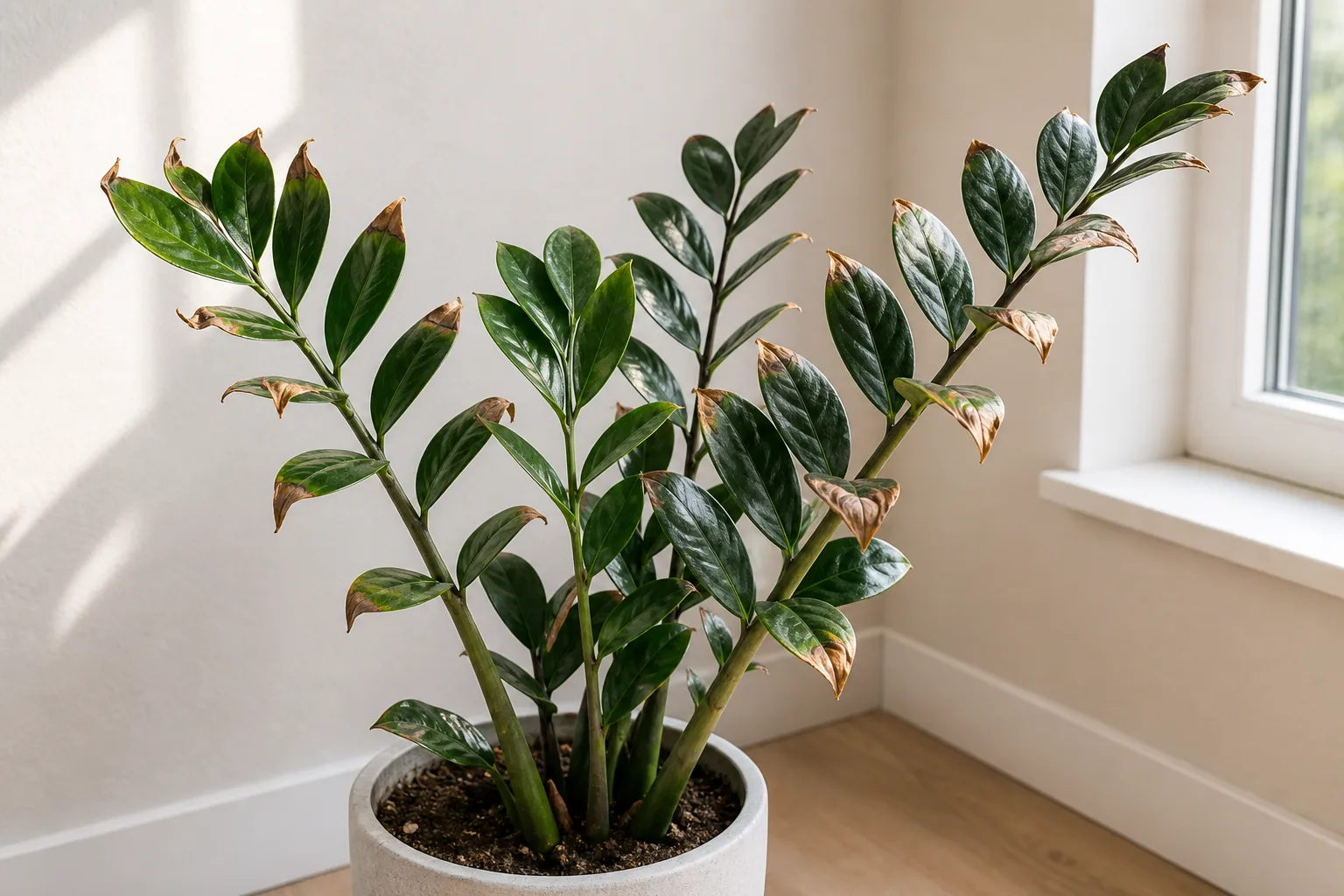
Low Humidity on ZZ Plant: Causes, Checks & Fixes
This guide covers low humidity on ZZ Plant. See also the general Low Humidity guide, watering, and light pages for this plant.
Low Humidity on ZZ Plant: Causes, Checks & Fixes
Quick answer
ZZ Plant (Zamioculcas zamiifolia) evolved in dry grassland and forest in Eastern Africa and stores water in bulbous rhizomes that survive periodic drought. Normal household humidity-often 30–50%-is not a problem. If leaflet tips turn crisp or brown, the cause is usually fluoride or salt in tap water, over-fertilizing, placement near a heating vent, or spider mites in hot dry air-not dry air by itself.
First step: switch to filtered or distilled water before changing humidity. Fill a watering can and use it for the next two to three waterings. If tips stop browning on new growth while soil dries normally, water chemistry was the issue-not humidity. Only consider a humidifier if watering, light, and pests are stable and a hygrometer reads below 25% for weeks.
What low humidity looks like on ZZ Plant
True humidity stress on ZZ is uncommon indoors. What owners often label “low humidity” usually shows up as:
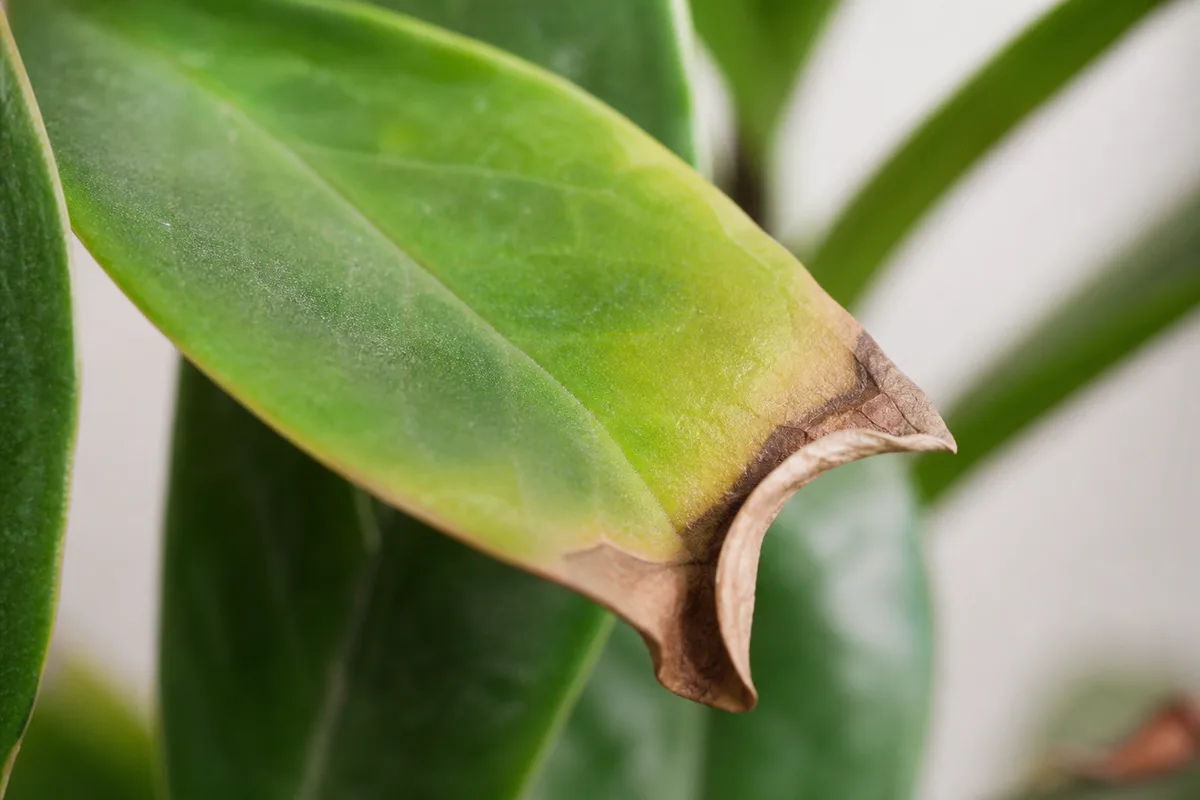
Low Humidity symptoms on ZZ Plant - compare with healthy tissue on the same plant.
- Crisp brown leaflet tips on otherwise glossy compound leaves, sometimes only on the side facing a radiator or heat vent
- Slight leaflet shrink or dullness when underwatering overlaps with dry winter heating
- Random yellowing or drop of lower leaflets after a sudden move near an AC blast or drafty window
- Fine stippling or pale dots on glossy leaflets with webbing underneath-spider mites, not dry air
Healthy ZZ leaflets feel thick, waxy, and upright along arching stems. Lower leaflets naturally yellow and drop as stems mature; that is not humidity damage. If new leaflets at stem tips stay glossy and firm while only older edges crisp, look at salt buildup, fluoride, or vent placement before blaming dry air.
Why ZZ Plant rarely suffers from low humidity
Zamioculcas zamiifolia is built for arid savanna conditions. Unlike ferns or calatheas, it is acclimated to arid conditions and thrives with regular indoor humidity levels. Its glossy leaflets store water and make it highly drought tolerant, so brief dry spells matter far less than they do for tropical foliage plants.
The plant detail target of 30–50% relative humidity matches what most heated or air-conditioned rooms already provide. ZZ does not need misting, pebble trays, or grouped-plant humidity boosts. Rhizomatous roots allow it to store water and survive the dry-down cycles it experiences in native habitats. In fact, pushing humidity higher around a ZZ that is already in slow-draining mix can keep soil wet longer-and that is far more dangerous than dry air.
High humidity combined with poor airflow is the real environmental risk. Wet soil plus stagnant moist air encourages rhizome rot, fungus gnats, and scale on arching stems. Dry air with sharp drainage is the safer side of the equation for this species. ZZ can be treated much like cactus and other succulent plants when it comes to moisture in the air.
How to confirm the real cause
Work through these checks in order before buying a humidifier:
- Pot weight and soil moisture. Lift the pot. A heavy pot with crisp tips suggests overwatering or salt stress, not dry air. A light pot with wrinkled, dull leaflets points to underwatering.
- Water source. Has the plant been on straight tap water for months? Fluoride and mineral salts accumulate at leaflet margins on many houseplants, including ZZ. Filtered, distilled, or rainwater often clears new growth within one to two months.
- Fertilizer history. White crust on the pot rim or mix surface means accumulated salts. Edges brown while stems still look firm and upright.
- Placement. Is the pot on a desk directly above a heating vent, or against a radiator? Localized hot dry air scorches leaflet edges faster than room-wide low humidity.
- Pest inspection. Hold leaflets up to light and check undersides for webbing, moving dots, or cottony clusters at stem joints. Hot, dry indoor air favors spider mite outbreaks on many houseplants, including ZZ.
- Room humidity (optional). A hygrometer reading below 25% for weeks in winter may contribute to minor tip crisping on small or recently propagated plants-but only after the above causes are ruled out.
If soil dries normally between waterings, new leaflets stay glossy, and no pests appear, your ZZ is almost certainly fine in your current humidity.
First fix for ZZ Plant
Switch to filtered or distilled water and move the pot away from heating vents before touching humidity.
Allow soils to dry between waterings-only when the mix is bone dry top to bottom, then empty the saucer. Do not mist leaflets; surface moisture does nothing useful for ZZ and can encourage fungal issues on thick foliage in stagnant air.
If you fertilize, flush the pot with plain water in spring to rinse salt buildup, then feed only once or twice at quarter strength during active growth. If you find spider mites, rinse leaflet undersides in the sink and treat the infestation-raising humidity will not eliminate mites and may worsen rot risk.
Trim fully brown leaflet tips only after the underlying cause is fixed. Partial edge damage is cosmetic; the leaflet will not regreen, but new leaflets should emerge glossy once care is steady.
Lookalike symptoms to rule out
| What you see | More likely cause than low humidity |
|---|---|
| Yellow stems with wet, heavy soil | Overwatering or rhizome rot |
| Wrinkled leaflets, light pot, dry mix | Underwatering |
| Crisp patches on one side of the plant | Heat vent or radiator scorch |
| Yellow lower leaflets dropping slowly | Normal aging, or overwatering if soil stays damp |
| Stippling + fine webbing | Spider mites in hot dry conditions |
| White crust on soil surface | Fertilizer salt buildup |
Overwatering is the primary ZZ killer-not dry air. Mushy rhizomes, collapsing stems, and sour-smelling mix point to rot, not humidity stress.
Mistakes to avoid
Do not mist ZZ leaflets daily hoping to fix crisp tips-this aroid does not absorb meaningful moisture through foliage, and wet leaves in low airflow invite problems. Do not run a humidifier next to a ZZ in standard potting mix; the extra ambient moisture slows soil dry-down and increases rot risk.
Do not repot or fertilize a stressed ZZ to “help it recover” from dry air. Fix watering and placement first. Do not ignore crisp edges when soil stays soggy for days-that pattern is rot risk, not humidity stress. Wear gloves when handling cut stems-ZZ Plant is toxic to cats and dogs if chewed.
How to prevent humidity-related stress
Place ZZ where it gets bright indirect to low light, with airflow around the pot-not jammed against a radiator, dehumidifier, or AC vent. Use gritty cactus or succulent mix so the rhizome zone dries predictably. Water based on soil dry-down, not a weekly habit, and cut back sharply in fall and winter when growth slows.
Keep ZZ out of steamy bathrooms unless the mix still dries within two weeks. If your home runs extremely dry in winter (below 25% for extended periods) and a young division shows persistent tip crisping despite perfect watering, a small humidifier in the room-not aimed at the pot-can help. Mature established ZZ plants rarely need even that.
When to worry
Dry air alone rarely kills ZZ. Worry when:
- Rhizome bases soften while soil stays wet-rhizome rot, not humidity
- Stems collapse at the soil line with sour-smelling mix
- Stippling spreads and webbing covers growing tips-untreated spider mites can weaken a plant
- New leaflets stay dull and shriveled for weeks despite corrected watering-inspect rhizomes for rot or bound, compacted mix
Mild brown tips on a few older leaflets with glossy new growth and dry soil on schedule is cosmetic. Firm rhizomes and upright arching stems mean the plant is healthy in your current air.
Conclusion
Low humidity is one of the least common problems on ZZ Plant. This drought-adapted aroid prefers dry to moderate air and thrives with regular indoor humidity levels in typical homes without special humidity gear. When leaflet edges crisp, diagnose water quality, vent placement, salts, and pests first. Keep drainage sharp, skip the misting bottle, and judge recovery by glossy new leaflets-not by whether a humidifier is running.
Related ZZ Plant guides
- ZZ Plant overview
- ZZ Plant watering
- ZZ Plant light
- Brown Tips on ZZ Plant
- Spider Mites on ZZ Plant
- Yellow Leaves on ZZ Plant
- All ZZ Plant problems
Conclusion
Use this page to confirm low humidity on ZZ Plant by pattern and pot checks-not by treating every houseplant the same. When symptoms overlap with sibling pages, follow the linked guide for the matching cause before stacking fertilizer, repotting, or pesticide.