Spider Mites on ZZ Plant: Causes, Checks & Fixes
Quick answer
Spider mites on ZZ Plant cause pale stippling and fine webbing on glossy leaflets in hot, dry air-not yellow mushy stems from overwatering. First step: isolate the plant and rinse every leaflet underside thoroughly before applying insecticidal soap.
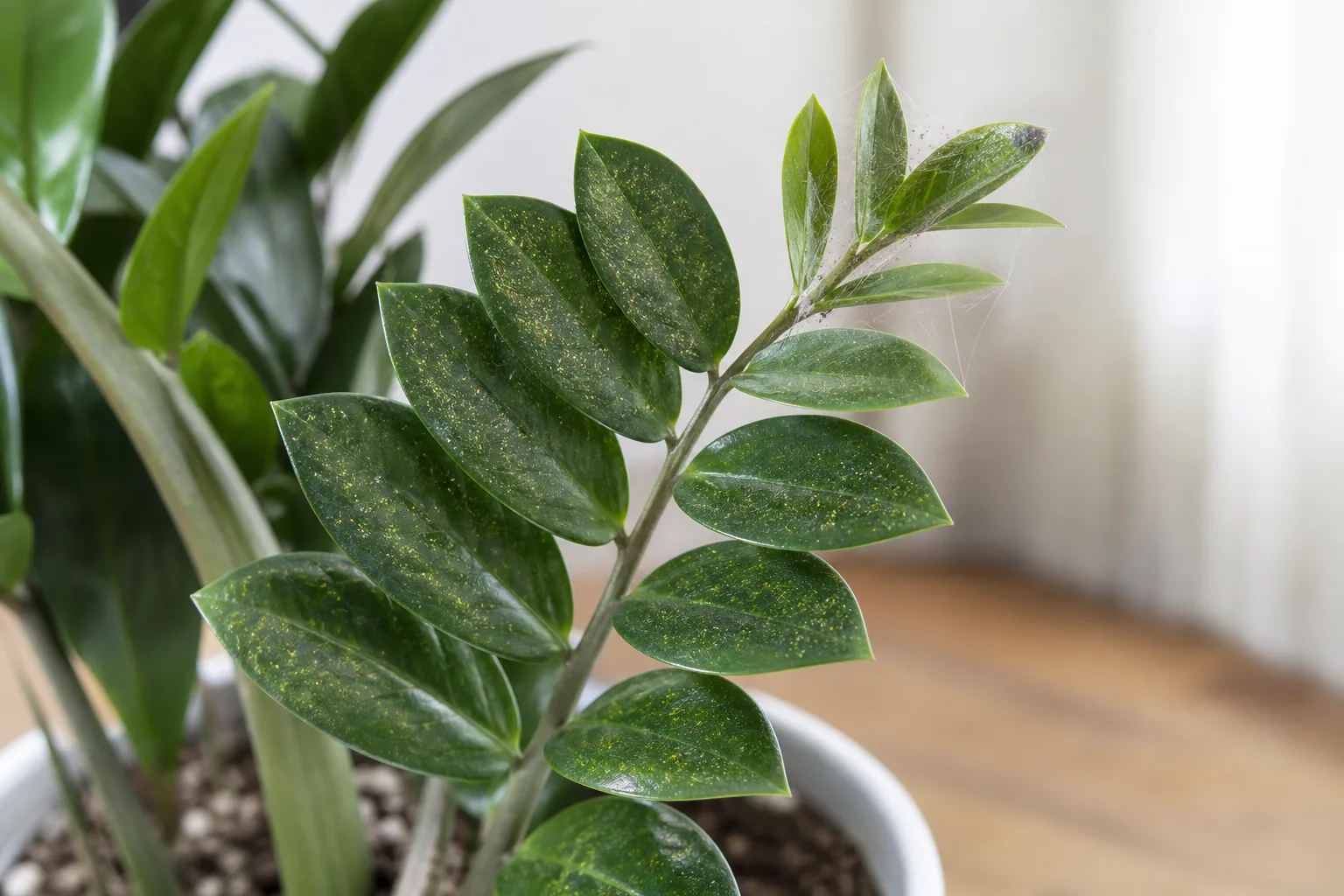
Spider Mites on ZZ Plant: Causes, Checks & Fixes
This guide covers spider mites on ZZ Plant. See also the general Spider Mites guide, watering, and light pages for this plant.
Spider Mites on ZZ Plant: Causes, Checks & Fixes
Quick answer
Spider mites are microscopic sap-feeding arachnids that thrive in warm, dry indoor air. On ZZ Plant, they pierce the thick glossy leaflets and leave pale stippling, dull bronzing, and fine silk webbing at petiole bases-not the yellow mushy stems that signal overwatering and rhizome rot.
First step: isolate the plant and rinse every leaflet underside thoroughly in lukewarm water. Hold arching petioles and spray from below so undersides get direct contact. Only after you confirm live mites with a tap test or magnifier should you follow with insecticidal soap on labeled intervals.
UF/IFAS notes that no diseases or pests are an issue for ZZ under good conditions-mite outbreaks usually arrive on new plants or stressed specimens in dry, dusty spots.
Why ZZ Plant gets spider mites
ZZ Plant (Zamioculcas zamiifolia) stores water in underground rhizomes and tolerates very drought-tolerant conditions with low humidity. That resilience does not protect leaflets from spider mites-it may hide early damage because the plant keeps upright stems while individual leaflets stipple.
Mites favor the same dry heated environments where ZZ plants often live: office desks under HVAC vents, sunny windowsills in winter, and crowded plant shelves with poor airflow. Spider mites thrive in dry, warm conditions and reproduce quickly when humidity drops and dust coats leaflet surfaces.
The ZZ leaf structure makes inspection easy to skip. Thick, waxy, elliptical leaflets on upright petioles arising directly from the rhizome look healthy from across a room even when undersides carry colonies. Arching stems hide the backs of upper leaflets unless you lift them deliberately.
Because ZZ grows slowly, mite damage accumulates quietly. A plant may lose gloss and show bronze speckling for weeks before webbing appears-by then populations are often established across multiple leaflets.
Introduction from other plants is the other common path. Mites walk between touching leaves, drift on silk strands, and hitch rides on hands, tools, or clothing. Quarantine newly purchased plants before mixing them with your collection.
What spider mites look like on ZZ Plant
Early mite feeding:
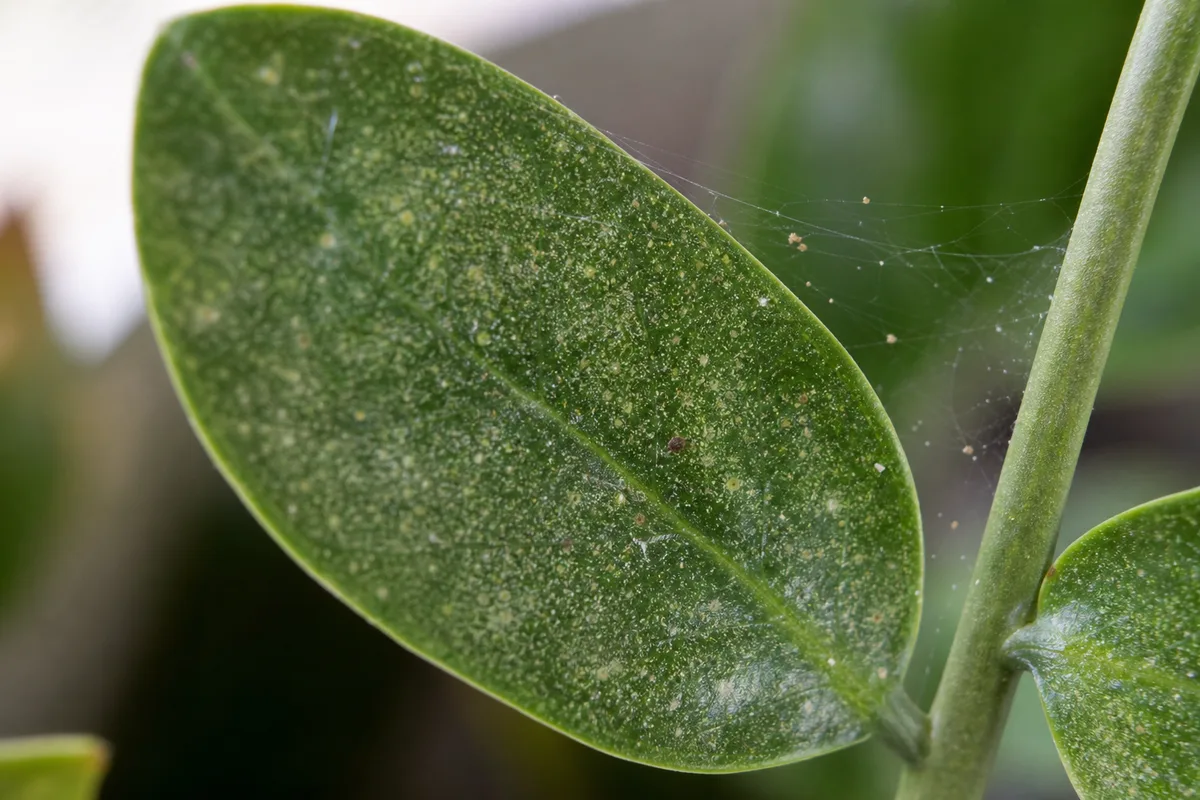
Spider Mites symptoms on ZZ Plant - compare with healthy tissue on the same plant.
- Fine pale yellow or white dots scattered across glossy green leaflets
- Leaflets lose their polished shine and look dusty or dull
- No webbing yet; damage may appear on one side of the plant first
Established infestation:
- Bronze or bleached stippling across many leaflets
- Fine silk webbing at petiole bases where leaflets meet the stem
- Tiny moving specks visible with a hand lens on leaflet undersides
- Tap test: hold white paper under a leaflet and tap-moving dots confirm mites
What ZZ mite damage is not:
- Whole stems turning yellow with soft bases while soil stays wet-that pattern fits overwatering and root rot, not mites
- Brown leaflet tips only, with firm rhizomes and no stippling-often fluoride, salts, or low humidity
- White cottony clusters at stem bases-mealybugs, not mites
Damaged leaflets stay stippled permanently. New leaflets emerging from rhizomes after treatment should look clean and glossy-that is your recovery signal.
How to confirm the cause
Work through these checks in order:
- Tap test - Hold white paper under a suspect leaflet and tap sharply. Watch for tiny moving creatures falling onto the paper.
- Underside inspection - Lift arching petioles and examine leaflet backs with a magnifier. Look for mites, eggs, cast skins, and early webbing.
- Stippling pattern - Mites create uniform speckling across leaflet surfaces. Overwatering yellows entire stems from the base upward without fine dots.
- Rhizome firmness - Press through the pot or unpot if stems look yellow. Firm white rhizomes support a pest diagnosis; black mushy tissue means rot-treat watering, not mites.
- Environment check - Note proximity to heating vents, radiators, or south-facing glass in winter. Dry heat strongly correlates with mite outbreaks on indoor plants.
- Neighbor plants - Inspect plants on the same shelf or windowsill. Mites rarely stay on one pot in a shared dry zone.
If stippling appears but the tap test shows nothing and no webbing develops after a week of monitoring, reconsider fluoride burn or mechanical dust before committing to repeated sprays.
First fix for ZZ Plant
Isolate the plant and rinse every leaflet underside thoroughly with lukewarm water.
Move the ZZ away from other plants immediately. Mites spread by contact and drifting silk. In a sink or shower, support the pot so soil does not waterlog-wrap the pot in plastic if needed to keep mix from flooding. Spray forcefully from below, targeting the backs of all leaflets along each arching petiole.
This single step physically removes mites, webbing, and debris before any chemical treatment. Let leaflets air-dry the same day. Do not repot, fertilize, or prune heavily on day one-those add stress without addressing the pest.
Do not soak ZZ rhizomes trying to “wash mites from soil.” Spider mites primarily inhabit foliage, especially undersides-not potting media.
Step-by-step recovery
After the initial rinse:
- Repeat water rinses every five to seven days for at least three cycles. Mite eggs survive single washes; repeat applications are usually necessary.
- Apply insecticidal soap if live mites persist after two thorough rinses. Spray leaflet undersides until runoff-soaps only kill on contact. Use products labeled for spider mites; do not mix homemade soap, which can burn waxy ZZ leaflets.
- Treat neighboring plants on the same shelf or in the same room at the same time. Mites reinfest from asymptomatic neighbors quickly in dry indoor collections.
- Improve local humidity without overwatering - rest the pot on a pebble tray or move the plant away from heating vents. ZZ does not need frequent watering to raise humidity; avoid overwatering while chasing humidity.
- Remove severely bronzed leaflets only if they are mostly dead tissue-trim with clean shears to reduce pest load and improve spray coverage. Leave green stippled leaflets; they still photosynthesize.
- Wash hands and tools after handling infested plants to avoid spreading mites on clothing or watering cans.
Horticultural oil can work on mites but test one leaflet first-oils on stressed or waterlogged plants can cause damage. Never spray in direct hot sun through a window.
Recovery timeline
Water rinses show results within a few days when colonies are moderate-you should see fewer live mites on tap tests. A full soap course with label-interval repeats typically takes two to three weeks because mite generations overlap.
Stippled leaflets will not regain their original gloss. Watch for new leaflets emerging clean from rhizomes-that may take two to four weeks on ZZ because growth is inherently slow. If new growth stays stippled after three treatment cycles, reinfestation or insufficient underside coverage is likely-escalate inspection of nearby plants before adding more sprays.
Lookalike symptoms to rule out
Overwatering and rhizome rot yellows whole stems, causes soft bases, and may wilt arching petioles despite wet soil. Rhizomes feel mushy. No fine stippling or silk webbing.
Mealybugs form white cottony masses at petiole bases and leaf axils, often with sticky honeydew. Mites cause stippling and webbing, not waxy clusters.
Scale insects attach as immobile brown bumps along stems. Mites move and stipple leaflet tissue.
Fluoride or salt burn browns leaflet tips and margins uniformly without speckled dots or webbing. Common with tap water and over-fertilizing on ZZ.
Normal ZZ stem color - mature stems often show dark spots that are not pest damage. Check whether discoloration is on the stem surface only, without leaflet stippling nearby.
Mistakes to avoid
Do not assume yellow ZZ tissue means mites-check rhizome firmness and soil moisture first. Overwatering kills more ZZ plants than pests do.
Do not spray only the tops of glossy leaflets. Mites congregate on undersides; target the underside of leaves or treatment fails.
Do not stop after one rinse or one soap application. Eggs hatch in cycles; single treatments leave survivors.
Do not overwater trying to increase humidity. Wet rhizomes weaken ZZ and invite rot while doing little to eliminate mites on leaflets.
Do not repot during an active mite fight unless soil is genuinely failing. ZZ Plant repotting guide stress on a slow-growing plant delays recovery.
Wear gloves when handling heavily infested plants or trimming many leaflets-ZZ sap contains calcium oxalate crystals that irritate skin.
ZZ Plant care cross-check
While treating mites, keep baseline care stable:
- Water only when soil is completely dry-ZZ rhizomes store water and sitting in water causes root rot.
- Provide bright indirect or office fluorescent light. Very low light slows recovery because new leaflets emerge slowly.
- Hold fertilizer until new growth looks clean. Feeding stressed plants does not speed mite recovery.
- Confirm drainage holes are open and the pot is not oversized-chronic wet mix weakens plants against pests.
How to prevent spider mites on ZZ Plant
Quarantine new plants for at least three to four weeks before placing them beside your ZZ. Inspect leaflet undersides weekly during quarantine.
Rinse dusty leaflets occasionally in dry seasons-dusty foliage in hot rooms favors mite buildup. A quick shower every few weeks on a healthy ZZ also removes early colonists.
Keep plants away from heating vents and radiators when possible. If the only good light is near a vent, use a pebble tray or small humidifier nearby without soaking the pot.
Inspect the full collection monthly in winter when indoor air is driest. Lift ZZ petioles and check backs of upper leaflets-the spots most often skipped.
Maintain spacing between pots so leaflets do not touch. Mites walk between plants on contact.
When to worry
Treat as urgent when webbing spans multiple leaflets, stippling spreads to new growth within a week, or several plants in the same room show matching damage. Mites multiply faster than ZZ replaces damaged leaflets.
Consider discarding a severely defoliated ZZ in a shared office or plant room if three full treatment cycles fail-keeping a reservoir plant can reinfect the whole collection. Heavily infested plants may pose a risk to other plants in the household.
A few stippled leaflets on an otherwise firm, dry-potted ZZ near a vent is manageable with isolation and repeated rinsing-not an emergency if you act within days.
Conclusion
Spider mites on ZZ Plant show up as stippled, dull leaflets and fine webbing in dry heated rooms-not as mushy rhizomes from overwatering. Isolate first, rinse every leaflet underside thoroughly, confirm with a tap test, then repeat rinses or insecticidal soap on labeled intervals until new leaflets emerge clean. Because ZZ grows slowly, patience matters: old stippling stays, but firm rhizomes and glossy new growth mean you have the infestation under control.
When to use this page vs other ZZ Plant guides
- ZZ Plant watering guide - Use for routine moisture checks before assuming spider mites is the main issue.
- ZZ Plant problems hub - Browse all 27 common issues on this species.
- Low Humidity on ZZ Plant - Different entry point when symptoms overlap with spider mites.
- Slow Growth on ZZ Plant - Different entry point when symptoms overlap with spider mites.