ZZ Plant Fertilizer: When, How, and Mistakes to Avoid
ZZ Plant Fertilizer: When, How, and Mistakes to Avoid
ZZ Plant Fertilizer: When, How, and Mistakes to Avoid
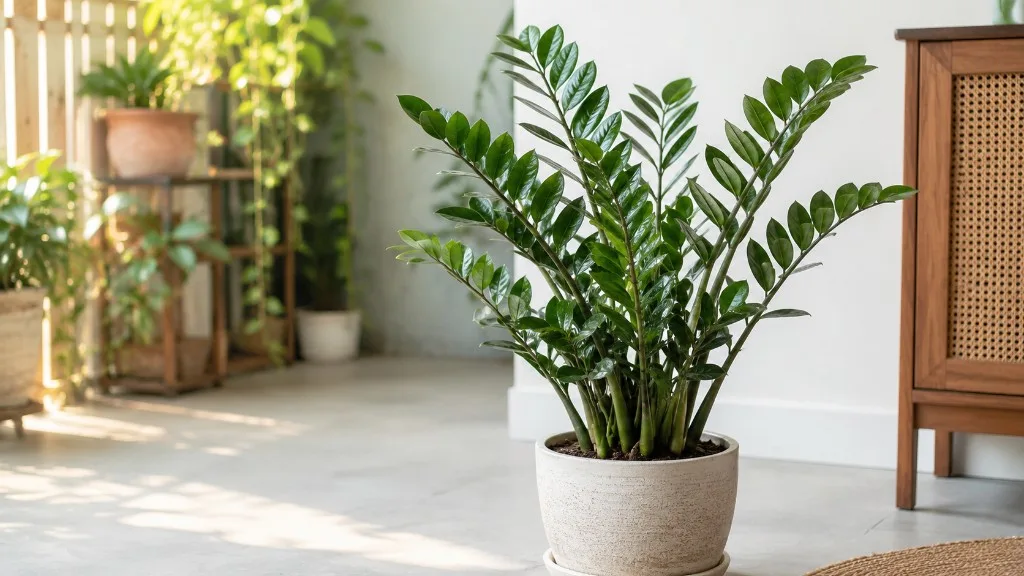
ZZ plant fertilizer is one of the easiest houseplant nutrition decisions - and one of the easiest to get wrong. Zamioculcas zamiifolia, the glossy, upright plant most people call ZZ plant, is built for lean conditions. Thick rhizomes under the soil store water and energy. Growth is deliberately slow. That biology means the plant tolerates skipped feeds far better than it tolerates heavy ones. Feed with a diluted balanced liquid fertilizer during spring and summer only, on a every 2–3 month rhythm, and skip entirely from late fall through winter. Apply to moist soil, never dry roots. Watch for over-fertilizing signs - brown leaf tips, white crust on the soil surface, wilted stems despite damp mix, and sudden leaf drop - before they turn into lasting root damage.
Clemson University’s Home & Garden Information Center states that ZZ plants are slow-growing and should be fertilized only once or twice during the growing season with a balanced fertilizer (Clemson HGIC - ZZ Plant). That conservative guidance matches how the plant behaves in homes: a healthy ZZ in a well-draining pot can look excellent for years with minimal feeding. The practical goal for most growers is not maximum growth - it is steady, glossy foliage without salt stress. This guide covers when to feed, how much to dilute, which formulas work, how to read deficiency versus burn, and the mistakes that cause more harm than skipping a season ever would.
Why Fertilizer Matters for ZZ Plant
ZZ plant uses nutrients to build new leaflets along upright stems, extend rhizomes, and maintain the waxy green (or near-black, in cultivars like Raven) foliage that makes the species popular. Potting mix starts with a modest nutrient bank, but watering leaches some minerals over time, and root activity gradually draws down what remains. Fertilizer replaces what the plant uses - but only up to the rate its slow metabolism can absorb without salt damage.
Missouri Botanical Garden describes Zamioculcas zamiifolia as a stemless evergreen perennial that spreads slowly by rhizomes and handles low light and dry periods well (Missouri Botanical Garden - Zamioculcas zamiifolia). That slow spread is the clue: ZZ does not behave like a fast annual that empties a small pot of nitrogen in six weeks. It behaves like a patient accumulator - building tissue when conditions are warm and bright, then coasting when they are not. Feeding should match that patience.
Think of fertilizer as maintenance for an already healthy, actively growing plant - not a rescue tool for a ZZ that is yellowing because it sits in soggy soil, a pot without drainage, or a room with almost no light. Fix water and light first. A stressed root zone cannot safely process nutrients, and adding fertilizer to damaged roots is one of the fastest paths to tip burn and rhizome rot. When the plant is stable - firm stems, healthy leaf color for the cultivar, soil drying on a predictable rhythm - light feeding during the warm months supports modest new growth without pushing soft, salt-vulnerable tissue.
Rhizomes and Why ZZ Plants Are Light Feeders
The bulbous rhizomes at the base of a ZZ plant are not decorative; they are the plant’s savings account. Native to arid open woodlands of Eastern Africa, from Kenya to South Africa, ZZ evolved to survive irregular rainfall by storing water and carbohydrates underground (Clemson HGIC - ZZ Plant). That storage system also buffers short nutrient gaps. A mature ZZ can push out a new stem with a flush of leaflets using internal reserves, which is why many office plants look fine for years without anyone feeding them at all.
Light feeding respects that design. Heavy feeding treats ZZ like a hungry tomato in ZZ Plant light guide - and the roots pay the price. Soluble fertilizer salts raise the concentration of the soil solution. When salts exceed what roots can manage, water moves the wrong direction through root cells - osmotic stress - and you see the classic burn pattern at leaf margins even when the pot is moist. ZZ’s drought tolerance does not mean salt tolerance. It means the plant can wait for plain water; it does not mean it can process double-strength 20-20-20 every two weeks.
When to Fertilize ZZ Plant: Active Growth vs Rest
Timing follows the plant’s metabolism more than a calendar on the wall. Feed when the ZZ is actively producing new stems or leaflets, and stop when growth slows sharply. Indoors, that rhythm usually tracks longer days and warmer rooms from mid-spring through late summer. A ZZ in a heated apartment may keep a few new shoots going longer than one in a cool spare room, but most plants still wind down in fall regardless of how green the old foliage looks.
The mistake is feeding a plant that looks alive but is not building new tissue. Winter leaves can stay glossy for months while roots barely work. Unused fertilizer then sits in the mix as soluble salts. University of Maryland Extension identifies excessive or frequent fertilizer use as a primary cause of high soluble salts in indoor plants, with symptoms including brown leaf tips and marginal necrosis (University of Maryland Extension - Fertilizer Toxicity). ZZ is not exempt because it is “easy.” Easy plants often receive too much care in the wrong season.
Spring and Summer Feeding Window
Begin feeding when you see credible new growth - a fresh stem emerging from the rhizome, a new row of leaflets unfurling at the tip of an existing stem, or noticeably faster drying of the pot compared to winter weeks. In temperate climates, that window typically opens in mid-spring and runs through late summer, roughly April through August for many homes. Warmer regions or bright, south-facing placements may justify starting in March; cooler rooms may not warrant the first feed until May.
During this active window, plan on two to three applications total for the entire season if you use half-strength balanced liquid - roughly every 2–3 months - not a dozen feeds squeezed into twelve weeks. That aligns with Clemson’s once-or-twice guidance while giving growers in brighter, faster-drying setups a third light feed in late summer if the plant is clearly still expanding. Each application should be conservative. You are topping up a checking account, not flooding it.
| Month (temperate indoor climate) | Growth phase | Feeding guidance |
|---|---|---|
| March | Early wake-up in warm homes | Hold unless active new stems visible |
| April–May | Growth resumes | First half-strength balanced liquid feed |
| June–July | Peak (still slow) growth | Second feed ~2–3 months after first |
| August | Late summer expansion | Optional third feed if new stems still emerging |
| September | Slowing | Taper - no new feeds after early September |
| October–February | Rest phase | No fertilizer |
The table is a framework, not a law. A ZZ under strong grow lights in a warm room may use nutrients slightly faster than one in a dim corner. Watch the plant: if it is producing firm new stems on a steady but slow cadence, the timing is right. If it has not pushed new growth in months, solve light and watering before adding food.
Fall Taper and Winter Pause
Do not fertilize ZZ plant in winter. Pause entirely from late fall through early spring - typically October or November through February or March, depending on your home. Metabolic demand drops as daylight shortens and room temperatures cool, even when foliage stays upright and glossy. Winter feeding is one of the most common ways indoor plants accumulate salts, because roots absorb nutrients slowly while fertilizer ions remain in the mix.
Taper in early fall by simply stopping. Unlike some fast growers that benefit from one last weak feed, ZZ rarely needs a “goodbye” dose. If you fed in August and the plant is still expanding in September, you may give one final half-strength application in early September - then nothing until spring growth returns. If you are unsure, skip. A month without food in fall is always safer than an extra dose the roots cannot use.
Exception: if you grow under strong supplemental grow lights and the plant keeps producing new stems all winter, you can feed at most once during the cold months - still at half strength - and only if the last feed was at least eight weeks prior. Even then, most growers should still pause. ZZ’s reputation for indestructibility partly comes from owners who forget to feed entirely.
Best Fertilizer Type for ZZ Plant
The best fertilizer for ZZ plant in most homes is a complete, water-soluble, balanced houseplant formula with nitrogen, phosphorus, potassium, and listed micronutrients. You want a steady, moderate supply of all three macronutrients because ZZ builds stems, roots, and leaves together - not flowers or fruit. Avoid high-nitrogen “grow” boosters and high-phosphorus “bloom” formulas. ZZ rarely flowers indoors, and excess nitrogen pushes soft new tissue that is more vulnerable to physical damage and salt stress.
Liquid fertilizer wins for control. You mix a known volume, dilute to half label strength, and apply evenly to moist soil. That precision matters in containers where a localized overdose can burn rhizome tissue before you notice leaf symptoms. Granular products can work, but they release on their own schedule - harder to align with a plant that needs only two or three feeds per year.
Balanced Liquid Formulas and NPK Ratios
A 10-10-10 or 20-20-20 water-soluble fertilizer diluted to half the label strength is the standard recommendation across extension and botanical sources for ZZ plant. Equal NPK ratios keep the decision simple: you are supporting overall vigor, not steering the plant toward flowering or fruiting. Some growers use a dedicated cactus or succulent liquid feed at half strength; those formulas are often already mild, which suits ZZ’s light-feeder status, though a balanced houseplant formula is equally appropriate if diluted.
Read the label for micronutrients - iron, manganese, magnesium, and others. Pale new leaflets on an otherwise well-watered ZZ sometimes trace to trace-element gaps rather than a lack of nitrogen, especially in peat-heavy mixes that age past two years. A complete soluble formula covers that base without needing separate supplements.
What to pour: mix fertilizer with water in a watering can, stir, and apply until a modest amount drains from the bottom. Discard saucer runoff within thirty minutes so the plant is not reabsorbing concentrated salts. Never apply full label strength to a container ZZ unless you have a specific reason and a habit of flushing salts monthly - most home growers do not, and the plant does not need it.
Slow-Release, Organic, and What to Skip
Slow-release granules (often labeled 14-14-14 or similar) can work if you apply once in early spring and skip liquid feeds for the rest of the season. The risk is stacking: slow-release pellets plus liquid feeds in the same pot double the salt load unpredictably. If you top-dress with slow-release at ZZ Plant repotting guide, treat that as your spring feed and do not add liquid until late summer at earliest - if at all.
Organic liquids such as fish emulsion or compost tea can feed ZZ at quarter to half strength if you already use them. They smell, they can attract fungus gnats if overapplied, and they are harder to dose precisely - fine for experienced growers, unnecessary for beginners who want a simple twice-a-year routine.
Skip foliar feeding for routine care. ZZ leaflets are thick and waxy; they are not designed to absorb nutrients through the surface the way some soft-leaved plants might. Skip fertilizer-pesticide combination products unless you have a diagnosed pest issue and follow that product’s safety label separately. Skip undiluted crystals or spikes jammed into dry soil - both concentrate salts near rhizomes.
Pet note: The ASPCA lists ZZ plant (Zamioculcas zamiifolia) as toxic to cats and dogs, with ingestion causing oral irritation, vomiting, and diarrhea due to calcium oxalate crystals (ASPCA - ZZ Plant). Concentrated fertilizer solution and crusty, salty soil are not safe for pets to ingest either. Keep plants, runoff, and stored bottles out of reach.
How Much Fertilizer to Use on ZZ Plant
If you remember one number, make it half strength - never full label strength on a container-grown ZZ for routine feeding.
Fertilizer labels assume a range of species, pot sizes, and outdoor growing conditions. ZZ sits firmly in the light feeder category - far closer to succulents than to heavy-feeding vegetables. Cutting liquid products to one-half the label’s recommended concentration for houseplants is the safest default. Some cautious growers use quarter strength for a once-per-season top-up on a plant in low light with a history of tip burn; that is reasonable when the alternative is skipping feed entirely out of fear.
Example math: if the bottle says 1 teaspoon per gallon of water for indoor plants, use ½ teaspoon per gallon for ZZ. If it says 1 tablespoon per gallon for outdoor annuals, use 1½ teaspoons per gallon (half strength). Measure with a spoon or syringe. Eyeballing concentrates errors because different brands ship different scoops, and ZZ does not give you rapid visual feedback - burn shows up weeks after the salt load crosses a threshold.
For a 6- to 10-inch pot, apply enough solution to moisten the full root zone - typically until a small amount drains - not a flood that leaves the saucer full for days. ZZ prefers to dry between waterings; it does not prefer to sit in fertilizer-laden runoff. If you use hard tap water high in minerals, consider that you are already adding background salts. In that case, stay at half strength or weaker and flush with plain water between feeds.
How Often to Fertilize ZZ Plant
Frequency should follow growth rate, light level, and salt management - not guilt about whether you are “doing enough.”
For most indoor ZZ plants during spring and summer:
- Every 2 to 3 months with half-strength balanced liquid - typically two feeds per season, optional third in late summer if growth is clearly active
- Once in early spring if you also applied slow-release granules at repotting - then no liquid until at least midsummer, if at all
- No fertilizer from late fall through winter
- No fertilizer for 4–8 weeks after repotting, root division, or any stress event (leaf drop, relocation shock, pest treatment)
That 2–3 month spacing beats monthly feeding for most owners because ZZ simply does not metabolize nutrients that fast. Monthly half-strength feeds on a slow grower in a small pot stack salts across a season even when each individual dose looks “mild.” Clemson HGIC’s once-or-twice-per-growing-season guidance and a 2–3 month liquid interval describe the same underlying principle: fewer, conservative applications.
| Situation | Suggested frequency | Strength |
|---|---|---|
| Active growth, bright indirect light | Every 2–3 months (2–3 feeds Mar–Aug) | Half label strength |
| Active growth, low light / office | Every 3 months or twice per season | Half label strength |
| Slow-release applied at spring repot | Once at repot; skip liquid or one summer top-up | Per product label, lean side |
| After repotting or division | Wait 6–8 weeks minimum | None until new growth stable |
| Fall and winter | None | - |
| Recovering from over-fertilization | Pause 4–8 weeks after flushing | None |
If you forget a scheduled feed, do not double the next dose. ZZ grows fine with zero fertilizer for years in many homes. One missed summer application is invisible; one doubled application can leave salt crust within weeks.
Step-by-Step: How to Feed ZZ Plant Safely
Feeding ZZ is less about technique flair and more about sequence: right season, right soil moisture, right dilution, right cleanup.
Step 1 - Confirm the season. Only feed between mid-spring and late summer while new stems or leaflets are appearing.
Step 2 - Check plant health. Stems should be firm, not mushy at the base. If the plant recently dropped multiple leaflets, was repotted within two months, or wilted despite wet soil, postpone feeding and diagnose water and roots first.
Step 3 - Verify soil moisture. Water with plain water a day before feeding if the mix is fully dry, or feed after a regular plain-water session when the mix is evenly moist. Never pour fertilizer onto dust-dry peat.
Step 4 - Mix half-strength solution. Measure fertilizer per label, then cut that dose in half. Stir in a watering can with a narrow spout.
Step 5 - Apply evenly and discard runoff. Pour around the rhizome zone until a little water exits the drainage hole, then empty the saucer within thirty minutes.
Step 6 - Log the date. A phone note prevents accidental double feeding a few weeks later.
Pre-Feed Checks and the Moist-Soil Rule
Run this 30-second checklist before every feed:
Season check: Is it between April and August (or your local warm-growth window)? If not, skip.
Moisture check: Is the mix moist at root depth - not desert-dry, not waterlogged? If dry, plain-water first and feed tomorrow.
Salt check: Is there white crust on the soil surface or rim of the pot? If yes, skip feed and flush with plain water until runoff runs clear, then wait four weeks.
Growth check: Has the plant produced a new stem or leaflet since the last feed? If growth is stalled for months, fix light before adding nutrients.
Repot check: Was the plant repotted or divided in the last two months? If yes, wait. Fresh mix already contains nutrients; damaged root cuts need time to callus.
The moist-soil rule is non-negotiable for ZZ. Rhizomes tolerate drought, but they do not tolerate concentrated fertilizer salts arriving in a dry, thirsty root zone. Plain water first, fertilizer second - always.
Signs Your ZZ Plant Needs More Nutrition
True nutrient deficiency on ZZ is less common than over-fertilization in home settings, especially in pots repotted within the last year. Still, a plant in depleted mix for three or more years, in bright light, pushing steady new stems, may show hunger signals.
Watch for pale new leaflets that stay light green while older leaflets remain deep green - particularly if light and watering are already correct. Smaller than usual new leaflets on a mature stem can suggest low nitrogen, though genetics and light also control size. Very slow stem production across an entire summer, after ruling out root-bound conditions and underwatering on ZZ Plant, may point to a tired mix.
Before feeding for deficiency, confirm the pot drains freely, the plant receives moderate indirect light, and you have not been feeding monthly at full strength - which mimics deficiency later via damaged roots. If deficiency seems plausible and no salt crust is present, one half-strength balanced feed in spring is a reasonable test. Reevaluate in six to eight weeks based on new leaflet color - ZZ responds slowly by design.
Signs of Over-Fertilizing and Salt Buildup
Over-fertilizing signs on ZZ plant are often subtle at first, then suddenly obvious. Because the species tolerates neglect, owners sometimes blame “old age” for damage that is chemical.
Brown or tan leaf tips and margins on otherwise firm leaflets are the classic early signal. Tips do not recover once necrotic, but new growth can emerge clean if salts are flushed.
White or yellowish crust on the soil surface, pot rim, or saucer indicates soluble salt accumulation - fertilizer ions left behind as water evaporates.
Sudden leaflet drop - multiple leaflets yellowing and falling within days - on a plant that was recently fed, especially onto dry soil or at high concentration.
Wilting or limp stems despite moist soil suggests root dysfunction; salt stress and root rot on ZZ Plant both qualify. Check rhizome firmness: mushy means rot (often water + salts); firm with brown tips means likely burn.
Stunted new stems that emerge small and abort, or new growth that opens already browned at the edges.
Sour or musty smell from the pot combined with crust - microbial imbalance tied to chronic overwatering on ZZ Plant and salt load.
University of Maryland Extension notes that high soluble salts damage roots, reduce water uptake, and produce marginal leaf necrosis even when soil moisture appears adequate (University of Maryland Extension - Fertilizer Toxicity). ZZ’s thick leaves hide root problems longer than thin-leaved plants do - which is why checking the soil surface for crust before every feed matters.
If you see multiple signs right after feeding, assume fertilizer burn until proven otherwise. Flush, pause, and observe the next stem the plant produces.
How to Flush ZZ Plant After Over-Feeding
Flushing leaches excess soluble salts out of the root zone. It is the first and most important recovery step - not more fertilizer, not repotting immediately unless rot is present.
Step 1 - Stop all feeding for at least 4 to 8 weeks, longer if symptoms were severe.
Step 2 - Run plain, room-temperature water slowly through the mix in a sink or tub for several minutes - until at least 2 to 3 times the pot volume has passed through and drains clear.
Step 3 - Let the pot drain completely, then resume your normal plain-water rhythm once the top two inches of mix approach dryness.
Step 4 - Trim only fully dead leaflets if unsightly. Partially browned tips will not green up but do not harm the plant.
Step 5 - Resume feeding only after new growth emerges clean - typically next spring, not the week after flushing.
If stems are mushy at the soil line, inspect rhizomes and repot into fresh, well-draining mix, removing rotted tissue. That is root rot territory, often worsened by overwatering after salt damage.
Seasonal and Situational Adjustments
Season drives the base schedule; situation fine-tunes it within spring and summer.
In bright indirect light, ZZ uses water and nutrients slightly faster - the 2-month end of the feeding interval is reasonable if new stems keep appearing. In low light or fluorescent office conditions, stretch toward 3 months or limit yourself to two feeds total (late spring and midsummer). The plant grows slower; so should your bottle.
Heat waves that dry pots quickly do not justify extra fertilizer. They justify extra plain water. Feeding a heat-stressed plant adds salt when roots are already working hard to move water.
Variegated and colored cultivars (Chameleon, Raven, Zenzi) follow the same conservative rules. Raven’s dark mature leaves can mask pale new growth - inspect new stems closely rather than guessing from older foliage.
After repotting or rhizome division, wait 6 to 8 weeks before any fertilizer. Fresh mix contains starter nutrients; root cuts need time to heal. After shipping, pest treatment, or a major move, wait until the plant holds leaflets and resumes a normal drying rhythm - often three to six weeks. Root-bound plants need repotting, not extra food. New nursery plants often arrive in enriched grower mix - confirm before duplicating greenhouse feeding.
Fertilizer and Other ZZ Plant Care
Fertilizer only works when light, water, and soil are already in range. ZZ in bright indirect light uses a modest amount of nutrients efficiently. The same plant in a dim hall with soggy mix will accumulate salts because roots idle while fertilizer ions remain.
ZZ Plant watering guide comes first. ZZ prefers the mix to dry thoroughly between drinks. Overwatering plus feeding is a reliable path to rhizome rot masked as “fertilizer problems.” If you fertilize on the correct schedule but water weekly regardless of dryness, fix water before tweaking NPK.
Soil structure matters. Clemson HGIC recommends a coarse, well-draining mix - roughly half peat or coir-based potting soil, with perlite and sand for porosity (Clemson HGIC - ZZ Plant). Dense, aged peat compacts, holds moisture too long, and concentrates salts at the surface. Repotting into fresh, airy mix every two to three years resets the root environment more effectively than doubling fertilizer.
Light modulates appetite. A ZZ tolerates low light but grows minimally there - nutrients go unused. Reserve feeding for plants that are visibly building stems, not merely surviving.
Temperature below about 60°F (15°C) slows metabolism. Do not feed cold plants in drafty winter windows even if the calendar says March; wait until nights warm and new growth is obvious.
Common ZZ Plant Fertilizer Mistakes
Feeding on a calendar instead of on growth. Feed when stems move, not when the date arrives.
Monthly feeding because “houseplants need monthly food.” Two to three conservative feeds per year beats twelve “mild” ones on ZZ.
Full label strength or winter feeding to “keep it green.” Existing leaflets stay glossy without cold-season nitrogen.
Pouring fertilizer onto dry soil or ignoring white crust and feeding again on schedule. Crust is a stop sign - flush first.
Using slow-release and liquid without a plan, or chasing yellow leaves with fertilizer when overwatering is the real problem.
When in doubt, skip the feed. ZZ earned its reputation by surviving owners who forget the bottle exists.
Conclusion
ZZ plant fertilizer is a low-frequency, low-concentration job. Use a balanced liquid formula - 10-10-10 or 20-20-20 at half strength - during spring and summer only, about every 2–3 months for most homes, and pause completely in fall and winter. Apply to moist soil, discard runoff, and watch for over-fertilizing signs: brown leaflet tips, white crust on the mix, sudden leaf drop, and wilt despite damp soil. Flush with plain water and stop feeding if those appear.
Clemson HGIC’s conservative guidance - once or twice per growing season - and a 2–3 month liquid rhythm describe the same truth: ZZ is a light feeder built on rhizome reserves, not a hungry annual. Match feeding to visible new growth, keep water and drainage sound, and treat fertilizer as occasional maintenance rather than a growth hack. Do that, and the plant will keep doing what it does best - looking composed while you forget it exists for weeks at a time.
When to use this page vs other ZZ Plant guides
- ZZ Plant overview - Start here for whole-plant context before deep-diving this topic.
- ZZ Plant problems hub - Jump to symptom-specific fix guides when this care topic does not resolve the issue.
- Overfertilization on ZZ Plant - Escalate here when fertilizer adjustments are not enough.
- Salt Build-up on ZZ Plant - Escalate here when fertilizer adjustments are not enough.
- Fertilizer Burn on ZZ Plant - Escalate here when fertilizer adjustments are not enough.
Related ZZ Plant guides
- ZZ Plant overview
- ZZ Plant watering
- ZZ Plant light
- ZZ Plant soil
- ZZ Plant propagation
- ZZ Plant repotting
- Overfertilization on ZZ Plant
- Salt Build-up on ZZ Plant
- Fertilizer Burn on ZZ Plant
- ZZ Plant problems
Related tool
Try the Fertilizer Dilution Calculator with zz-plant pre-selected to estimate needs for your setup.