Fertilizer Burn on ZZ Plant: Causes, Checks & Fixes
Quick answer
Fertilizer burn on ZZ Plant scorches leaflet tips and margins because this slow grower needs minimal feeding. Stop fertilizing, flush the pot with plain water until it drains freely, and wait four to six weeks before any diluted spring feed.
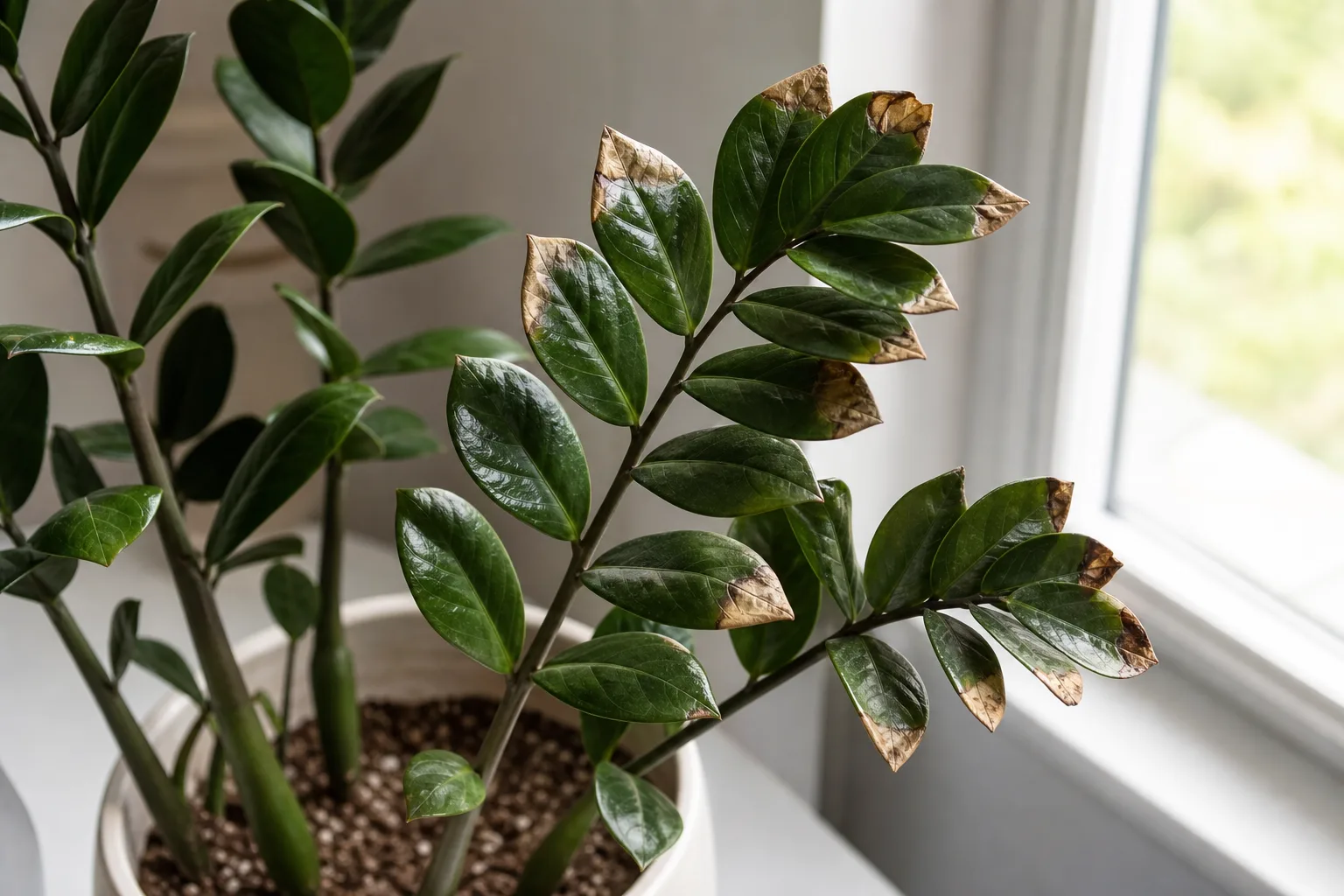
Fertilizer Burn on ZZ Plant: Causes, Checks & Fixes
This guide covers fertilizer burn on ZZ Plant. See also the general Fertilizer Burn guide, watering, and light pages for this plant.
Fertilizer Burn on ZZ Plant: Causes, Checks & Fixes
Quick answer
Fertilizer burn on ZZ Plant (Zamioculcas zamiifolia) shows up as dry, crispy brown tips and margins on otherwise firm, glossy leaflets-often within days or weeks of feeding. Unlike fast-growing tropicals, ZZ is a slow grower that stores water in underground rhizomes. Excess fertilizer salts concentrate in potting mix and at leaf edges faster than ZZ Plant overview can use them.
First step: stop all fertilizer and flush the pot with plain water. Run water through until it drains freely from the bottom, empty the saucer, and repeat once more within a few days. Do not repot, prune heavily, or add more nutrients until you confirm rhizomes are firm and new growth looks healthy.
What fertilizer burn looks like on ZZ Plant
Healthy ZZ leaflets are thick, waxy, and evenly green along arching compound leaves. Burn damage has a distinct pattern:
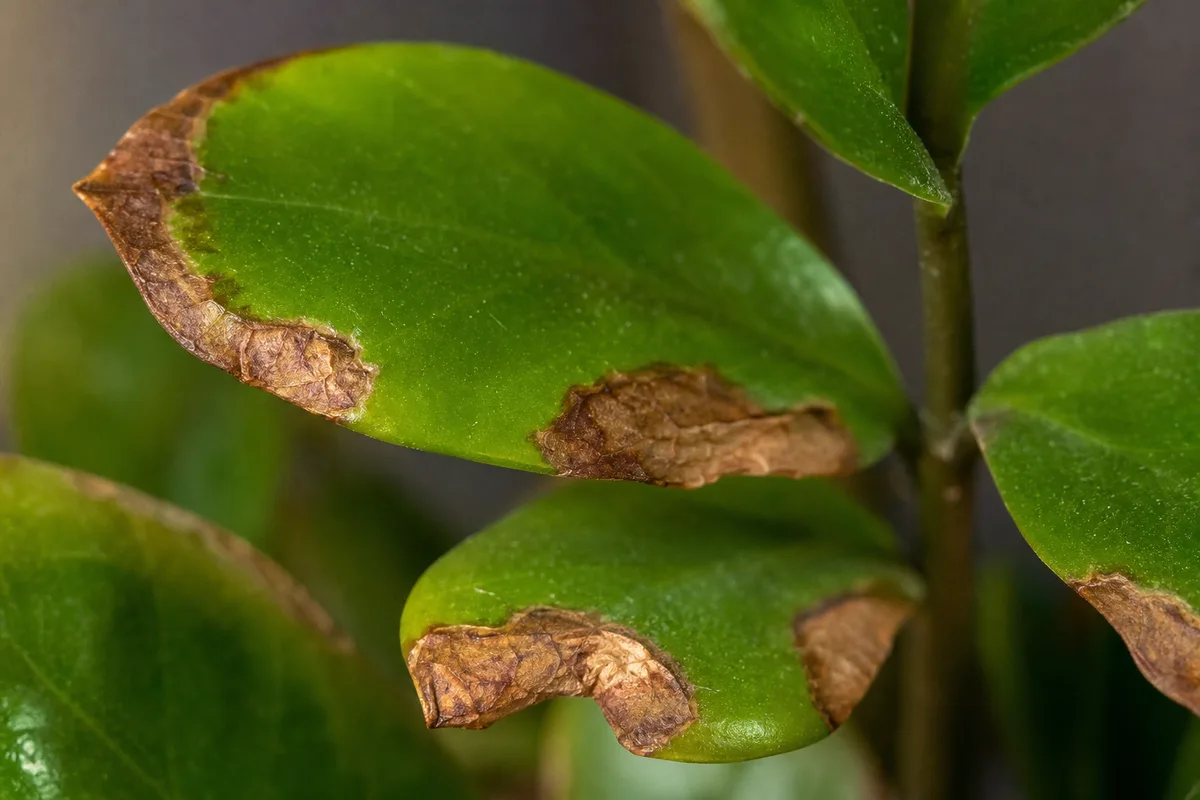
Fertilizer Burn symptoms on ZZ Plant - compare with healthy tissue on the same plant.
- Crisp brown tips or margins on ZZ Plant on multiple leaflets, often symmetric across the plant
- White or tan crust on the soil surface or inside the pot rim from accumulated salts
- Timing tied to feeding - symptoms worsen or appear shortly after liquid feed, slow-release granules, or fertilizer spikes
- Firm stems and rhizomes - unlike rot, burned plants usually keep upright arching petioles without mush at the soil line
- No sour smell from the mix when you sniff near the drainage hole
Damage typically starts at leaflet edges because salts pull moisture from tissue there first. Center patches or single-side scorch more often trace to direct sun or mechanical damage than to fertilizer.
Older leaflets may show tips first while new growth still looks green-until salts keep building. Once feeding stops and salts flush out, the next emerging leaf should open with clean margins. That new leaflet is your best recovery signal.
Why ZZ Plant gets fertilizer burn
ZZ evolved for arid African woodlands where nutrients are scarce and drought is common. It grows from bulbous rhizomes that store water and survive drought. NC State Extension notes this species has a slow growth rate and recommends treating it much like a succulent: infrequent water and minimal fertilizer.
That biology makes ZZ especially sensitive to overfeeding:
Light feeding need. Clemson HGIC advises fertilizing ZZ only once or twice during the growing season with a balanced product. NC State Extension suggests a balanced liquid houseplant fertilizer once or twice a year. Many owners feed monthly because that schedule suits pothos or philodendron-on ZZ, that quickly overshoots what slow rhizome growth can absorb.
Infrequent watering traps salts. ZZ pots often go weeks between drinks. Each watering normally leaches some fertilizer from soil; when intervals stretch long, salts stay concentrated around rhizomes. University of Minnesota Extension notes that fertilizers are salt-based and excess builds up in container soil, eventually injuring roots and causing browning that begins at leaf tips.
Winter feeding on a dormant plant. Growth stalls in cool months with shorter days. Feeding when the plant is not actively producing new leaflets adds salts without uptake-the classic setup for tip scorch on the next flush of growth.
Wrong product or dose. Full-strength liquid feed, slow-release spikes, or granular fertilizer scattered on dry rhizomes delivers a salt shock. Synthetic fertilizers applied too often can burn roots before visible leaf damage appears, according to UMN Extension.
Tap water compounds the problem. Fluoride and minerals in hard municipal water can brown leaflet edges on their own. Heavy fertilizer plus mineral-rich water pushes tips past cosmetic brown into widespread crisp margins.
How to confirm the cause
Work through these checks before ZZ Plant repotting guide or cutting stems:
- Feeding history - When did you last fertilize? What product and concentration? Monthly or full-strength applications on ZZ strongly favor burn.
- Soil surface - Scrape lightly with a finger. White, gritty crust confirms salt accumulation. No crust does not rule burn out, but crust plus recent feed is diagnostic.
- Rhizome firmness - Slide the plant partway out or feel through the drainage hole. Firm, potato-like rhizomes support a salt-burn diagnosis. Soft, black, or collapsing tissue means rot-different emergency.
- Soil moisture and smell - Dry or moderately dry mix with neutral odor fits burn. Wet, heavy mix that smells sour suggests overwatering on ZZ Plant with or without fertilizer stress.
- Symptom pattern - Even tip browning on many leaflets after feeding points to salts. Yellow stems collapsing at the base with wet soil points to rhizome rot. Wrinkled leaflets on bone-dry soil suggest underwatering on ZZ Plant.
- Light exposure - Direct sun scorches exposed leaflets on one side. Burn from fertilizer usually affects tips across the whole plant.
If rhizomes are mushy, prioritize rot treatment over flushing alone. You can have both problems when over-fertilized plants were also overwatered.
First fix for ZZ Plant
Stop all fertilizer immediately and flush the pot with plain water.
Place the container in a sink or tub. Water slowly until excess runs freely from drainage holes for several minutes. Let the pot drain completely, then empty the saucer. Repeat the deep flush once more within two to three days to leach remaining salts.
This single step addresses the root cause-excess salts in soil-without the stress of repotting on day one. Hold off on trimming, moving pots, or adding supplements until flushing is done.
Do not fertilize again until you see healthy new leaflets with clean edges and at least four to six weeks have passed.
Step-by-step recovery
After the initial flush, continue in this order based on severity:
- Remove surface salts - If a thick white crust covers the top inch of mix, scrape it off gently without damaging rhizomes near the surface. Replace scraped material with fresh, coarse potting mix only if the crust was heavy.
- Adjust watering - Return to a dry-between-waterings rhythm. Clemson HGIC recommends watering ZZ one to two times per month, only after the medium has completely dried. Missouri Botanical Garden advises allowing soils to dry between applications. Wet feet plus lingering salts slow recovery.
- Trim cosmetic damage - Cut fully dead brown tips with clean scissors if they bother you. Leave partially green leaflet tissue; it still photosynthesizes.
- Repot only if flushing fails or mix is exhausted - If tips keep browning after two flush cycles and crust returns quickly, repot into fresh, gritty, well-drained mix. NC State notes ZZ needs well-drained potting soil and does not tolerate wet feet. Do not feed at repotting time.
- Resume feeding sparingly - When new growth looks healthy, apply half-strength balanced liquid fertilizer once in late spring. A second optional feed in early summer is enough for most indoor ZZ plants. Skip fall and winter entirely.
- Flush on schedule - Every three to four months, run plain water through the pot to prevent salt buildup, especially if you use synthetic fertilizer or hard tap water.
Skip emergency repotting unless rhizomes are soft or soil is sour. ZZ tolerates being slightly root-bound; unnecessary repotting right after burn adds stress.
Recovery timeline
Fertilizer burn on ZZ is usually slow to appear and slow to clear-which works in your favor because rhizomes often stay intact.
- Days 1–7: Stop feed, flush twice. No new damage should appear if salts were the sole trigger.
- Weeks 2–6: Existing brown tips remain; watch for the next emerging leaflet. Clean new tissue means salts have dropped to safe levels.
- Months 2–3: Multiple new leaflets with good color confirm full recovery. Old scarred leaflets can stay on the plant indefinitely without harm.
- If tips keep spreading after six weeks with firm rhizomes: repot into fresh mix, verify you are not overwatering, and confirm the pot is not in direct sun.
ZZ’s slow growth means visible recovery may take a full growing season. Judge success by new leaflet quality, not by old tips re-greening.
Lookalike symptoms
Several ZZ problems mimic tip browning:
Brown tips from fluoride or low humidity - Dry office air and tap water can scorch edges without any recent fertilizer. No white soil crust and a stable feeding history point here. Switch to filtered water and avoid misting; tips may stabilize without flushing.
Overwatering and rhizome rot - Yellow stems, mushy rhizomes, wilted arching petioles, and sour wet soil. Rot is urgent; flushing alone will not save soft tissue. Unpot and remove decay before repotting dry.
Underwatering - Leaflets wrinkle and feel thin when soil has been dry for many weeks. A deep drink plumps tissue within days; brown tips from drought are usually less crispy than salt burn.
Direct sun scorch - Bleached or brown patches on leaflets facing the window, not evenly distributed tips. Move the plant to ZZ Plant light guide.
Pest damage - Mealybugs and scale weaken ZZ but cause spotting, sticky residue, or stunted new growth-not uniform salt-style tip crisping across the whole plant.
Mistakes to avoid
- Feeding on a calendar meant for faster houseplants - Monthly full-strength doses overshoot ZZ needs quickly.
- Fertilizing dry soil - Salts contact rhizomes directly without dilution. Water first, then feed at half strength if you feed at all.
- Adding fertilizer when tips are already brown - Burned plants need fewer salts, not more. Flush and wait.
- Repotting and feeding the same week - Stack one stress at a time. Flush first; repot only if needed; feed last.
- Using slow-release spikes on a slow grower - Continuous salt release outpaces ZZ uptake indoors.
- Ignoring white crust - Surface salts will re-burn roots with each watering until removed or flushed.
ZZ care cross-check
Fertilizer burn often appears on an otherwise well-managed plant that was simply fed too generously. Still, confirm the baseline care that keeps ZZ stable:
- Light: Bright indirect or office fluorescent; avoid direct sun that adds scorch.
- Water: Only when soil is completely dry; never let the pot sit in a full saucer.
- Soil: Coarse, well-draining mix-similar to cactus blend-not heavy peat that stays wet.
- Season: Withhold all feed when growth is stalled in cool months.
When those conditions are right, ZZ needs little fertilizer to look full and glossy.
How to prevent fertilizer burn next time
Treat fertilizer as optional maintenance, not routine weekly care:
- Feed once or twice between spring and early summer with balanced liquid fertilizer at half label strength or less.
- Skip winter feeding when new leaflets are not emerging.
- Water before you feed so nutrients distribute through moist mix.
- Flush with plain water every few months to leach salts-UMN Extension recommends flushing houseplant soil to avoid fertilizer buildup.
- Use filtered or low-mineral water if tip browning persists without feeding.
- Wait three months after repotting before the first feed on a newly potted rhizome division.
A healthy ZZ in good light can go a full year without fertilizer and still look excellent. When in doubt, underfeed.
When to worry
Tip burn alone is low urgency and responds to flushing. Escalate if:
- Rhizomes feel soft, hollow, or smell rotten
- Yellowing climbs stems from the base while soil stays wet
- New leaflets emerge stunted, pale, or deformed after you already stopped feeding
- More than half the arching stems collapse despite dry soil
Those signs suggest rot, severe root damage, or combined cultural stress-not cosmetic salt scorch alone. Unpot, inspect rhizomes, and trim decay before the plant loses all firm tissue.
Conclusion
Fertilizer burn on ZZ Plant is a salt problem, not a nutrient shortage. The glossy leaflets turn crispy at the edges when feeding outpaces this slow rhizome grower’s needs-especially on infrequent watering schedules that fail to leach salts. Stop fertilizer, flush the pot thoroughly, and let new leaflets tell you when it is safe to feed again at half strength once or twice a year. Firm rhizomes and clean emerging growth mean you caught it in time; mushy bases mean rot needs attention first.
When to use this page vs other ZZ Plant guides
- ZZ Plant watering guide - Use for routine moisture checks before assuming fertilizer burn is the main issue.
- ZZ Plant problems hub - Browse all 27 common issues on this species.
- Overfertilization on ZZ Plant - Different entry point when symptoms overlap with fertilizer burn.
- Salt Build-up on ZZ Plant - Different entry point when symptoms overlap with fertilizer burn.
- Brown Tips on ZZ Plant - Different entry point when symptoms overlap with fertilizer burn.