Pot Too Large on ZZ Plant: Causes, Checks & Fixes
Quick answer
A pot too large for ZZ Plant holds excess soil moisture the rhizomes cannot use fast enough, mimicking chronic overwatering. First step: unpot, measure the rhizome clump, and repot into a container only one to two inches wider with gritty, fast-draining mix.
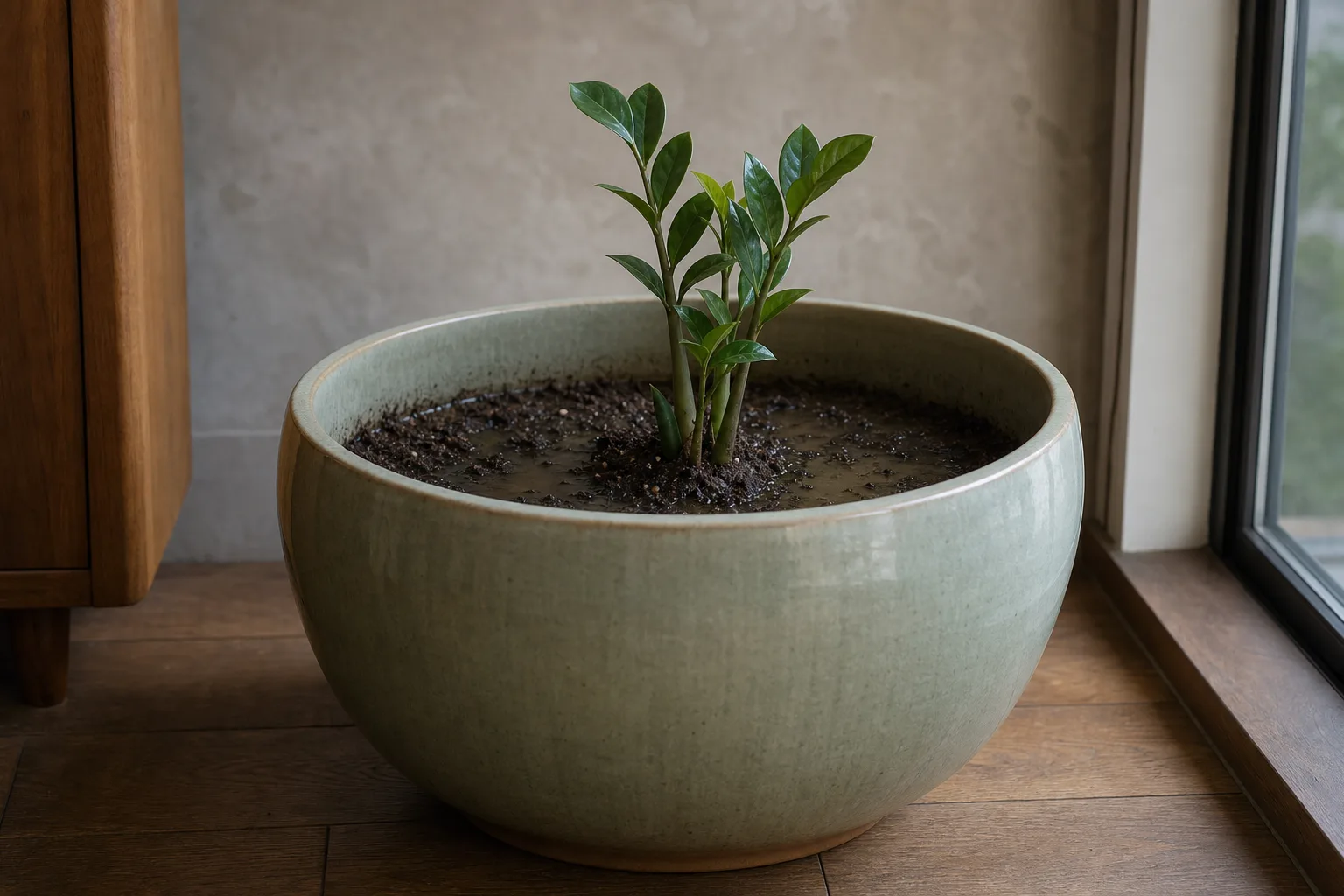
Pot Too Large on ZZ Plant: Causes, Checks & Fixes
This guide covers pot too large on ZZ Plant. See also the general Pot Too Large guide, watering, and light pages for this plant.
Pot Too Large on ZZ Plant: Causes, Checks & Fixes
Quick answer
A pot too large for ZZ Plant (Zamioculcas zamiifolia) is a hidden overwatering on ZZ Plant trap. Thick underground rhizomes store water for drought, so the plant uses moisture slowly-especially in low light. When the container holds far more soil than active rhizomes can colonize, the outer mix stays wet for weeks while the glossy stems still look fine.
First step: unpot the plant, measure the rhizome clump width, and repot into a container only one to two inches wider with fast-draining mix. Do not add water immediately. Oversized pots create the same anaerobic conditions as watering too often; downsizing dry is the single most effective correction.
Why oversized pots hurt ZZ Plant
ZZ plants evolved on East African savannas where rainfall is sporadic. They survive dry spells by storing water in potato-like rhizomes and waxy leaflets-not by sending roots into a large wet soil reservoir. Missouri Extension notes that pot size is one of the factors controlling how fast an entire soil mass dries; when the volume is too big for the root system present, that mass stays wet longer than the plant can tolerate.
Unlike fast-growing pothos or philodendrons, ZZ metabolizes slowly. Rhizomes take months-not weeks-to colonize fresh mix after ZZ Plant repotting guide. In an oversized container, most of the pot holds damp soil with no active roots pulling water. The center and bottom stay saturated while only the surface looks dry. That pattern invites rhizome rot in poorly drained soil with excessive water even when you believed you were watering conservatively.
Common ways owners end up with too much pot:
- Jumping pot sizes after purchase - Moving a nursery ZZ from a six-inch pot into a twelve-inch decorative planter leaves six inches of unused wet mix on every side.
- Sizing for future growth - ZZ rewards patience; it is comfortable slightly pot-bound for years and does not need room to grow into.
- Double-potting without drainage - A small inner pot sitting inside a large cache pot with standing runoff behaves like an oversized, waterlogged container.
- Deep tall cylinders - Excess depth adds wet soil volume below rhizomes without helping the horizontal spread ZZ Plant overview prefers.
- Repotting too often - Unnecessary moves into incrementally larger pots stack extra wet mix before rhizomes have filled the previous container.
Low light and cool winter rooms compound the problem. A ZZ in a dim office uses even less water, so an oversized pot in winter can stay damp for a month or more.
What pot too large looks like on ZZ Plant
Early signs are subtle because upright glossy leaflets hide rhizome trouble underground:
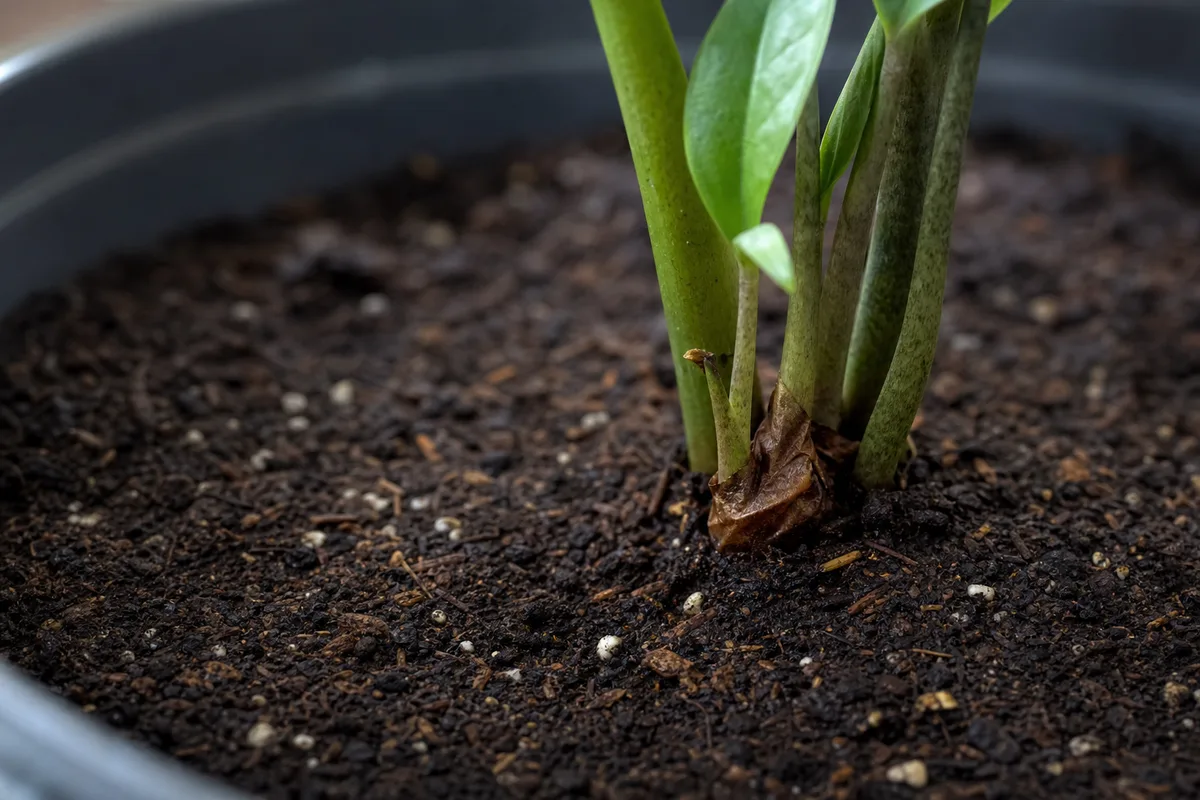
Pot Too Large symptoms on ZZ Plant - compare with healthy tissue on the same plant.
- Chronic damp soil - Mix two inches below the surface stays cool and moist ten to fourteen days after a modest drink, while you expected dry-down in a week.
- Heavy pot weight - Container still feels waterlogged days after watering; lifting shows saturated mix, not the light dry feel of a properly sized pot.
- Fungus gnats - Small flies around the pot rim indicate larvae breeding in persistently wet outer soil-the zone rhizomes have not reached.
- Surface mold or algae - Green or white film on mix that never fully dries suggests excess volume holding moisture.
- Yellow leaflets despite careful watering - Lower or older leaflets turn dull yellow while mix remains wet; stunted slow growth with yellowing leaves is a symptom of over-watering and stems may still stand upright at first.
- Soft rhizomes on inspection - Unpotting reveals mushy brown tissue at the base while only a small rhizome clump sits in a large soil mass.
- Slow or stalled new petioles - Few or no new shoots during warm months when light is adequate, because rotting rhizomes cannot support fresh growth.
Advanced cases mimic root rot on ZZ Plant: stems flop suddenly, soil smells sour, and rhizomes collapse to hollow shells-all driven by excess wet volume, not necessarily by frequent watering.
How to confirm the cause
Work through these checks before repotting on autopilot:
- Measure rhizome width vs. pot diameter - Slide the plant out gently. Lay a ruler across the widest rhizome span. If the pot interior is more than two inches wider on each side, the container is oversized for current roots.
- Finger or skewer test deep in the mix - Push a bamboo skewer to the bottom center. If it comes out wet while you have not watered in ten days, excess soil volume is retaining moisture the rhizomes are not using.
- Pot weight comparison - Lift the pot three days after watering, then again ten days later. A properly sized gritty mix in bright light should lighten noticeably; an oversized peat-heavy pot stays heavy for weeks.
- Rhizome firmness - Healthy rhizomes feel firm like a raw potato. Soft, squishy, or hollow tissue confirms wet-soil damage-not just a sizing issue but active rot needing trimming.
- Rule out pure overwatering - If the pot is correctly sized but you water weekly on schedule, the problem may be frequency-not volume. Correctly sized pots still fail with dense mix and no dry-down.
- Rule out wrong soil mix - Peat-heavy blend in even a correct-diameter pot behaves like an oversized wet reservoir. Confirm mix is gritty and fast-draining before blaming diameter alone.
If the pot is dramatically wider than the rhizome clump and deep mix stays wet with soft rhizomes, pot too large is confirmed.
First fix for ZZ Plant
Unpot, trim any mushy rhizome tissue, and repot into a container only one to two inches wider than the remaining firm rhizome clump using dry, gritty cactus or succulent blend.
That single downsizing step removes the excess wet soil mass causing chronic saturation. Handle rhizomes gently-physical damage to storage tissue can invite rot. Set the plant at the same depth as before; burying rhizomes deeper adds unnecessary wet mix around the crown.
Do not water for one to two weeks after repotting. Let any trimmed cuts callous and let roots settle in dry mix. Move the plant to ZZ Plant light guide so remaining moisture evaporates predictably-without scorching leaflets in direct sun.
Do not fertilize a stressed ZZ. Do not mist. Do not repot into standard peat potting soil hoping to dry it faster-dense mix in a smaller pot still holds too much water around rhizomes.
Step-by-step recovery
After the initial downsizing repot:
- Sterilize tools - Wipe scissors with rubbing alcohol before cutting mushy rhizomes. Remove all soft black tissue until only firm white or tan flesh remains.
- Air-dry trimmed rhizomes - Lay the plant out on newspaper for twenty-four hours so cut surfaces callous before contacting fresh mix.
- Choose appropriate pot depth - Prefer a pot as wide as it is deep or slightly wider than deep. Avoid tall narrow cylinders that trap wet mix below rhizomes.
- Add drainage - Confirm drainage holes are open. A mesh screen over holes keeps mix in without blocking exit paths.
- Fill with gritty mix - Use cactus or succulent blend amended with extra perlite or coarse bark. NC State Extension treats ZZ much like cactus and other succulent plants that need dry-down between waterings.
- Terracotta optional but helpful - Porous clay walls pull moisture from mix sides, speeding dry-down in borderline cases.
- First water test - After two weeks, water lightly until a small amount exits the drainage hole. Discard saucer runoff within thirty minutes.
- Monitor new petioles - Recovery shows as firm new shoots emerging from rhizomes over the next one to three months-ZZ growth is inherently slow.
If fungus gnats persist after dry-down, allow soil to go fully dry between waterings and use yellow sticky traps; larvae cannot survive prolonged dry mix.
Recovery timeline
Expect the pot to feel lighter and surface mix to dry within seven to ten days after downsizing in bright indirect light-that alone confirms you removed excess wet volume.
Trimmed rhizomes with firm tissue remaining usually push the first new petiole within four to eight weeks during spring or summer. Winter recovery is slower; do not interpret dormancy as failure.
Yellow or collapsed leaflets on damaged petioles will not revert to deep green. Judge success by new upright shoots and firm rhizomes on spot checks, not by fixing every old leaflet.
If every rhizome was mushy after downsizing, propagation from healthy leaf cuttings on remaining firm petioles may be the salvage path rather than saving the original rhizome cluster.
Lookalike symptoms to rule out
Simple overwatering in a correctly sized pot - Same yellow leaflets and soft rhizomes, but pot diameter matches the rhizome clump. Fix watering cadence and mix, not container width.
Wrong soil mix - Dense peat stays wet in any pot size. Repot into gritty blend even if diameter is already correct.
Root rot from no drainage hole - Standing water in sealed decorative pots causes identical collapse. Drill holes or repot into a container with open drainage regardless of diameter.
underwatering on ZZ Plant - Mix is dusty dry throughout, rhizomes are firm but slightly wrinkled, and leaflets may curl or feel thin-not yellow on wet soil.
Low light alone - Slow growth without wet soil or soft rhizomes points to insufficient brightness, not pot volume. Move to brighter indirect light before downsizing.
Mealybugs or scale - White cottony clusters or hard brown bumps on petioles indicate pests, not pot size. Sticky residue with insects differs from chronic damp mix smell.
Mistakes to avoid
Do not jump from a six-inch nursery pot to a twelve-inch decorative planter to avoid repotting again soon-that guarantees years of wet outer soil.
Do not water on a calendar because the large pot looks like it needs more water. Water only when the entire mix is dry.
Do not repot into an even larger container if growth is slow-check light and rhizome crowding first. ZZ often needs brighter indirect light, not more soil.
Do not leave the plant in standing saucer water after downsizing. Empty runoff within thirty minutes every time.
Do not size up because roots peek from drainage holes unless rhizomes also crowd pot walls. A few visible roots on a slow grower do not always mean the next pot size up.
Do not use garden soil or heavy peat in the smaller pot-it defeats the purpose of removing excess wet volume.
How to prevent pot-size problems next time
Repot only when rhizomes visibly press against container walls, push up through the soil surface, emerge from drainage holes, or deform a flexible nursery pot-often every two to five years for indoor ZZ plants, not annually.
When sizing up, increase diameter by only one to two inches. Missouri Extension guidance for houseplants applies broadly: repot when pot-bound, not preemptively, and avoid containers dramatically larger than the root mass-the danger of overwatering and root rots increases if pots are too big.
Use fast-draining mix and pots with open drainage. Clemson HGIC recommends watering only after the potting medium has completely dried and never letting the plant sit in water. Missouri Botanical Garden advises to allow soils to dry between waterings.
Keep bright indirect light so whatever soil volume is present dries on a predictable rhythm. Reduce watering frequency in winter when growth slows.
If you want a large decorative planter for aesthetics, keep the ZZ in a correctly sized inner nursery pot with drainage and empty the outer shell after every watering.
When to worry
Treat as urgent when multiple arching stems collapse at once, rhizomes smell sour or feel hollow, or yellowing spreads across most leaflets while mix is saturated. Those signs mean wet excess volume has already rotted storage tissue-downsize and trim the same day.
Mild chronic dampness with firm rhizomes and no yellowing is a warning, not an emergency. Downsize at the next convenient repot window before rot starts.
If downsizing and dry repotting fail to produce firm rhizomes or new petioles within three months in warm bright conditions, the remaining tissue may be too compromised-consider leaf-cuttings propagation from healthy petioles instead of repeated repot cycles.
Conclusion
Pot too large on ZZ Plant is less about aesthetics and more about physics: excess soil volume stays wet while drought-adapted rhizomes cannot drink fast enough. Measuring the rhizome clump, downsizing one to two inches with gritty dry mix, and withholding water until the plant settles removes the hidden swamp that careful watering cannot fix. Size up only when rhizomes genuinely crowd the pot-and until then, a slightly snug container is exactly what this plant prefers.
When to use this page vs other ZZ Plant guides
- ZZ Plant watering guide - Use for routine moisture checks before assuming pot too large is the main issue.
- ZZ Plant problems hub - Browse all 27 common issues on this species.