No Drainage Hole on ZZ Plant: Causes, Checks & Fixes
Quick answer
A ZZ Plant in a sealed pot has nowhere for excess water to exit, so rhizomes sit in a wet bottom layer even when the surface looks dry. First step: move the plant into a container with open drainage holes-or drill holes in the current pot-before watering again.
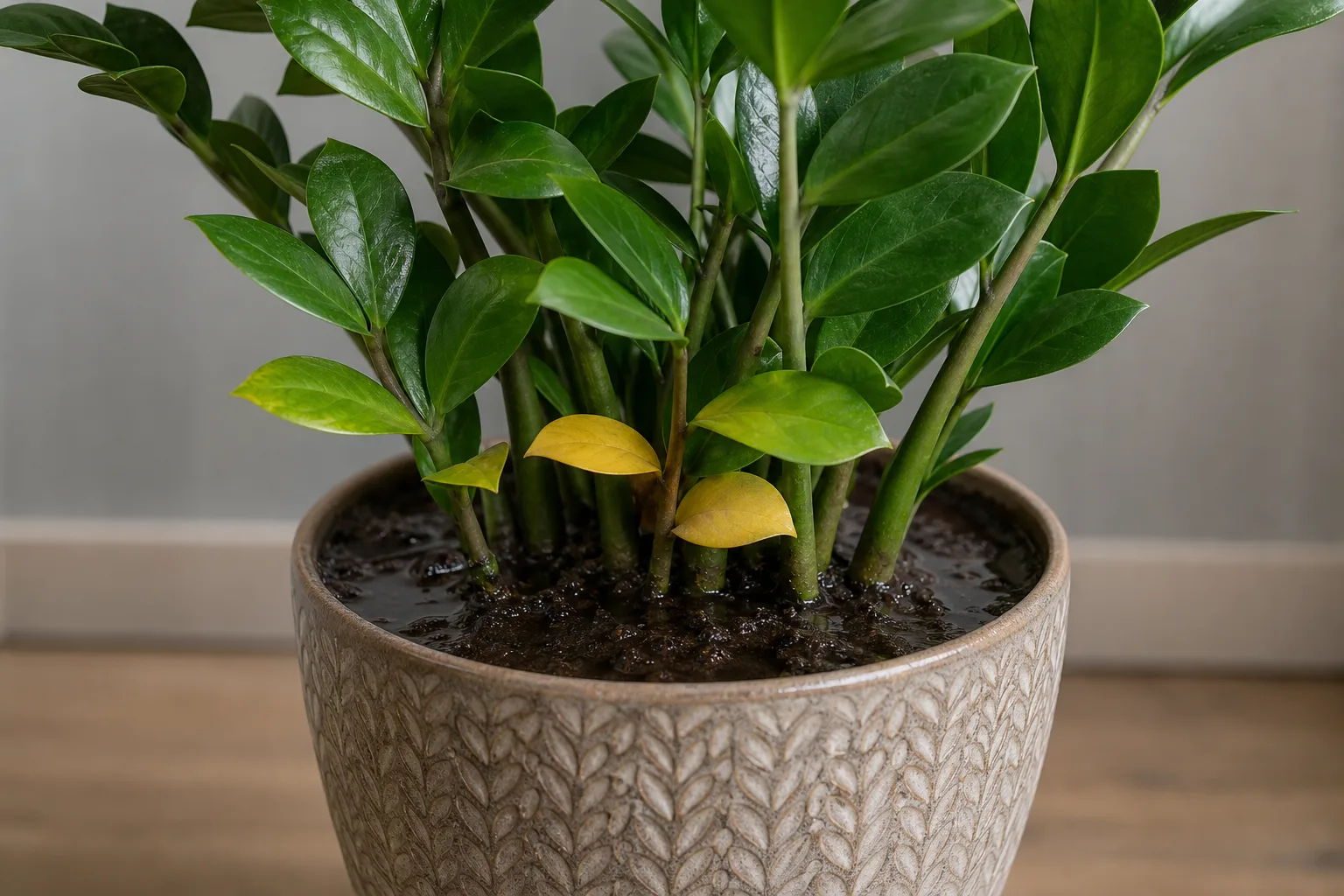
No Drainage Hole on ZZ Plant: Causes, Checks & Fixes
This guide covers no drainage hole on ZZ Plant. See also the general No Drainage Hole guide, watering, and light pages for this plant.
No Drainage Hole on ZZ Plant: Causes, Checks & Fixes
Quick answer
A ZZ Plant (Zamioculcas zamiifolia) in a pot without drainage holes is a setup problem, not a mystery disease. Every drink adds water that cannot escape. The bottom of the mix stays saturated while the surface dries, so owners think the plant is fine and water again. Meanwhile, the thick underground rhizomes that store water for drought sit in anaerobic wet soil-the opposite of what ZZ Plant overview evolved for.
First step: get the plant into a container with open drainage holes before the next watering. Drill holes in ceramic or plastic if the material allows, or slip the root ball into a nursery pot with holes that fits inside your decorative shell. Do not try to fix a sealed pot by watering less often or adding rocks at the bottom. Without an exit path, excess water still pools around rhizomes.
What no drainage looks like on ZZ Plant
The symptoms overlap with overwatering on ZZ Plant because the root cause is the same-chronic wetness-but the pattern often starts right after ZZ Plant repotting guide into a pretty sealed planter or placing a holed nursery pot permanently inside a cache that never gets emptied.
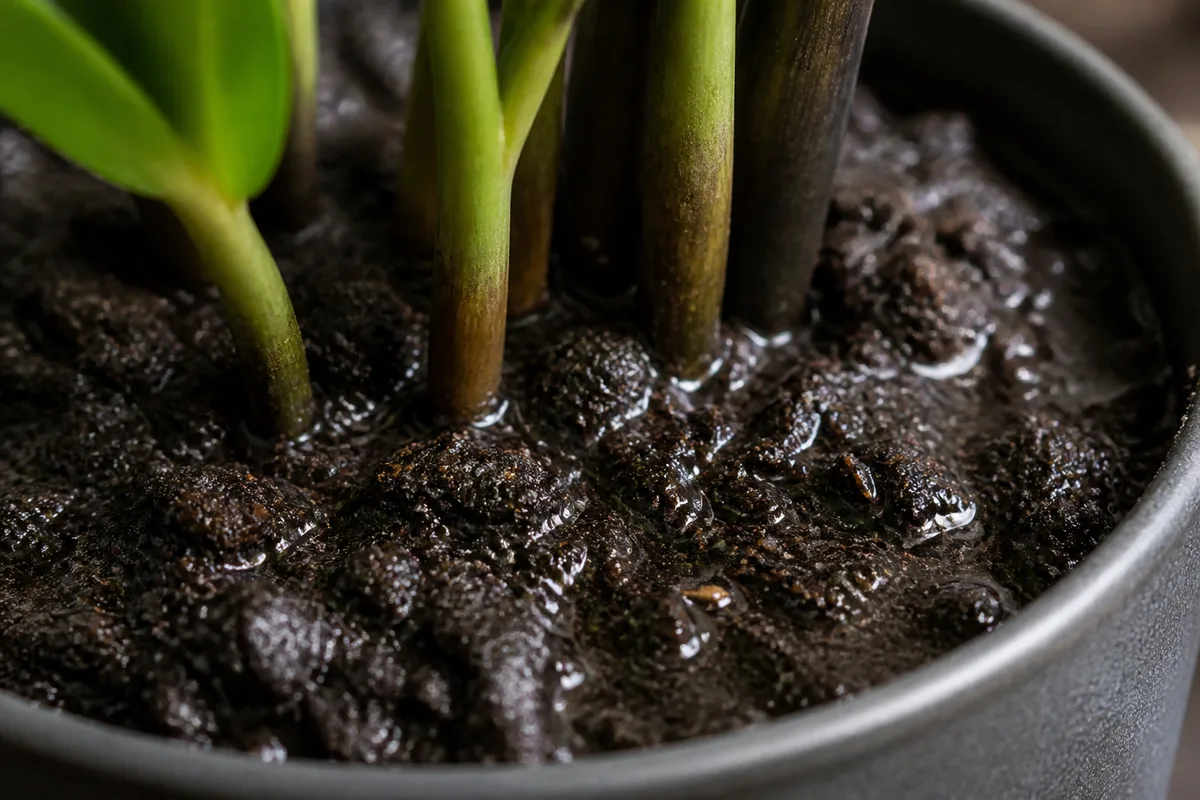
No Drainage Hole symptoms on ZZ Plant - compare with healthy tissue on the same plant.
Watch for these ZZ-specific clues:
- Pot stays heavy for weeks after a single watering, even in bright office light where mix should dry faster
- Surface looks dry but stems yellow or leaflets drop while lower mix is still damp-rhizome rot begins below before glossy leaves show stress
- Stems bend or flop just above the soil line when rhizomes lose structure, a common late sign on ZZ before collapse
- Sour or musty smell from the pot, especially when you lift it from a decorative outer shell
- White or green mold on soil surface, fungus gnats hovering near the pot, or algae in a cache reservoir-all thrive where water never fully drains
- Mushy rhizomes when you finally unpot-healthy tissue feels firm like a potato; rotted rhizomes are black, hollow, or squishy
Because ZZ is slow-growing and keeps glossy leaves longer than many houseplants, sealed-pot damage can stay hidden until several stems fail at once. Do not wait for obvious wilt if you already know the container has no holes.
Why sealed pots kill ZZ faster than other houseplants
ZZ Plant is native to dry grassland and open woodland in eastern Africa. It survives office neglect because bulbous rhizomes and thick leaflets store water for long dry spells. That adaptation makes it forgiving of missed waterings-and extremely vulnerable when the root zone never dries.
Unlike moisture-loving tropicals that pull water steadily through fine roots, ZZ drinks slowly, especially in low light and cool winter rooms. In a sealed pot, each watering adds a layer of unused moisture at the bottom. Over weeks, the lowest rhizomes sit in saturated mix with little oxygen. Root rot may occur if ZZ plants are grown in poorly drained soil with excessive water for an extended period.
Three container setups cause most problems:
Fully sealed decorative pots - Glazed ceramic bowls, glass jars, and metal containers sold without holes look polished but function as reservoirs. Even careful measured watering leaves a wet sump beneath the root ball.
Cache pots that never get emptied - A common design trick places a holed nursery pot inside a decorative outer shell. That works only if you lift the inner pot to drain after every watering. When runoff sits in the cache for days, you have recreated a sealed system.
Blocked or missing holes - Sometimes a pot has holes, but roots, debris, or a glued-in saucer pad clog them. Missouri Extension notes that drainage holes can become clogged and that pots wrapped in waterproof foil or placed in deep planters should be checked for standing water.
A gravel layer at the bottom of a sealed pot does not create drainage-it raises the wet zone closer to rhizomes while water still pools underneath. The fix is always an exit hole, not a drainage myth.
How to confirm the cause
Work through these checks before repotting or trimming rhizomes. You want to confirm the container is the problem, not only watering frequency or soil type.
- Hole test - Water until the mix is evenly moist. Within one to two minutes, water should exit the bottom. If none appears, the pot is sealed, holes are blocked, or the plant sits in a full cache.
- Cache inspection - Lift the planted pot out of any outer decorative container. Water in the bottom confirms trapped runoff. Dry cache with a heavy inner pot still means the mix itself is holding too much water-but combined with no holes, that is expected.
- Weight check - Pick up the pot a week after watering. ZZ in a well-drained container feels noticeably lighter as mix dries. Persistent heaviness points to trapped moisture.
- Deep moisture probe - Push a skewer or finger several inches down through the top. Dry surface with a wet skewer tip is classic sealed-pot stratification.
- Rhizome spot-check - If stems look off or the pot smells sour, unpot partially at the edge and press a rhizome. Firm tissue with wet mix suggests you caught drainage failure early; mushy rhizomes mean rot has started.
- Setup history - Was the plant recently moved into a gift planter, desk pot, or “self-watering” vessel? That timing alone often confirms the diagnosis.
If the pot has open holes, the cache is empty after watering, mix dries fully between drinks, and rhizomes are firm, look elsewhere-usually dense soil mix or a pot far too large for the rhizome clump.
First fix for ZZ Plant
Move the plant into a container with functional drainage holes-or add holes to the current pot-before you water again.
That single step stops new water from accumulating at the bottom. Everything else depends on whether rhizomes are still healthy.
If the existing pot is drill-safe (unglazed terracotta, plastic, or glazed ceramic with care), add one or more bottom holes and verify water runs through freely. If the vessel cannot be drilled-thick glass, sealed metal, or a composite planter-transfer the ZZ into a standard nursery pot with holes that fits your decorative shell.
Do not repot into fresh mix on the same day unless rhizomes are already mushy or the old mix smells sour. If the plant looks stable above soil, fixing drainage first and letting the current mix dry out may be enough. If rot is suspected, proceed to recovery steps below.
Step-by-step recovery
Once drainage holes are open-or the plant is in a holed nursery pot inside a cache you will empty-work in this order:
- Stop watering immediately. Let the existing mix dry completely. ZZ rhizomes can supply the plant for weeks; more water in a recently fixed but still wet root zone slows recovery.
- Empty all reservoirs. Dump cache pots, saucers, and outer shells. Never let the planted pot sit in standing water while mix dries.
- Inspect rhizomes if any stems yellow, smell develops, or the pot was sealed for months. Unpot gently, rinse away wet mix, and cut all mushy rhizome sections back to firm white or tan tissue with clean scissors. Sterilize blades between cuts.
- Air-dry trimmed plants for 24 hours on newspaper in ZZ Plant light guide before repotting if you removed rotted tissue.
- Repot only when needed. Use a coarse, well-draining mix-cactus or succulent blend amended with perlite works well. Choose a pot only slightly wider than the rhizome clump; oversized pots stay wet too long even with holes.
- First watering after recovery - When you do water, soak until runoff exits the holes, then discard saucer water within 30 minutes. Wait until the entire mix is dry before the next drink.
- Brighten light modestly - Moving to brighter indirect light helps remaining mix dry predictably without scorching glossy leaflets.
Skip fertilizer until new growth looks healthy for several weeks. Feeding a stressed ZZ in fresh mix adds salt stress without fixing drainage.
Recovery timeline
Stabilization often takes two to three weeks after drainage is fixed and water is withheld-the pot should feel lighter, smell neutral, and rhizomes should stop softening.
New upright stems or leaflets are the best success signal. Expect them in four to eight weeks during warm indoor conditions; ZZ is inherently slow even when healthy. Old yellow leaflets will not revert to green-remove them once the plant is stable.
Full rhizome mass rebuilds over several months, not days. A ZZ that lost half its rhizomes to rot may stay smaller but can still thrive with corrected drainage and sparse watering.
Worsening signs: rhizomes soften further after dry treatment, multiple stems collapse in a week, or black decay climbs petiole bases. Those point toward advanced rot that may require propagating healthy leaf cuttings from firm stems.
Lookalike symptoms
- Overwatering in a holed pot - Same yellow leaves and mushy rhizomes, but water exits the bottom and saucers were simply left full. Fix: empty saucers and dry down; container holes are already adequate.
- Poor drainage from dense mix - Holes exist but peat-heavy soil stays wet for weeks. Fix: repot into gritty mix; hole setup may already be fine. NC State notes wet feet are not tolerated on ZZ.
- Pot too large - Extra soil volume holds moisture ZZ cannot use, mimicking sealed-pot heaviness. Fix: downsize to a snug pot with holes rather than drilling more holes in an oversized container.
- underwatering on ZZ Plant - Very light pot, dusty dry mix throughout, firm but slightly wrinkled leaflets. Fix: one deep soak with full drainage, not more holes.
- Normal slow growth - Firm rhizomes, dry-down working, no smell, no yellowing-ZZ simply grows slowly in low light. No container surgery needed.
What not to do
Do not water less as the only fix while the pot remains sealed. Less water still accumulates over time without an exit.
Avoid gravel, pebbles, or charcoal layers at the bottom of a hole-less pot-they do not substitute for drainage holes and can keep the saturated zone higher in the root ball.
Do not mist or increase humidity to “help” a struggling ZZ. The issue is excess root-zone moisture, not dry air.
Skip immediate repotting into a larger decorative planter without holes because it “looks healthier.” That repeats the failure.
When handling cut rhizomes or sap, wear gloves and wash hands-ZZ contains calcium oxalate crystals and is toxic to cats and dogs if ingested.
How to prevent drainage problems next time
Use pots with at least one open drainage hole for any long-term ZZ planting. If design matters, treat the decorative vessel as a removable sleeve and dump runoff every time you water.
Match pot size to the rhizome clump-only one to two inches wider than the root mass. Extra empty soil holds water ZZ will not use quickly.
Choose fast-draining mix and water only when the entire pot is dry, not on a calendar. Bright indirect light helps the pot dry at a predictable rate between drinks.
After every watering, check cache pots and saucers within 30 minutes. Missouri Extension recommends discarding water that remains beneath the pot one hour after watering-sooner is better for drought-adapted rhizomes.
When buying a new ZZ, confirm the nursery pot has open holes before sliding it into a desk planter. Gift pots are a common source of sealed-container failures.
When to worry
Escalate immediately if the cache sloshes, rhizomes dent under gentle pressure, stems collapse together, or more than a third of rhizomes are mushy on inspection. Mild yellowing with firm rhizomes after fixing holes can wait for a dry-down period.
If every rhizome is soft after trimming, survival odds drop sharply-take leaf cuttings from healthy stems while tissue is still firm.
Conclusion
No drainage hole on a ZZ Plant turns a drought-tolerant office favorite into a hidden rot trap. Confirm it with a hole test, cache inspection, and rhizome firmness-not leaf color alone. Open drainage first, then dry the mix, trim decay if needed, and repot gritty. ZZ forgives missed waterings far more willingly than it forgives a sealed bottom.
When to use this page vs other ZZ Plant guides
- ZZ Plant watering guide - Use for routine moisture checks before assuming no drainage hole is the main issue.
- ZZ Plant problems hub - Browse all 27 common issues on this species.