Leaf Spot Disease on ZZ Plant: Causes, Checks & Fixes
Quick answer
Leaf spot on ZZ Plant shows as discrete brown or black spots on individual glossy leaflets-not the uniform yellowing of overwatering. First step: snip off spotted leaflets with clean scissors, then let the pot dry fully and keep foliage dry going forward.
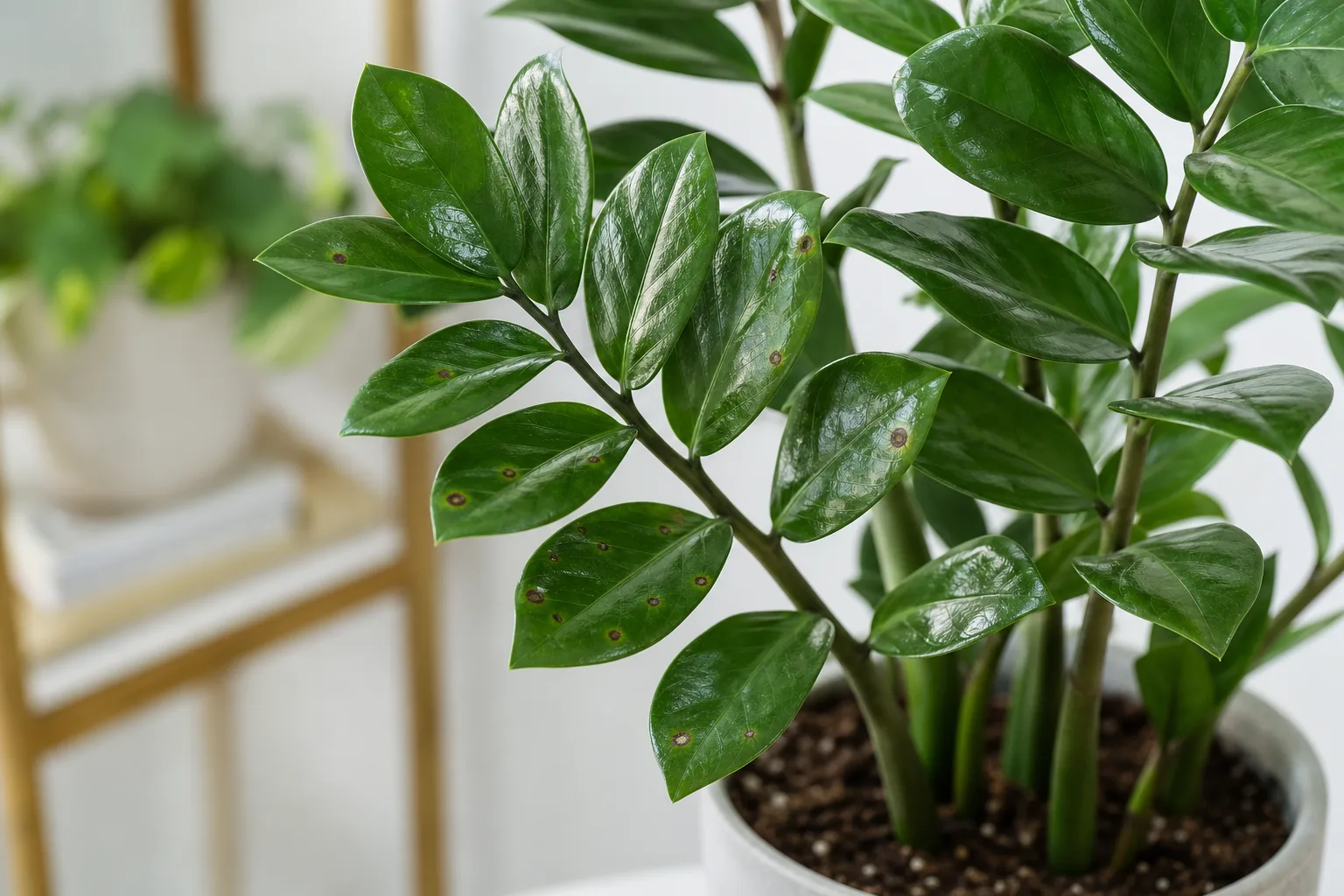
Leaf Spot Disease on ZZ Plant: Causes, Checks & Fixes
This guide covers leaf spot disease on ZZ Plant. See also the general Leaf Spot Disease guide, watering, and light pages for this plant.
Leaf Spot Disease on ZZ Plant: Causes, Checks & Fixes
Quick answer
Leaf spot disease on ZZ Plant (Zamioculcas zamiifolia) is fungal or bacterial spotting on individual glossy leaflets-not the uniform yellowing that overwatering on ZZ Plant causes across whole stems. UF/IFAS states that no diseases or pests are problematic on well-cared ZZ plants, so discrete spots usually trace to wet leaves, poor airflow, or a chronically damp pot stressing the plant.
First step: snip off spotted leaflets with clean scissors. Dispose of them in the trash, not compost. Then let the entire pot dry per ZZ norms and keep foliage dry going forward. Do not reach for fungicide on day one if only a few leaflets are affected.
What leaf spot looks like on ZZ Plant
Healthy ZZ leaflets are thick, waxy, and deep green along arching petioles that rise directly from underground rhizomes. Leaf spot disease breaks that uniform gloss with discrete lesions:
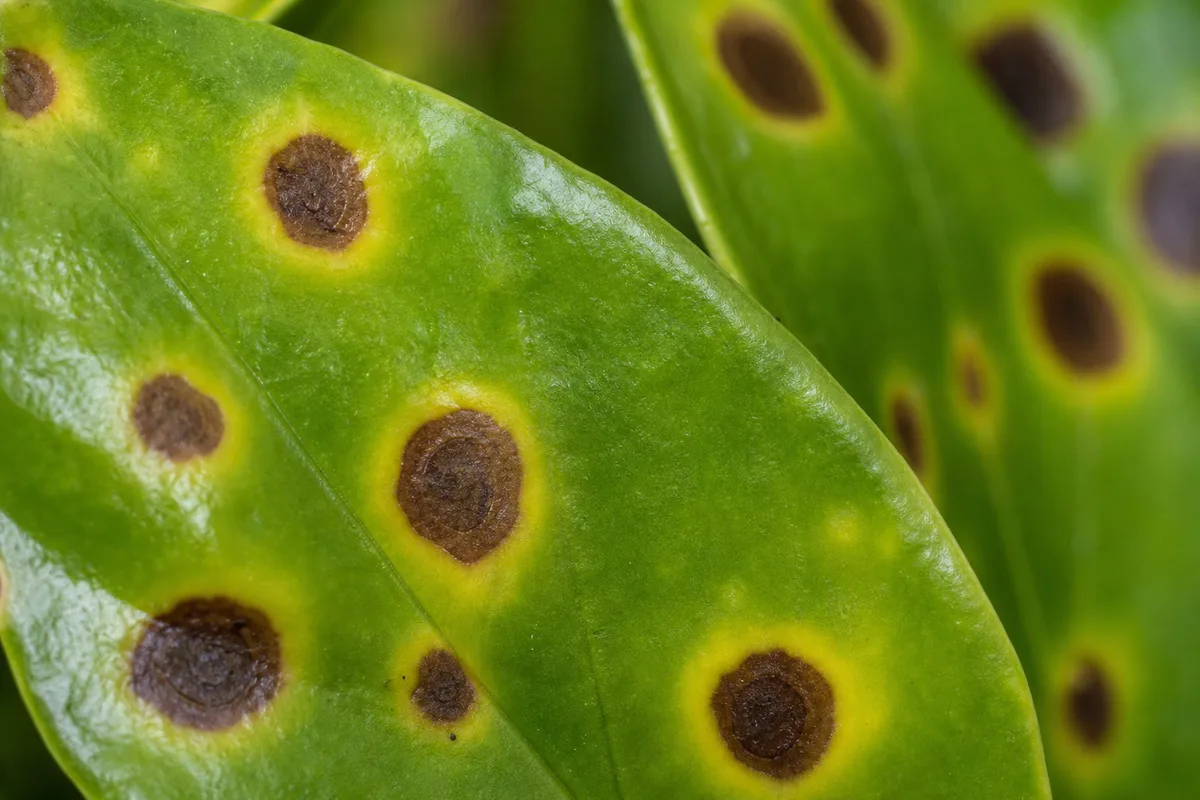
Leaf Spot Disease symptoms on ZZ Plant - compare with healthy tissue on the same plant.
- Round or irregular brown, black, or tan spots on one or a few leaflets
- Yellow halos around older spots on some infections
- Spots that enlarge slowly over days rather than appearing overnight across the whole plant
- Firm rhizomes and upright stems while damage stays foliar
Spots stay localized on individual leaflets. They do not typically coat every leaflet on a stem the way overwatering yellowing does. Clemson HGIC notes that black spots on ZZ stems are normal on healthy plants-do not confuse those harmless stem markings with spreading foliar disease.
Severe infections may cause spotted leaflets to yellow and drop, but defoliation on ZZ is slow because the plant grows slowly and holds older foliage for a long time.
Why ZZ Plant gets leaf spot disease
ZZ plants evolved for arid East African woodlands. Their rhizomes store water for months, and Missouri Botanical Garden advises allowing soils to dry between waterings. That drought adaptation makes them poor candidates for constantly humid, wet-leaf conditions-the environment leaf spot fungi prefer.
The most common triggers on ZZ Plant are:
Wet foliage overnight. Overhead watering, late-day misting, or splashing soil onto glossy leaflets keeps surfaces damp for hours. UMN Extension notes that misting houseplants increases the likelihood of foliar leaf spot diseases because fungi need moisture on leaves to infect.
Stagnant air on crowded shelves. ZZ plants tolerate low light and often sit packed on office desks or dim corners where air barely moves. Humidity trapped between pots lets spores spread from leaflet to leaflet.
Chronic overwatering stress. The same wet mix that causes root rot in poorly drained soil also weakens ZZ tissue and favors secondary foliar pathogens. A plant sitting in damp peat while leaflets stay wet is doubly vulnerable.
Dirty tools or splashing water. Pruning with unsterilized scissors or reusing drip trays without cleaning can move bacteria between plants in a collection.
ZZ is not a high-humidity plant. Misting, pebble trays aimed at leaf surfaces, and enclosed terrarium-style displays work against its natural preferences and invite spotting.
How to confirm the cause
Work through these checks before treating:
- Spot pattern - Discrete circular lesions on scattered leaflets suggest leaf spot. Uniform yellowing from the soil line up on many stems points to rhizome stress from overwatering.
- Soil moisture and pot weight - Lift the pot. Heavy, cool mix days after watering confirms saturation. Leaf spot can occur on stressed overwatered plants even when rot has not started.
- Rhizome firmness - Knock the plant out gently. Firm potato-like rhizomes with a few spotted leaflets usually mean foliar disease without advanced rot. Mushy black rhizomes mean you are also fighting root decay.
- Leaf surface moisture history - Recall whether you mist, use overhead watering, or run a humidifier that condenses on leaves. Recent wet-leaf nights strongly support fungal leaf spot.
- Airflow - Plants pressed against walls, glass, or neighbors trap humidity. A small fan or spacing often stops new spots once leaves dry.
- Pest check - Mealybugs and scale leave cottony masses or hard bumps, not uniform circular spots without insects. No webbing or honeydew should be present on true leaf spot cases.
If spots are few, rhizomes are firm, and you recently kept leaves wet, leaf spot is the likely diagnosis. If the whole plant yellows on soggy soil, prioritize drying the pot and inspecting rhizomes before focusing on foliar sprays.
First fix for ZZ Plant
Remove every spotted leaflet with clean, sharp scissors.
Cut each affected leaflet at the base of its petiole or remove the entire leaflet cluster if spots cover most of the surface. Bag the tissue and throw it away-do not compost indoors where spores can survive. UMN Extension recommends pinching off leaves infected with leaf spots and removing them from the growing area before the infection spreads.
Wear gloves when trimming. ZZ Plant contains calcium oxalate crystals and is toxic to cats and dogs; sap can irritate skin on sensitive people.
Do not mist after pruning. Do not water the foliage to “wash” spots-dry leaves are the goal. Hold off on fungicide until you have removed infected tissue and fixed the moisture pattern for at least one week.
Step-by-step recovery
After the initial pruning:
- Let the pot dry completely before the next watering. Clemson HGIC recommends watering only after the potting medium has completely dried and never letting the plant sit in water.
- Water at the soil line with a narrow spout. Keep glossy leaflets dry during and after watering.
- Improve airflow by spacing plants, opening shelf gaps, or running a fan on low nearby. Grey mold and similar foliar diseases spread in stagnant humid air; better circulation dries leaf surfaces faster.
- Sterilize scissors with rubbing alcohol between cuts and before touching other houseplants.
- Monitor new growth weekly for two to three weeks. Fresh leaflets that open clean mean your moisture fix is working.
- Consider fungicide only if spots return on new leaflets after cultural changes. For houseplants, fungicides are protective rather than curative- they guard healthy tissue, not already-spotted leaves. Use a houseplant-labeled product per label directions and test on one leaflet first.
If rhizomes feel soft or soil smells sour while spots spread, unpot and inspect for rot before continuing foliar treatment alone.
Recovery timeline
Spotted leaflet tissue will not green up again. Judge success by whether new leaflets stay clean, not by old lesions fading.
ZZ is inherently slow-growing. Clemson HGIC notes that ZZ plants are slow-growing even under favorable conditions. Expect several weeks before new leaflets cover a pruned section, and months before a thinned stem looks full again.
Active spot spread should stop within one to two weeks once leaves stay dry and soil follows a dry-down rhythm. If new spots keep appearing after that window, recheck watering habits, airflow, and whether another plant in the room is the spore source.
Lookalike symptoms to rule out
Overwatering yellowing washes across many leaflets and stems while soil stays wet and rhizomes may soften. Spots are discrete; overwatering yellowing is broad and often paired with a heavy pot.
Physical scuffs on glossy leaflets from moving or brushing the plant leave torn or scraped patches without yellow halos or slow enlargement.
Normal black stem spots on healthy ZZ stems are not disease. They do not spread to leaflets or enlarge over time.
Oedema blisters from erratic watering look like water-soaked bumps, often on leaflet undersides, rather than dry brown fungal centers.
Mealybugs or scale show white cottony colonies or hard brown bumps along petioles and stems. Insects or sticky honeydew should be visible on close inspection.
Salt burn on leaflet tips browns margins evenly from fertilizer buildup; it does not produce scattered round spots in leaflet centers.
Mistakes to avoid
Do not mist a spotted ZZ hoping humidity will help. Wet leaves feed the fungi you are trying to stop.
Do not leave pruned infected leaflets on the soil surface where spores splash back onto healthy tissue.
Do not apply fungicide without first removing spotted leaves and fixing watering. Sprays on already-damaged tissue rarely reverse lesions.
Do not keep watering on a calendar when the pot is still heavy. ZZ rhizomes need dry cycles, not constant moisture.
Do not confuse harmless stem markings with foliar disease and prune healthy stems unnecessarily.
Do not handle cut tissue bare-handed if pets or children share the space-the plant is toxic when chewed and sap can irritate skin.
How to prevent leaf spot next time
Water only when the entire pot is dry. UF/IFAS advises allowing soil to become dry between waterings and never letting ZZ sit in water.
Always water at the base. Skip misting, overhead sprays, and wet pebble trays that keep glossy foliage damp.
Give plants space on shelves and desks so air moves between pots. A small fan in a closed plant room helps during humid seasons.
Sterilize pruning tools between plants, especially when trimming any spotted tissue.
Quarantine new ZZ plants for two weeks before placing them against existing specimens. Reject nursery stock with widespread spotting or soggy soil.
Match pot size to the rhizome clump and use fast-draining mix so the drought-adapted root system dries predictably.
When to worry
Treat as urgent when spots enlarge daily on new leaflets, multiple stems lose foliage within a week, or petiole bases turn water-soaked and dark. Those patterns suggest aggressive infection or overlapping rot.
Also urgent: firm-looking stems above soft, foul-smelling rhizomes in wet soil. Foliar leaf spot and rhizome rot often share the same overwatering trigger, and rot is the bigger threat to plant survival.
Mild spotting on a few leaflets of an otherwise firm, dry-potted ZZ is manageable with pruning and cultural fixes. The plant rarely dies from cosmetic leaf spot alone when roots stay healthy.
Conclusion
Leaf spot on ZZ Plant is uncommon on well-cared specimens but shows up when glossy leaflets stay wet or airflow is poor-often alongside overwatering habits this drought-tolerant plant cannot tolerate. Snip spotted leaflets first, dry the pot, and keep foliage dry. ZZ’s slow growth means patience, but clean new leaflets confirm you have fixed the conditions that invited the spots.
When to use this page vs other ZZ Plant guides
- ZZ Plant watering guide - Use for routine moisture checks before assuming leaf spot disease is the main issue.
- ZZ Plant problems hub - Browse all 27 common issues on this species.