Wrong Soil Mix on ZZ Plant: Causes, Checks & Fixes
Quick answer
Wrong soil mix on ZZ Plant means moisture-retentive peat or standard potting soil that stays wet around water-storing rhizomes. Repot into a gritty cactus or succulent blend with extra perlite and water only when the entire pot is bone dry.
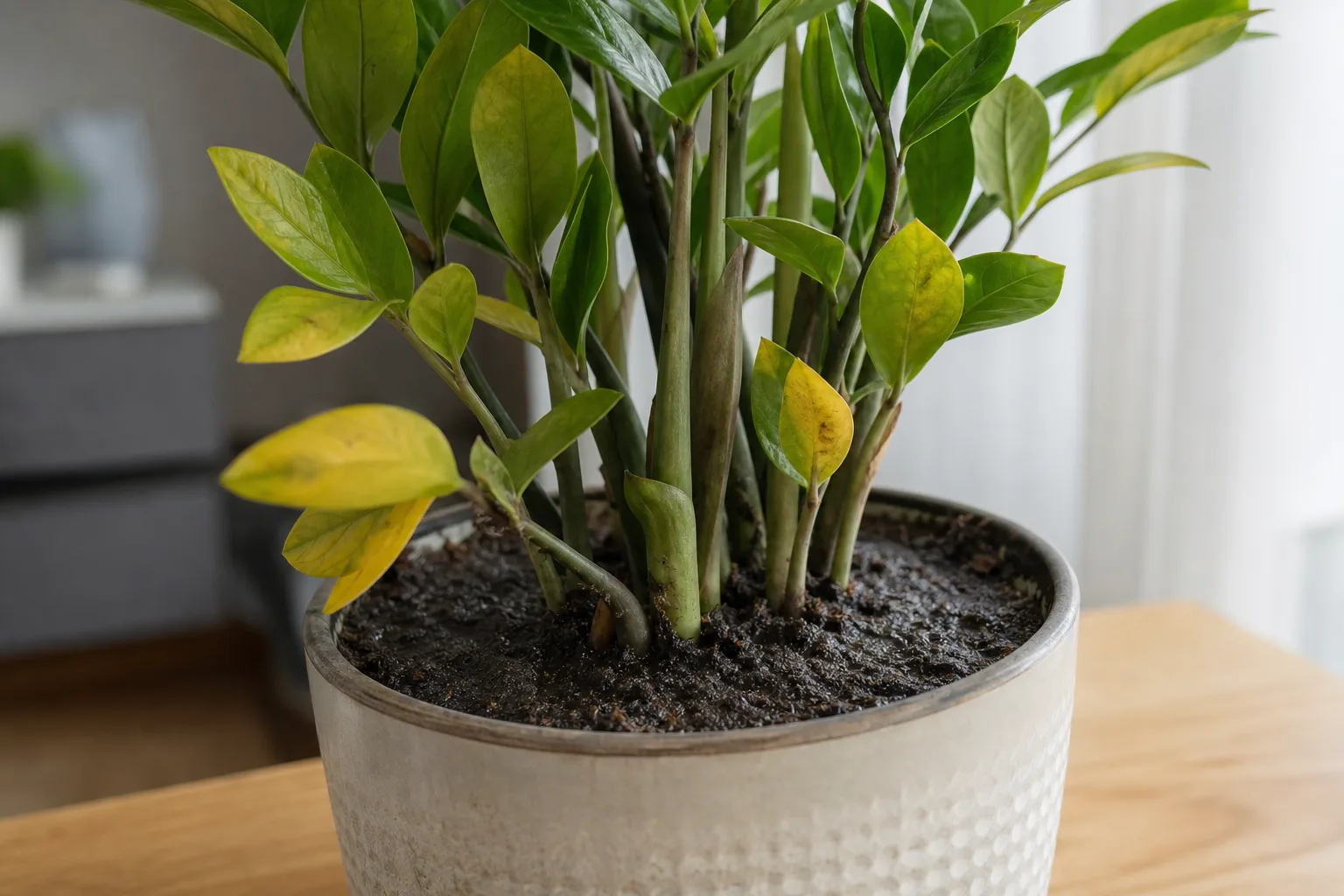
Wrong Soil Mix on ZZ Plant: Causes, Checks & Fixes
This guide covers wrong soil mix on ZZ Plant. See also the general Wrong Soil Mix guide, watering, and light pages for this plant.
Wrong Soil Mix on ZZ Plant: Causes, Checks & Fixes
Quick answer
Wrong soil mix on ZZ Plant (Zamioculcas zamiifolia) means potting medium that holds water too long around thick underground rhizomes built for drought, not damp soil. Standard peat-heavy bagged mix, moisture-control blends, or garden soil in a container keep the root zone saturated even when you water sparingly. NC State Extension advises well-drained potting soil watered routinely but allowed to dry out between waterings-treat ZZ much the same way as cactus and other succulent plants.
First step: slide the plant out and feel the mix around the rhizomes. Crumbly, airy soil that dries within a week or two is workable. Dense, wet, peat-packed muck clinging to rhizomes confirms the wrong blend and usually needs ZZ Plant repotting guide-not more careful watering on the same schedule.
What wrong soil mix looks like on ZZ Plant
Above soil, a bad mix often masquerades as a watering problem. Glossy stems may still look fine while the rhizome zone stays chronically damp. Common clues:
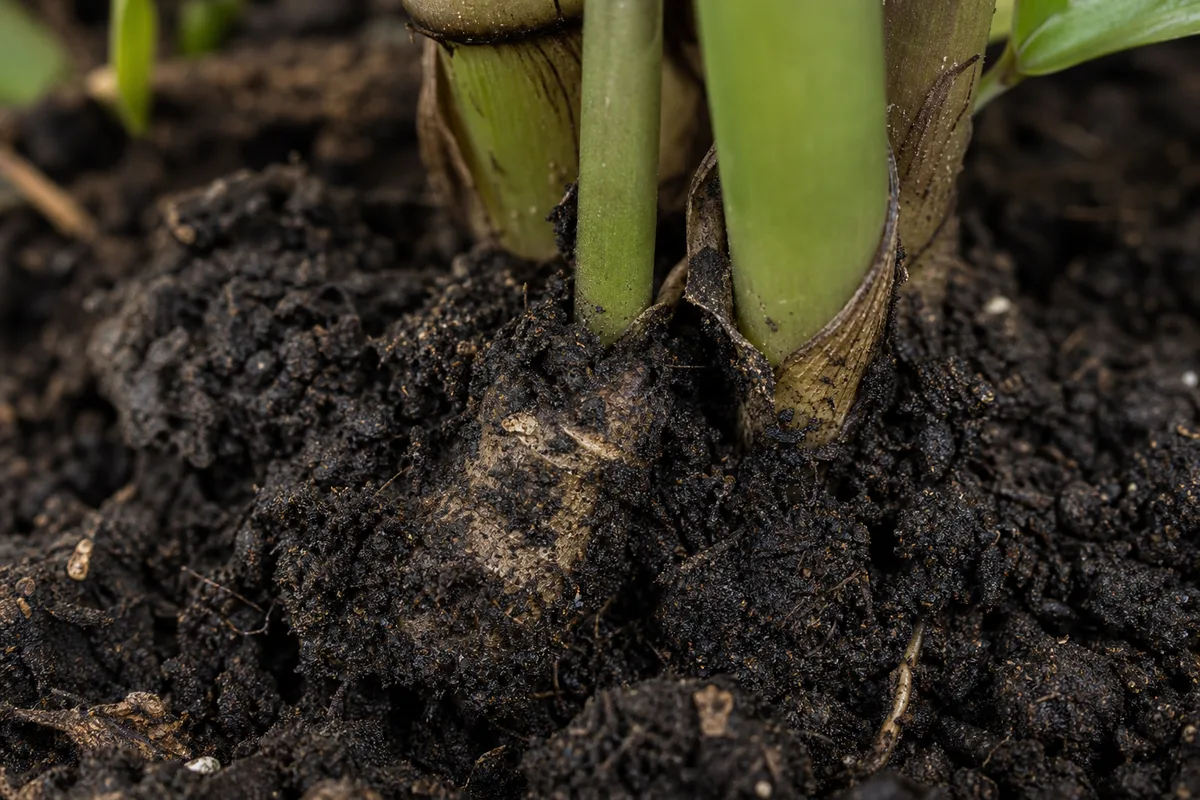
Wrong Soil Mix symptoms on ZZ Plant - compare with healthy tissue on the same plant.
- Soil surface looks dry but the pot feels heavy days after a drink
- Mix stays visibly wet for two weeks or more indoors
- Yellow leaflets appear despite what feels like conservative watering
- Fungus gnats hover around the pot rim
- White or gray mold on the soil surface
- Sour or swampy smell when you lift the plant from its pot
Below soil, the decisive sign is texture and rhizome health. In the wrong mix, rhizomes sit in a tight wet ball of peat. Healthy tissue feels firm like a potato; decay from chronic sogginess turns rhizomes brown, soft, or hollow. Root rot may occur if ZZ plants are grown in poorly drained soil with excessive water for an extended period-and dense mix creates that condition even when watering seems modest.
Lookalikes to separate first: overwatering on ZZ Plant on a decent mix and wrong mix often overlap. If you repot into gritty soil but keep watering weekly out of habit, symptoms return. Undersaturated mix with firm rhizomes and a light pot usually means underwatering on ZZ Plant, not a blend problem. Yellow leaves from fluoride or salt buildup in old mix can mimic rot stress-check for crusty white deposits on the soil surface before assuming the whole batch is wrong.
Why ZZ Plant fails in the wrong mix
ZZ evolved in dry grassland and forest in Eastern Africa. Petioles rise directly from rhizomes that store water for months. Missouri Botanical Garden notes plants should be regularly watered, but allow the soils to dry between applications and avoid wet soils. Mix that behaves like a sponge fights that biology.
Peat-heavy standard potting soil is the most common mismatch. Fresh peat drains reasonably; after a year or two indoors it compacts, shedding air pockets rhizomes need. Water pools in the center of the pot while the top inch looks dry-owners think the plant needs another drink and worsen saturation.
Garden soil or topsoil in pots compacts faster, holds more water, and introduces pathogens. Containers lack the drainage and soil biology of outdoor beds. ZZ rhizomes suffocate in that dense environment.
Moisture-retentive “indoor plant” blends without added grit suit ferns and peace lilies, not drought-adapted aroids. ZZ’s slow indoor growth rate means it uses water slowly; retentive mix stays wet long after the plant has finished drinking.
Oversized pots amplify bad mix. A small rhizome clump in a large wet zone means most soil never dries. NC State notes wet feet are not tolerated-oversized containers plus heavy mix is a common rot setup.
Low light slows transpiration further. A ZZ in a dark corner planted in dense peat may take three weeks to dry halfway down, turning every watering into a swamp event.
How to confirm the cause
Work through these checks before repotting or changing your whole routine:
- Pot weight - Lift the container. Heavy several days after watering means mix is holding moisture too long.
- Moisture at depth - Stick a finger or dry skewer to the bottom third. Surface dryness with wet deep mix confirms retentive soil, not drought.
- Smell - Musty or sour odor from the drainage hole points to anaerobic mix around roots.
- Rhizome firmness - Knock the plant out gently. Press rhizomes. Firm and pale is healthy; squishy or dented tissue means damage already started.
- Mix texture - Crumbly with visible perlite or bark pieces is appropriate. Smooth, sticky peat clumps that hold shape when squeezed are too dense for ZZ.
- Dry-down time - Note how many days until the pot feels light again. More than ten to fourteen days in normal indoor conditions often means mix, pot size, or both are off.
- Drainage hardware - No drainage holes or a plugged hole can mimic wrong mix. Confirm holes are open before blaming the blend alone.
If mix is gritty, pot is appropriately sized, rhizomes are firm, and soil dries fully between drinks, look at overwatering or pot size instead.
First fix for ZZ Plant
Repot into fast-draining gritty mix-ideally the same day you confirm dense wet soil around softening rhizomes.
Do not water first to “loosen” the root ball. Slide the plant out, knock away old mix, and inspect every rhizome. Cut away mushy sections with clean scissors. Let trimmed rhizomes air-dry on newspaper for 24 hours so cut surfaces callus.
For fresh mix, Clemson HGIC recommends a coarse, well-draining blend: roughly 50% peat- or coir-based potting soil, 25% perlite, and 25% sand. A commercial cactus or succulent mix blended with 30–40% extra perlite or orchid bark also works well. UF/IFAS notes any well-drained peat- or bark-based potting soil can be used-the critical part is drainage, not richness.
Choose a pot only slightly wider than the rhizome clump, with open drainage holes. Set the plant at the same depth as before. Fill around rhizomes with dry mix-do not pack it tight. Wait one to two weeks before the first small watering so damaged tissue can stabilize.
After repotting, move the plant to ZZ Plant light guide if it has been in deep shade. Better light helps the new mix dry on a predictable schedule.
Step-by-step recovery
Once repotted into appropriate mix:
- Withhold water for at least seven to fourteen days unless every rhizome was healthy and you simply upgraded preventive mix.
- Test dryness with a skewer to the pot bottom before each future drink. The entire volume should be dry, not just the surface.
- Watch new growth - A fresh stem emerging upright means roots are functioning again. Recovery is slow; ZZ may take months to push new shoots.
- Trim yellow leaflets only after the plant stabilizes. Damaged leaflets will not green up, but firm rhizomes can still produce replacements.
- Reduce winter watering - NC State suggests watering only once a month in winter when not actively growing. Gritty mix dries faster, but cool rooms still slow uptake.
Recovery timeline and what to expect
Mild cases-firm rhizomes, no smell, mix simply too peat-heavy-often stabilize within two to four weeks after repotting. You may see no new growth immediately; that is normal for a slow species.
Moderate rot trimmed back can need two to three months before a new stem appears. Judge success by firm rhizome tissue and a stable soil dry-down cycle, not by how fast leaves return.
Advanced mushy rhizomes with collapsing stems may leave too little healthy tissue to save the whole plant. Propagate leaf cuttings from firm stems while repotting surviving rhizome sections.
Signs improvement is working: Pot weight drops within seven to ten days after watering, no new yellowing, firm rhizomes on spot checks, and eventually one new petiole rising from soil level.
Signs the problem is worsening: Continued stem flop despite dry gritty mix, spreading black tissue at rhizome cuts, or sour smell returning within days of repotting.
Mistakes to avoid
- Adding gravel to the pot bottom - This raises the saturated zone rather than improving aeration. Fix the mix itself.
- Repotting into fresh standard potting soil without perlite - New peat still holds too much water for ZZ rhizomes.
- Watering right after repotting - Wet cuts and fresh wounds in damp mix restart rot.
- Jumping to a much larger pot - More wet soil volume around a small root system prolongs saturation.
- Misting or humidity trays - ZZ tolerates normal indoor humidity; extra moisture does not fix soil structure.
- Fertilizing stressed plants - Salts in heavy mix plus fertilizer can burn leaflet edges. Wait until new growth is healthy.
Wear gloves when handling cut rhizomes if sap irritates your skin. ZZ Plant is toxic to cats and dogs if ingested-keep trimmed debris away from pets.
How to prevent wrong soil mix next time
- Start with gritty blend at purchase or first repot, not plain bagged indoor mix.
- Refresh soil every two to three years even if the plant is not root-bound-peat breakdown is gradual and invisible.
- Match pot to rhizome mass - One to two inches wider than the clump is enough for years.
- Confirm drainage - Holes open, saucers emptied after each watering.
- Water on dryness, not calendar - Water only after the potting medium has completely dried, as Clemson HGIC directs.
- Adjust for season - Less frequent drinks in cool months when growth pauses.
When to worry
Treat as urgent when multiple stems collapse at once, rhizomes feel hollow on inspection, or soil smells sour while leaves yellow rapidly. Same-day repot into dry gritty mix is warranted.
A firm plant in slightly too-rich mix without symptoms can wait for planned spring repotting-do not disturb a stable ZZ unnecessarily.
If every rhizome is mushy after unpotting, salvage is unlikely for the mother plant. Take healthy leaf cuttings and discard rotted tissue rather than repotting decay into fresh mix.
When to use this page vs other ZZ Plant guides
- ZZ Plant watering guide - Use for routine moisture checks before assuming wrong soil mix is the main issue.
- ZZ Plant problems hub - Browse all 27 common issues on this species.