Mealybugs on ZZ Plant: Causes, Checks & Fixes
Quick answer
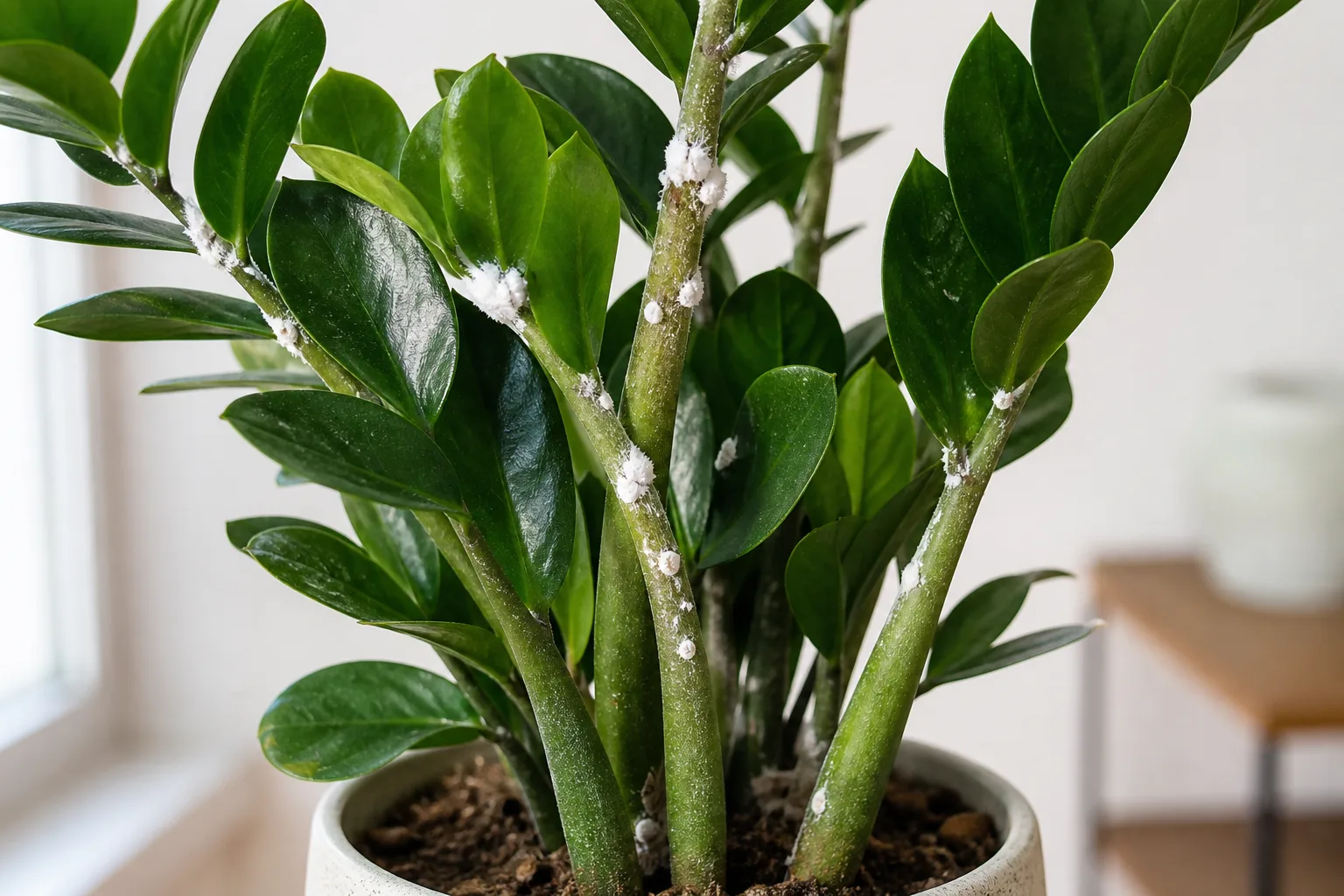
Mealybugs on ZZ Plant hide as white cottony masses where thick petioles meet the rhizome and in leaf axils along arching stems. First step: move the plant away from others and dab every visible bug with a cotton swab dipped in 70% rubbing alcohol before any spray.
Mealybugs on ZZ Plant: Causes, Checks & Fixes
This guide covers mealybugs on ZZ Plant. See also the general Mealybugs guide, watering, and light pages for this plant.
Mealybugs on ZZ Plant: Causes, Checks & Fixes
Quick answer
Mealybugs on ZZ Plant (Zamioculcas zamiifolia) appear as white, cottony wax clusters tucked where thick petioles arise directly from the rhizome, at the soil line, and in leaf axils along arching stems. They suck sap, weaken slow new growth, and leave sticky honeydew that can support black sooty mold on glossy leaflets below.
First step: isolate the plant and dab every visible mealybug with a cotton swab dipped in 70% rubbing alcohol. That stops immediate spread and kills adults you can reach. Only after manual removal should you plan repeat sprays for hidden eggs and crawlers.
What mealybugs look like on ZZ Plant
ZZ Plant is stemless-each glossy petiole emerges from an underground rhizome rather than a visible trunk. That architecture creates exactly the protected crevices mealybugs prefer on houseplants: crown of the plant, branch crotches, stems near soil, and spaces between touching leaves.
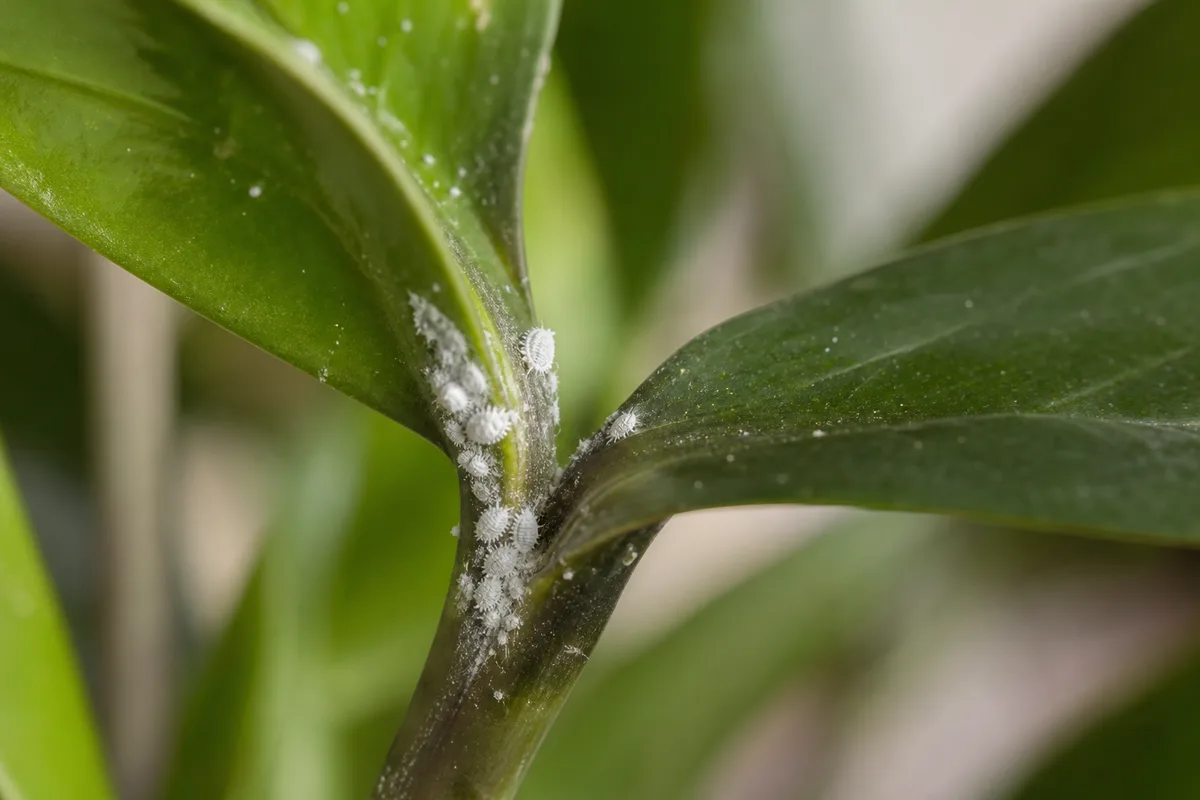
Mealybugs symptoms on ZZ Plant - compare with healthy tissue on the same plant.
Typical signs on Zamioculcas zamiifolia:
- White, cottony masses at the rhizome crown and soil line
- Wax clusters where petioles meet the rhizome or where leaflets join the rachis
- Slow-moving pinkish or gray bodies if you part the cotton with a fingernail
- Shiny, tacky patches on upper leaflets from honeydew drips
- Black sooty mold on honeydew-coated leaves
- Stunted or distorted new shoots when feeding is heavy
- Ant trails on the pot rim or shelf farming honeydew
Mealybugs are covered with powdery wax and look like bits of cotton or meal when crowded together. On ZZ, infestations often start low at the rhizome crown-hidden under arching petioles-before crawlers climb stems. The thick waxy cuticle on leaflets resists some pests, but mealybugs still colonize joints and sheaths where sprays miss.
Why ZZ Plant gets mealybugs
ZZ Plant is naturally resilient. UF/IFAS notes that pests are not usually problematic under good indoor conditions-outbreaks almost always trace to introduction or stress, not random bad luck.
Indoor conditions favor them. Mealybugs thrive where winters are mild and plants grow year-round-exactly what happens in heated homes. Greenhouses and indoor plantings are especially vulnerable because natural enemies rarely reach them.
ZZ’s structure hides pests. The rhizome crown sits at or just below the soil surface with multiple thick petioles radiating outward. Mealybugs tuck into those tight bases and into unfurling leaf sheaths while the glossy canopy looks clean from across the room.
Stress invites trouble. Clemson HGIC reports no serious insect problems on healthy ZZ plants, but overwatering can lead to root rot that weakens rhizomes. A plant sitting in wet soil, dim light, or recovering from a recent move is easier prey than a stable specimen with proper dry-down between waterings.
Introduction from outside the home. Mealybugs spread when new nursery plants skip quarantine, when infested pots touch clean ones, or when crawlers walk across shared shelves. Adult females do not fly, but young crawlers move plant to plant on contact.
How to confirm the cause
Work through these checks before you buy spray:
- Location on the plant - Mealybugs cluster at the rhizome crown, petiole bases, and leaflet sheaths. Random dry white dust on open leaflet faces alone is less typical.
- Texture test - Part the white mass gently. Mealybugs feel soft and may show a pinkish or gray body underneath. Scale is hard and fused to the petiole. Saprophytic mold on wet soil is fluffy on the mix surface, not attached to stems.
- Movement - Crawlers and adults move slowly when disturbed. Scale, mineral deposits, and dried sap do not.
- Honeydew check - Rub a glossy upper leaflet. Tacky residue with optional black sooty film points to sap feeders, not the plant’s natural shine.
- Rhizome and crown inspection - Pull petioles aside at the soil line with a hand lens or phone light. Check every point where a petiole emerges from the rhizome.
- Neighbor plants - Inspect every pothos, philodendron, hoya, and dracaena within reach. Mealybugs rarely stay on one pot once established.
- Care cross-check - Press the rhizome through the pot wall or gently unpot one side. Firm rhizomes with dry soil suggest pest-only stress. Soft, mushy rhizomes with wet mix point to rot compounding the problem.
If you find cottony colonies with honeydew and no hard scale shell, mealybugs are confirmed.
First fix for ZZ Plant
Move the plant to an isolated spot with ZZ Plant light guide, then dab every visible mealybug with a cotton swab dipped in 70% isopropyl alcohol.
Isolation prevents crawlers from reaching your collection. Direct alcohol contact kills exposed adults and removes wax. Test alcohol on one petiole first and wait a day-some houseplants burn if solution pools on tissue.
Work systematically from the rhizome crown upward, opening each petiole base and leaflet sheath. On a full-size ZZ, expect twenty to thirty minutes for the first pass. Wear gloves when handling cut tissue-ZZ Plant sap contains calcium oxalate crystals that irritate skin.
Do not soak soil repeatedly while treating. Do not repot on day one unless you confirm root-feeding mealybugs. Do not fertilize a pest-hit plant hoping to push new growth-that produces tender tissue pests prefer.
Step-by-step recovery
After the alcohol dab pass:
- Repeat manual removal every three to five days until you stop finding live white clusters on inspection.
- Apply insecticidal soap to petiole bases, leaflet sheaths, and undersides where mealybugs hide. Cover crevices thoroughly; soap only works on direct contact. Repeat at label intervals through at least two mealybug generations-typically weekly for three to four weeks.
- Optional targeted rinse if soil moisture is moderate. A gentle stream on petioles dislodges exposed nymphs-avoid drenching a pot that is already wet.
- Wipe honeydew and sooty mold from glossy leaflets with a damp cloth once feeding stops. Trim only leaflets that are more than half coated and no longer functional.
- Manage ants if present. Ants protect mealybugs from predators in exchange for honeydew-control ants on pot rims and shelves.
- Inspect quarantined plants weekly for six weeks. Eggs and hidden nymphs hatch after the first treatment wave; most failures come from stopping too early.
- Repot only if root mealybugs are suspected-white wax near buried rhizomes, or foliar bugs gone but colonies return within days. Shake off old mix, rinse rhizomes, and repot into fresh gritty well-draining soil. Wait before resuming normal watering.
Neem oil and horticultural oil can supplement soap on contact-only schedules, but test on one petiole first. ZZ’s succulent tissue can be sensitive to repeated oil films.
Recovery timeline
Manual alcohol dabbing shows visible reduction within a few days when colonies are small. A full soap cycle with label-interval repeats typically takes two to four weeks. Large ZZ specimens with deep petiole bases may need six weeks of monitoring before you declare the plant clean.
Old leaflets with heavy sooty mold rarely regain their original mirror gloss-watch for firm new petioles emerging without wax at the rhizome. That is your recovery signal. Because ZZ is inherently slow-growing, a full canopy refresh can take several months even after pests are gone.
Lookalike symptoms to rule out
Scale insects form hard brown, tan, or white domes glued to petioles. They do not look cottony and do not wipe off easily. Check for both-mealybugs and scale often arrive together on nursery stock.
Spider mites cause fine stippling and webbing on leaflets, not cottony wax in petiole joints. Mites favor hot, dry air; mealybugs tolerate average room humidity.
Saprophytic mold on soil appears as white fuzz on the potting mix surface when soil stays wet too long. It does not cluster on petiole bases or produce honeydew on leaves.
Mineral dust or hard-water spots wipe off dry or with water alone. Mealybug wax stays until you physically remove it.
Rhizome rot shows soft, mushy tissue at the crown with sour-smelling wet soil-not cottony insects. Yellowing stems with firm rhizomes and white wax clusters point to pests, not rot alone.
Mistakes to avoid
Do not return the plant to your collection after one treatment. Eggs hatch on a staggered schedule-plan for repeats.
Do not overwater while fighting pests. ZZ rhizomes rot in wet mix, and rot stress plus sap loss collapses the plant faster than mealybugs alone.
Do not handle extensively without gloves. ZZ Plant is toxic to cats and dogs if chewed, and sap irritates skin during pruning.
Do not use broad outdoor pesticides indoors without label clearance for houseplants and the specific pest.
Do not ignore nearby plants. Mealybugs on one ZZ often mean hidden colonies on lower shelves.
ZZ Plant care cross-check
While treating pests, keep baseline care stable:
- Light - Bright to medium indirect light supports recovery. ZZ tolerates low light but grows very slowly there, extending rehab time.
- Water - Water only when soil is completely dry. Rhizomes store water; soggy mix weakens the plant and invites rot alongside pests.
- Soil - Use a coarse, well-draining mix. Rhizomes cannot sit in moisture-retentive peat for long.
- Temperature - Keep above 60°F. Cold stress slows growth and complicates monitoring.
- Fertilizer - Hold feed until new growth looks healthy for two weeks. ZZ needs minimal nutrition.
Fixing only the bugs while ignoring wet soil or dark placement often brings the infestation back.
How to prevent mealybugs next time
Quarantine every new plant for at least two to three weeks before placing it near your ZZ. Inspect rhizome crowns and petiole bases at purchase-dealers often miss pests tucked at the soil line.
Add mealybug checks to weekly care: one pass at the rhizome crown with a hand lens takes minutes once you know the hiding spots. Examine plants when you water-lift arching petioles and look where they meet the rhizome.
Avoid excess nitrogen fertilizer during active pest season. High nitrogen with regular watering stimulates tender new growth where mealybugs prefer to lay eggs.
Keep pots spaced so arching petioles do not touch-crawlers bridge gaps between plants. Clean saucers and shelf surfaces after a prior outbreak.
When to worry
Treat as urgent when cottony colonies cover multiple petioles, honeydew drips onto furniture daily, ants swarm the pot, or rhizomes soften while soil stays wet. Heavy feeding on a plant already stressed by overwatering can spiral quickly on slow-growing ZZ.
Mealybugs are very difficult to control on large infestations. Heavily infested plants may need to be discarded rather than repeatedly treated-especially if rhizomes are already compromised.
A few isolated white tufts at one petiole base, caught early, are manageable. Scale the response to the spread you actually see.
Conclusion
Mealybugs on ZZ Plant hide where thick petioles meet the rhizome-out of sight until honeydew or sooty mold gives them away. Isolate first, dab with alcohol, then follow with thorough soap sprays on a repeat schedule until new petioles emerge clean. Stable light, dry-down watering, and weekly crown checks keep this drought-tough houseplant ahead of the next crawler wave.
When to use this page vs other ZZ Plant guides
- ZZ Plant watering guide - Use for routine moisture checks before assuming mealybugs is the main issue.
- ZZ Plant problems hub - Browse all 27 common issues on this species.
- Yellow Leaves on ZZ Plant - Different entry point when symptoms overlap with mealybugs.
- Slow Growth on ZZ Plant - Different entry point when symptoms overlap with mealybugs.
- Spider Mites on ZZ Plant - Different entry point when symptoms overlap with mealybugs.