Scale Insects on ZZ Plant: Causes, Checks & Fixes
Quick answer
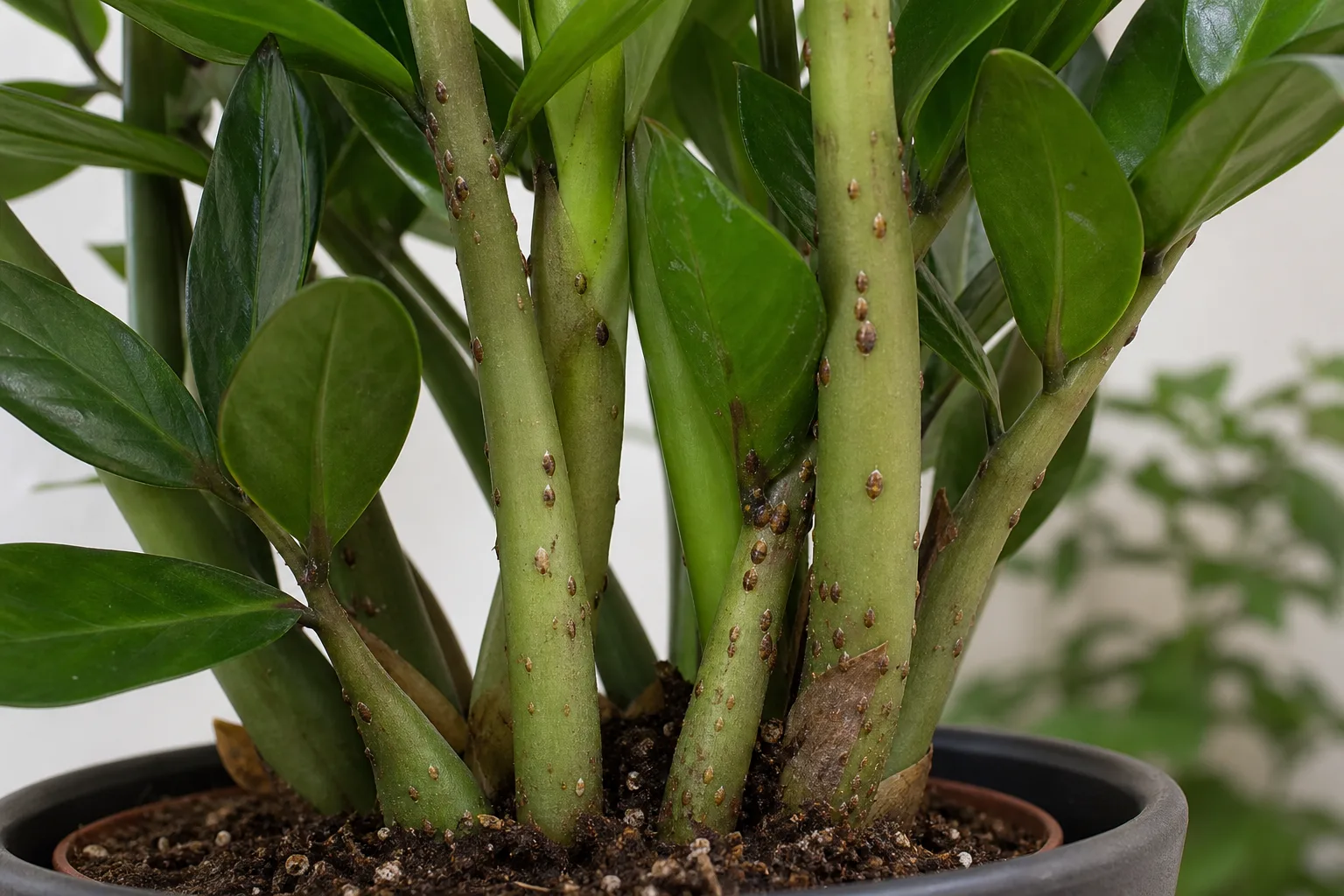
Scale on ZZ Plant shows as immobile tan or brown bumps along arching petioles and stems, often with sticky honeydew on glossy leaflets below. First step: isolate the plant and scrape off bumps with an alcohol-soaked cotton swab before applying any spray.
Scale Insects on ZZ Plant: Causes, Checks & Fixes
This guide covers scale insects on ZZ Plant. See also the general Scale Insects guide, watering, and light pages for this plant.
Scale Insects on ZZ Plant: Causes, Checks & Fixes
Quick answer
Scale insects are sap-feeding pests that settle as immobile, shell-covered bumps on stems and leaf petioles. On ZZ Plant (Zamioculcas zamiifolia), they most often appear along the thick arching petioles that rise directly from underground rhizomes-not scattered randomly on glossy leaflets.
Healthy ZZ plants under good care rarely develop pest problems, but scale hitchhikes on new plants and can colonize a ZZ sitting near an infested neighbor. Sticky honeydew on leaflets below the bumps, yellowing leaflets, and black sooty mold are the usual warning signs-not the bumps alone.
First step: isolate the plant and manually remove every bump you can reach with a cotton swab dipped in 70% isopropyl alcohol. Confirm you are dealing with removable scale, not the normal dark spots ZZ stems develop, before you schedule repeated oil or soap sprays.
What scale looks like on ZZ Plant
Scale on ZZ differs from the plant’s normal appearance in several ways.
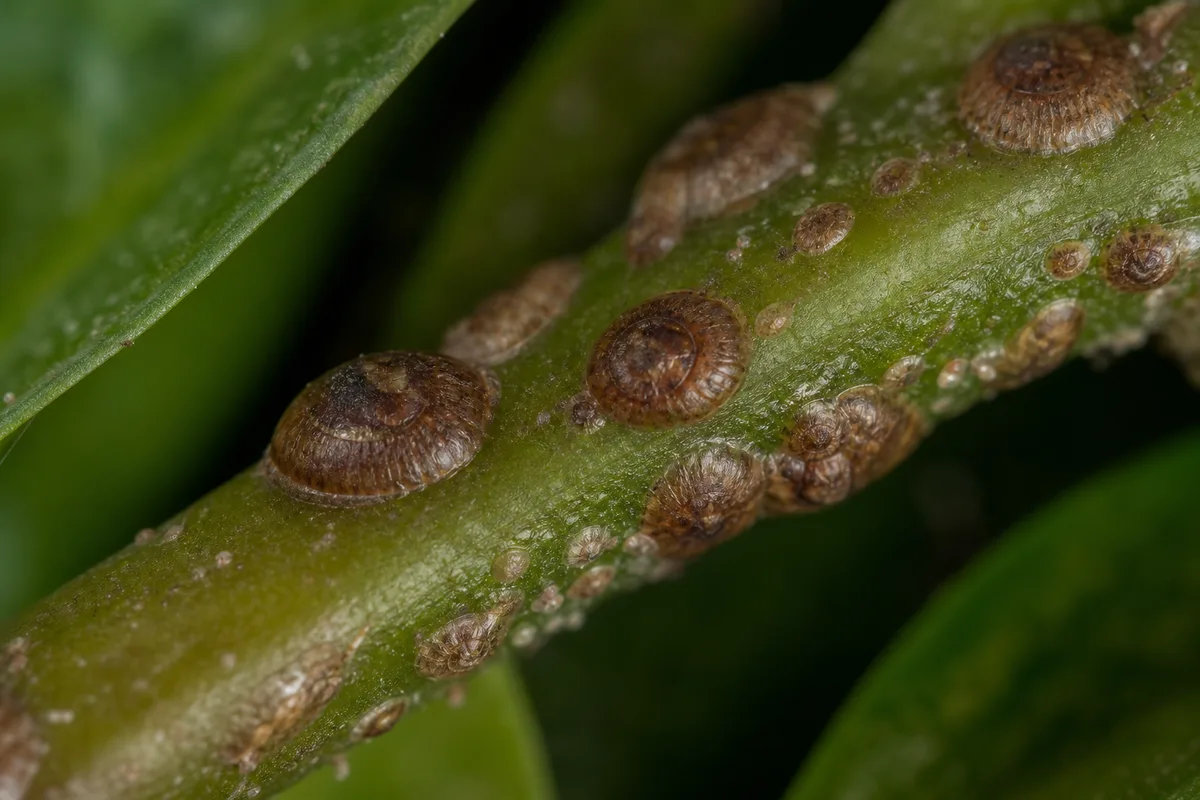
Scale Insects symptoms on ZZ Plant - compare with healthy tissue on the same plant.
Typical scale signs:
- Flat or rounded tan, brown, or gray bumps glued along petioles, especially near the rhizome crown and in leaf axils where stems arch
- Sticky, shiny honeydew on upper leaflets beneath infested petioles, or on the pot rim and nearby surfaces (typical of soft scale species)
- Black sooty mold growing on dried honeydew-it wipes off with a damp cloth but returns if insects remain
- Yellowing or dull leaflets on stems with heavy feeding, without the sour smell or mushy rhizome of rot
- Bumps that flake off under gentle pressure from a fingernail, toothpick, or swab-unlike permanent stem tissue
What is often normal on ZZ:
- Small black spots on otherwise firm stems are typical on healthy plants and do not scrape off
- Thick, naturally glossy leaflets with no tackiness, insects, or mold
- Firm rhizomes and dry-to-touch potting mix between waterings
Unlike mealybugs on ZZ Plant, scale lacks white cottony wax. Unlike aphids, adults do not move once settled. The slow, upright growth habit of ZZ means infestations concentrate on visible petiole surfaces rather than hidden leaf undersides-though always check where petioles meet the soil line.
Soft scale vs. armored scale on ZZ
Most indoor ZZ scale outbreaks involve soft scale species that excrete honeydew and form rounded, slightly convex covers. Armored scale species are flatter, often smaller, and do not secrete sticky honeydew-so you may see bumps without tacky leaflets or sooty mold. Armored covers typically stay fused to the petiole when you try to lift them; soft scale shells may separate more easily under a swab.
That distinction matters for treatment. Honeydew-producing soft scale often responds to repeat horticultural oil or insecticidal soap plus optional systemic drenches labeled for houseplants. Armored scale needs thorough contact sprays on crawler hatch windows and does not respond reliably to soil-applied imidacloprid. On ZZ’s thick succulent petioles, both types hide at the rhizome crown where arching stems block casual view.
Why ZZ Plant gets scale
ZZ evolved for drought-prone African woodland and stores water in rhizomes. Indoors it tolerates low light and infrequent watering, which is why it is marketed as nearly pest-free. Under ideal culture, pests are not usually problematic for this plant-outbreaks almost always trace to introduction or stress, not random bad luck.
Most common triggers on ZZ:
- New plants without quarantine - Scale crawlers travel on nursery stock and spread when pots sit close together on a shelf or desk
- Contact with infested neighbors - Even succulents, ficuses, or crotons nearby can pass scale to a ZZ that otherwise looked clean
- Stressed, overwatered plants - Rhizomes sitting in wet mix grow weakly and recover slowly from sap loss; pests gain ground on sluggish tissue. See root rot on ZZ Plant if rhizomes soften at the same time
- Low-light placement with poor inspection - Office ZZ plants may go weeks without anyone lifting arching stems to check petiole bases
- Dusty stems in dry heated rooms - Dust does not cause scale, but it hides early bumps until honeydew appears
Scale feeds on plant sap with sucking mouthparts, draining phloem. On a slow-growing ZZ, even a moderate infestation removes resources that would otherwise fuel one or two new petioles per season-so early treatment matters more than on fast-growing pothos.
Weekly inspection ritual for office ZZ plants
Once a week during watering, set a desk lamp or phone flashlight at the rhizome crown and lift each arching petiole where it meets the soil line. Run a finger along the upper leaflets directly below suspicious stems for tackiness. This two-minute pass catches scale before honeydew drips to the floor or furniture-especially in dim cubicle light where glossy leaflets hide stem bumps from across the room.
How to confirm the cause
Work through these checks in order before spraying:
- Scrape test - Pick one bump on a petiole. If it flakes off and leaves a soft insect underneath or a clean scar, you have scale. If the spot is fixed in the stem and feels like normal tissue, it is likely a harmless ZZ stem marking.
- Honeydew check - Run a finger along leaflets directly under suspicious stems. Tacky residue that returns after wiping suggests active sap feeders-usually soft scale, not armored species.
- Shell hardness - Try to lift the edge of a bump with a toothpick. Armored scale covers stay glued flat; soft scale may feel slightly raised and convex.
- Distribution pattern - Scale clusters along petioles and stem joints; fungal leaf spot appears as discrete spots on leaf surfaces with no shells on stems.
- Mealybug rule-out - White powdery cotton at the same joints means mealybugs, not scale-treatment overlaps, but identification guides how thoroughly you search crevices.
- Rhizome and soil check - Unpot only if stems yellow widely or the base feels soft. Firm rhizomes with dry mix confirm this is a pest issue, not overwatering rot masquerading as decline.
- Collection scan - Inspect plants you bought in the last two months or grouped within arm’s reach. Scale on one pot often means others are incubating crawlers.
- Magnifier pass - Newly hatched crawlers are tiny and mobile. A hand lens along petiole veins catches reinfestation early.
If bumps are fixed black stem spots, leaflets are glossy and dry, and the rhizome is firm, you likely do not have scale-no pesticide needed.
First fix for ZZ Plant
Move the plant away from all others and remove every scale you can see by hand.
Place the ZZ on a washable surface. Dip a cotton swab in 70% isopropyl alcohol and dab each bump, then wipe honeydew from leaflets with a soft cloth. Thick ZZ leaflets generally tolerate alcohol spot cleaning when the swab is damp, not dripping-but test one leaflet or petiole first and wait 24 hours before treating the whole plant, especially on drought-stressed or sun-exposed specimens.
Wear gloves-sap can irritate skin and the plant is toxic if chewed by pets. Keep treated plants off pet-accessible shelves during cleanup.
This single step confirms diagnosis, cuts the adult population immediately, and makes later sprays more effective. Do not start with horticultural oil alone on a heavy infestation-the shells protect insects underneath.
Wait until leaf surfaces dry before moving the plant back to its spot. Keep it isolated until you see no new bumps for two full weeks after follow-up treatments.
Step-by-step recovery
After manual removal, work through these steps in order:
- Shower or rinse leaflets - Lukewarm water over leaflets removes honeydew and dislodges crawlers. Avoid soaking the rhizome crown; ZZ rhizomes should not sit wet. Direct water at leaflets and petioles only.
- Apply horticultural oil or insecticidal soap - Coat petioles, stem joints, and leaflet undersides on label repeat intervals, typically every five to seven days for two to three cycles, to catch newly hatched crawlers. Use products labeled for indoor houseplants.
- Repeat alcohol spot treatment - Between spray days, swab any bumps that reappear at the rhizome crown-the favorite hiding zone on ZZ.
- Hold fertilizer and repotting - Do not feed or repot a pest-stressed ZZ until new growth looks healthy for two weeks. Salt and root disturbance slow recovery.
- Correct watering - Resume the dry-down rhythm from the ZZ watering guide. Overwatering can lead to root rot and weakens rhizomes-not scale directly, but stacked stress slows healing.
- Monitor the collection - Treat or inspect neighboring plants that shared a shelf. Crawlers walk to adjacent pots before you notice honeydew on the ZZ.
- Wash nearby surfaces - Honeydew on desks and windowsills can harbor mold; cleaning it prevents ants from farming remaining insects.
- Escalate if armored scale persists - After three full oil or soap cycles, if flat bumps without honeydew keep returning on petiole bases, continue contact treatments through another crawler generation. Systemic soil drenches containing imidacloprid may help soft scale with honeydew but are not reliable against armored species-read labels carefully and keep drenches away from pets. When more than half of visible petiole surfaces carry encrusted scale and yellowing spreads despite treatment, discarding the plant may protect the rest of your collection.
Recovery timeline
ZZ Plant recovers from scale slowly because new petioles emerge over weeks to months, not days.
- Days 1–7: Honeydew stops accumulating if adults are removed; existing sooty mold can be wiped off
- Weeks 2–4: No new shells on previously cleaned petioles means treatment is working; continue scheduled sprays through crawler hatch windows
- Months 1–3: New arching stems with glossy leaflets signal rhizome health; old stippled leaflets may remain until you prune them for appearance
- Six weeks: Minimum monitoring window-scale can rebound from missed crawlers
Judge success by absence of new bumps and firm rhizomes, not instant leaf greening. A ZZ that pushes one healthy new petiole after treatment is on track even if older leaflets stay yellow-edged.
Lookalike symptoms
Several ZZ conditions mimic scale bumps. Use this table when you are unsure:
| What you see | Likely cause | Key check | First action |
|---|---|---|---|
| Tan/brown bumps on petioles; may scrape off | Scale insects | Honeydew on leaflets below; shell flakes under swab | Isolate; alcohol dab; repeat oil/soap |
| Firm fixed dark patches on healthy stems | Normal ZZ black stem spots | Spot does not scrape off; no honeydew | No treatment needed |
| White cottony wax in petiole axils | Mealybugs | Soft wax, not hard shell | Isolate; alcohol dab; soap repeats |
| Brown lesions on leaflets only | Leaf spot disease | No bumps on petioles | Improve airflow; dry-down watering |
| Fine stippling and webbing | Spider mites | No hard bumps; hot dry air | Rinse; targeted miticide if severe |
| Soft rhizome, sour wet soil, yellow stems | Root rot | Mushy crown; wet mix | Unpot; trim decay; dry repot |
When online guides say ZZ has “no pests,” remember that means low routine pressure-not that scale cannot appear on an individual plant.
Mistakes to avoid
- Scraping normal black stem spots - Damaging healthy tissue opens wounds on a toxic plant unnecessarily
- One spray and done - Scale life stages need repeated treatments; a single oil application rarely clears indoor infestations
- Skipping isolation - Crawlers spread to pothos, sansevieria, and succulents on the same windowsill
- Overwatering during recovery - Wet rhizomes plus pesticide stress compound the problem
- Repotting on day one - Unless mix is soggy and rhizomes are soft, repotting can wait until pests are controlled
- Heavy fertilizer to “boost” recovery - ZZ needs minimal feed; salts on stressed roots burn leaflet edges
- Ignoring honeydew - Sticky leaflets attract ants and sooty mold that block light on slow-growing plants
- Soaking the rhizome crown during rinses - Wet rhizomes invite rot while the plant is already stressed
ZZ Plant care cross-check (scale recovery)
While fighting scale, keep only the care variables that affect pest recovery:
- Water - Allow potting mix to dry completely between drinks. Wet rhizomes weaken a plant already losing sap. Full dry-down details are in the watering guide.
- Light - Bright indirect or office fluorescent light supports one clean new petiole faster than deep shade, where slow growth makes monitoring harder.
- Fertilizer - Hold feed until new growth looks healthy for two weeks. ZZ needs minimal nutrition during recovery.
- Handling - Wear gloves when wiping sap or treating bumps; keep the plant off pet-accessible shelves until honeydew cleanup finishes.
Fixing chronic overwatering alone will not kill existing scale, but it prevents the weak growth that lets reinfestation take hold after you clear the bugs.
Pet safety during treatment
ZZ Plant contains calcium oxalate crystals that irritate skin and are toxic to cats and dogs if chewed. Wear gloves when dabbing alcohol or wiping honeydew. Bag and discard swabs and wipes rather than leaving them where pets can reach them.
If a pet chews leaves, stems, or soil from a treated plant, contact your veterinarian or the ASPCA Animal Poison Control Center promptly-do not wait for symptoms. This guide is not veterinary advice.
How to prevent scale next time
Quarantine every new plant two to six weeks before it joins your ZZ. Inspect petiole bases where stems emerge from the rhizome during each watering check.
Space pots so you can see stem surfaces-not packed tight on a credenza. Wipe dust from arching petioles occasionally; clean stems make bumps easier to spot in low light.
Treat neighboring plants at the first sign of honeydew anywhere in the room. Avoid nitrogen-heavy feeding that pushes soft, pest-attracting tissue-ZZ needs light, infrequent fertilizer.
Early detection beats any pesticide. A magnifier and bright desk lamp at the rhizome crown catch scale before honeydew reaches the floor.
When to worry
Escalate care when:
- Honeydew and sooty mold cover multiple leaflets despite two treatment cycles
- Yellowing spreads up several petioles while rhizomes stay firm-heavy sap loss on a slow plant
- Bumps reappear weekly after a full month of alcohol and oil treatments-look for a hidden source plant
- Rhizomes turn soft during the same episode-unpot for rot immediately; scale and rot can coexist on overwatered ZZ
- More than half of petioles show encrusted scale and new shoots stall for a full season-consider discarding to protect the collection
You do not need emergency action for a handful of bumps on one petiole on an otherwise firm plant-isolate, remove, and treat on schedule.
Related ZZ Plant guides
- ZZ Plant overview - growth habits and baseline care
- ZZ Plant watering - dry-down rhythm during recovery
- Mealybugs on ZZ Plant - cottony lookalike at petiole bases
- Aphids on ZZ Plant - mobile sap feeders with honeydew
- Spider mites on ZZ Plant - stippling without hard bumps
- Root rot on ZZ Plant - soft rhizomes and wet soil triage
- All ZZ Plant problems
Conclusion
Scale on ZZ Plant is uncommon but real: immobile bumps on arching petioles, sticky honeydew on glossy leaflets below, and slow recovery tied to the plant’s natural growth rate. Isolate first, scrape and dab with alcohol, then follow with labeled horticultural oil or insecticidal soap on repeat intervals while you keep rhizomes dry and firm. Distinguish scale from normal black stem spots before you treat, tell soft from armored scale when honeydew is absent, and monitor the whole collection for six weeks so crawlers do not restart the cycle on your otherwise low-maintenance ZZ.