Poor Drainage on ZZ Plant: Causes, Checks & Fixes
Quick answer
Poor drainage keeps ZZ rhizomes wet in dense peat mix or blocked holes, causing yellow leaves and rot. Repot into gritty cactus-style mix with open drainage and water only when the entire pot is bone dry.
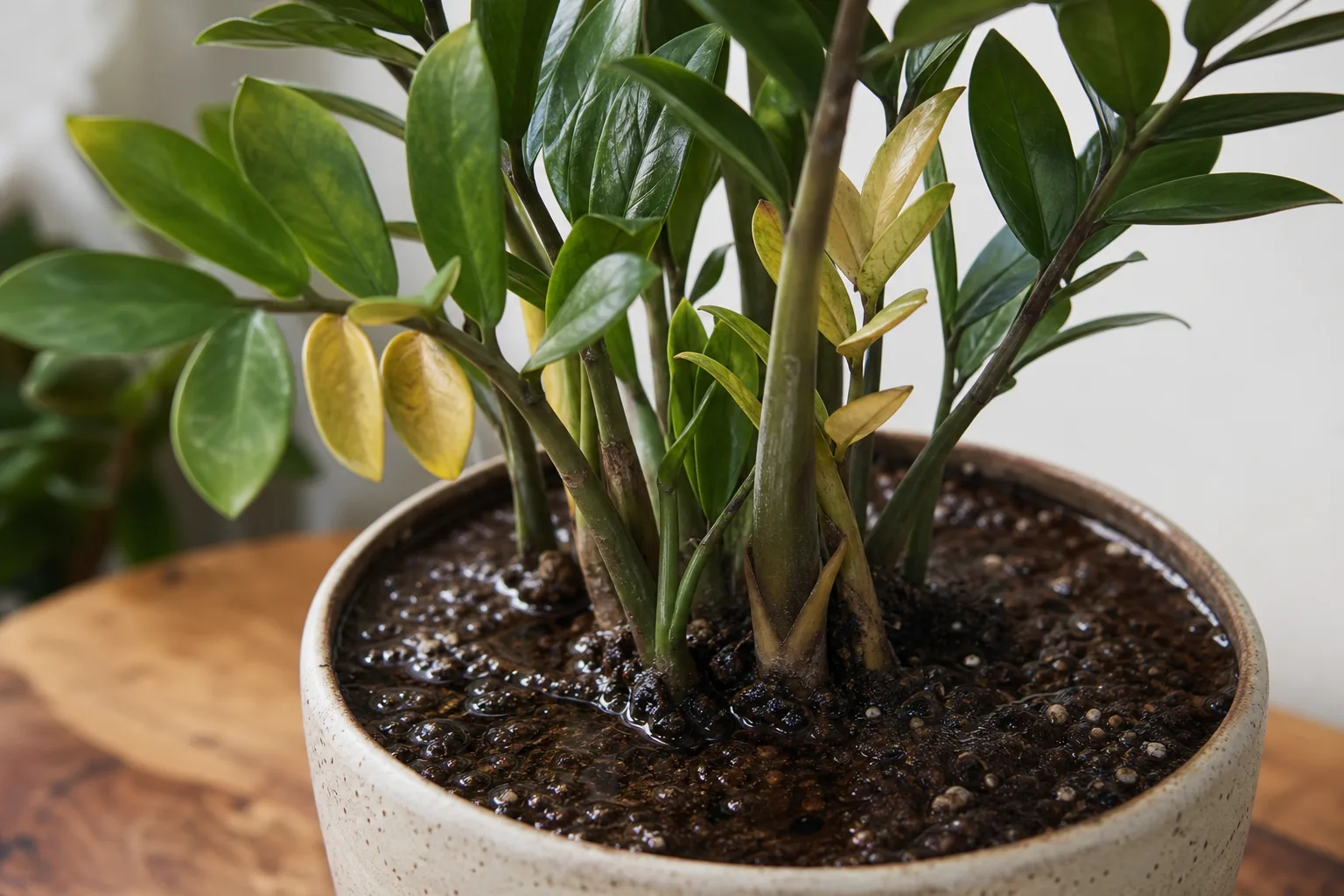
Poor Drainage on ZZ Plant: Causes, Checks & Fixes
This guide covers poor drainage on ZZ Plant. See also the general Poor Drainage guide, watering, and light pages for this plant.
Poor Drainage on ZZ Plant: Causes, Checks & Fixes
Quick answer
Poor drainage on ZZ Plant (Zamioculcas zamiifolia) means the potting mix or container holds water around drought-adapted rhizomes long after you watered. ZZ evolved on dry African grasslands and stores moisture in thick underground rhizomes-wet, airless soil is the opposite of what those roots need. The first fix is not another watering adjustment alone: repot into fresh gritty cactus-style mix, confirm drainage holes are open, and trim any mushy rhizomes before the plant sits dry for one to two weeks.
What poor drainage looks like on ZZ Plant
Poor drainage often hides until rhizomes fail. Above soil, glossy arching stems can still look fine while the mix below stays damp for weeks. Early clues include soil that feels cool and wet on the surface days after watering, a musty or sour odor from the pot, white mold on the mix surface, and fungus gnats hovering near the soil line. As saturation continues, lower leaflets yellow, stems soften at the base, and the pot stays noticeably heavy even when you expect it to have dried.
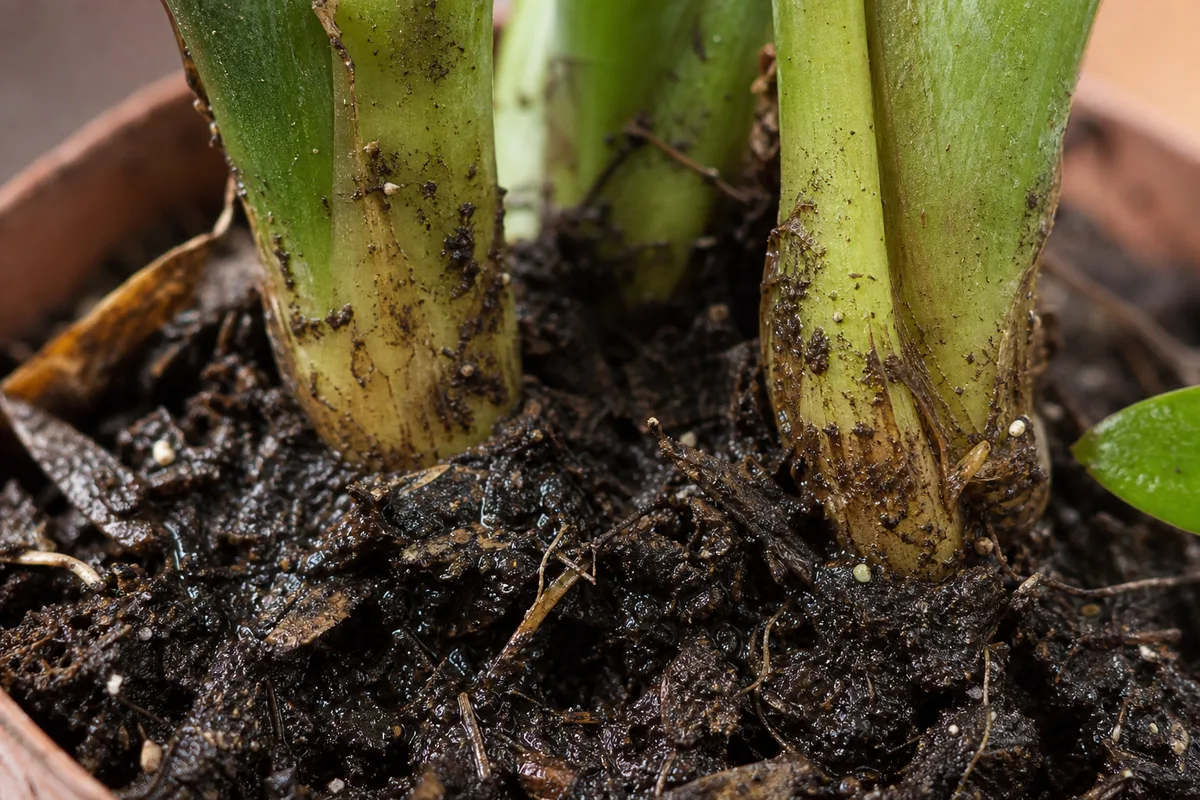
Poor Drainage symptoms on ZZ Plant - compare with healthy tissue on the same plant.
Unlike a single accidental overwatering on ZZ Plant, poor drainage is chronic-the mix never dries fast enough no matter how carefully you pour. You may water less often and still see yellow leaves because dense peat, compacted old soil, blocked holes, or an oversized pot trap moisture around rhizomes that were built to stay dry between rare rains.
Why ZZ Plant is vulnerable to poor drainage
ZZ Plant is not a moisture-loving tropical. Its bulbous rhizomes act as water reservoirs, letting the plant survive months of drought. When standard peat-heavy potting soil-often sold as “indoor plant mix”-surrounds those rhizomes without perlite, bark, or sand, the mix stays saturated in the root zone. UF/IFAS notes that root rot may occur when ZZ plants grow in poorly drained soil with excessive water for an extended period.
Several setup mistakes compound the problem:
- Dense all-purpose mix without grit. Rich peat holds water like a sponge. ZZ needs coarse, fast-draining media similar to what NC State Extension recommends for succulent-type houseplants.
- Compacted or aged potting soil. Over one to two years, peat breaks down, pore spaces collapse, and water moves more slowly. Missouri Extension warns that soil kept too moist becomes sticky and slimy, inviting root rots.
- No drainage holes or blocked exits. Water pools at the bottom even if you water lightly. Decorative cachepots and foil-wrapped nursery pots are common culprits.
- Oversized containers. Extra soil volume holds moisture the small rhizome mass cannot use, keeping the center of the pot wet while the surface looks merely “damp.”
- Low light plus slow evaporation. ZZ tolerates dim offices, but weak light slows water uptake while poor drainage keeps the mix wet-a combination that accelerates rhizome decay.
Poor drainage and overwatering overlap, but they are not identical. You can water infrequently and still rot rhizomes if the mix never dries. Fixing the watering calendar without fixing soil structure leaves the underlying problem in place.
How to confirm poor drainage
Work through these checks before ZZ Plant repotting guide on autopilot:
- Pot weight test. Lift the pot two to three days after watering. If it still feels heavy and the surface is wet, drainage is failing.
- Finger or skewer probe. Push deep into the mix. If the center stays cold and damp while you have waited a week, the soil structure-not your schedule-is the issue.
- Drainage hole inspection. Tip the pot and look underneath. Roots or compacted mix may clog holes; cachepots may hold standing water.
- Rhizome firmness check. Knock the plant out gently. Healthy ZZ rhizomes feel firm like a potato. Mushy, black, or hollow rhizomes with wet dense mix confirm poor drainage has already caused rot.
- Smell test. A sour, musty odor from the mix suggests anaerobic conditions from chronic wetness.
If the mix is dusty dry throughout and rhizomes are firm but leaflets are wrinkled, you may be dealing with underwatering on ZZ Plant instead. If only the bottom of the pot is wet while the top is dry, the mix may have become hydrophobic on top while staying soggy below-still a drainage and soil-structure problem worth fixing through repotting.
The first fix to try
Repot into fresh gritty mix with confirmed open drainage. This is the single most important action for ZZ Plant with chronically wet soil.
Slide the plant out, shake away old mix, and inspect every rhizome. Cut away soft or black tissue with clean scissors. Let cut surfaces air-dry for 24 hours. Repot into a cactus or succulent blend amended with roughly 40% perlite or orchid bark. Choose a pot only slightly wider than the remaining rhizome clump, with unobstructed drainage holes. Do not water for one to two weeks after repotting-let the fresh mix and trimmed rhizomes stabilize in dry conditions.
Stopping water alone helps only if the mix can actually dry. When peat is compacted or the pot has no exit for water, withholding drinks still leaves rhizomes in stale moisture. That is why repotting-not just pausing the watering can-is the first fix here.
Step-by-step recovery
1. Unpot and assess rhizomes
Work on a tarp or newspaper. Gently loosen the root ball and brush off old mix. Healthy rhizomes are pale tan to white and firm. Remove anything mushy, black, or foul-smelling. Keep every firm section even if the plant looks sparse above soil.
2. Prepare the right mix and pot
Clemson HGIC recommends a coarse, well-draining blend-such as peat- or coir-based potting soil with perlite and sand-for ZZ Plant. A practical home recipe is equal parts cactus mix and perlite, or standard indoor mix amended with 40% bark or perlite. Avoid garden soil, which Missouri Extension notes often leads to poor drainage and root disease indoors.
Use terracotta or a plastic pot with multiple drainage holes. Size up only one to two inches beyond the rhizome width.
3. Repot dry and wait
Set the rhizome clump in the new mix so the top of the rhizomes sits just below the surface. Firm the mix lightly-do not pack it. Place the pot in ZZ Plant light guide to encourage faster drying. Wait at least seven to fourteen days before the first light watering.
4. Resume watering on dryness, not calendar
Water only when the entire pot is dry. Clemson advises watering after the potting medium has completely dried and never letting the plant sit in water. Empty saucers within thirty minutes of watering.
5. Trim damaged foliage after stability
Yellow or collapsed leaflets on surviving stems will not revert to green. Remove them once you see firm new growth or stable rhizomes, not immediately after repotting when the plant is still stressed.
Recovery timeline
ZZ Plant recovers slowly even with good drainage. Expect two to four weeks before you can judge whether rhizomes are stable. New stems may take six to twelve weeks to emerge from firm rhizomes. A single healthy rhizome can regenerate an entire plant, but multiple rotten sections leave little to salvage.
Signs of improvement include lighter pot weight between waterings, no sour smell, firm rhizomes on spot checks, and eventually new upright stems. Worsening signs-more yellowing, collapsing petioles, spreading black tissue-mean rot is advancing and you should trim again or propagate leaf cuttings from any healthy stems remaining.
Lookalike symptoms
Overwatering looks similar above soil-yellow leaves, soft stems-but may occur in decent mix when you simply water too often. If a skewer dries normally between sessions yet you watered weekly out of habit, overwatering is the primary issue. If the mix stays wet regardless of schedule, poor drainage is the root cause.
Root rot is often the result of poor drainage left unfixed. Once rhizomes are mushy, you are in rot-rescue mode: trim, dry, repot gritty. See the root rot guide for advanced collapse cases.
Underwatering produces wrinkled, thin leaflets and very light pots with dusty dry mix throughout. Rhizomes stay firm. Fix with a deep drink, not a repot.
Low light alone causes leggy, spaced stems without wet soil or rhizome decay. Move to brighter indirect light; soil should still dry on a normal schedule.
Mistakes to avoid
- Adding rocks at the pot bottom. This raises the saturated zone rather than improving aeration. Fix the mix and holes instead.
- Repotting into fresh peat without perlite. New dense mix resets the calendar but not the physics-rhizomes will stay wet again.
- Choosing a much larger decorative pot. Extra soil holds moisture ZZ roots cannot absorb quickly.
- Watering on a schedule after repotting. Even perfect mix fails if you water before it dries completely.
- Fertilizing stressed plants. Do not feed until new growth appears and drainage problems are resolved.
- Ignoring cachepot water. Outer pots often hide standing water that keeps the inner mix saturated.
How to prevent poor drainage next time
Repot every one to two years before peat collapses, or whenever water lingers despite careful watering. Use gritty succulent-style mix from the start. Confirm every container has open drainage and empty saucers after watering. Match pot size to the rhizome mass-not the height of the foliage. Keep ZZ in bright indirect or office fluorescent light so the plant uses water at a predictable rate.
Missouri Extension reminds growers that potted plants need good drainage and that coverings holding water cause sick plants-yellow leaves, collapsed flowers, and brown roots. Treat ZZ much the same way as cactus and other succulent plants at the soil level even though it looks like a leafy foliage plant above ground.
When to worry
Act the same day if multiple stems flop over, rhizomes feel hollow, or the mix smells rotten while still wet. Mild cases with firm rhizomes after trimming have a fair recovery window. If every rhizome is mushy, salvage leaf cuttings from healthy stems rather than expecting the old root system to rebound.
Wear gloves when handling cut rhizomes. ZZ Plant contains calcium oxalate crystals and is toxic to cats and dogs if chewed-keep the plant and discarded tissue away from pets during repotting.
Conclusion
Poor drainage on ZZ Plant is a setup problem: the wrong mix, blocked holes, or oversized pots keep rhizomes wet until they rot. The fix is structural-repot into gritty, fast-draining soil, open the drainage path, trim any decay, and water only when the entire pot is dry. Catching it while rhizomes are still firm gives a slow but realistic recovery. Ignoring soggy mix because the stems still look glossy is how otherwise indestructible ZZ plants die indoors.
When to use this page vs other ZZ Plant guides
- ZZ Plant watering guide - Use for routine moisture checks before assuming poor drainage is the main issue.
- ZZ Plant problems hub - Browse all 27 common issues on this species.