Stem Rot on ZZ Plant: Causes, Checks & Fixes
Quick answer
Stem rot on ZZ Plant is rhizome decay visible where arching petioles meet wet soil-the bases go soft, brown, and collapse while mix stays damp. Stop watering immediately, unpot, cut all mushy rhizome and petiole tissue back to firm white or tan, air-dry 24 hours, and repot in gritty dry mix without watering for two weeks.
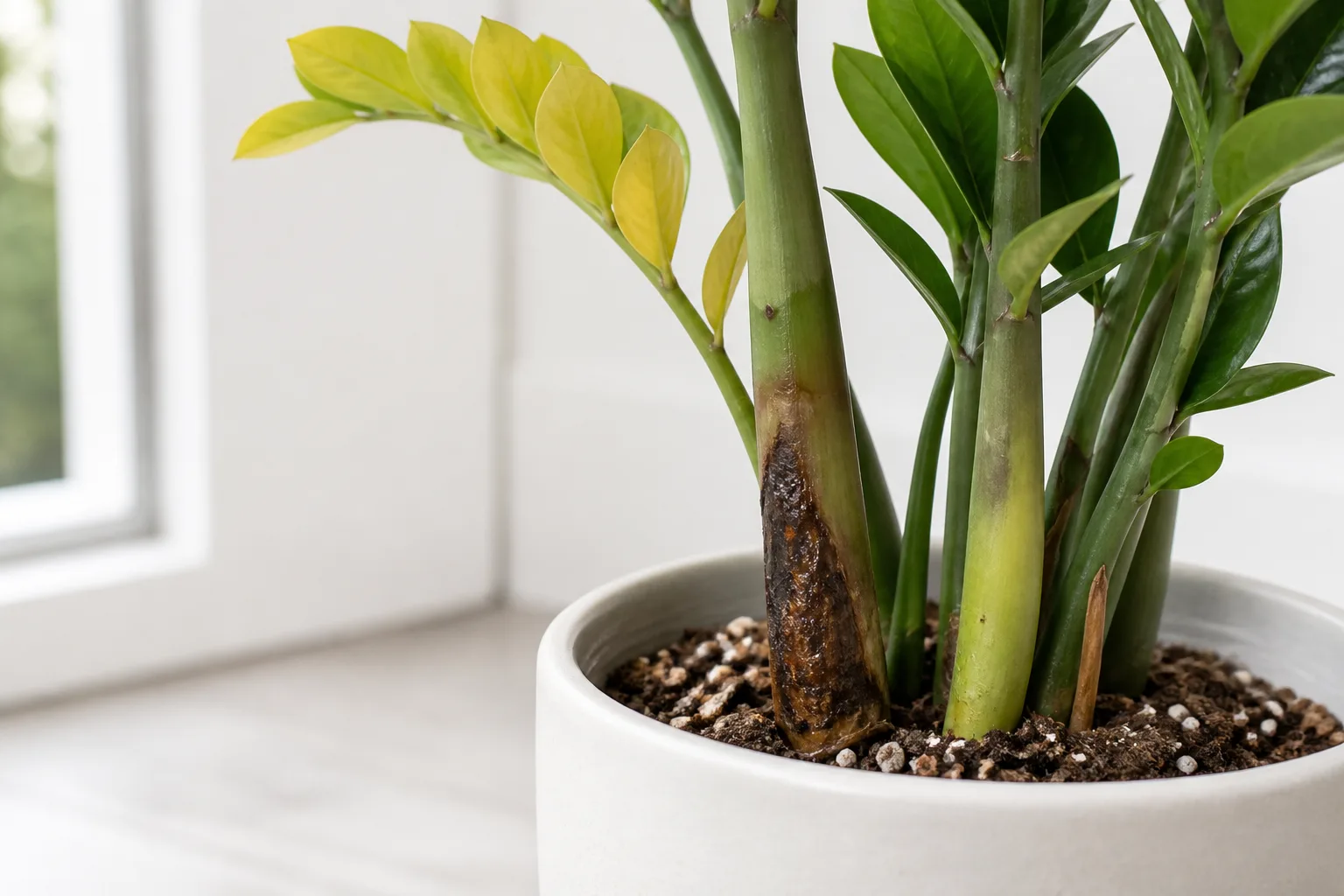
Stem Rot on ZZ Plant: Causes, Checks & Fixes
This guide covers stem rot on ZZ Plant. See also the general Stem Rot guide, watering, and light pages for this plant.
Stem Rot on ZZ Plant: Causes, Checks & Fixes
Quick answer
Stem rot on ZZ Plant (Zamioculcas zamiifolia) is not a separate disease from rhizome rot-it is the same overwatering on ZZ Plant problem showing up where you can finally see it. ZZ is stemless; glossy leaflets attach to thick petioles that rise directly from underground rhizomes. When those rhizomes sit in saturated mix, decay climbs into the swollen petiole bases and the stems turn soft, dark, and hollow at the soil line.
First step: stop watering and unpot today. Do not wait for more leaves to yellow. Feel each petiole base where it meets the soil-mushy tissue with wet mix and a sour smell confirms active rot. Cut away every soft section back to firm white or tan rhizome, let cuts air-dry, and repot in fresh gritty mix without watering for two weeks.
What stem rot looks like on ZZ Plant
Early stem rot is easy to miss because the glossy leaflets above the soil can stay green for days while rhizomes fail underground. By the time petiole bases soften, rot has usually been building for weeks.
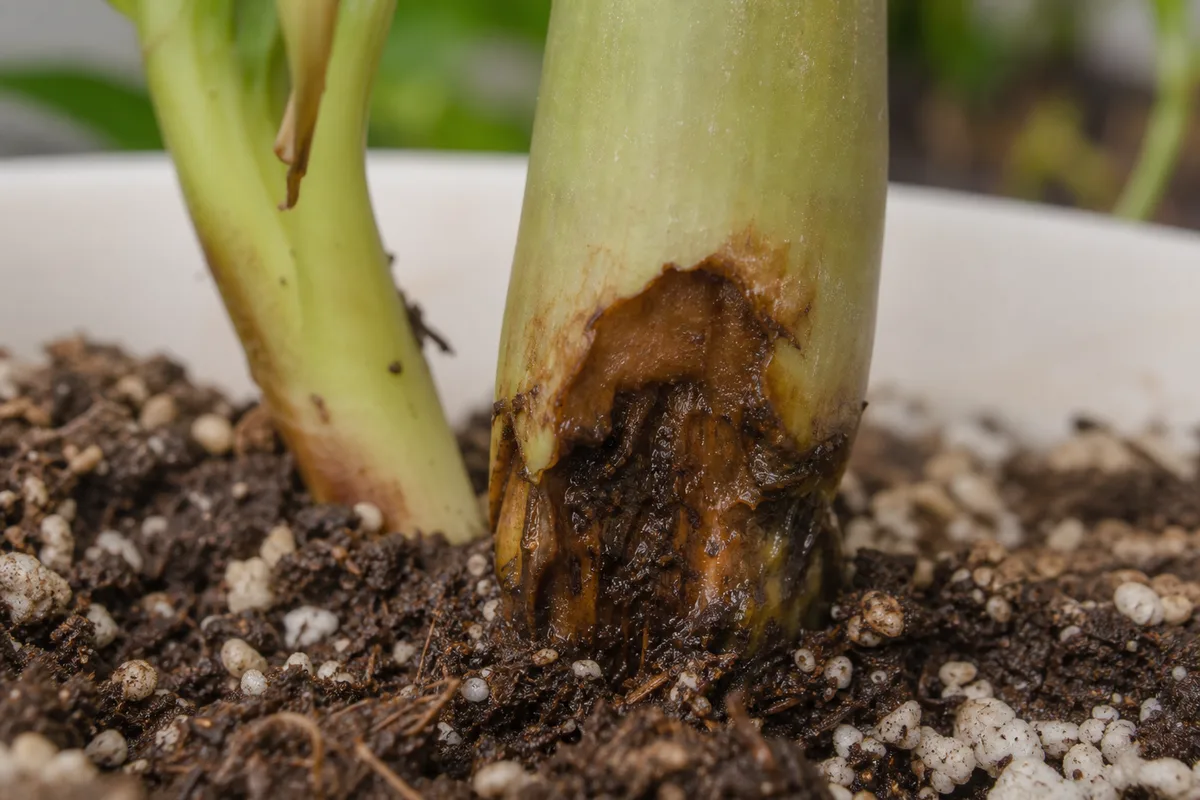
Stem Rot symptoms on ZZ Plant - compare with healthy tissue on the same plant.
Typical stem rot signs:
- Petiole bases turn brown, black, or translucent right at the soil line
- Stems feel squishy, slimy, or hollow when you pinch them-healthy ZZ petioles are firm and waxy
- One or more arching stems flop over while inner leaflets still look fine
- Soil stays wet for days after watering; the pot feels heavy
- A sour or swampy smell rises from the mix when you lift the plant
Advanced signs:
- Black decay spreads several inches up the petiole from the base
- Multiple stems collapse at once and the plant wobbles in its pot
- Yellowing starts at the lowest leaflets and moves upward
- Rhizomes feel like wet sponge instead of firm potato-like tissue
Do not confuse stem rot with the normal dark spots Clemson Extension describes on healthy ZZ stems-those are firm, dry markings on an otherwise solid petiole, not soft collapse at the soil line.
Why ZZ Plant gets stem rot
ZZ evolved for arid African woodlands and stores water in thick underground rhizomes. UF/IFAS notes that root rot may occur if ZZ plants are grown in poorly drained soil with excessive water for an extended period. NC State Extension describes bulbous fleshy rhizomes that store water and make the plant highly drought tolerant-but wet feet are not tolerated indoors.
Stem rot happens when that storage system backfires:
Overwatering on a calendar. ZZ needs the entire pot to dry between drinks. Watering because a week passed, or because other plants need water, keeps rhizomes anaerobic.
Poor drainage. Dense peat-heavy mix, pots without holes, and saucers that hold standing water trap moisture around rhizomes. NC State advises treating ZZ much the same way as cactus and other succulent plants, with dry-down between waterings.
Oversized containers. Extra soil volume holds moisture long after the rhizome has absorbed what it needs. Low light in offices slows water use, so mix stays wet even with modest watering.
Cool rooms plus continued watering. ZZ slows growth below about 60°F. Winter watering on a summer schedule saturates soil the plant cannot use.
Fungal pathogens in wet soil accelerate tissue breakdown, but the trigger is almost always excess moisture around rhizomes-not airborne leaf disease.
How to confirm the cause
Work through these checks in order before you repot:
- Feel petiole bases. Press where each stem meets the soil. Firm and waxy is healthy; squishy or hollow confirms stem rot.
- Smell the pot. Sour or rotten odor from mix means anaerobic decay, not a surface issue.
- Weigh the pot. Heavy days after watering means saturation. ZZ in dry mix feels light.
- Unpot and inspect rhizomes. Knock the plant out gently. Healthy rhizomes feel firm like a potato-pale, smooth, solid. Rotted tissue is brown, black, or mushy and may fall apart.
- Compare to underwatering on ZZ Plant. Wrinkled leaflets with dusty-dry mix and firm rhizomes mean drought, not rot. Do not confuse the two-dry rhizomes need water; mushy rhizomes need surgery and dry ZZ Plant repotting guide.
If mix is wet, rhizomes are mushy, and petiole bases collapse, you have confirmed stem rot. No fungicide replaces removing wet soil and decayed tissue.
First fix for ZZ Plant
Stop all watering immediately. Every additional drop keeps decay climbing the petiole.
Then unpot, work quickly, and be ruthless about removing soft tissue:
- Brush away wet soil and rinse rhizomes lightly if mix is foul-discard all old soil.
- With sterilized scissors or a sharp knife, cut away every mushy rhizome section and every soft petiole base. Keep cutting until you see only firm, pale tissue.
- Remove entire petioles whose bases are rotted, even if upper leaflets still look green-they will not recover.
- Dust cut surfaces with cinnamon or let them air-dry uncovered for 24 hours so wounds callous.
- Repot remaining firm rhizomes into fresh, gritty, well-draining mix in a pot sized to the trimmed clump-not the original oversized container.
- Wait one to two weeks before the first light watering. Missouri Botanical Garden notes that plants with partial rot may be salvaged by pruning out the rotted part-recovery depends on how much firm rhizome survives.
Wear gloves when handling cut tissue. ZZ Plant contains calcium oxalate crystals and is toxic to cats and dogs if ingested; sap can irritate skin.
Step-by-step recovery
After the dry repot, recovery is slow because ZZ is a naturally slow grower even under good conditions.
Week 1–2: Keep the plant in ZZ Plant light guide, not deep shade. Do not water. Firm rhizomes may plump slightly as they stabilize.
Week 3–4: If mix is completely dry throughout the pot, give a light drink and pour off any saucer water. Clemson HGIC recommends watering only after the potting medium has completely dried and never allowing the plant to sit in water.
Month 2–3: Watch for new petioles emerging from rhizomes-that is the best sign rot has stopped. Existing damaged leaflets on trimmed stems will not green up again; judge success by new growth, not old leaves.
Month 3+: Resume sparse feeding only after new growth looks healthy. ZZ needs minimal fertilizer-once or twice per growing season at low dose is enough.
If no new petioles appear after six to eight weeks and remaining rhizomes soften again, the salvage failed. Take leaf cuttings from any firm stems before discarding the rest.
Lookalike symptoms
Normal black stem spots. Clemson Extension notes that black spots on ZZ stems are normal on healthy plants. These are firm, dry markings along the petiole-not soft collapse at the soil line.
Underwatering wilt. Prolonged drought shrivels leaflets while rhizomes stay firm and mix is dusty dry. A deep soak fixes this; surgery does not.
Physical breakage. Snapped petioles from moving or bumping the plant show a clean break, not progressive mushiness spreading from the base.
Root rot without visible stem damage. Early rhizome rot may hide underground while stems still feel firm above soil. Yellow leaves with wet mix warrant unpotting even before bases soften.
Mistakes to avoid
- Keep watering wilted stems when soil is already wet. Wilt with saturated mix often means rotting roots cannot take up water-not thirst.
- Mist leaves or run a humidifier. Stem rot is a root-zone moisture problem; extra humidity does not help.
- Repot into standard potting soil. Rich, moisture-retentive mix repeats the conditions that caused rot.
- Leave rotted petioles because leaflets look green. Decay spreads through the base; remove the whole stem.
- Fertilize a stressed plant. Feed only after new healthy growth confirms recovery.
- Assume one soft stem means a single bad branch. Inspect every rhizome-rot often affects multiple petioles from one wet core.
Recovery timeline and warning signs
Improving: No new soft spots appear; firm rhizomes stay solid; a new petiole emerges from soil level within two to three months; soil dries predictably between waterings.
Worsening: Additional petiole bases soften; sour smell returns; rhizomes turn hollow after repotting; yellowing spreads despite dry soil. These mean remaining rot or mix that still holds too much moisture-unpot again and trim further, or shift to leaf-cuttings propagation.
Realistic expectation: one healthy rhizome can regrow a full plant over many months. ZZ is patient-but wet soil is not.
How to prevent stem rot next time
- Water only when the entire pot is dry from top to bottom, not on a schedule.
- Use coarse, well-draining mix-cactus or succulent blend with extra perlite or bark works well.
- Choose pots with open drainage holes and empty saucers after every watering.
- Size pots to the rhizome clump; avoid large decorative containers that hold excess soil moisture.
- Place in bright indirect or office fluorescent light so the plant uses water at a steady pace.
- Reduce watering frequency in winter when growth slows and rooms cool.
- Never bury petiole bases deeper at repotting-keep rhizomes near the surface in fast-draining mix.
UF/IFAS advises allowing soil to become dry between waterings and not letting ZZ sit in water. That single habit prevents most stem rot cases.
When to worry
Treat as urgent when multiple petioles soften at once, the plant falls over suddenly, or black mushy tissue covers most rhizomes. Same-day trimming and dry repotting gives the best chance.
Salvage is unlikely when every rhizome is hollow and every petiole base is mushy. Before discarding the plant, take leaf cuttings from any firm tissue-UF/IFAS notes ZZ propagates easily from leaf cuttings, which may be your only path to a replacement plant.
Mild cases with one soft base and mostly firm rhizomes recover well if you act before decay reaches the rhizome core.
When to use this page vs other ZZ Plant guides
- ZZ Plant watering guide - Use for routine moisture checks before assuming stem rot is the main issue.
- ZZ Plant problems hub - Browse all 27 common issues on this species.