Ixora Plant Care: Light, Water, Soil & Tips
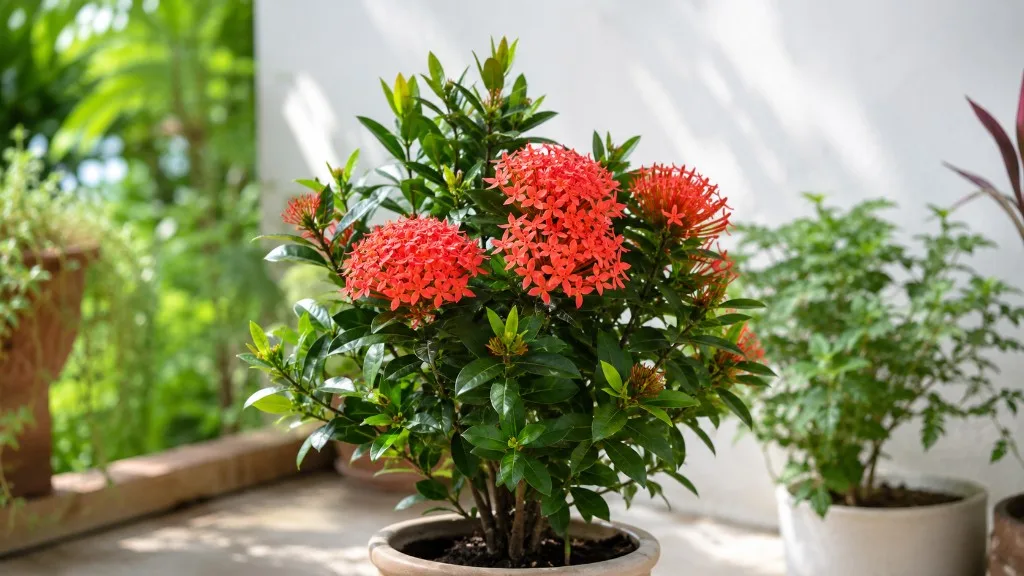
Ixora coccinea
Ixora needs acidic soil (pH 5.0–6.0) and bright direct sun. Interveinal yellowing is iron chlorosis from wrong pH. Use ericaceous compost and chelated iron. Frost-tender - overwinter above 10°C.
Ixora Plant Care: Light, Water, Soil & Tips
Start with wateringThe most common care mistake for IxoraWatering guide →Ixora care essentials
Light
full sun to partial shade - 4–6 hours direct sun for prolific flowering
Water
Keep soil evenly moist. Use collected rainwater or filtered water to avoid raising pH. Never waterlogged.
Soil
Ericaceous (acid) compost, pH 5.0–6.0. Acidic soil is non-negotiable.
Humidity
High humidity (60–80%); naturally adapted to humid tropical warm regions
Temperature
20°C to 35°C (68–95°F)
Fertilizer
Use acid fertilizer (Azalea/Camellia feed or ammonium sulfate-based) to maintain low pH and stop if the plant is stressed, newly repotted, or not actively growing. Alkaline fertilizers and hard tap water - raise pH and cause immediate chlorosis.
About Ixora
Ixora is native to Southern India and Sri Lanka, typically reaches 1–2 m tall; 60–90 cm wide in pots indoors, with slow to moderate growth. Ixora has a bushy growth habit and part of the Rubiaceae family. It is also known as Jungle Flame, Flame of the Woods, Vedchi, and Rangan.
| Detail | Information |
|---|---|
| Also known as | Jungle Flame, Flame of the Woods, Vedchi, Rangan |
| Native region | Southern India and Sri Lanka |
| Mature size | 1–2 m tall; 60–90 cm wide in pots |
| Growth rate | Slow to moderate |
| Growth habit | Bushy |
| Scientific name | Ixora coccinea |
| Family | Rubiaceae |
Ixora Plant Care: Light, Water, Soil & Tips
What Is Ixora?
Ixora is a woody, evergreen tropical shrub grown for dense clusters of star-shaped flowers that sit above glossy, dark green leaves like small bouquets held on the stem tips. The most widely cultivated species is Ixora coccinea, known in commerce as flame of the woods, jungle flame, jungle geranium, iron tree, and Maui sunset depending on the cultivar and region. Other species such as Ixora chinensis and Ixora javanica appear in nurseries with similar care needs but different mature sizes and flower colors, so keep the botanical name on the tag when you have it.
Indoors or in containers, ixora typically reaches 1 to 2 meters (3 to 6 feet) tall and spreads 60 to 90 cm (2 to 3 feet) wide, forming a rounded, bushy silhouette with slow to moderate growth in typical home conditions. The flowers appear in flat-topped cymes - rounded clusters of four-petaled blooms most often in red, orange, yellow, or pink depending on the cultivar - and can repeat through the warm season when light, soil acidity, and moisture stay aligned. The plant is native to the humid tropics of Southern India, Sri Lanka, and neighboring regions of Southeast Asia, where monsoon rains and dry seasons alternate and the soil stays naturally acidic.
If you are deciding whether ixora fits your home or patio, the honest summary is this: ixora rewards Ixora light guide, consistently acidic soil, even moisture, and warm stable temperatures - and it punishes alkaline water, cold drafts, drought, and dim corners. It is harder than a pothos and easier than a finicky orchid collection, but only if you respect its calcifuge physiology. The payoff is months of vivid flower clusters on a glossy evergreen frame that reads as genuinely tropical. One practical caveat for northern growers: ixora is not frost-hardy and becomes a seasonal container plant or conservatory subject anywhere sustained temperatures drop below about 50°F (10°C).
Botanical Background and Native Range
Ixora belongs to the family Rubiaceae - the same family as coffee and gardenia - which matters for care because many Rubiaceae ornamentals share a preference for well-drained, organically rich, acidic soil and steady moisture without waterlogging. In its native range across Western and Southern India, Sri Lanka, Bangladesh, and into Indo-China, ixora grows as an understory-to-edge shrub in humid tropical and subtropical climates receiving roughly 1,800 mm of annual rainfall according to the CABI compendium on Ixora coccinea. It tolerates light to moderate shade in the wild but flowers most heavily where direct sun is available for much of the day.
The species has spread through warm landscapes worldwide, especially in Florida, Hawaii, Puerto Rico, and other frost-free zones, where it functions as a foundation hedge, container specimen, or mixed-border accent. NC State Extension notes that ixora is hardy in USDA zones 10a through 11b outdoors and may die back or fail entirely when temperatures fall below about 50°F (10°C). In cooler regions, gardeners grow it in pots and move plants indoors before cold nights, or treat it as a warm-season patio plant replaced each spring. CABI data indicate that leaves and small twigs suffer damage below about 39°F (4°C), and light frosts can kill above-ground growth even when roots survive to resprout in spring - a pattern familiar from other tropical shrubs but easy to underestimate on a plant that looks tough.
Pollination in the wild involves papilionid butterflies attracted to bright red and orange flower forms, which explains why open, sunny placements with good air movement support both bloom quantity and plant health. That ecological detail is not trivia for the home grower: ixora that sits in stagnant, dim corners often keeps leaves but drops buds before they open, because the plant is essentially waiting for conditions that resemble its flowering season in the tropics.
Why Acid-Loving Shrubs Need Different Rules
Ixora is a calcifuge - a plant that cannot efficiently absorb iron and manganese when soil or irrigation water pushes pH toward neutral or alkaline. This is the single most important distinction separating ixora from generic “tropical houseplant” advice. When pH rises above about 6.0 to 6.2, new leaves often emerge pale yellow with green veins, a pattern called iron chlorosis. Growth slows, existing foliage may bleach, and flower buds abort before opening even when you are feeding regularly. The problem is not missing fertilizer in many cases; it is nutrient lockout caused by the wrong pH.
Commercial ixora is frequently sold in peat-based, acid-leaning mix that works until hard tap water, limestone mulch leaching, or top-dressing with alkaline compost shifts conditions over months. Gardeners who diagnose chlorosis as “needs more nitrogen” and respond with balanced fertilizer sometimes make the situation worse by adding salts without correcting acidity. The fix hierarchy is: confirm pH and water quality first, then adjust soil or irrigation, then consider iron chelate or acid-forming fertilizer if symptoms persist on genuinely acid mix.
This physiology also means ixora pairs naturally with other acid lovers - gardenias, camellias, azaleas, and blueberries in outdoor beds - and poorly with concrete-adjacent plantings, new limestone paths, or well water high in bicarbonates. If you live in an alkaline-soil region and want ixora anyway, container culture with ericaceous mix and rainwater is more reliable than planting in amended ground that reverts every rainy season.
Best Growing Conditions for Ixora
Ixora does best when your space approximates the warm, bright, humid rhythm of its native range. The four variables that decide almost every outcome are light, water, soil acidity, and temperature. Align those and feeding, Ixora repotting guide, pruning, and propagation become routine maintenance. Misalign any one - especially soil pH or cold exposure - and the plant declines in ways that look like random “mystery” problems until you read the newest leaves and the pot’s moisture pattern together.
Light Requirements for Flowering
Ixora needs substantial direct sun to flower reliably. NC State Extension lists cultural requirements as full sun (six or more hours of direct sunlight daily) with tolerance for partial shade (two to six hours of direct sun). For home growers, a practical target is four to six hours of direct sun daily at minimum for visible bloom, with more sun producing denser growth and heavier flowering on most cultivars. Bright indirect light alone often keeps the plant alive indoors but reduces or eliminates flower production - the most common reason people assume their ixora is “the wrong type” when the environment is actually too dim.
Outdoor placement in frost-free zones should prioritize open sky above the canopy, not dappled shade under dense tree cover. On patios and balconies, south- or west-facing exposures with afternoon protection in desert-level heat work well; in humid subtropical climates, full sun all day is standard. Indoors, the brightest available window - typically south or west - is the starting point. An east window can work if the room stays bright the rest of the day and you accept lighter bloom. North windows are usually insufficient for flowering unless supplemented with grow lights.
The diagnostic for incorrect light is new growth and bud behavior, not old leaves. Compact internodes, glossy firm leaves, and visible flower clusters at stem tips mean the plant is likely getting enough energy. Long, sparse stems with small pale leaves and no buds mean more light is needed. Bleached patches, brown scorch on sun-facing leaves, or midday curling after a sudden move to stronger exposure mean you need gradual acclimation over one to two weeks or slight afternoon filtering. Ixora formed in a dim shop will burn if you place it in unfiltered midday sun immediately, even though the species “wants” sun in principle.
If natural light is weak during winter overwintering, a full-spectrum grow light on a 10–12 hour timer, positioned 12–18 inches above the canopy, prevents the stretched, leaf-dropping look common on ixora kept in northern living rooms between November and February. Rotate the pot weekly so growth stays even. Flowering under lights is possible if intensity is high enough, but many overwintered plants rest bloom-wise until spring when they return outdoors - a normal seasonal pattern rather than a failure.
Temperature and Humidity
Ixora prefers stable warm temperatures between about 68 and 95°F (20 and 35°C) during active growth, matching the tropical and subtropical climates where it thrives outdoors year-round. It begins to suffer when temperatures drop toward 60°F (15°C) and shows clear cold injury below about 50°F (10°C), with leaf drop, bud loss, and twig damage accelerating as mercury falls further. Treat 50°F as a hard planning threshold for outdoor pots: when night lows approach that line, move containers to a heated room or greenhouse rather than hoping the plant will “adapt.”
Frost is non-negotiable. Any frost event at or below 32°F (0°C) typically kills or severely damages above-ground growth, though established in-ground plants in marginal zones may resprout from protected root zones in spring according to CABI and extension sources. For most container growers, frost means permanent loss unless you moved the plant in time. Do not leave ixora on an unheated porch “just for one night” in zone 9 or below.
Humidity matters more for ixora than for many common houseplants because it evolved in humid tropical air, typically 60 to 80% relative humidity in native-range conditions. Average home humidity of 40–50% is workable in warm, bright conditions but dry winter air below about 30% encourages spider mites and can cause crisp leaf margins even when watering is correct. Grouping plants, using a pebble tray with the pot elevated above the water line, or running a small humidifier nearby all help more than misting, which raises humidity briefly and can leave wet foliage that invites fungal spotting if air circulation is poor. Bathrooms and bright kitchens often provide the best indoor microclimates if light is adequate.
Watch problem spots: directly under AC vents, window ledges with cold glass at night, and radiators can push ixora out of its comfort zone within hours. Cold drafts combined with wet soil are a particularly fast path to sudden leaf drop.
Soil pH and Drainage
Use ericaceous (acid-loving) compost with a target pH of 5.0 to 5.5, or a mix you have confirmed stays below 6.0. UF/IFAS Gardening Solutions and multiple extension sources converge on slightly to moderately acidic, organically rich loam as the ideal ground and container medium. A workable home blend is roughly 40% quality peat-free or peat-based potting mix, 30% coco coir or peat moss, 20% compost, and 10% perlite, adjusted with extra perlite if your home runs hot and bright or if the pot stays wet too long. The principle matters more than a single branded recipe: the mix should hold moisture in the root zone without staying waterlogged for days, retain enough air space for roots to breathe, and not contain limestone or dolomitic lime that pushes pH upward.
Always plant in a container with a drainage hole. Decorative cachepots are fine only if you empty runoff after every watering. In garden beds within ixora’s hardiness range, conduct a soil test before planting and amend alkaline ground with elemental sulfur or appropriate acidifiers per test results rather than guessing. Ixora shows moderate salt spray tolerance in coastal plantings according to CABI, but zero tolerance for alkaline soil - a distinction Florida and Gulf Coast growers learn quickly when hedge rows yellow uniformly along concrete driveways.
Repot into fresh acid-leaning mix every one to two years even if the plant is not root-bound, because mineral buildup from tap water gradually shifts conditions. If leaf tips burn or white crust forms on the soil surface, flush the pot with plain rainwater or filtered water at two to three times the pot volume before reaching for more fertilizer.
How to Water Ixora
The general rule for ixora is keep the soil evenly moist but never waterlogged. Ixora does not tolerate drought well - CABI notes only moderate drought tolerance even in established plantings - and underwatering on Ixora shows up as brittle leaf tips, wilt, and premature bud drop that people often misread as pest damage. At the same time, roots suffocate quickly in stagnant wet mix, especially in cooler, dimmer winter conditions. Water when the top 1 to 2 cm (about half an inch) of mix feels dry and the pot still has moderate weight, then soak thoroughly until a small amount runs from the drainage hole.
In warm, bright outdoor containers during active growth, that often translates to roughly every two to three days in summer and every four to five days in cooler months as a starting interval - but your calendar should be a reminder to check, not a rule to follow blindly. Pot size, mix composition, humidity, and sun exposure all change the drying rate. A small pot in full Florida sun may need daily checks at midsummer; an overwintered indoor pot in low light may need ten days or more between thorough waterings.
Use collected rainwater, distilled water, or filtered water when possible to avoid slowly raising soil pH with alkaline or hard tap water. If you must use tap water, occasional flushing helps, but in high-bicarbonate regions rainwater is not optional luxury - it is core maintenance for calcifuge plants. Let cold tap water sit overnight to reach room temperature before applying; cold water shock on warm roots stresses tropical species unnecessarily.
Ixora watering guide During Active Growth
During the warm, bright months when new leaves expand and flower clusters form, ixora uses water steadily. The goal is a consistent moisture band: the mix should feel like a wrung-out sponge through most of the root zone, not wet mud and not dusty dry. Dramatic midday wilting on a light, dry pot is a clear thirst signal - water thoroughly and watch for recovery by evening. Wilting on a heavy, wet pot is the opposite problem and points to root stress from overwatering on Ixora rather than drought.
Apply water at the soil surface or drip line, not as overhead spray, to reduce fungal issues on dense foliage in humid climates. If you just bought the plant, expect a short adjustment period. Nursery ixora often arrives in peat-heavy mix with roots accustomed to greenhouse humidity. Do not compensate for transplant shock by watering more frequently unless the pot is genuinely dry; stabilize light and temperature first, then fine-tune the interval based on how fast your specific container dries.
Seasonal Adjustments
In cooler, dimmer months - especially for overwintered indoor plants - growth slows and the pot dries more slowly. Stretch the interval between waterings and reduce or pause fertilizer until new growth resumes in spring. The most common winter failure mode is continuing a midsummer watering schedule in lower light, which keeps the mix waterlogged and leads to yellow lower leaves, fungus gnats, root rot on Ixora, and secondary scale infestations on stressed plants.
Outdoor plants in autumn need a parallel shift. As nights cool and day length shortens, ixora drinks less. Move containers to sheltered spots before temperatures drop below 60°F at night, and check moisture before each watering rather than assuming the summer rhythm still applies. When bringing plants indoors for winter, inspect for pests first - scale and mealybugs hitchhike on stems and leaf axils and explode in the dry, still air of heated rooms.
Common Watering Mistakes
The single most damaging mistake is watering on a fixed schedule without checking the pot. The second is letting the plant sit in a full saucer or cachepot, which suffocates roots within days even if the surface looks fine. The third is giving tiny daily sips instead of a full soak when the plant is dry - that wets only the upper layer while the center stays parched, producing wilt cycles that weaken roots over time.
People also misread ixora wilting. A thirsty plant recovers after a thorough watering; a rotting plant may wilt while the mix stays wet and then decline despite your efforts. Always pair wilt with a moisture check at depth before adding more water. If stems are soft at the base and the mix smells sour, stop watering, inspect roots, trim any brown mushy tissue, and repot into fresh acid mix rather than hoping the next drink fixes the problem.
Another regional mistake is assuming rain always helps. In areas where rain falls through alkaline dust or onto limestone roofs before collection, even “rainwater” can carry pH-raising minerals. Test stored water if chlorosis appears despite good care habits.
How to Feed Ixora
Ixora is a moderate feeder during active growth, but the fertilizer type matters as much as the schedule because feeding without maintaining acidity wastes money and can accumulate salts. Use a fertilizer formulated for acid-loving plants - often labeled for azaleas, camellias, rhododendrons, or gardenias - applied every two to three months during the growing season according to UF/IFAS Extension guidance for acid-loving landscape plants. Alternatively, a balanced water-soluble formula at one-quarter to one-half label strength works if your soil pH is already confirmed in the correct range.
Apply to already-moist soil so nutrients distribute through the root zone without burning dry roots. Spread granular products around the drip line rather than concentrating on the stem base, which reduces root-burn risk and mirrors how roots absorb in nature. For containers, liquid feeding monthly at half strength during active growth is a workable rhythm if you are also maintaining acidic mix.
Hold fertilizer entirely during cool, low-light months, after a major repot until new growth appears, and while the plant is recovering from root rot, severe chlorosis correction, or heavy pest treatment. Overfeeding produces salt buildup and brown leaf margins that resemble drought stress but persist even when watering is correct. If margins crisp despite good moisture and correct pH, flush the pot and pause feeding for six to eight weeks.
When iron chlorosis appears on acid mix with good care otherwise, a chelated iron supplement applied per label directions can green up new leaves within weeks, but treat it as a bridge fix while you address why pH drifted - usually water quality or exhausted mix - not as a permanent substitute for proper soil management.
Repotting and Root Health
Repot ixora roughly every one to two years, or whenever roots circle drainage holes, the plant dries out within a day of watering, water runs straight through without soaking in, or chlorosis persists despite iron treatments - sometimes indicating mineral-loaded old mix rather than current care errors. The best timing is early spring as active growth resumes, which gives the plant a full warm season to fill the new root zone. In frost-free climates, repotting just before the rainy season also works because natural humidity supports recovery.
Choose a pot only one size larger than the current root ball - typically 2 to 5 cm (1 to 2 inches) wider. Oversized pots hold excess wet mix around roots that cannot use it, which is the most common trigger for rot after repotting. Use fresh ericaceous, well-draining mix, plant at the same depth as before, and water lightly for the first week while cut roots heal. Keep the plant in bright light without harsh midday scorch immediately after repotting, and avoid fertilizer until you see new tip growth.
Signs It Is Time to Repot
Physical signs include roots emerging from drainage holes, a top-heavy plant that wilts despite recent watering, or mix that has broken down into fine, water-retentive mud. Performance signs include stalled growth for weeks during warm weather despite adequate light and feeding, recurring chlorosis on new leaves after iron chelate treatments, or chronic edge burn that persists after you have corrected watering - often indicating salt-loaded or pH-shifted old mix.
Do not repot a plant that is actively collapsing from overwatering until you have inspected roots and trimmed rot. Moving a failing root ball into fresh mix without fixing the underlying moisture problem rarely saves ixora. Similarly, do not repot purely because of a few yellow lower leaves if the root zone is healthy - senescence of old foliage is normal on evergreen shrubs.
Propagation Methods for Ixora
The standard home propagation method for ixora is stem cuttings, taken when the parent plant is healthy and actively growing. Seed propagation is possible but seedlings will not match named cultivars, so cuttings are how you preserve flower color and compact habit. Division works on large, multi-stemmed specimens but is less common in home settings because woody root balls are harder to split cleanly than herbaceous perennials.
Take a 10 to 15 cm (4 to 6 inch) semi-hardwood cutting just below a leaf node using clean, sharp shears. Remove leaves from the lower half of the stem, leaving one or two leaf pairs at the top. Dip the cut end in ** rooting hormone** if you have it - optional but helpful for woody stems. Root in a moist, well-draining ericaceous mix rather than plain water, because ixora roots forming in water sometimes struggle when transferred to soil.
Cover the pot with a clear plastic bag or dome to raise humidity, keeping plastic off the leaves with stakes. Place the cutting in bright indirect light at warm temperatures near 24 to 27°C (75 to 80°F), ventilate briefly every few days to prevent mold, and keep the medium evenly moist but not soggy. Roots typically form in four to eight weeks; tug gently on the stem to feel resistance before removing the cover and treating the plant as established. Pinch the tip once roots establish to encourage branching.
Do not propagate stressed, chlorotic, diseased, or heavily pest-infested plants - cuttings inherit the parent’s problems and weak cuttings fail at much higher rates. Address chlorosis and pests on the parent first, then propagate from vigorous new growth.
Common Ixora Problems
Most ixora problems are environmental, not mysterious diseases. The plant communicates through leaf color patterns, bud retention, and wilt timing long before the entire specimen collapses. The useful habit is to check soil pH and moisture, then light, then temperature before reaching for pesticide or doubling fertilizer.
Chlorosis, Bud Drop, and Pests
Iron chlorosis - yellow new leaves with green veins while older leaves may remain darker - is the signature ixora problem in alkaline conditions or after months of hard tap water. It is often misdiagnosed as nitrogen deficiency. Confirm whether your mix and water keep pH in the 5.0 to 5.5 range; flush salts, repot if mix is exhausted, switch to rainwater, and apply chelated iron only after correcting the underlying acidity issue. Leaves already chlorotic will not fully revert to deep green; judge success by new growth color two to four weeks after fixes.
General yellowing without green veins more often points to overwatering, underwatering, cold stress, or natural aging of lower leaves. If yellow leaves are soft and the mix is wet, suspect overwatering and inspect roots. If yellow leaves are crisp and the pot is light, drought stress is more likely. A single yellow lower leaf on an otherwise healthy plant is often normal senescence - remove it and watch new growth rather than changing every variable at once.
Bud drop before flowers open usually traces to ** drought, sudden light change, cold exposure below about 60°F, or chlorosis-related stress**. Ixora aborts flowers rather than opening them when energy budgets tighten. Fix the environmental trigger and wait for the next flush rather than feeding heavily while buds are still dropping.
Brown leaf tips and margins can indicate low humidity, drought, salt buildup, or fluoride/chlorine sensitivity in tap water. Flush the pot periodically with rainwater and review whether the watering rhythm matches actual drying in current light.
Watch for scale along stems and leaf undersides, mealybugs in leaf axils, thrips scarring new growth, and spider mites in dry winter air - fine webbing and stippled leaves are the tell. NC State Extension specifically notes that ixora moved indoors for winter may become susceptible to scale, thrips, and mealybugs. Catch infestations early with weekly inspection. A strong shower, manual removal, and insecticidal soap applied per label directions handle most issues if you act before populations spread. Severe scale on woody stems may require pruning out heavily infested branches and repeating treatment on regrowth.
Sudden leaf drop after a move often combines light shock and watering mismatch - the plant lost leaf surface area and now dries differently. Stabilize one variable at a time: light first for two weeks, then adjust water, then consider feed.
Is Ixora Safe for Pets?
Ixora coccinea is non-toxic to dogs, cats, and horses according to the ASPCA’s listing for flame of the woods and iron tree, which both reference Ixora coccinea in the Rubiaceae family with non-toxic principles. A separate ASPCA entry for jungle geranium lists Ixora javanica as similarly non-toxic to cats and dogs. For practical pet safety, ixora belongs in the generally safe category alongside many common ornamentals - a useful contrast to toxic tropicals such as oleander or sago palm.
That said, the ASPCA notes that consumption of any plant material may cause mild gastrointestinal upset in some pets - vomiting or loose stool - even when the plant is not classified as poisonous. Non-toxic does not mean “encourage chewing.” Large ingestions of woody stems or treated leaves (pesticide residue) can still cause problems unrelated to ixora’s natural chemistry. Do not rely on toxicity tables alone if your pet is symptomatic; contact your veterinarian or the ASPCA Animal Poison Control Center at (888) 426-4435 (a consultation fee may apply) when you observe persistent vomiting, lethargy, or unusual behavior after plant contact.
For households with curious pets, ixora is a reasonable choice at floor level compared with many flowering tropicals, but placement still matters for plant health - cats knocking pots break stems and spill acid mix, and dogs trampling containers compact soil and damage roots. Hanging baskets and sturdy stands protect both the plant and the pet from chaotic interactions.
Conclusion
Ixora (Ixora coccinea) is a tropical flowering shrub from Southern India and Sri Lanka that trades attentive environmental management for months of vivid star-shaped blooms in warm, bright conditions. Give it four to six hours of direct sun daily for reliable flowering, consistently acidic soil around pH 5.0 to 5.5, even moisture without waterlogging, warm stable temperatures above about 60°F, and rainwater or low-mineral irrigation when possible, and it will reward you with glossy evergreen foliage and repeated flower clusters through the growing season. Treat it as a conservatory or bright-room plant in cold climates, moving containers indoors before nights drop toward 50°F, and accept that overwintered specimens may rest from bloom until spring light returns.
When something looks wrong, read the plant in context: yellow new leaves with green veins mean acidity and iron availability - fix pH and water before adding random fertilizer; bud drop with dry soil means drought; bud drop with wet soil and cold air means environment, not pests; no flowers in a dim room means light, not a bad cultivar. Yellow lower leaves alone often trace to normal aging or moisture imbalance rather than disaster. Fix soil acidity and watering first, adjust light second, and treat scale or mealybugs before they spread on winter-stressed plants. Do that, and ixora becomes one of the most satisfying acid-loving shrubs you can grow - as long as you respect its frost limits, its calcifuge physiology, and the fact that Ixora overview tells the truth about your water quality in its leaf color long before you buy a pH meter.
When to use this page vs other Ixora guides
- Ixora overview - Canonical hub for this species - care topics and problems branch from here.
- Ixora problems - Symptom-first path when you already know something is wrong.
Related Ixora guides
How to care for Ixora?
How much light does Ixora need?
full sun to partial shade - 4–6 hours direct sun for prolific flowering
- full sun to partial shade - 4–6 hours direct sun for prolific flowering - full sun to partial shade - 4–6 hours direct sun for prolific flowering.
When should you water Ixora?
Keep soil evenly moist. Use collected rainwater or filtered water to avoid raising pH. Never waterlogged.
- Water when the top 3 cm of soil is dry - Use collected rainwater or filtered water to avoid raising pH.
- Drain excess water - Use collected rainwater or filtered water to avoid raising pH.
What soil works best for Ixora?
Ericaceous (acid) compost, pH 5.0–6.0. Acidic soil is non-negotiable.
- 40% potting mix
- 30% cocopeat or peat moss - Organic material that holds moisture while still allowing some airflow in the mix.
- 20% compost - Ericaceous (acid) compost, pH 5.0–6.0.
Grower notes for Ixora
What matters most with Ixora
Ixora needs enough light and seasonal rhythm to bloom well. Leaves may stay alive in mediocre light, but flowers usually reveal whether the plant is truly getting what it needs. In practice, the care checkpoint is simple: full sun to partial shade - 4–6 hours direct sun for prolific flowering. Pair that with ericaceous (acid) compost, pH 5.0–6.0. Acidic soil is non-negotiable, and avoid changing water, pot size, and placement all at once.
Best placement in a real home
Ixora belongs where full sun to partial shade - 4–6 hours direct sun for prolific flowering is realistic for most of the day, not only where the pot looks good. Keep soil evenly moist. Use collected rainwater or filtered water to avoid raising pH. Never waterlogged. If the pot stays wet longer than expected, move the plant into better light or reassess the mix before watering again. Humidity target: High humidity (60–80%); naturally adapted to humid tropical warm regions. Temperature comfort zone: 20°C to 35°C (68–95°F).
Before you buy this plant
Choose Ixora with firm new growth, clean leaf undersides, and soil that does not smell sour or feel compacted. Be cautious if you see iron chlorosis, sticky residue, collapsed crowns, or a pot that is wet in poor light. Cosmetic old-leaf damage is less worrying than weak roots or active pests.
First month after bringing it home
Do not repot Ixora on day one unless the mix is failing or pests are obvious. Quarantine it, learn how fast the pot dries, and keep care boring while it adjusts. Watch especially for iron chlorosis, no-flowers, and leaf-drop. If problems appear, correct the condition first rather than stacking fertilizer, repotting, and pruning together.
Safety note for Ixora
Ixora is not a plant to keep within reach of pets or children. The database flags it for cats and dogs. Use gloves if sap or plant tissue is irritating, and pick a pet-safe alternative for floor pots or low shelves.
How to tell Ixora is settling in
Also sold as Jungle Flame, Flame of the Woods, and Vedchi, this plant should be judged by stable new growth rather than label names alone. If you plan to multiply it later, common methods include Stem cuttings. Repot only when you see roots escaping drainage holes and slow growth despite good care. If no-flowers shows up early, inspect light, watering, and roots before assuming the plant is permanently weak.
Is it pet safe?
Ixora is generally considered non-toxic to cats and dogs.
Generally non-toxic. No significant pet toxicity reports.
Watering Ixora
For Ixora, water when the top 3 cm of soil is dry and water every 2–3 days in summer; every 4–5 days in cooler months. Regular watering throughout India's warm season; slight reduction in winter.
| Detail | Information |
|---|---|
| How often | Every 2–3 days in summer; every 4–5 days in cooler months |
| How to check | Water when the top 3 cm of soil is dry |
| Seasonal changes | Regular watering throughout India's warm season; slight reduction in winter |
Signs of overwatering
- root rot
- yellow leaves
- flower drop
Signs of underwatering
- wilting stems
- leaf drop
- flower bud drop
Soil & potting for Ixora
Use a mix of 40% potting mix, 30% cocopeat or peat moss, 20% compost, 10% perlite for Ixora. Good drainage with moisture retention. Target soil pH around 4.5–6.0 (strongly acid-preferring - this is critical for ixora). Repot every 2 years; use an acidic potting mix when repotting, ideally in spring (March–April).
| Detail | Information |
|---|---|
| Recommended mix | 40% potting mix, 30% cocopeat or peat moss, 20% compost, 10% perlite |
| Drainage | Good drainage with moisture retention |
| Soil pH | 4.5–6.0 (strongly acid-preferring - this is critical for ixora) |
| Repotting frequency | Every 2 years; use an acidic potting mix when repotting |
| Best season to repot | Spring (March–April) |
Signs it needs repotting
- roots escaping drainage holes
- slow growth despite good care
Humidity & temperature for Ixora
Ixora prefers high humidity (60–80%); naturally adapted to humid tropical warm regions, though normal home humidity is usually fine. Keep temperatures around 20°C to 35°C (68–95°F).
| Detail | Information |
|---|---|
| Humidity | High humidity (60–80%); naturally adapted to humid tropical warm regions - normal home humidity is fine. |
| Ideal temperature | 20°C to 35°C (68–95°F) |
Fertilizer & pruning for Ixora
Use use acid fertilizer (Azalea/Camellia feed or ammonium sulfate-based) to maintain low pH and stop if the plant is stressed, newly repotted, or not actively growing. Alkaline fertilizers and hard tap water - raise pH and cause immediate chlorosis. for Ixora.
| Detail | Information |
|---|---|
| Fertilizer type | Use acid fertilizer (Azalea/Camellia feed or ammonium sulfate-based) to maintain low pH and stop if the plant is stressed, newly repotted, or not actively growing. Alkaline fertilizers and hard tap water - raise pH and cause immediate chlorosis. |
Common problems on Ixora
No Flowers
MediumLikely cause: Insufficient light and incorrect pH prevent Ixora flowering
Quick fix: Move to brighter position; correct soil pH to 5.0–6.0; prune in late winter
Full fix guide →Leaf Drop
MediumLikely cause: Cold temperatures, sudden temperature change, or very dry air cause leaf drop in this tropical shrub
Quick fix: Maintain warmth above 15°C; increase humidity; avoid cold drafts
Full fix guide →Yellow Leaves
MediumLikely cause: Common on this plant type; confirm with recent watering, light, and root checks.
Quick fix: Inspect the plant and correct the most likely care stressor before stacking treatments.
Full fix guide →Brown Tips
MediumLikely cause: Common on this plant type; confirm with recent watering, light, and root checks.
Quick fix: Inspect the plant and correct the most likely care stressor before stacking treatments.
Full fix guide →Root Rot
MediumLikely cause: Common on this plant type; confirm with recent watering, light, and root checks.
Quick fix: Inspect the plant and correct the most likely care stressor before stacking treatments.
Full fix guide →Overwatering
MediumLikely cause: Common on this plant type; confirm with recent watering, light, and root checks.
Quick fix: Inspect the plant and correct the most likely care stressor before stacking treatments.
Full fix guide →Underwatering
MediumLikely cause: Common on this plant type; confirm with recent watering, light, and root checks.
Quick fix: Inspect the plant and correct the most likely care stressor before stacking treatments.
Full fix guide →Spider Mites
MediumLikely cause: Common on this plant type; confirm with recent watering, light, and root checks.
Quick fix: Inspect the plant and correct the most likely care stressor before stacking treatments.
Full fix guide →Mealybugs
MediumLikely cause: Common on this plant type; confirm with recent watering, light, and root checks.
Quick fix: Inspect the plant and correct the most likely care stressor before stacking treatments.
Full fix guide →Aphids
MediumLikely cause: Common on this plant type; confirm with recent watering, light, and root checks.
Quick fix: Inspect the plant and correct the most likely care stressor before stacking treatments.
Full fix guide →Leggy Growth
MediumLikely cause: Common on this plant type; confirm with recent watering, light, and root checks.
Quick fix: Inspect the plant and correct the most likely care stressor before stacking treatments.
Full fix guide →Slow Growth
MediumLikely cause: Common on this plant type; confirm with recent watering, light, and root checks.
Quick fix: Inspect the plant and correct the most likely care stressor before stacking treatments.
Full fix guide →Wilting
MediumLikely cause: Common on this plant type; confirm with recent watering, light, and root checks.
Quick fix: Inspect the plant and correct the most likely care stressor before stacking treatments.
Full fix guide →Drooping Leaves
MediumLikely cause: Common on this plant type; confirm with recent watering, light, and root checks.
Quick fix: Inspect the plant and correct the most likely care stressor before stacking treatments.
Full fix guide →Low Humidity
MediumLikely cause: Common on this plant type; confirm with recent watering, light, and root checks.
Quick fix: Inspect the plant and correct the most likely care stressor before stacking treatments.
Full fix guide →Not Enough Light
MediumLikely cause: Common on this plant type; confirm with recent watering, light, and root checks.
Quick fix: Inspect the plant and correct the most likely care stressor before stacking treatments.
Full fix guide →Fungus Gnats
MediumLikely cause: Common on this plant type; confirm with recent watering, light, and root checks.
Quick fix: Inspect the plant and correct the most likely care stressor before stacking treatments.
Full fix guide →Mold on Soil
MediumLikely cause: Common on this plant type; confirm with recent watering, light, and root checks.
Quick fix: Inspect the plant and correct the most likely care stressor before stacking treatments.
Full fix guide →