Best Soil for Ixora: Acidic, Well-Draining Mix
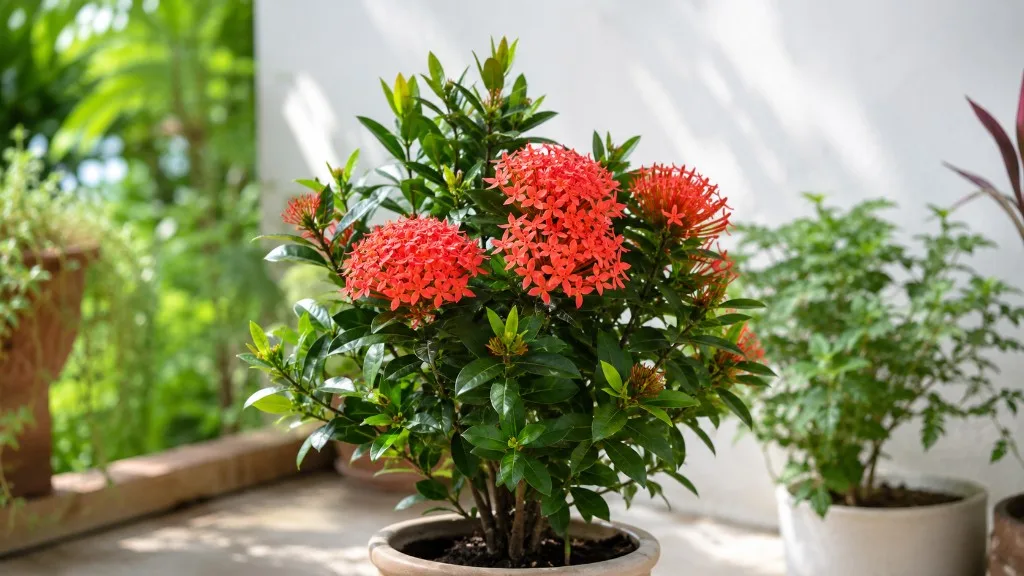
Best Soil for Ixora: Acidic, Well-Draining Mix
Best Soil for Ixora: Acidic, Well-Draining Mix
Best soil for ixora is not a cosmetic choice - it is the chemistry and physics that decide whether Ixora coccinea and related species push out tight clusters of red, pink, or orange flowers on dark green leaves, or slowly fade into yellow, interveinal chlorosis and bud drop. Ixora is an acid-loving tropical shrub from Southern India and Sri Lanka, adapted to moist but well-drained acidic soils in the Rubiaceae family alongside gardenias, hibiscus, and other ornamentals that share similar root-zone demands. The mix you put in the pot controls three things at once: pH, air around the roots, and how fast water moves through after every watering. Get those wrong and no amount of fertilizer fixes the plant, because alkaline soil locks out iron and manganese even when those nutrients are sitting in the mix.
The practical target for most home growers is straightforward: use an acidic, peat-based or ericaceous mix with a pH around 5.0 (acceptable range 4.5–6.0), ensure fast drainage through a bottom hole, and refresh the substrate before it compacts into a sour, oxygen-poor block. A reliable home recipe is 40% quality potting base, 30% peat moss or coco coir, 20% compost, and 10% perlite - adjusted upward on perlite if your home runs humid and the pot stays wet. Pair the mix with rainwater or filtered water when possible, because hard tap water slowly pushes pH upward and triggers the yellow-leaf pattern growers mistake for a watering error.
This guide covers why acidity matters, exact mix ratios, how to test and correct pH, pot and drainage choices, outdoor planting differences, when to repot, and the soil mistakes that cause more damage than using the wrong fertilizer ever could.
Why Soil Matters More for Ixora Than Most Houseplants
Most houseplants tolerate a moderate, near-neutral potting mix without dramatic consequences. Ixora is not in that group. UF/IFAS Extension classifies ixora among acid-loving landscape plants that need more deliberate soil management than species adapted to alkaline conditions - particularly in regions where residential fill soils and concrete structures push pH upward (UF/IFAS - Acid-loving plants including Ixora). In a container, the problem is compressed: you have a small volume of mix, no groundwater buffer, and every watering, fertilizer, and Ixora repotting guide decision lands directly on the root ball.
Soil is the delivery system for water, oxygen, and minerals. When ixora roots sit in mix that is too alkaline, iron and manganese become chemically unavailable. The plant cannot build chlorophyll efficiently in new leaves even if you add chelated iron granules to the pot - high pH prevents uptake through the roots, which is why extension guidance recommends foliar micronutrient sprays only as a bridge while you fix the underlying substrate (UF/IFAS Gardening Solutions - Ixora). When the mix is too wet and compacted, roots lose oxygen, fungal issues accelerate, and the plant shows overlapping symptoms: yellowing, leaf drop, and failure to bloom.
Treat soil as a living system with a shelf life, not a one-time recipe. Peat and compost both break down. Perlite does not, but it cannot compensate for a mix that has collapsed into a dense mat. An ixora that looked perfect for twelve months after repotting may decline in year two purely because drainage slowed - not because you changed your care. That is why soil thinking for ixora is ongoing: test, observe new growth, and refresh before the root zone fails.
What Ixora Needs From Its Root Zone
Ixora wants what its native habitat provides: steady moisture without waterlogging, warm stable temperatures, and acidic organic soil that holds nutrients in forms the roots can absorb. The plant is often described as liking soil that stays evenly moist - but moist is not the same as wet. Moist means the root zone has access to water and air simultaneously. Wet means pore spaces stay filled long enough to suffocate fine roots. Your mix must drain fast enough that, after a thorough watering, excess water exits within minutes and the interior of the ball approaches evenly damp within hours - not days.
In cultivation, ixora typically reaches 1–2 m tall and 60–90 cm wide in pots, with slow to moderate growth when light and temperature are adequate. That moderate pace can mislead growers into thinking the soil is fine when it is slowly deteriorating. New growth is the honest report card: firm, dark green leaves and visible flower bud clusters mean the root zone is working. Smaller new leaves, pale tissue, or buds that form then abort often trace to soil chemistry or drainage long before pests appear.
Acidic pH Is Non-Negotiable
Ixora needs acidic soil with a target pH around 5.0, within a practical range of 4.5–6.0. UF/IFAS Charlotte County Extension notes that a pH of 5 is slightly lower than what most landscape plants prefer, and that reaching it is an ongoing challenge in alkaline fill soils - but it remains the benchmark for healthy foliage and year-round flowering potential (UF/IFAS Charlotte County - Ixora in the landscape). Below 4.5, you risk micronutrient toxicity and root stress; above 6.5, iron chlorosis appears with increasing reliability; above 7.0, ixora in containers generally struggles without constant acidification.
Acidic soil is non-negotiable not because ixora is fussy for its own sake, but because pH controls nutrient chemistry. Iron and manganese - both critical for chlorophyll production in new leaves - become insoluble as pH rises. The veins stay green while the tissue between them yellows: classic interveinal chlorosis. Growers who see that pattern and respond with more water, more shade, or random “plant tonic” sprays are treating symptoms while the root zone remains chemically wrong.
Drainage Speed and Moisture Retention Together
Ixora is not a desert plant and not a bog plant. UF/IFAS describes it as thriving in moist but well-drained acidic soil (UF/IFAS Gardening Solutions - Ixora). Those two adjectives must coexist in the same mix. Peat moss or coco coir provides water retention and organic structure. Perlite or pumice creates macropores that let water move through. Compost contributes slow organic matter and microbial activity but should not dominate the mix, because too much dense compost reduces airflow in a closed pot.
The one-minute drainage check is worth learning: water thoroughly until runoff streams from the bottom hole. Within 60 seconds, water should not pool on the surface. Within 5–10 minutes, the pot should feel heavier but not audibly sloshing. If water sits on top or the pot is still dripping heavily after half an hour in a warm room, the mix needs more perlite, a smaller pot, or a full refresh. Ixora can tolerate brief dryness better than sustained sogginess - but chronic underwatering on Ixora in a mix that has gone hydrophobic from peat breakdown is a separate problem with similar yellowing. Feel the mix, watch new growth, and let drainage speed guide adjustments.
Best Soil Mix for Ixora in Containers
The best soil for ixora in pots is a peat-based, ericaceous-style blend that hits acidic pH out of the bag or holds acidity well after you mix it. Commercial azalea, camellia, or rhododendron potting mixes are reasonable starting points because they are formulated for acid-loving plants - though you should still verify drainage and adjust with perlite in humid indoor environments or during cool seasons when evaporation slows.
Avoid standard all-purpose indoor potting soil used straight from the bag unless you know its pH. Many general mixes target 6.0–7.0, which is tolerable for pothos and monstera but marginal for ixora over a full growing season. Lime-buffered mixes and some “organic” blends with added limestone are particularly poor fits. If the label mentions dolomitic lime for “pH balance,” that product is working against you.
A Reliable Peat-Based Recipe You Can Mix at Home
For a single ixora in a 20–25 cm pot, this home recipe performs consistently:
- 40% quality low-lime potting base or fine pine bark
- 30% peat moss or coco coir (coir is more sustainable; peat is more acidic out of the bag)
- 20% well-aged compost or leaf mold
- 10% perlite or pumice
Mix thoroughly in a tub until the perlite is distributed evenly - streaky perlite means uneven drainage pockets. Moisten lightly before potting so dry peat does not repel the first watering. When repotting, choose a container only one size larger than the previous pot unless you are moving a young plant into its first serious training pot. Oversized containers surround a small root ball with wet, unused mix that stays saturated and encourages root rot on Ixora.
If your ixora lives in a very bright, warm conservatory where pots dry in two to three days, you can reduce perlite slightly to 5% and lean on the peat or coir fraction for moisture stability. If the plant sits in cooler indoor air or a cachepot without airflow, push perlite to 15–20% and skip the compost increase - more organic matter is not better if it costs you drainage.
Ericaceous and Azalea Compost: When to Use Commercial Mixes
Ericaceous compost - sold for rhododendrons, azaleas, blueberries, and camellias - is the closest off-the-shelf match to what ixora wants. Use it when you do not want to batch-mix, when you are repotting a single plant quickly, or when you are still learning and want a pH-safe baseline. Open the bag, squeeze a handful: it should crumble apart when you release it, not form a tight muddy ball.
Commercial mixes vary by brand. Some are excellent; some are too heavy with fine peat fines that compact in year one. A practical upgrade path: buy ericaceous compost and cut it 70/30 with perlite for container ixora indoors. Outdoors in tropical climates where rain is frequent, the extra perlite prevents saturation during wet weeks.
Can ixora grow in regular potting soil? Not reliably. A neutral mix may look acceptable for a few months while residual acidity from nursery soil buffers the roots, but as pH drifts and the plant pushes new growth, chlorosis and weak blooming follow. If you must use general potting soil temporarily, acidify aggressively with peat and sulfur-based products labeled for acid-loving plants - and test pH rather than guessing.
Understanding pH for Ixora
pH is a logarithmic scale from 0 to 14 measuring hydrogen ion activity in the mix. For gardeners, the useful translation is simpler: pH decides which nutrients dissolve and reach roots. Ixora sits at the acidic end with a target near 5.0. At that level, iron and manganese remain available; phosphorus is present but not so bound that it blocks iron uptake - a balance extension sources note when they warn that purplish-red spotting on older leaves can indicate phosphorus and potassium stress, especially in cool weather (UF/IFAS Gardening Solutions - Ixora).
pH is not static in a pot. Alkaline tap water, lime leaching from nearby concrete, calcium-rich fertilizers, and breakdown of buffered commercial mixes all push pH upward over months. Indoor ixora near a concrete planter on a patio or a limestone windowsill inherits the same chemistry problem Florida landscapes face along foundations - UF/IFAS explicitly recommends keeping acid-loving plants away from concrete surfaces and screening fill soil for concrete fragments (UF/IFAS - Acid-loving plants including Ixora).
How to Test Soil pH at Home
You do not need a laboratory to make good decisions. Three accessible methods work for container ixora:
Slurry test with a consumer pH meter: Take a small sample of mix from the root zone (not just the surface). Mix one part soil to two parts distilled water. Stir, wait two minutes, insert a calibrated pH meter. Read the stable value. Distilled water matters - tap water can skew the reading.
Soil test kit strips or capsules: CHEAP colorimetric kits from garden centers give a ballpark reading. They are less precise than meters but excellent for confirming “clearly acidic” vs “clearly drifting alkaline.”
Runoff pH check: Water until runoff appears, catch the first teaspoon from the drainage hole, and test that liquid with a pH meter or strip. Runoff pH consistently above 6.5 on an ixora that is yellowing is a strong signal to refresh or acidify the mix, not to change your watering day.
Test when you repot, when chlorosis appears on new growth, and roughly every six months on established plants in alkaline-water regions. Log the number on your phone. A single reading is a snapshot; the trend tells you whether your soil strategy is winning.
What Happens When pH Creeps Too High
When pH rises above ixora’s comfort zone, new leaves show interveinal chlorosis - yellow tissue between green veins - while older leaves may hold color longer. Leaves can become smaller, flower buds may form then die, and overall vigor stalls even though you water responsibly. This is iron and manganese deficiency driven by chemistry, not a mysterious ixora mood.
Applying chelated iron to the soil often fails when pH stays high, because the chelate breaks down and iron precipitates out of the root zone. UF/IFAS guidance prioritizes liquid micronutrient foliar sprays mixed per label directions (often with distilled or rainwater) as a short-term correction while you rebuild acidic soil conditions (UF/IFAS Charlotte County - Ixora fertilization). Foliar feeding is a bridge, not a lifestyle. Fix the mix.
Long-term acidification tools include incorporating peat or composted pine bark, using fertilizers formulated for acid-loving plants, and applying elemental sulfur at label rates - understanding that sulfur works slowly and must be reapplied as alkaline water and concrete exposure continue to push pH back up. In outdoor beds, UF/IFAS suggests mixing roughly one-third organic matter such as compost or peat into designated planting areas before ixora goes in, then monitoring pH over time (UF/IFAS Charlotte County - Ixora in the landscape).
Ingredients Breakdown: What Each Component Does
Every ingredient in an ixora mix earns its percentage. Removing one without compensating changes either pH, drainage, or nutrient buffering - usually all three.
Peat moss is the classic acidifying organic. It holds moisture, lowers pH naturally, and creates a spongy structure roots penetrate easily. Downsides: peat compacts as it decomposes, can become hydrophobic when bone-dry, and raises sustainability concerns. For ixora, it remains the most predictable acid source in a bag.
Coco coir is the leading peat alternative. It has better rewetting behavior and a more neutral starting pH, so coir-heavy mixes may need more deliberate acidification - through ericaceous fertilizer, sulfur, or a percentage of peat - to hold pH 5.0 long term. Coir drains well and resists compaction better than fine peat, which helps indoor growers fighting soggy pots.
Perlite and pumice are inert aerators. They do not change pH meaningfully. They prevent the “mud brick” failure mode when organic matter breaks down. If you see roots circling a dense wet core, perlite was too low.
Compost and leaf mold add biology and slow-release nutrients. A 20% ceiling in containers is wise. Too much compost increases density, holds water longer, and can raise pH as it matures. Well-aged material is essential; hot, unfinished compost damages fine roots.
Pine bark fines appear in many ericaceous mixes. They acidify slightly as they decompose, improve structure, and mimic forest duff ixora relatives grow in. Fine bark is preferable to large nuggets in pots under 30 cm.
Sand is optional and often misused. A small amount can add weight in windy outdoor terrace settings, but sand does not create drainage by itself - despite persistent myth. Structure comes from pore spaces created by perlite and bark, not from a layer of gravel at the bottom.
Pot Size, Drainage Holes, and Soil Performance
Soil cannot compensate for a bad pot. The container is part of the root-zone system: it controls how fast the mix dries, how air enters from the sides, and whether runoff actually leaves the root ball.
A drainage hole is mandatory for long-term ixora care in containers. Without it, water accumulates at the bottom no matter how “well-draining” your recipe is - a phenomenon sometimes called a perched water table. Decorative pots without holes are cachepots only: grow ixora in a plain nursery pot with holes and lift it out to water, or drill a hole properly.
Glazed ceramic pots dry more slowly than terracotta. Plastic nursery pots sit in the middle. Choose material based on your drying speed: if the mix stays wet five days after watering in a cool room, terracotta or more perlite helps. If the plant wilts on day two in a hot conservatory, glazed or plastic with a moisture-retentive mix is reasonable.
Choosing the Right Container
Match pot size to root mass, not leaf canopy. Ixora blooms heavily when slightly root-established, but a vast empty pot is worse than a snug one. Upsize only when roots circle the drainage hole or the water runs straight down the sides without wetting the core - signs the root ball is dense and the old mix is exhausted.
Depth matters for stability more than magic root growth. Ixora is a shrubby plant that can reach meaningful height in pots; a stable base prevents tipping in wind on balconies. Avoid extremely shallow bowls unless you are growing a verified dwarf cultivar and accept faster drying.
Cachepots and saucers: Always empty the saucer after watering. Standing water re-saturates the bottom inch of mix within hours - the zone where roots are most active. If you use a decorative outer pot, elevate the inner pot on a layer of gravel so runoff is not sucked back up.
Outdoor Ixora Beds vs Indoor Pots
The chemistry goal is identical; the maintenance difficulty differs. Outdoor landscape ixora in Florida and similar climates battles alkaline native fill, concrete hardscape, and irrigation water with high bicarbonate content. UF/IFAS recommends planting in well-drained sites away from water runoff that carries lime, avoiding rock mulches that raise pH, and using organic mulches such as pine bark or pine straw kept away from trunks (UF/IFAS - Acid-loving plants including Ixora).
Bed preparation should incorporate organic matter deeply - not just a token scoop in the planting hole. A soil test before planting tells you how aggressive acidification must be. Elemental sulfur, organic mulches, and acid-forming fertilizers become part of seasonal maintenance, not one-time fixes.
Indoor and conservatory ixora face smaller volumes but controlled environments. The enemy is often tap water pH plus compact peat breakdown in a pot that never sees rain. Indoor growers have an advantage: you can repot entirely, swap to rainwater, and tune perlite ratios precisely. The disadvantage: lower light slows evaporation, so drainage errors persist longer.
Do not assume outdoor bed advice transfers literally to a windowsill pot. Landscape plantings in Florida sometimes perform in amended ground with natural rainfall leaching salts; a 15 cm indoor pot cannot buffer the same way. Container recipes in this article are written for pots first.
When to Refresh or Repot Ixora Soil
Ixora soil has a functional lifespan. Organic components decompose, perlite does not disappear but mix homogenizes, and salts accumulate from fertilizer and hard water. Repot or fully refresh the mix every 12–24 months on actively growing container plants, or sooner when symptoms appear.
Repot when:
- Roots emerge from the drainage hole or circle the surface tightly
- Water runs down the sides without absorbing (hydrophobic or root-bound)
- The mix smells sour, musty, or stagnant
- Drainage has slowed noticeably after the same watering routine
- New growth shows chlorosis despite corrected watering and appropriate light
- White salt crust covers the soil surface and returns after flushing
Do not repot a stressed ixora on arrival unless the existing mix is clearly failing - waterlogged, smelly, or infested. Quarantine new plants, learn their drying rhythm, then schedule repotting into acidic mix at the start of the next active growth window. Spring through early summer is ideal in temperate climates; in tropical indoor settings where growth is year-round, any month with stable warmth works if you avoid the hottest heat spike immediately after root disturbance.
When repotting, remove only the loose outer mix - not a violent bare-root scrub unless rot is present. Set the plant at the same depth it grew before. Water once thoroughly with rainwater or filtered water, then wait until the top inch approaches dry before the next soak. Hold fertilizer for four to six weeks while roots heal.
Fixing Soil Problems: Chlorosis, Compaction, and Soggy Mix
Soil troubleshooting starts by separating three failure modes that look similar from across the room.
Chlorosis from high pH hits new leaves first, with green veins on yellow tissue. Test pH and runoff pH. If elevated, repot into fresh ericaceous mix or replace at least the top third with acidic components, begin acid-forming fertilizer per label rates, and consider a single foliar micronutrient spray while roots recover. Do not keep spraying foliage monthly while ignoring the pot - you will stain patios and never fix uptake.
Compaction shows as slow drying, sour smell, and roots that are brown and mushy at the tips. The fix is full mix replacement and more perlite. Trim rotted roots with sterile shears, dust cuts if you wish, repot into the recipe above, and reduce watering frequency until new white root tips appear.
Soggy mix from overpotting or no drainage hole causes uniform yellowing, leaf drop, and sometimes edema. Fix the pot first - hole, smaller size, better airflow - then replace mix. No recipe survives standing water.
| Symptom pattern | Likely soil cause | First action |
|---|---|---|
| New leaves yellow between green veins | pH too high, iron lockout | Test pH; repot or acidify; rainwater |
| Mix wet 5+ days after watering | Compaction, oversized pot, no hole | Add perlite or repot; verify drainage |
| Water pools on surface | Hydrophobic peat, compaction | Refresh mix; pre-moisten peat when mixing |
| White crust on soil | Salt buildup from hard water/feed | Flush with rainwater; refresh if recurring |
| Buds form then drop | pH drift, phosphorus/potassium stress in cool weather | Test pH; review fertilizer type and temperature |
The table is a triage aid, not a diagnosis without looking at roots and moisture. Light and pests still matter - but ixora in wrong soil fails in a recognizable chemical pattern extension publications document across decades.
Common Ixora Soil Mistakes to Avoid
Using gravel at the bottom “for drainage.” This creates a textural interface that can perch water, not remove it. One homogeneous well-mixed blend beats layered tricks.
Planting near concrete indoors or out. Lime leaches into adjacent soil and raises pH. Move pots several feet from foundations, limestone ledges, and fresh concrete paths - UF/IFAS flags this as a primary ixora failure mode in landscapes; containers inherit the same chemistry on patios.
Relying on foliar iron forever. Sprays green up leaves temporarily while roots starve. Use them while fixing mix.
Choosing bloom-booster fertilizers high in phosphorus. Excess phosphorus binds micronutrients and worsens chlorosis in acid-loving plants - a concern echoed in specialized ixora nutrition guidance and consistent with UF/IFAS observations on phosphorus/potassium deficiency symptoms in cool weather.
Repotting into a huge decorative pot. More soil holds more water around a small root ball. Match size to roots.
Using rock mulch on outdoor ixora. UF/IFAS warns rock mulch can raise pH. Organic pine bark or pine straw is the safer ground cover.
Ignoring water chemistry. If your tap water is pH 8.0 with high alkalinity, you are fighting your soil every week. Rainwater, reverse-osmosis water, or filtered water is not precious - it is maintenance.
Assuming ericaceous bag mix never expires. Old, dried product can be hydrophobic and uneven. Fluff, moisten, and test - or buy fresh.
Soil, Water, and Fertilizer Work as One System
Soil does not operate in isolation. Watering carries the pH signal: alkaline water slowly neutralizes acidic mixes. Fertilizer adds salts and, depending on formula, pushes pH up or down. Acid-forming fertilizers for azaleas and camellias support ixora chemistry; generic high-nitrate feeds with calcium carriers work against it.
The integrated routine that keeps ixora soil healthy looks like this: rainwater or low-alkalinity water on a peat-based ericaceous mix with verified drainage, light feeding only during active growth with products labeled for acid-loving plants, and annual pH spot checks with repotting when structure collapses. When chlorosis appears, walk the chain in order - moisture, pH, then nutrition - instead of jumping to the last step.
Ixora rewards growers who think in systems. A plant in the right acidic mix, watered with appropriate water, in a pot that dries on a predictable rhythm, will carry dense flower clusters for months. The same cultivar in neutral soggy mix will sit in your collection as a perpetual yellowing mystery until the soil is replaced.
Conclusion
The best soil for ixora is an acidic, well-draining, peat-based mix held near pH 5.0, with enough perlite or pumice to keep oxygen at the roots and enough organic matter to retain moisture without waterlogging. Build it yourself with 40% potting base, 30% peat or coir, 20% compost, and 10% perlite, or start from ericaceous compost adjusted for your drying conditions. Test pH when chlorosis hits new growth, never plant against concrete without expecting drift, and refresh the mix before compaction and alkaline water win the slow war.
Soil is where ixora care is won or lost - more than pruning, more than bloom booster sprays, and certainly more than a decorative pot with no drainage hole. Get the root zone chemistry and physics right, pair it with rainwater where you can, and the plant shows you the result in dark green leaves and tight flower clusters that justify the extra attention acid-loving shrubs demand.
When to use this page vs other Ixora guides
- Ixora overview - Start here for whole-plant context before deep-diving this topic.
- Ixora problems hub - Jump to symptom-specific fix guides when this care topic does not resolve the issue.
- Root Rot on Ixora - Escalate here when soil adjustments are not enough.
- Mold on Soil on Ixora - Escalate here when soil adjustments are not enough.
Related Ixora guides
- Ixora overview
- Ixora watering
- Ixora light
- Ixora propagation
- Ixora fertilizer
- Ixora repotting
- Root Rot on Ixora
- Mold on Soil on Ixora
- Ixora problems
Related tool
Try the Soil Mix Calculator with ixora pre-selected to estimate needs for your setup.