Root Rot on Ixora: Causes, Checks & Fixes
Quick answer
Root rot on Ixora shows as limp leaves and dropped buds while the top 3 cm of mix still feels cool and damp-not on a light dry pot. First step: stop watering, lift the pot to confirm weight, and inspect roots before repotting or fertilizing.
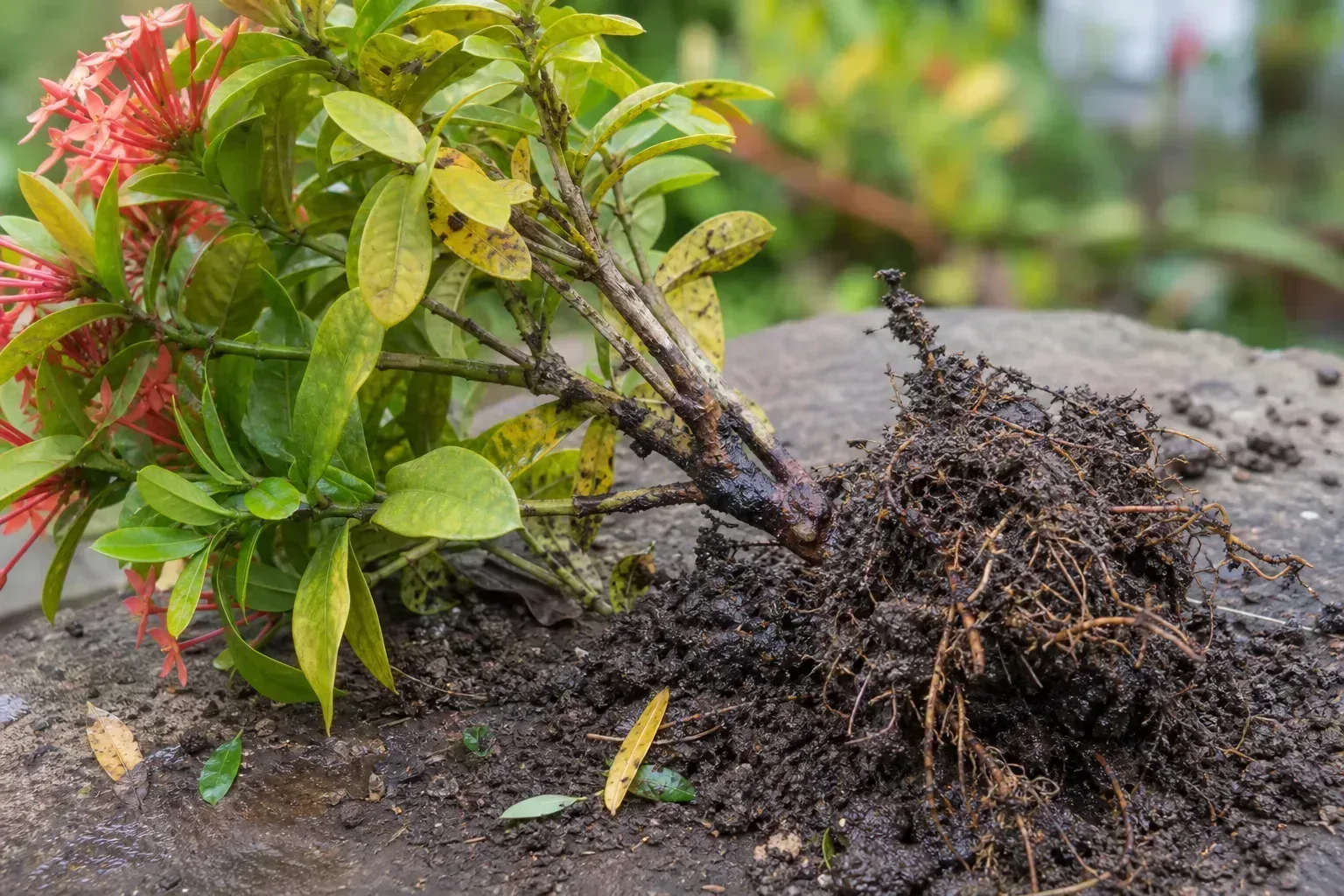
Root Rot on Ixora: Causes, Checks & Fixes
This guide covers root rot on Ixora. See also the general Root Rot guide, watering, and light pages for this plant.
Root Rot on Ixora: Causes, Checks & Fixes
Quick answer
Root rot on Ixora (Ixora coccinea, Jungle Flame) is almost always a watering and drainage failure on a woody tropical shrub-not a leaf disease you can spray away. The defining signal is wilt and flower bud drop while the mix is still damp: leaves go limp, coral bud clusters abort, and the pot stays noticeably heavy even though you have not skipped drinks.
First step: stop watering and check moisture at 3 cm depth before you add another drop. Push your finger or a bamboo skewer into the mix. Cool, clinging soil with a wilted plant means roots may be failing-not that the plant needs more water. Lift the pot: a heavy container days after you thought you watered lightly supports chronic wetness. Only after that fork-wet collapse versus light dry drought-should you unpot to inspect roots.
Root rot vs. drought wilt - why wet-soil collapse matters on ixora
Ixora is a moisture-loving calcifuge shrub that wants evenly moist, acidic, well-drained soil-not bone-dry cycles and not a permanently soggy root zone. Owners trained to “keep it moist” sometimes water on calendar through a cool indoor winter, or panic-water a wilted plant that is already rotting because summer drought taught them wilt means thirst.
The diagnostic fork is simple:
| Signal | Likely root rot (wet mix) | Likely underwatering (dry mix) |
|---|---|---|
| Pot weight | Heavy days after watering | Very light |
| Moisture at 3 cm | Cool, damp, clinging | Crumbly, warm, dusty |
| Leaf pattern | Limp glossy leaves on wet soil; lower yellowing | Limp leaves; crispy edges after dry spell |
| Flower buds | Abort on heavy wet pot | Drop on light dry pot in heat |
| Stem base | Softening, darkening near soil line | Firm woody stems |
| Root check (if unpot) | Brown, mushy, sour smell | Firm, pale roots |
If soil is wet throughout and leaves still wilt, do not water again-that is the most common mistake on ixora heading into rot. See the underwatering guide for the dry-soil branch of this fork.
What root rot looks on Ixora
On this branching Rubiaceae shrub with terminal cyme flower clusters, rot rarely starts as an obvious crown collapse. Early signs stack gradually:
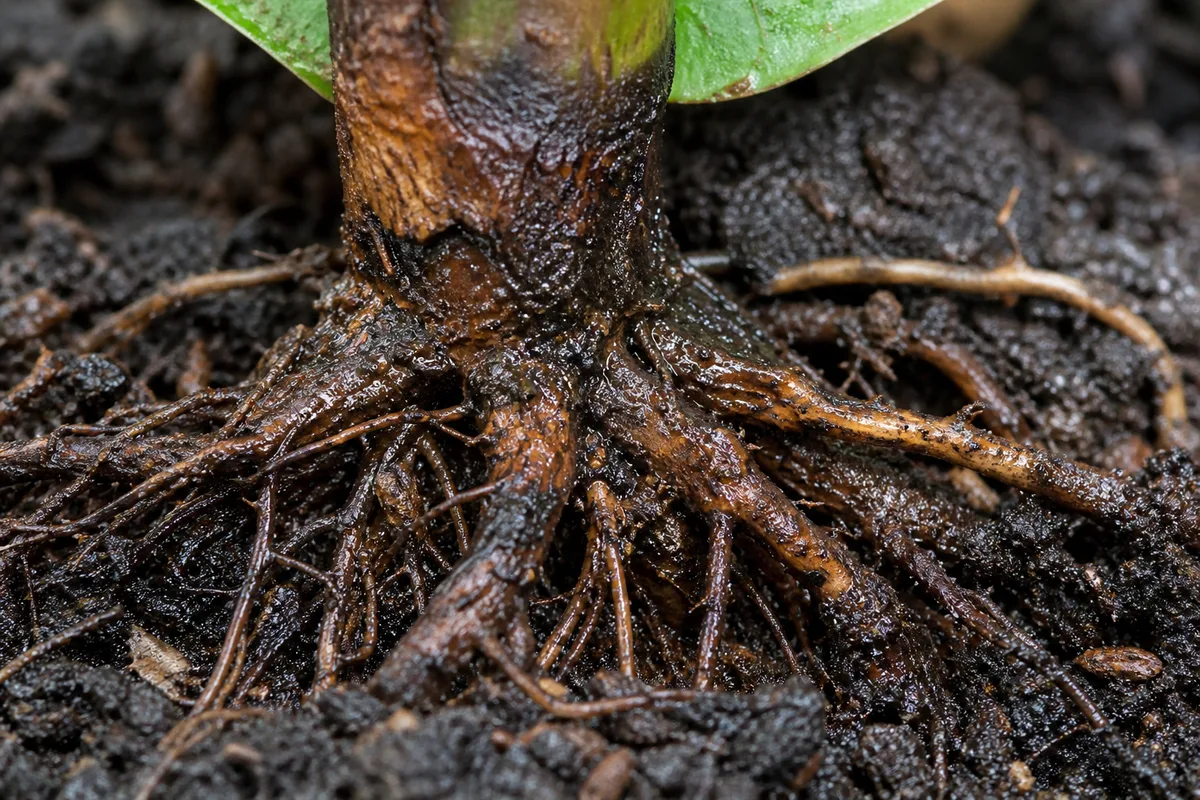
Root Rot symptoms on Ixora - compare with healthy tissue on the same plant.
- Limp, drooping leaves despite soil that feels damp at depth-not the light pot of drought
- Premature flower bud drop or failure of coral clusters to open when buds were already forming on a heavy wet pot
- Yellowing lower leaves while newer foliage may still look glossy for a time
- Sour or musty smell from drainage holes or when you disturb the mix
- Softening at the stem base where woody tissue meets wet acidic peat
- Fungus gnats hovering after watering-larvae thrive in chronically wet organic mix (extension guidance on fungus gnats)
- White fuzzy mold on the soil surface that returns within days of scraping-often the same moisture trigger as rot (mold on soil guide)
Advanced rot shows mushy dark tissue at the soil line, widespread leaf collapse, and roots that pull away as brown slime when you unpot. Compare with iron chlorosis: yellow new leaves with green veins on otherwise moist soil point to alkaline pH and micronutrient lockout-not mushy roots. Both can coexist on stressed ixora fed hard tap water.
Unlike underwatering, the mix does not pull away from the pot edge or crack on the surface. Roots, if exposed, should look firm and pale in healthy tissue-not brown, translucent, or slimy.
Why Ixora gets root rot
Ixora evolved in humid tropical Asia and is grown in moist but well-drained acid soil in full sun. That combination-high water demand in bright light plus intolerance of stale saturated mix-is where container growers fail. UF/IFAS notes ixora thrives in moist but well-drained acidic soil while NC State lists acid soil below pH 6.0 with good drainage and moist available space. “Moist” means cycling thorough drinks with partial dry-down at the surface-not keeping the entire ball waterlogged.
Common rot triggers on potted ixora:
Overwatering on calendar. Watering every two days regardless of pot weight keeps acidic peat anaerobic. In cool dim winter, the same volume that worked in summer sits for weeks.
Oversized patio containers. Extra soil volume stays wet longer than shallow tropical roots can use. A decorative cachepot without drainage re-wets mix from below.
Blocked drainage holes or saucers left full after bottom-watering. Roots suffocate in standing water even when the top looks dry.
Low light indoors. Ixora in a dim corner transpires slowly; evaporation at the surface slows, so the same watering leaves the root zone wet longer. Leggy pale stems often accompany chronic wetness.
Heavy garden soil or dense peat without perlite. Ixora needs well-drained acidic loam-not mud that holds water for days.
Winter slowdown trap. Growth and uptake drop below ~20°C in dim rooms, but owners keep summer schedules. UF/IFAS FP291 notes drought tolerance is moderate-ixora is not a succulent, but it also cannot sit in cold stale moisture.
The moisture paradox. Ixora “loves moisture” in the sense of even root-zone hydration during active growth-not constant saturation. Training from summer drought-wilt makes owners pour water onto an already rotting plant in winter.
How to confirm the cause
Work through these checks before repotting or spraying fungicide:
- Moisture at 3 cm - Cool, clinging soil with wilted leaves supports rot. Dry crumbly mix at depth points to drought-different fix.
- Pot weight - Heavy pot plus limp foliage on damp skewer confirms wet root zone. Light pot with dry depth means underwatering.
- Stem firmness - Press woody stems at the soil line. Soft, darkening tissue escalates toward rescue, not wait-and-see.
- Smell and drainage - Sour odor from holes or blocked saucers confirms anaerobic conditions.
- Bud and leaf pattern - Bud abort on wet heavy pot fits root stress. Interveinal yellowing on new leaves with alkaline crust suggests chlorosis-see yellow leaves guide.
- Root inspection - Slide the plant out gently. Healthy roots are firm and pale; rotted roots are brown, mushy, and may smell. Wilting with moist soil often means roots cannot absorb water because they are decaying.
If only the top centimeter was wet after one heavy splash but stems are firm and roots look healthy, you may have caught early overwatering-not advanced rot. Soft stems plus wet deep soil means treat as confirmed.
First fix for Ixora
Stop watering immediately and stabilize the environment before you change anything else.
Move the pot out of harsh midday sun if leaves are limp-bright indirect or morning light reduces further stress while roots are failing-but do not hide it in a colder dim corner that slows dry-down unevenly. Empty any saucer water. Do not fertilize, mist heavily, or repot on day one unless stems are already mushy and the mix smells sour.
Your goal in the first 24–48 hours is to confirm wet-soil wilt versus drought and decide whether unpotting is necessary-not to stack five treatments at once.
Step-by-step recovery
After you stop water and confirm wet-soil collapse, work in this order:
- Let the top 3 cm approach dry before any next drink-usually several days in a warm bright spot with airflow. Do not force full drought through the entire root ball; ixora is not drought-tolerant. You are breaking the saturation cycle, not desiccating the plant.
- Unpot carefully when stems soften or smell persists. Knock away wet mix without tearing healthy roots.
- Trim mushy tissue with clean sharp scissors or pruners. Cut back to firm white or tan root tissue. Sterilize blades between cuts on severely affected plants.
- Air-dry trimmed roots 30–60 minutes on newspaper in shade-not direct hot sun on exposed roots.
- Repot into fresh ericaceous mix with perlite for drainage. Use a pot only slightly larger than the trimmed root mass-never jump two sizes “to help recovery.” Follow modest repot steps in the repotting guide.
- Water once lightly after repot if mix is dry, then drain fully and empty the saucer. Resume the top-3-cm check before every future drink.
- Hold fertilizer until new shoots look normal for two weeks. Salt on damaged roots adds burn on top of rot.
Do not upsize the pot during recovery. Extra wet soil volume is a common reason rot returns on moisture-loving shrubs.
Recovery timeline
Mild early overwatering with firm stems and mostly healthy roots: stabilization often shows within one to two watering cycles after you correct the wet rhythm-new tip growth firming within 1–2 weeks in warm bright conditions.
Moderate root loss with trimmed mush and repot: expect 2–4 weeks before confident new shoots emerge from branch tips. Old yellow leaves will not re-green.
Severe crown mush at the soil line with most roots gone: recovery is unlikely on container ixora. Salvage may mean rooting firm stem cuttings above healthy nodes-propagation is a last resort, not day-one triage.
Good signs: Firm woody stems, no sour smell, dry surface at the 3 cm check before watering, new glossy leaves and bud clusters forming at shoot tips.
Bad signs: Continued limpness with wet soil after a corrected dry-down, spreading stem softening, widespread leaf drop, or mushy roots on re-inspection after repot.
Lookalike symptoms
- Underwatering - Light pot, dry mix throughout, firm stems. Fix with bottom-watering, not drying out further. Underwatering guide.
- Early overwatering without rot - Yellow lower leaves and limpness but firm roots when unpot. Correct drainage and rhythm before roots decay.
- Iron chlorosis - Yellow new leaves with green veins on moist alkaline soil; stems stay firm. Correct pH and water quality-not root trim.
- Surface mold only - White fuzz on top with firm stems and healthy roots below. Scrape and dry surface; see mold on soil.
- Fungus gnats - Adults over pot; larvae in wet top layer. Drying surface treats habitat shared with rot risk.
- Cold damage - Leaf drop after exposure below about 50°F (10°C); soil moisture may be normal. Warmth matters more than extra water.
What not to do
Do not keep watering because leaves look wilted when soil is already wet-watering a plant with rotting roots makes the problem worse. Do not repot into dense garden soil or a pot without drainage holes. Do not fertilize waterlogged or freshly trimmed plants. Do not upsize the pot after rot-that traps extra wet mix around recovering roots. Do not assume every wilt means drought without the pot-weight and 3 cm check. Do not blast fungicide on day one without fixing moisture and drainage-the primary cause is environmental, not a missing spray.
How to prevent root rot next time
Build prevention around how fast your pot dries in its actual spot:
- Water when the top 3 cm dries during March–October active growth; stretch intervals in cool dim months but never keep a summer calendar through winter indoors (watering guide).
- Use ericaceous mix with perlite-never plain garden soil in a container (soil guide).
- Prefer rainwater or filtered water to protect acid pH around pH 5.0–6.0; alkaline stress weakens roots already managing moisture swings.
- Keep 4–6 hours of direct sun where possible so transpiration and dry-down stay predictable.
- Empty saucers within an hour of watering; never let the pot sit in runoff.
- Right-size pots-especially on patios. Match container volume to root mass, not desired plant size.
- Remove spent flower debris from the soil surface so wet organic layers do not feed surface fungi and gnats.
- Scout weekly during warm months; bud drop on a heavy wet pot is an early alarm.
Practical checks
Urgency check
Treat as urgent if:
- Main stems soften at the soil line while mix is wet
- Most roots are mushy on inspection
- Wilt spreads across the whole shrub within 48 hours despite wet soil
- Sour smell persists after emptying the saucer and skipping one watering cycle
Mild limpness with firm stems and mostly healthy roots after one overwatering episode is usually reversible with corrected rhythm-not emergency repot.
Best inspection order
- Pot weight compared to your wet baseline
- Finger or skewer at 3 cm depth
- Stem firmness at soil line
- Bud cluster status and lower leaf color
- Drainage holes and saucer water
- Unpot only if steps 1–5 point to wet-soil failure or smell
Ixora care cross-check
| Variable | Target to reduce rot risk |
|---|---|
| Light | Bright; 4–6+ hours direct sun outdoors or brightest window indoors |
| Water | When top 3 cm dry; drain fully; empty saucers |
| Soil | Ericaceous, acidic, well-drained with perlite |
| Pot | Right-sized with open holes; avoid cachepots without drainage |
| Season | Reduce frequency in cool slow growth; do not summer-schedule winter |
Related Ixora guides
- Ixora overview - species biology and care hub
- Watering guide - moisture checks, wilt-on-wet-soil diagnosis, and prevention
- Soil guide - ericaceous mix, pH, and oversized-pot risk
- Repotting guide - modest container sizing after root trim
- Underwatering - dry-soil wilt branch of the diagnostic fork
- Overwatering - early wet-soil stress before roots decay
- Mold on soil - surface fungus sharing wet-mix triggers
- Wilting - limp foliage before full root failure
- Yellow leaves - chlorosis versus rot yellowing
- No flowers - bud drop from root stress versus light or pH
Related tool
Use the Root Rot Risk Checker to narrow causes for root rot on this plant before changing multiple variables at once.