No Flowers on Ixora: Causes, Checks & Fixes
Quick answer
When Ixora keeps glossy foliage but no cyme clusters, insufficient direct light is the most common indoor cause-followed by alkaline soil or hard water triggering iron chlorosis. First step: move the pot to the brightest spot that delivers four to six hours of direct sun on the leaves, or add a grow light, before changing fertilizer or repotting.
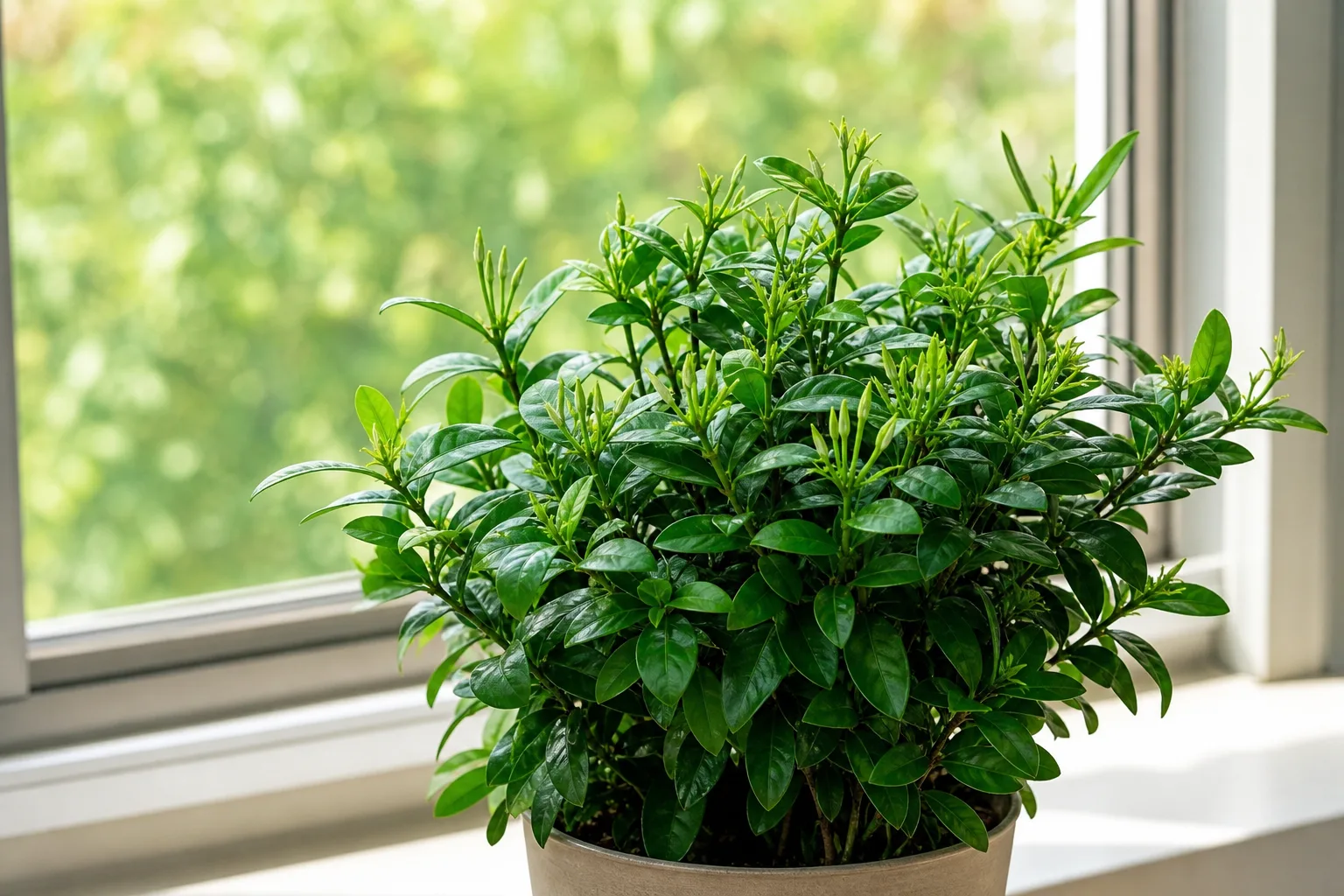
No Flowers on Ixora: Causes, Checks & Fixes
This guide covers no flowers on Ixora. See also the general No Flowers guide, watering, and light pages for this plant.
No Flowers on Ixora: Causes, Checks & Fixes
Quick answer
Ixora coccinea - flame of the woods, jungle flame - is a tropical flowering shrub grown for dense cymes of red, orange, pink, or yellow tubular blooms at stem tips. When the plant keeps glossy evergreen leaves for months but produces no flower clusters, the failure is usually environmental-not a mystery disease.
First step: increase direct light on the leaves before you change fertilizer, acidify soil, or repot. Move the container within one to three feet of your brightest east, south, or west window, target four to six hours of direct sun on the canopy daily, and add a full-spectrum grow light if a hand-shadow test at the top of the plant shows almost no shadow on a bright day. Only after light is honest should you correct soil pH near 5.0–6.0 if interveinal yellowing suggests iron chlorosis.
This page triages bloom failure across causes. For window placement, grow-light hours, and acclimation detail, see the Ixora light guide. For stretch-only symptoms without chlorosis, see not enough light on Ixora.
What no flowers looks like on Ixora
“No flowers” on ixora means missing or aborted cyme clusters - the spherical heads of four-petaled blooms that can persist six to eight weeks per cluster under ideal conditions. You are not looking for a single large blossom like hibiscus; you are looking for dense flower heads at growing tips that simply never appear, shrink to a few flowers, or form and drop before opening.
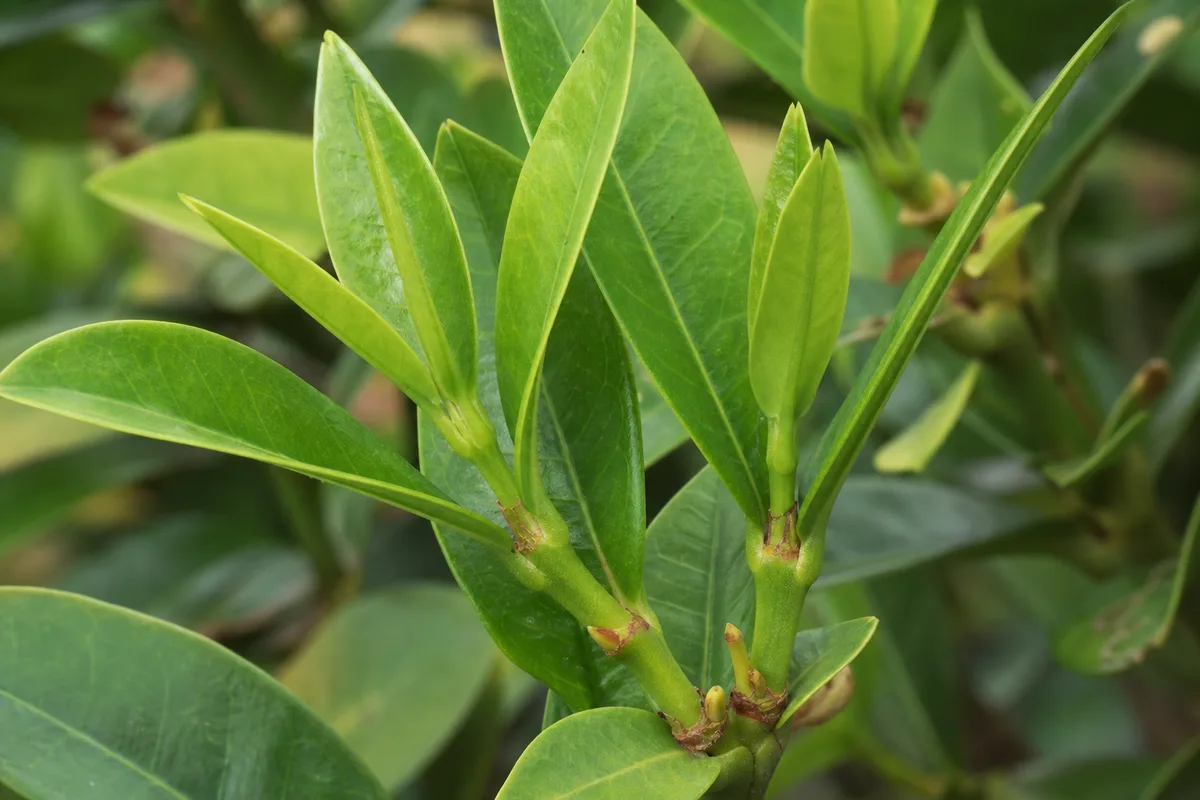
No Flowers symptoms on Ixora - compare with healthy tissue on the same plant.
Healthy foliage but no cymes or buds
The most frustrating pattern is a dark green, apparently healthy shrub that has not produced a cluster in weeks or months. Older leaves stay glossy. New tips may grow slowly or not at all. The pot looks fine. This is common indoors when cumulative daily light falls below what a sun-loving Rubiaceae shrub needs to budget energy for reproduction-even when watering and humidity seem acceptable.
Low-light signs: leggy stems and sparse clusters
When light is the blocker, blooms fail before leaf color changes dramatically. Watch for longer gaps between leaf pairs on new growth, a permanent lean toward the brightest wall, and lower branches going bare as the plant reaches for photons. Flower clusters, if any appear, are small and infrequent rather than the dense spheres ixora is known for in Florida landscapes.
Iron chlorosis: yellow between veins while light seems fine
Ixora in alkaline soil or hard tap water often keeps green veins while newer leaves yellow between them-classic iron and manganese chlorosis on this acid-loving species. UF/IFAS South Florida guidance notes that as chlorosis progresses, leaves may become smaller and buds may die even when you believe the window is bright enough. Chlorosis can mimic a healthy green plant from across the room while quietly blocking the bloom cycle. See also yellow leaves on Ixora when interveinal yellowing is the lead symptom.
Lookalikes at a glance
| What you see | Most likely cause | First check |
|---|---|---|
| Leggy lean, no clusters, firm green leaves | Insufficient direct light | Hand-shadow test at canopy; window distance |
| Yellow between green veins on new leaves | Alkaline soil or hard water (chlorosis) | Soil pH, tap water, concrete proximity |
| Sudden bloom loss after hedge cut | Heavy pruning removed flowering wood | Pruning date vs. bud formation |
| Green shrub, no buds after winter indoors | Short days + weak window intensity | Grow light; compare to summer patio performance |
| Lush leaves, no flowers, oversized pot | Roots colonizing excess mix | Pot size relative to root ball |
| Buds form then drop; wet soil | overwatering on Ixora in dim placement | Dry-down rate + light together |
Why Ixora stops flowering
Ixora ranks its bloom blockers predictably once you understand it as a full-sun tropical shrub that needs acidic, well-drained soil and warm stable temperatures-not a generic “bright indirect” foliage houseplant.
Insufficient light (primary indoor cause)
UF/IFAS states that ixora flowers continuously under ideal conditions outdoors but that full sun is necessary for maximum flower production-while large-leaved types tolerate partial shade, that tolerance means dappled afternoon relief in Florida heat, not a dim living room. Missouri Botanical Garden lists ixora as best grown in full sun with best flowering in full sun. NC State Extension defines full sun as six or more hours of direct sunlight daily.
Indoors, many ixoras receive bright ambient room light while the canopy sits too far from glass. The plant survives, stretches slowly, and abandons repeat bloom flushes because photosynthetic surplus never materializes. Winter compounds the problem: shorter photoperiods and weaker window angles can stop budding even when the pot never moved.
Alkaline soil or hard water (iron and manganese chlorosis)
Ixora is not well-suited to alkaline conditions, especially near sidewalks, foundations, or pots irrigated with hard tap water. UF/IFAS notes that new growth in high-pH conditions appears chlorotic from iron and manganese deficiencies, and UF/IFAS EP16400 adds that buds may die as symptoms continue. High soil pH prevents granular chelated iron from being taken up effectively; foliar micronutrient sprays often work better for acute correction on established plants.
Charlotte County Extension recommends keeping ixora away from concrete foundations and walkways that alkalize surrounding soil, targeting soil pH around 5 for best growth, and improving beds with organic matter to help lower pH. Container growers face the same chemistry in a pot-ericaceous mix drifts alkaline under hard water unless you manage pH deliberately. See the Ixora soil guide for mix and pH detail.
Oversized pot and high-nitrogen feeding
A slightly root-bound container often blooms better than a pot swimming with excess fresh mix, because the plant channels energy into shoots and flowers rather than colonizing a large root zone. Jumping several pot sizes “to help” a budless ixora frequently delays flowering for months.
Excess nitrogen pushes vegetative growth-lush leaves, long shoots, few clusters. Ixora wants lean, acid-forming nutrition during active growth, not lawn-grade nitrogen. Feed only after light and pH are corrected; see the Ixora fertilizer guide.
Heavy pruning that removed flowering wood
UF/IFAS warns that while ixora can be pruned anytime and tolerates shearing, pruning will reduce flowering because clusters form on newer growth. A hard mid-season hedge cut or late shearing can remove the wood that would have carried this year’s display. If blooms vanished immediately after pruning, wait for new shoots rather than fertilizing harder.
Cool winter rooms and shortened day length
Missouri Botanical Garden notes ixora does not tolerate temperatures below 50°F (10°C) and may die back in cooler zones. NC State lists the same threshold. Cool, dim winter rooms stall bud initiation even when autumn light seemed adequate. Ixora prefers warm stable conditions roughly between 68°F and 95°F (20°C and 35°C) with high humidity during active growth.
Seasonal slowdown in dim winter windows
Even without cold damage, short winter days at mid and high latitudes drop window intensity below outdoor Florida benchmarks. Leaves can look unchanged while flower production stops entirely until longer days return-or until you add supplemental lighting. This is normal seasonality, not necessarily a care failure, but it explains “no flowers” complaints every January.
How to confirm the cause
Work through this checklist before stacking treatments:
- Hand-shadow test at canopy height - On a bright day, hold your hand at the top of the shrub. A soft, readable shadow means usable light. Faint or absent shadow means too dim for reliable flowering on this species.
- Cluster history - Did cymes stop after a move indoors, a furniture shuffle away from glass, or winter? Green leaves with no clusters for three or more months during warm active growth strongly implicates light.
- New internode length - Compare the gap between the last two leaf pairs on a growing tip to older sections. Longer gaps plus directional lean confirm stretch from insufficient light.
- Leaf yellowing pattern - Uniform yellowing between green veins on newer leaves with hard tap water or alkaline mix points to iron chlorosis, not light alone. Stretch plus no blooms plus firm green leaves points to light.
- Soil pH and water source - Ericaceous mix should sit near pH 5.0–6.0. Rainwater or filtered water is safer than hard municipal water for calcifuge shrubs.
- Pruning timeline - Heavy shearing within the last four to eight weeks explains absent buds even when light is adequate.
- Pot size vs. root mass - Slip the plant out gently. A small root ball in a large pot suggests energy going to roots, not flowers.
- Dry-down rate - Mix that stays wet more than seven to ten days while growth stalls often pairs low light with overwatering risk-both must be corrected for bloom recovery.
First fix for Ixora
Move the pot to the brightest placement that delivers four to six hours of direct sun on the leaves-or install a grow light there-and then stop relocating it for at least fourteen days.
Choose a final spot within one to three feet of an unobstructed east window, or three to five feet back from south or west glass with sheer diffusion if leaves were trained in shade. If no window passes the hand-shadow test at canopy height, mount a full-spectrum LED twelve to eighteen inches above the plant on a fourteen- to sixteen-hour timer through winter.
Make this one deliberate placement change. Tropical shrubs drop a few leaves after relocation even when the new site is better; moving twice in two weeks compounds stress and delays budding.
If interveinal chlorosis is present, pair the light upgrade with pH correction-repot into fresh ericaceous mix or top-dress with acidic amendments per label directions, and switch to rainwater or filtered water. Do not acidify and fertilize heavily on the same week as a major move.
Do not repot into a larger container on day one. Do not apply full-strength bloom fertilizer to a stressed, budless shrub in wet dim soil.
Step-by-step bloom recovery
Once light is corrected, support recovery in this order:
- Hold placement stable for fourteen days - No second move, no heavy prune, no emergency repot.
- Adjust watering to the new dry-down rate - Brighter sites dry faster; soggy acidic mix in a dim corner was often a low-light side effect. Keep soil evenly moist but never waterlogged.
- Treat chlorosis if confirmed - Foliar chelated iron and manganese per label directions often work faster than soil drenches when pH is high. Retest pH after six weeks.
- Rotate the pot a quarter turn every two weeks - Prevents permanent lean; rotation does not replace photons.
- Add winter supplemental light if needed - Short days alone can pause budding even after a good summer on the patio.
- Resume mild acid-forming fertilizer only after new growth looks compact for two weeks - Half-strength during active warmth; skip feeding in cold dim winter.
- Light prune leggy shoots only after the first new buds or compact flush appears - Hard cuts before recovery remove potential flower wood.
Recovery timeline and realistic expectations
Expect minor leaf drop in the first one to two weeks after a placement correction, especially from a very dim prior location. Old leaves will not tell you whether the fix worked-watch new internode spacing and bud initials at stem tips.
During spring or summer active growth, many container ixoras show compact new leaves within three to six weeks after light improves. First cyme clusters often follow four to eight weeks later-not overnight, even when care is finally correct. Late fall or winter corrections may stall until longer days and warmer room temperatures return.
Chlorosis recovery takes longer than a simple light upgrade. Foliar treatments can green new leaves within two to four weeks, but bud formation may wait until iron metabolism and pH stabilize.
Worsening signs after twenty-one days of stable bright placement: continuing mass leaf drop, soft stems, sour wet soil, or spreading interveinal yellowing despite pH work-audit for root rot, scale, or combined overwatering rather than moving again.
Old stretched internodes do not shorten. A severely leggy specimen may need a season of correct light plus selective pruning before it looks like the dense hedge shape seen in tropical landscapes.
What not to do
Do not repot into a much larger pot hoping to force blooms-oversized containers delay flowering. Do not apply full-strength fertilizer to dry or stressed roots. Do not shear heavily mid-season if you want color this year.
Do not mistake a bright room for bright leaves-measure at the canopy. Do not treat chlorosis with only more water or only more light; pH and micronutrients need correction together.
Do not jump from deep shade to unfiltered hot south glass in one step-acclimate over seven to fourteen days to avoid scorch. Do not remove healthy leaves to “encourage” flowering; ixora needs foliage to fund bud formation.
Avoid rock mulch or concrete trays under pots if you are fighting alkaline conditions-they can raise pH around the root zone.
How to prevent repeat bloom failure
Place ixora where four to six hours of direct sun or equivalent supplemental light is realistic year-round-not where the pot looks best in a hallway. Pair stable light with ericaceous mix, rainwater or filtered water, and even moisture without waterlogging.
Re-evaluate every late autumn before winter angle drops window intensity. When patio plants move indoors, give them the brightest overwintering spot available.
Fertilize lightly with acid-forming, bloom-appropriate formulas during active growth only; excess nitrogen is a common silent bloom blocker. Keep pots appropriately sized-refresh mix without jumping multiple sizes at once.
Link ongoing care habits to the Ixora overview, light guide, soil guide, and fertilizer guide so bloom troubleshooting stays connected to baseline culture.
When to worry
Treat bloom failure as urgent when buds form repeatedly then abort alongside wet sour soil and soft stems-that pattern can signal root decline, not a simple light deficit. Rapid interveinal yellowing on all new growth despite foliar iron and pH correction may need a soil test and expert review.
Chronic no blooms with declining leaf count, pest clusters on new tips, or temperatures below 50°F (10°C) need escalation beyond placement tweaks. A firm-wooded plant in acidic moist mix that only needs more sun can be corrected over weeks; a collapsing root system cannot be fertilized back into bloom.
Conclusion
Ixora bloom failure is rarely a single mysterious switch-it is the visible result of light, soil chemistry, pruning, pot size, and season interacting on a shrub evolved for tropical sun and acidic ground. Glossy leaves without cymes fool growers into chasing fertilizer while the canopy sits in shade, or chasing light while alkaline water kills buds through chlorosis.
Increase honest direct light first, confirm pH and water quality second, and adjust feeding and pruning only after new compact growth proves the foundation is right. Judge recovery on the next flower clusters, not on old bare stems. Get those conditions aligned, and flame of the woods returns to the dense, long-lasting color display it was bred to deliver.
When to use this page vs other Ixora guides
- Ixora watering guide - Use for routine moisture checks before assuming no flowers is the main issue.
- Ixora problems hub - Browse all 18 common issues on this species.