Overwatering on Ixora: Causes, Checks & Fixes
Quick answer
Overwatering on Ixora shows as a heavy pot, limp glossy leaves, and cool damp soil at 3 cm depth-often with dropped flower buds. First step: stop watering until the top 3 cm dries and the pot weight drops, then confirm drainage before adding another drink.
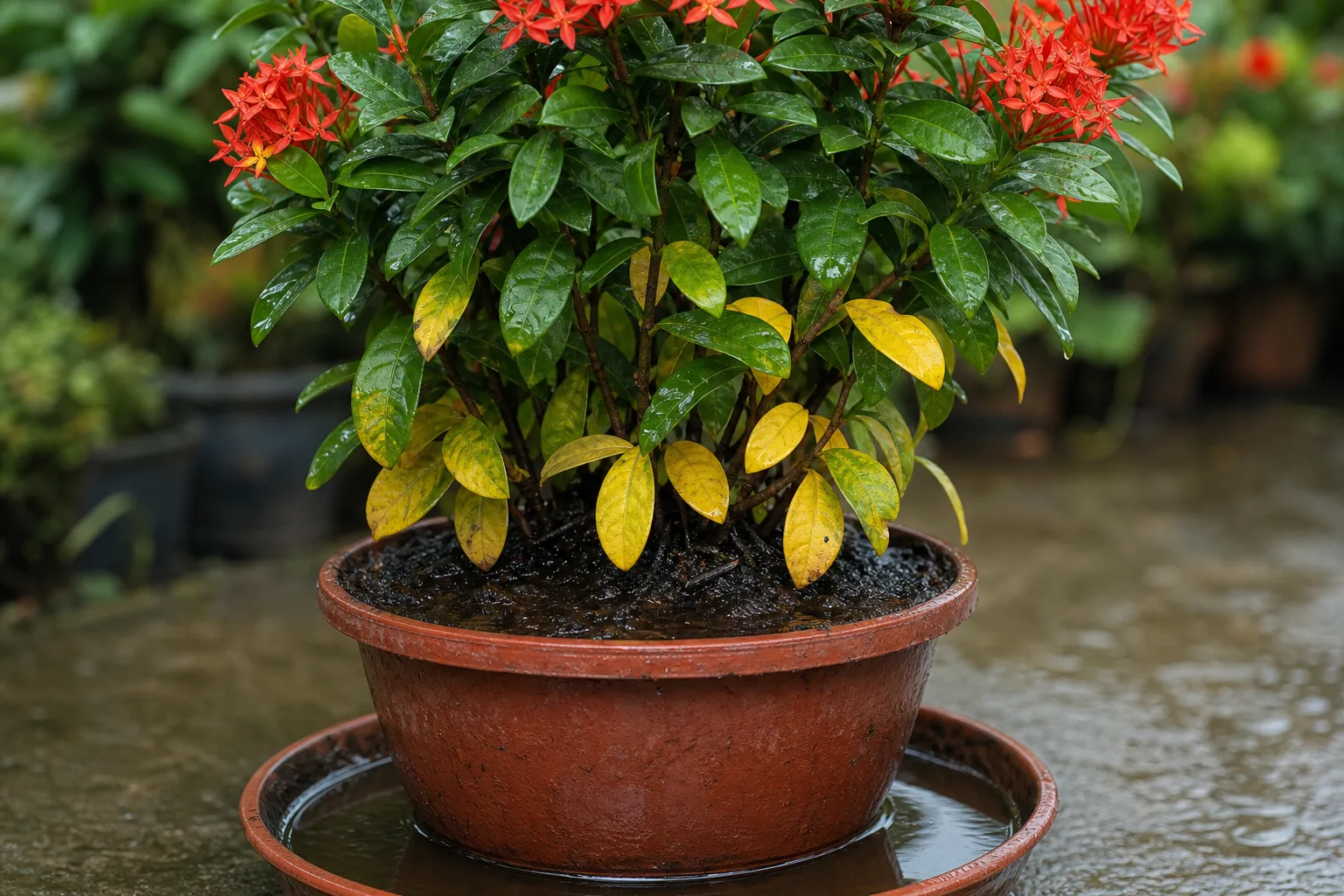
Overwatering on Ixora: Causes, Checks & Fixes
This guide covers overwatering on Ixora. See also the general Overwatering guide, watering, and light pages for this plant.
Overwatering on Ixora: Causes, Checks & Fixes
Quick answer
Overwatering on Ixora (Ixora coccinea, Jungle Flame) is the most common misread on this woody tropical shrub: limp leaves and dropped coral buds while the mix is still damp. That wilt-on-wet-soil pattern means roots are failing-not that the plant is thirsty.
First step: stop watering until the top 3 cm of mix dries and the pot feels lighter. Push your finger or a bamboo skewer to depth. Cool, clinging soil with a wilted plant means pause-not another drink. Only after the surface dries and weight drops should you resume a check-based rhythm aligned with the watering guide.
What overwatering looks on Ixora
On this branching Rubiaceae shrub with terminal cyme flower clusters, chronic wetness rarely announces itself as obvious mud on day one. Symptoms stack in a recognizable order:
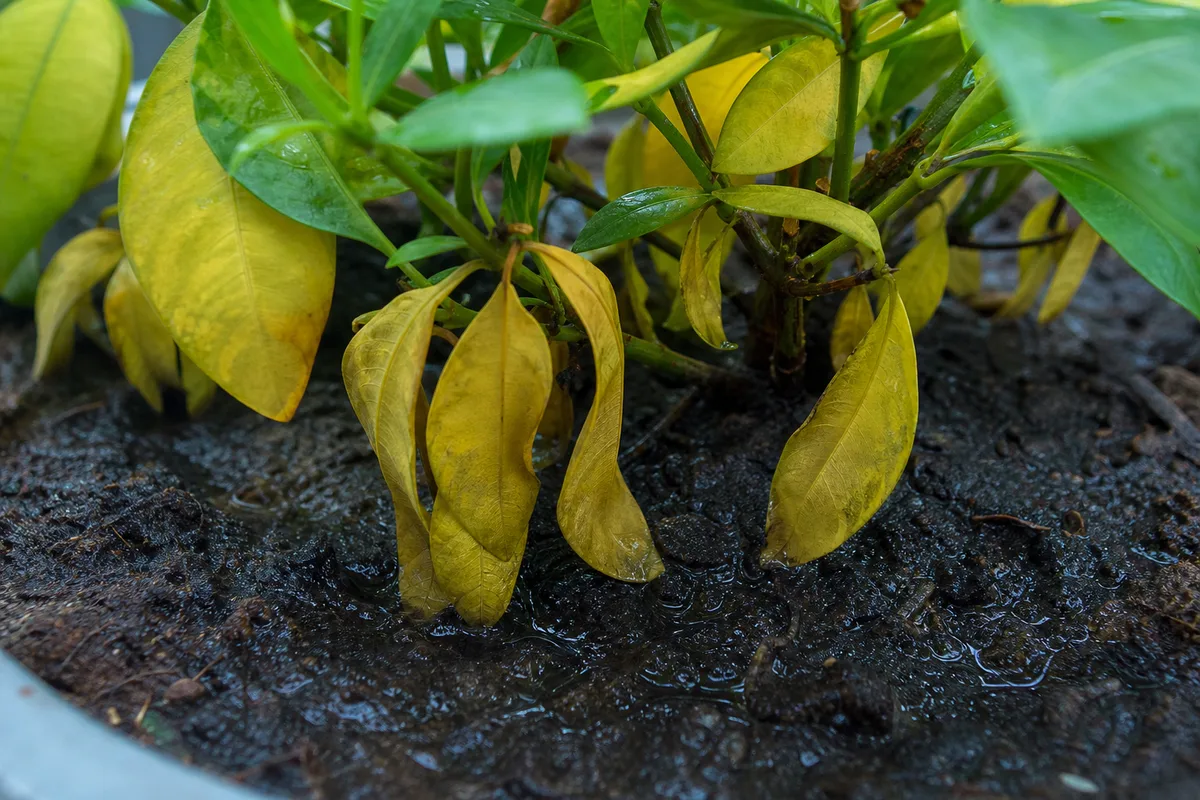
Overwatering symptoms on Ixora - compare with healthy tissue on the same plant.
- Limp, drooping glossy leaves while soil at 3 cm depth feels cool and damp-not the light pot of drought
- Premature flower bud drop or failure of coral clusters to open when buds were already forming on a heavy wet pot
- Yellowing lower leaves while newer foliage may still look dark green for a time
- A noticeably heavy pot days after you thought you watered lightly
- Sour or musty smell from drainage holes when you disturb the mix
- Fungus gnats hovering after watering-larvae thrive in chronically wet organic mix
- Softening at the stem base where woody tissue meets wet acidic peat-not “crown” collapse, but darkening tissue at the soil line on advanced cases
Unlike underwatering, the mix does not pull away from the pot edge or crack on the surface. If you slide the plant out, early overwatering may still show firm pale roots; advanced cases show brown mush and a sour smell. Yellow new leaves with green veins on moist soil often point to iron chlorosis from alkaline water-not pure overwatering alone.
Why Ixora gets overwatered
Ixora evolved in humid tropical Asia and is grown in moist but well-drained acidic soil in full sun. That narrow window-high water demand in bright light plus intolerance of stale saturated mix-is where container growers fail. UF/IFAS describes ixora as thriving in moist but well-drained acidic soil while NC State lists acid soil below pH 6.0 with good drainage and moist available space. “Moist” means cycling thorough drinks with partial dry-down at the surface-not keeping the entire ball waterlogged.
Common overwatering triggers on potted ixora:
Calendar watering through winter. Ixora uses less water in cool, dim rooms. The same Tuesday schedule that worked in summer leaves acidic peat anaerobic for weeks indoors.
Panic watering after a drought scare. Owners who once let ixora go too dry may overcompensate-drenching a plant that is already wilting on wet soil because summer taught them wilt means thirst.
Oversized patio containers. Extra soil volume stays wet longer than shallow tropical roots can use. A decorative cachepot without drainage re-wets mix from below.
“Keep it moist” advice without checks. Ixora is not drought-tolerant like a succulent, but it still needs the top few centimeters to dry between thorough drinks. Constant surface dampness suffocates fine roots.
Low light indoors. Ixora in a dim corner transpires slowly; evaporation at the surface slows, so the same watering leaves the root zone wet longer.
Heavy garden soil or dense peat without perlite. Ixora needs well-drained acidic loam-not mud that holds water for days. See the soil guide for ericaceous mix targets.
Rainy weeks on outdoor patio pots. Drainage holes blocked by saucers or trays let the root zone re-saturate after every storm.
How to confirm the cause
Work through these checks before changing anything else:
- Pot weight - Compare today’s pot to how it feels right after a thorough watering. A heavy container with wilted leaves supports chronic wetness, not drought.
- Moisture at 3 cm depth - Insert a finger or thin probe. A dry surface is not always a sign of water need; cool, clinging soil with limp leaves confirms overwatering risk. Crumbly, warm, dry mix at depth points to underwatering instead.
- Stem firmness - Firm woody stems with wet soil early in stress; softening and darkening at the soil line suggests advancing rot.
- Flower bud status - Buds aborting on a heavy wet pot fit root stress from saturation. Buds dropping on a light dry pot fit drought.
- Drainage sanity - Saucer full for hours, blocked holes, or water pooling on the surface after a normal drink all extend wet time.
- Lookalike screen - Interveinal yellowing on new leaves with alkaline crust on the pot rim suggests pH stress (yellow leaves guide); fungus gnats with surface mold point to the same wet trigger (fungus gnats, mold on soil).
- Season and light - Cool dim winter slows uptake; bright summer sun dries small pots fast. Calendar rules fail both seasons without weight checks.
If soil is wet throughout and leaves still wilt, do not water again-that is the defining mistake on ixora heading into root rot.
Practical checks before you change anything
Lift the pot with both hands after your moisture probe. A wet reference weight from last thorough watering is your baseline. Note whether the surface looks dry while the core stays cool-that “dry top, wet heart” pattern keeps owners watering too often. Smell the drainage hole: sour notes mean anaerobic mix. Watch for gnats within 24 hours of watering-that often correlates with soil that never fully dries between drinks.
First fix for Ixora
Stop watering until the top 3 cm dries and pot weight drops.
Move the plant to brighter indirect light if it sits in deep shade-slow evaporation worsens wet soil, but avoid harsh midday sun on a stressed shrub. Empty any saucer water. Do not fertilize, repot, or prune heavily on day one.
If stems stay firm and roots are not mushy when you peek through the drainage hole, this pause alone often stabilizes mild overwatering within one to two weeks.
Step-by-step recovery
Mild overwatering
Soil was wet too long but stems are firm and no sour smell:
- Pause all drinks until the top 3 cm is dry and the pot feels lighter.
- Improve airflow - crack a window or run a fan nearby; grouped pots slow evaporation.
- Resume check-based watering - one thorough drink when the 3 cm probe reads dry, then drain fully and empty the saucer.
- Watch new growth - firm expanding tips mean roots are recovering; old limp leaves may lag.
Moderate overwatering
Yellow lower leaves, dropped buds, or lingering dampness after a week-long pause:
- Unpot carefully when the mix has dried enough to handle-inspect roots for brown mush versus firm pale tissue.
- Trim only clearly mushy roots with clean shears; dust cuts with cinnamon or let air-dry 30 minutes.
- Repot into the same size or one step smaller container with fresh ericaceous mix and open drainage-never upsize “to help drying.”
- Hold fertilizer until new growth looks normal for two weeks.
Severe - escalate to root-rot protocol
Stem base softening, widespread wilt, sour smell, or roots that pull away as slime:
Stop here and follow the root rot guide for unpotting, root trim, and repot workflow. Severe stem-base mush at the soil line is often fatal on container ixora-honest salvage may mean stem cuttings from firm upper wood only.
Recovery timeline
Mild stress: Leaves often firm within three to seven days after the mix dries and oxygen returns to roots.
Moderate stress with bud drop: Expect one to three weeks before fresh cyme clusters form once moisture and light stay steady. Dropped buds do not reopen.
Old yellow lower leaves: Rarely re-green; judge success by firm woody stems and glossy new tips-not by damaged foliage recovering.
Worsening signs: Continued limpness 72 hours after confirmed dry-down, spreading stem softening, or widespread leaf drop with wet soil means advancing rot-not simple overwatering.
Lookalike symptoms
| Signal | Overwatering (wet mix) | Underwatering (dry mix) | Iron chlorosis |
|---|---|---|---|
| Pot weight | Heavy | Very light | Variable |
| Moisture at 3 cm | Cool, damp | Crumbly, dry | Often moist |
| Leaf pattern | Limp on wet soil; lower yellowing | Limp; crispy edges | Yellow new leaves, green veins |
| Flower buds | Drop on heavy wet pot | Drop on light dry pot in heat | Buds may fail on pH stress |
| Stem base | May soften if advanced | Firm | Firm |
| Fix | Pause watering; dry down | Bottom-water; rewet | Correct pH and micronutrients |
- Root rot - Overlaps heavily; wet-soil wilt with mushy roots is the advanced stage. See root rot when smell and stem base confirm decay.
- Iron chlorosis - Yellow new leaves with green veins on otherwise moist soil; hard tap water and alkaline mix-not solved by watering less alone.
- Fungus gnats - Co-symptom of chronic wetness; drying the mix is the first fix before traps or treatments.
- Cold damage - Leaf drop after exposure below about 50°F (10°C); soil moisture may be fine. Warmth matters more than less water.
What not to do
Do not water again because leaves wilt on wet soil-that accelerates root decline on ixora. Avoid fertilizing a waterlogged plant; salts on stressed roots add burn. Do not repot into a larger container to “help drying”-extra soil volume stays wet longer. Do not mist instead of fixing soil moisture-roots need air in the mix, not leaf surface spray. Do not assume every yellow leaf means overwatering without checking vein color and pH context.
How to prevent overwatering on Ixora
Build prevention around how fast your pot dries:
- Check the top 3 cm before every drink during active growth; stretch intervals in cool dim winter without keeping a summer schedule.
- Use ericaceous mix with perlite for drainage plus peat or cocopeat for moisture retention-never plain garden soil in a pot.
- Prefer rainwater or filtered water to protect acid pH around 5.0–6.0 and reduce chlorosis that mimics wet-root stress.
- Keep the plant in bright light with good airflow; dim corners slow evaporation and invite chronic wetness.
- Right-size the pot-modest containers dry faster than oversized patio planters.
- Empty saucers within 30 minutes of watering so roots do not sit in stale runoff.
- After repotting, water lightly until roots explore fresh mix-do not flood a newly disturbed root ball on calendar.
Weekly pot-weight checks during monsoon season or indoor winter catch wet-down failures before buds drop.
When to worry
Escalate the same day if woody stems soften and darken at the soil line, the mix smells sour after a dry-down attempt, or widespread leaf collapse continues 72 hours after you stopped watering confirmed wet soil. Those patterns suggest root rot-not a pause-and-wait case.
Persistent fungus gnats, returning surface mold, and lower-leaf yellowing that spreads up the shrub while soil stays damp mean the root zone has not stabilized-inspect roots before resuming normal watering.
Related Ixora guides
- Ixora overview - species biology and care hub
- Watering guide - moisture checks, wilt-on-wet-soil diagnosis, and prevention
- Underwatering - dry-soil wilt branch of the diagnostic fork
- Root rot - advanced wet-soil rescue when roots decay
- Soil guide - ericaceous mix, pH, and oversized-pot risk
- Yellow leaves - chlorosis versus rot yellowing
- Fungus gnats - co-symptom of chronically wet mix
- Mold on soil - surface fungus sharing wet-mix triggers
Related tool
Use the Root Rot Risk Checker to narrow causes for overwatering on this plant before changing multiple variables at once.