Yellow Leaves on Ixora: Causes, Checks & Fixes
Quick answer
Yellow new leaves with green veins on Ixora usually mean iron or manganese chlorosis from alkaline soil or hard tap water-not a generic watering mistake. First step: inspect the newest leaves at each branch tip for that interveinal pattern and check soil pH and water quality before adding fertilizer or watering again.
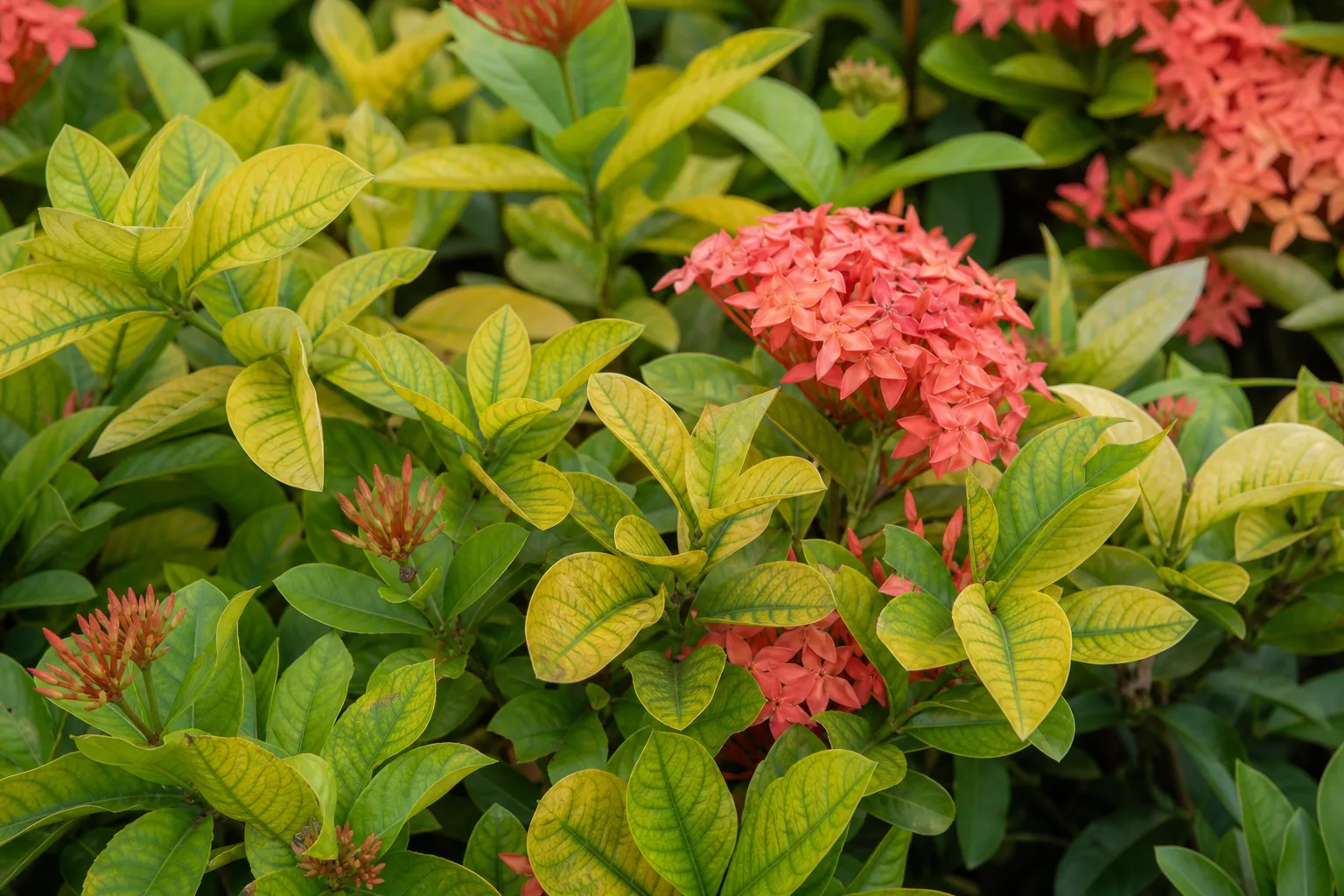
Yellow Leaves on Ixora: Causes, Checks & Fixes
This guide covers yellow leaves on Ixora. See also the general Yellow Leaves guide, watering, and light pages for this plant.
Yellow Leaves on Ixora: Causes, Checks & Fixes
Quick answer
Yellow leaves on Ixora (Ixora coccinea, Jungle Flame) are a symptom with several distinct causes on this woody tropical shrub-not one generic “bad luck” diagnosis. The pattern on newest leaves at branch tips usually matters more than a single faded leaf at the base.
First step: inspect the newest leaves at each branch tip for interveinal yellowing-yellow tissue between still-green veins. That pattern on acid-loving Ixora almost always means iron and manganese chlorosis from alkaline soil or hard tap water. Check soil pH near 5.0–5.5 and switch to rainwater or filtered water before changing watering frequency or adding balanced fertilizer.
If veins and blades yellow together on lower older leaves while the pot feels heavy and soil stays damp, suspect root stress from overwatering-see the overwatering guide. A light dry pot with crisp yellow leaf edges points to drought-see underwatering. One or two yellow lower leaves on an otherwise firm blooming shrub are often normal aging.
Why acid-loving Ixora yellows differently from generic houseplants
Ixora is a calcifuge Rubiaceae shrub-an evergreen woody plant evolved for humid tropical Southern Asia with naturally acidic ground. It grows as a compact rounded bush with glossy opposite leaves and flat-topped cyme flower clusters at branch tips, not as a rosette with crown-centered new growth.
That physiology explains why yellow leaves on Ixora rarely match generic houseplant advice:
- Micronutrient lockout from rising pH is the signature problem-new leaves show chlorosis while older foliage may stay darker green longer
- Full-sun transpiration in summer patio pots dries acidic peat fast; winter indoor slowdown keeps the same mix wet longer-both paths yellow leaves through different mechanisms
- Cold below about 50°F (10°C) triggers rapid yellow-and-drop on this frost-sensitive tropical shrub
- Bud clusters at stem tips attract aphids that distort and yellow the newest flush
Generic “check watering and light” misses the primary ixora story: your water chemistry and soil acidity often show up in leaf color before you own a pH meter.
What yellow leaves look like on Ixora
Healthy Ixora foliage is glossy, leathery, and dark green on firm woody stems. Yellowing changes the look in patterns that point to different causes:
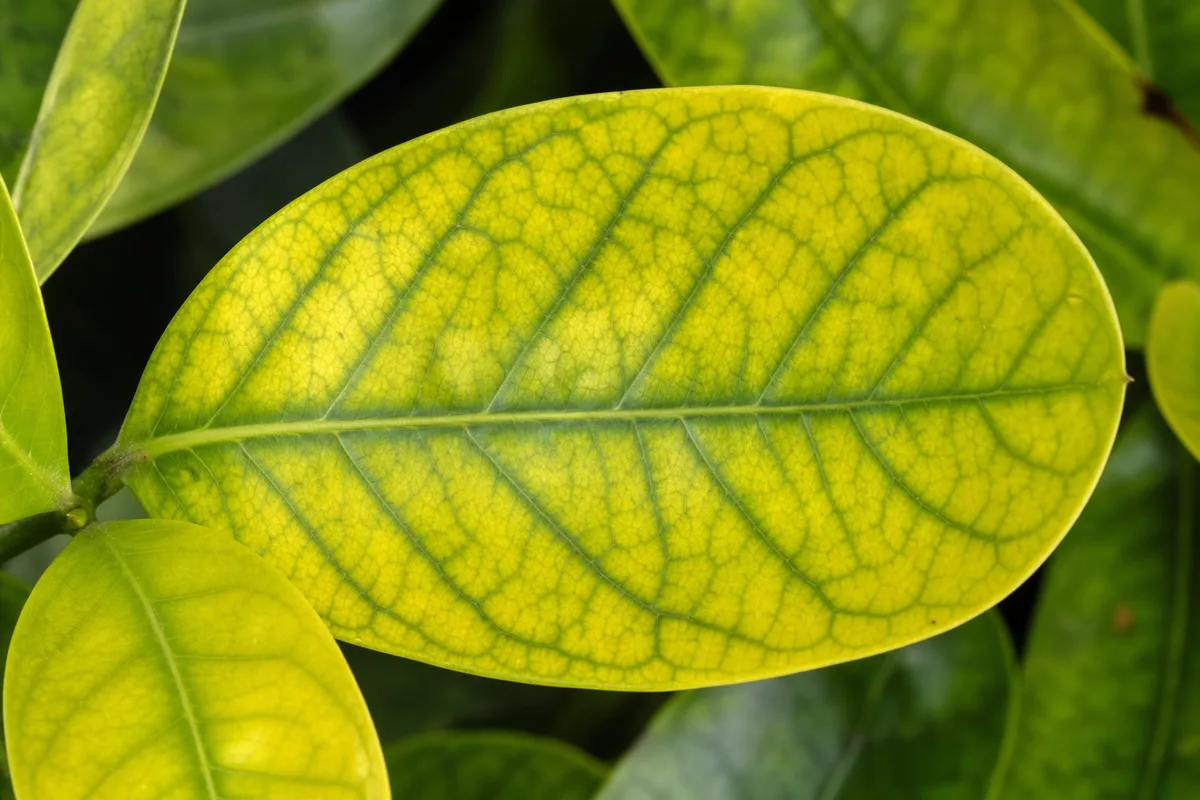
Yellow Leaves symptoms on Ixora - compare with healthy tissue on the same plant.
Iron and manganese chlorosis (yellow new leaves, green veins)
On alkaline soil or after months of hard tap water, new growth at branch tips turns pale yellow or lime-green between veins that stay darker green-classic interveinal chlorosis. Leaves may become smaller, growth slows, and flower buds can die before opening even when you believe light is adequate. White mineral crust on the pot rim often accompanies this pattern indoors.
Overwatering (limp yellow lower leaves, wet heavy pot)
Older lower leaves yellow uniformly-veins and blade together-while texture turns soft and limp. The pot feels heavy, soil 1–2 cm down stays cool and clinging, and cyme bud clusters may drop. Woody stems can stay firm early on; advanced cases soften at the soil line. This is root stress, not chlorosis.
Underwatering (crisp yellow edges, light dry pot)
A light pot with dusty dry mix produces yellow-brown crisp margins or fully yellow leaves that feel papery, often starting at exposed outer branches on a sunny patio. Lower leaves may drop after prolonged drought. Branch tips may wilt before full yellowing spreads.
Chill and draft stress (rapid yellow-and-drop)
After a cold night below about 50°F (10°C), near a frosty window, or beside an AC vent in winter, many leaves yellow and drop within days across the shrub-not just the oldest foliage. Buds abort and stems may look otherwise firm. This is environmental shock, not nutrient deficiency.
Low light (pale leggy upper growth, few buds)
In dim corners, upper leaves bleach to yellow-green while stems stretch with long gaps between leaf pairs. The plant may keep some green color but produces few flower clusters. This differs from interveinal chlorosis-veins do not stay prominently darker.
Aphids on bud clusters (distorted new flush)
Soft-bodied insects on unopened flower heads and the youngest leaves below each cyme cause curling, stunting, and yellowing localized to tender branch tips. Sticky honeydew on glossy leaves is a common first clue. See aphids on Ixora when insects or honeydew are present.
Purple P+K deficiency spots on older leaves
Purplish-red or reddish-purple spots on older leaves-sometimes mistaken for fungal leaf spot-can indicate combined potassium and phosphorus deficiency, especially in alkaline sandy soil or after cool snaps. UF/IFAS Collier County research links this pattern to calcarious soils where both P and K are limiting.
Normal lower-leaf aging on blooming ixora
A single yellow lower leaf on an otherwise firm shrub with active bud clusters at branch tips is often harmless senescence. Remove the spent leaf and watch the next flush-do not repot, acidify, and fertilize all at once for one fading leaflet.
Why Ixora gets yellow leaves
Ixora yellows when one or more of its non-negotiables slip: acidic soil, even moisture without waterlogging, warm stable temperatures, and strong light for flowering shrubs.
Alkaline soil and hard water gradually raise pH above the 5.0–5.5 range this species prefers. Iron and manganese become unavailable; chlorosis appears on new foliage first because mobile iron moves to support expanding tissue at branch tips.
Overwatering in dim winter rooms keeps peat-heavy mix saturated while growth slows. Fine roots die; lower leaves yellow on wet soil-the classic winter failure mode for patio plants moved indoors.
Summer drought on sunny balconies desiccates small pots in one to two days. Ixora wants moist but well-drained acidic soil in full sun; skipping drinks during a heat wave yellows outer leaves fast.
Cold exposure below about 50°F (10°C) damages tropical foliage. NC State Extension notes ixora does not tolerate temperatures below 50 degrees and may die back in marginal zones.
Low light plus unchanged summer watering slows dry-down indoors, mimicking overwatering stress on lower leaves even when you have not increased frequency.
Aphids and scale weaken new growth at the exact tissue where flower clusters form, yellowing the flush you care about most.
How to confirm the cause
Work through this checklist before treating-each step narrows the diagnosis:
- Newest-leaf vein color - Yellow between green veins on new branch-tip leaves points to chlorosis. Uniform yellow on older leaves points to moisture or aging.
- Soil pH and water source - Target pH 5.0–5.5 in ericaceous mix. Hard tap water, concrete-adjacent placement, or rock mulch under pots raises pH. See the soil guide.
- Moisture at 1–2 cm depth - Insert a finger or skewer. Crumbly dry mix with a light pot confirms drought. Cool clinging damp soil on a heavy pot confirms wet-root stress.
- Pot weight - Lift the container. Light and dry vs heavy and wet separates underwatering from overwatering faster than looking at leaf color alone.
- Chill and move timeline - Recent patio night below 50°F, new window with cold glass, or AC blast explains sudden mass yellowing without soil problems.
- Bud-cluster and leaf-underside inspection - Check tight flower domes and youngest leaves for aphids, scale bumps, or honeydew shine.
- Purple spots on older leaves - Spotting with reddish-purple tones on mature foliage suggests P+K deficiency in alkaline conditions-not a fungus to spray.
- Scope of yellowing - One or two lower leaves on a blooming plant favors aging. Widespread new-flush chlorosis favors pH. Rapid whole-shrub drop after cold favors chill injury.
Lookalike comparison on Ixora
| Pattern | Where it shows | Soil / pot | Vein color | First direction |
|---|---|---|---|---|
| Iron/manganese chlorosis | New leaves at branch tips | Moist; white rim crust possible | Yellow between green veins | Rainwater, pH correction, foliar micronutrients |
| Overwatering | Lower older leaves | Heavy, cool damp mix | Uniform yellow | Stop watering; inspect roots |
| Underwatering | Outer branches, crisp margins | Light, dry | Uniform yellow-brown | Bottom-water |
| Chill stress | Many leaves at once | Moisture may be normal | Uniform yellow then drop | Warm stable spot above 60°F |
| Low light | Leggy upper stems | Normal | Pale yellow-green, no green veins | Increase direct light |
| Aphids | Bud clusters, new flush | Normal | Distorted yellow new growth | Rinse and isolate |
| Normal aging | One or two lowest leaves | Normal | Uniform yellow | Remove leaf; monitor branch tips |
| Purple P+K spots | Older leaves | Alkaline sandy mix | Green with purple spots | Acidify soil; balanced acid-forming feed |
First fix for Ixora
Inspect the newest leaves at each branch tip for interveinal yellowing-yellow between green veins-before you water, fertilize, or repot.
If that chlorosis pattern is present:
- Pause balanced fertilizer until pH and moisture are stable-feeding without fixing acidity can worsen lockout.
- Switch to rainwater, distilled water, or filtered water for the next several weeks.
- Check soil pH with a meter or test kit; ericaceous mix should sit near 5.0–5.5. Repot into fresh acid-leaning mix if pH is above 6.0 or mix has broken down-see soil guide.
- Apply foliar chelated iron and manganese per label directions mixed with distilled water or rainwater. Granular soil iron is often ineffective when pH is high; liquid micronutrients sprayed on the foliage work best for acute chlorosis on established plants.
If newest leaves are not chlorotic but lower leaves yellow on wet heavy soil, your first fix is different: stop watering and confirm drainage. Do not add fertilizer or foliar iron to a waterlogged root zone-see overwatering.
If the pot is light and dry with crisp yellow leaves, bottom-water with room-temperature rainwater until the root zone rewets, then drain fully-see underwatering.
If yellowing followed a cold night, move Ixora to a stable spot above about 60°F (15°C) away from drafts before changing soil chemistry.
Recovery timeline
Chlorosis recovery is measured on new branch-tip leaves, not old chlorotic foliage. Foliar micronutrient treatments can produce noticeably greener new growth within two to four weeks once pH and water quality stabilize. Bud clusters may take longer to return if chronic stress caused bud death.
Overwatering recovery depends on root health. After you pause watering and improve drainage, watch for firm woody stems and fresh glossy leaves at branch tips over one to three weeks. Yellow lower leaves drop; they will not re-green.
Drought recovery often shows new green tips within several days to one week after a thorough bottom-water on healthy roots.
Chill injury may shed many leaves before new growth resumes in warmth-allow two to four weeks of stable temperatures before judging survival.
Aphid damage on yellowed new flush clears as clean bud clusters emerge after rinsing-curled leaves stay cosmetically marked until pruned or aged out.
Worsening signs after three weeks of correct care: spreading interveinal chlorosis despite foliar iron, sour wet soil with soft stems, or total bud loss on a collapsing shrub-escalate to root inspection or expert review.
What not to do
- Do not apply balanced fertilizer as the first response on chlorotic ixora-correct pH and water quality first.
- Do not water a heavy wet pot because yellow lower leaves “look thirsty”-that deepens root stress.
- Do not rely on granular iron alone when soil pH is above 6.0-most uptake is blocked until acidity improves.
- Do not assume all yellow leaves need more light-interveinal chlorosis on new growth in a bright window is a chemistry problem.
- Do not flush salts aggressively without knowing pH status-on calcifuge ixora, blind flushing with hard tap water can raise pH further.
- Do not repot, acidify, fertilize, and prune on the same day-ixora recovers better when you fix one variable at a time.
- Do not leave ixora outdoors when nights approach 50°F (10°C) if you are fighting unexplained mass yellowing after a cold snap.
Wear gloves when handling many yellow spent leaves if pets chew plants-the ASPCA lists Ixora coccinea (flame of the woods) as non-toxic to cats and dogs, though any plant material may still cause mild gastrointestinal upset.
How to prevent yellow leaves next time
Prevention on Ixora is mostly about protecting acidity and matching water to season:
- Use rainwater or filtered water as the default irrigation-hard tap water is the slowest path to chlorosis indoors.
- Maintain ericaceous mix near pH 5.0–5.5 and repot every one to two years before peat breaks down and compacts-see soil guide.
- Water when the top 1–2 cm dries during active growth; stretch intervals in dim cool winter months per the watering guide.
- Keep several hours of direct sun on the canopy-dim rooms plus heavy winter watering yellow lower leaves from slow dry-down.
- Move containers indoors before nights drop toward 50°F (10°C) on patio specimens.
- Avoid concrete foundations, limestone mulch, and rock trays under pots that leach alkalinity.
- Feed with acid-forming fertilizer only during active growth after pH is confirmed-see fertilizer guide.
- Inspect bud clusters weekly during warm months so aphid yellowing on new flush is caught early.
When to worry
Escalate beyond basic fixes when:
- Many leaves yellow rapidly while soil stays cool and wet-unpot for root rot before repotting into fresh mix
- Interveinal chlorosis spreads to every new flush despite foliar iron and rainwater for six weeks-soil test and expert review
- Whole-shrub collapse after prolonged wet soil with soft stems at the base
- Mass leaf drop after frost or sub-50°F exposure with no new branch tips after four weeks of warmth
- Buds form repeatedly then abort alongside wet soil and yellow lower leaves-audit roots and environment together
In salvage situations, firm stem tips above healthy nodes can be rooted as cuttings even when the parent shrub fails-propagation is recovery, not day-one triage.
Related Ixora guides
- Ixora overview - species biology, chlorosis FAQ, and frost limits
- Soil guide - ericaceous mix, pH targets, and repot timing
- Watering guide - moisture checks and winter dry-down
- Fertilizer guide - acid-forming feed without worsening lockout
- Light guide - direct sun needs for healthy foliage
- Overwatering - wet heavy pot and yellow lower leaves
- Underwatering - crisp drought yellowing on sunny pots
- Not enough light - pale stretch without interveinal pattern
- Aphids - yellow distorted new flush on bud clusters
- Root rot - soft stems and sour soil escalation
- Drooping leaves - limp foliage before full yellowing
Related tool
Use the Yellow Leaves Diagnosis Tool to narrow causes for yellow leaves on this plant before changing multiple variables at once.