Ixora Fertilizer: Acid-Loving Feeding, Iron
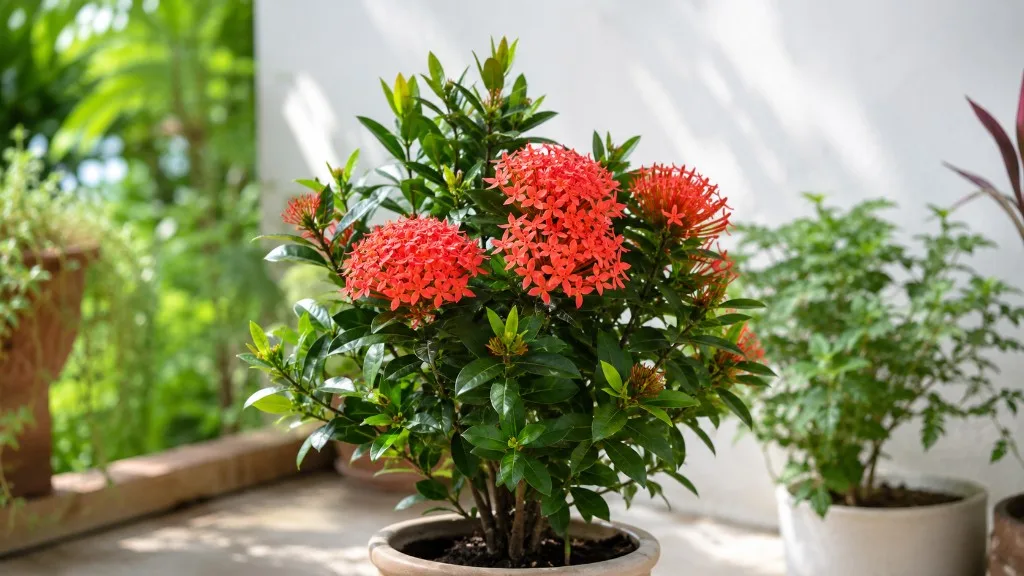
Ixora Fertilizer: Acid-Loving Feeding, Iron, and Micronutrients
Ixora Fertilizer: Acid-Loving Feeding, Iron, and Micronutrients
Ixora fertilizer is not a generic houseplant feeding question. Ixora coccinea and the dwarf cultivars sold as indoor and patio plants belong to the Rubiaceae family and evolved on acidic, humid soils in Southern India and Sri Lanka. They push clusters of red, orange, pink, or yellow flowers when roots sit in a low-pH root zone - roughly pH 5.0 to 6.0 - with steady moisture and bright light. Feed them like a random foliage plant on alkaline tap water and balanced 20-20-20 at full strength, and you often get the opposite of what you wanted: interveinal chlorosis (yellow leaves with green veins), bud drop, sparse blooms, and salt-burned leaf tips on a shrub that should look dense and glossy.
The practical goal for most growers is threefold: use an acid-formula fertilizer suited to azaleas, camellias, or other ericaceous plants; maintain iron and manganese availability through pH management and targeted micronutrient supplements when chlorosis appears; and apply nutrients lightly and consistently during active growth, then pause in late fall and winter. Half-strength liquid feeding on moist soil beats heavy doses. Foliar chelated iron and liquid micronutrient sprays work when high pH or alkaline water locks nutrients in the soil - a pattern UF/IFAS Extension documents repeatedly for ixora in Florida landscapes and one that container growers replicate indoors when water, mix, or pot placement raises pH over time.
This guide covers when to feed, which acid-loving formulas work, how to read and fix iron chlorosis, which micronutrients matter beyond NPK, and the mistakes that cause more damage than skipping a month ever would.
Why Ixora Needs a Different Fertilizer Strategy Than Most Houseplants
Ixora is an acid-loving ornamental. University of Florida Extension materials note that a pH of around 5 suits ixora - slightly lower than what many landscape plants tolerate - and that acid-loving species require more deliberate fertilization management than plants adapted to alkaline soils (UF/IFAS - Ixora nutrient guidance). The issue is not simply “more fertilizer.” It is nutrient availability at the root surface. When soil or potting mix drifts alkaline - from hard tap water, limestone in the mix, concrete near the pot, or depleted ericaceous compost - iron and manganese become chemically unavailable even if they are present in the bag you poured on last month.
That chemistry explains the most common ixora complaint: new leaves turn yellow between the veins while veins stay green. Horticulturists call this chlorosis, and on ixora it usually signals iron or manganese deficiency, not nitrogen hunger. Adding high-nitrogen feed to “green it up” can worsen the problem by pushing soft new growth that also cannot access locked micronutrients. UF/IFAS Collier County Extension notes that pushing growth with soluble nitrogen on nutrient-stressed ixora produces more chlorosis and characteristic reddish leaf spots tied to potassium and phosphorus stress in cool weather (UF/IFAS Collier - Ixora nutrient problems).
Think of ixora feeding as maintaining an acid root zone and replacing what growth consumes - not as a rescue for a plant in too little light, sitting in waterlogged mix, or drying to wilt repeatedly. Fix light, drainage, and Ixora watering guide first. Then choose fertilizer that supports low pH and includes or pairs with micronutrients ixora actually uses. Rainwater or filtered water helps indoors because alkaline irrigation water slowly neutralizes acid mixes - the same long-term challenge Florida growers face with residential fill soils that creep back toward alkaline after sulfur or organic amendments (UF/IFAS Charlotte County - Ixora in the landscape).
When to Fertilize Ixora: Active Growth vs Rest
Timing follows metabolic demand, not guilt about the calendar. Feed ixora when it is actively producing new leaves, stems, and flower buds, and stop when growth slows in short days and cooler rooms. Outdoors in tropical and subtropical climates, ixora may grow year-round with only a slight winter slowdown. Indoors in temperate homes, the pause is sharper: lower light from November through February reduces uptake even when old leaves stay attached.
A plant that looks “alive” in winter is not necessarily using fertilizer. Unused nutrients accumulate as soluble salts while roots absorb water more slowly - the same pathway to brown tips and weak spring growth that hits other container shrubs. Ixora tolerates a skipped month far better than it tolerates off-season feeding on static tissue.
Spring and Summer Feeding Window
Start feeding when new growth is clearly visible - fresh leaves unfurling with glossy texture, stem tips extending, and flower clusters forming on well-lit plants. In temperate climates, that usually means March through October, with peak demand in the warmest, brightest months. UF/IFAS Charlotte County Extension recommends slow-release granular fertilizer formulated for acid-loving plants for established landscape ixora, applied perhaps once in May and once in October at label rates (UF/IFAS Charlotte County - Ixora fertilization). Container growers indoors typically use lighter, more frequent liquid feeds because small pots leach nutrients faster and do not hold the same buffer as garden soil.
During active growth, a practical indoor rhythm is half-strength acid-formula liquid every two to three weeks from mid-spring through early fall, adjusted to your light and pot size. Plants in bright conservatory light or on a sunny patio dry quickly and build tissue faster; they may sit at the shorter end of that range. Plants in moderate indoor light grow slowly and may need every four weeks at the same half strength - or less if slow-release granules are already incorporated at Ixora repotting guide. Watch the plant, not the schedule: dense dark-green foliage (for green-leaved cultivars), steady but not explosive stem elongation, and recurring flower clusters mean timing and dose are roughly right.
| Month (temperate indoor/patio) | Growth phase | Feeding guidance |
|---|---|---|
| March–April | Waking up, new shoots | Start half-strength acid liquid if active growth visible |
| May–August | Peak growth and flowering | Every 2–3 weeks liquid; foliar micronutrients if chlorosis |
| September | Slowing slightly | Reduce to every 4 weeks or taper |
| October | Wind-down | Final light feed if still growing, then pause |
| November–February | Low growth | No fertilizer for typical indoor setups |
The table is a framework. Your room, cultivar, and water quality matter. If new leaves stay small and chlorotic despite feeding, suspect pH and iron before increasing nitrogen.
Fall Taper and Winter Pause
Taper feeding in early to mid-fall as days shorten. One practical approach: give a final half-strength acid feed in early fall if you still see new growth, then stop entirely from late fall through winter for most indoor ixora. Landscape plants in frost-free zones may receive a second slow-release acid feed in October per UF/IFAS guidance, but that recommendation targets in-ground shrubs in acidic management programs, not stressed container plants on a windowsill.
Winter rest is partial, not absolute dormancy. Metabolic demand drops. Resume in early spring when new shoots appear, building back to the regular frequency over two to three weeks rather than jumping to peak dose immediately. Exception: if you grow under strong supplemental grow lights and the plant keeps producing new leaves and buds through winter, you may feed lightly at half strength every six to eight weeks - but watch for salt crust and chlorosis, and default to skipping winter feeds if unsure.
Best Fertilizer Type for Acid-Loving Ixora
The best ixora fertilizer for most homes is a complete formula designed for acid-loving plants - the same category sold for azaleas, camellias, rhododendrons, and gardenias. These products typically use ammoniacal or ammonium-based nitrogen that does not drive pH upward as quickly as nitrate-heavy feeds, and they often include iron, manganese, and other micronutrients on the label. You want moderate nitrogen for leafy growth and flowering, controlled phosphorus, adequate potassium for bud health, and explicit micronutrient content because ixora’s most visible failures are trace-element problems on the wrong pH background.
Avoid shopping by the word “ixora” on the bottle unless you trust the brand’s dosing guidance. A reputable ericaceous or azalea/camellia product used conservatively outperforms generic houseplant food applied at full strength on alkaline mix.
Azalea-Camellia Formulas and Acidic NPK Choices
Azalea, camellia, and gardenia fertilizers are the standard recommendation across UF/IFAS ixora publications for landscape plants. They align with ixora’s acid soil requirement better than generic 10-10-10 or 20-20-20 unless you know your mix stays firmly in the pH 5.0–6.0 range and your water is soft or acidified. North Carolina Extension’s Plant Toolbox lists ixora among ornamentals needing well-drained, acidic soil for best performance (NC Extension - Ixora coccinea).
For liquid feeding in containers, dilute acid-formula products to half the label strength for houseplants or container shrubs unless experience tells you otherwise. A balanced acid feed with micronutrients on the label is preferable to a high-nitrogen lawn or tomato formula. UF/IFAS nutrient researcher Timothy Broschat has recommended slow-release ornamental formulas with ratios such as 8N-2P-12K-4Mg plus water-soluble micronutrients for Florida woody ornamentals including ixora, applied at modest rates several times per year in sandy soils (UF/IFAS Collier - Ixora nutrient problems). Home container growers can mirror the low-phosphorus, potassium-adequate, micronutrient-inclusive logic without copying commercial pound-per-square-foot rates.
Can you use azalea fertilizer on ixora? Yes - that is the intended parallel. Use label rates adjusted downward for pots, and pair with rainwater or filtered water when tap water is hard. Ammonium sulfate-based acid feeds appear in horticultural guidance for lowering pH and supplying nitrogen; treat them as strong tools that require conservative dosing in small pots to avoid salt burn.
What to avoid for routine feeding: high-phosphorus bloom boosters as your only source of nutrition (phosphorus excess can interact with micronutrient uptake in acid-loving plants under stress), generic slow-release lawn fertilizers near ixora roots, and oxide or sucrate forms of micronutrients listed in fine print - UF/IFAS notes these are often ineffective compared with chelated or soluble forms (UF/IFAS Collier - micronutrient forms).
Slow-Release, Liquid, and What to Skip
Slow-release granules formulated for acid-loving plants suit established landscape ixora and large patio tubs refreshed once or twice a year - May and October align with UF/IFAS examples. In small indoor pots, granules release unpredictably and stack with liquid feeds; if you incorporated slow-release at repotting, skip liquid for two to three months and monitor for salt crust before adding more.
Liquid acid-formula feeds win for control in containers: you mix, dilute, and apply a known dose to moist soil. They are also the base for routine maintenance between heavier granular applications outdoors.
Foliar micronutrient sprays are not a substitute for a sound soil program, but UF/IFAS recommends them during summer for landscape ixora when granular chelated iron and manganese in alkaline soil fail to correct chlorosis - because high pH prevents root uptake even when products are applied to the ground (UF/IFAS - Ixora nutrient guidance). Indoors, foliar sprays become essential when chlorosis persists after acid feeding and pH correction because pot volume and water chemistry limit how much you can fix with soil drenches alone. Mix with rainwater or distilled water if label allows, protect surfaces from iron stain, and follow label intervals.
Skip foliar feeding as your only nutrition long term, fertilizer-pesticide combos unless you have a specific pest issue, and heavy nitrogen pushes to force blooms - UF/IFAS warns that soluble nitrogen on deficient ixora increases chlorosis and spot symptoms because new growth demands nutrients that remain unavailable.
Iron Deficiency and Chlorosis on Ixora
Iron deficiency is the signature ixora nutrition problem. It is so common in alkaline conditions that extension agents describe ixora as a litmus test for soil nutrient problems in South Florida. The mechanism is nutrient lockout, not necessarily absent iron in your fertilizer bag. When pH rises above ixora’s comfort zone, iron converts to forms roots cannot absorb efficiently. Manganese follows a similar pattern. Symptoms appear on youngest leaves first because iron is not mobile inside the plant - new tissue starves while older leaves may still look green.
Reading Interveinal Yellowing on New Leaves
Interveinal chlorosis means leaf tissue between the veins turns yellow, pale green, or white while veins remain darker green. On ixora, check newest leaves and shoot tips first. As deficiency continues, UF/IFAS notes leaves may become smaller, flower buds may abort, and overall vigor declines (UF/IFAS - Ixora nutrient guidance). Uniform whole-leaf yellowing on older lower leaves often points to overwatering on Ixora, natural senescence, or cold stress rather than iron - chlorosis pattern matters.
Reddish-purple spotting on leaves, especially in cooler weather, may indicate phosphorus and potassium deficiency in ixora according to UF/IFAS field observations - distinct from iron chlorosis but still a feed and pH management issue, not a reason to blast high-nitrogen fertilizer (UF/IFAS Charlotte County - deficiency symptoms). Do not confuse iron chlorosis with scorch from direct sun, mite damage (often stippled with fine webbing), or magnesium deficiency (sometimes older-leaf interveinal yellowing on other species; ixora’s classic presentation remains iron/manganese on new growth in alkaline conditions).
Diagnostic order: confirm soil moisture is appropriate, confirm light is adequate for flowering (bright indirect to partial direct sun for most cultivars), then assess pH and water alkalinity, then adjust acid fertilizer and iron/manganese supplements.
Foliar Iron and Chelated Supplements That Actually Work
When chlorosis appears, soil applications of chelated iron and manganese help only if pH is already in range. UF/IFAS is explicit: in alkaline soil, most granular chelated products applied to the ground are not taken up effectively; liquid micronutrients sprayed on foliage work best for treating active chlorosis (UF/IFAS - Ixora nutrient guidance). That does not mean foliar fixes everything forever - you still need ericaceous mix, acidic fertilizer, organic mulch analogs (pine bark surface dressing in pots), and sulfur or acidifying practices where appropriate to stop pH from climbing again.
Practical foliar protocol:
- Identify chlorosis on new leaves - interveinal yellowing with green veins.
- Pause high-nitrogen feeding until color stabilizes; continue modest acid-formula feeds at half strength if plants are not burned.
- Apply chelated iron and manganese foliar spray per label, often using rainwater or distilled water for mixing.
- Repeat at label interval - usually every one to two weeks for a cycle, not daily.
- Protect concrete, stone, and white walls from iron stain.
- Correct root-zone pH with repot into fresh ericaceous mix, rainwater irrigation, and acid-formula feeds; consider elemental sulfur in ground plantings per soil test, not guesswork indoors.
For soil drenches when pH is already acidic, soluble iron products and chelated granular supplements labeled for acid-loving plants can work. Read labels for EDTA, DTPA, or EDDHA chelates rather than iron oxide forms UF/IFAS lists as ineffective. Indoor growers in small pots often achieve faster results with foliar plus repot than with repeated heavy soil drenches that raise salt load.
Micronutrients Ixora Needs Beyond NPK
Macronutrients - nitrogen, phosphorus, potassium - matter for stem growth, root function, and flower persistence, but ixora’s visible crises usually involve micronutrients tied to pH:
- Iron (Fe): Essential for chlorophyll synthesis; deficiency causes interveinal chlorosis on new leaves.
- Manganese (Mn): Often deficient alongside iron in alkaline conditions; similar chlorosis patterns, sometimes with necrotic speckling in advanced cases.
- Magnesium (Mg): Supports chlorophyll; included in many complete acid formulas (Broschat’s 4Mg recommendation for Florida ornamentals reflects sandy soil leaching).
- Zinc (Zn), copper (Cu), boron (B): Present in complete micronutrient packages; deficiencies are less common than iron on ixora but appear when feeding is stripped-down or pH is wrong.
UF/IFAS recommends liquid supplemental micronutrients during summer for landscape ixora alongside slow-release acid granules (UF/IFAS Charlotte County - micronutrient spray). Indoors, a quarterly foliar micronutrient spray during active growth - or whenever chlorosis appears - is reasonable if your acid liquid feed already lists micronutrients and problems persist. Do not stack multiple full-strength micronutrient products the same week; read labels and avoid toxicity.
Organic mulches - pine bark or pine straw in landscapes, pine bark fines as surface dressing in large pots - help maintain acidity and microbial activity near roots over time (UF/IFAS - Ixora nutrient guidance). Avoid limestone rock mulch or placing pots where concrete splash raises pH.
How Much and How Often to Feed Ixora
If you remember one rule for containers, make it half strength on moist soil - never full label strength on a slow-growing ixora in a 20-cm pot unless you leach salts regularly and know your mix stays acidic.
Landscape established ixora (UF/IFAS model):
- Slow-release acid-loving granular per label, commonly twice yearly (May and October cited in extension blogs)
- Foliar micronutrients in summer when chlorosis or extension recommendations call for them
Container indoor and patio ixora:
- Half-strength acid-formula liquid every 2–3 weeks March through October during active growth
- Every 4 weeks in moderate light or when slow-release is already in fresh mix
- Flush with plain water monthly to reduce salt buildup in pots
- No fertilizer November through February for typical indoor conditions
- After repotting into fresh ericaceous mix, wait three to four weeks before first liquid feed
| Situation | Suggested frequency | Strength |
|---|---|---|
| Active growth, bright light, container | Every 2–3 weeks | Half label strength, acid formula |
| Active growth, moderate light | Every 3–4 weeks | Half strength |
| Landscape, established, acidic bed | Twice yearly | Slow-release acid granules per label |
| Chlorosis on new leaves | Foliar iron/Mn per label | 1–2 week cycles; fix pH |
| Early fall, slowing growth | Once, then pause | Half strength |
| Winter indoors | Skip | - |
| After repotting | Wait 3–4 weeks | Then resume half strength |
| Recovering from over-fertilizing | Pause 4–6 weeks | Flush; resume half strength |
Hard alkaline tap water doubles the pH challenge - if chlorosis persists despite correct fertilizer, switch to rainwater or filtered water before increasing dose.
Step-by-Step: How to Fertilize Ixora Safely
Safe feeding is mostly order of operations. The brand matters less than whether soil was moist, pH is in range, and salts were not already crusting the pot rim.
- Check season and growth. Confirm new leaves or buds are forming. If it is winter and the plant is static, stop here.
- Inspect for chlorosis and salt crust. Interveinal yellowing on new leaves means address iron/manganese and pH, not double nitrogen. White crust means skip feed and flush.
- Water with plain (preferably soft) water if the top mix is dry. Fertilize only when the root zone is evenly moist - never pour acid feed onto dry roots.
- Mix acid-formula fertilizer at half strength in room-temperature water.
- Apply slowly across the soil surface, keeping solution off foliage when possible.
- Stop when a little water drains; discard saucer water within 30 minutes.
- Log the date so you do not feed twice in an enthusiastic week.
- Schedule foliar micronutrients separately if chlorosis persists - follow iron spray label, not the same day as heavy liquid feed unless label allows.
Morning feeding after the plant has hydrated is fine; the moist-soil rule matters more than the clock.
Pre-Feed Checks and the Moist-Soil Rule
Before every feed, run a three-point check: soil moisture, newest leaf color, and season.
Moisture first: if the top 2 cm is dry, water with plain water and feed the next day if still in your feeding window. If the pot is soggy, wait - waterlogged acid-loving roots take up nutrients poorly and stay sensitive to salt.
Newest leaf color tells you whether the plant is building healthy tissue. Glossy, appropriately colored new leaves mean your acid program is working. Interveinal yellowing means iron/manganese and pH before more nitrogen.
Season gates feeding: active growth gets food; winter slowdown gets plain water. Ixora punishes off-season feeding with tip burn and weak spring recovery.
Signs Your Ixora Is Under-Fed vs Over-Fed
Under-feeding on ixora in fresh ericaceous mix is less common than micronutrient lockout or over-feeding. True macronutrient hunger shows as gradually slower growth in peak season, uniformly paler new leaves without the classic green-vein pattern, and fewer flower clusters on a plant otherwise in strong light and steady moisture. Lower-leaf yellowing alone often means senescence or water stress - not fertilizer.
Over-feeding is common and dangerous:
- Brown leaf tips and margins
- White salt crust on soil surface and pot rim
- Sudden leaf drop after feeding
- Soft, overly lush growth that chloroses anyway because pH is wrong
- Sour or stressed root smell if salts accumulate in wet mix
If symptoms follow feeding within days, suspect salt injury first. If chlorosis persists through regular feeding, suspect pH and iron first. The fixes differ: flush and pause for burn; foliar iron and acidify for chlorosis.
How to Flush Ixora After Over-Fertilizing
Over-fertilized ixora needs dilution and rest, not compensatory feeding.
- Stop all fertilizer and micronutrient sprays immediately.
- Place the pot in a sink or outdoors and run plain water through the mix until it flows freely from drainage holes - roughly two to three pot volumes over an hour, not one quick splash.
- Let the plant drain completely; empty saucers.
- Repeat plain watering at normal intervals for two weeks without feed.
- Remove badly burned leaves only if they are fully necrotic; partially damaged leaves may still photosynthesize.
- Resume half-strength acid-formula feed only after new growth looks healthy - usually four to six weeks after a moderate burn, longer after severe salt load.
Badly burned leaves will not green again; watch the next flush of new leaves for recovery signal.
Fertilizer, Soil pH, and Other Ixora Care
Fertilizer works only when light, water, soil, and pH are already in range. Ixora in bright indirect to partial direct sun uses nutrients and produces flowers; in dim corners it stretches, chloroses easily, and cannot process heavy feeds. Evenly moist, well-drained ericaceous mix keeps uptake steady - fertilizing waterlogged roots adds salt stress without fixing yellow leaves.
Target pH 5.0–6.0 in the root zone. Repot into fresh acid compost every one to two years indoors because peat-based mixes decompose and drift toward neutral. Rainwater or filtered water prevents alkaline minerals from undoing your fertilizer choice. Keep pots away from concrete walls and limestone mulch that raise pH over time (UF/IFAS - Ixora nutrient guidance).
After repotting, hold food three to four weeks. After drought wilt, cold damage, or pest stress, hold food until stable new growth returns. Container vs landscape: containers need lighter, more frequent liquid acid feeds; in-ground plants in managed acidic beds use slow-release granules and seasonal micronutrient sprays per extension models.
Common Ixora Fertilizer Mistakes
The failures that show up most often are predictable:
- Using generic balanced fertilizer on alkaline mix or hard water while chlorosis worsens
- Adding high nitrogen to green up iron-deficient yellow leaves
- Applying chelated iron to alkaline soil and expecting root uptake without foliar or pH correction
- Buying micronutrient products with oxide forms listed in fine print
- Full label strength feeding in small pots
- Fertilizing dry soil and burning roots
- Winter feeding on plants that only look active
- Ignoring white salt crust and feeding again on schedule
- Feeding immediately after repotting or stress
- Placing pots by concrete or using rock mulch that raises pH
- Foliar iron on white furniture without protecting surfaces
Each mistake is easier to prevent than to reverse. When in doubt, fix water and pH, then feed lightly.
Conclusion
Ixora fertilizer success comes down to treating ixora as the acid-loving, micronutrient-sensitive shrub it is - not as a generic foliage plant that responds to more nitrogen. Use azalea/camellia or ericaceous acid-formula feeds at half strength during active growth from spring through early fall, pause in late fall and winter, and irrigate with soft or rainwater when tap water is alkaline. When new leaves yellow between green veins, think iron and manganese chlorosis tied to pH lockout: correct the root zone, apply foliar chelated micronutrients as UF/IFAS recommends when soil applications fail, and avoid high-nitrogen pushes that make chlorosis worse.
Pair feeding with ericaceous mix near pH 5.0–6.0, good light, and steady moisture. Flush salts when crust appears; pause after repotting or burn. Watch new growth: glossy leaves and recurring flower clusters mean your rhythm works; interveinal yellowing means iron and pH before the next bottle of feed. Get those pieces aligned and fertilizer becomes simple maintenance - the kind that keeps ixora dense, dark green, and worth the extra attention acid-loving plants ask for.
When to use this page vs other Ixora guides
- Ixora overview - Start here for whole-plant context before deep-diving this topic.
- Ixora problems hub - Jump to symptom-specific fix guides when this care topic does not resolve the issue.
- No Flowers on Ixora - Escalate here when fertilizer adjustments are not enough.
Related Ixora guides
- Ixora overview
- Ixora watering
- Ixora light
- Ixora soil
- Ixora propagation
- Ixora repotting
- No Flowers on Ixora
- Ixora problems
Related tool
Try the Fertilizer Dilution Calculator with ixora pre-selected to estimate needs for your setup.