Ixora Watering Guide: Schedule, Checks & Mistakes
Ixora Watering Guide: Schedule, Checks & Mistakes
Ixora Watering Guide: Schedule, Checks & Mistakes
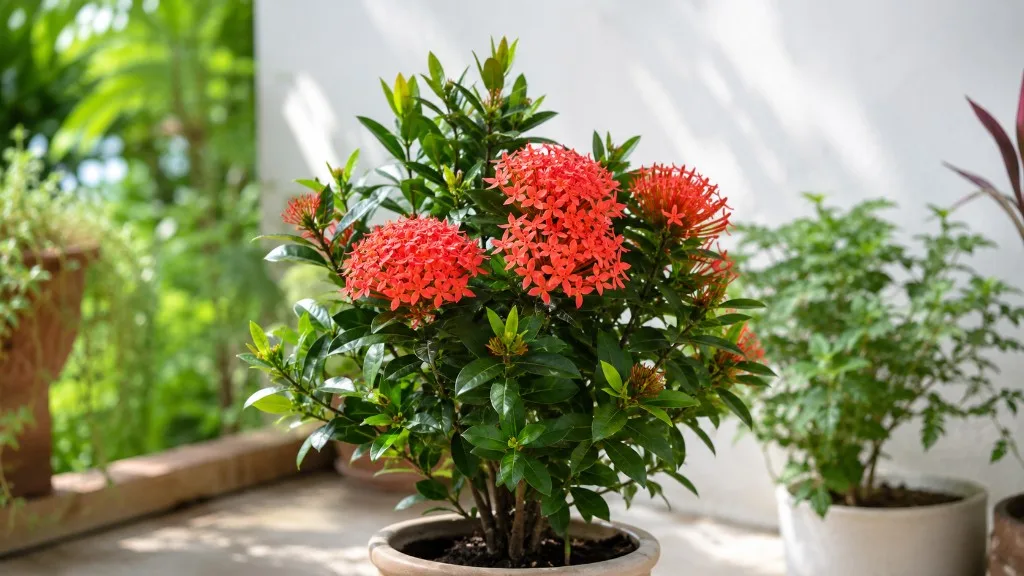
Ixora watering is less about memorizing a day of the week and more about keeping the root zone in a narrow band: moist enough that fine roots stay active, dry enough that air still moves through the mix. Ixora coccinea - the shrub behind those dense clusters of red, orange, pink, or yellow tubular flowers - evolved in the humid tropics of Southern India and Sri Lanka. It did not evolve to survive repeated dry spells followed by panic soaking. When the mix swings between bone-dry and soggy, the plant responds with wilt, yellow leaves, iron chlorosis from stressed roots, and the kind of flower bud drop that makes growers think the cultivar is weak when the real problem is inconsistent moisture.
The practical goal for most homes is straightforward: water thoroughly when the top 3 cm (about 1 inch) of soil feels dry and the deeper mix is approaching dry - not when a calendar says Tuesday, and not when the surface alone looks pale. In warm active growth, that often means every 2–3 days for a container in bright light; in cooler, slower months, every 4–5 days or longer is a common starting range before you adjust for your pot, mix, and room. Use rainwater, filtered water, or acid-friendly tap water when possible, because hard alkaline water raises soil pH and triggers yellowing even when you water on schedule. Empty saucers. Never let the pot sit in runoff. And treat drought as an emergency for ixora - not a stress it can shrug off the way a succulent might.
This guide covers how to check moisture, how often to water by season, how to water cleanly, why drought kills blooms faster than it kills leaves, and the mistakes that turn a beautiful tropical shrub into a chronically wilted pot.
Why Watering Rhythm Matters More Than a Calendar for Ixora
Ixora is a slow-to-moderate growing, bushy Rubiaceae shrub that reaches roughly 1–2 m tall and 60–90 cm wide in pots when mature. Its metabolism tracks light, warmth, and humidity more closely than a date on your phone. A fixed “water every Sunday” routine fails the moment your plant moves to a brighter window, your heat kicks on, or monsoon humidity rolls in. The same 25 cm pot that needed water every three days in May might still feel damp at the root line a week later in January - and watering it anyway is how healthy-looking plants develop soft yellow lower leaves and quiet root rot on Ixora.
University of Florida IFAS Extension describes ixora as thriving in moist but well-drained acidic soil (UF/IFAS Gardening Solutions - Ixora). That phrase is doing heavy lifting. “Moist” means the root zone should not experience full drought during active growth. “Well-drained” means oxygen still reaches roots after a thorough drink - which requires a pot with holes, a mix that does not compact into mud, and discipline about emptying saucers. Calendar watering ignores both halves of that sentence.
Think of ixora watering as matching the pot’s dry-down speed in your specific room. NC State Extension lists ixora cultural requirements as acid soil (pH below 6.0) with good drainage and moist available space - light intensity, air movement, pot material, soil texture, and root mass all change how fast water leaves the mix.
How Ixora Uses Water in Active Growth vs Rest
During active growth - warm temperatures, strong light, visible new leaves and flower clusters - ixora transpires steadily and pulls water from the mix on a predictable rhythm. Roots absorb water and dissolved nutrients; leaves release moisture into the air. When that cycle runs smoothly, stems stay firm, foliage holds its dark green gloss, and bud clusters develop without aborting early. The plant is essentially a tropical engine that needs fuel on tap, not in sporadic bursts.
When growth slows - shorter days, cooler rooms, reduced light after moving indoors for winter - metabolic demand drops sharply. Roots take up water more slowly. The mix stays wet longer. Many of the watering failures I see on ixora happen here: the grower keeps a summer schedule through December because the leaves still look green, and the roots sit in stale moisture while the owner wonders why new buds never open. Rest does not mean desert-dry soil, but it does mean stretching the interval and checking deeper before every drink.
What “Evenly Moist” Actually Means for Ixora
“Keep soil evenly moist” is the phrase every ixora care sheet repeats, and it confuses people because it sounds like the mix should never dry at all. That is not what it means. For ixora, evenly moist describes a cycle: you water thoroughly, let excess drain away, then allow the upper few centimeters to dry before the next thorough watering. The deeper root zone should approach dry but not stay desiccated for days.
The Spruce notes that ixora appreciates consistent moisture and that soil should not be allowed to dry out completely, though watering can decrease somewhat in winter (The Spruce - How to Grow Ixora). The partial dry-down at the surface is what prevents root rot. The avoidance of full drought is what prevents wilt and bud drop. Both truths apply at once. If your finger finds damp soil 3 cm down, wait - even if the top looks lighter in color. If the top is dry and the pot feels light, water now - even if you watered four days ago instead of your usual three.
How Often to Water Ixora Indoors and Outdoors
There is no universal answer to how often to water ixora, but there are reliable starting ranges once you commit to checking the pot instead of the calendar. Container ixora in bright warmth typically needs attention every 2–3 days through the warm active season when growth and flowering are strong. In cooler or dimmer periods, every 4–5 days or longer is a reasonable starting point before you refine based on actual dry-down. Landscape plants in humid tropical climates, once established in acid soil with mulch, may need supplemental irrigation every 5–7 days in dry spells - but that assumes in-ground roots, rainfall, and soil volume nothing like a 20 cm indoor pot.
These numbers are starting points, not laws. A small pot in direct sun dries faster than a large one in filtered light. Unglazed clay breathes and dries faster than glazed ceramic. Peat-heavy ericaceous mix holds moisture differently than a bark-heavy blend with extra perlite. The only interval that is always correct is the one confirmed by a moisture check seconds before you pour.
Starting Intervals by Season
Use the table below as a framework, then override it whenever the pot tells you something different. If monsoon rains soaked your balcony ixora, skip manual watering even if the calendar says otherwise. If your heated indoor air pulls moisture fast in February because the plant sits under a grow light, shorten the interval even though it is “winter.”
| Season / condition | Typical check frequency | Starting watering interval (containers) | Notes |
|---|---|---|---|
| Warm active growth (bright, 24–35°C) | Daily to every 2 days | Every 2–3 days | Peak transpiration; never let full drought occur |
| Moderate growth (spring/fall transition) | Every 2–3 days | Every 3–5 days | Adjust for rain, cloud cover, and pot size |
| Cool slow growth (below ~20°C, low light) | Every 3–4 days | Every 5–10+ days | Risk shifts toward overwatering on Ixora, not drought |
| Just after Ixora repotting guide | Every 2–3 days | Light moisture; no flood | Fresh mix dries unevenly until roots explore |
| After drought stress recovery | Daily checks | Small thorough drinks as mix allows | Do not compensate with one giant soak |
Indian warm-season growers often water regularly through the hot months with a slight reduction in winter - matching the plant’s native rhythm. UK or US indoor growers who move plants inside when nights drop below 16°C (60°F) should expect leaf drop from the shock and reduce water immediately, because a root zone that stayed wet at 30°C can become dangerously stagnant at 18°C with weaker uptake.
The Best Moisture Check Before You Reach for the Can
The most reliable ixora watering decision comes from the root zone, not from leaf color alone. Leaves can look slightly soft from overwatering or from underwatering on Ixora; wilt is ambiguous until you know whether the mix is wet or dry. Build a simple pre-water routine and use it every time.
Start with pot weight. Lift the container after a thorough watering when you know the mix is fully saturated - that heavy baseline is your wet reference. When the pot feels noticeably lighter and the top is dry, you are approaching time to water. Weight is especially useful for larger pots where a finger cannot reach the root line. Next, use a finger or bamboo skewer pushed 3–5 cm into the mix near the pot wall. Cool, clinging soil means wait. Dry, crumbly soil at depth with a dry surface means water soon. A moisture meter can help if you tend to misread texture, but it is a backup tool - not a replacement for learning how your specific mix feels.
Watch the plant’s growth pace as a secondary signal. Active new leaves and tight flower domes usually mean the plant is drinking on rhythm. Premature bud drop, crispy leaf edges, or sudden leaf fall without pest damage often trace to moisture swings - but confirm with the mix before reacting. If several symptoms stack up, compare watering with light and soil conditions together rather than changing water, fertilizer, and pot size on the same day.
Finger, Skewer, and Pot-Weight Methods
For a fast field decision, use this sequence every time you are unsure:
- Step 1 - Surface look: A dry, lighter-colored top is a hint, not proof. Proceed to step 2.
- Step 2 - Finger or skewer at 3 cm depth: Cool and damp means wait. Dry and loose means eligible to water.
- Step 3 - Pot weight: Light pot plus dry skewer confirms. Heavy pot with dry surface only means wet core - do not water.
- Step 4 - Drainage sanity check: If the last watering drained poorly or the saucer was full for hours, fix drainage before adding more water.
Consistency matters more than which tool you prefer. The same check at the same depth, every time, teaches you how fast your ixora dries in your home - which is the skill calendar posts skip.
How to Water Ixora Correctly Step by Step
Good technique is boring on purpose. Water the mix evenly until water runs freely from the drainage holes, then stop. Move slowly across the surface so the entire root ball rewets - a quick splash on one side leaves dry pockets that fool you on the next finger test. Use room-temperature water; cold tap water can shock tropical roots and slow uptake right when the plant is already stressed. If you store rainwater in a barrel or bucket, let it warm to room temperature before pouring.
After watering, empty the saucer or cachepot within 15–20 minutes. Ixora roots need moisture, not a standing bath. Decorative outer pots are a common rot factory: the inner pot drains, but the outer shell holds an invisible reservoir. If you use a cachepot, lift the inner container to water at the sink, drain fully, then replace. Avoid routinely misting leaves as a substitute for soil moisture - brief leaf wetting does not hydrate roots, and wet foliage in stagnant air can invite fungal spotting.
If water runs straight through and out the bottom in seconds, the mix may have dried too far and shrunk away from the pot wall - a partial drought state even if you watered “yesterday.” In that case, bottom-water for 20–30 minutes in a basin, let drain, then confirm the mix feels evenly heavy. Going forward, shorten the interval so the mix never hydrophobes in the first place.
Why Ixora Cannot Tolerate Drought
Ixora is sometimes listed as having moderate drought tolerance in landscape references once established in the ground in frost-free climates (UF/IFAS FPS 291 - Ixora coccinea). That label misleads container growers. A shrub rooted into a meter of acid soil with mulch and rainfall is not the same as a 20 cm pot whose entire world dries in 48 hours of air conditioning. For potted and indoor ixora, treat drought as a bloom killer and a root stressor, not a training exercise.
Unlike succulents that pause and plump up, ixora keeps thin, actively transpiring leaves in warm conditions. When soil water potential drops too low, the plant closes stomata, wilts, and sacrifices flower buds first - buds are expensive water investments. One missed watering during bud formation often means clusters shrivel and drop before opening. Repeated drought cycles damage fine root hairs; when water finally returns, damaged roots cannot absorb efficiently, and the plant may wilt while sitting in wet mix - a confusing pattern that sends growers back to the can and makes rot worse.
What Happens to Roots and Flowers When Soil Dries Out
The damage sequence is predictable enough that you can stop it early if you know the order. First, flower buds shrink and drop while leaves still look mostly green - growers often blame pests or fertilizer here. Next, leaf edges brown and tips crisp, especially if humidity is also low. Then, whole leaves yellow and fall, starting with older lower foliage. Finally, stems wilt in warm weather even after you water, because roots are compromised and pathogens may have entered through stressed tissue.
Recovery is possible from a single dry episode if you catch it quickly: water thoroughly, drain well, raise humidity modestly, and do not flood twice daily out of guilt. Give the plant stable moisture for two to three weeks and hold off heavy feeding until new growth looks firm. Repeated drought is harder - roots do not fully regenerate on demand, and the plant may survive as a leafy shrub that rarely flowers again until conditions stay consistently stable through a full warm season.
Signs You Are Underwatering Ixora
Underwatering on ixora is common in bright, warm rooms where growers fear root rot and underwater as a precaution. It is also common when vacations interrupt care or when small pots dry overnight on a sunny sill. Learn the signs separately from overwatering so you do not pour more water onto a plant that is already drowning.
Typical underwatering symptoms include:
- Wilted stems and drooping leaves on Ixora in warm afternoon light, especially when the pot feels light and the skewer is dry at depth
- Premature flower bud drop - clusters shrink, turn brown, and fall before opening
- Crispy brown leaf edges and tips, worsened when humidity drops below ~50%
- Older leaf yellowing followed by drop after repeated dry cycles, not a single old-leaf shed
- Slow or stunted new growth even in warm bright conditions with adequate fertilizer
- Hydrophobic mix where water channels through without wetting the root ball, often after the plant was left dry too long
Rehydrate with a full thorough watering and proper drainage, then adjust the interval so the top 3 cm dries but the root zone never desiccates completely. If buds dropped, do not expect instant rebloom - stabilize moisture for weeks, then look for new clusters on fresh growth.
Signs You Are Overwatering Ixora
Overwatering kills ixora more slowly than drought kills blooms, but it kills more permanently. Roots need oxygen as much as water. When mix stays saturated for days - especially in cool dim conditions - fine roots suffocate, pathogens establish, and uptake collapses. The cruel trick is that overwatered ixora also wilts, because dead roots cannot move water. Growers see wilt, add more water, and accelerate the collapse.
Watch for these overwatering signals:
- Uniform yellowing of older leaves while the mix smells musty or stays wet at depth for more than 2–3 days after watering
- Soft, darkening stems at the soil line - advanced cases show blackened crown tissue
- Leaf drop with wet soil, especially after a period of cool weather or reduced light
- Brown leaf edges with soggy mix, sometimes mistaken for low humidity alone
- White or green algae on the soil surface - a sign of chronic surface wetness and poor air exchange
- Fungus gnats breeding in constantly damp upper mix
- No new buds despite good light, because roots cannot support flower load
If several signs appear together, pause watering, confirm drainage holes are open, remove standing cachepot water, and inspect roots if the plant is sliding fast. Trim obviously mushy roots, repot into fresh ericaceous mix only if necessary, and keep the plant in Ixora light guide while the root zone recovers - still watering when the upper mix dries, but never on the old heavy schedule that caused stagnation.
Water Quality, pH, and Ixora’s Acid-Loving Roots
Watering ixora is not only about quantity and timing - water chemistry changes how the plant uses what you give it. Ixora is strongly acid-preferring, with optimal growth often cited around pH 5.0–6.0 in ericaceous compost. UF/IFAS notes that foliage turns yellow in alkaline soil and that ixora is a high-maintenance plant in many coastal landscapes where fill soil and concrete raise pH (UF/IFAS Gardening Solutions - Ixora). Hard tap water with high bicarbonate content gradually pushes pH upward, locking up iron and manganese even when you water “perfectly” on schedule. The visible result is interveinal chlorosis - yellow leaves with green veins - that looks like a fertilizer problem but starts at the tap.
Rainwater is the classic choice for ixora because it is naturally soft and slightly acidic. Collected rainwater, reverse-osmosis or distilled water, and some filtered waters work well. If you must use tap water, let it sit overnight to warm and degas slightly, and watch for chronic yellowing - that is your signal to blend with rainwater or use an acid-forming fertilizer strategy on the feeding side while fixing water quality on the watering side. Avoid reclaimed or high-salt irrigation water on ixora; salts accumulate in containers faster than in ground beds and burn leaf margins.
Never use cold water straight from an outdoor tap on a warm root zone. Temperature shock reduces uptake exactly when you are trying to rehydrate after a dry spell. Room-temperature water is a small detail that prevents big misreads - you water, the plant still wilts, you assume drought continues, and you water again into rot.
Humidity, Light, and How They Change Water Needs
Ixora naturally grows in high humidity (60–80%) in tropical regions. Dry indoor air does not stop transpiration - it increases it. A plant in 35% humidity beside a heating vent may need water sooner than the same plant in a steamy bathroom, even at the same temperature. Low humidity also amplifies drought damage: buds shrivel, leaf edges brown, and the plant looks thirsty when the real problem is compound stress from fast dry-down plus air pull.
Light works the same way in the opposite direction of humidity. Full sun to partial shade with 4–6 hours of direct sun drives photosynthesis and flowering, which drives water use. An ixora moved from a dim corner to a south window may need water twice as often within a week - not because the rules changed, but because the engine runs hotter. Conversely, a plant that loses light after coming indoors for winter needs less water, not the same summer volume, even if humidity drops.
Group plants, use a humidity tray, or run a cool-mist humidifier if your home sits below ~50% relative humidity. Humidity support does not replace soil moisture, but it reduces edge browning and bud abort while you dial in the watering rhythm. If you fix watering while ignoring a desiccating air stream, you will keep chasing crispy tips forever.
Container Size, Soil Mix, and Drainage
The pot is part of the watering system. A too-large pot with a small root ball holds wet mix for days - classic overwatering setup. A too-small pot in blazing sun dries in hours - drought waiting to happen. Match pot size to root mass, repot incrementally rather than jumping sizes, and choose mix for moisture retention with drainage, not either extreme.
Use ericaceous (acid) compost with pine bark and perlite so water moves through while the root zone stays evenly damp between cycles. Heavy peat that compacts after a year turns into a waterlogged brick - the plant thirsts and drowns at once. Refresh mix on repotting schedule, usually every 1–2 years for container ixora, because degraded structure changes dry-down speed more than any calendar tweak.
Why Pot Choice Changes How Fast the Mix Dries
Unglazed terracotta breathes through walls and dries faster - good for growers who tend to overwater, demanding more frequent checks in heat. Glazed ceramic and plastic retain moisture longer - safer in dry air, riskier in winter dim rooms. Double pots and cachepots hide drainage problems; always lift and drain. No drainage holes is unacceptable for ixora except as a temporary display - move to a proper container within days, not weeks.
After repotting, the mix often stays wet longer at the center while the surface looks dry. Check deeper and water lightly until roots explore, then return to full thorough drinks. Do not repot and immediately soak daily out of transplant anxiety - that is how fresh cut roots rot before they callus.
Seasonal Watering Adjustments for Ixora
Seasonal change is where stable ixora care either holds or unravels. Warm-season active growth rewards consistent moisture without drought - regular checks, thorough drinks, empty saucers. Cool-season slowdown demands ** restraint**: the same plant that drank every three days in July may need seven to ten days between drinks in a cool January room, always confirmed by skewer and weight, not by memory.
When moving ixora outdoors for summer or indoors for winter, expect transitional leaf drop from light shock. Reduce water immediately because a plant shedding leaves and receiving less light uses less water - even if your emotional brain says it looks sad and thirsty. Resume stronger watering only when new growth appears and the mix dry-down speeds up again. In India’s warm season, maintain regular watering with a slight reduction in winter when growth slows. In temperate climates, winter indoors is the danger zone for overwatering, not underwatering.
Fertilizer timing follows the same rhythm: do not feed a plant sitting in stagnant cold wet mix. Fix moisture first, align feeding with active growth separately, and keep water quality stable through seasonal transitions so pH does not drift while you are adjusting volume.
Common Ixora Watering Mistakes
Most ixora watering failures repeat a short list of patterns. Avoiding them is cheaper than recovering a root-damaged shrub.
Watering on a calendar without checking the mix is the top mistake. Calendar reminders are fine; calendar obedience without a skewer test is not. Letting the pot sit in runoff turns “evenly moist” into anaerobic mud within a day. Using hard cold tap water daily slowly alkalizes acid mix and produces chronic yellow leaves misdiagnosed as nitrogen deficiency. Shallow sips instead of thorough watering keep surface roots wet and deep roots dry, training a fragile root plate that droughts fast. Compensating after drought with daily flooding rots the very roots you are trying to save. Ignoring humidity while chasing soil moisture leaves bud drop and edge burn unresolved. Keeping summer water volume after moving indoors is the classic winter rot path. Repotting, moving, and changing water schedule simultaneously makes it impossible to know which variable caused leaf drop - change one factor at a time.
If your ixora repeats the same symptom after you “fixed” watering, compare this page with the plant’s light, soil, and fertilizer guidance before stacking more changes. Water is central, but acid soil and sufficient light decide whether good watering produces flowers or merely keeps leaves alive.
Conclusion
Ixora watering succeeds when you treat moisture as a steady rhythm rather than a rigid schedule or a crisis response. Check the top 3 cm of mix, confirm with pot weight or a skewer, then water thoroughly until drainage runs free and the saucer is empty. In warm active growth, many containers need water every 2–3 days; in cooler slow periods, every 4–5 days or longer is a common starting point - always adjusted to your pot, light, and air. Never let the root zone go fully drought-stressed if you want blooms; never let the pot sit wet for days if you want roots.
Use soft, room-temperature water that will not push pH upward, keep humidity reasonable, and read wilt together with soil moisture so you do not water a drowning plant or withhold from a dry one. Ixora is not forgiving of long dry spells, but it is manageable once you learn how your specific container dries. Master that dry-down cycle and the plant stops being a wilt-and-drop mystery and becomes what it should be: a glossy tropical shrub that rewards consistent care with clusters of color that last.
When to use this page vs other Ixora guides
- Ixora overview - Start here for whole-plant context before deep-diving this topic.
- Ixora problems hub - Jump to symptom-specific fix guides when this care topic does not resolve the issue.
- Overwatering on Ixora - Escalate here when watering adjustments are not enough.
- Underwatering on Ixora - Escalate here when watering adjustments are not enough.
- Root Rot on Ixora - Escalate here when watering adjustments are not enough.
Related Ixora guides
- Ixora overview
- Ixora light
- Ixora soil
- Ixora propagation
- Ixora fertilizer
- Ixora repotting
- Overwatering on Ixora
- Underwatering on Ixora
- Root Rot on Ixora
- Wilting on Ixora
- Drooping Leaves on Ixora
- Mold on Soil on Ixora
Related tool
Try the Plant Watering Calculator with ixora pre-selected to estimate needs for your setup.