Wilting on Ixora: Causes, Checks & Fixes
Quick answer
Wilting on Ixora usually means the plant lost turgor faster than roots replaced water-but the cause is not always thirst. First step: lift the pot, probe the top 3 cm of mix, and check newest leaf color before you water.
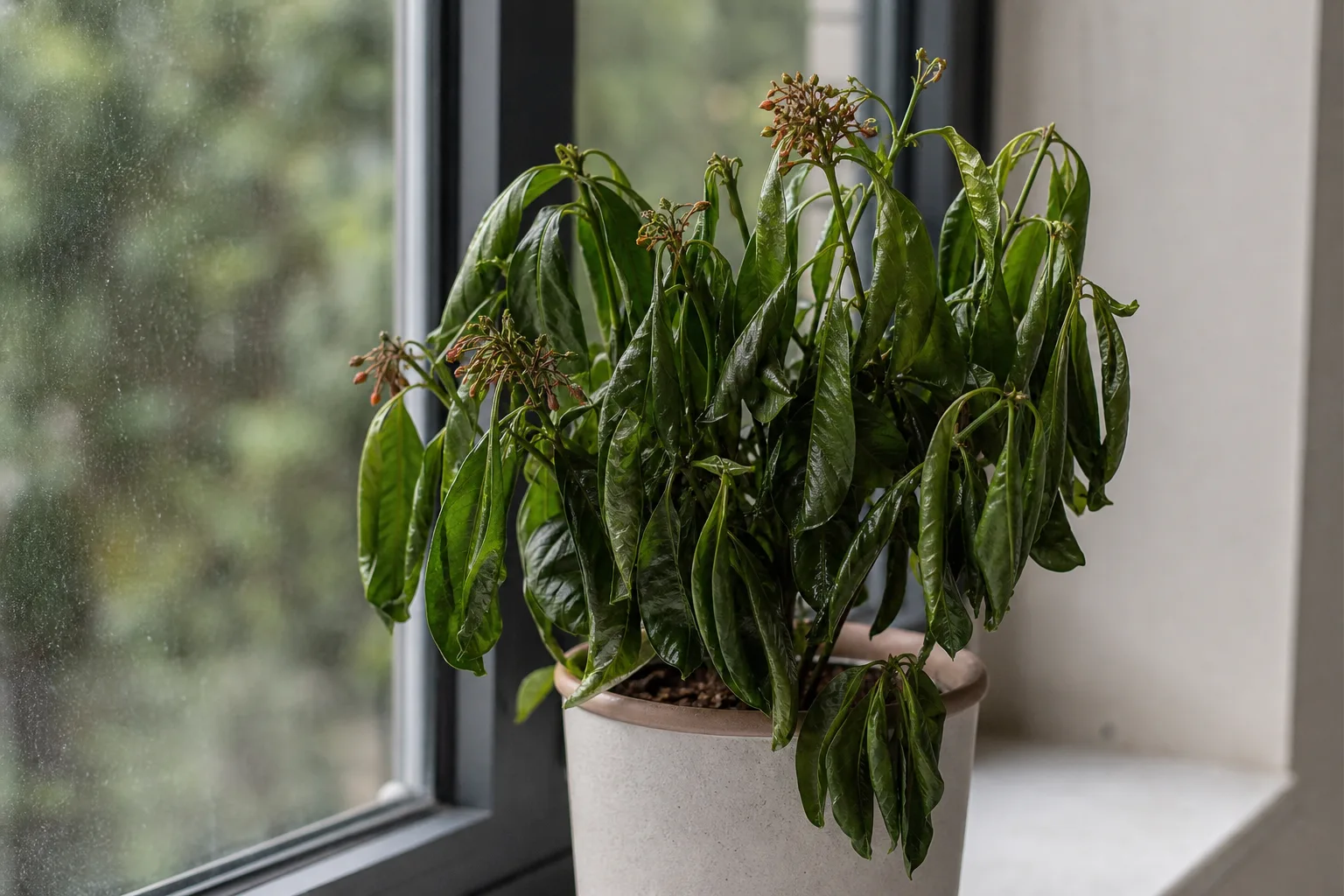
Wilting on Ixora: Causes, Checks & Fixes
This guide covers wilting on Ixora. See also the general Wilting guide, watering, and light pages for this plant.
Wilting on Ixora: Causes, Checks & Fixes
Quick answer
Ixora (Ixora coccinea, Jungle Flame) is a tropical Rubiaceae shrub that needs evenly moist, acidic soil and warm temperatures. When it wilts, glossy dark green leaves fold downward and flower buds may abort-but wilting is a symptom, not a diagnosis.
First step: lift the pot, probe the top 3 cm of mix, and look at the newest leaves. A light pot with dry crumbly soil and firm stems usually means thirst. A heavy pot with cool wet soil and soft stems means root failure-do not water. Yellow new leaves with green veins on moist mix point to iron chlorosis from alkaline water, not a drink shortage.
Match the pattern below, then apply one targeted fix. Do not soak a plant that is already sitting in wet soil.
What wilting looks like on Ixora
Wilting on Ixora is visible loss of leaf turgor-the glossy, leathery foliage goes limp and hangs instead of holding its usual stiff angle. Stems may still feel woody and firm in drought, or soften when roots are failing. Flower cymes often drop closed buds before they open when stress hits during bloom formation.
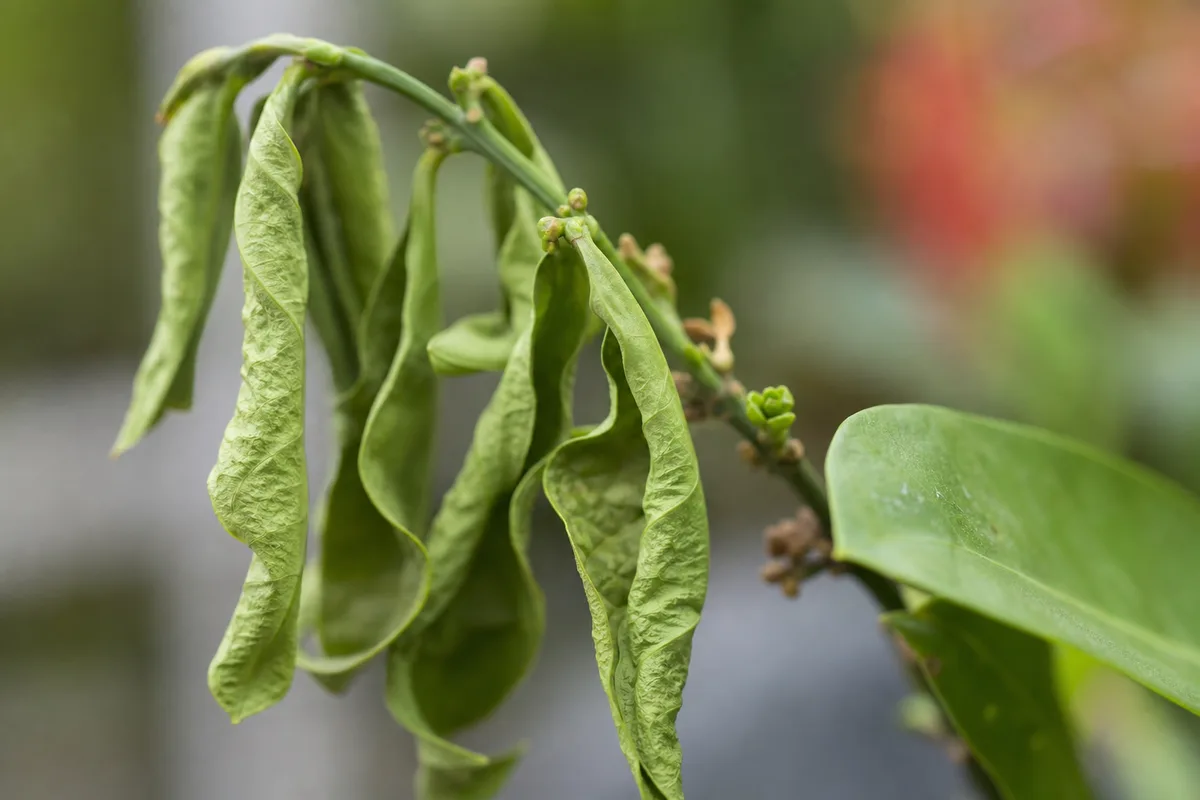
Wilting symptoms on Ixora - compare with healthy tissue on the same plant.
Limp glossy leaves on a light dry pot (thirst wilt)
The classic drought pattern: leaves fold and droop, the pot feels noticeably light when lifted, and the top 3 cm of mix is warm, dusty, and crumbly. Soil may have pulled away from the pot wall. Stems stay firm. This is the branch covered in depth on underwatering on Ixora.
Limp shrub on cool wet mix with soft stems (root failure)
Leaves wilt even though the surface looks damp or the pot feels heavy. Mix clings cool and dark at 3 cm depth. Lower leaves yellow, and a sour smell may rise from the pot. Stems near the base soften. Roots, if inspected, are brown and mushy instead of firm and pale. See overwatering and root rot for the wet-soil path.
Yellow new leaves with green veins on moist mix (chlorosis weakness)
New growth emerges pale yellow while veins stay green. The plant looks weak and limp even though you water regularly. Hard tap water, alkaline mix, or concrete-adjacent placement shifts pH and locks out iron on this calcifuge shrub. This mimics wilt but needs pH correction, not more water. See yellow leaves on Ixora.
Water runs straight through on first pour (hydrophobic peat)
After a long dry spell, peat-heavy ericaceous mix can repel water. A quick top-water pools and races down the sides while the core stays bone dry. Leaves soften because roots inside never drank. The surface may look briefly damp while the pot still feels light.
Afternoon limpness in hot full sun on dry mix (transpiration stress)
Ixora in full sun loses water fast through glossy leaves. On a hot afternoon the foliage may droop even when morning moisture was adequate-especially in small containers. If the top 3 cm are dry and the pot is light, this is still a water-demand issue, not a separate disease.
Limp or translucent leaves after cold exposure below ~50°F (10°C)
Ixora does not tolerate sustained temperatures below about 50°F. Cold window-sills, drafty winter entries, or outdoor exposure in marginal zones produce limp, sometimes translucent tissue. Soil moisture may be fine; extra watering will not reverse cold damage. Warmth and stable humidity matter more than another drink.
Wilting vs. drooping on Ixora - when to use this page
Wilting describes loss of turgor-the leaf cannot hold water pressure and goes limp. Drooping describes the downward angle of stems or foliage; a turgid leaf can droop from gravity on soft new growth, while a wilted leaf is limp to the touch.
On Ixora the practical overlap is large: most limp-leaf searches land here first. Use this page to choose the cause (dry, wet, chlorosis, hydrophobic mix, heat, cold, pests). Use underwatering for confirmed dry-soil drought and drooping leaves when stems angle down but leaves still feel firm.
Why Ixora wilts
Ixora evolved in humid tropical Asia and grows best in moist, acidic, organically rich, well-drained soil in full sun. That physiology means high transpiration in bright light paired with a root zone that should never go dust-dry for long-yet roots also suffocate when acidic peat stays waterlogged in cool dim rooms.
Common triggers behind wilt on container Ixora:
- Calendar watering instead of checking the top 3 cm-sunny patio pots dry in one to two summer days while winter indoor schedules overwater
- Fear of root rot after one rotted plant; skipping drinks until the whole root ball desiccates and buds drop
- Hydrophobic peat after drought that repels water despite brief surface dampness
- Hard tap water raising soil pH; chlorotic new growth looks weak and wilted on moist mix
- Full-sun transpiration in small pots that outruns weekly watering
- Cold drafts or window-sills below ~50°F with wet winter soil compounding stress
- Aphids or mealybugs on new bud clusters draining sap-soil moisture can look normal (aphids on Ixora)
Ixora is not drought-tolerant like a succulent. Landscape moderate drought tolerance assumes deep ground soil; a container in six hours of direct sun is a different calculation.
How to confirm the cause
Work through this checklist before changing care:
- Pot weight - Compare today to how the pot feels right after a thorough watering. A large weight drop with limp leaves supports drought; a heavy pot with wilt supports root failure.
- Moisture at 3 cm - Insert a finger or thin probe. Crumbly warm dry mix confirms thirst. Cool clinging wet mix means do not add water.
- Newest leaf color - Yellow blades with green veins on moist mix suggest chlorosis, not underwatering.
- Stem firmness - Firm woody stems with dry soil fit drought. Soft stems at the base with wet soil suggest rot.
- Water absorption test - Pour lightly on the surface. Instant runoff without darkening the center signals hydrophobic mix.
- Bud status - Closed cymes falling daily during limp foliage often track drought or heat stress on this flowering shrub.
- Temperature and placement - Cold exposure below ~50°F, heating vents, or afternoon full sun on a dry pot each change the first fix.
- Pest screen - Sticky residue, distorted new buds, or insects clustered on cymes point to sap-feeding pests, not thirst.
| Signal | Thirst wilt | Wet-soil root failure | Iron chlorosis |
|---|---|---|---|
| Pot weight | Light | Heavy | Moderate |
| Mix at 3 cm | Dry, warm | Wet, cool | Often moist |
| New leaf color | Dark green | Yellow lower leaves | Yellow with green veins |
| Stems | Firm | Softening at base | Firm but weak growth |
| Recovery after soak | Perks in 24–48 h | Worsens if watered again | No perk from water alone |
If soil is wet throughout and leaves still wilt, do not water again-wilting with wet soil can indicate rotting roots, so inspect roots before treating drought.
First fix for Ixora
Apply one branch based on what you confirmed above. Do not stack repot, prune, fertilize, and pesticide on the same day.
If top 3 cm of mix is dry and pot is light
Bottom-water thoroughly with room-temperature rainwater or filtered water, then drain completely. Set the pot in a tray until the surface darkens and feels cool, lift it out, and empty the saucer after 15–30 minutes. Repeat once if water ran through hydrophobic mix on the first pass. Full step-by-step recovery lives on underwatering on Ixora.
If mix is wet and cool and stems soften
Stop watering. Move to brighter airflow, slip the plant out to inspect roots, and trim mushy tissue into fresh ericaceous mix only if rot is confirmed-not while the plant is still collapsing. See root rot for escalation.
If new leaves are yellow with green veins
Switch to rainwater or filtered water and confirm ericaceous mix pH near 5.0–6.0 before adding iron chelate. Do not respond with more irrigation. Details on yellow leaves and the soil guide.
If water runs straight through (hydrophobic peat)
Slow bottom-water in a basin-poke a few shallow holes in the dry surface with a chopstick first so water enters the center. Plan to refresh peat-heavy mix after the plant stabilizes if a second soak still fails to moisten the core.
If plant sits in a cold draft or on a cold sill
Move to a stable warm spot above ~60°F (15°C) with bright light. Hold extra water until you confirm soil moisture at depth; cold-damaged tissue may not re-turgid even after warmth returns.
If aphids or mealybugs coat new buds
Rinse bud clusters and treat pests before adjusting watering. Sap loss mimics drought wilt while soil stays moist. See aphids on Ixora.
Step-by-step recovery by cause
After the first targeted action:
- Thirst wilt - Move out of harsh midday sun until leaves re-turgid; resume check-based watering when the top 3 cm dry during active growth.
- Root failure - Let mix dry to appropriate depth before the next drink; repot into fresh ericaceous mix with perlite only after trimming dead roots.
- Chlorosis - Correct water source and pH for two weeks before judging iron supplements; hold fertilizer on stressed plants.
- Hydrophobic mix - Two bottom-water cycles 24 hours apart; repot if the center still resists rewetting.
- Heat transpiration - Match summer watering to pot size and sun-every 2–3 days is common for small containers in bright windows.
- Cold damage - Warmth and humidity first; prune only fully dead tissue after new growth shows whether buds survived.
Hold fertilizer until new tips look normal for two weeks. Salt on drought- or rot-stressed roots adds burn on top of wilt.
Recovery timeline
Mild thirst wilt: Leaves often perk within 24–48 hours after a proper bottom-water if roots are still healthy.
Moderate stress with bud drop: Expect one to three weeks before new cyme clusters form once moisture, light, and temperature stay steady.
Chlorosis correction: New leaves may take two to four weeks to green after pH and water improve; old chlorotic leaves rarely fully revert.
Root rot branch: Recovery is measured in weeks to months by firm new tips and stopped yellowing-not by old limp leaves re-firming.
Cold damage: Damaged leaves may stay limp or drop; judge success by undamaged new growth after warmth stabilizes.
Worsening signs: Continued limpness 72 hours after confirmed rewet on dry soil, spreading stem softening, or widespread leaf drop with wet soil means escalation-not more of the same fix.
Lookalike symptoms to rule out
- Overwatering / root rot - Wilting with wet soil, sour smell, and mushy roots. Fix by drying out and inspecting roots, not soaking again.
- Iron chlorosis - Yellow new leaves with green veins near concrete or with hard tap water; soil may be moist. Correct pH, not just water volume.
- Low humidity alone - Crispy edges with otherwise moist soil and turgid stems; increase humidity without drowning roots (low humidity).
- Spider mites - Stippled dusty undersides with fine webbing; soil moisture can look normal (spider mites).
- Normal drooping - Soft new growth angling down on an otherwise healthy plant; stems and mature leaves feel firm.
What not to do
Do not water a wilting Ixora when mix is already wet and cool-overwatering wet soil accelerates root rot, not recovery. Do not mist instead of watering soil; roots need moisture, not leaf surfaces. Do not fertilize or repot a collapsed plant on day one. Do not treat chlorosis with more water. Do not drench daily after one dry spell-that swings Ixora from drought to waterlogged peat. Do not assume bright indirect light alone fixes wilt when the plant needs four to six hours of direct sun for healthy transpiration balance-see the light guide.
How to prevent wilting on Ixora
Build prevention around how fast your pot dries in your light:
- Check the top 3 cm before every drink during March–October active growth; small pots in full sun often need water every 2–3 days in summer.
- Use ericaceous mix with perlite for drainage plus peat or cocopeat for retention-never plain garden soil in a pot (soil guide).
- Prefer rainwater or filtered water to protect acid pH and reduce chlorosis that mimics wilt.
- Keep 4–6 hours of direct sun with good airflow; match water rhythm to transpiration (light guide).
- Refresh hydrophobic peat that has dried out repeatedly and started repelling water.
- Move plants indoors before sustained temperatures drop below ~50°F; do not leave wet soil on a cold window-sill all winter.
- Scout bud clusters weekly for aphids during warm months.
Weekly pot-weight checks during hot weather catch dry-down before buds drop.
When to worry
Treat as urgent if:
- The crown or main stems soften while soil is wet-possible advancing rot.
- Wilt spreads across the whole shrub within 48 hours despite confirmed rewet on previously dry soil.
- Pests coat most new growth and buds abort daily.
- Roots are mostly mushy when you inspect after wet-soil wilt.
Mild limpness on a light dry pot in summer heat is common and usually reversible within days if you rehydrate promptly. Severe repeat drought-collapse cycles or chronic wet-soil wilt can kill fine roots even when the plant partially recovers visually.
Ixora care cross-check
Wilting rarely appears in isolation. Align the basics from the Ixora overview:
| Variable | Target for healthy turgor |
|---|---|
| Light | 4–6+ hours direct sun for outdoor/patio bloom; brightest window indoors |
| Water | When top 3 cm dry; rainwater preferred |
| Soil | Ericaceous, pH 5.0–6.0, good drainage |
| Temperature | Above ~50°F; stable warmth indoors |
| Humidity | Moderate; avoid drying vents on wilted foliage |
Related Ixora problems
- Underwatering - dry-soil limp leaves and bottom-watering recovery
- Overwatering - wet-soil limpness and drainage fixes
- Root rot - mushy roots on acidic mix
- Yellow leaves - iron chlorosis branch
- Drooping leaves - stem angle without full turgor loss
- Aphids - sap-feeding wilt on bud clusters
- Ixora overview - full care hub