Low Humidity on Ixora: Causes, Checks & Fixes
Quick answer
Ixora prefers 60–80% relative humidity; dry indoor air below ~50% causes crispy leaf edges and dropped buds even when soil is moist. First step: check a hygrometer and soil moisture 3 cm down-raise humidity with a pebble tray or humidifier, not another watering.
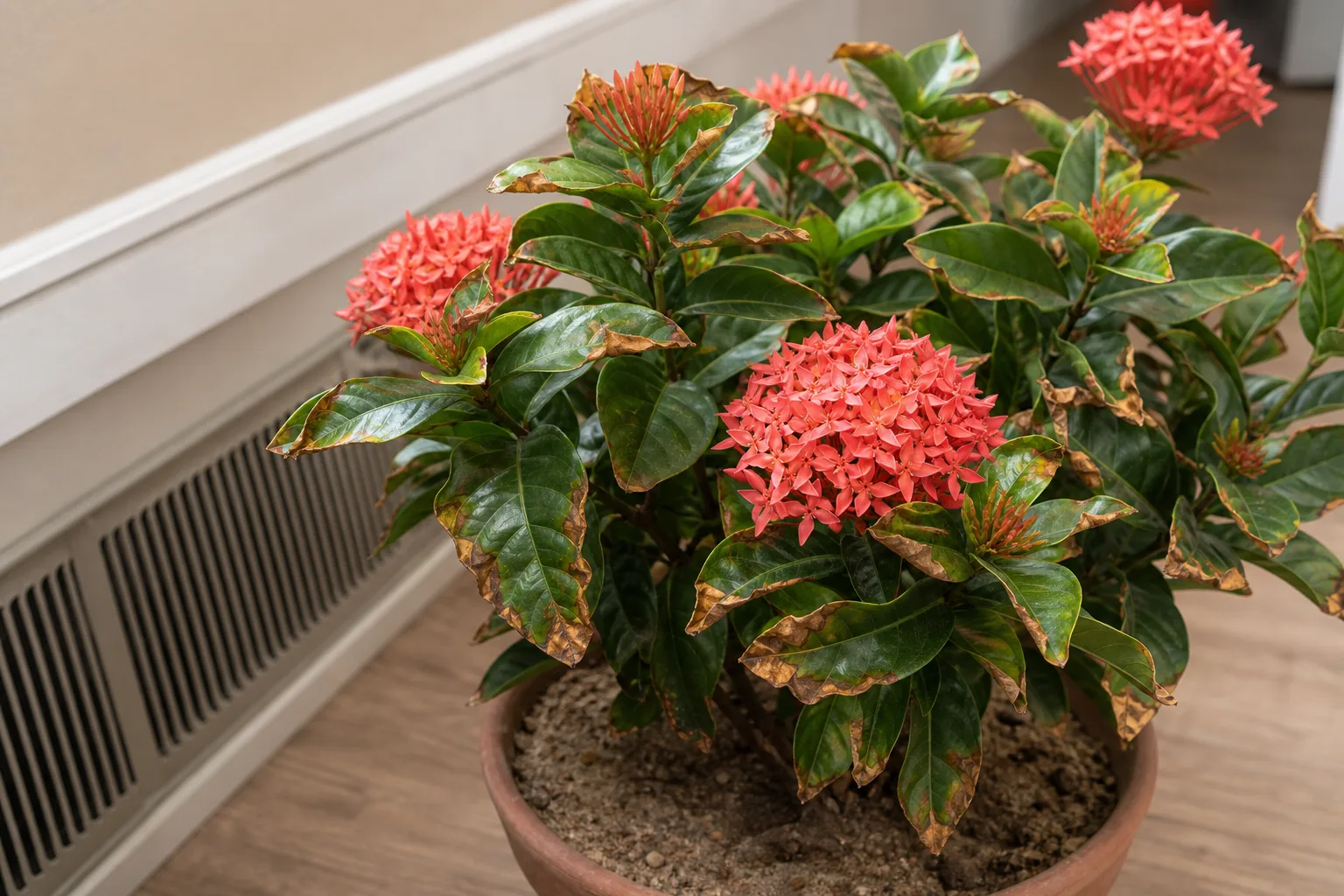
Low Humidity on Ixora: Causes, Checks & Fixes
This guide covers low humidity on Ixora. See also the general Low Humidity guide, watering, and light pages for this plant.
Low Humidity on Ixora: Causes, Checks & Fixes
Quick answer
Ixora (Ixora coccinea, Jungle Flame) is a woody tropical shrub from humid Southeast Asia that prefers 60–80% relative humidity . Dry indoor air-often 30–40% beside a heating vent or air-conditioning outlet-pulls moisture from leathery evergreen leaves faster than roots can replace it, even when soil is still moist.
First step: read a hygrometer and check soil 3 cm down. If relative humidity is below ~50% and edges crisp while the mix feels cool and damp, raise humidity with a pebble tray, grouped pots, or a room humidifier. Do not pour extra water to fix dry-air damage-that risks root rot on this acid-loving shrub.
What low humidity looks like on Ixora
Dry-air stress on Ixora usually appears before full drought sets in:
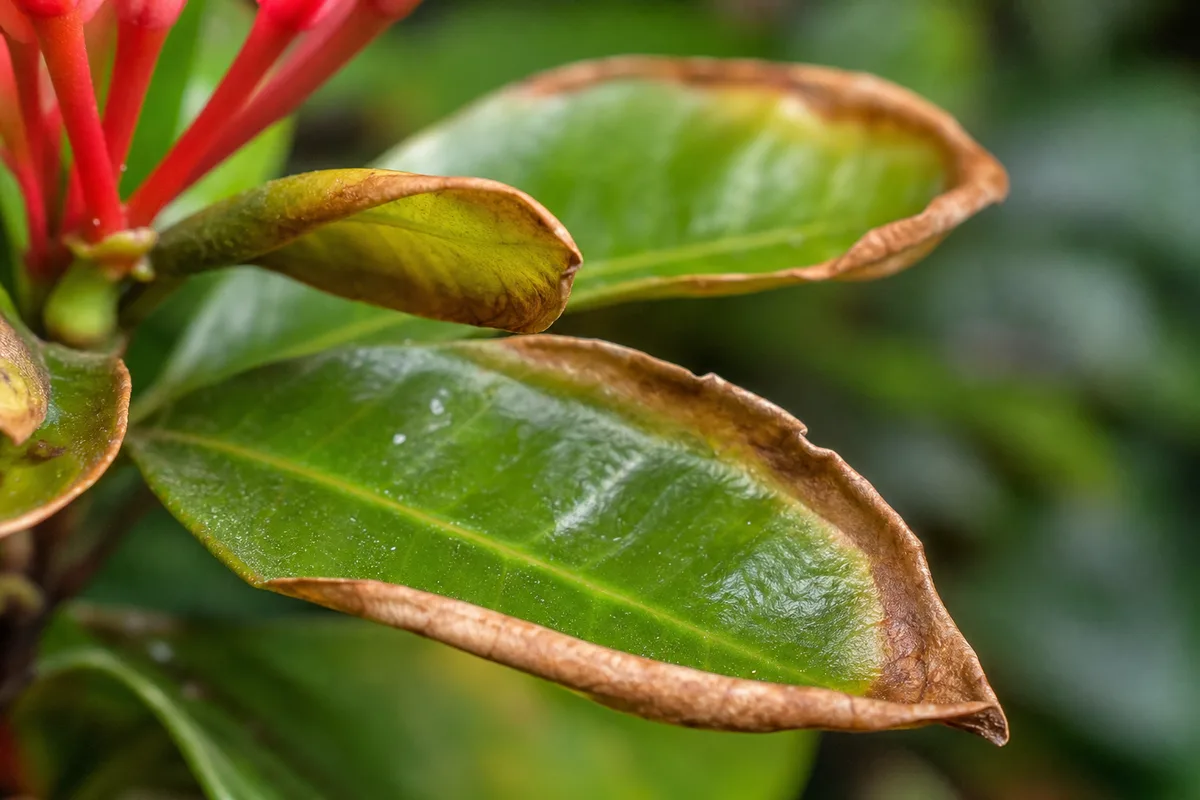
Low Humidity symptoms on Ixora - compare with healthy tissue on the same plant.
- Crispy brown leaf edges and tips on otherwise glossy dark green foliage, often starting on leaves closest to a heater, sunny window, or AC vent
- Shrunken or dropped flower buds while lower leaves still look mostly green-the plant aborts blooms before it wilts entirely
- Moist soil with turgid stems but progressive edge burn-the classic “thirsty look” without a light, dry pot
- Slower new growth in winter even when you water on schedule, because transpiration outpaces uptake in desiccating air
- Fine stippling or webbing on leaf undersides when dry air also favors spider mites-stippling is pests, not humidity alone
Healthy Ixora leaves feel leathery and hold a waxy shine. Lower leaves naturally age and drop over time; that is not humidity damage. When new tips stay firm but only margins crisp, suspect air moisture before root failure.
Why Ixora is sensitive to dry indoor air
Ixora is native to warm, humid tropical regions of South and Southeast Asia and is grown in moist, acidic, organically rich, well-drained soils in full sun. UF/IFAS notes ixora thrives in moist but well-drained acidic soil as a native of Southern Asia. That biology expects steady air moisture around broad evergreen leaves with high surface area.
Indoors, winter heating and summer air conditioning routinely drop relative humidity to 35–45%-far below the 60–80% range this shrub tolerates best. Dry air does not stop transpiration; it increases it. Spider mites thrive in dry, warm conditions on houseplants, and the same dry-air stress pulls moisture from foliage faster than roots replace it. A plant beside a radiator may lose leaf water faster than roots pull it up, producing compound stress: soil still damp at depth while foliage desiccates at the margins.
Ixora is more humidity-sensitive than succulents or many desert-adapted houseplants, but less demanding than ferns or calatheas. It will survive average room air for a while, yet edge crisping and bud drop are common when RH stays low for weeks-especially in small pots under bright direct sun, which drives water use even faster. See the watering guide for how humidity and light together change how fast your pot dries.
Common dry-air triggers:
- Heating season - Forced-air heat beside the pot pulls humidity below 40% for months
- Air-conditioning vents - Cold dry blasts crisp leaves on the facing side first
- Sunny glass in winter - Bright light plus dry air doubles transpiration stress
- Newly moved indoor plants - Outdoor summer humidity drops sharply when Ixora comes inside
- Overcorrecting drought - After underwatering, owners sometimes keep soil wet while air stays dry; edges keep crisping until humidity rises
How to confirm low humidity (not underwatering or mites)
Work through these checks in order:
- Hygrometer reading - Place a meter near the plant at leaf height for 24 hours. Sustained readings below ~50% RH support low-humidity stress; 55–65% is a practical indoor target for recovery.
- Soil moisture at 3 cm - Insert a finger or skewer. Cool, damp mix with crispy edges fits dry air. Dusty, crumbly dry mix with a very light pot points to underwatering instead.
- Stem firmness - Firm woody stems with moist soil and edge burn mean raise humidity, not water. Soft stems at the base with sour-smelling wet soil suggest overwatering or root rot.
- Pot weight - A normal or heavy pot plus edge crisping favors humidity. A dramatically light pot favors drought.
- Pest inspection - Hold leaves to light and check undersides for stippling, moving specks, or fine webbing. Spider mites thrive in hot dry air on Ixora-dry, warm conditions favor mites on many houseplants; stippling without uniform edge burn is mite damage.
- Water quality check - White crust on the pot rim with yellow new leaves and green veins suggests hard-water or alkaline iron chlorosis, not humidity alone.
If soil is wet throughout, stems stay firm, and RH is below 45%, do not water again-fix the air first.
First fix for Ixora
Raise relative humidity around the plant without soaking the soil.
Start with the lowest-intervention options:
- Move the pot away from heating registers, AC vents, and hot window glass where air is driest.
- Add a pebble tray - Set the pot on stones above a water line so evaporation humidifies leaf-level air without wicking water into the drainage holes.
- Group plants - Several transpiring pots together modestly raise local humidity; leave airflow gaps so leaf axils do not stay wet.
- Run a cool-mist humidifier in the room, aimed at general air circulation-not a constant stream on the foliage crown.
Target 55–65% RH near the plant as a realistic indoor recovery range. You do not need tropical greenhouse levels to stop edge burn, but sustained readings below 40% will keep crisping margins.
Do not respond to crispy edges by watering again when soil is already moist-that is how healthy-looking Ixora develops soft yellow lower leaves and quiet root rot in peat-heavy mix.
Step-by-step humidity recovery
Mild - edge crisp only
Firm stems, moist soil, RH roughly 40–50%. Move off the dry-air blast, add a pebble tray, and group with other plants. New leaves should emerge with clean margins within one to two weeks once RH stabilizes above ~50%.
Moderate - bud drop with moist soil
Flower buds shrivel while soil stays damp-classic compound dry-air stress. Combine pebble tray or humidifier with stable check-based watering (top 3 cm dry-down, not calendar drinks). Hold fertilizer until new growth looks glossy for two weeks. Expect two to four weeks before fresh bud clusters form.
Severe - compound drought plus dry air
If the pot was also left dry too long, edges crisp and leaves wilt with light soil. Rehydrate first per the underwatering guide, drain completely, then raise humidity. Fixing only air while roots are desiccated leaves the plant limp; fixing only water while air stays at 30% RH leaves edges burning.
Recovery timeline
Mild edge crisp with firm growth: Margins stop worsening within 3–7 days after humidity rises; existing brown tips are permanent but new foliage should look clean within 1–2 weeks.
Bud drop from dry air: Shrunken buds will not reopen. Watch for new cyme clusters after 2–4 weeks of stable moisture, humidity, and adequate direct sun.
Worsening signs: Spreading stem softening at the soil line with wet mix, sour smell, or widespread leaf drop despite corrected humidity means root problems-not more misting. Continued stippling with webbing means mites need treatment, not humidity alone.
Judge success by firm new tips and glossy expanding leaves, not by old damaged edges greening up.
Lookalike symptoms
| What you see | More likely cause than low humidity alone |
|---|---|
| Very light pot, dusty dry soil 3 cm down, limp leaves | Underwatering |
| Wilting with wet cool soil, yellow lower leaves, sour smell | Overwatering / root rot |
| Stippling, bronzing, fine webbing on undersides | Spider mites in hot dry air |
| Brown tips with white pot rim crust, yellow new leaves, green veins | Hard water / iron chlorosis |
| Crispy edges only on sun-facing leaves after a move | Sun scorch or not enough light transition stress |
| Crispy edges with moist soil and firm stems | Low humidity - raise RH, do not water again |
The row that confuses owners most: moist soil but crispy edges. That pattern means raise humidity, not irrigation volume.
What not to do
Do not water a second time when soil is already moist and only edges are crisp-that swings Ixora from dry-air stress to waterlogged acidic mix. Avoid misting the crown or leaf axils daily; surface moisture does little for this shrub and can encourage fungal issues in stagnant humid pockets, similar to problems described on mold on soil.
Do not run a humidifier directly into the pot so the soil surface never dries-high humidity without airflow can worsen surface mold. Do not fertilize or repot a stressed plant on day one. Do not ignore spider mites when stippling appears-raising humidity helps prevention but does not cure active infestations.
Do not assume every brown tip means dry air without checking hard-water salt buildup (brown tips guide) or drought at depth.
How to prevent low humidity stress on Ixora
- Monitor RH in winter and AC season - A $10 hygrometer near the plant beats guessing from leaf appearance.
- Keep the pot off radiator ledges and away from AC vents - Even a foot of distance reduces direct desiccation.
- Maintain 55–65% RH with pebble tray, grouping, or room humidifier when indoor air routinely drops below 45%.
- Match watering to transpiration - Bright 4–6 hours of direct sun increases water use; pair humidity support with check-based watering from the watering guide, not calendar flooding.
- Use acid-friendly water - Rainwater or filtered water protects pH; chlorotic plants show stress faster in dry air.
- Inspect leaf undersides weekly in dry months - Low humidity and mite outbreaks often arrive together on Ixora.
When to worry
Treat as urgent if:
- Stems soften at the soil line while mix stays wet-likely rot, not humidity (root rot)
- Most leaves drop within days after a care change, with sour-smelling soil
- Stippling and webbing spread to new growth despite higher humidity-active mites need isolation and treatment
- Entire shrub wilts in hot sun with bone-dry soil-that is drought urgency, not humidity alone
Mild brown tips on a few leaves with firm new growth and RH climbing above 50% is cosmetic. Firm woody stems and glossy expanding tips mean the plant is recovering in your current air.
Conclusion
Low humidity on Ixora is a real indoor problem for this tropical shrub, not a generic houseplant footnote. Dry winter air below ~50% RH crispens leathery leaf edges and drops flower buds even when soil stays moist-the fix is measuring humidity and raising it, not reflex watering. Confirm the pattern with a hygrometer and soil check at 3 cm, separate lookalikes like drought and spider mites, and judge recovery by clean new growth. Align humidity with steady watering and adequate light from the Ixora overview and your plant stops chasing crispy tips every heating season.
Related Ixora guides
- Watering - humidity, light, and how they change water needs
- Underwatering - dry-soil drought vs. dry air alone
- Spider mites - stippling in hot dry conditions
- Brown tips - hard water and salt edge burn
- Yellow leaves - iron chlorosis on acid-loving Ixora
- Not enough light - light stress overlapping humidity issues