Brown Tips on Ixora: Causes, Checks & Fixes
Quick answer
Brown tips on Ixora usually mean sun scorch after a sudden move to stronger light, hard alkaline tap water browning leaf margins, dry winter air crisping edges, or drought when the top 3 cm of mix is dry and the pot feels light. First step: note which leaves are affected and check light history, water chemistry, pot weight, and moisture 3 cm down-then apply one cause-specific fix, not extra water by default.
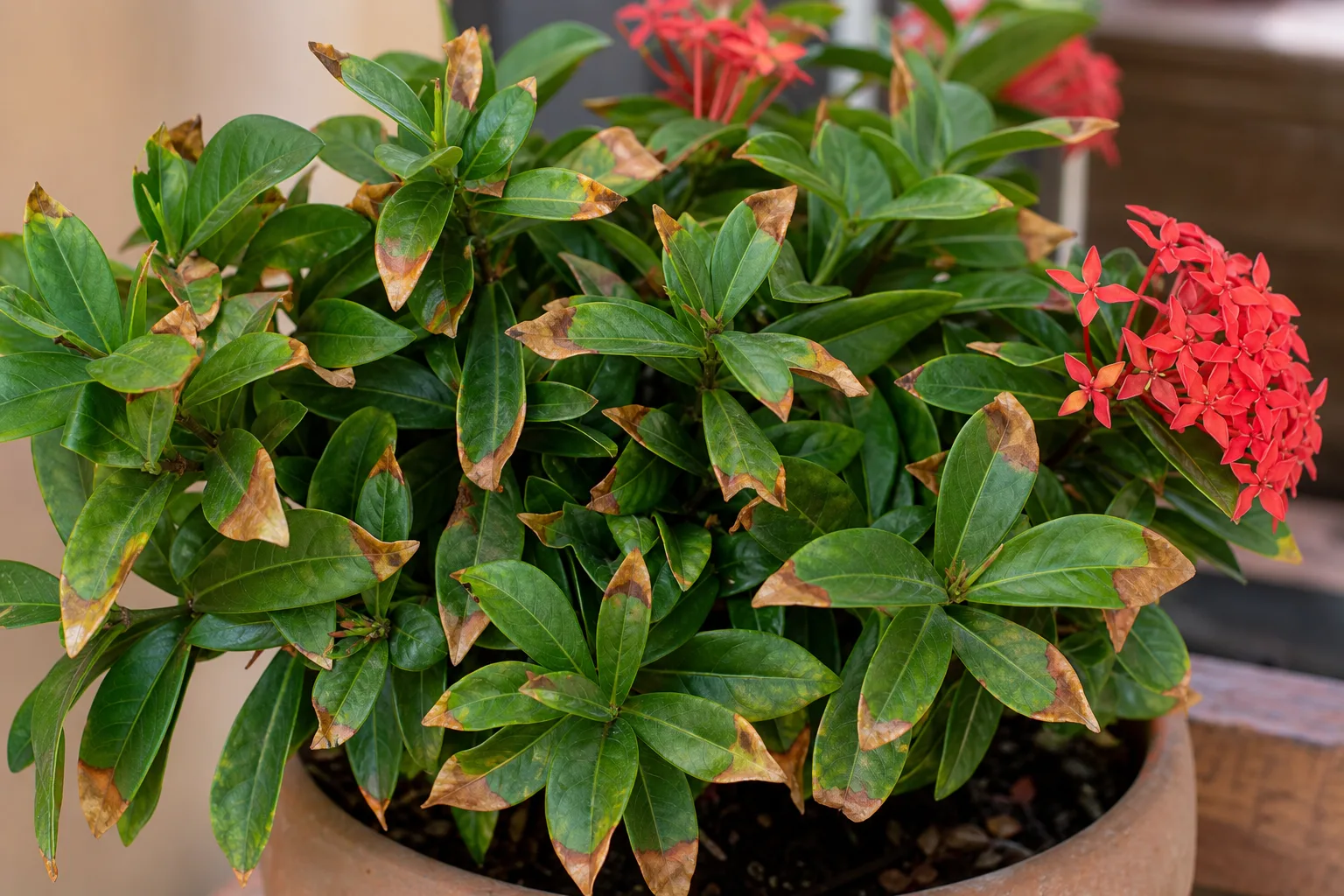
Brown Tips on Ixora: Causes, Checks & Fixes
This guide covers brown tips on Ixora. See also the general Brown Tips guide, watering, and light pages for this plant.
Brown Tips on Ixora: Causes, Checks & Fixes
Quick answer
Ixora coccinea - flame of the woods, jungle flame - carries glossy dark-green leaves that show stress at the margins before the whole shrub collapses. Brown tips on this tropical shrub rarely mean one universal problem. The same crispy edge can come from sun scorch after a sudden light increase, hard alkaline tap water burning calcifuge foliage, dry winter air crisping margins even when soil moisture is correct, or drought when the root zone has gone too dry between drinks.
First step: read the pattern on the leaves, then run four checks - recent light moves, water source chemistry, pot weight, and moisture 3 cm into the mix. Sun-facing bleached or tan patches with firm stems point to scorch. Even brown margins on many leaves with moist soil and hard tap water point to pH or salt stress. Crisp tips on turgid leaves with a light, dry pot point to underwatering. Match the pattern before you water, fertilize, or move the plant again.
What brown tips look like on Ixora
Brown tips on Ixora are not one uniform symptom. The leaf pattern tells you which branch of the diagnosis to follow.
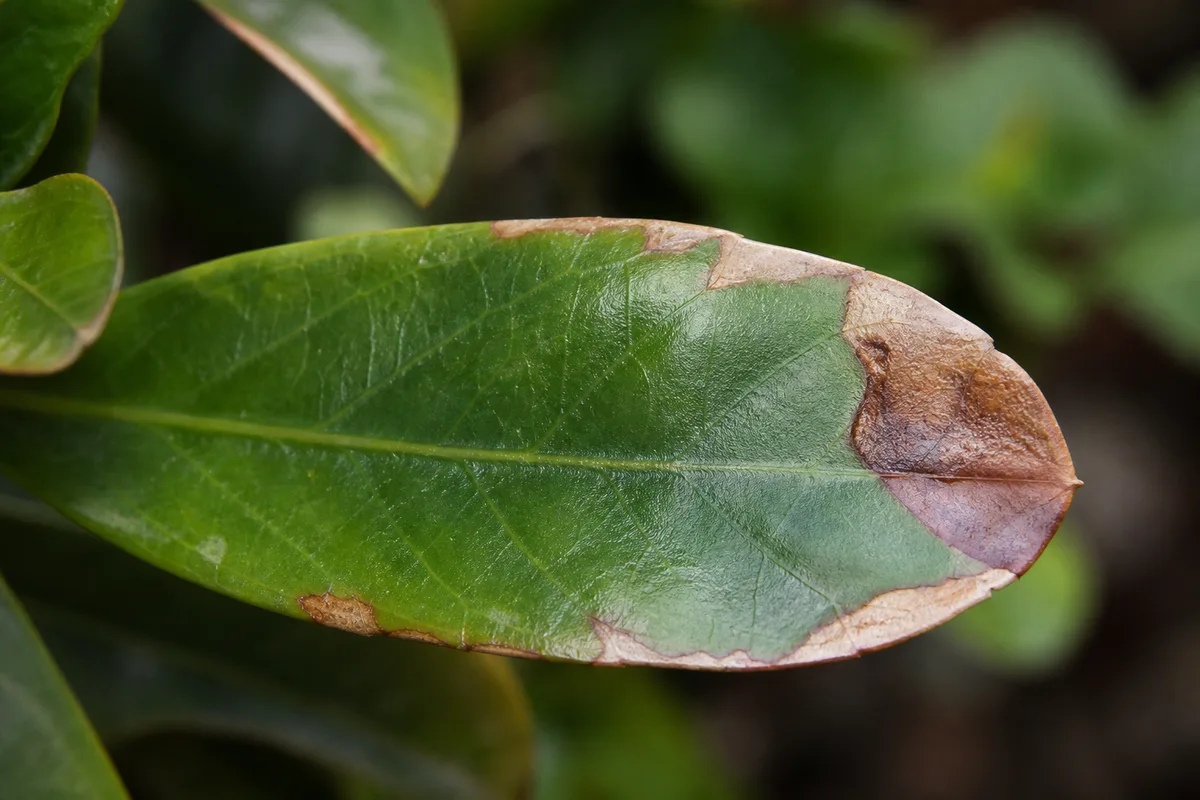
Brown Tips symptoms on Ixora - compare with healthy tissue on the same plant.
Sun scorch shows as bleached pale patches or tan-to-brown scorch on the sun-facing side of individual leaves, often after the pot moved from a dim interior to a south or west window, returned outdoors in spring, or sat against hot afternoon glass. The damage is usually localized to exposed leaf faces, not random tip burn on every leaf. Stems stay firm and soil moisture may be fine - extra watering will not reverse scorch.
Hard-water or alkaline-irrigation burn produces even brown or tan margins along leaf edges, sometimes with a thin yellow band before full browning. You may see white mineral crust on the soil surface or pot rim. New leaves may later show yellowing between green veins - iron chlorosis from rising pH - but margin burn often appears first on acid-loving shrubs like ixora. Soil can feel appropriately moist while edges crisp.
Low-humidity crisping looks like dry, papery brown tips and margins on otherwise firm, glossy leaves, often in heated winter rooms or near AC vents. Soil moisture at 3 cm depth is normal. The plant does not wilt heavily, but leaf edges desiccate because tropical air dropped below what this species evolved in.
Drought-related crisping follows limp or drooping foliage, a very light pot, and dusty dry mix 3 cm down. Brown margins appear on older leaves after repeated dry cycles, sometimes with dropped flower buds. This pattern overlaps with underwatering but may present as tip burn before whole leaves yellow.
Cold-draft damage can brown leaf margins when temperatures fall toward 50°F (10°C) or cold air hits leaves beside a winter window. Damage may appear overnight after a cold snap while watering rhythm was unchanged.
Spider mite stippling is a lookalike: fine yellow speckles on leaf undersides with bronzing and webbing, not simple tip-only burn. Dry brown tips without insects on the living tissue point back to humidity, hard water, or light stress - the same distinction noted on the aphids guide for this species.
Why Ixora gets brown tips
Ixora evolved in humid tropical lowlands as a sun-loving, acid-loving evergreen shrub. That combination explains why tip burn shows up in specific, repeatable ways - not as random bad luck.
Direct sun without acclimation
Ixora needs substantial direct sun to flower and hold compact growth. NC State Extension lists ixora cultural requirements as full sun with moist, well-drained, acidic soil, and UF/IFAS Gardening Solutions notes that full sun is necessary for maximum flower production. Plants grown in dim shops or overwintered in low-light rooms, however, have leaves adapted to weaker rays. Moving them to unfiltered midday or afternoon sun in one step causes photoinhibition and tissue death on exposed surfaces - even though the species “wants” sun in principle. This is the same scorch risk described in the not enough light recovery guide when growers panic-move to a south sill after months of shade.
Calcifuge water chemistry
Ixora is a calcifuge - it cannot efficiently absorb iron and manganese when soil or irrigation water pushes pH toward neutral or alkaline. UF/IFAS FP291 notes that foliage turns yellow in alkaline soil such as next to sidewalks and foundations, and UF/IFAS Gardening Solutions adds that new growth will appear chlorotic from iron and manganese deficiencies in alkaline conditions. Before full interveinal chlorosis spreads, many growers see margin burn and tip crisping from salt and bicarbonate buildup in containers. Hard tap water, reclaimed irrigation, and limestone leaching all raise pH over months. Rainwater or filtered water is not optional luxury for this species in high-bicarbonate regions - it is core maintenance, as detailed in the watering guide.
Tropical moisture rhythm vs. surface-dry guesswork
Ixora wants evenly moist, never waterlogged acidic mix. Missouri Botanical Garden lists only moderate drought tolerance even in landscape plantings. In containers, letting the root zone go dust-dry between drinks causes transpiration stress that shows at leaf margins first - especially when the plant sits in four to six hours of direct sun and drinks faster than a calendar schedule supplies. The opposite mistake - keeping wet soil because tips look “dry” - does not fix scorch or hard-water burn and can advance root problems that later brown tissue through failed uptake.
Dry indoor air in winter
Average home humidity of 40–50% is workable in warm bright conditions, but heated winter air below about 30% pulls moisture from glossy leaves faster than roots replace it. Margins crisp even when you follow the top-3-cm moisture rule correctly. This pattern is common enough that the low humidity page and aphids guide both flag dry brown tips without insects as an environmental signal on ixora.
Brown tips vs. yellow leaves vs. iron chlorosis
Confusing these three patterns leads to the wrong first fix.
| Pattern | What you see | Soil / pot | Leading cause |
|---|---|---|---|
| Tip-only brown margins | Crisp edges, firm leaves, localized sun-side scorch possible | Moist to normal; pot weight moderate | Sun scorch, hard water, low humidity |
| General yellow leaves | Soft yellow foliage, often lower leaves first | Wet, heavy pot; sour smell possible | Overwatering / root stress |
| Interveinal chlorosis | Yellow new leaves with green veins | Often moist; alkaline crust on pot | High pH, hard water - see yellow leaves |
| Drought crisping | Limp leaves, brown edges, dropped buds | Light pot; dry 3 cm down | Underwatering |
Brown tips alone rarely mean advanced root rot - rot more often starts with yellowing and soft stems on wet mix. If brown tips appear with yellow lower leaves and wet soil that stays soggy for a week, inspect roots before assuming drought or hard water.
How to confirm the cause
Work through these checks in order. Stop when one cause clearly fits - then apply one fix, not three.
Light history
Did the plant move to a brighter window, return outdoors, or sit against hot glass in the last two weeks? Sun-facing bleached or brown patches with firm wood and normal soil moisture confirm scorch. No recent light change makes scorch less likely unless seasonal sun angle intensified on the same sill.
Water chemistry and pot rim
Note whether you use rainwater, filtered water, or hard tap. White crust on soil or pot edges, plus even margin burn on multiple leaves with moist mix, points to alkaline or salty irrigation. Yellow new growth with green veins layered on margin burn strengthens the chlorosis branch.
Pot weight and moisture at 3 cm
Lift the pot and push a finger or skewer 3 cm into the mix near the pot wall - the same depth used in the watering guide. A light pot with crumbly dry soil and limp leaves confirms drought. A heavy pot with cool damp soil and brown tips means do not add water - look to hard water, humidity, scorch, or rot instead.
Humidity and air movement
Check whether the plant sits beside a heating vent, radiator, or drafty winter window. Crisp margins on turgid leaves with moist soil and no light-change history fit low humidity. A humidifier or pebble tray helps more than misting, which raises humidity briefly and can leave wet foliage in stagnant air.
Cold exposure
Sudden margin browning after nights below 50°F (10°C) or direct cold glass contact suggests cold injury, not underwatering. Warmth stabilizes the plant; extra water will not reverse cold-damaged tissue.
Confirmation decision table
| If you find… | Most likely cause | First fix direction |
|---|---|---|
| Sun-side bleached/brown patches after light increase | Sun scorch | Filter afternoon sun; acclimate gradually |
| Even brown margins, white soil crust, hard tap water | Alkaline / salt burn | Switch to rainwater; flush pot |
| Crisp tips, firm leaves, dry winter air, moist soil | Low humidity | Raise humidity; check vent placement |
| Light pot, dry 3 cm, limp leaves, dropped buds | Drought | Bottom-water thoroughly; drain fully |
| Yellow new leaves with green veins | Iron chlorosis lookalike | Correct pH and water before iron sprays |
| Stippling + webbing on leaf undersides | Spider mites | Rinse and treat pests - see spider mites |
First fix for Ixora (by likely cause)
Apply one correction based on your confirmation checks. Do not stack Ixora repotting guide, pruning, fertilizer, and pesticide on the same day.
Sun scorch: Move the pot slightly back from hot glass or add a sheer curtain for afternoon sun. Acclimate over seven to fourteen days if the plant came from deep shade - increase bright hours gradually rather than holding it on an unfiltered south sill. Do not increase watering; scorch is a light problem.
Hard-water or alkaline burn: Switch the next several waterings to rainwater or filtered water. If white crust covers the soil surface, flush the pot with plain low-mineral water at two to three times the pot volume before resuming normal drinks. Hold fertilizer until margins stop advancing. Test or refresh ericaceous mix if chlorosis yellowing appears on new leaves.
Low humidity crisping: Move the pot away from heating vents and run a humidifier or pebble tray nearby. Keep the top-3-cm moisture rhythm steady - crispy edges from dry air are not cured by drowning the roots.
Drought crisping: Bottom-water with room-temperature rainwater until the mix rewets evenly, then drain completely - same protocol as the underwatering guide. Resume check-based watering when the top 3 cm dries during active growth.
Cold damage: Move to a stable warm room above 60°F (15°C) away from cold glass and drafts. Hold watering steady until new growth shows the plant has stabilized.
Recovery timeline
Sun scorch: Active browning usually stops spreading within one to two weeks after light is moderated or acclimation completes. Bleached patches on old leaves do not re-green.
Hard-water margins: Expect two to four weeks of stable care before new leaves emerge without edge burn, provided you switched water and flushed salts. Old brown edges remain until trimmed or replaced by growth.
Low humidity: Margins often stabilize within one to two weeks once humidity rises above roughly 50% and air movement is gentler.
Drought: Leaves frequently regain turgor within 24–48 hours after a proper rewet. Crispy brown tissue is permanent; judge success by firm new tips and glossy expanding leaves over the next two to four weeks.
Worsening signs: Brown spread continuing two weeks after the correct single fix, soft stems at the base, or yellow lower leaves on wet soil mean escalate - inspect roots for rot and review the overwatering and root rot guides rather than repeating the same tip-burn fix.
What not to do
Do not pour extra water when tips browned from sun scorch, hard water, or low humidity - wet roots on an already-moist pot add rot risk without fixing margins. Do not fertilize or spray iron on the first day before you know whether pH or drought is driving the symptom. Do not jump from dim shade to unfiltered afternoon sun as a panic fix for sparse blooms - that trades one problem for scorch. Do not trim heavily, repot, and change water chemistry the same afternoon; ixora recovers faster when you change one variable and read the response. Do not assume every brown tip means underwatering - this species shows yellow leaves and light pots first when truly dry.
How to prevent brown tips next time
Build prevention around ixora’s actual biology, not generic houseplant rules.
- Acclimate light changes over seven to fourteen days when moving from shop shade to a bright window or patio - ixora needs direct sun for blooms but leaves must adjust.
- Water when the top 3 cm dries, using rainwater or filtered water when possible - not “when the surface looks pale” and not on a fixed calendar. See the overview and watering guide for the full moisture rhythm.
- Maintain humidity near 50–60% in heated winter rooms so margins do not crisp while soil moisture is correct.
- Flush containers every few months in hard-water regions to prevent salt crust and pH creep.
- Keep the plant above 60°F (15°C) and away from cold window glass overnight.
- Check leaf undersides monthly for spider mite stippling when air is dry - mites exploit stressed glossy foliage.
Weekly pot-weight checks during hot weather catch drought before margins crisp. Seasonal window cleaning and grow-light supplementation through short winter days prevent the dim-to-bright swing that triggers scorch each spring.
When to worry - wet mix with yellow lower leaves
Brown tips combined with soft yellow lower leaves, sour-smelling soil, and a heavy wet pot point past cosmetic margin burn toward root stress or rot. Stop watering, inspect roots for mushy brown tissue, and follow the overwatering diagnostic path. Cosmetic tip burn from sun or hard water rarely softens the stem base - if wood goes soft while soil stays wet, treat urgency as root health, not leaf edges.
Related Ixora care
- Ixora overview - light, chlorosis, and troubleshooting hub
- Watering guide - top-3-cm checks, rainwater, pot weight
- Light requirements - direct sun for blooms without scorch
- Yellow leaves - chlorosis vs. overwatering
- Low humidity - winter crisping
- Underwatering - drought rehydration
- Not enough light - scorch after panic light fixes
When to use this page vs other Ixora guides
- Ixora watering guide - Use for routine moisture checks before assuming brown tips is the main issue.
- Ixora problems hub - Browse all 18 common issues on this species.
- Low Humidity on Ixora - Different entry point when symptoms overlap with brown tips.
- Underwatering on Ixora - Different entry point when symptoms overlap with brown tips.
- Overwatering on Ixora - Different entry point when symptoms overlap with brown tips.