Spider Mites on Ixora: Causes, Checks & Fixes
Quick answer
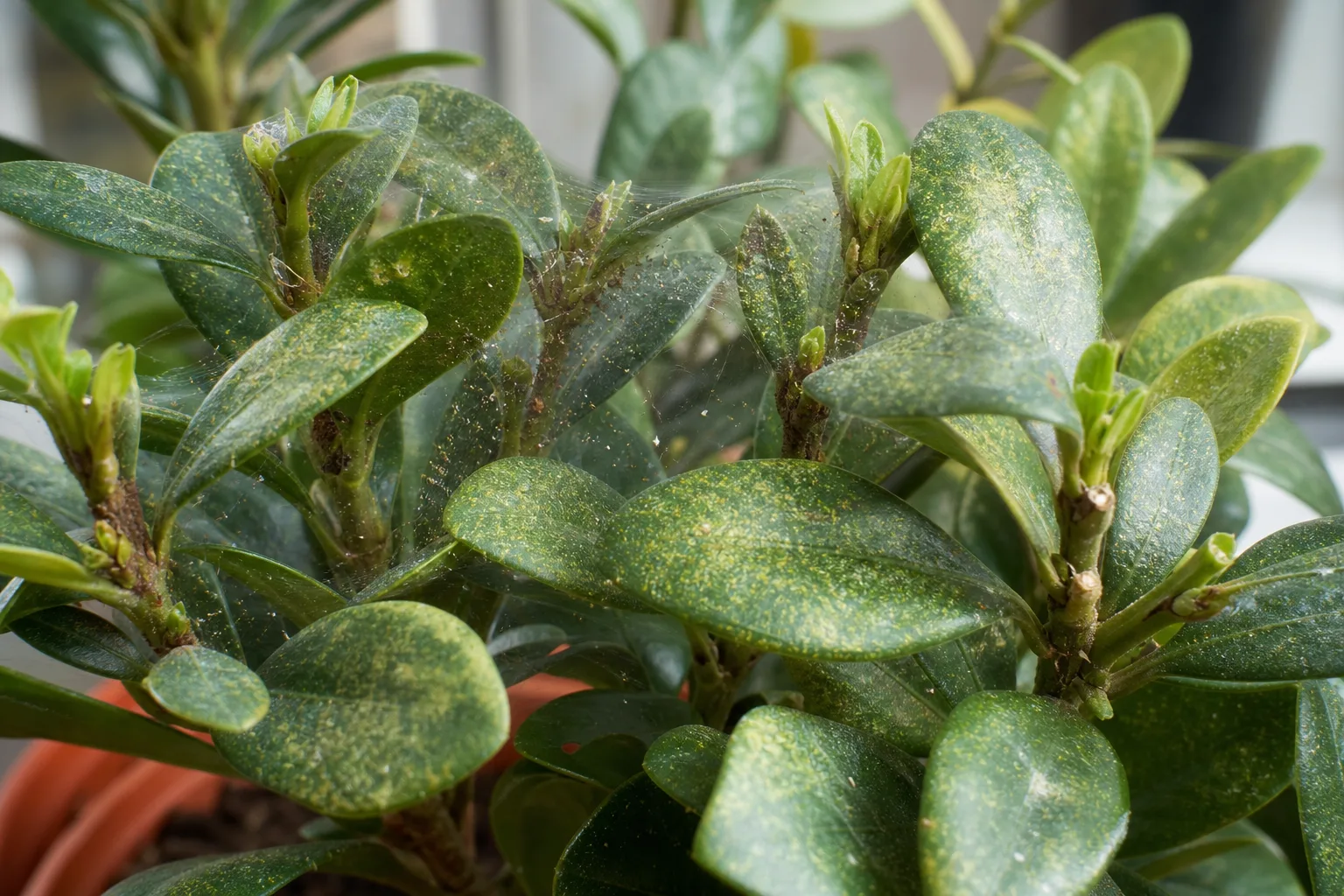
Spider mites on Ixora cause fine stippling on glossy whorled leaves and tight flower bud clusters, especially in dry winter rooms above heat vents. First step: isolate the plant and rinse every leaf underside with lukewarm water before applying any spray.
Spider Mites on Ixora: Causes, Checks & Fixes
This guide covers spider mites on Ixora. See also the general Spider Mites guide, watering, and light pages for this plant.
Spider Mites on Ixora: Causes, Checks & Fixes
Quick answer
Spider mites on Ixora (Ixora coccinea, flame of the woods) show up as fine yellow or white stippling on glossy whorled leaves, often with silky webbing at leaf bases, stem joints, and tight flower bud clusters. They are not insects-they are tiny arachnids that pierce leaf cells and suck sap, and they multiply fast in the warm, dry air common above radiators and heating vents.
First step: move the Ixora away from other plants and rinse every leaf underside with lukewarm water. That single action knocks down live mites and breaks up early webbing before you confirm severity or reach for sprays. Do not start with fertilizer, Ixora repotting guide, or a single oil application and walk away-mite eggs hatch in cycles, so one treatment rarely finishes the job.
Why Ixora gets spider mites
Ixora evolved in the humid tropics of Southern India and Sri Lanka with monsoon rainfall and high ambient moisture. UF/IFAS describes ixora as thriving in moist, well-drained acidic soil-conditions nothing like a dry winter living room beside a forced-air register. That mismatch is the core reason mites explode on otherwise healthy-looking patio specimens once windows close.
Several ixora-specific factors raise risk:
Dry winter air after patio-to-indoor moves. Container ixora summered outdoors or on a humid balcony often moves inside before sustained cold. The same plant that looked pest-free in August can show stippling by November because spider mites thrive in dry, warm conditions while indoor heating pulls humidity below what this tropical shrub expects. See low humidity on Ixora for the environmental overlap.
Heat vents and sunny glass. Ixora placed beside radiators, above floor registers, or in south windows with blasting dry air loses leaf moisture faster than its moist acidic root zone can compensate. Mites colonize the dry microclimate at leaf tips and bud clusters while soil moisture still looks normal-a pattern that confuses growers into watering more instead of treating pests.
Glossy whorled leaves hide undersides. Ixora carries leaves in tight whorls at stem tips, exactly where flower bud domes form. Mites feed on undersides out of sight; stippling may spread across a whole whorl before you notice one pale patch on the upper surface.
Chronic drought stress. Ixora that has gone through repeated dry spells-common when growers stretch winter watering intervals too far-becomes more susceptible to mite damage even after soil moisture returns. Underwatering stress and mite stippling can overlap; check the 3 cm dry-down rule and underwatering guide alongside pest signs.
Contrast with mealybugs. Mealybugs on ixora prefer sheltered, humid leaf axils and tight crown pockets-see mealybugs on Ixora. Spider mites favor the opposite: hot, dry air above the same plant. A humid conservatory ixora can host mealybugs while a dry windowsill neighbor gets mites.
Recent plant additions. Mites often arrive on newly purchased plants or pots grouped beside infested hibiscus, croton, or ficus. Skipping quarantine after a nursery purchase is a common entry route.
What spider mites look like on Ixora
Early feeding:
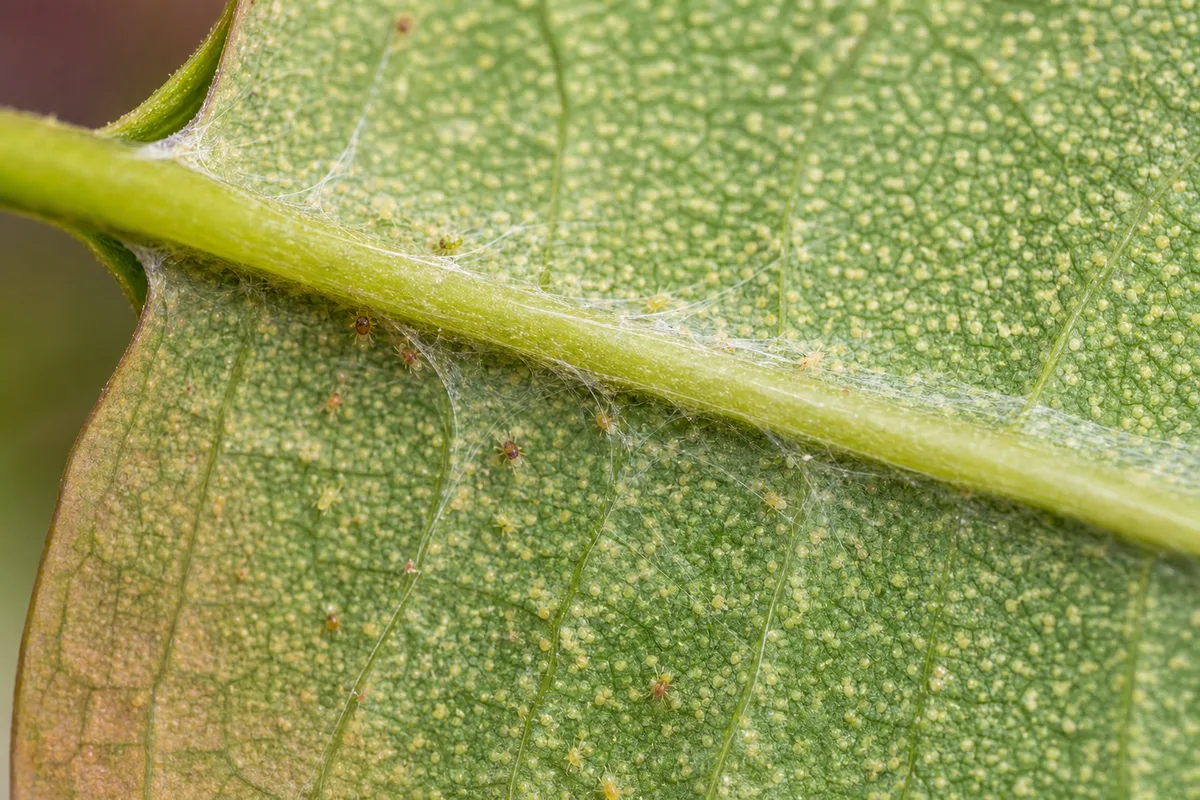
Spider Mites symptoms on Ixora - compare with healthy tissue on the same plant.
- Pinpoint yellow or pale dots scattered across upper leaf surfaces-the classic stippled look on dark glossy foliage
- Slight dullness or bronzing on heavily fed leaves in each whorl
- Subtle speckling on tight, unopened flower bud clusters before silk is visible
- Leaves still attached; bud development may slow before webbing appears
Established colonies:
- Fine silk webbing at leaf petioles, whorl bases, and along flower stalks
- Undersides feel gritty; black fecal specks or amber eggs visible with a hand lens
- Yellowing that follows the stipple pattern rather than uniform interveinal chlorosis from alkaline water
- Flower heads that look speckled, sticky, or fail to open evenly
Advanced infestation:
- Leaves turn bronze or bleach pale, then drop from lower whorls
- Webbing covers stem sections and bud clusters; mites visible as moving dots when disturbed
- New flush leaves emerge small, distorted, or fail to unfurl
- Bud clusters abort before opening-a serious loss on a plant grown for bloom
To the naked eye, mites look like tiny moving dots-about 1/50 inch long. A 10× hand lens makes identification much easier on ixora’s glossy surfaces.
How to confirm the cause
Work through these checks in order:
-
Tap test - Hold white paper under a suspect whorled leaf cluster and tap the blade firmly. Watch for tiny moving specks on the paper. Static debris does not crawl; mites do.
-
Underside inspection - Spread the whorled crown apart and examine backs of leaves at each stem tip, especially below unopened bud domes. Mites live in colonies mostly on undersides. Webbing at the leaf-stem joint is a strong mite signal.
-
Pattern check - Stippling scattered across individual leaves in a whorl points to mites. Uniform yellow new leaves with green veins across the whole plant fits iron chlorosis from alkaline soil-not pinprick dots with webbing.
-
Webbing vs. no webbing - Silk webbing confirms spider mites. Thrips cause silvery streaks but not silk. Aphids on Ixora show soft pear-shaped insects and honeydew, not stipple dots. Mealybugs show white cottony masses in axils.
-
Environment check - Is the ixora beside a heat vent, in a sun-baked south window with dry air, or in a room that has been heated for weeks without a humidifier? That context fits mites better than root rot on Ixora.
-
Neighbor plants - Scan other houseplants on the same shelf or bench. Mites crawl from plant to plant when populations are high.
If the tap test shows no movement, webbing is absent, and new leaves are uniformly yellow with green veins near concrete or hard tap water, investigate pH and watering before committing to a mite treatment cycle.
First fix for Ixora
Move the ixora away from other plants and wash every leaf underside under lukewarm running water or a shower spray.
Hold whorled stem tips so water hits the backs of leaves and the bases of bud clusters directly. Forceful washing reduces mite numbers and breaks up protective webbing. Wrap the pot in a plastic bag first so ericaceous mix stays in place during a shower rinse. Let foliage dry in bright light the same day-rinse in the morning so whorled leaf clusters dry before evening.
Do not apply horticultural oil or insecticidal soap on day one before this rinse. Soap and oils work by contact; a pre-wash clears debris so later sprays reach mites. Do not repot, prune heavily, or fertilize a stressed ixora until you know the infestation level.
Step-by-step recovery
After the initial isolation and wash:
-
Repeat water washes every two to three days for one week if the infestation is light. Re-check undersides and bud bases with a lens after each session.
-
Apply insecticidal soap or horticultural oil if mites persist. Both smother mites on contact and are effective against spider mites on indoor plants. Coat undersides and bud stalks completely; repeat every five to seven days for at least three cycles to catch newly hatched nymphs.
-
Raise ambient humidity without soaking whorled foliage overnight. Run a humidifier near the ixora or group plants slightly to share moisture. Higher humidity slows mite reproduction but does not replace direct treatment. Do not rely on misting glossy whorled leaves as the primary fix-wet foliage in cool stagnant air invites fungal problems on tight leaf clusters.
-
Prune only heavily webbed leaves or flower stems that are mostly bronze or dead. Removing a few worst whorls lowers pest load and improves spray coverage. Bag and discard prunings; do not compost indoors.
-
Inspect adjacent plants on the same shelf or patio grouping. Treat any with early stippling even if webbing is not visible yet.
-
Wash hands and tools after handling infested foliage so mites do not hitchhike to healthy plants.
For severe infestations where most whorls are webbed and bud clusters are aborting, discarding the ixora in a sealed bag may be more practical than saving one pot at the cost of the whole collection.
Light / moderate / heavy infestation tiers
Light: Stippling on one or two whorls, no webbing yet, tap test shows a few mites. Repeated water washes plus humidity improvement may be enough.
Moderate: Webbing at several leaf bases, stippling across multiple whorls, bud clusters look dull but stems stay firm. Add soap or oil on a five- to seven-day repeat schedule for three cycles minimum.
Heavy: Webbing spans stem sections, new flush fails to open, multiple plants on the same bench show stippling. Isolate the entire group, treat all affected pots, and consider discarding the worst specimen.
Recovery timeline
Light infestations often show fewer new stipples within three to five days of repeated washing. A full soap or oil course typically takes two to three weeks with label-interval repeats. Old stippled leaves remain scarred-judge recovery by clean new whorled leaves, intact bud clusters, and no fresh webbing, not by old foliage returning to solid green.
If new growth stays clean for two weeks after your last treatment, consider the outbreak controlled. Resume normal ixora watering rhythm only after you confirm mites are gone-overwatering on Ixora during recovery adds root stress on top of foliar damage.
Lookalike symptoms to rule out
| What you see | Likely cause | How to tell apart |
|---|---|---|
| Pinprick stippling + fine webbing | Spider mites | Tap test shows moving specks; dry air context |
| Yellow new leaves, green veins, no webbing | Iron chlorosis | Alkaline water or high pH; uniform pattern, not speckles |
| Silvery streaks, no silk | Thrips | Adults fly when disturbed; no stipple webbing |
| White cotton in leaf axils | Mealybugs | Honeydew sticky; no uniform upper-surface stippling |
| Soft green insects on bud tips | Aphids | Pear-shaped bodies on newest flush; honeydew present |
| Crispy brown leaf edges, moist soil | Low humidity alone | Edge browning without pinprick dots across blade |
| Uniform yellowing, wet cool mix | Overwatering | Sour smell, soft stems; no mite tap test |
Thrips leave silvery streaks or scuffed patches and black specks of excrement. They do not spin silk webbing. Shake a stem-adult thrips fly; mites crawl.
Iron chlorosis on ixora produces yellow new leaves with green veins when soil pH rises above about 6.0-common with hard tap water. The pattern is interveinal and plant-wide, not scattered pinprick dots with webbing on one whorl.
Low humidity tip dieback browns leaf edges without the speckled upper-surface pattern mites create. See low humidity on Ixora for that branch.
Mistakes to avoid
Do not stop after one spray because leaves look better for a day-eggs hatch on a short cycle and populations rebound within a week.
Do not spray only the tops of ixora leaves. Mites live on undersides and at bud bases; top-only treatment misses colonies hidden in whorled clusters.
Do not apply oil or soap to a drought-stressed ixora in direct hot sun. UC IPM warns against treating water-stressed plants or when temperatures exceed 90°F.
Do not use broad-spectrum insecticides aimed at other pests. Pyrethroids can kill mite predators and trigger mite outbreaks.
Do not mist whorled glossy leaves as your main humidity strategy-wet foliage in cool stagnant air invites disease on tight leaf clusters. Use a humidifier or pebble tray at pot level instead.
Do not fertilize during active infestation hoping to push new buds-tender flush tissue is what mites prefer.
Do not confuse alkaline-water chlorosis with mite stippling. Check soil pH and water quality before treating pests only.
Do not ignore neighboring plants because one ixora looks worse. Mites spread along shared shelves and patio groupings.
Ixora care cross-check
While treating mites, keep baseline care steady per the Ixora overview and watering guide:
| Care factor | Target during treatment | Why it matters for mites |
|---|---|---|
| Water | Top 3 cm dry before thorough drink; never bone-dry for days | Water-stressed plants suffer more mite damage |
| Soil pH | Acidic ericaceous mix, pH 5.0–6.0 | Chlorosis mimics pest stress; bud drop has multiple causes |
| Light | Bright with 4–6 hours direct sun when possible | See light guide; do not move weakened plant into harsh new exposure mid-treatment |
| Humidity | Steady ambient moisture via humidifier | Slows mite reproduction without soaking whorled crowns |
| Airflow | Good air movement, away from heat vents | Dry blast zones favor mites |
Ixora is listed as non-toxic to dogs and cats by the ASPCA. Keep treated plants out of pet reach while sprays dry, and wash hands after handling wet foliage.
How to prevent spider mites next time
Rinse or shower ixora foliage monthly to remove dust and expose early colonies. Dusty, neglected whorls are easier for mites to colonize unnoticed.
Quarantine patio containers and new nursery plants for at least two weeks before placing them beside existing ixora. Monitor for stippling during isolation.
Run a humidifier in dry winter rooms or move ixora away from heat registers. A tropical shrub evolved for monsoon humidity needs ambient moisture when heating season starts-not just correct soil watering.
Inspect leaf undersides and bud bases weekly during heating season-one quick check of each whorled tip takes less time than treating a whole shelf later.
Before bringing outdoor ixora inside for cool weather, rinse thoroughly and inspect with a lens. Outdoor exposure can pick up mites that explode once windows close and air dries.
When to worry
Treat as urgent when webbing covers multiple whorls, new flush leaves fail to open, bud clusters abort before blooming, or mites appear on several plants in the same room within days. At that stage, isolation and repeated washing may need to extend to the whole collection.
Consider discarding a severely webbed ixora in a shared space rather than risking months of reinfestation on neighboring hibiscus or croton. UMN Extension recommends bagging and removing plants when most of the foliage is covered.
Early stippling on one whorl with no webbing yet is manageable-confirm with a tap test and start washing before populations build. That window closes quickly in warm dry rooms beside heat vents.
Escalate to your county extension office if repeated label-compliant treatments fail after four weekly cycles, or if you are managing a large patio collection moved indoors without isolation.
Conclusion
Spider mites on ixora are a dry-air problem on a humid-tropical flowering shrub as much as a pest problem. A patio container beside a winter heat vent creates exactly the microclimate mites favor while bud clusters and whorled leaves hide early damage. Isolate, rinse undersides thoroughly, confirm with a tap test, then repeat soap or oil sprays through several generations while ambient humidity improves. Stippled old leaves may stay marked, but clean new whorls and opening bud clusters tell you the plant is winning-act on those first pinprick dots before silk webbing spans the whole crown.
When to use this page vs other Ixora guides
- Ixora watering guide - Use for routine moisture checks before assuming spider mites is the main issue.
- Ixora problems hub - Browse all 18 common issues on this species.
- Low Humidity on Ixora - Different entry point when symptoms overlap with spider mites.
- Leaf Drop on Ixora - Different entry point when symptoms overlap with spider mites.
- Slow Growth on Ixora - Different entry point when symptoms overlap with spider mites.