Slow Growth on Ixora: Causes, Checks & Fixes
Quick answer
Slow growth on Ixora is normal in cool dim winter but a problem if no new tips appear through a warm bright season. First step: inspect the newest stem tip and leaf color-quiet buds with pale new leaves and green veins usually mean alkaline water or soil pH drift, not a fertilizer shortage.
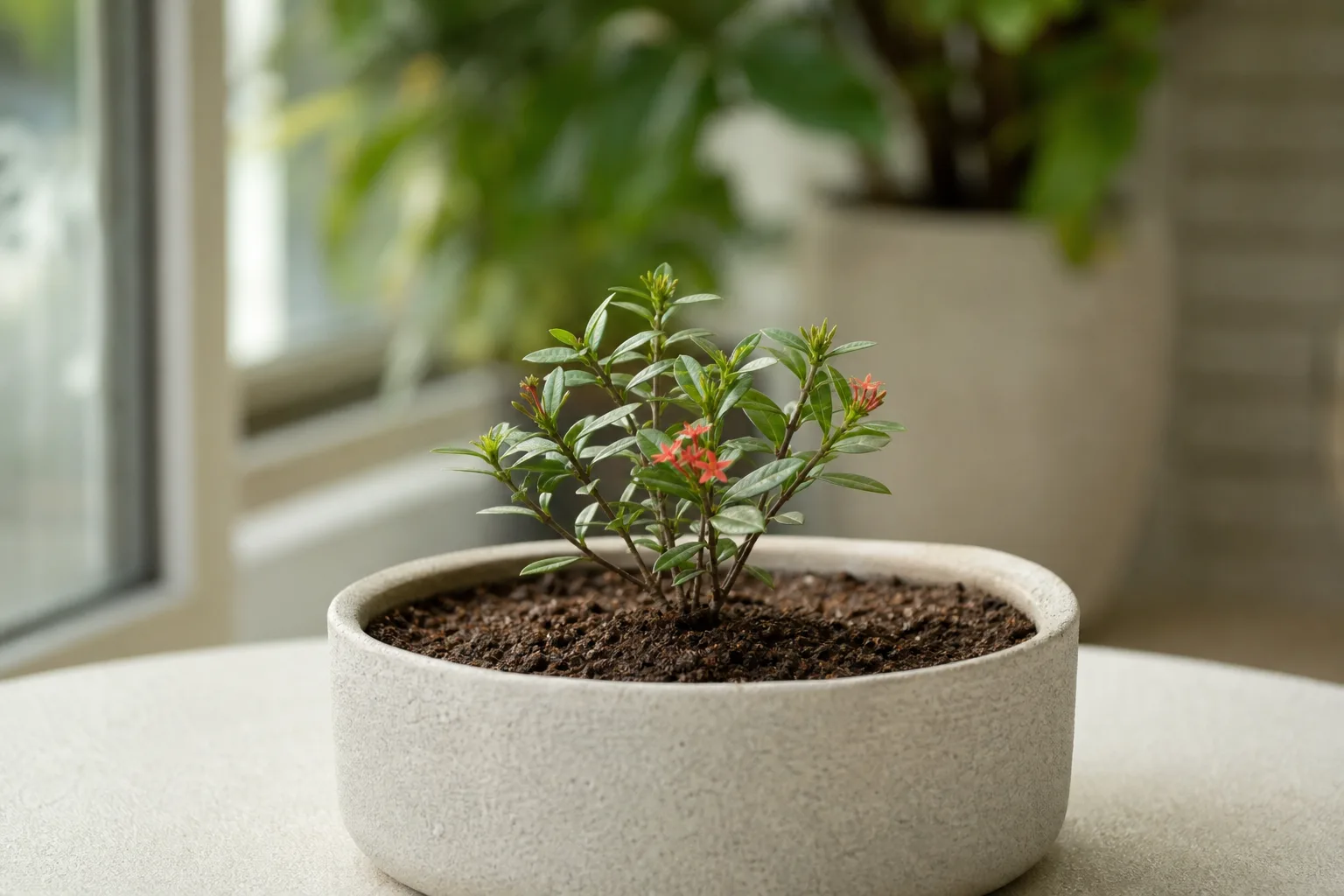
Slow Growth on Ixora: Causes, Checks & Fixes
This guide covers slow growth on Ixora. See also the general Slow Growth guide, watering, and light pages for this plant.
Slow Growth on Ixora: Causes, Checks & Fixes
Quick answer
Ixora coccinea - flame of the woods, jungle flame - is a tropical Rubiaceae shrub with slow to moderate growth in typical home conditions. When growth stalls, the cause is rarely mysterious disease. More often it is winter indoor rest, iron chlorosis from alkaline hard tap water, insufficient direct sun for tip and flower production, chronic overwatering in a dim room, drought stall, cold below about 50°F (10°C), or repot shock-not simply “needs fertilizer.”
First step: inspect the newest stem tip and the color pattern on the youngest leaves. Count whether a fresh tip flush appeared in the last four to six weeks during warm bright months. Pale new leaves with green veins point to pH and water quality before any feed. Quiet buds with wet soil that stays damp ten-plus days in a dim corner point to light and watering together-not more acid fertilizer on day one.
What slow growth looks like on Ixora
Slow growth on this species means little or no new tip activity, not one yellow lower leaf. Learn the Ixora-specific pattern:
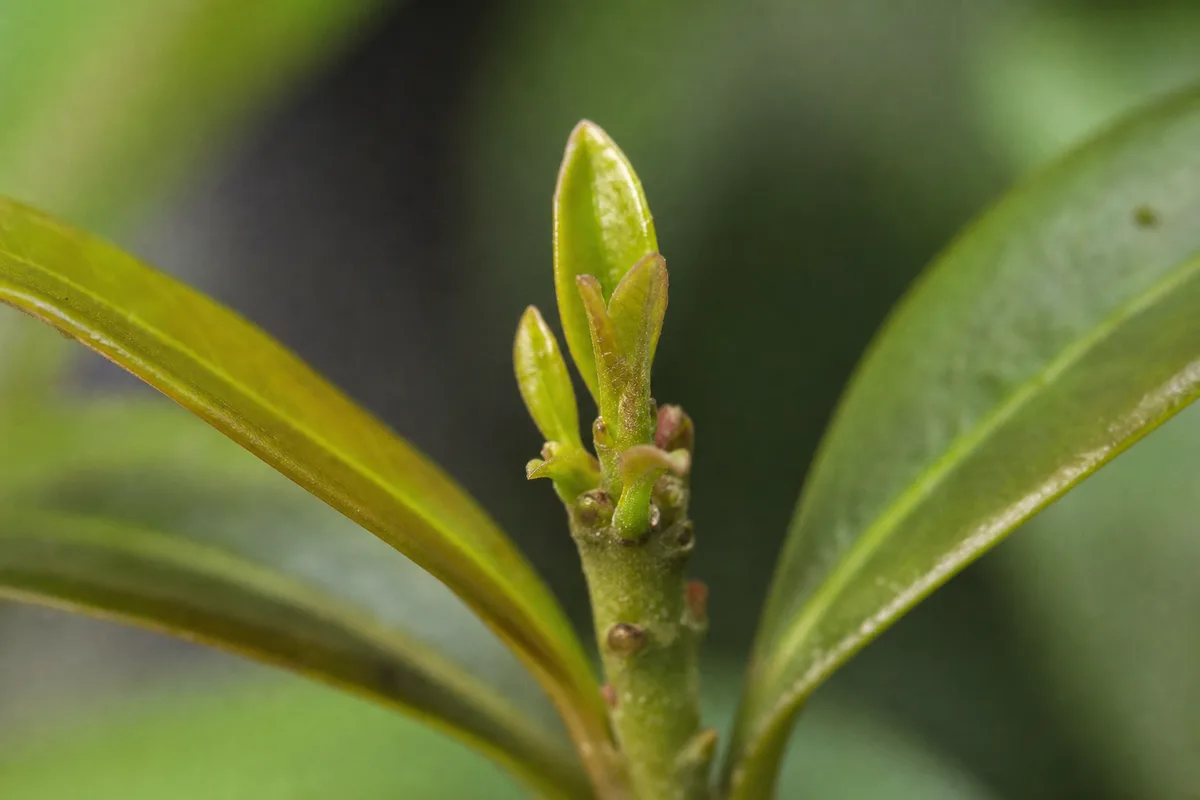
Slow Growth symptoms on Ixora - compare with healthy tissue on the same plant.
Normal active-season growth:
- Compact new tips every two to four weeks during spring through autumn in warm, bright rooms
- Flower cymes forming or opening at stem tips when light and soil acidity align
- Pot weight cycling between lighter dry and heavier after watering on a predictable rhythm
Slow-growth signals (problem, not rest):
- Quiet apical buds for six or more weeks through a warm bright season (March–September in temperate climates)
- No flower clusters despite months of stable old foliage
- Pale new leaves with green veins - classic iron chlorosis from pH drift
- Soil wet for ten-plus days with no new flush - common when low light slowed transpiration
- Thin open silhouette without the bushy hedge form ixora shows in full sun
Seasonal pause (normal, not a problem):
- From late fall through winter indoors, tip growth may pause entirely while existing leaves stay glossy
- Reduced watering and no fertilizer match this rest period - see the watering guide
- Resume expecting new tips when days lengthen and room temperatures stay above about 60°F (15°C)
What normal growth speed is indoors
The overview describes ixora as slow to moderate indoors - faster tip flush in bright warm months, noticeably slower in cool dim winters. Outdoors in frost-free climates with full sun, UF/IFAS notes ixora can flower continuously under ideal conditions, but indoor pots rarely match that intensity.
Think in seasons, not daily change:
| Season | What healthy growth usually looks like |
|---|---|
| March–May | New compact tips reappear; pot dries on a faster rhythm |
| June–August | Steady tip flush; flower cymes may form on well-lit plants |
| September–October | Growth slows; fewer new tips |
| November–February | Rest - little or no new tips is normal indoors |
If your plant has not produced a meaningful tip flush or flower cyme through an entire warm bright season, something is limiting - not the cultivar being “naturally slow.” Ixora sold as a flowering shrub often survives in mediocre light without growing or blooming; owners mistake inherent slow-to-moderate pace or winter rest for failure.
Why Ixora grows slowly - ranked causes
1. Iron chlorosis from alkaline soil or hard tap water
Ixora is a calcifuge - when soil or irrigation water pushes pH above about 6.0 to 6.2, iron becomes unavailable in alkaline soils on acid-loving shrubs. New leaves emerge pale yellow with green veins, growth slows, existing foliage may bleach, and flower buds abort before opening even when you feed regularly. Hard tap water slowly alkalinizes acid peat mix - the primary hidden cause of “mystery” slow growth indoors. This is nutrient lockout, not deficiency; more balanced fertilizer without pH correction worsens salt stress.
2. Insufficient direct sun for tip and flower stall
Ixora needs substantial direct sun to flower reliably. Bright indirect light alone often keeps the plant alive but reduces or eliminates flower production and stalls compact tip growth. Low light also slows photosynthesis and growth, so the same watering schedule leaves soil wet longer and sets up root stress. Full workflow: not enough light on Ixora.
3. Chronic overwatering root stress in low light
Dim ixora drinks slowly. Continuing a summer watering rhythm through a dark winter corner keeps roots in stale moisture. Growth stalls while old leaves may still look green. Yellow lower leaves, fungus gnats, and sour-smelling mix overlap with overwatering - fix light and moisture together, not one alone.
4. Underwatering and drought stall
Ixora has only moderate drought tolerance and aborts buds when the root zone desiccates. A light pot, wilted glossy leaves, and dry mix pulled from the pot edge point here - see underwatering.
5. Cold temperatures and seasonal slowdown
Ixora may die back when temperatures fall below about 50°F (10°C). Cold drafts, unheated porches, and window ledges with cold glass stall growth and drop buds even when soil moisture looks fine. CABI data note leaf damage below about 39°F (4°C).
6. Relocation or repot shock
A normal post-repot pause lasts two to four weeks. Stacking repot, prune, iron drench, and pesticide on a stressed shrub compounds stall. Do not repot before checking pH, light, and moisture.
7. Nutrient lockout misread as “needs fertilizer”
Feeding a chlorotic ixora in alkaline mix adds salts without fixing iron availability. Confirm acid soil pH 5.0–5.5 and adequate light before any acid-forming feed - details in the fertilizer guide and soil guide.
How to confirm the cause
Work through these checks in order - each narrows the list before you change multiple variables:
- Season check - Note the month. November through February pause is normal if stems are firm and mix is not sour.
- New tip audit - Mark a stem tip. Wait two to three weeks in the active season. Zero change with firm green old leaves suggests light, pH, or roots - not instant drought.
- Leaf color pattern - Yellow between green veins on new leaves → chlorosis; test pH and switch water. Uniform green with no buds and long internodes → light. See yellow leaves for overlap.
- Hand-shadow test - At canopy height on a bright day, almost no shadow means light is likely limiting; see the light guide.
- Soil dry-down rate - Mix wet ten-plus days while growth stalls in a dim room → low light slowing uptake plus overwatering risk.
- Water quality and pH - White crust on the pot rim, months of hard tap water, or pH above 6.0 on a slurry test → calcifuge stall.
- Temperature - Room or placement below about 60°F (15°C), or recent cold move indoors → cold stress.
- Root screen - Soft stems, sour wet soil → inspect roots before Ixora repotting guide; firm stems with appropriate moisture keep environmental causes at the top of the list.
If winter rest explains the pause, hold course. If four or more active-season checks point to chlorosis or light - and rot is absent - treat that as confirmed.
Lookalike symptoms
| What you see | Likely cause | First direction |
|---|---|---|
| No new tips Nov–Feb, firm stems, slower watering rhythm | Winter rest | Wait; resume checks in March |
| Long bare stems, lean toward window, no flower cymes | Leggy stretch from low light | Not enough light, leggy growth |
| Pale new leaves, green veins, no dramatic stretch | Iron chlorosis / alkaline water | Soil, rainwater, pH test |
| Wet soil weeks, yellow lower leaves, quiet tips in dim room | Overwatering in low light | Overwatering + light fix |
| Light dry pot, wilt, dropped buds | Underwatering | Underwatering |
| Stall 2–4 weeks after repot only | Transplant pause | Hold stable; no stacked treatments |
| Leaf drop after cold porch night | Cold stress | Warm stable placement above 15°C |
Slow growth is the headline - general stall with compact spacing. Leggy stretch is internode elongation plus lean while the plant still pushes some length toward light.
First fix for Ixora (by confirmed cause)
Make one primary change, then wait two to three weeks before stacking treatments.
If iron chlorosis / alkaline water: Switch to rainwater or filtered water as the first move. Test soil pH; target 5.0–5.5 with ericaceous mix per the soil guide. Apply chelated iron only after correcting water and acidity - not before.
If light is limiting: Move to a spot with four to six hours of direct sun daily or add a full-spectrum grow light twelve to fourteen hours daily. Do not simultaneously repot or feed. Full workflow: not enough light.
If overwatering in dim placement: Correct light so the plant uses moisture again, then let the top 3 cm dry before the next soak. Do not water less as the only fix in a dark room.
If underwatering: Bottom-water thoroughly with room-temperature rainwater until the root zone rewets, then drain completely.
If cold stress: Move above 60°F (15°C) away from drafts and cold glass. Do not jump to full outdoor sun while recovering.
If winter rest: Reduce watering; hold fertilizer until spring tip flush. Keep the brightest window available - rest is not an excuse for a dark closet.
If repot shock only: Hold placement and watering stable for fourteen days before any other intervention.
Recovery timeline
Expect first compact new tips within three to six weeks after correcting light or water quality during active growth. Flower cymes may follow four to eight weeks later - ixora does not bloom overnight even when conditions finally align.
Chlorotic leaves already formed will not fully re-green - judge progress by new growth color two to four weeks after pH and water fixes. Old stretched internodes from prior low light do not shorten - see leggy growth for pruning timing after recovery flush.
Winter corrections may stall until March light returns. If no new tips appear six weeks after a clear spring light move or rainwater switch, re-test pH and inspect roots for hidden rot.
Worsening signs: continuing mass leaf drop after twenty-one days of stable corrected care, soft stems with sour wet soil, or spreading chlorosis despite rainwater - escalate to root inspection rather than more fertilizer.
What not to do
Do not fertilize a stalled ixora to “wake it up” - especially when new leaves show chlorosis or soil stays wet in dim light. Do not repot on day one before checking pH, light, and moisture; root disturbance on a stressed tropical shrub compounds stall.
Do not stack repot, prune, iron drench, and pesticide on the same week. Do not assume green old leaves mean active growth - ixora keeps foliage in mediocre light while flower cymes and tip flush tell the truth.
Do not expose cold-stressed ixora to sudden full outdoor sun when diagnosing slow growth. Do not confuse slow growth with normal post-repot pause (two to four weeks).
How to prevent slow growth next time
Match ixora’s calcifuge rhythm: acid soil pH 5.0–5.5, rainwater or filtered water, four to six hours of direct sun or equivalent grow-light hours, and check-based watering from the watering guide. Refresh ericaceous mix every one to two years before mineral buildup shifts pH.
In winter, accept slower growth, water less, and skip feed per the fertilizer guide. In spring, verify tip activity before assuming failure. When bringing patio plants indoors, place them in the brightest overwintering spot - not a hallway shelf.
Cross-check baseline care on the overview guide when multiple symptoms overlap.
When to worry
Escalate when pale new leaves spread despite rainwater and confirmed acid mix, stems soften with sour wet soil, or no tip activity persists through an entire warm bright season. Those are decline patterns, not dormancy.
Patience is enough when stems are firm, mix smells neutral, existing leaves stay glossy, and the calendar is winter - or when you repotted two weeks ago and the plant is in expected transplant pause.
Ixora care cross-check
| Factor | Active season target | Slow-growth mistake |
|---|---|---|
| Light | Four to six hours direct sun or strong supplemental light | North window survival without tip flush |
| Water | Top 3 cm dry, then soak; rainwater preferred | Summer schedule in dim wet winter corner |
| Soil pH | 5.0–5.5 ericaceous mix | Hard tap water slowly alkalinizing peat |
| Temperature | Above 60°F (15°C) stable | Cold porch or AC draft |
| Feed | Acid-forming feed only when growing on correct pH | Fertilizer on chlorotic stalled plant |
Related Ixora problems
- Not enough light - leggy stretch and absent flower cymes
- Leggy growth - when elongation, not general stall, dominates
- Yellow leaves - chlorosis diagnostic overlap
- Underwatering and overwatering - moisture stalls
- No flowers - bloom gate when tips look active but buds fail
When to use this page vs other Ixora guides
- Ixora watering guide - Use for routine moisture checks before assuming slow growth is the main issue.
- Ixora problems hub - Browse all 18 common issues on this species.
- Not Enough Light on Ixora - Different entry point when symptoms overlap with slow growth.
- Leggy Growth on Ixora - Different entry point when symptoms overlap with slow growth.
- Yellow Leaves on Ixora - Different entry point when symptoms overlap with slow growth.