Leggy Growth on Ixora: Causes, Checks & Fixes
Quick answer
Leggy Ixora shows long gaps between leaves, pale thin shoots, and few flower clusters-usually etiolation from insufficient light. Rule out iron chlorosis (yellow leaves with green veins). Stretched stems are permanent; brighten light first, then prune after new growth compacts.
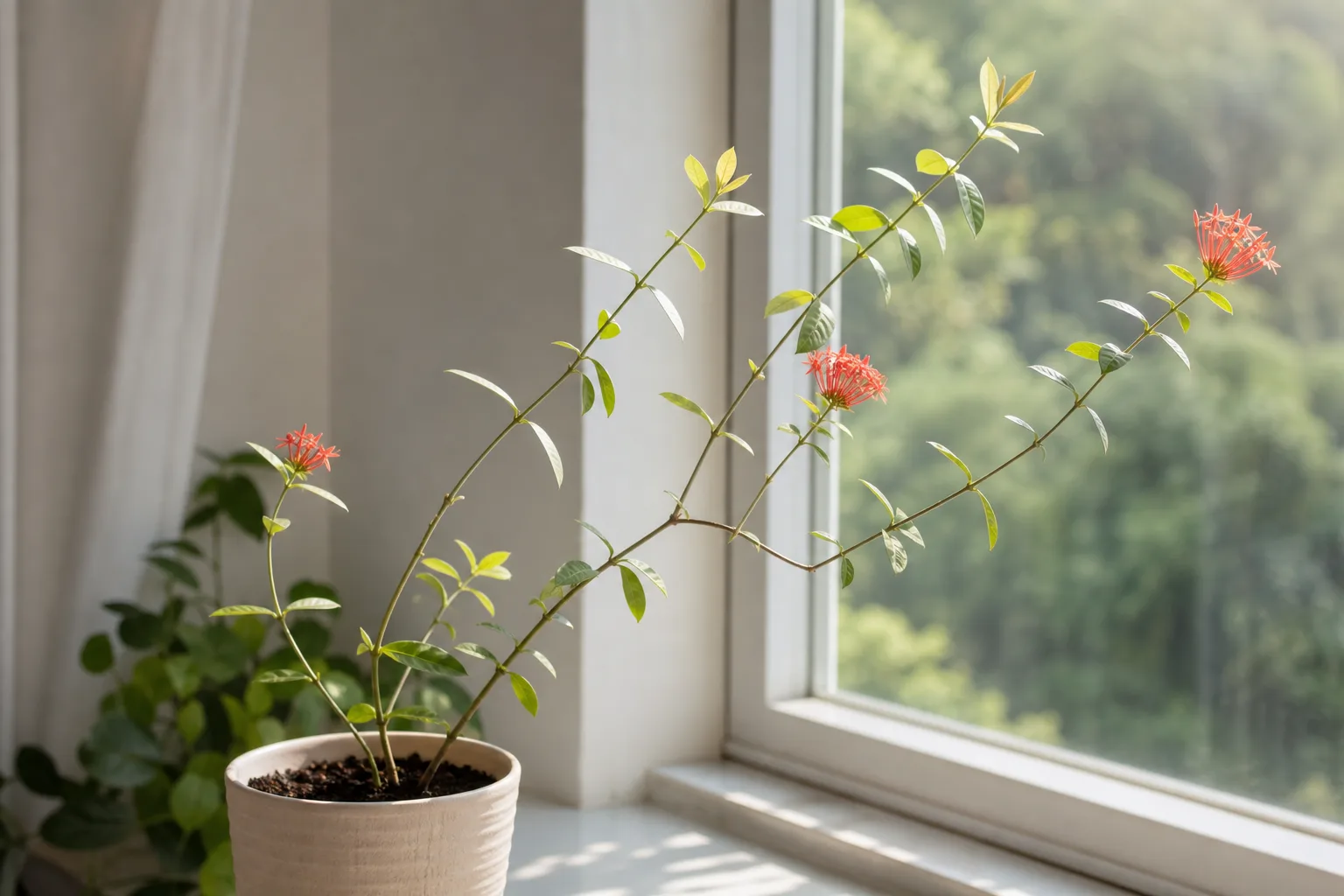
Leggy Growth on Ixora: Causes, Checks & Fixes
This guide covers leggy growth on Ixora. See also the general Leggy Growth guide, watering, and light pages for this plant.
Leggy Growth on Ixora: Causes, Checks & Fixes
Quick answer
Leggy growth on Ixora (Ixora spp.) is etiolation-woody shoots stretch toward light, internodes lengthen, new leaves pale and shrink, and flower clusters fail when intensity is too low. Ixora is a tropical sun-loving shrub marketed for patios and bright conservatories; indoors it survives dim corners but does not stay compact or bloom there.
Stretched shoots do not shorten. Better light shapes future growth only.
First step: brighten exposure per not enough light on Ixora. Rule out iron chlorosis-yellow leaves with green veins on alkaline wet soil need pH correction, not pruning alone. After compact new growth appears, prune leggy branches back to nodes.
This page covers structural recovery and chlorosis rule-out. Light placement targets live on not-enough-light.
What leggy growth looks on Ixora
Healthy ixora carries glossy dark green leaves in dense clusters with round orange, red, or yellow flower heads in warm bright conditions. Leggy plants show:
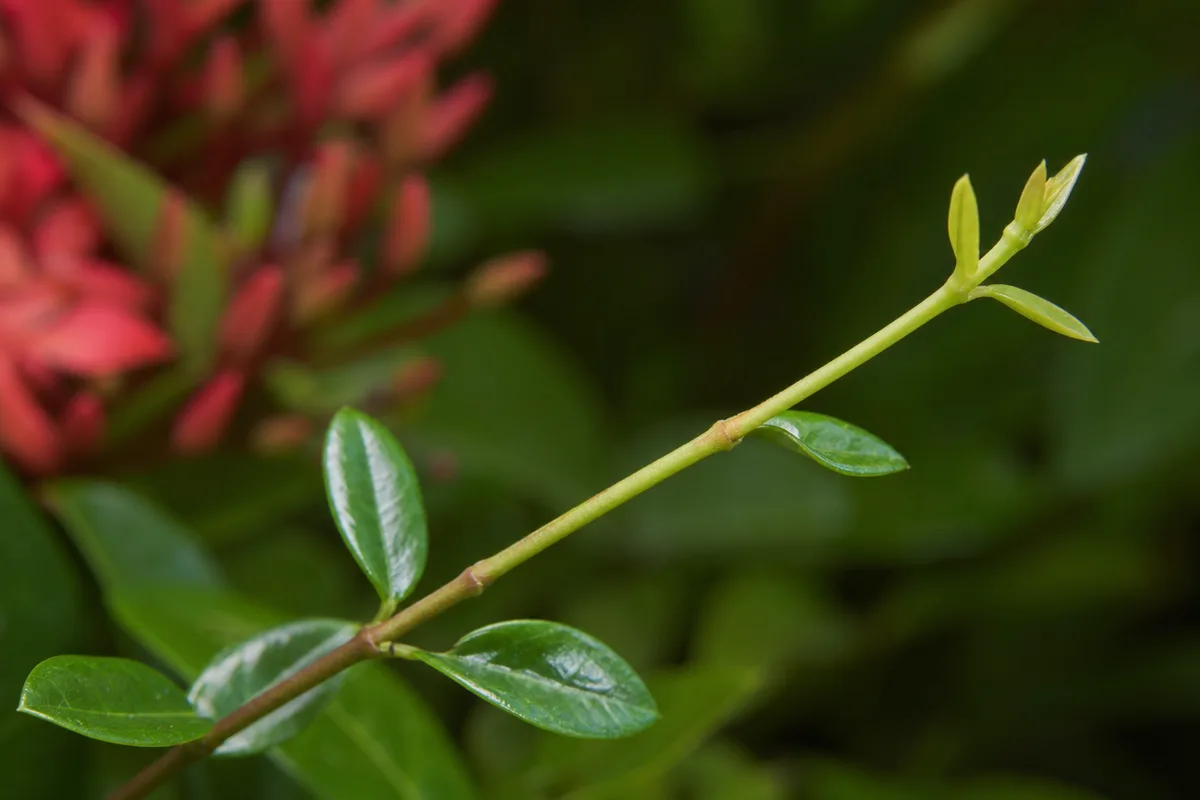
Leggy Growth symptoms on Ixora - compare with healthy tissue on the same plant.
- Long bare sections between leaves on new branch tips
- Smaller, lighter new leaves vs. older glossy foliage on the same branch
- Branches leaning toward the brightest window or skylight
- Few or no blooms for an entire warm season despite adequate age
- Open sparse canopy instead of bushy dome shape
Stretch develops over months in the same dim office or shaded patio corner.
Critical lookalike - iron chlorosis:
- Interveinal yellowing (yellow leaf tissue between green veins)
- Often on new growth first while older leaves stay greener initially
- Linked to alkaline soil, hard tap water, or poor drainage-not etiolation alone
- UF IFAS notes ixora prefers acidic soil and suffers in high-pH conditions
If veins stay green while blades yellow, fix iron/pH per ixora soil guide before heavy pruning.
What leggy growth is not:
- Uniform yellow mushy leaves on wet soil-overwatering on Ixora
- Scorched brown patches-too much direct hot sun without acclimation
- Scale or sooty mold on sticky stems-pest issues
Why Ixora gets leggy
Ixora evolved in tropical sun and humid warmth. UF IFAS describes ixora as needing full sun to partial shade outdoors for best flowering-indoors that translates to brightest indirect light you can offer.
Weak light produces spindly growth reaching toward windows. Energy goes to stem length, not the tight leaf clusters and bloom buds ixora needs.
Chlorosis stacks onto stretch when alkaline water or lime-heavy mix locks iron-even in adequate light, pale weak shoots can result. Always check vein color.
How to confirm the cause
- Internode comparison - Widening gaps on new shoots confirm etiolation
- Vein color - Green veins on yellow blades = chlorosis; rule out before pruning-only fix
- Soil pH / water - Hard tap, limestone mix, or chalky residue on pot rims support chlorosis
- Light trial - Two weeks brighter indirect light; tighter new leaves confirm light was limiting
- Bloom history - No clusters last summer in same dim spot strongly supports chronic low light
- Soil moisture - Wet heavy soil in dim room = rot risk overlap
First fix for Ixora
Brighten light and correct chlorosis if present-then prune after compact new growth.
- Move to brightest indirect light or filtered south/west exposure per ixora light guide
- If green veins on yellow leaves, acidify care-acidic fertilizer, rainwater or filtered water, well-drained acidic mix
- Wait 2–3 weeks for tighter new leaves
- Prune leggy shoots back to healthy nodes or outward-facing buds
Do not prune heavily into chlorotic yellow wood without fixing iron-new shoots may stay pale.
Step-by-step recovery
- Correct pH/iron if chlorosis present-see fertilizer and soil guides
- Improve light - Grow light supplement if natural light is weak
- Light prune - Remove worst stretched leaders; shape after bloom if possible
- Rotate weekly for even canopy fill
- Water on dry-down - Match watering guide; do not keep soggy in dim corners
- Wait for bloom cycle - Flower clusters may return next warm season after light and nutrition stabilize
Recovery timeline
Weeks 2–4: Tighter new leaves if light was the limiter; chlorosis correction shows greener new blades if pH was wrong.
Months 2–6: Fuller canopy from pruned nodes; blooms may appear next warm season.
Old stretched shoots: Permanent unless pruned off.
Lookalike symptoms
| Pattern | Likely cause | Action |
|---|---|---|
| Long internodes, lean, no blooms | Etiolation | Not-enough-light then prune |
| Yellow leaves, green veins | Iron chlorosis | Acidify soil/water |
| Soft yellow leaves, wet soil | Overwatering | Dry down; inspect roots |
| Scorched leaf tips | Sunburn | Filter afternoon sun |
What not to do
Do not assume all pale growth is light without vein check. Do not prune into chlorotic wood without fixing iron. Do not use alkaline tap on chlorotic ixora. Do not expect blooms in dim rooms even after prune.
How to prevent leggy growth next time
- Bright light year-round indoors; partial sun outdoors in frost-free climates
- Acidic well-drained mix; avoid hard water buildup
- Rotate potted specimens weekly
- Prune after flowering to maintain dome shape per pruning guide
Conclusion
Leggy Ixora is etiolation-permanent stretch on old shoots plus weak bloom performance in dim light. Brighten per not-enough-light, rule out iron chlorosis (green veins on yellow leaves), then prune after compact new growth returns. Blooms follow light and acidic nutrition-not fertilizer in a dark corner.
When to use this page vs other Ixora guides
- Ixora watering guide - Use for routine moisture checks before assuming leggy growth is the main issue.
- Ixora problems hub - Browse all 18 common issues on this species.
- Not Enough Light on Ixora - Different entry point when symptoms overlap with leggy growth.
- Slow Growth on Ixora - Different entry point when symptoms overlap with leggy growth.
- Leaf Drop on Ixora - Different entry point when symptoms overlap with leggy growth.