Ixora Pruning Guide: When, Where, and How Much to Cut
Ixora Pruning Guide: When, Where, and How Much to Cut
Ixora Pruning Guide: When, Where, and How Much to Cut
Quick Answer
First action: sterilize bypass pruners, then remove dead, damaged, or diseased stems back to healthy green tissue - before deadheading, shaping, or any live-wood shortening.
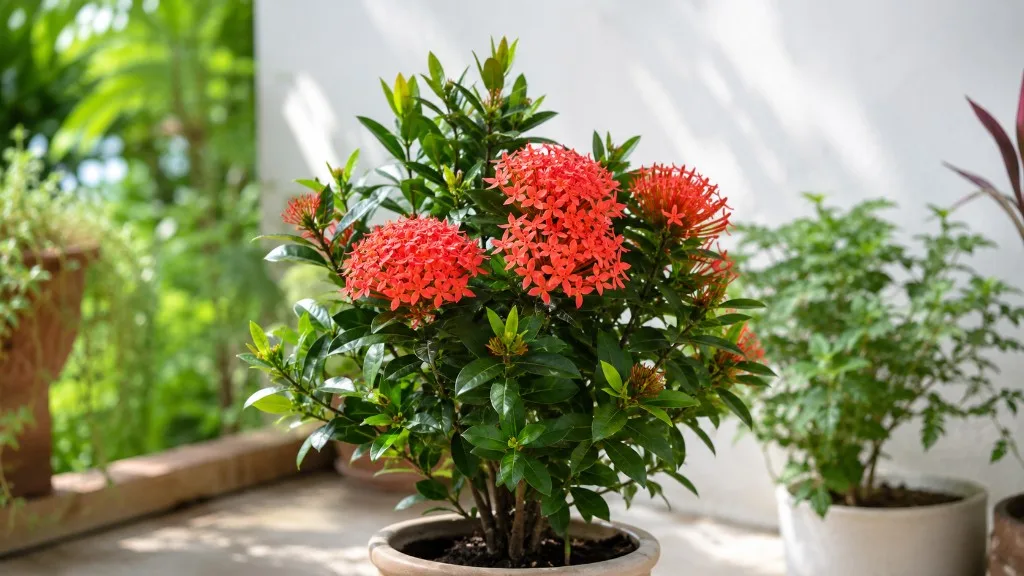
Ixora (Ixora coccinea and related hybrids), sold as Flame of the Woods or Jungle Flame, carries its flower clusters at stem tips. UF/IFAS notes that repeated shearing of those tips removes emerging buds and cuts bloom count even when the plant stays green. After a flush fades, deadhead spent clusters with a shallow snip. Save major shaping for early spring as new growth starts, cut just above outward-facing nodes, and remove no more than about one-third of live foliage in one session.
What Pruning Does for Ixora
Left unchecked, ixora develops a rounded mound of glossy evergreen leaves with color concentrated at the outer rim. Leggy extension toward the brightest window or sunniest bed edge is common indoors and in partial shade. Pruning redirects vigor into lateral shoots that can become the next flowering terminals - but only if you preserve enough bud-bearing wood and time the work to active growth.
The job splits into three rhythms that should not be confused. Sanitation - removing dead, pest-heavy, or cold-damaged wood - is allowed whenever you spot it. Post-flush grooming after clusters fade means deadheading and one or two corrective cuts on obvious problem stems. Annual structural shaping in early spring sets size, opens congested centers, and addresses leggy framework before the warm-season bloom cycle accelerates.
Pruning cannot substitute for Ixora light guide, acidic well-drained mix, or correction of iron chlorosis from high pH. A chlorotic ixora trimmed aggressively often stays pale and flower-poor because the physiology behind bud formation still fails. Fix light and soil chemistry first; use pruning to allocate existing vigor, not to force a sick plant to perform.
Terminal Clusters and Where Next Buds Form
Ixora flowers in dense terminal heads - dozens of small four-petaled blooms grouped at branch ends. Individual clusters can persist six to eight weeks under good conditions according to UF/IFAS Gardening Solutions, and healthy plants in frost-free climates often flower repeatedly through the warm season. The plant begins preparing its next flush shortly after the current one finishes, which is why heavy tip work immediately post-bloom feels harmless yet creates a long flower gap.
Each cluster arises from tissue at or near the apical meristem. Hedge shears that level many tips at once delete that bud zone across the canopy in seconds. Selective hand cuts preserve neighboring terminals while correcting one leggy wand or a crossing interior branch. Deadheading removes only the spent inflorescence and brown edge tissue; shaping shortens the stem to a lower node and changes architecture - two different decisions with different bloom consequences.
When to Prune Ixora
Timing on ixora is less about a single calendar date and more about matching cut severity to growth stage. Light work tracks flowering; heavy work tracks spring extension.
Light Grooming After Each Flowering Flush
When most clusters on a branch have turned dull and brown at the edges, you are in the post-flush window. This is the right moment to deadhead, snip one or two leggy extensions, and remove any stems scraped by moving pots or coated in sooty mold from sap feeders. It is the wrong moment to remove a third of the canopy or rejuvenate half the plant unless you accept a prolonged bloom pause.
If partially open clusters still sit beside faded ones, deadhead only the finished heads and defer live-wood shortening until you can see which tips will flower next. Impatience here costs blooms.
Major Shaping in Early Spring
Structural pruning - correcting size, reopening a congested center, or addressing a shrub that has outgrown its space - belongs in early spring as new growth begins. UF/IFAS Extension recommends keeping major shaping to this window and limiting full shaping events to about one annual session, because repeated pruning events strip successive rounds of flower buds.
In USDA zones 10a–11b where ixora grows outdoors year-round, that window often aligns with late winter through early spring. For container ixora overwintered indoors, translate the signal to consistent new bronze-tipped leaf pairs and faster pot drying - not a random mid-winter day when the plant sits semi-dormant on a cool windowsill.
When Not to Prune
Hold off on shortening live green stems when the plant is cold-stressed, drought-stressed, recently repotted, or showing widespread iron chlorosis (yellowing with green veins on new growth). Ixora injured by frost needs time to declare which tips are dead before you interpret dieback as a shaping opportunity. Likewise, do not stack heavy pruning on top of root saturation or a fresh move to a new room.
Dead or clearly broken material is the exception - remove it whenever you find it. That is sanitation, not the structural pruning that resets bloom timing.
What to Check Before You Cut
Walk the plant in bright light before opening the blades. Rotate the pot or circle an in-ground shrub so you are not guessing node positions from one angle.
Check overall vigor first. Press the top few centimetres of mix - waterlogged roots make post-prune recovery risky. Scan leaves for interveinal yellowing, purplish spotting (possible nutrient imbalance on alkaline mixes per UF/IFAS nutrient guidance), sticky honeydew, or sooty mold. If pests or severe chlorosis are active, treat those stressors before removing a third of the foliage.
Gather bypass hand pruners that slice without crushing stems, plus sharp snips for delicate cluster removal. Keep 70% isopropyl alcohol and a cloth nearby. Dull blades and kitchen scissors are the most common reason home cuts look fine for a day then blacken at the tip. The ASPCA lists Ixora coccinea (Flame of the Woods) as non-toxic to cats and dogs - still keep trimmings off floors where pets chew plants, because any plant material can cause mild stomach upset in large amounts.
The First Cut to Make
Start with dead, damaged, or diseased wood only. Trace each suspect stem until a thin scratch on barked sections reveals green cambium, or until the cross-section on green wood shows moist, clean tissue. Cut back to that point, just above a healthy node or where the branch meets another stem.
Clearing this material first reveals the live framework so you can judge deadheading depth and shaping needs without hiding problems inside a glossy shell. Do not jump straight to shortening leggy live branches until the sanitation pass is complete - otherwise you risk cutting around stems that should have been removed entirely.
Deadheading vs Shaping Cuts After Flowering
Deadheading improves appearance and redirects energy away from seed development on spent clusters. Snip or pinch below the faded head, removing only the inflorescence and any immediately brown tissue - not half the branch “to neaten it.”
Shaping cuts shorten entire stems to change height, width, or density. Use them after deadheading, when you have stepped back and identified specific problems: one long wand breaking the dome, two branches crossing in the center, or leggy extension on the side facing away from light. Each shaping cut lands just above a node with a bud pointing outward so the plant opens rather than tightens inward.
After a flush, limit yourself to deadheading plus one or two shaping cuts on an otherwise healthy plant. Ten simultaneous shortenings behave like an unplanned hard prune and delay the next color wave even though the plant stays green.
Where to Cut: Nodes, Angles, and Outward Buds
Ixora branches from nodes - the points where leaves attach - not from bare internodes. A cut mid-stem with no bud waiting produces a stub that dies back or a naked section with no side shoots.
When shortening a stem, follow it to a strong lower node. Position blades about 5–10 mm above the node - not flush against it, not half an inch above leaving a long stub - and cut at a slight angle so water runs off the face. Choose nodes whose buds face outward to keep the interior open. On multi-branched specimens, vary cut heights slightly so the profile stays natural rather than sphere-perfect unless you accept reduced bloom frequency.
Avoid cutting bare internodes with no visible bud. Avoid leaving long dead tips above nodes - they invite dieback and rot entry on slow-healing tropical wood.
Step-by-Step Ixora Pruning
When a flowering flush has mostly finished and the plant is healthy, work in this order:
- Sterilize tools and set the plant where you can access all sides.
- Remove dead, damaged, and diseased wood back to healthy tissue.
- Deadhead spent clusters with snips, leaving living stem below unless tissue is clearly brown and brittle.
- Identify at most one-third of live growth that could go without leaving the plant skeletal - typically leggy extensions, backward-facing shoots, or duplicate leaders.
- Shorten those stems individually above outward nodes, stepping back every few cuts to check the silhouette.
- Thin the interior lightly if airflow is poor - one crossing branch, not five, unless you are formally rejuvenating in early spring.
- Brush off clippings, wipe sap from blades, and water only if the mix was already approaching dry.
Label mentally what you did: sanitation, deadheading, or structural shaping. If structural shaping touched more than a few stems, delay heavy fertilizer for two to three weeks and keep light steady so new shoots harden normally.
How Much You Can Safely Remove
A widely applied guideline - supported by UF/IFAS landscape pruning guidance - is to remove no more than about one-third of the canopy in a single session. For ixora, interpret “canopy” as green leaf-bearing stem volume, not height alone.
For minor post-flush grooming, staying under 10–15% removal preserves bloom continuity: deadhead, one or two leggy stems, maybe one crossing branch. For annual early-spring shaping on a vigorous specimen, work up toward 25–30% if light is strong and the plant is not otherwise stressed. For rejuvenation of a neglected plant, use staged cuts - one-third now, reassess in three to four weeks, another third only if new shoots are obvious - rather than a single hard chop.
Container plants and dwarf cultivars tolerate less total removal than vigorous in-ground ‘Nora Grant’ plantings. You can always prune again next month in active season; you cannot reattach removed buds.
Container Ixora vs Landscape Hedges
Container ixora - common in conservatories, sunny rooms, and patio pots - needs gentler total volume removed per year than a landscape hedge. Restricted root space slows recovery; a pot specimen cut back by half may take two growing seasons to look full again. Shape by removing the longest one or two stems per session, maintaining a rounded dome rather than a flat tabletop silhouette. Rotate the pot monthly so pruning is not constantly correcting one-sided stretch toward glass.
Landscape hedges tempt owners into power shears and flat planes because ixora tolerates shearing mechanically - but UF/IFAS Gardening Solutions warns that constant shearing reduces flower display. If formal lines are non-negotiable, choose dwarf cultivars sized for the bed width and accept fewer flowers, or replace one shear pass per year with hand thinning that opens three to five spots in the canopy.
Large-leaf types like ‘Nora Grant’ (8–12 feet at maturity) are a poor fit for 3-foot foundation hedges; repeated hard containment produces thin, leggy bases over time. Match cultivar to space up front and you prune less later. Dwarf orange, pink, red, and yellow ixora suit clipped hedges near walkways; tall ‘Maui’ or ‘Super King’ types belong as specimens or screens where their scale does not require constant fight-back pruning.
Pinching and Selective Thinning for Fuller Plants
Pinching applies to soft new extension growth - the bronze-tinged tips ixora pushes in warm weather. When tips are still pliable, remove the top few millimetres with fingers or snips to break apical dominance and encourage two side shoots from upper nodes. This densifies young plants without the bloom penalty of cutting back woody stems that already carried buds. Stop pinching six to eight weeks before you want peak bloom if you are timing a display.
Selective thinning removes whole selected stems at their point of origin or shortens them back to a side branch. Use it when the plant is mature and congested - interior leaves sparse, exterior shell thick, flowers only at the outer rim. Remove one stem at a time, starting with oldest, least productive woody shoots low in the canopy. Thinning improves light to inner nodes, which can create new flowering wood over the next season even though it temporarily reduces total bud count.
Do not combine heavy thinning, hard rejuvenation, and immediate fertilizing in the same week. Pick one controlled stressor and let the plant answer first.
Rejuvenating Leggy or Overgrown Ixora
Overgrown ixora shows long bare lower stems, flowers only at the top, and a woody open center - often the legacy of years of tip shearing or a large cultivar planted in too small a space. True rejuvenation renews flowering wood from lower nodes but requires accepting a temporary bloom gap and multiple seasons on slow-growing specimens.
Schedule rejuvenation for early spring as new growth starts. Remove all dead wood and any stems with persistent pest or disease issues. Shorten the longest third of branches to well-chosen outward nodes, not uniform-height stubs. On severely leggy plants, lower some stems by half their length over two sessions rather than one.
Avoid the landscape “hard cut” practice of stripping all leaves to knee height unless you treat ixora as a recovery project, not a blooming shrub that season. Such cuts on mis-sized hedges produce thin ugly bases and long declines. After rejuvenation, do not shear new shoots as they elongate; let them extend, harden slightly, then pinch lightly if density is needed.
Aftercare and Recovery Timeline
Post-prune care is about stability, not stimulation. Keep light consistent with what the plant had before - sudden moves to hotter sun burn tender new tips, while deep shade produces weak etiolated shoots unlikely to bloom. Water on the same moisture rhythm the plant already preferred: evenly moist, well-drained acidic mix, not soggy recovery soaks.
Watch for new shoots from nodes below cuts within two to four weeks in warm active growth; slower in cool indoor conditions. Light pinching of overly long fresh shoots can balance shape once they carry four to six new leaf pairs. Resume normal feeding when growth is obvious and leaves appear evenly green, not mottled with interveinal yellowing.
After deadheading only, expect the next clusters sooner than after major shaping - sometimes within the same season on well-fed, full-sun plants. After heavy shaping, rebloom may wait until the next major warm-season wave, which is normal.
Signs pruning worked: fresh lateral shoots below cuts, tighter natural dome, improved airflow through the center, and new terminal clusters forming on preserved or newly trained tips.
Signs pruning was too much or poorly timed: no new growth after four to six weeks in spring, blackening cut tips from dull tools or stub cuts, widespread yellowing pointing to soil pH rather than technique, or a plant that stays leafy but flowerless for months after repeated shearing.
Mistakes That Reduce Flowers
The most expensive mistake is treating ixora like boxwood: scheduling frequent shear passes to maintain crisp geometry. Each pass removes precisely the tissue that carries buds. The second mistake is over-removal in one session beyond the one-third guideline because the plant “looked messy.” Ixora recovers slowly from shock, especially in pots, and may sit leafy but bloomless while rebuilding reserves.
Timing mistakes rank high too: major shaping in late fall or winter on outdoor plantings, or on indoor plants in dim cool rooms, yields slow or absent back-budding. Stub cuts and internode cuts produce dieback and bare patches. Pruning chlorotic or recently repotted plants removes foliage still needed for recovery. Using unclean tools on multiple shrubs can spread fungal leaf spots. Assuming deadheading depth should match rose deadheading - ixora needs a shallower snip.
If you inherited a sheared, flowerless hedge, plan one spring thinning and months of patience rather than another hard cut.
Conclusion
Ixora rewards a patient, bloom-aware pruning style more than a frequent shear habit. After each flowering flush, deadhead spent clusters, remove dead or damaged wood anytime, and save major shaping for early spring when new growth is underway - limiting live removal to about one-third per session and cutting just above outward-facing nodes with clean bypass tools.
When flowers matter, replace tip shearing with selective thinning and deadheading. When formal hedges matter, choose dwarf ixora and accept fewer blooms. Fix soil acidity and light before you try to prune your way out of decline, and give slow-growing potted specimens time between sessions. Pruned with that mindset, ixora returns with fresh lateral shoots and cluster color that justifies the restraint.
When to use this page vs other Ixora guides
- Ixora overview - Start here for whole-plant context before deep-diving this topic.
- Ixora problems hub - Jump to symptom-specific fix guides when this care topic does not resolve the issue.
- Leggy Growth on Ixora - Escalate here when pruning adjustments are not enough.
- Slow Growth on Ixora - Escalate here when pruning adjustments are not enough.
- Brown Tips on Ixora - Escalate here when pruning adjustments are not enough.