Leaf Drop on Ixora: Causes, Checks & Fixes
Quick answer
Leaf drop on Ixora usually follows cold nights below about 15°C, a sudden patio-to-indoor move, wet soil in a cool dim room, or iron chlorosis from alkaline water. First step: log last night's temperature near the pot, lift the pot to compare wet vs dry weight, and move the shrub to a stable spot above 15°C away from AC vents-then reduce watering if the mix stays wet after an indoor move.
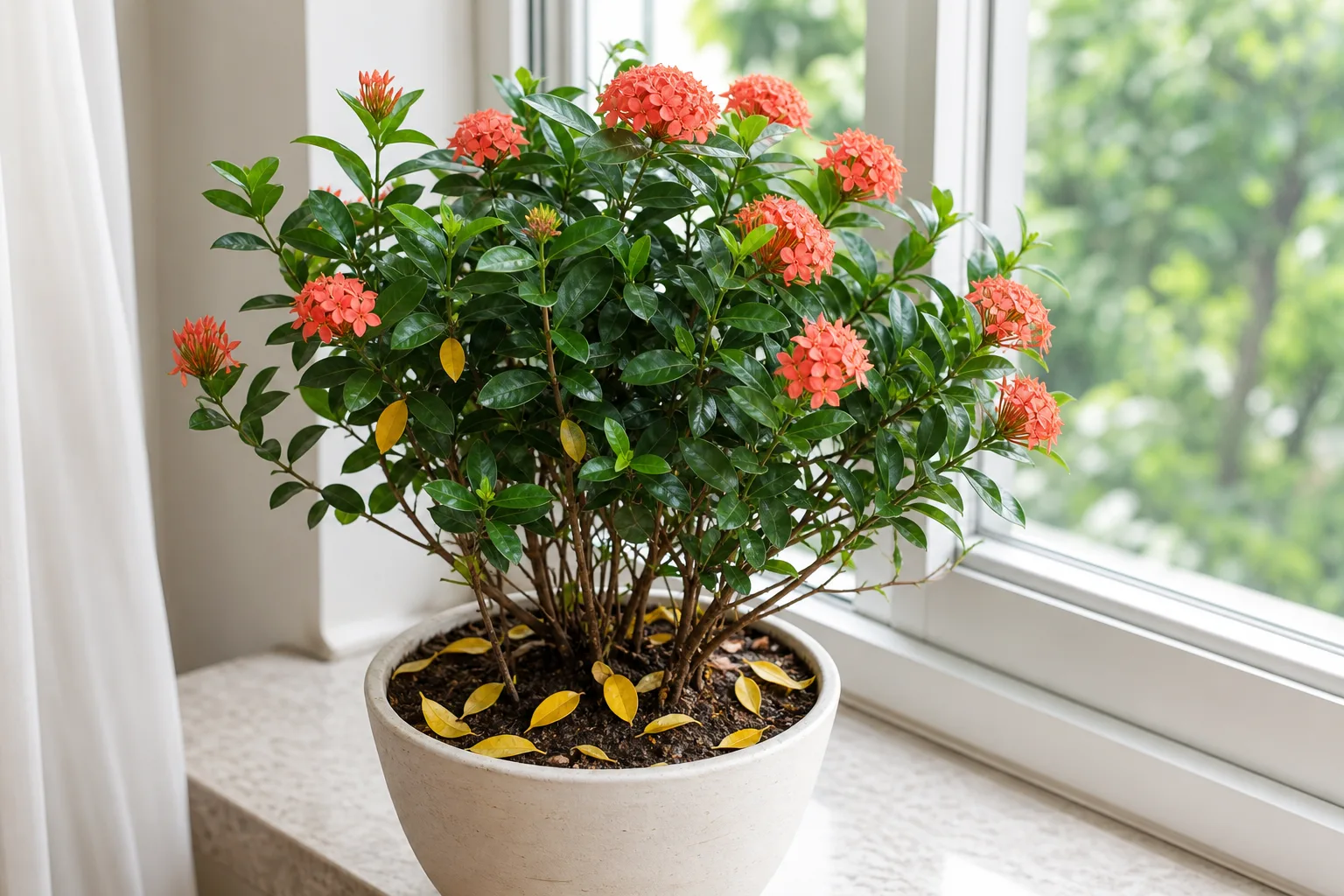
Leaf Drop on Ixora: Causes, Checks & Fixes
This guide covers leaf drop on Ixora. See also the general Leaf Drop guide, watering, and light pages for this plant.
Leaf Drop on Ixora: Causes, Checks & Fixes
Quick answer
Ixora coccinea - flame of the woods, jungle flame - is a frost-sensitive tropical shrub that drops foliage fast when nights fall toward 15°C (60°F), when a patio pot moves indoors into cooler air and lower light, or when wet acidic mix sits cold near a window or air-conditioning vent. Less often, iron chlorosis from alkaline tap water yellows new leaves until they fall, and drought or overwatering on Ixora in dim winter rooms produce their own shed patterns.
First step: check what changed in the last seven days. Log the lowest overnight temperature within one metre of the pot, lift the container to feel wet-heavy versus light-dry, and scan newest leaves for yellow between green veins. Move the shrub to a stable location above about 15°C, away from cold glass and AC drafts, in the brightest spot you can offer - then adjust water to the new dry-down rate. Do not repot, fertilize, or soak a wet pot on day one.
What leaf drop looks like on Ixora
Leaf loss on ixora ranges from a few lower leaves to a mass shed within days. Read how leaves fall, which leaves go first, and what the soil and buds are doing before you treat.
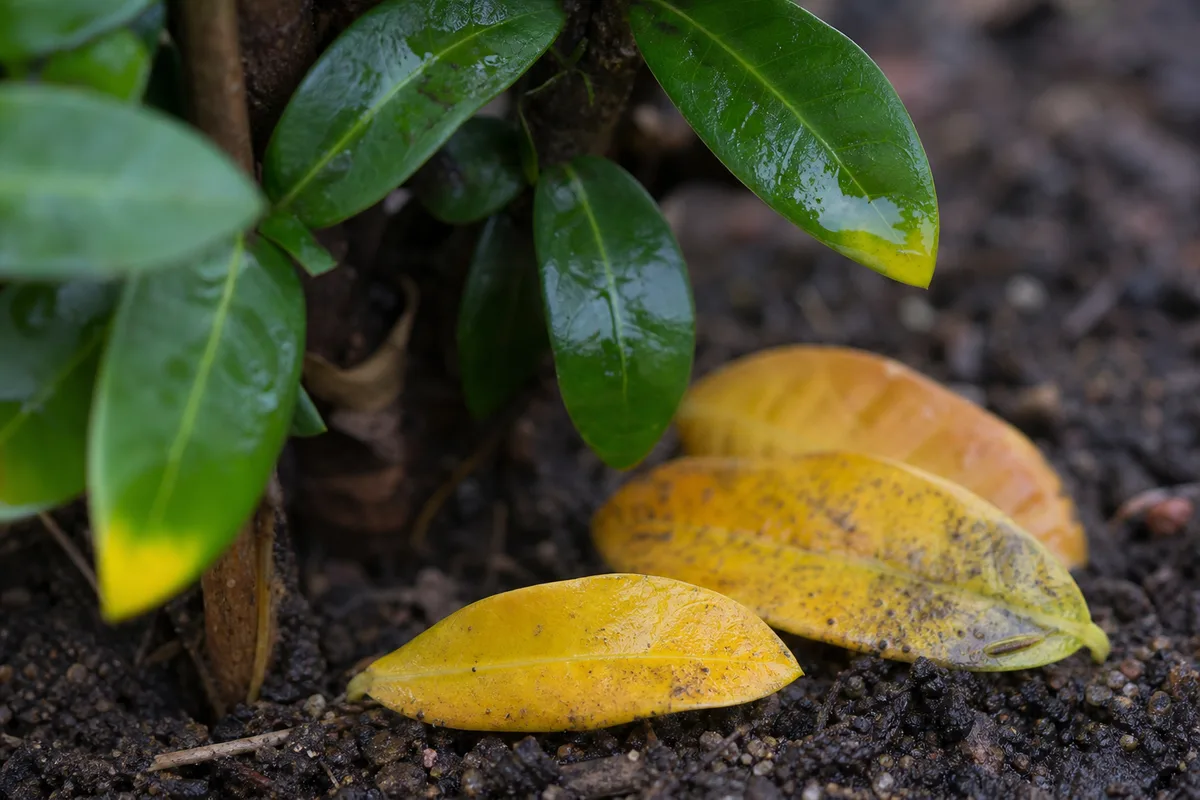
Leaf Drop symptoms on Ixora - compare with healthy tissue on the same plant.
Normal lower-leaf aging on woody stems
Mature ixora develops woody stems with glossy evergreen foliage clustered toward the tips. One or two older lower leaves turning yellow and dropping on an otherwise firm, blooming plant is often normal senescence, not crisis. The pot weight stays moderate, new tips stay green, and flower clusters may still form at branch ends. UF/IFAS notes ixora is a year-round flowering shrub under ideal conditions - occasional lower-leaf loss on an established frame does not stop that cycle.
Cold and draft stress
The classic chill pattern is many green or slightly dull leaves falling within days after a cold night, an open window, or placement under an air-conditioning vent. NC State Extension warns that ixora does not tolerate temperatures below 50°F (10°C) and may die back in cooler zones. In containers, suffering often begins toward 60°F (15°C) before clear injury appears near 50°F (10°C). Leaves may drop still green because the plant aborts foliage faster than it can yellow. Flower buds shrink and drop at the same time - buds are sacrificed before older leaves in many stress events.
Wet soil plus chill in cool indoor rooms
A heavy, wet pot in a cool dim room after summer patio culture is a particularly fast path to sudden leaf drop on ixora. Roots need oxygen; cold stagnant mix suffocates fine roots while the canopy still looks fine for a few days - then mass yellowing and drop follows. Soil smells musty or stays clinging wet at depth more than three days after watering. This pattern overlaps with overwatering but the trigger is often continuing a summer Ixora watering guide indoors when light and temperature dropped.
Iron chlorosis before drop
Ixora is strongly acid-preferring. UF/IFAS notes that ixora in alkaline conditions shows chlorotic new growth from iron and manganese deficiencies, with purplish spots on older leaves when potassium and phosphorus are also low. On containers, yellow new leaves with green veins may curl and drop while stems stay firm and soil moisture looks normal. Hard tap water and limestone leaching are common triggers - the shed masquerades as environmental stress until you read the vein pattern on the newest leaves.
Light shock after patio-to-indoor move
When a bright patio pot comes indoors for autumn, transitional leaf drop is common even if the new room feels warm. Light intensity drops sharply away from glass, growth slows, and the plant sheds leaves it cannot support at the new energy budget. Missouri Botanical Garden recommends overwintering container ixora indoors in bright sunny locations where outdoor culture is not hardy. Shedding paired with leggy new stretch toward the window points to light shock; shedding with wet soil and no stretch points to overwatering in the dimmer room.
Drought stress
Pure drought drop is less common than chill or wet-soil failure on ixora, but it happens when a sunny pot goes dry too long. Expect limp leaves, a very light pot, and dry mix pulled from the pot wall before leaves crisp and fall. Bud clusters abort early - often before mass leaf drop - because ixora sacrifices flowers first when water is scarce.
Why Ixora gets leaf drop
Ixora evolved as a woody evergreen shrub in humid tropical lowlands of southern India and Sri Lanka, where warm nights, acidic soil, and bright days stay consistent. It is not built for the temperature swings, dry winter air, and light cliffs of temperate indoor culture.
Cold sensitivity drives most container failures. NC State lists ixora as hardy only in USDA zones 10a through 11b outdoors and notes it does not tolerate sustained temperatures below 50°F (10°C). The CABI compendium on Ixora coccinea records leaf and small twig damage below about 39°F (4°C) - a threshold you may hit on an unheated porch long before the plant looks “frozen.” Indoors, 60°F (15°C) nights near cold glass or HVAC outlets produce the same physiology at slower speed: abscission hormones trigger, buds abort, and green leaves fall.
Watering rhythm must track light and temperature together. Ixora wants moist but well-drained acidic soil - never bone dry for weeks, never stagnant for days. When a patio plant moves inside, transpiration drops while owners often maintain summer watering. Cold wet roots plus shedding leaves is a feedback loop that looks like “the plant is unhappy so it needs more care” when it needs less water and more warmth.
Calcifuge physiology adds a third branch. As soil pH rises above about 6.0 - above the acid soil range ixora prefers - iron lockout yellows new tissue; stressed chlorotic leaves drop because the plant cannot maintain them. Alkaline irrigation water makes this worse over months even when temperature and light are acceptable.
Finally, ixora is a sun-loving flowering shrub, not a low-light foliage plant. Full sun is necessary for maximum flower production per UF/IFAS. A dim overwintering room keeps the plant alive but forces leaf shedding as the plant rebalances to lower photosynthate income - especially if you simultaneously overwater.
How to confirm the cause
Work through these checks in order. Stop when one pattern clearly dominates.
- Night-low temperature log - Place a thermometer near the pot for three nights. Lows below about 15°C with green leaf fall implicate chill or drafts. Exposure below about 10°C is serious injury territory on Ixora overview.
- Vent and window scan - Cold air from AC, heat-pump outlets, or single-pane glass at night can chill foliage while the room thermostat reads warm.
- Pot weight and moisture at 3 cm - Lift the pot. Heavy and wet with yellowing lower leaves in a cool room suggests overwatering plus chill. Light and dry with limp leaves suggests drought. Moderate weight, firm stems, recent move suggests transitional light shock.
- New-leaf vein pattern - Yellow between green veins on the newest leaves points to iron chlorosis, not temperature alone.
- Recent move timeline - Patio to indoors in the last two to four weeks? Shedding without soggy soil fits light shock and seasonal transition; reduce water and maximize brightness.
- Bud and flower status - Shrunken bud clusters alongside leaf fall confirm active stress; the plant is cutting reproductive load first.
- Stem firmness at the base - Firm wood supports environmental or light causes. Soft, darkening stems with sour wet soil suggest root decline - a different urgency level.
Lookalike quick reference
| Pattern | Soil | Temperature / placement | Leaf appearance | Leading cause |
|---|---|---|---|---|
| Mass green-leaf drop after cold night | Often moderate | Below ~15°C or AC draft | Green or dull leaves, bud loss | Chill / draft |
| Yellow lower leaves, wet pot, cool room | Wet at depth | Indoors, dim, cool | Uniform yellow, no green veins | Overwatering + low light |
| New leaves yellow, green veins | Moist, normal weight | Any | Interveinal yellow on newest leaves | Iron chlorosis |
| Drop after patio move | Moderate, not soggy | Warm room, dim vs outdoors | Mixed green and yellow, lean to window | Light shock |
| Crisp edges, light pot | Dry 3 cm down | Warm, sunny | Limp then crisp | Drought |
| One to two lower leaves only | Normal | Stable | Single yellow old leaf | Normal aging |
First fix for Ixora
Move the pot to a stable warm, bright location - then match water to the new conditions. Make this one change and wait.
Choose a spot where nights stay above about 15°C (60°F), away from AC vents and cold window glass, with as much direct sun as your indoor space allows - ideally four to six hours or the brightest unobstructed window. NC State recommends full sun with moist, well-drained, acidic soil for healthy ixora culture; overwintering indoors still means maximum brightness, not a hallway shelf.
If the plant just came indoors or soil stays wet and heavy, skip the next scheduled watering until the top 3 cm dries. A shedding ixora in lower light uses less water - continuing a summer schedule causes the wet-soil-plus-chill spiral. If the pot is light and dry, water thoroughly with room-temperature rainwater or filtered water, then drain completely.
Do not fertilize, repot, or prune heavily on the same day as the move. One environmental correction lets you read the plant’s response over the next fourteen days.
Step-by-step recovery
After the first placement and watering adjustment:
- Hold location stable for fourteen days - Repeated moves reset acclimation and extend shedding.
- Log nightly lows - Confirm the new spot actually stays above the 15°C planning line.
- Adjust humidity if air is below ~40% - A pebble tray or humidifier reduces further desiccation stress while roots recover; misting alone is optional, not sufficient.
- Correct chlorosis if veins stay green on yellow new leaves - Switch to rainwater or filtered water and confirm ericaceous mix; iron supplements come after pH and water quality, not before.
- Remove only fully brown or mushy leaves - Green leaves still attached may re-turgid; dropped leaves will not reattach.
- Resume modest watering rhythm - Check top 3 cm twice weekly until dry-down rate is predictable in the new room.
Hold fertilizer until new tips look glossy and firm for two weeks. Feeding cold, wet, shedding roots adds salt stress without fixing the trigger.
Recovery timeline
Transitional shed after a patio move or placement fix: Expect some continued leaf drop for one to two weeks even when the new site is better - the plant is shedding leaves built for the old environment. Judge success by stopped acceleration, not zero fallen leaves on day three.
New growth is the metric. Look for fresh glossy leaves at branch tips and new bud clusters within three to six weeks during warm active growth once temperature, light, and moisture align. Late-winter corrections may stall until longer days return.
Cold injury below about 10°C: Recovery takes four to eight weeks or longer if stems stay firm. Twigs damaged below about 4°C may die back to woody tissue; wait for new breaks before pruning hard.
Worsening signs: Daily accelerating drop after twenty-one days of stable warm placement, soft stems, or sour wet soil - inspect roots for rot and review the overwatering path rather than adding water or fertilizer.
Lookalike symptoms
- Iron chlorosis - Yellow new leaves with green veins, often with hard tap water or alkaline crust on the pot rim. Fix water and acidic mix; warmth alone will not restore green new growth.
- Insufficient light - Leggy stretch toward the window, sparse blooms, but gradual lower-leaf loss rather than sudden mass chill shed. Fix brightness with direct sun or grow light; see the not-enough-light guide for placement detail.
- underwatering on Ixora - Very light pot, dry mix, limp leaves in warm sun. Rehydrate from the bottom; do not confuse with wet-soil leaf drop.
- Overwatering / root rot on Ixora - Yellowing with wet soil, soft stem base, fungus gnats. Dry appropriately and inspect roots; more water accelerates collapse.
- Spider mites in dry winter air - Stippled leaves with fine webbing; soil moisture may look normal. Rinse and treat pests; humidity helps prevention.
What not to do
Do not increase watering because the plant “looks sad” if the mix is already wet - that is the classic winter rot path on ixora after an indoor move. Avoid fertilizing or iron drenching before you know whether cold, water, light, or pH is primary; stacked inputs obscure the diagnosis. Do not repot, prune hard, and move on the same weekend during active shedding.
Do not leave ixora on an unheated porch “for one more night” when forecasts approach 50°F (10°C) - NC State’s tolerance threshold is not a goal, it is a damage line. Do not mist heavily onto dense foliage in a cool dim room; wet leaves without airflow invite fungal spotting.
How to prevent leaf drop next time
Plan temperature before décor. When night lows approach 50°F (10°C) outdoors, move container ixora to a heated bright room - UF/IFAS notes frosts or freezes will injure ixora north of its hardiness limit. Indoors, keep pots away from AC vents and cold window glass, and log winter lows near the plant, not across the room.
Match watering to season and light. Reduce frequency when the plant moves indoors or when growth slows; check the top 3 cm instead of following a summer calendar. Use rainwater or filtered water on ericaceous mix to prevent chlorosis-driven drop.
Give enough light for the species. Four to six hours of direct sun or equivalent supplemental light keeps ixora in active growth rather than survival shedding. Bright indirect alone may keep leaves briefly but often fails after a patio summer - place overwintering pots in the brightest available window or add a grow light.
When buying or moving ixora, acclimate over seven to fourteen days rather than one-stepping from full outdoor sun to a dim interior. One deliberate transition beats repeated rescue moves mid-shed.
Conclusion
Leaf drop on Ixora coccinea is rarely a mystery once you read temperature, pot weight, and newest leaf color together. This tropical shrub drops fast when nights chill, when wet cold mix suffocates roots, when alkaline water locks out iron, or when a bright patio pot lands in a dim overwintering room with summer watering still on autopilot. The first fix is not more products - it is stable warmth above about 15°C, corrected water for the new light level, and maximum brightness while you watch for fresh tips and bud clusters to prove recovery. Get those three aligned, and flame of the woods usually rebuilds its glossy frame within weeks rather than months.
When to use this page vs other Ixora guides
- Ixora watering guide - Use for routine moisture checks before assuming leaf drop is the main issue.
- Ixora problems hub - Browse all 18 common issues on this species.
- Yellow Leaves on Ixora - Different entry point when symptoms overlap with leaf drop.
- Drooping Leaves on Ixora - Different entry point when symptoms overlap with leaf drop.
- Root Rot on Ixora - Different entry point when symptoms overlap with leaf drop.