Drooping Leaves on Ixora: Causes, Checks & Fixes
Quick answer
Drooping Ixora leaves usually mean a water mismatch-dry soil or failing roots in wet mix-not random bad luck. First step: weigh the pot and check moisture 3 cm down before adding water.
Drooping Leaves on Ixora: Causes, Checks & Fixes
This guide covers drooping leaves on Ixora. See also the general Drooping Leaves guide, watering, and light pages for this plant.
Drooping Leaves on Ixora: Causes, Checks & Fixes
Quick answer
Drooping leaves on Ixora (Ixora coccinea, Jungle Flame) almost always trace to a water mismatch-dry soil or roots failing in wet mix-not a mystery disease. This woody tropical shrub wants moist but well-drained acidic soil in full sun, so small containers in bright light dry fast while heavy-handed watering suffocates roots in peat-heavy mix.
First step: weigh the pot and check moisture 3 cm down. A light pot with dusty dry mix means drought-bottom-water with rainwater until the root zone rewets, then drain fully. A heavy pot with cool damp soil and dropped buds means root stress-do not add water; see the overwatering guide instead.
Drooping vs. wilting on Ixora
The words overlap in everyday use, but they help you set expectations on this rounded evergreen Rubiaceae shrub.
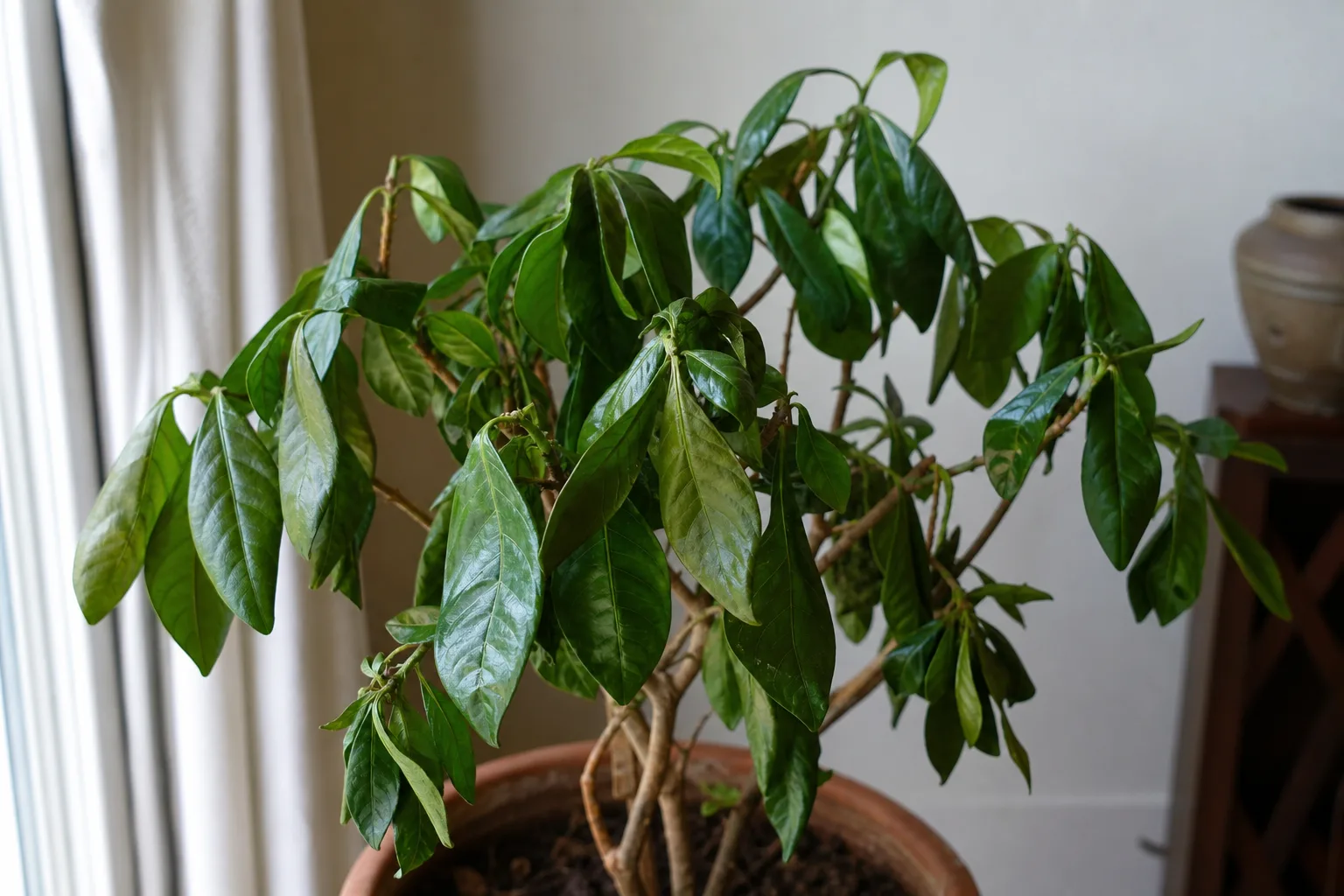
Drooping describes glossy, leathery leaves folding downward along firm woody stems-a gradual loss of lift that may build over days. Stems stay stiff; only foliage loses posture. Color often stays dark green early on.
Wilting fits faster collapse: limp leaves after a missed drink in summer heat, a cold draft below about 10°C (50°F), or sudden relocation to harsh sun. The same moisture check applies, but timing is more urgent when the whole shrub slumps in one afternoon.
If droop is partial and stems are firm, start here. If the plant collapsed acutely after heat or relocation, also read wilting on Ixora for escalation steps. Both pages share the central rule: never water without confirming wet vs dry at depth.
What drooping looks like on Ixora
Healthy Ixora leaves are glossy, leathery, and opposite on woody stems, usually 10–15 cm long. Drooping changes the silhouette before full yellowing:
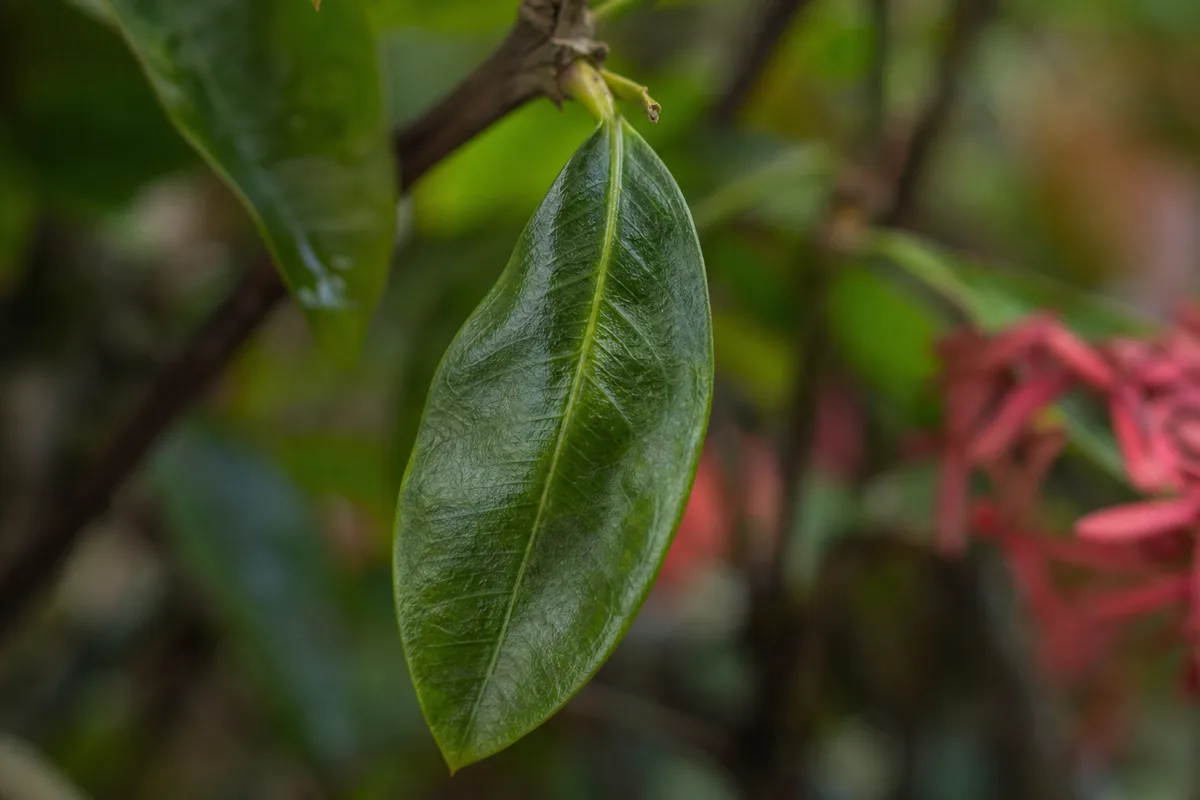
Drooping Leaves symptoms on Ixora - compare with healthy tissue on the same plant.
- Leaf blades hang downward or fold softly instead of presenting their waxy surface outward
- Stems remain firm at the base-unlike advanced rot, early droop rarely softens the woody framework
- Flower buds may abort-shrunken or dropped cyme clusters while foliage still looks mostly green
- Color can stay green in early drought; yellow lower leaves on wet soil point to root failure instead
- Whole-shrub droop suggests a root-zone or environmental issue affecting the entire pot
- One-sided droop beside a heating vent, AC outlet, or sun-scorched window often means localized airflow or heat stress, not systemic disease
Compare with iron chlorosis: interveinal yellowing on new leaves with green veins while soil is moist is a pH problem masquerading as wilt-not fixed by more water.
Dry-pot droop, wet-mix droop, chlorosis lookalike, and heat-stress droop
| Pattern | Pot weight | Soil 3 cm down | Leaf color | Buds | First direction |
|---|---|---|---|---|---|
| Dry-pot drought | Very light | Dusty, crumbly dry | Green, limp glossy leaves | May drop if drought was prolonged | Bottom-water |
| Wet-mix root stress | Heavy | Cool, clinging damp | Yellow lower leaves common | Dropped buds on wet soil | Stop watering; inspect roots |
| Iron chlorosis | Normal | Moist; white rim crust possible | Yellow new leaves, green veins | Bud death on chronic stress | Rainwater, acid pH correction |
| Heat / draft | Normal to light | Moisture may be fine | Limp leaves on exposed side only | Buds may abort in dry blast | Move away from vent; stabilize |
Why Ixora leaves droop
Ixora evolved in humid tropical Asia and is grown in moist, acidic, organically rich, well-drained loams in full sun. That combination means high transpiration in bright light with a root zone that should cycle between thorough drinks and a partial surface dry-down-not bone-dry desiccation or stale soggy peat.
Moisture-loving calcifuge biology and full-sun transpiration
NC State Extension lists Ixora cultural requirements as acid soil below pH 6.0 with good drainage and moist available space in full sun. A container in a sunny window can dry the top 3 cm in one to two days during active growth while owners trained to “not overwater” let the whole root ball desiccate. Conversely, fear of drought leads to watering on calendar-even when the mix is still damp-suffocating fine roots in acidic peat.
Hard alkaline tap water gradually raises soil pH; chlorosis develops in alkaline soils and chlorotic plants use water inefficiently, looking wilted even when you water on schedule.
The wilt-on-wet-soil paradox
The most dangerous Ixora pattern: limp glossy foliage with cool damp mix and a heavy pot. Wilting with wet soil can indicate rotting roots that cannot absorb water, so the plant droops despite abundant moisture-exactly the situation described in the watering guide FAQ. Watering again accelerates bud drop and root decline. This is not thirst; it is root failure.
Other triggers include repot shock within the last two weeks, cold exposure below about 10°C (50°F) after a patio night, hydrophobic peat that channels water down the pot sides without rewetting the center, and AC or heating vents that pull moisture from leathery leaves faster than roots replace it on one side of the shrub.
How to confirm the cause
Work through these checks in order-each step narrows the diagnosis before you treat:
- Pot weight - Lift the container. A large drop in weight with drooping leaves strongly favors drought. A heavy pot with limp foliage on wet soil favors root failure.
- Moisture at 3 cm depth - Insert a finger or thin skewer. Crumbly, warm, dry mix confirms underwatering. Cool, clinging soil means wait-do not add water.
- Stem firmness at soil line - Firm woody stems with dry soil fit drought. Softening at the stem base with wet soil suggests advancing rot-see root rot.
- Bud status - Dropped or shrunken cyme clusters on wet soil support overwatering; dropped buds on a light dry pot support drought.
- Newest leaf color - Yellow leaves with green veins on new growth while soil is moist points to chlorosis, not water volume alone.
- Recent events - Repot, move to brighter sun, heat spike, or cold night explains temporary droop without root disease.
- Smell and drainage - Sour anaerobic odor from the mix or water pooling in a full saucer supports wet-root stress.
If dry soil and a light pot match your symptoms, treat as underwatering. If wet soil, sour smell, or yellow lower leaves accompany droop, treat as root stress before watering again.
First fix for Ixora
Weigh the pot and check moisture 3 cm down-then act on what you find, not on how limp the leaves look.
- If dry and light: Bottom-water in a tray with room-temperature rainwater or filtered water until the surface darkens and feels cool, then drain fully for 15–30 minutes and empty the saucer. Do not mist leaves; roots need moisture.
- If wet and heavy: Do not add water. Move the pot to brighter airflow to help the mix dry, improve drainage, and plan a root inspection if droop persists beyond 48 hours on damp soil.
This single check prevents the most common Ixora mistake: watering an already-wet drooping plant, which deepens rot while leaves stay limp.
Step-by-step recovery
After the first fix, follow the path that matches your diagnosis:
For underwatered Ixora:
- Bottom-water until the full root ball moistens-not just the surface. Repeat if water ran straight through hydrophobic peat.
- Move out of harsh midday sun until leaves re-turgid; morning sun or bright indirect reduces further water loss while roots catch up.
- Wait 6–24 hours before reassessing. Glossy leaves should regain lift; stems that stay limp may have secondary damage.
- Resume check-based watering per the watering guide-top 3 cm dry-down, not calendar drinks.
For overwatered or root-stressed Ixora:
- Stop watering until the top half of the mix approaches dry-unless stems soften at the base (then unpot immediately).
- Unpot, rinse roots, and trim brown mushy tissue with clean scissors until only firm roots remain.
- Repot into fresh ericaceous mix with perlite in a pot with drainage holes. Hold fertilizer until new growth looks normal for two weeks.
- Withhold the next drink until the upper mix dries slightly-then water lightly and drain fully.
For chlorosis-related droop:
- Switch to rainwater or filtered water and confirm acid-friendly mix.
- Address yellow new growth per the yellow-leaves guide-more water alone will not green interveinal tissue.
- Stabilize moisture without keeping roots waterlogged.
For environmental droop:
- Move away from heating registers, AC blasts, and cold window glass.
- If you recently moved the plant to much harsher direct sun, shift it back slightly and acclimate over a week.
- Raise humidity if edges crisp while soil stays moist-see low humidity.
Recovery timeline
Mild drought droop: Leaves often perk within 6–24 hours after a proper bottom-water if roots are still healthy.
Moderate stress with bud drop: Expect one to three weeks before new cyme clusters form once moisture, light, and pH stay steady.
Wet-soil root stress: Recovery takes several days to weeks after you stop watering a mildly stressed plant; repotted rot cases need two to three weeks before firm new tips confirm success.
Repot or relocation droop: Usually resolves within 3–7 days if you keep care stable and avoid overwatering during adjustment.
Judge recovery by firm new tips and glossy expanding leaves, not by whether every old leaf re-angles perfectly. Leaves that stayed limp for more than a week may not fully recover and can be trimmed once the plant is stable.
Worsening signs: Continued limpness 72 hours after a confirmed rewet, spreading softening at the stem base, or widespread leaf drop with wet soil means root damage-not simple drought.
What not to do
Do not water drooping leaves when the pot is heavy and mix is cool-damp-that worsens rot and bud drop on this acid-loving shrub. Avoid cold tap water on limp tropical foliage. Do not mist instead of watering the soil-roots, not leaf surfaces, restore turgor. Do not fertilize or repot a collapsed plant on day one. Do not assume every droop means thirst without checking soil at depth; the wilt-on-wet-soil trap kills more patio Ixoras than honest drought. Do not drench daily after one dry spell-that swings the plant from drought to waterlogged roots. Do not stack Ixora repotting guide, heavy pruning, and pesticide on the same day-make one care correction at a time so you can read the plant’s response.
How to prevent drooping leaves next time
Build a routine around how fast your pot dries in your light:
- Check the top 3 cm before every drink during active growth; reduce watering in winter but small pots in full sun often need water every 2–3 days in summer.
- Use ericaceous mix with perlite for drainage plus peat or cocopeat for moisture retention-never plain garden soil in a container.
- Prefer rainwater or filtered water to protect acid pH and reduce chlorosis that mimics drought stress.
- Keep the plant in several hours of direct sun with good airflow; Ixora thrives in full sun in moist but well-drained acid soil, not dim “bright indirect” corners that encourage weak, water-stressed growth.
- Empty saucers after watering so roots do not sit in stale water.
- Refresh old peat-heavy mix that has dried out repeatedly and started repelling water.
Weekly pot-weight checks during hot weather catch dry-down before buds drop. For the full seasonal rhythm, see the Ixora overview and watering guide.
When to worry
Escalate beyond basic care correction if:
- Drooping continues more than 48 hours on wet, sour-smelling soil
- The stem base softens while mix stays damp
- Leaves yellow rapidly across the shrub while soil stays cool and wet
- Bud drop accelerates after you watered wet soil a second time “because leaves looked thirsty”
- The whole shrub collapses after weeks of dryness and stems feel brittle
In those cases, unpot and inspect roots. If most tissue is mushy, trim healthy stem tips above firm nodes and root them in fresh mix-the parent may not recover, but the cultivar can be saved. Persistent chlorosis after pH correction may need extension guidance for micronutrient sprays suitable for acid-loving shrubs.
Related ixora problems
- Ixora overview - species biology, light, and soil basics
- Watering guide - moisture checks, seasonal intervals, wilt-on-wet-soil FAQ
- Wilting - acute collapse and urgent triage
- Underwatering - dry-pot recovery and bottom-watering steps
- Overwatering - wet-mix droop and drainage fixes
- Root rot - when soft stems and sour soil mean unpotting
- Yellow leaves - iron chlorosis vs drought yellowing
When to use this page vs other Ixora guides
- Ixora watering guide - Use for routine moisture checks before assuming drooping leaves is the main issue.
- Ixora problems hub - Browse all 18 common issues on this species.
- Underwatering on Ixora - Different entry point when symptoms overlap with drooping leaves.
- Overwatering on Ixora - Different entry point when symptoms overlap with drooping leaves.
- Root Rot on Ixora - Different entry point when symptoms overlap with drooping leaves.