Mealybugs on Ixora: Causes, Checks & Fixes
Quick answer
Mealybugs on Ixora hide in whorled leaf axils and tight flower clusters. First step: move the plant away from others and dab every visible cottony cluster with 70% isopropyl alcohol on a cotton swab before spraying anything.
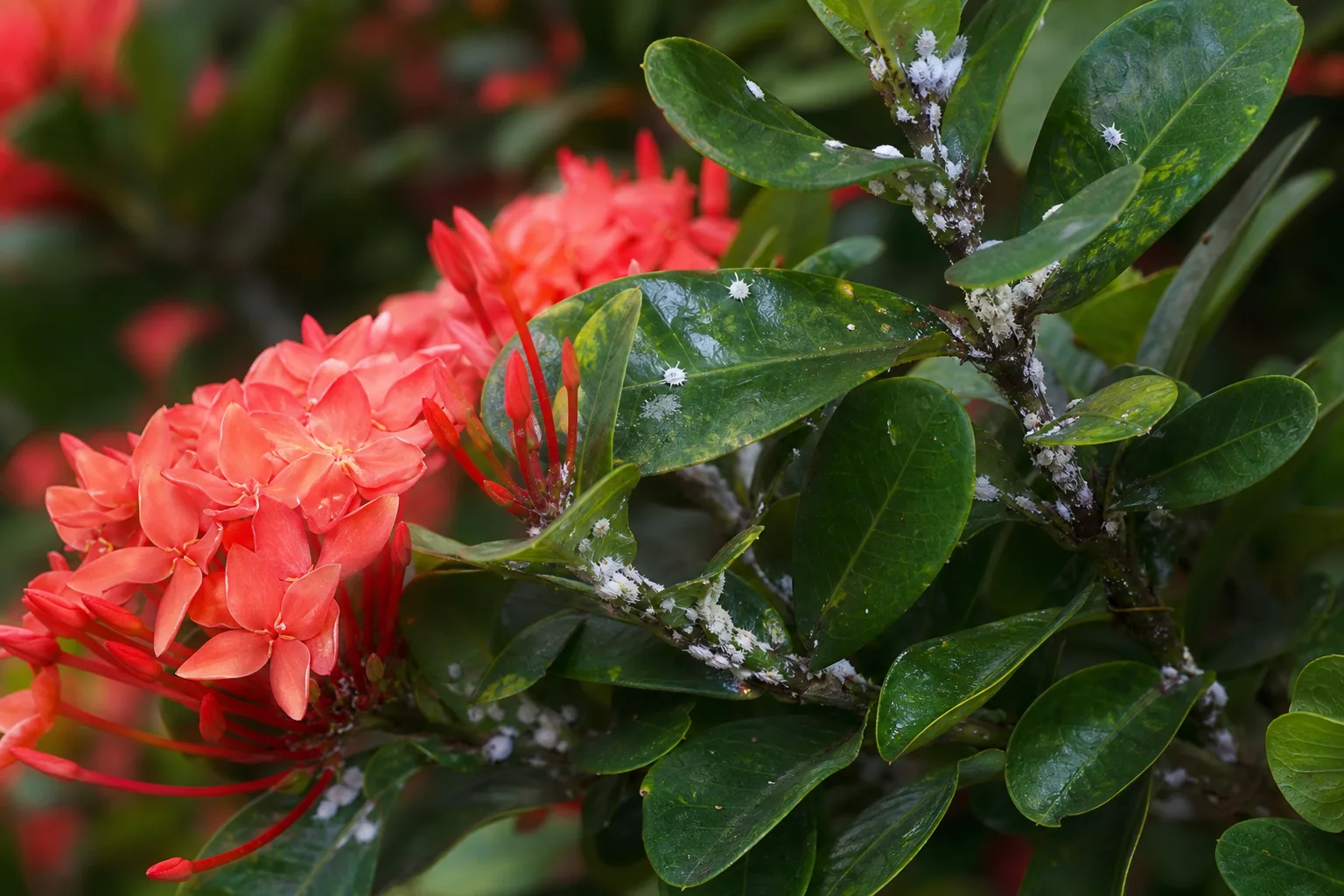
Mealybugs on Ixora: Causes, Checks & Fixes
This guide covers mealybugs on Ixora. See also the general Mealybugs guide, watering, and light pages for this plant.
Mealybugs on Ixora: Causes, Checks & Fixes
Quick answer
Mealybugs on Ixora (Ixora coccinea, Jungle Flame) are sap-sucking insects that settle in the plant’s tightest hiding spots-whorled leaf axils, young shoot tips, and flower clusters. They look like bits of cotton wool, but they move slowly and leave sticky honeydew that can coat glossy leaves and invite sooty mold.
First step: isolate the plant and dab every visible cluster with 70% isopropyl alcohol on a cotton swab. Ixora’s dense, overlapping leaves protect mealybugs from a casual spray, so direct contact kills matter more than misting the room. Repeat weekly for at least three weeks to catch newly hatched crawlers before they lay eggs again.
What mealybugs look like on Ixora
On Ixora, mealybugs usually show up as white, powdery or cottony masses along stems and in the joints where leaves meet the stem. Because Ixora carries leaves in whorls at the tips, colonies often sit inside the crown where you only see them if you spread the foliage apart.
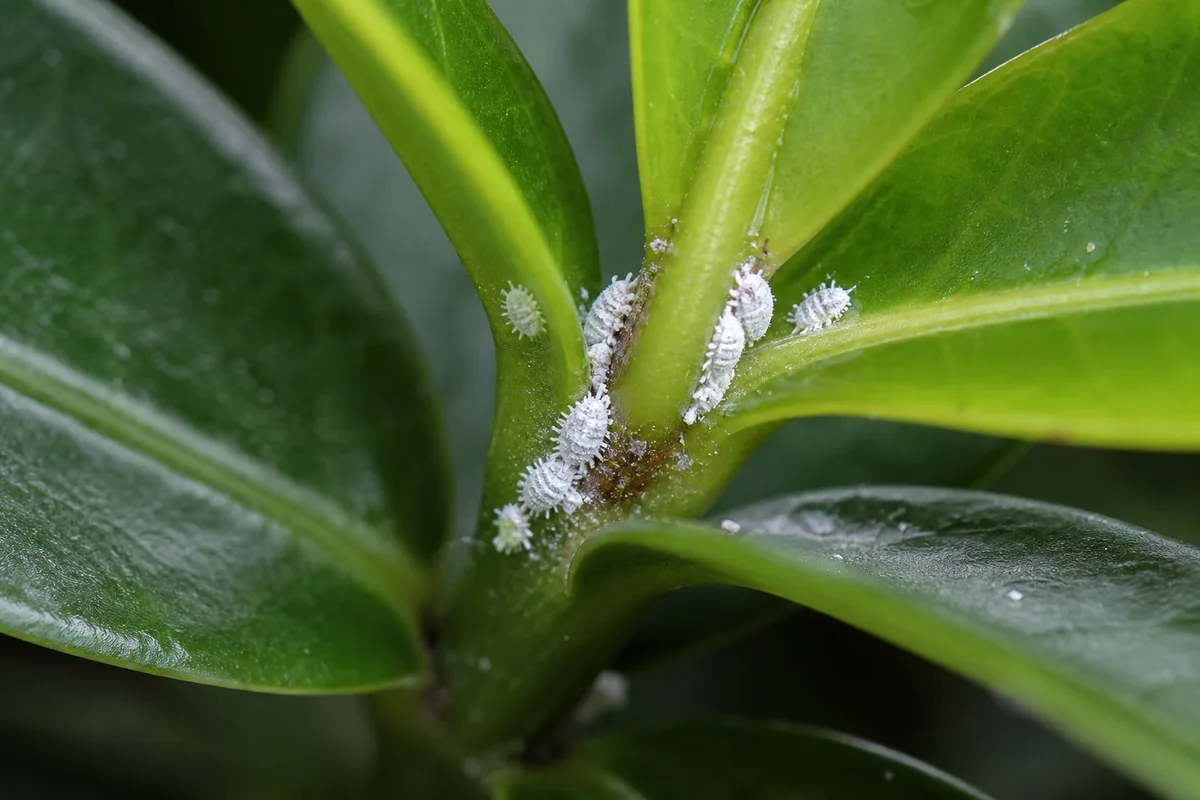
Mealybugs symptoms on Ixora - compare with healthy tissue on the same plant.
Typical signs include:
- White tufts along petioles, stem nodes, and flower stalks
- Flat, waxy insects underneath the cotton-pinkish or gray when the wax is wiped away
- Sticky honeydew on upper leaf surfaces, the pot rim, or the saucer
- Black sooty mold growing on that honeydew in humid conditions
- Yellowing, curling, or stunted new leaves when feeding is heavy
- Flower buds dropping before they open on an otherwise well-watered plant
Mealybugs feed by piercing soft tissue and draining sap. On a flowering shrub like Ixora, that damage hits tender buds and new whorls first-exactly where you want the next bloom flush.
Why Ixora gets mealybugs
Ixora is not randomly unlucky. Several traits of Ixora overview and how it is usually grown make mealybug colonies easier to miss and harder to knock down.
Sheltered leaf architecture. Ixora’s whorled leaves and bushy crown create deep, humid pockets at stem tips. Mealybugs favor protected crevices-leaf axils, stem bases, and the underside of clustered leaves-where sprays and rinses do not reach on the first pass.
History as a scale- and mealybug-prone ornamental. In Florida and other warm regions, Ixora is grouped with camellia, hibiscus, and holly as ornamentals that often carry persistent scale and mealybug problems when conditions favor them. The pink hibiscus mealybug attacks Ixora among many tropical ornamentals. Indoor specimens brought from nurseries or shared outdoor seasons can arrive with hidden colonies.
Humid, evenly moist culture. Ixora wants high humidity and consistently moist-but not waterlogged-acidic soil. That environment suits the plant, but mealybugs also thrive in damp, sheltered foliage compared with pests like spider mites that prefer hot dry air. A healthy Ixora in a humid conservatory can still host mealybugs if one crawler hitchhikes in.
Soft new growth and flower shoots. Fast spring and summer growth produces the tender stems and buds mealybugs prefer. Heavy nitrogen fertilizer pushes even softer shoots that are easier to pierce.
Introduction from neighbors. Mealybugs spread on new plants, tools, hands, and when pots touch. Crawlers walk short distances. Skipping quarantine after a nursery purchase is the most common entry route-not a sudden failure of your watering routine.
How to confirm the cause
Work through these checks before you treat the whole collection:
- Location of the white material - Mealybugs cluster at nodes, axils, and stem bases. Chalky hard-water spots or dried fertilizer splash sit on the leaf face and wipe off dry; mealybugs smear pink when crushed.
- Movement - Nudge a cluster with a toothpick. Mealybugs shift slowly; mineral deposits and lint do not.
- Honeydew - Shiny, sticky residue on leaves or nearby surfaces points to sap feeders (mealybugs, aphids, or scale), not a fungal leaf spot.
- Ant activity - Ants farming honeydew on the pot or saucer often mean mealybugs or aphids are active above.
- Stem versus root - If stems and leaf axils look clean but the plant keeps declining, slide it from the pot and inspect roots and the inner pot wall for root mealybugs-tiny white specks in moist acidic mix.
- Nearby plants - Check hibiscus, croton, ficus, or other broad-leaf neighbors. Mealybugs rarely stay on one pot.
If you see hard brown domes glued to stems with no cotton, suspect scale insects instead. Flat green insects on new tips point to aphids. Webbing with stippling suggests spider mites in dry air-not mealybugs.
First fix for Ixora
Move the plant away from others and dab every visible mealybug with 70% isopropyl alcohol on a cotton swab.
That single action does three things: kills adults on contact, removes wax that blocks later sprays, and shows you how large the colony really is once you open the whorled crown. Test alcohol on one leaf first if the plant sits in hot direct sun; Ixora leaves can scorch when alcohol evaporates quickly on stressed tissue.
After dabbing:
- Rinse leaf undersides and stem joints with lukewarm water in a sink or shower to dislodge crawlers you missed. Avoid leaving the crown soggy overnight.
- Prune only heavily infested flower stems or leaves you cannot reach-bag and discard them, do not compost indoors.
- Wait 24 hours, then apply insecticidal soap or horticultural oil labeled for ornamental shrubs, covering undersides and axils until the solution drips slightly. Mealybugs hatch on a rolling schedule; one spray rarely clears them.
Repeat alcohol touch-kills plus soap or oil every five to seven days for at least three weeks. Ixora’s layered foliage means you will find new clusters on later passes-that is normal, not failure.
Step-by-step recovery
Once the first dab-and-isolate step is done, follow this sequence:
- Quarantine - Keep Ixora separated until you see no new cottony clusters for two full weeks after the last treatment.
- Manual removal daily for light cases - A few swab passes may be enough if you caught the outbreak early on one shoot.
- Soap or oil on schedule - For moderate infestations, alternate thorough soap/oil coverage with alcohol dabs on stubborn clusters. Oils work best when mealybugs are young and have less wax.
- Check roots if stems stay clean - Unpot, rinse roots gently, and repot into fresh ericaceous mix if you find white specks on roots or the pot wall. Root mealybugs explain reinfestation after perfect foliar treatment.
- Wash the pot and saucer - Crawlers hide under unglazed rims and saucers. Scrub with hot soapy water.
- Inspect neighbors - Treat or monitor any plant that shared a windowsill or bench.
Do not repot healthy Ixora on day one just because of foliar mealybugs. Repot only when root mealybugs are confirmed or the mix is heavily contaminated with honeydew and sooty mold.
Recovery timeline
Week 1: Visible cottony clusters should shrink after the first alcohol pass and initial soap or oil application. Honeydew may still feel sticky until you wipe leaves.
Weeks 2–3: You should see fewer new clusters if you treat every five to seven days. Old yellowed leaves will not revert; watch new whorls and flower buds for clean growth.
Week 4 and beyond: If no new mealybugs appear for two weeks, move the plant out of quarantine. Persistent colonies in the same axils after four weekly cycles suggest root mealybugs or a missed neighbor plant.
Flower display may lag one bloom cycle after heavy bud damage. Ixora can reflower once sap loss stops and light, acidic soil, and moisture stay stable.
Lookalike symptoms
| What you see | Likely cause | How to tell apart |
|---|---|---|
| White cotton in leaf axils | Mealybugs | Smears pink when crushed; honeydew present |
| Hard brown bumps on stems | Scale | Does not smear; shell stays after scraping |
| Green insects on new tips | Aphids | Soft bodies, no wax tufts; often on newest flush only |
| Fine webbing + leaf stippling | Spider mites | Dry indoor air; mites move on white paper tap test |
| White crust on leaf face | Mineral or pesticide residue | Wipes dry; no insects underneath |
| White mold on soil surface | Saprophytic fungus | On mix only; stems clean |
Mistakes to avoid
- Spraying once and stopping - Eggs hatch over one to two weeks. Ixora needs repeated passes because crawlers hide under the next leaf whorl.
- Treating without isolating - Crawlers walk to adjacent hibiscus, croton, or ficus within days.
- Drenching with systemic insecticide first - Systemics often show poor kill on established mealybugs and stress an already sap-drained Ixora. Contact removal plus soap or oil is the safer opening move indoors.
- Alcohol on the whole plant in hot sun - Leaf burn is real on glossy tropical foliage. Spot-test and treat in shade or evening.
- Composting pruned infested stems indoors - Crawlers survive in warm compost bins near other pots.
- Blaming acidic soil or pH - Mealybugs are insects, not a chlorosis symptom. Fix the pest first; keep pH management separate.
Ixora care cross-check
Mealybugs weaken Ixora by stealing sap; they do not replace good culture. After treatment stabilizes:
- Light - Bright light with some direct sun supports recovery and tighter growth that is easier to inspect.
- Water - Keep soil evenly moist in ericaceous mix, but let the top few centimeters dry slightly so crowns are not constantly wet-a wet crown plus honeydew invites sooty mold.
- Humidity - Steady humidity helps Ixora, but improve airflow between grouped plants so leaf axils dry after rinsing.
- Fertilizer - Hold acid fertilizer until new growth looks clean. Soft nitrogen-rich flushes attract the next generation.
How to prevent mealybugs on Ixora
- Quarantine new plants two weeks before placing them beside Ixora.
- Inspect axils and flower buds weekly during spring and summer growth.
- Rinse foliage monthly in the shower or with a gentle hose-dislodges crawlers before colonies form wax.
- Avoid nitrogen-heavy feeds that stimulate tender new growth mealybugs prefer.
- Control ants on benches and saucers; they protect mealybugs from predators.
- Buy clean stock - Pass on plants with sticky leaves, dropped buds, or white wax in the crown even if the price is right.
When to worry
Escalate or consider discarding the plant if:
- Colonies return in the same spots after four weekly treatment cycles
- Multiple plants in the room show cottony wax and ants
- Root mealybugs fill the pot despite clean stems
- The shrub loses most leaves and buds while stems stay soft and sticky-not firm and recovering
- You suspect pink hibiscus mealybug outdoors in Florida-report to your county extension rather than repeatedly spraying broad insecticides
Ixora can bounce back from moderate foliar mealybugs when isolation, alcohol contact, and repeated soap or oil coverage start early. Severe, months-old infestations on a small potted specimen may cost more in time and neighbor risk than replacing one plant and hardening quarantine rules.
Conclusion
Mealybugs on Ixora succeed because this bushy, whorled shrub hides pests where sprays glance off. Confirm cottony clusters in leaf axils and flower joints, isolate the plant, and dab visible insects with alcohol before anything else. Repeat weekly treatments until crawlers stop appearing, check roots if stems look clean but decline continues, and judge success by new growth-not old spotted leaves. Steady light, acidic moist soil, and weekly axil checks keep the next outbreak visible while it is still small.
When to use this page vs other Ixora guides
- Ixora watering guide - Use for routine moisture checks before assuming mealybugs is the main issue.
- Ixora problems hub - Browse all 18 common issues on this species.
- Yellow Leaves on Ixora - Different entry point when symptoms overlap with mealybugs.
- Slow Growth on Ixora - Different entry point when symptoms overlap with mealybugs.
- Spider Mites on Ixora - Different entry point when symptoms overlap with mealybugs.