Tillandsia Problems: Causes & Quick Fixes
Quick answer
Tillandsia is prone to 19 common issues - each link below is a plant-specific fix guide.
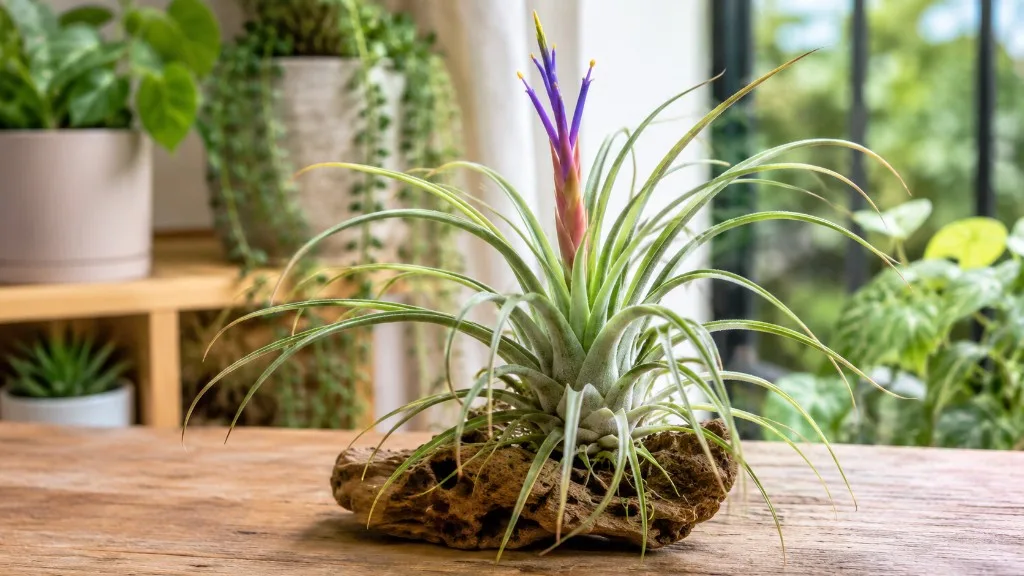
Tillandsia problems
Use the guides below to diagnose and fix common issues on Tillandsia. Each problem page explains why it happens on this species and what to do first.
Or use our problem diagnosis tool to narrow down symptoms.
Common problems on Tillandsia
Brown Tips
LowLikely cause: Underwatering or very low humidity
Quick fix: Increase soaking frequency; mist more regularly; trim brown tips
Full fix guide →Crispy Leaves
MediumLikely cause: Prolonged underwatering causes leaves to curl, crisp, and eventually die
Quick fix: Soak in room-temperature water for 2–3 hours; the plant may partially recover
Full fix guide →Stem Rot
HighLikely cause: Water trapped at the base without drying-most often from not shaking out water after soaking or placing in an enclosed humid space
Quick fix: Always shake excess water from the base after soaking; ensure the plant is fully dry within 4 hours
Full fix guide →No Flowers
LowLikely cause: Most tillandsia bloom only once in their lifetime and then produce pups
Quick fix: Flowering is triggered by maturity; ethylene gas from a ripe apple in a bag with the plant overnight can sometimes trigger blooming
Full fix guide →Mealybugs
MediumLikely cause: Mealybugs nest at the base of leaf clusters
Quick fix: Rinse thoroughly; treat with diluted neem oil or isopropyl alcohol spray
Full fix guide →Yellow Leaves
MediumLikely cause: Common on this plant type; confirm with recent watering, light, and root checks.
Quick fix: Inspect the plant and correct the most likely care stressor before stacking treatments.
Full fix guide →Root Rot
MediumLikely cause: Common on this plant type; confirm with recent watering, light, and root checks.
Quick fix: Inspect the plant and correct the most likely care stressor before stacking treatments.
Full fix guide →Overwatering
MediumLikely cause: Common on this plant type; confirm with recent watering, light, and root checks.
Quick fix: Inspect the plant and correct the most likely care stressor before stacking treatments.
Full fix guide →Underwatering
MediumLikely cause: Common on this plant type; confirm with recent watering, light, and root checks.
Quick fix: Inspect the plant and correct the most likely care stressor before stacking treatments.
Full fix guide →Spider Mites
MediumLikely cause: Common on this plant type; confirm with recent watering, light, and root checks.
Quick fix: Inspect the plant and correct the most likely care stressor before stacking treatments.
Full fix guide →Aphids
MediumLikely cause: Common on this plant type; confirm with recent watering, light, and root checks.
Quick fix: Inspect the plant and correct the most likely care stressor before stacking treatments.
Full fix guide →Leggy Growth
MediumLikely cause: Common on this plant type; confirm with recent watering, light, and root checks.
Quick fix: Inspect the plant and correct the most likely care stressor before stacking treatments.
Full fix guide →Slow Growth
MediumLikely cause: Common on this plant type; confirm with recent watering, light, and root checks.
Quick fix: Inspect the plant and correct the most likely care stressor before stacking treatments.
Full fix guide →Wilting
MediumLikely cause: Common on this plant type; confirm with recent watering, light, and root checks.
Quick fix: Inspect the plant and correct the most likely care stressor before stacking treatments.
Full fix guide →Drooping Leaves
MediumLikely cause: Common on this plant type; confirm with recent watering, light, and root checks.
Quick fix: Inspect the plant and correct the most likely care stressor before stacking treatments.
Full fix guide →Low Humidity
MediumLikely cause: Common on this plant type; confirm with recent watering, light, and root checks.
Quick fix: Inspect the plant and correct the most likely care stressor before stacking treatments.
Full fix guide →Not Enough Light
MediumLikely cause: Common on this plant type; confirm with recent watering, light, and root checks.
Quick fix: Inspect the plant and correct the most likely care stressor before stacking treatments.
Full fix guide →Fungus Gnats
MediumLikely cause: Common on this plant type; confirm with recent watering, light, and root checks.
Quick fix: Inspect the plant and correct the most likely care stressor before stacking treatments.
Full fix guide →Mold on Soil
MediumLikely cause: Common on this plant type; confirm with recent watering, light, and root checks.
Quick fix: Inspect the plant and correct the most likely care stressor before stacking treatments.
Full fix guide →