Slow Growth on Tillandsia: Causes, Checks & Fixes
Quick answer
Tillandsia are naturally slow growers-many species add only a few leaves per year and one to two pups in good conditions. Problem stall shows as no new pups through a full warm season in adequate light, a gradually loosening rosette, or post-soak drying that keeps slowing. First step: confirm light with the hand-shadow test, then match soak rhythm to your species type before changing fertilizer.
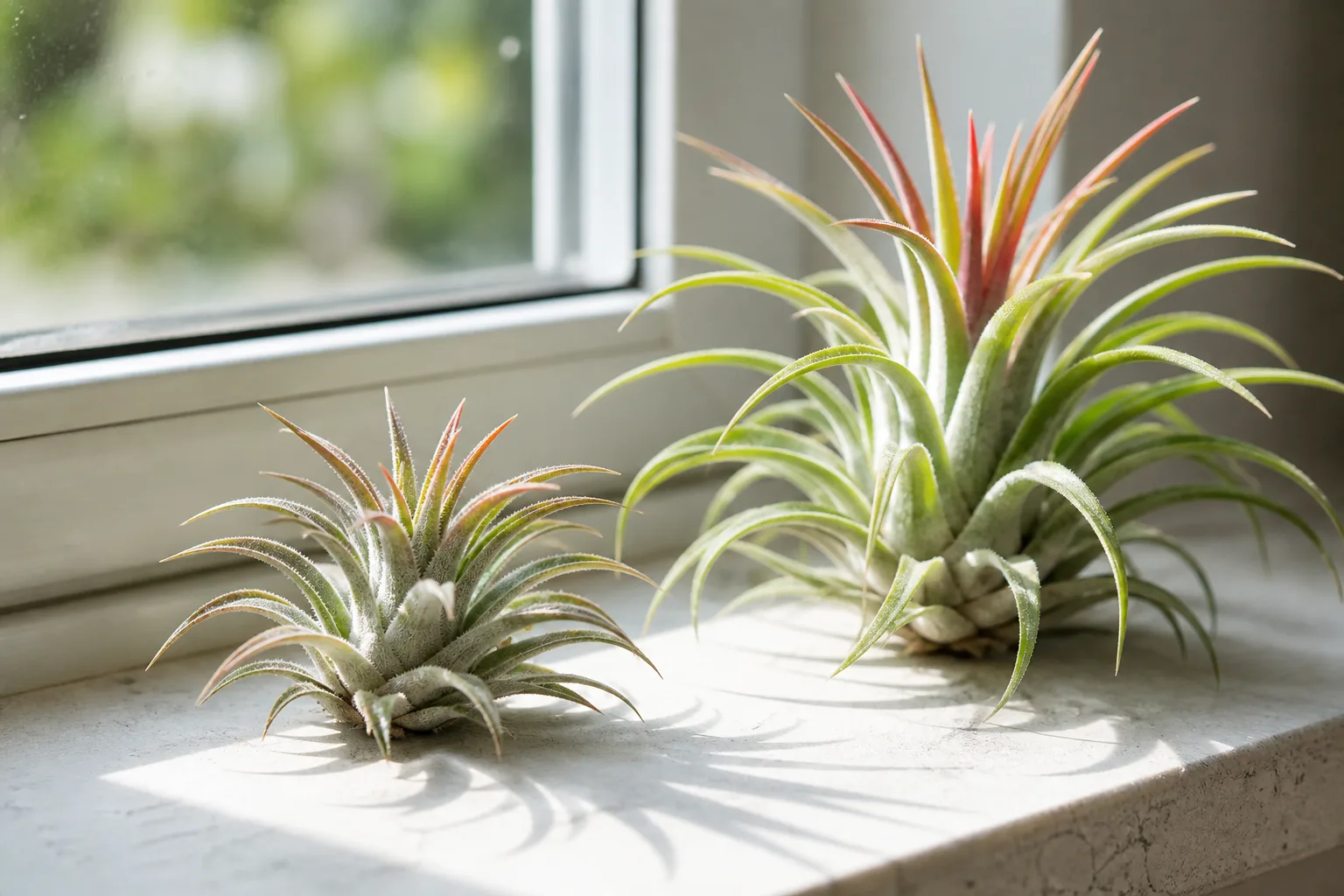
Slow Growth on Tillandsia: Causes, Checks & Fixes
This guide covers slow growth on Tillandsia. See also the general Slow Growth guide, watering, and light pages for this plant.
Slow Growth on Tillandsia: Causes, Checks & Fixes
Quick answer
Tillandsia air plants are naturally slow growers. Unlike pothos or philodendron, they add only a few new leaves per year and may produce one to two pups annually in good indoor conditions-less on large xeric species like Tillandsia xerographica. A compact rosette that looks unchanged for months is often normal, not a crisis.
This page is for stall diagnosis-when growth stops beyond your species’ baseline. That means no new leaf segments or pups through a full warm season in tested bright light, a gradually loosening rosette without obvious stretch, mist-only routines that keep xeric types alive but idle, or post-bloom mother decline you mistake for reversible stall.
This is not the low-light page. If you need to decide whether light is too dim before you act, start with not enough light on Tillandsia. If the rosette is already visibly elongated, see leggy growth. For window placement, mesic vs xeric intensity, and grow lights, use the Tillandsia light guide.
First step: run the hand-shadow test at midday at the rosette’s current spot. A soft readable shadow confirms adequate brightness for active growth; no shadow means fix light before soaking more or fertilizing. Hold other variables steady for four to six weeks in warm months, then judge only newest leaf segments and pup buds-not old foliage.
Is this slow growth or normal for tillandsia?
Air plants evolved on cliffs, branches, and scrub where growth is measured in seasons, not weeks. Penn State Extension notes tillandsias grow slowly indoors and need bright indirect light to maintain even that modest pace.
Normal slow baseline fits when:
- The rosette stays compact and firm with stable leaf color for your type
- You see occasional new leaf segments or a pup forming at least once per warm season in adequate light
- Growth pauses in cool, short-day winter without base softening
- A post-bloom mother fades slowly while pups enlarge at the base
Problem stall fits when:
- No pups and no new inner leaves through one full warm season in confirmed bright light
- The rosette loosens and pales month over month while the base stays firm-stall from chronic under-lighting without obvious stretch yet
- Mist-only care on silver xeric types: leaves look green but trichomes stay dull and size never increases
- Enclosed terrarium or globe away from the opening: humidity is high but metabolism is flat
- Years without fertilizer on a bright-window plant that otherwise dries correctly
Retail Tillandsia ionantha often stall in dim bathrooms for 12 to 18 months before pupping resumes after a light upgrade. T. xerographica may add only one leaf cycle per year even in ideal care-that is slow, not broken.
What slow growth looks like on Tillandsia
Stall on air plants is subtle because the plant may stay green and upright while metabolism drops. Watch pups and newest leaf segments as your primary growth metric-not overall rosette diameter alone.
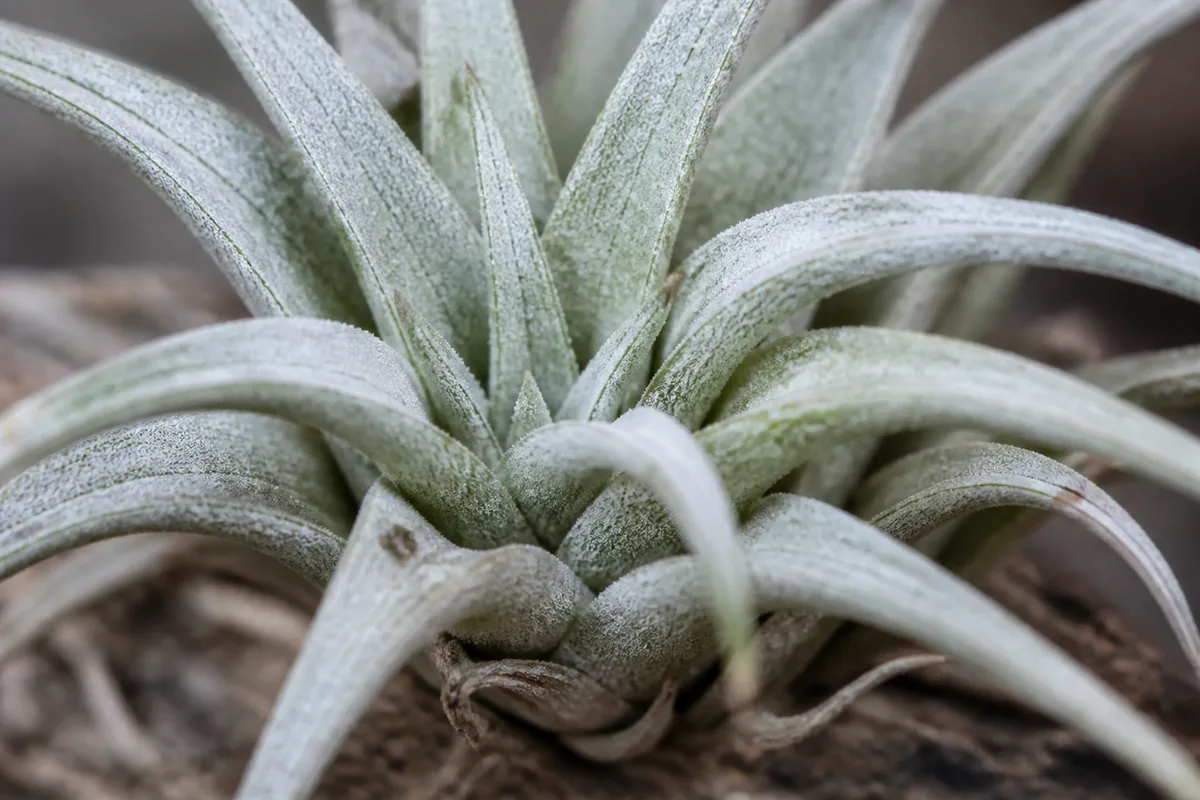
Slow Growth symptoms on Tillandsia - compare with healthy tissue on the same plant.
- No pup buds at the base through a full spring and summer in tested light
- Newest leaves smaller or paler than segments from six months ago, without inward curl from thirst
- Rosette gradually opens with wider leaf gaps but without dramatic lean toward a window (that pattern fits low light-see not enough light)
- Post-soak dry-down takes longer each month in the same spot-metabolic pace is dropping
- Mist-only xeric types stay small and stiff for a year; trichomes look flat, not frosty
- Terrarium plants show zero size change while open-mounted neighbors pup
- Post-bloom mothers yellow slowly at outer leaves while pups stay tiny for many months-may be normal lifecycle, not fixable stall
Tillandsia do not have a soil root zone. Judge crown and lowest leaf bases: firm and dry fits metabolic stall; soft, translucent, or sour-smelling fits crown rot-see stem rot and overwatering.
Mesic vs xeric growth expectations
Commercial air plants split into mesic (forest) and xeric (dry-climate) types with different pace and stall clues. NC State Extension lists tillandsia as slow-growing epiphytes that need high light indoors to reach maturity.
| Type | Examples | Normal indoor pace | Stall warning signs |
|---|---|---|---|
| Mesic | T. bulbosa, T. caput-medusae, greener T. stricta | Several new leaf segments per year in bright filtered light; pups after first bloom | Green but inflated, loose rosette; no segments in 8+ warm months |
| Xeric | T. ionantha, T. xerographica, T. tectorum | Ionantha: modest annual size gain, pups after bloom; Xerographica: one leaf cycle per year | Mist-only survival with dull silver; no pup after bloom in bright light |
If you do not know the species, silver stiff leaves usually need deeper soaks and more total light once corrected; green smooth leaves need steady humidity and filtered brightness.
Why tillandsia grows slowly
Normal baseline - air plants are not fast growers
Tillandsia are epiphytic bromeliads that absorb water and nutrients through foliar trichomes, not roots. Without a soil reservoir, every new leaf segment depends on light-driven photosynthesis and trichome uptake-a inherently slow indoor pipeline compared with potted tropicals.
Insufficient light is the usual bottleneck
Even when leaves look green, chronic dim placement keeps metabolism in survival mode. Tillandsia can linger for months without pupping while slowly loosening. This overlaps with the not-enough-light page: use that guide for shadow-test confirmation; return here when light is adequate but growth still flatlines.
UF/IFAS recommends bright but not direct sunlight for indoor air plants-compact growth stalls when brightness stays below that threshold.
Cool temperatures and winter pause
Growth slows sharply below about 15°C (59°F) and during short winter days. A firm rosette with no pups from November through February in a cool room is often seasonal, not a care failure. Compare against summer pace before overcorrecting.
Under-watering and mist-only metabolic stall
Xeric types tolerate drought but cannot build mass on mist alone. A silver T. ionantha misted twice weekly may stay alive indefinitely while never pupping. Mesic types dull and stall when soaks are skipped for weeks. Match rhythm to the Tillandsia watering guide-typically 20 to 30 minute weekly soaks for mesic types, with thorough shake-dry within four hours.
Low nutrition after years without feed
Years in the same bright window without diluted bromeliad fertilizer can cap pup production. Nutrition is a secondary fix-only after light and drying rhythm are confirmed. See the Tillandsia fertilizer guide for half-strength monthly timing during active warm months.
Post-bloom decline in monocarpic species
Most tillandsia bloom once, then slowly decline while pups form. On Tillandsia ionantha clusters, the mother yellows at outer leaves while offsets develop-this mimics stall but is not reversible on the parent. Support pups; do not fertilize a fading mother hoping to restart growth. Cross-read no flowers on Tillandsia for bloom energy context.
Enclosed terrariums and poor airflow
Glass globes and closed terrariums trap humidity but often shade the rosette when the opening faces sideways. High humidity plus low light produces green survival without growth. Open mounting under a bright window or grow lamp restores pace faster than misting inside a dim globe.
How to confirm the cause
Work through these checks before fertilizer, remounting, or aggressive trimming:
- Hand-shadow test - At the rosette at midday, a soft readable shadow means light is adequate for growth troubleshooting; no shadow means fix light first per not-enough-light.
- Pup and segment audit - Compare photos from six months ago. No new inner leaves or pup buds through a full warm season in confirmed light = true stall.
- Species pace check - Is this a large xeric type where one leaf cycle per year is normal? Do not chase pothos speed on T. xerographica.
- Soak vs mist history - Xeric types on mist-only routines rarely gain mass. Mesic types on long soak gaps dull and stall.
- Post-bloom context - Did the plant flower in the last 12 months? Mother fade with enlarging pups is lifecycle, not stall.
- Base firmness - Firm dry crown fits metabolic stall. Soft mushy base fits rot-dry immediately before expecting growth.
- Dry-down time - After a standard soak, bases should dry within about four hours in bright airflow. Progressively slower drying in the same spot suggests dropping metabolism-often light-linked.
- Temperature log - Nights below 10°C (50°F) or sustained cool rooms pause growth for weeks.
Confirmed stall fits when light passes the shadow test, soak rhythm matches species type, the base is firm, no active post-bloom mother decline explains the pattern, and no new segments or pups appear through one warm season.
Lookalike symptoms
| Symptom cluster | Likely cause | First move |
|---|---|---|
| No pups + failed shadow test + firm base | Not enough light (stall from dimness) | Not enough light guide |
| Obvious lean + elongated leaves + open rosette | Leggy etiolation | Leggy growth guide |
| Compact rosette, adequate light, no bloom ever | Energy or maturity limit | No flowers guide; patience on young plants |
| Bloom faded + mother yellowing + pups at base | Normal post-bloom decline | Support pups; not a light emergency |
| Inward curl + wrinkling + dry feel | underwatering on Tillandsia | Soak per watering guide |
| Soft base + sour smell + black lowest leaves | Crown rot | Dry, trim mush; see stem rot |
| Firm rosette, no growth Nov–Feb, cool room | Winter metabolic pause | Wait for warm season; optional grow light |
| Green globe plant, zero change for 18 months | Enclosed low-light stall | Open mount + brighter placement |
Shipping acclimation can pause new arrivals for two to four weeks. Chronic stall built over many months in your home is not shipping stress.
First fix for Tillandsia
Confirm adequate light, then match soak rhythm to species type-hold fertilizer for four to six weeks.
If the shadow test fails, relocate per mesic vs xeric rules in the light guide before any other change:
- Mesic green types - Within a few feet of bright east, west, or filtered south glass; no harsh midday sun. The RHS Tillandsia growing guide recommends bright filtered light for compact growth indoors.
- Xeric silver types - Same baseline plus gentle morning sun when acclimated.
If light already passes but xeric types are on mist-only care, switch to weekly soak-and-shake-dry per the watering guide. If mesic types dry too slowly in dim corners, fix placement and drying together-wet crowns in shade stall and rot.
Do one change at a time. Do not stack Tillandsia repotting guide (not applicable to mounted air plants), heavy pruning, and fertilizer on the same day.
Step-by-step recovery
- Photograph the rosette and note pup count today-your baseline for comparison.
- Run the hand-shadow test; upgrade placement if needed over 7 to 14 days of gradual acclimation.
- Remove from closed globes or dim terrariums; mount openly with airflow.
- Soak 20 to 30 minutes, shake upside down until droplets stop, dry in bright indirect light until the base is fully dry-within about four hours.
- Wait four to six weeks in warm months; inspect only newest leaf segments and pup buds.
- If new growth appears, maintain rhythm. Optionally add half-strength bromeliad fertilizer monthly during active growth per the fertilizer guide.
- If still flat after a confirmed light fix, recheck species pace (xerographica is slow by nature) and winter timing before escalating.
Recovery timeline
Mesic types in corrected bright light often show tighter new leaf spacing or visible pup buds within four to eight weeks in warm months. Xeric ionantha may pup two to six months after bloom once light and soak rhythm stabilize. T. xerographica may add one leaf cycle per year-success is a measurable new segment, not doubling in size.
Winter recovery is slower; judge over one full warm season if the plant was chronically stalled in shade.
Old loose outer leaves do not tighten. Recovery shows only in new segments, pup enlargement, and faster post-soak drying. Post-bloom mothers do not return to pre-bloom vigor-redirect care to pups.
What not to do
Do not fertilize a stalled tillandsia before confirming light and drying rhythm-nitrogen on a stressed, wet crown invites rot.
Do not soak more often because growth is slow if the base already stays damp for hours after each soak. Tillandsia rot when water pools in overlapping leaf bases, not when a soil root zone is wet.
Do not assume misting alone will build mass on silver xeric types-they need periodic deep hydration.
Do not confuse post-bloom mother fade with reversible slow growth. Removing a healthy fading mother too early can stress developing pups.
Do not jump a shade-grown mesic plant to unfiltered south afternoon sun in one move-acclimate over one to two weeks to avoid scorch that pauses growth further.
Do not compare tillandsia to fast vining houseplants. Species-appropriate pace is the benchmark.
How to prevent slow growth next time
Mount new purchases where the hand-shadow test passes year-round, not where the display looks best. Identify mesic vs xeric before setting soak frequency. Supplement north-facing or winter windows with a grow light 12 to 14 hours daily. Inspect for new leaf segments or pups monthly. Fertilize lightly only after light and water rhythm are stable.
Open terrarium styling works only when the container sits directly under bright glass or a grow lamp-not across a dim room. The Tillandsia overview links the full care cluster.
When to worry
Chronic stall with a firm base is a care rhythm fix, not an emergency. Escalate if:
- The base softens or smells sour despite corrected light
- Several lowest leaves pull away with black tissue at the meristem
- No new segments appear after one full warm season in confirmed bright light with matched soaking
- Pests weaken a stalled rosette-stabilize light and drying before heavy treatment
Conclusion
Tillandsia are supposed to grow slowly-judge them by pups and new leaf segments, not houseplant speed. When a firm rosette stalls through a warm season despite adequate light, match soak rhythm to mesic vs xeric type, open dim enclosures, and add fertilizer only after growth resumes. Post-bloom fade is lifecycle, not failure. Cross-check light with the sibling guides before stacking fixes.
Related guides: Tillandsia light · Not enough light · Leggy growth · Watering · Fertilizer · No flowers · Overview
Practical checks
Urgency check
Treat as urgent if bases soften, rot smell spreads, pests cover multiple rosettes, or several lowest leaves fail at once while the crown stays wet-not for a compact rosette that simply has not pupped yet in winter.
Best inspection order
Hand-shadow test → pup and segment audit → species pace baseline → soak vs mist history → post-bloom context → base firmness → dry-down time → temperature.
Severity note
Use no new growth through one warm season in confirmed light and spreading base rot-not a single season without pups on a young xerographica-to decide how fast to act.
When to use this page vs other Tillandsia guides
- Tillandsia watering guide - Use for routine moisture checks before assuming slow growth is the main issue.
- Tillandsia problems hub - Browse all 19 common issues on this species.
- Not Enough Light on Tillandsia - Different entry point when symptoms overlap with slow growth.
- Leggy Growth on Tillandsia - Different entry point when symptoms overlap with slow growth.
- Yellow Leaves on Tillandsia - Different entry point when symptoms overlap with slow growth.