Leggy Growth on Tillandsia: Causes, Checks & Fixes
Quick answer
Leggy Tillandsia growth is etiolation-the rosette opens, leaves space out, and the plant leans toward brighter light. First step: remount closer to an east or filtered south/west window (or add a grow light), then adjust soaking to match faster dry-down.
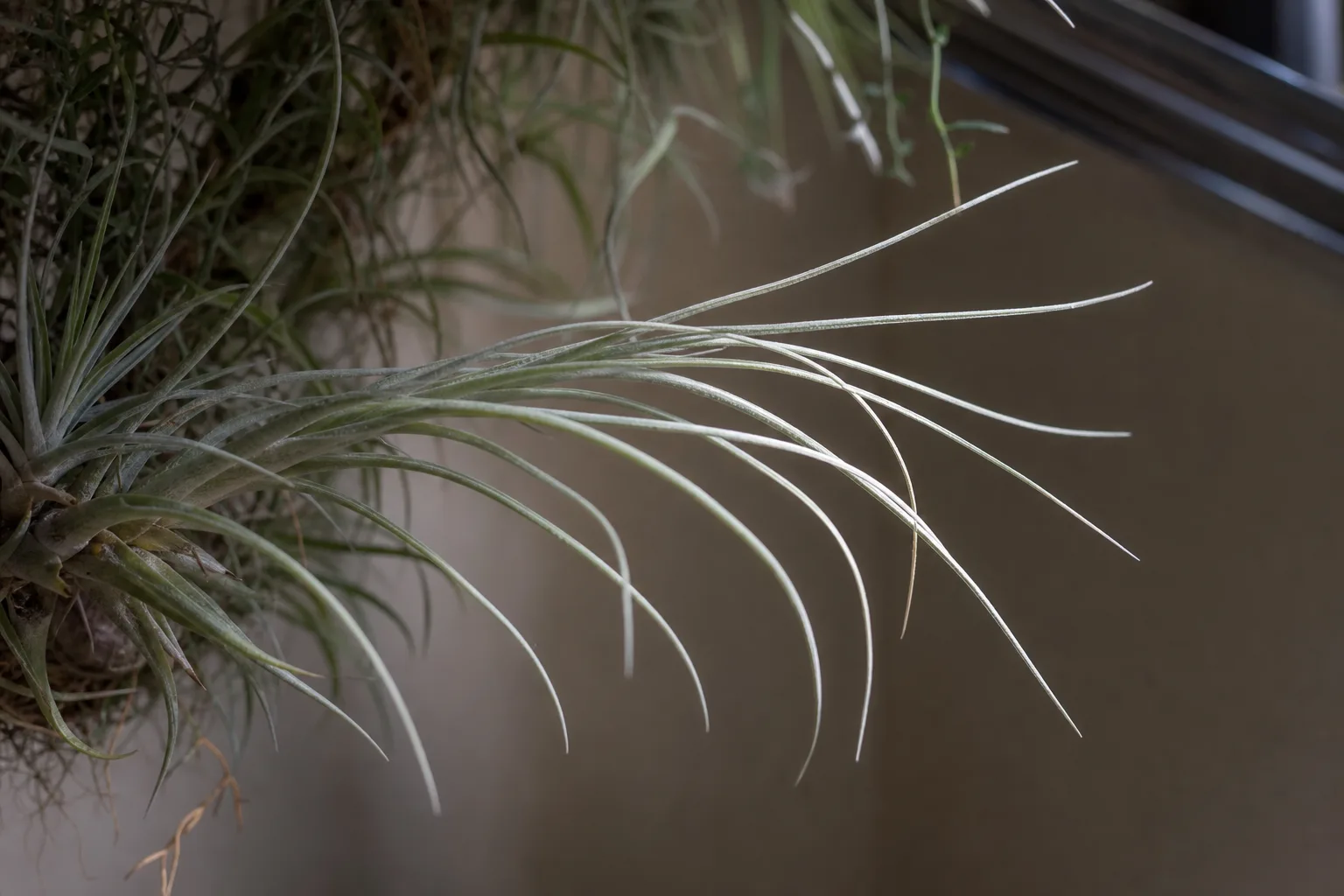
Leggy Growth on Tillandsia: Causes, Checks & Fixes
This guide covers leggy growth on Tillandsia. See also the general Leggy Growth guide, watering, and light pages for this plant.
Leggy Growth on Tillandsia: Causes, Checks & Fixes
Quick answer
Leggy growth on Tillandsia air plants is etiolation-the survival response when a rosette does not receive enough usable light. Unlike potted houseplants that lengthen bare stems between leaves, tillandsia have no internodes. Instead the rosette opens, leaves space farther apart, the plant leans toward the brightest direction, and silver xeric types may lose their crisp trichome frosting.
This page is for visible stretch morphology and mount-repositioning recovery. If you are still deciding whether light is the problem at all, start with not enough light on Tillandsia. For mesic vs xeric placement, grow-light setup, and window orientation, see the Tillandsia light guide.
First step: remount the plant closer to bright indirect light-typically an east window or filtered south/west glass for mesic green types, with optional gentle morning sun for silver xeric types. Do not fertilize, remount onto wet moss, or trim heavily on day one. Give any placement change 10 to 14 days and judge recovery by firm new leaves, not by old stretched tissue tightening up.
What leggy growth looks like on Tillandsia
Healthy tillandsia form tight, symmetrical rosettes with leaves spaced evenly and-on xeric species-a bright silver or gray trichome coat. Leggy etiolation breaks that pattern:
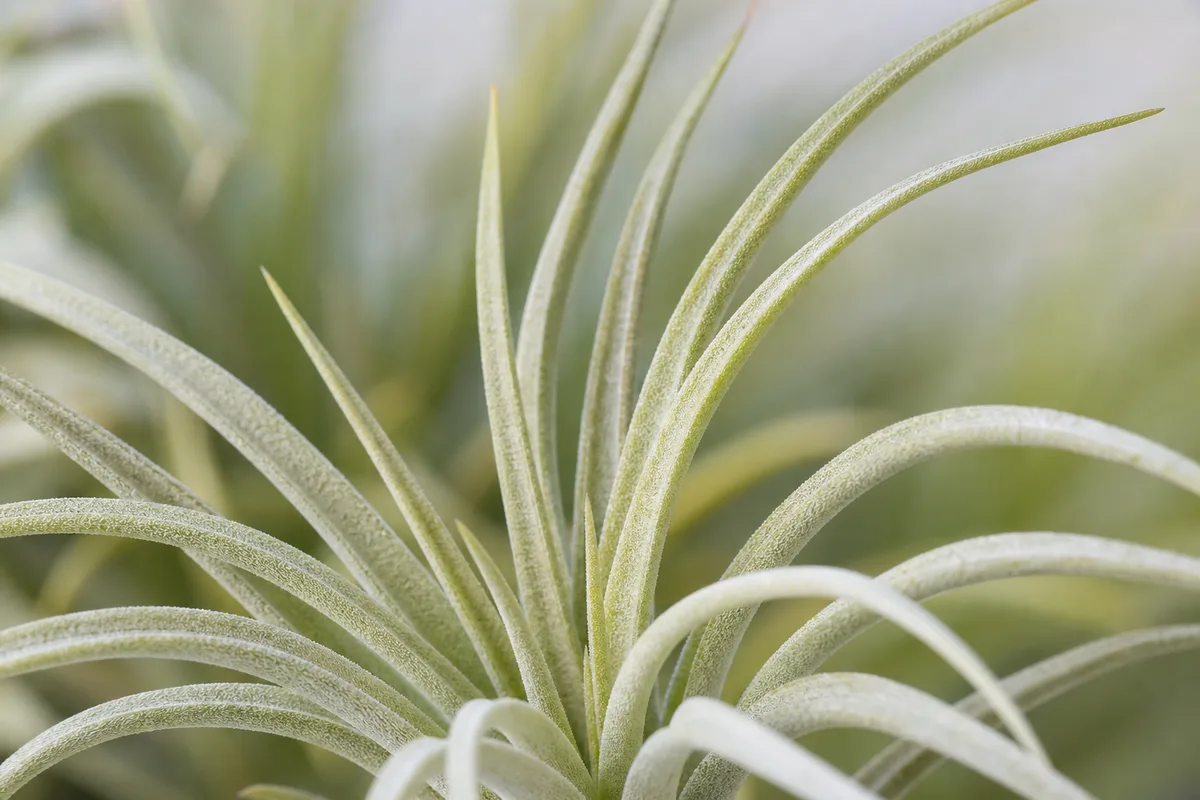
Leggy Growth symptoms on Tillandsia - compare with healthy tissue on the same plant.
- Open, loose rosette that never closes after watering
- Elongated leaves with wider gaps between them than when you bought the plant
- Upward stretch or lean toward a window, lamp, or doorway
- Dull, washed-out color on new growth-pale green on mesic types, loss of silver frosting on xeric types
- Slow or absent pupping and delayed flowering after bloom
- Slow post-soak drying because low light keeps metabolic pace low
Mesic vs xeric stretch differences
Commercial air plants split into mesic (humid-forest) and xeric (dry-climate) types, and the stretch looks different on each. Penn State Extension notes mesic tillandsia have smoother, greener leaves with smaller trichomes and prefer more filtered light, while xeric types show denser trichomes and greater tolerance for brighter exposure.
| Type | Leaf clues | Leggy stretch pattern | Light correction |
|---|---|---|---|
| Mesic (e.g., T. bulbosa, T. caput-medusae) | Green, smooth, flexible | Rosette stays green but loosens and elongates; leaves look inflated, not tight | Bright filtered indirect light; no harsh midday sun |
| Xeric (e.g., T. ionantha, T. xerographica) | Silver, stiff, fuzzy | Rosette towers taller, trichomes look dull or pale, lean is obvious | Bright indirect plus 1–3 hours gentle morning sun when acclimated |
If you do not know the species name, silver and stiff usually means more sun tolerance once you fix stretch; green and smooth means filtered brightness only.
Why Tillandsia gets leggy
Tillandsia are epiphytic bromeliads that absorb water and nutrients through foliar trichomes, not soil roots. They evolved under canopy-filtered light, cliff-edge morning sun, or open scrub-not the uniform dimness of a bookshelf across the room or a terrarium on a side table.
When photons fall short, the plant increases leaf spacing and grows toward the light source. UF/IFAS notes tillandsia need bright but not direct sunlight indoors-survival in a dim corner is possible for months, but compact growth is not.
Several tillandsia-specific factors make etiolation common indoors:
Distance from the window. Light intensity drops sharply even one meter from glass. A rosette on a bathroom shelf or terrarium away from the opening may receive far less usable brightness than one mounted near an east sill.
Winter light drop. Shorter days weaken indoor light. A plant that held form in summer can open its rosette through winter unless you move it closer or add a grow light.
Terrarium and globe displays. Glass containers look bright but often shade the rosette when the opening faces sideways. Humidity stays high while light stays low-a recipe for slow stretch and slow drying.
Mesic/xeric mismatch. Putting a green mesic type in the same dim spot that barely sustains a silver xeric type, or giving a mesic plant direct afternoon sun while trying to “fix” stretch, creates the wrong stress.
One-sided exposure. Tillandsia exhibit phototropism-rosettes bend toward light. Without weekly rotation, stretch and lean compound on one side.
Leggy growth is rarely caused by underwatering on Tillandsia alone. Thirsty tillandsia show inward leaf curl and wrinkling, not a gradual rosette opening toward a window. Base rot from overwatering in a dim corner can accompany stretch, but the directional lean and widened leaf spacing still point to light as the primary driver.
How to confirm the cause
Work through these checks before trimming, remounting onto new décor, or changing fertilizer:
- Rosette pattern - Is the newest growth more open and spaced than leaves from six months ago? Widening gaps fit etiolation; uniform tight spacing fits adequate light.
- Lean direction - Does the rosette point at the brightest window or lamp? Strong directional lean confirms light-seeking stretch.
- Trichome color on xeric types - Silver types should look frosty when well lit. Dull, uniform pale green on new leaves suggests chronic under-lighting.
- Hand-shadow test - At the plant’s position at midday, your hand should cast a soft but readable shadow. No shadow means the spot is too dim for long-term compact growth.
- Base firmness - Pinch the lowest leaf bases. Firm and dry fits pure legginess. Soft, mushy, or sour-smelling suggests crown rot from slow drying in dim conditions-see stem rot on Tillandsia and fix light plus drying together.
- Moisture rhythm - Under-lit tillandsia dry slowly after soaking. If you are soaking on a bright-window schedule but the plant sits in shade, wet bases plus stretch mean you need more light first, not more water.
- 10–14 day new-growth rule - After any light increase, watch only the youngest emerging leaves for two weeks. Old stretched leaves never revert; new firm, properly colored growth confirms the fix.
If stretch pattern and weak light placement match, you have enough to act without Tillandsia repotting guide-tillandsia do not live in soil, and remounting is only needed when the display blocks light or traps moisture.
First fix for Tillandsia
Remount the plant closer to bright indirect light and hold other variables steady for 10 to 14 days.
Choose placement by type:
- Mesic green types - Bright east, west, or filtered south window; within a few feet of glass; no direct midday sun.
- Xeric silver types - Same bright indirect baseline, plus gentle morning sun on an east sill when acclimated.
Penn State Extension recommends bright indirect light in an east- or west-facing window for tillandsias indoors. The RHS Tillandsia growing guide likewise emphasizes bright filtered light for healthy air plants.
If the plant lived in deep shade for months, acclimate gradually-move closer in stages over 7 to 14 days, or add 15 to 30 minutes of morning sun per day for xeric types. Jumping a shade-grown mesic tillandsia to unfiltered south glass can scorch leaves within days.
Do not fertilize a stretched rosette hoping to tighten it-fertilizer cannot replace photons. Do not soak more often without increasing light; that invites base rot in dim corners.
Step-by-step recovery
After light improves:
- Remount openly - Wire to cork, freestanding in a shallow bowl, or on dry pebbles with the base exposed. Avoid moss or glass globes that shade the rosette or hold crown moisture. The Tillandsia soil and mounting guide covers open-display setups.
- Rotate weekly so all sides receive similar exposure and new growth stays even.
- Adjust soaking or misting to match faster dry-down in brighter light. Brighter tillandsia use water faster; follow the Tillandsia watering guide and let the plant fully dry within four hours after soaking.
- Wait for tighter new growth - Look for shorter spacing between emerging leaves and restored silver tone on xeric types. That confirms the light fix is working.
- Trim irreversibly stretched leaves only after new growth looks firm-see Tillandsia pruning for safe removal of outer leaves without damaging the meristem.
- Add a grow light if the best window still falls short. Mount a full-spectrum LED 6 to 12 inches above the rosette and run it 12 to 14 hours daily on a timer. Details are in the light guide.
- Watch pups after bloom - Light-corrected tillandsia resume pupping more reliably. Propagation steps are in the Tillandsia propagation guide.
Example recovery path: A silver T. ionantha on a bathroom shelf three meters from frosted glass showed an open rosette and dull trichomes. Remounted on wire 30 cm from an east window, soaked once weekly, rotated every seven days. New inner leaves emerged tighter and silver again within 14 days; outer stretched leaves were trimmed after three weeks once the center firmed.
Recovery timeline
Light correction shows in new growth within 10 to 14 days when temperatures are warm and the plant is actively growing. Winter recovery is slower; judge success over four to six weeks if the rosette was severely opened.
Old elongated leaves never shorten or tighten. Only new leaves tell you whether placement works. Bloom and pupping may take months after light stabilizes-NC State Extension notes most tillandsia need high light indoors to flower.
Judge recovery by new leaf spacing, trichome color, and base firmness-not by old stretched foliage disappearing.
Lookalike symptoms to rule out
Normal post-bloom decline. Mother tillandsia bloom only once in their lifetime and slowly die after flowering while pups form. That life-cycle senescence is not etiolation-look for bloom spike remnants and pup clusters at the base.
Underwatering curl. Dehydrated tillandsia fold leaves inward and show fine wrinkling. The rosette may look smaller but does not usually lean toward a window with widened spacing.
Overwatering or crown rot in dim corners. Soft black base, sour smell, and leaves pulling away from the center suggest rot, not pure stretch. Stretch plus slow drying can precede rot-fix light and drying together. See overwatering on Tillandsia.
Shipping stress. New arrivals may look dull for a week after transit. If stretch appeared gradually over months in your home, shipping is not the cause.
Too much light scorch. Bleached patches, crispy tips, and inward daytime curling mean excess light-not etiolation. Step back from glass or add sheer diffusion.
| Symptom cluster | Likely cause | First move |
|---|---|---|
| Open rosette + lean toward window + firm base | Leggy etiolation | Increase light gradually |
| Inward curl + wrinkling + dry feel | Underwatering | Soak, then shake dry |
| Soft base + sour smell + dark lowest leaves | Crown rot | Dry, trim mushy tissue, improve airflow |
| Bleached patches + crispy tips | Too much sun | Reduce intensity, acclimate |
Mistakes to avoid
Do not trim heavily before improving light-you will remove photosynthetic surface while the rosette keeps reaching.
Do not place a shade-grown mesic tillandsia into direct afternoon south sun in one move. Acclimate over two weeks.
Do not assume “air plant” means low-light tolerant. Tillandsia survive dim corners longer than many plants but do not stay compact there.
Do not soak more often to “perk up” a stretched plant in a dark spot-slow drying plus excess moisture invites base rot.
Do not stack remounting, fertilizer, and pesticide on the same day. Change light first, wait two weeks, then adjust other care.
Do not judge success from old leaves. Only new growth after a placement change counts.
Tillandsia care cross-check
Leggy growth often appears when watering looks correct on paper but light does not match the plant’s photon budget:
- Light: Bright indirect at the brightest workable window; morning sun for acclimated xeric types (light guide)
- Water: Mist or soak leaves, never the mount substrate; shake dry and dry fully within four hours (watering guide)
- Mount: Open display with airflow at the base-no water-trapping moss in dim corners
- Type ID: Mesic green = filtered light; xeric silver = brighter indirect plus optional morning sun
- Feeding: Light fertilizer only during active growth in adequate light-not as a stretch fix
When light and drying align, new tillandsia leaves should emerge firm, properly colored, and closer together within one to two growth cycles.
How to prevent leggy growth next time
Mount new purchases where bright indirect light is realistic long term-not where the terrarium looks best on a dim console. Identify mesic vs xeric before choosing a windowsill. Rotate weekly, supplement winter windows with a grow light, and inspect new leaf spacing monthly.
If you love globe or terrarium styling, place the container directly under a bright window or grow lamp, not across a room. The Tillandsia overview links the full care cluster when you need a broader reset.
When to worry
Leggy stretch alone is a placement fix, not a crisis. Escalate attention if:
- The base softens or smells sour while the plant sits in a dim, slow-drying spot
- Several lowest leaves pull away cleanly with black tissue at the meristem
- New growth stays pale and open for six weeks despite a clear move to brighter light
- Pests (mealybugs, scale) spread on a weakened rosette-treat pests after stabilizing light
In those cases, inspect the base, confirm drying after soaks, and address rot or pests before expecting tighter growth.
Conclusion
Leggy Tillandsia rosettes are telling you the mount needs more usable light-not more fertilizer or a bigger display. Remount closer to bright indirect exposure (with morning sun for acclimated xeric types), acclimate gradually, adjust soaking to match faster dry-down, and judge recovery by new tight growth over 10 to 14 days. Old stretched leaves will not revert, but with better light and timely trimming, air plants regain the compact, silvery form that made them worth displaying in the first place.
Related guides: Tillandsia light · Not enough light · Watering · Pruning · Propagation · Overview
Practical checks
Urgency check
Treat as urgent if bases soften, rot smell spreads, pests cover multiple rosettes, or several lowest leaves fail at once while the plant stays wet in a dim spot.
Best inspection order
Newest leaf spacing → base firmness → mount and moisture rhythm → window distance and shadow test → leaf undersides for pests.
Severity note
Use spreading base rot and persistent open rosette after a confirmed light upgrade-not a single elongated outer leaf-to decide how fast to act.
When to use this page vs other Tillandsia guides
- Tillandsia watering guide - Use for routine moisture checks before assuming leggy growth is the main issue.
- Tillandsia problems hub - Browse all 19 common issues on this species.
- Not Enough Light on Tillandsia - Different entry point when symptoms overlap with leggy growth.
- Slow Growth on Tillandsia - Different entry point when symptoms overlap with leggy growth.
- Yellow Leaves on Tillandsia - Different entry point when symptoms overlap with leggy growth.