Tillandsia Light Needs: Bright Indirect to Direct Sun
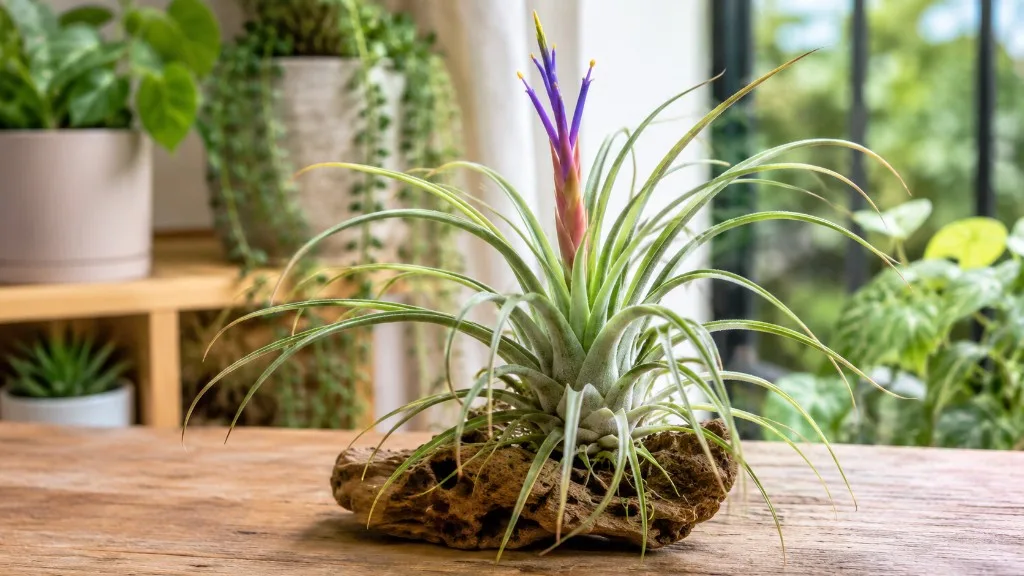
Tillandsia Light Needs: Bright Indirect to Direct Sun by Species
Tillandsia Light Needs: Bright Indirect to Direct Sun by Species
Tillandsia air plants are sold as effortless décor - a sculptural rosette on driftwood, a cluster in a terrarium, a single ionantha on a desk. The marketing rarely mentions that every tillandsia is a light-dependent epiphyte whose tolerance range depends on where its species evolved. A fuzzy xerographica from arid Mexican cliffs and a smooth green bulbosa from humid Central American forest edges both belong to the genus Tillandsia, but they will not thrive on the same windowsill without compromise. Light is the variable that decides whether your plant stays compact, colors up, blooms, and produces pups - or slowly stretches, fades, and stalls in a corner that looks bright to you but delivers too few photons to the leaves.
The practical baseline for most tillandsia indoors is bright indirect light, with some direct morning sun for xeric, silver-leaved types that evolved under stronger radiation. Mesic types - smoother, greener, rainforest-adapted species - need filtered brightness and should not receive unshaded midday rays. Penn State Extension notes that tillandsias do best with bright, indirect light, preferably in an east- or west-facing window, and that excessive sunlight is less common as a killer in cloudy northern regions than chronic under-lighting indoors. (Penn State Extension) That east/west guidance is a starting point, not the whole story. Your actual decision depends on mesic vs xeric type, species identity when known, window obstruction, and how new growth responds over two weeks.
This guide focuses on placement decisions that protect firm foliage and flowering potential: how much light tillandsia actually needs, how mesic and xeric air plants differ, species-level ranges for common varieties, why dark corners fail long-term, when direct sun helps versus burns, how to set up grow lights indoors, and how to read warning signs before etiolation or scorch becomes habit.
How Much Light Tillandsia Actually Needs
Tillandsia are bromeliads that absorb water and nutrients primarily through foliar trichomes - tiny scales that catch moisture and, in xeric species, reflect excess light to reduce heat load. They photosynthesize like other plants, but their epiphytic lifestyle means they evolved under dappled canopy light, cliff-edge morning sun, or open scrub with intense but brief direct exposure - not the uniform dimness of an interior hallway or the baking afternoon blast through unfiltered south glass.
For home growers, the usable baseline is bright indirect light for most of the day. In plain terms, that means the plant sits where leaves receive strong ambient brightness - enough to read comfortably without a lamp at midday - without continuous harsh rays on the foliage. Many common tillandsia tolerate one to three hours of gentle direct sun, typically early morning from an east exposure, when xeric types are involved. Mesic types often perform best with zero direct sun and bright filtered light from an east, west, or diffused south window.
Light quantity also drives metabolic pace. Brighter, correct light increases photosynthesis, speeds the drying cycle after soaking or misting, and supports the energy budget for blooming and pup production. Dim light keeps plants alive longer than most beginners expect - which is why under-lit tillandsia often linger for months looking “fine” while slowly losing vigor. The failure is gradual, not dramatic, until you realize the rosette has not grown, colored, or pupped in a year.
Research on Tillandsia ionantha under controlled conditions shows the species can acclimate to both low and high irradiance, adjusting chlorophyll concentration and photochemical efficiency - but low-light and high-light plants achieve that balance differently, and sudden jumps outside a plant’s acclimated range produce stress. (University of Chicago Press) You do not need to memorize photochemistry to apply the takeaway: tillandsia are flexible within limits, not immune to bad placement, and new growth is the honest report card.
The Short Answer for Busy Growers
If you only remember five rules, use these. Identify mesic vs xeric first - silver, stiff, fuzzy leaves usually mean more sun tolerance; smooth, green, glossy leaves mean softer light only. Default placement: bright indirect light at the brightest workable window, within a few feet of the glass, not across a dim room. Direct sun: offer morning sun only to xeric types; keep mesic types in filtered brightness with no hot midday rays. Avoid dark corners - bathrooms with frosted glass, interior shelves, and terrariums far from light sources rarely sustain tillandsia for years. Judge by new growth: firm, properly colored emerging leaves mean the current light works; upward stretching, pale green new foliage, or bleached crispy tips mean adjust before changing water or fertilizer.
Give any placement change 10 to 14 days before deciding it failed. Old damaged leaves do not recover - only new ones tell the truth.
Mesic vs Xeric Air Plants and What That Means for Light
Commercial air plant care collapses hundreds of species into one sentence: “bright indirect light.” That shortcut causes most scorch and etiolation disputes. Tillandsia split into two broad ecological groups - mesic and xeric - based on native humidity and rainfall patterns, and those origins map directly onto light tolerance.
Mesic tillandsia come from moderately humid forests and cloud-forest edges. Their leaves tend to be greener, smoother, and less densely covered in trichomes. They evolved under filtered canopy light with high humidity and frequent moisture capture. Xeric tillandsia come from drier, sun-exposed habitats - cliffs, scrub, open woodlands. Their leaves are often silver, gray, or white-fuzzy, stiff, and coated in dense trichomes that reflect light and reduce water loss. Penn State Extension describes mesic types as preferring more filtered light and xeric types as showing greater trichome development for drought and light stress tolerance. (Penn State Extension)
The mesic/xeric frame is not academic trivia. It is the fastest way to choose a window before you know the exact species name on a grocery-store tag.
Identifying Mesic Types by Leaf Texture and Color
Mesic tillandsia usually look green to yellow-green, with a smooth or slightly velvety surface and less visible frosting. Leaves may be softer and more flexible. Examples commonly sold include Tillandsia bulbosa, T. butzii, T. fuchsii, and many T. stricta forms with greener foliage. These plants expect bright indirect light similar to what a phalaenopsis orchid or a rainforest bromeliad might receive near a bright window with sheer diffusion.
For mesic types, treat direct sun as a risk unless proven otherwise. Even early morning rays through unobstructed east glass can desiccate and curl leaves that formed in a shaded nursery. If you want to test slightly stronger light, move the plant closer to a bright window before you expose it to direct beams, and watch the youngest leaves for translucent patches or tip browning within a week.
Mesic tillandsia in too little light often remain green but loose, with elongated, spaced leaves that look inflated rather than tight. Because their trichomes are less reflective, they cannot sit in the same sun pool as a xerographica without damage - but they still need more brightness than a “low light houseplant” label implies.
Identifying Xeric Types and Their Higher Sun Tolerance
Xeric tillandsia read as silvery, gray, or chalky white, with stiff, often recurving leaves and obvious fuzzy trichome coating. The silver is functional: it reflects radiation and slows desiccation. The NYBG air plant care guide summarizes the tradeoff cleanly: mesic air plants need bright indirect light and more moisture; xeric air plants tolerate more direct exposure and less frequent watering.
Xeric types commonly sold include Tillandsia ionantha (many cultivars), T. xerographica, T. harrisii, T. tectorum, and T. streptophylla. These can often handle bright indirect light plus one to three hours of direct morning sun when acclimated. Afternoon sun through hot south or west glass is still dangerous for most - xeric tolerance is not immunity to midday heat load.
If you cannot identify the species, silver and stiff beats green and smooth as a rule for sun tolerance. When in doubt, start with bright indirect only, then introduce short morning sun sessions over two weeks while checking new growth.
Species-Level Light Differences Among Common Tillandsia
Mesic and xeric categories narrow the window, but species still matter within each group. Two xeric plants can differ in how much afternoon heat they accept; two mesic plants can differ in how dim a room they tolerate before stretching. When you know the name on the tag, use it. When you do not, use leaf traits and the ranges below as a conservative guide.
Xeric Favorites - Ionantha, Xerographica, and Harrisii
Tillandsia ionantha is the compact, often blushing rosette seen in bulk displays. Despite its small size, it is typically xeric and wants bright indirect light with optional gentle morning sun. Ionantha under strong light often colors more intensely before bloom; in too little light, it stretches taller, loses tight rosette form, and may delay flowering. Research on ionantha grown under different LED spectra found measurable shifts in growth balance under various light qualities, reinforcing that brightness and spectrum both influence morphology - not just survival. (JALES)
Tillandsia xerographica is the large, silver rosette with wide, curling leaves. It is among the most sun-tolerant tillandsia in home cultivation, evolved for arid, high-light cliffs. Indoors, it thrives in very bright indirect light and can take limited direct morning sun when acclimated. Under-lighted xerographica grow slowly, stay pale, and produce fewer pups; over-lighted plants show crinkled, parchment-like scorch on the most exposed curves.
Tillandsia harrisii and T. tectorum share the xeric silver profile. Harrisii handles strong bright indirect and some morning sun similarly to xerographica on a smaller scale. Tectorum’s extreme trichome density makes it look almost white - it reflects so much light that it can sit closer to bright exposures than green mesic types, but hot afternoon sun still burns leaf tips. For all three, prioritize brightness without heat shock.
Mesic and Shade-Leaning Types - Bulbosa, Stricta, and Caput-Medusae
Tillandsia bulbosa has smooth, green, often twisted leaves that read more mesic. It wants bright filtered indirect light - not deep shade, but not direct sun. Even morning rays on bulbosa can cause rapid leaf curling and tip death if the plant was grown in shaded conditions. Houseplant retailers with tillandsia specialty lines consistently place bulbosa in the gentle-light group alongside aeranthos and caput-medusae.
Tillandsia stricta sits in a middle zone. Many forms are moderately trichome-covered and accept bright indirect light well; some greener stricta behave more mesic, while silvery stricta ‘Elegant’ types accept slightly more intensity. Treat stricta as bright indirect default, adding only soft morning sun if leaves are silvery and the plant is acclimated.
Tillandsia caput-medusae, with its snake-like green leaves, is mesic-leaning. It needs bright indirect and no harsh direct sun. Caput-medusae in low light stretches and loses the firm, sculptural tension that makes the species desirable. In too much sun, leaves desiccate from the tips inward faster than you can compensate with misting.
When buying unlabeled plants, assume bulbosa- and caput-medusae-like greens need softer light than ionantha or xerographica. Label accumulation beats guessing once you have the plant home.
Best Window Placement for Tillandsia Indoors
Window direction matters because it shapes both light intensity and heat. Tillandsia are not rooted in soil to buffer temperature swings; a leaf pressed against hot glass overheats fast. Placement is a two-part question: Is the plant bright enough? and Is the exposure too hot at peak hours?
Place air plants close enough to the window that leaves receive strong ambient brightness - NC State Extension notes that most species demand high light levels indoors if they are to flower. Tillandsia also exhibit phototropism; rosettes bend toward light over time. Rotate mounts weekly so growth stays even, especially under directional windows and single-bulb grow lights.
East, South, West, and North Exposures Compared
East-facing windows are the safest premium real estate for most tillandsia. Morning sun is cooler and shorter than afternoon sun. Xeric types can often sit within direct morning rays on an east sill when acclimated; mesic types do well near the east window in bright indirect brightness, especially if the sunbeam moves off the plant by mid-morning.
South-facing windows deliver the strongest indoor light in the Northern Hemisphere. That is an asset with sheer curtains or a few feet of setback for mesic types and many xeric rosettes. Unfiltered south glass at midday is where bleaching and tip burn appear fastest. If south is your only bright exposure, use diffusion, distance, or a sheer panel and reserve direct contact with glass for winter months when heat load drops.
West-facing windows supply strong afternoon light with more heat than east exposures. Tillandsia can work on west sills if blocked from mid-afternoon to evening sun or positioned where trees and buildings cut the harshest rays. Xeric types with prior acclimation may handle late-day brightness better than mesic types, but caput-medusae, bulbosa, and green stricta often scorch here without filtration.
North-facing windows can sustain mesic tillandsia in bright rooms where the north glass still yields readable daylight for most of the day. In darker north rooms, north windows alone are usually insufficient for long-term vigor unless you supplement with grow lights. Do not confuse “surviving on a north sill” with thriving - check whether new leaves stay compact after six months. NC State Extension notes that most Tillandsia species demand high light levels indoors if they are to flower.
Why Dark Corners Fail Tillandsia Long-Term
Tillandsia’s soil-free habit tricks people into treating them like decorative objects rather than living plants with a photon budget. A rosette tucked on a bookshelf across the room, inside a closed terrarium on a side table, or in a windowless bathroom may hold its shape for weeks or months because tillandsia survive short droughts and low light better than many succulents. That survival masks chronic under-lighting.
Dark-corner failure follows a predictable arc. The plant stops producing tight new growth. Existing leaves may stay green while the rosette opens loosely, stretches upward, or leans hard toward the nearest window. Color fades to dull green. Pupping slows or stops. Bloom delays indefinitely. Because the metabolic pace drops, the plant dries slowly after watering, which invites another common mistake: keeping a dim tillandsia wet too long because the watering calendar was copied from a bright-window plant.
Terrarium displays deserve special caution. Glass containers amplify humidity - sometimes helpful for mesic types - but they also shade plants when the opening faces sideways and the rosette sits below the light path. If you love terrarium styling, place the container directly under a bright window or grow light, not on a dim console because it “looks right” there.
The fix for dark corners is not heroic misting. It is more usable light: move the plant closer to glass, remove visual barriers, add a full-spectrum grow lamp, or swap the location entirely. If you would not comfortably read a paperback at the plant’s position without switching on a lamp at noon, the tillandsia is probably hungry for photons.
Direct Sun - When It Helps and When It Burns
Direct sun is not a villain for all tillandsia - it is a species- and season-specific tool. Xeric types use moderate direct exposure to deepen silver tone, tighten rosettes, and support bloom when humidity and watering keep pace. Mesic types generally treat direct sun as damage risk, not growth advantage.
The safest direct sun is early morning: east exposure, cool air, lower UV intensity, and shorter duration. Late morning to early afternoon direct rays through south glass are the highest scorch risk indoors. Afternoon west sun is the second most common burn source. Outdoor summer shade under open trees mimics tillandsia ecology well; outdoor uncovered midday sun on a patio table often burns plants grown in nursery shade.
Acclimation is non-negotiable when increasing direct exposure. Plants grown under shade cloth or in warehouse light have leaves constructed for lower radiation. Moving them instantly to a south sill produces bleached patches, crispy margins, and inward leaf curling within days - not because the window is “wrong,” but because the plant was not hardened. Increase direct exposure by 15 to 30 minutes per day over two weeks, or step the plant one foot closer per week to a bright source, watching youngest leaves.
Heat couples with light. A xeric tillandsia may tolerate photons that would still kill it if the leaf contacts 120°F glass or sits above a heat register. Air circulation matters: stagnant hot air accelerates tip burn even at acceptable light levels.
Grow Lights When Natural Light Falls Short
Office desks, north apartments, winter light drop, and interior design placement all push tillandsia below viable natural brightness. Grow lights work well for air plants when you match spectrum, distance, duration, and species needs. Penn State Extension and multiple specialty growers note that tillandsia respond reliably to artificial light when natural windows fall short - provided you avoid incandescent bulbs that add heat without balanced spectrum. (Penn State Extension)
Fixture Choice, Distance, and Daily Hours
Use full-spectrum LED grow lights in the 3000K to 6500K range. Research on T. ionantha under LED treatments found that cool white and natural white LEDs supported balanced leaf and root development compared with heavily skewed single-color spectra. (JALES) For home use, a quality white full-spectrum panel or bar beats a random purple bulb with unknown PPFD.
Distance: start 6 to 12 inches between the light source and the tillandsia rosette. Closer increases intensity; farther reduces burn risk for mesic types. If leaves bleach or curl under the lamp, raise the fixture 2 to 4 inches and reassess after ten days.
Duration: run lights 12 to 14 hours daily for most tillandsia. Plants need a dark period for normal metabolism; 24-hour lighting is unnecessary and counterproductive. A simple timer keeps photoperiod consistent - especially important for bloom signaling, which tracks seasonal light patterns in many bromeliads.
Placement tips: mount tillandsia directly under the fixture, not off to the side where intensity drops sharply. Rotate weekly. Combine grow lights with natural window light when possible rather than treating the lamp as a dim-corner rescue forever. If you rely solely on artificial light, prioritize brightness adequate for the species - mesic types generally need less peak intensity than xeric silver rosettes, but both need enough total daily light to prevent etiolation.
Warning Signs Your Tillandsia Has the Wrong Light
Tillandsia do not always scream when light is wrong. They change growth habit - which is why the new-growth test beats diagnosing from old leaves that will never revert. Separate too little from too much before you change watering; light mistakes and water mistakes look similar at the base of the rosette.
Too Little Light - Stretching, Pale Foliage, and No Blooms
Under-lighted tillandsia show:
- Etiolation - the rosette stretches taller, leaves space farther apart, and the plant leans toward the brightest direction
- Pale, washed-out green on new growth, even in species that should blush or silver under stronger light
- Soft, loose rosette structure that never tightens after watering
- Slow or absent pupping after bloom, and delayed flowering that can stretch years on ionantha grown in dim offices
- Persistent moisture after soaking because the plant uses water slowly at low metabolic rates
If you see these signs, increase light gradually - closer to window, better window orientation, or grow light - before soaking more often or fertilizing harder. Fertilizer cannot replace photons.
Too Much Light - Bleach, Crisp Tips, and Sun Stress
Over-lighted or unacclimated tillandsia show:
- Bleached, chalky, or yellow-white patches on the most exposed leaf surfaces
- Crispy brown tips and margins, especially after a sudden move to south glass
- Inward curling or folding during brightest hours as the plant reduces exposed surface area
- Translucent or sunburned patches that feel dry and papery, not firm
- Rapid desiccation even when watering frequency has not changed - light and heat increased water demand
If you see these signs, reduce intensity immediately: pull back from glass, add sheer diffusion, shorten direct sun exposure, or raise the grow light. Remove purely cosmetic damaged leaf tips only after the plant stabilizes; focus on protecting new growth.
How to Move or Acclimate Tillandsia Safely
Tillandsia react to sudden light jumps more than gradual ones. A plant moved from a shaded nursery to a south window in June can scorch in 48 hours. A plant moved from a bright office to a dim living room may not show stretching for three weeks, then decline slowly. Treat light changes as experiments with one variable, not part of a full care overhaul.
Acclimation protocol for increasing light:
- Move the plant closer to the target window in stages over 7 to 14 days, or add 15 to 30 minutes of direct morning sun per day for xeric types.
- Watch youngest leaves daily - they show stress first.
- Keep watering and mounting stable during acclimation so you are reading light, not double-changing care.
- If scorch appears, step back one stage and hold there for a week before trying again.
Reducing light - for example, moving indoors for winter - is usually less traumatic than increasing light, but watch for stretching by late winter and compensate with a grow light if the rosette opens loosely.
Seasonal shifts matter. Summer sun through the same south window delivers more heat and UV than winter sun at the same position. A placement that worked in February may burn in July. Re-evaluate in late spring, not only on the day you bring the plant home.
Conclusion
Tillandsia light care is not one brightness setting for every rosette. The genus spans mesic forest epiphytes and xeric cliff dwellers, and that split maps directly onto how much direct sun you can offer. The baseline for most homes is bright indirect light at the brightest workable window, with morning sun reserved for silver, xeric types that show firm new growth under stronger exposure. Mesic green species need filtered brightness without hot midday rays. Dark corners and pretty but dim terrarium placements fail slowly - stretching, pale foliage, and absent blooms are the receipts. When windows are not enough, full-spectrum LED grow lights at 12 to 14 hours daily, mounted close and timed consistently, keep tillandsia compact and flowering-capable indoors.
Read the plant, not the room. If new leaves are tight, correctly colored, and firm, your light is working. If they stretch, bleach, or crisp, adjust exposure before rewriting the watering calendar. Identify mesic vs xeric, match the species when you can, acclimate every upgrade in light, and tillandsia repay the effort with the blushing rosettes and pups that made air plants popular in the first place.
When to use this page vs other Tillandsia guides
- Tillandsia overview - Start here for whole-plant context before deep-diving this topic.
- Tillandsia problems hub - Jump to symptom-specific fix guides when this care topic does not resolve the issue.
- Not Enough Light on Tillandsia - Escalate here when light adjustments are not enough.
- Leggy Growth on Tillandsia - Escalate here when light adjustments are not enough.
Related Tillandsia guides
- Tillandsia overview
- Tillandsia watering
- Tillandsia soil
- Tillandsia propagation
- Tillandsia fertilizer
- Tillandsia repotting
- Not Enough Light on Tillandsia
- Leggy Growth on Tillandsia
- Tillandsia problems
Related tool
Try the Plant Problem Diagnosis Tool with tillandsia pre-selected to estimate needs for your setup.