Not Enough Light on Tillandsia: Causes, Checks & Fixes
Quick answer
Tillandsia in too little light stay green for months while rosettes loosen, trichomes dull, and growth slows-often without obvious wilt. First step: run the hand-shadow test at the plant's spot at midday; if no readable shadow, move within a few feet of an east or filtered south/west window and recheck new growth in 10 to 14 days.
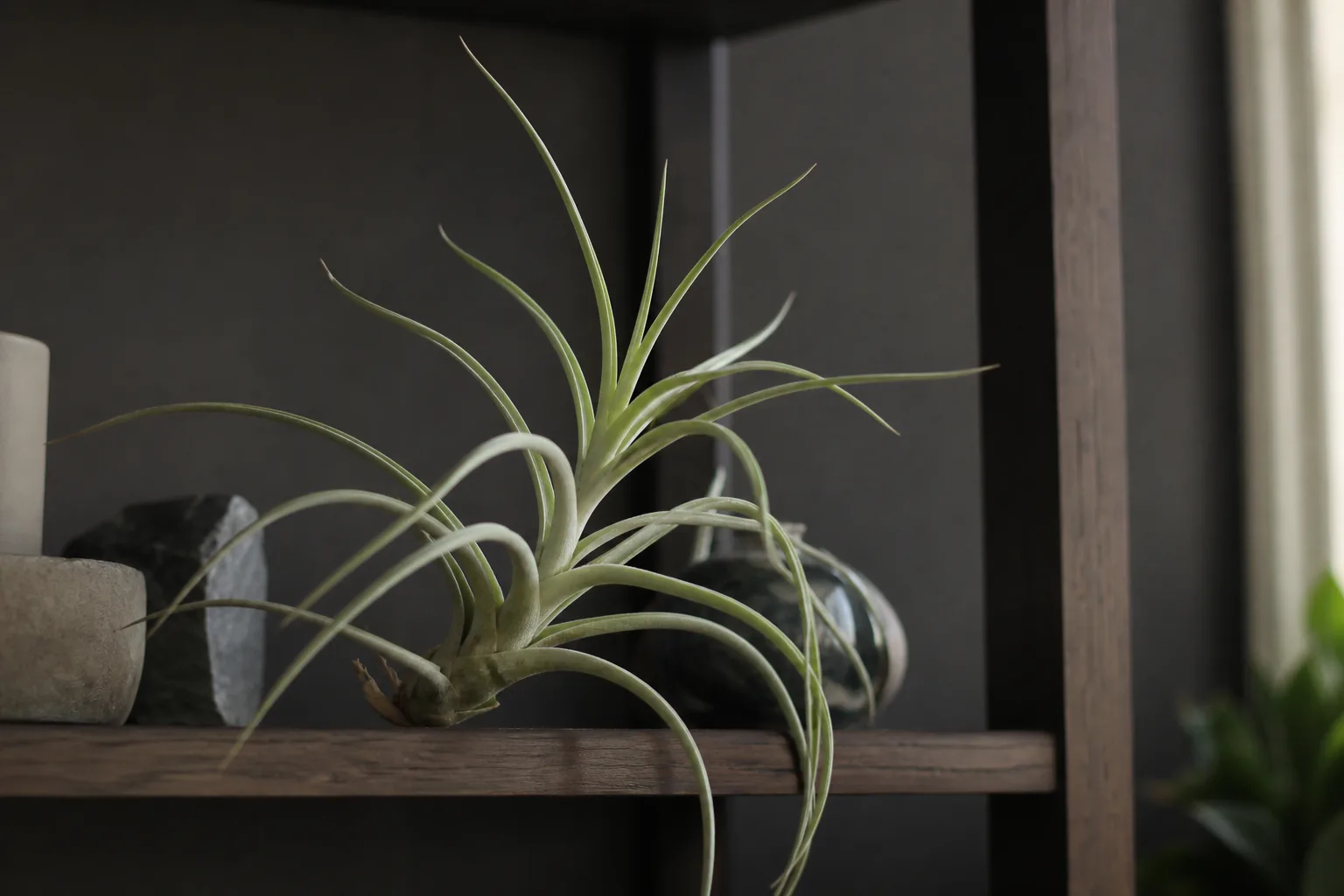
Not Enough Light on Tillandsia: Causes, Checks & Fixes
This guide covers not enough light on Tillandsia. See also the general Not Enough Light guide, watering, and light pages for this plant.
Not Enough Light on Tillandsia: Causes, Checks & Fixes
Quick answer
Tillandsia air plants can look fine in a dim bathroom or terrarium for months while slowly running out of usable light. Unlike thirsty plants that curl and wrinkle, under-lit tillandsia often stay green and upright while the rosette loosens, trichomes dull on silver types, pupping slows, and post-soak drying takes longer because metabolic pace drops.
This page is for diagnosing whether light is the limiting factor-before you change soaking, fertilizer, or display. If you already see obvious open-rosette stretch and need remounting steps, go to leggy growth on Tillandsia. For window orientation, mesic vs xeric placement, and grow-light setup, see the Tillandsia light guide.
First step: run the hand-shadow test at the plant’s current position at midday. Hold your hand between the rosette and the brightest window. A soft but readable shadow means enough brightness for long-term compact growth; no shadow means relocate within a few feet of an east window or filtered south/west glass (mesic green types) or add gentle morning sun for acclimated xeric silver types. Do not soak more often or fertilize until you have tested light. Recheck only new growth after 10 to 14 days.
What not enough light looks like on Tillandsia
Low light on tillandsia is easy to miss because the plant may not wilt. Watch the pattern over weeks, not a single bad leaf:
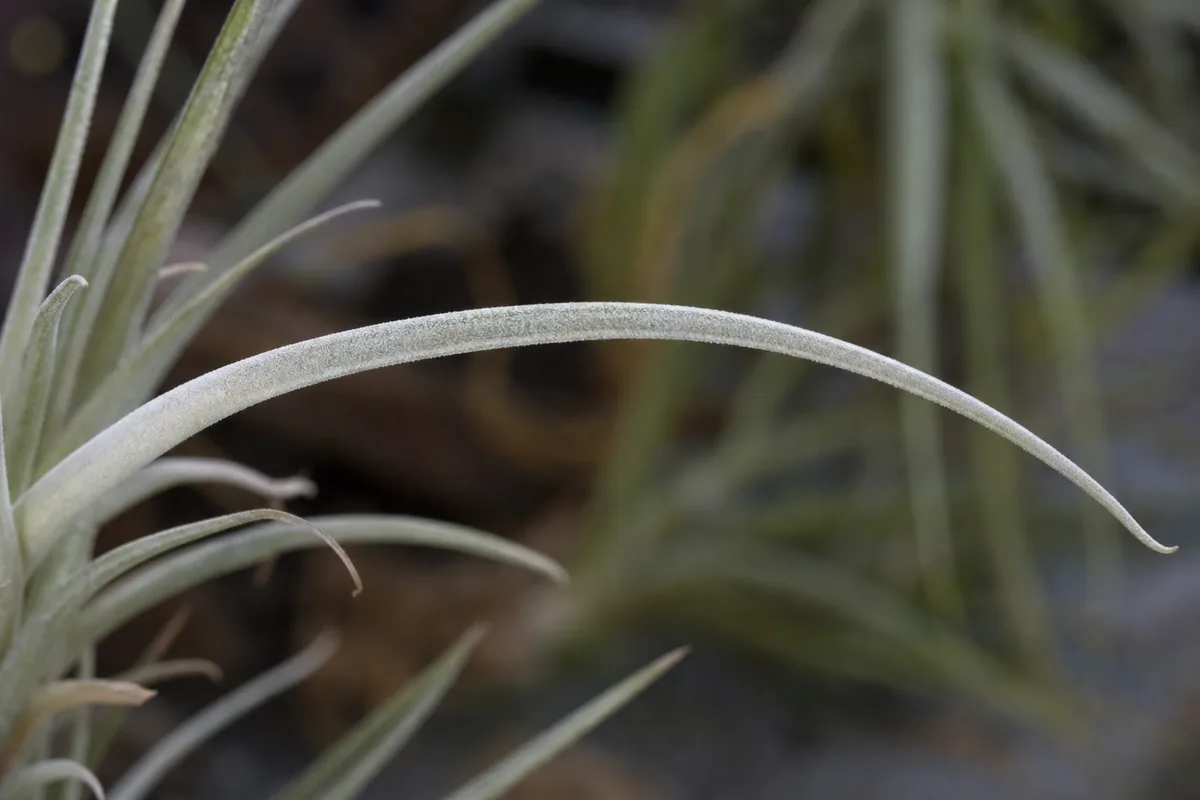
Not Enough Light symptoms on Tillandsia - compare with healthy tissue on the same plant.
- Gradually opening rosette with wider gaps between leaves than when you bought the plant
- Pale or washed-out new growth-dull green on mesic types, loss of silver frosting on xeric types like T. ionantha
- Lean or upward reach toward a window, lamp, or terrarium opening
- Slow post-soak drying-bases stay damp longer because low light slows water use
- Slow or absent pupping and delayed flowering; see no flowers on Tillandsia when bloom never arrives
- Months of “survival” without compact form-especially on bathroom shelves, terrariums away from the opening, or bookshelves more than a meter from glass
These differ from underwatering on Tillandsia, where leaves curl inward and feel dry, and from crown rot, where the base softens with a sour smell. Low-light tillandsia usually keep a firm base until slow drying in a dim corner compounds into rot-fix light and drying together if both are present.
Mesic vs xeric low-light clues
Commercial air plants split into mesic (humid-forest) and xeric (dry-climate) types, and low light shows differently on each. Penn State Extension notes mesic tillandsia have smoother, greener leaves with smaller trichomes, while xeric types show denser trichomes and greater tolerance for brighter exposure once you correct placement.
| Type | Leaf clues | Low-light pattern | Minimum fix |
|---|---|---|---|
| Mesic (e.g., T. bulbosa, T. caput-medusae) | Green, smooth, flexible | Stays green but loosens and elongates; looks inflated, not tight | Bright filtered indirect within a few feet of glass |
| Xeric (e.g., T. ionantha, T. xerographica) | Silver, stiff, fuzzy | Dull trichomes, taller rosette, obvious lean | Bright indirect plus gentle morning sun when acclimated |
If you do not know the species name, silver and stiff usually needs more total brightness once corrected; green and smooth needs filtered brightness without harsh midday sun.
Why Tillandsia runs out of light indoors
Tillandsia are epiphytic bromeliads that absorb water and nutrients through foliar trichomes, not soil. They evolved under canopy-filtered light, cliff-edge morning sun, or open scrub-not the uniform dimness of a decorative terrarium on a side table.
UF/IFAS notes tillandsia need bright but not direct sunlight indoors. Survival in a dim corner is possible for months, but compact growth is not. University of Maryland Extension lists tillandsia among plants that need high light and warns that insufficient light causes spindly stretch, fading leaf color, diminished flowering, and poor growth.
Common tillandsia-specific triggers:
Distance from the window. Light intensity drops sharply even one meter from glass. A rosette on a bathroom shelf three meters from frosted panes may receive far less usable brightness than one on an east sill.
Terrarium and globe displays. Glass looks bright but often shades the rosette when the opening faces sideways. Humidity stays high while light stays low-a slow-stretch trap.
Winter light drop. Shorter days weaken indoor light. A plant that held form in summer can loosen through winter unless you move it closer or add a grow light.
Mesic/xeric mismatch. A green mesic type in the same dim spot that barely sustains a silver xeric type, or blasting a mesic plant with afternoon sun to “fix” dimness, creates the wrong stress.
Light–water coupling. Under-lit tillandsia dry slowly after soaking. If you soak on a bright-window schedule but the plant sits in shade, wet bases plus chronic dimness invite crown rot-see overwatering on Tillandsia and stem rot. More water is not the first fix when light is low.
How to confirm the cause
Work through these checks before trimming, remounting, or changing fertilizer:
- Hand-shadow test - At the rosette’s position at midday, your hand should cast a soft but readable shadow. No shadow confirms the spot is too dim; marginal shadow means move closer to glass or add a grow light.
- Window distance - Measure from the rosette to the pane. More than one meter from an unobstructed window usually means insufficient brightness for compact tillandsia indoors.
- Newest vs oldest leaves - Compare leaf spacing on emerging growth to leaves from six months ago. Widening gaps fit chronic low light; uniform tight spacing fits adequate light.
- Lean direction - Does the rosette point at the brightest window or lamp? Directional lean supports a light deficit.
- Trichome color on xeric types - Silver types should look frosty when well lit. Dull, uniform pale green on new leaves suggests chronic under-lighting.
- Base firmness - Pinch the lowest leaf bases. Firm and dry fits pure low light. Soft, mushy, or sour-smelling suggests crown rot from slow drying-fix light and drying together before expecting recovery.
- Moisture rhythm - If soaking frequency matches a bright-window plant but the rosette sits in shade, slow drying plus loosening rosette means light first, not more water.
- 10–14 day new-growth rule - After any light increase, watch only the youngest emerging leaves for two weeks. Old stretched leaves never revert; new firm, properly colored growth confirms the fix.
Confirmed low light fits when shadow test fails, stretch or dulling pattern matches weak placement, the base stays firm, and a two-week light upgrade produces tighter new growth. If open-rosette stretch is already the main complaint, continue with leggy growth on Tillandsia for remounting and recovery steps.
Lookalike symptoms to rule out
| Symptom cluster | Likely cause | First move |
|---|---|---|
| Gradual rosette opening + weak shadow + firm base | Not enough light | Increase light gradually; recheck new growth in 10–14 days |
| Open rosette + obvious lean + elongated leaves | Leggy etiolation (confirmed stretch) | See leggy growth for remount recovery |
| Tight rosette but no new leaves for months | Slow growth (other stressors) | See slow growth |
| Inward curl + wrinkling + dry feel | Underwatering | Soak, shake dry; confirm drying within four hours |
| Soft base + sour smell + dark lowest leaves | Crown rot | Dry, trim mushy tissue, improve airflow and light together |
| Bloom spike faded + mother fading + pups forming | Normal post-bloom decline | Not a light emergency; support pups per propagation guide |
| Bleached patches + crispy tips | Too much sun | Reduce intensity; acclimate gradually |
Shipping stress can dull new arrivals for a week. If symptoms appeared gradually over months in your home, shipping is not the cause.
Normal winter pause. Growth slows in cool, short-day months without necessarily meaning your window failed-compare against the hand-shadow test before overcorrecting.
First fix for Tillandsia
Relocate to brighter exposure and hold other variables steady for 10 to 14 days.
Choose placement by type:
- Mesic green types - Within a few feet of a bright east, west, or filtered south window; no direct midday sun.
- Xeric silver types - Same bright indirect baseline, plus gentle morning sun on an east sill when acclimated.
Penn State Extension recommends bright indirect light in an east- or west-facing window for tillandsias indoors. The RHS Tillandsia growing guide emphasizes bright filtered light for healthy air plants.
If the plant lived in deep shade for months, acclimate gradually-move closer in stages over 7 to 14 days, or add 15 to 30 minutes of morning sun per day for xeric types. Jumping a shade-grown mesic tillandsia to unfiltered south glass can scorch leaves within days.
Do not fertilize hoping to replace photons. Do not soak more often without increasing light-that invites base rot in dim corners. Do not remount onto wet moss or trim heavily on day one; change light first, then adjust soaking per the Tillandsia watering guide once dry-down speeds up in brighter placement.
Grow lights when windows are not enough
North-facing rooms, windowless bathrooms, and winter short days often need supplemental light even after the best window move.
- Mount a full-spectrum LED grow light 6 to 12 inches above the rosette
- Run 12 to 14 hours daily on a timer
- Keep the fixture directly above the plant, not off to the side where intensity drops sharply
- Combine with natural window light when possible rather than treating the lamp as a permanent dim-corner rescue
NC State Extension notes most tillandsia need high light indoors to flower-compact vegetative growth also depends on adequate daily photon dose. Full grow-light workflow and species-specific intensity notes are in the Tillandsia light guide.
Recovery timeline
Light correction shows in new growth within 10 to 14 days when temperatures are warm and the plant is actively growing. Winter recovery is slower; judge success over four to six weeks if the rosette was severely opened.
Old elongated leaves never shorten or tighten. Only new leaves tell you whether placement works. Bloom and pupping may take months after light stabilizes.
Judge recovery by new leaf spacing, trichome color, and base firmness-not by old stretched foliage disappearing. If stretch morphology is severe, follow the remounting timeline in leggy growth on Tillandsia.
What not to do
Do not soak more often to “perk up” a dull rosette in a dark spot-slow drying plus excess moisture invites base rot at the crown.
Do not place a shade-grown mesic tillandsia into direct afternoon south sun in one move. Acclimate over two weeks.
Do not assume “air plant” means low-light tolerant. Tillandsia survive dim corners longer than many plants but do not stay compact there.
Do not fertilize a stressed rosette before confirming light and drying rhythm.
Do not judge success from old leaves. Only new growth after a placement change counts.
Do not confuse crown softness and rot smell with cosmetic stretch-escalate to rot guides if the base fails.
How to prevent low-light stress next time
Mount new purchases where bright indirect light is realistic long term-not where the terrarium looks best on a dim console. Identify mesic vs xeric before choosing a windowsill. Rotate weekly, supplement winter windows with a grow light, and inspect new leaf spacing monthly.
If you love globe or terrarium styling, place the container directly under a bright window or grow lamp, not across a room. The Tillandsia overview links the full care cluster when you need a broader reset.
When to worry
Chronic low light alone is a placement fix, not an emergency. Escalate attention if:
- The base softens or smells sour while the plant sits in a dim, slow-drying spot
- Several lowest leaves pull away cleanly with black tissue at the meristem
- New growth stays pale and open for six weeks despite a confirmed move to brighter light
- Pests (mealybugs, scale) spread on a weakened rosette-stabilize light before heavy treatment
In those cases, inspect the base, confirm drying after soaks, and address rot or pests before expecting tighter growth.
Conclusion
Tillandsia often hide light starvation behind green leaves and slow decline. Run the hand-shadow test, compare mesic vs xeric clues, rule out underwatering and crown rot, then move within range of bright indirect exposure (with morning sun for acclimated xeric types). Recheck new growth over 10 to 14 days-old stretched tissue will not revert, but with correct light and matched soaking, air plants regain the compact form that made them worth displaying.
Related guides: Tillandsia light · Leggy growth · Slow growth · Watering · No flowers · Overview
Practical checks
Urgency check
Treat as urgent if bases soften, rot smell spreads, pests cover multiple rosettes, or several lowest leaves fail at once while the plant stays wet in a dim spot-not for gradual rosette opening alone.
Best inspection order
Hand-shadow test → window distance → newest leaf spacing → base firmness → soak dry-down time → lean direction → leaf undersides for pests.
Severity note
Use spreading base rot and persistent open rosette after a confirmed light upgrade-not a single dull outer leaf-to decide how fast to act.
When to use this page vs other Tillandsia guides
- Tillandsia watering guide - Use for routine moisture checks before assuming not enough light is the main issue.
- Tillandsia problems hub - Browse all 19 common issues on this species.
- Leggy Growth on Tillandsia - Different entry point when symptoms overlap with not enough light.
- Slow Growth on Tillandsia - Different entry point when symptoms overlap with not enough light.
- Yellow Leaves on Tillandsia - Different entry point when symptoms overlap with not enough light.