Tillandsia Not Blooming: Patience, Encouragement &
Quick answer
Most tillandsia bloom once per rosette, then slowly decline while pups form-a monocarpic lifecycle, not a care failure. First step: decide which scenario fits-immature plant (wait), mature healthy plant (check light and culture), or post-bloom rosette with pups (success, no rebloom on that plant).
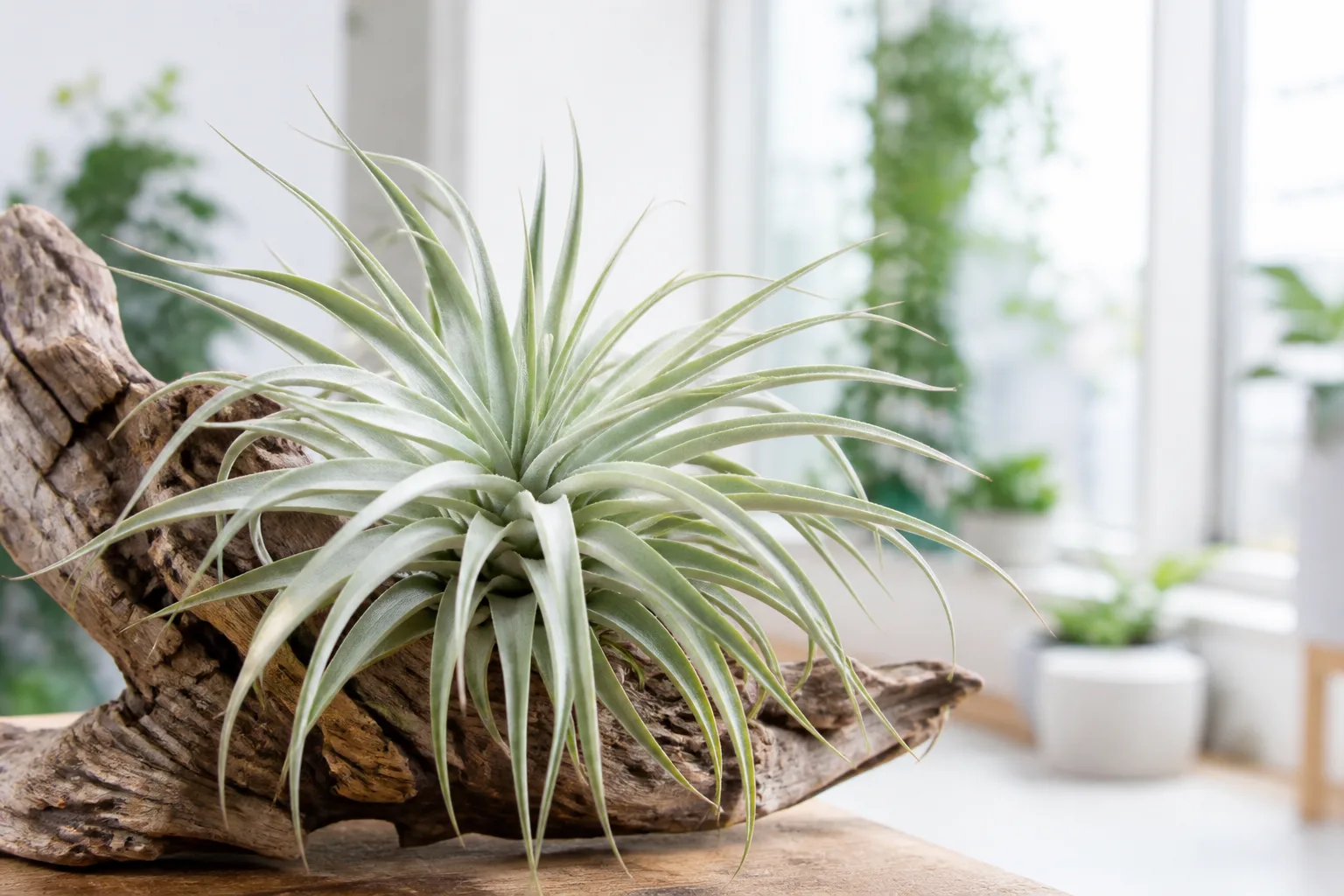
Tillandsia Not Blooming: Patience, Encouragement & Monocarpic Life Cycle
This guide covers no flowers on Tillandsia. See also the general No Flowers guide, watering, and light pages for this plant.
Tillandsia Not Blooming: Patience, Encouragement & Monocarpic Life Cycle
Quick answer
If your tillandsia (Tillandsia spp.) has never flowered-or your plant bloomed months ago and shows no sign of a second bloom-start by naming which situation you are in, not by stacking random fixes.
Scenario A - young rosette, no bracts yet: Normal. Most tillandsia need years of maturity before their first bloom. A compact Tillandsia ionantha under a year old with firm green leaves and no pink center is simply not ready-not broken.
Scenario B - mature plant, good culture, still no bloom: Check bright indirect light, proper soak-and-dry rhythm, and airflow first. Only then consider optional ethylene forcing on a healthy adult rosette.
Scenario C - plant already bloomed, now raising pups, no second flowers: Success. Most tillandsia bloom once per rosette, then slowly decline while pups form. That rosette will not flower again; the pups will-on their own schedule.
First step: Match your plant to A, B, or C above before changing water, light, or fertilizer.
Is no flowering normal on tillandsia?
Yes-often completely normal. Tillandsia are monocarpic bromeliads: each individual rosette grows to reproductive maturity, flowers once, sets seed or pups, and then gradually senesces. UF/IFAS notes that the mother plant slowly dies after bloom while new plants sprout from it-that is the intended lifecycle, not a penalty for bad care.
Three distinct “no flowers” intents drive most searches:
| Your situation | Is it normal? | What to do |
|---|---|---|
| Young plant, never bloomed, firm leaves | Yes-immaturity | Wait; optimize light and soak rhythm per the light and watering guides |
| Mature plant, years old, bright light, no bloom yet | Sometimes-culture or patience | Run the maturity checklist below; consider ethylene only if healthy and mature |
| Plant bloomed 6–18 months ago, pups at base, no rebloom | Yes-monocarpic biology | Support pups; read the propagation guide |
| Plant bloomed, center mushy and wet, sour smell | No-crown rot | See stem rot and overwatering-not a flowering issue |
Brief exception: A few tillandsia species such as T. intermedia and T. pringlei are polycarpic and can flower repeatedly on the same rosette. Most retail air plants-including ionantha, xerographica, caput-medusae, and bulbosa-are monocarpic. Assume once-per-rosette unless you know your species is an exception.
What a tillandsia bloom looks like
Knowing what you are waiting for prevents mistaking normal immaturity for failure-or missing an emerging bloom.
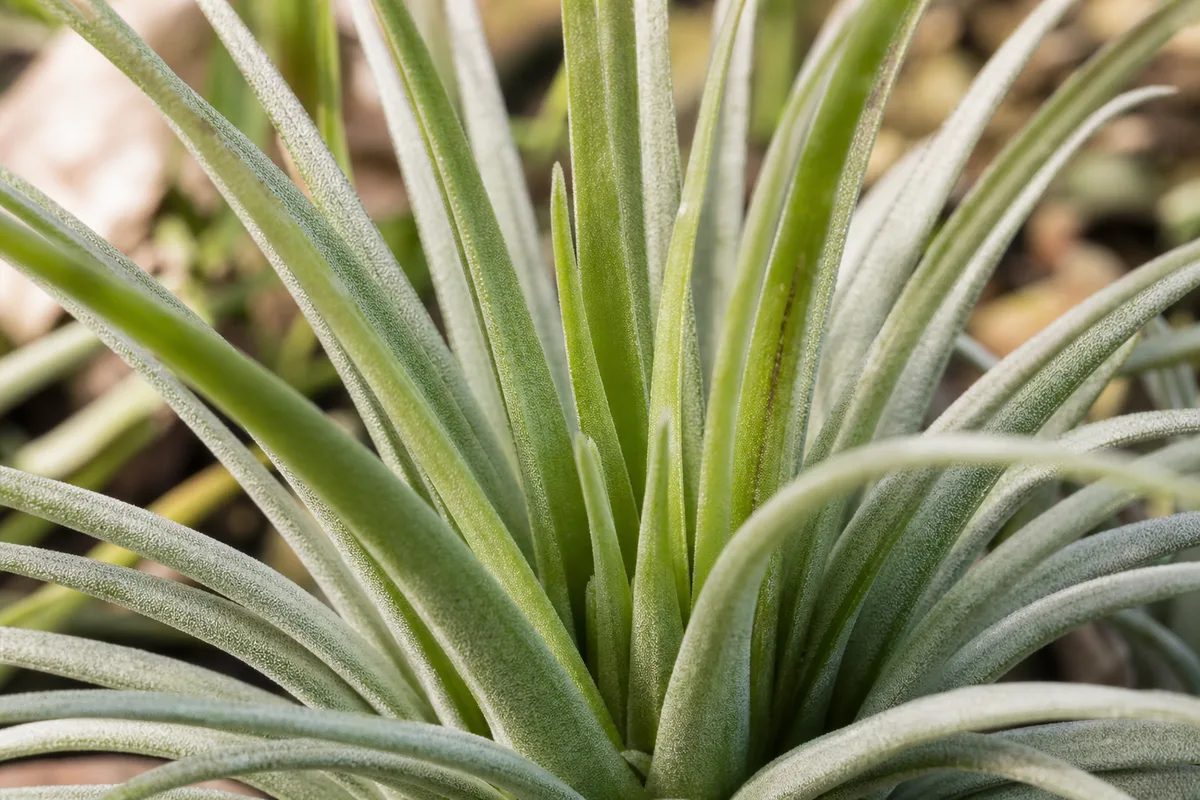
No Flowers symptoms on Tillandsia - compare with healthy tissue on the same plant.
Inflorescence basics: Tillandsia flowers emerge from the center of the rosette on a stalk called an inflorescence. Colorful bracts-modified leaves-often appear first and last far longer than the actual flowers. Individual blooms are typically small tubular flowers less than two inches across on many species.
Species differences you will see in shops:
- Tillandsia ionantha: Center leaves blush pink, rose, or purple before tiny purple flowers open from the crown. The whole show may fit in a golf-ball-sized rosette. Bracts can last several weeks.
- Tillandsia xerographica: A tall, arching silvery spike rises from the wide rosette; bracts blush pink in strong light. Bloom can last months on large specimens. First bloom may take many years in home culture.
- Tillandsia caput-medusae: Snake-like leaves from a swollen base; a red or pink bracted spike emerges from the center. Flowers are tubular and often purple.
- Tillandsia bulbosa: Bulbous base with twisted leaves; bracts and flowers emerge from the center, often in pink or purple tones.
What “no flowers” looks like on a healthy immature plant:
- Uniform leaf color with no blush, spike, or bract swelling at the center
- Firm leaves, dry intact base, steady but slow new leaf segments
- No pup initials yet (pups usually follow bloom, not precede it on most species)
What “no flowers” looks like after a successful bloom:
- Spent or removed bloom stalk at the crown
- One to several pups swelling at the base or between lower leaves
- Mother outer leaves slowly yellowing or drying while pups stay green and firm-normal monocarpic decline, not urgent rot unless the center is mushy
Why tillandsia may not flower
Immaturity-the most common reason
Tillandsia cannot bloom until a rosette accumulates enough energy and reaches species-specific maturity. Penn State Extension notes that air plants bloom only once in their lifetime-but that event may take years to arrive.
Approximate first-bloom windows in good home culture (bright light, proper soak-and-dry):
| Species | Typical wait for first bloom | Notes |
|---|---|---|
| T. ionantha | 1–3 years | Fastest common retail type; blush at center is the first sign |
| T. caput-medusae | 2–4 years | Blooms from bulbous base once rosette is substantial |
| T. bulbosa | 2–5 years | Mesic type; needs filtered bright light |
| T. xerographica | 5–25 years | Very slow; one leaf cycle per year is normal pace |
| T. stricta, T. brachycaulos | 2–4 years | Intermediate mesic/xeric types |
A “small ionantha” from a gift shop may be six months old. No pink center is expected-not a deficiency.
Insufficient light-the main culture blocker
Tillandsia in dim corners can stay alive for years without ever blooming. Penn State Extension recommends bright, indirect light-typically an east- or west-facing window-for best growth and flowering potential. RHS guidance emphasizes bright diffused light with protection from harsh direct sun, especially for mesic green types.
Mesic vs xeric bloom thresholds:
- Mesic types (bulbosa, greener stricta): need bright filtered light, no hot midday sun. Chronic dimness produces loose, pale rosettes that never initiate bloom.
- Xeric types (ionantha, xerographica, caput-medusae): tolerate more intensity-often bright indirect plus one to three hours of gentle morning sun when acclimated. Still fail to bloom in dark shelves and closed globes.
See the Tillandsia light guide for mesic vs xeric placement and grow-light setup.
Water stress and poor drying rhythm
Bloom initiation requires a healthy photosynthetic rosette. Over-soaking without drying, mist-only survival on xeric types, or water trapped in the crown weakens the plant and redirects energy toward survival-not reproduction. Match soak frequency to species per the watering guide: typically 20–30 minute weekly soaks for mesic types with shake-dry and upside-down drying within four hours.
Already bloomed-monocarpic no-rebloom
If your plant flowered within the past one to three years and now shows pups at the base, the absence of a second bloom on that same rosette is biology. RHS notes that most bromeliads including tillandsia are monocarpic-they grow to maturity, flower, set seed or pups, then die, leaving offsets to grow on.
Do not fertilize a fading mother hoping to restart flowering. Redirect care to pup development and eventual separation per the propagation guide.
Optional: ethylene has not been used (and does not need to be)
Some mature plants bloom naturally once culture is right. Others sit ready for years. Growers and nurseries sometimes force bloom with ethylene gas from ripening fruit-optional, not required for a healthy collection.
How to confirm the cause
Run this checklist in order:
- Bloom history: Has this exact rosette ever shown bracts or a flower spike? If yes → Scenario C (pups are the goal). If no → continue.
- Age estimate: When did you acquire it? Ionantha under ~12 months is almost certainly immature. Xerographica under ~5 years is still young.
- Light test: At the rosette at midday, can you read comfortably without a lamp? A soft hand shadow suggests adequate brightness for bloom troubleshooting. No shadow means fix light first via not enough light.
- Leaf firmness and base check: Firm leaves and dry intact base fit immaturity or culture stall. Soft, translucent, sour-smelling center fits rot-not a flowering problem.
- Pup presence: Pups without a bloom you remember may mean you missed the show, bought a post-bloom plant, or have a offset from a parent elsewhere. Pups after bloom = success.
- Species ID: Match expectations to mesic vs xeric type. A xeric ionantha misted twice weekly may never build bloom energy.
Confirmed “wait, not fix”: Young plant + adequate light + firm base + no bloom history.
Confirmed “culture first”: Mature-looking plant + failed shadow test OR wrong soak rhythm for species type.
Confirmed “lifecycle success”: Post-bloom rosette + enlarging pups + gradual mother fade.
First fix: patience and culture before forcing
Match your first action to the scenario-one change at a time.
Scenario A or immature plant → wait and optimize culture
Do not reach for fruit bags or bloom fertilizer on a juvenile rosette. Move to bright indirect light per mesic vs xeric rules in the light guide. Establish proper soak-and-dry rhythm per the watering guide. Ensure airflow-avoid closed globes that stay humid after misting.
Judge progress by firm new leaf segments and species-appropriate growth pace, not by flowers appearing this month.
Scenario B - mature, healthy, good light, still no bloom → optional ethylene
Only after light, water, and base firmness pass, consider ethylene forcing on a rosette you are willing to let complete its lifecycle. Skip this on stressed, dehydrated, or recently shipped plants.
Scenario C - post-bloom with pups → support offsets
Remove spent bloom stalks once bracts fade-see the pruning guide for technique. Leave pups attached until one-third to one-half parent size. Maintain light and soak rhythm for the cluster. The mother will fade; the pups are your next bloom cycle.
The ethylene apple bag method
Ripening apples and pears release ethylene gas, which can trigger bromeliads-including tillandsia-to initiate their final reproductive phase. This is industry practice in nurseries and a home option for impatient growers with mature, healthy plants.
Important caveats before you start:
- Ethylene forces bloom and commits a monocarpic rosette to decline after flowering-it is not a harmless “bloom booster.”
- Use only on mature rosettes with firm leaves and good culture history.
- Never force immature, dehydrated, or rot-stressed plants.
- Blooms forced early on small plants may shorten useful life and produce fewer pups.
Step-by-step protocol:
- Confirm maturity - ionantha at least palm-sized with multiple leaf generations; xerographica substantially wider than a fist; plant healthy and dry.
- Drain the plant - allow it to dry fully after its last soak; ethylene works on hydrated but not soggy tissue.
- Bag setup - place the tillandsia in a clear plastic bag with a ripe apple or pear. Seal the bag. Keep at bright indirect light-not direct sun inside the bag, which can cook the plant.
- Duration: one to two weeks - not overnight. Check every few days. Replace fruit as it over-ripens or rots. You may open the bag briefly for air exchange, but keep it sealed most of the time.
- Remove the bag after one to two weeks. Return the plant to normal mounted display and care.
- Watch for bract color at the center over the next two to six weeks. A bloom spike may follow. After bloom, expect pup formation and gradual mother decline-normal monocarpic completion.
If no response after six weeks, return to culture optimization. Forcing twice in one year is unnecessary and stressful.
Recovery timeline and pup development as success
There is no “recovery” from absent flowers on an immature plant-only waiting with good culture.
Realistic bloom timelines after culture is correct:
- T. ionantha: First bloom often one to three years from purchase as a small offset; bract blush may appear two to six weeks after ethylene forcing on mature plants.
- T. xerographica: First bloom five to twenty-five years-judge success by annual leaf cycles, not monthly expectations.
- Post-bloom phase: Mother may remain partially green six to eighteen months while pups enlarge. UF/IFAS notes new plants sprout after bloom as the mother fades.
Signs you are succeeding without flowers yet:
- Firm new leaf segments in the center
- Proper leaf color for species (silver on xeric, green on mesic)
- Faster dry-down after soaking within four hours
- Visible pup initials after a past bloom
Signs the situation is worsening-not a flowering delay:
- Center turning mushy with sour smell
- Whole rosette wrinkling and dulling without recovery after soak
- No new segments through an entire warm season in tested bright light (see slow growth)
Lookalike symptoms
| What you see | Likely explanation | Action |
|---|---|---|
| No bracts, firm green rosette, plant under 2 years | Normal immaturity | Wait; optimize light and water |
| No bracts, pale stretched leaves leaning to window | Too little light | Not enough light guide |
| No rebloom, pups at base, outer leaves yellowing slowly | Post-bloom monocarpic decline | Support pups; propagation guide |
| No flowers, center black and wet | Crown rot | Dry, trim mush; stem rot |
| No flowers, tight silver rosette, mist-only for months | Underpowered culture on xeric type | Full soaks per watering guide |
| Pink center already present | Bloom starting-not “no flowers” | Enjoy; plan for post-bloom pup care |
What not to do
- Do not expect rebloom on the same rosette after monocarpic flowering-grow pups instead.
- Do not use the apple bag overnight or on immature plants-use the one-to-two-week sealed protocol with life-stage awareness.
- Do not repot into soil hoping to trigger flowers-tillandsia are epiphytic bromeliads that absorb moisture through leaf trichomes, not soil roots. Soil traps moisture and causes rot.
- Do not stack bloom fertilizer, forcing, and relocation on the same day-change one variable, then observe two to four weeks.
- Do not confuse post-bloom mother fade with rot-gradual outer leaf yellowing with firm pups differs from mushy wet centers.
- Do not discard a post-bloom plant that is raising pups-that is successful reproduction, not failure.
How to prevent disappointment next time
Buy with lifecycle expectations. Ask species name when possible. Ionantha blooms relatively soon; xerographica is a multi-year commitment before first flower.
Place for bloom-capable light from day one. Follow mesic vs xeric rules in the overview and light guide-not a dark bathroom shelf or sealed globe.
Water for growth, not bare survival. Mesic types need regular soaks; xeric types need thorough rinses or soaks-not mist alone for years.
Inspect weekly for center blush during warm months-that pink or red flush at the crown is the first bloom signal on many ionantha and stricta types.
After bloom, plan for pups. Read the propagation guide before flowers fade so you know separation timing. Trim spent spikes per the pruning guide to keep moisture from lodging in dead bracts.
Optional light feeding during active growth - dilute bromeliad fertilizer at quarter strength monthly in spring and summer may support vigor; see the fertilizer guide. Fertilizer is secondary to light and water-not a substitute for maturity.
Practical checks
Urgency check
No flowers alone is never urgent. Treat as urgent only when paired with:
- Mushy wet center with sour smell (crown rot)
- Rapid whole-rosette collapse after soaking (advanced rot or severe dehydration cycle)
- Pest webbing or cottony masses covering the crown (see spider mites or mealybugs)
Post-bloom yellowing outer leaves with firm enlarging pups is normal-not urgent.
Best inspection order
Bloom history → species maturity estimate → hand-shadow light test → soak rhythm vs species type → base firmness → pup presence → center color change (emerging bracts).
Severity note
Judge “no flowers” by scenario, not by calendar anxiety. A healthy immature tillandsia with firm leaves is succeeding even with zero bracts. A post-bloom mother raising pups has already succeeded-the next bloom lives in the offsets.
Conclusion
Tillandsia without flowers usually means patience, culture adjustment, or monocarpic biology-not a broken plant. Young rosettes need years. Mature rosettes need bright light and proper soak-and-dry rhythm before optional ethylene forcing. Post-bloom plants will not flower again on the same rosette-but pups are the intended next chapter. Match your scenario, fix one variable at a time, and use the propagation, pruning, light, and watering guides for the culture baseline that makes blooming possible when the plant is ready.
When to use this page vs other Tillandsia guides
- Tillandsia watering guide - Use for routine moisture checks before assuming no flowers is the main issue.
- Tillandsia problems hub - Browse all 19 common issues on this species.