How to Prune Tillandsia: When, Where & What to Cut
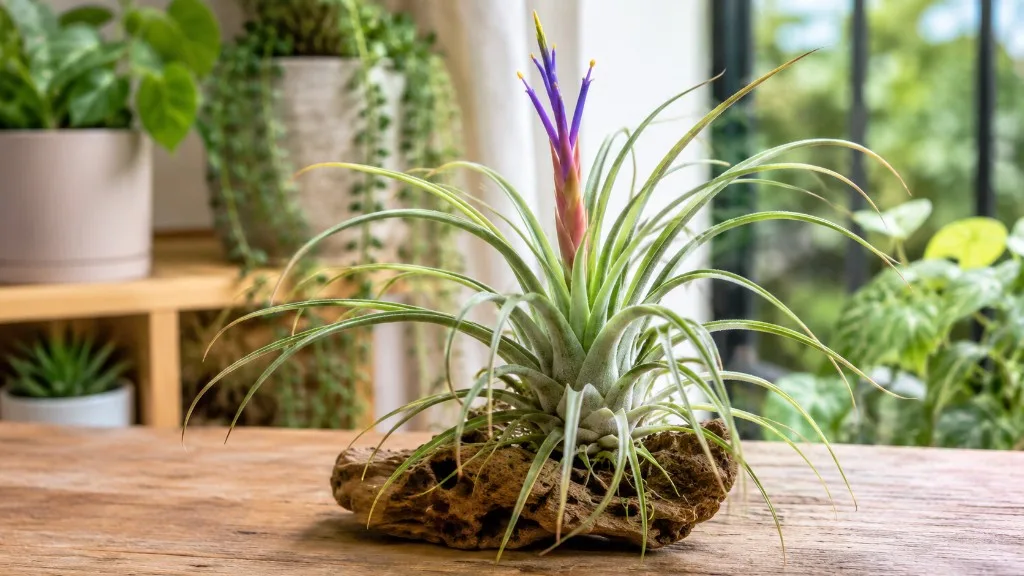
How to Prune Tillandsia: When, Where & What to Cut
How to Prune Tillandsia: When, Where & What to Cut
Quick Answer - Grooming, Not a Haircut
First action: inspect the rosette in good light, then gently pull off only lower leaves that are fully dried and release without resistance - papery, brown, and no longer green at the base. Tillandsia pruning is grooming and cleanup, not shaping. These epiphytic bromeliads do not branch from nodes, respond to hard cutbacks, or regrow from mid-leaf amputations. Leaves covered in trichomes are the plant’s entire water-and-nutrient intake system. Most healthy air plants need occasional removal of spent lower foliage, optional cosmetic tip trims, and post-bloom spike cleanup - not scheduled shearing.
What Tillandsia Pruning Actually Means
For home growers, pruning Tillandsia means selective grooming: pulling fully dead lower leaves, trimming brown or broken tips on otherwise green blades, removing dried inflorescences after bloom, and clearing decaying tissue from a fading mother plant. It does not mean cutting the rosette back for fullness, thinning green leaves for size control, or pinching growing tips to force bushiness.
Each leaf is a functional organ, not disposable decoration. Penn State Extension notes that tillandsias absorb water and nutrients through leaf trichomes - the silvery scales that give many species their frosted look. Remove too much healthy leaf surface and you reduce the plant’s ability to hydrate and feed itself. Michigan State University Extension describes routine maintenance as gently pulling dried lower leaves and angle-trimming damaged blades or dried tips. Grooming tidies spent tissue and improves airflow at the base; it does not correct chronic underwatering on Tillandsia, weak light, or rot from water trapped between leaves.
How Tillandsia Grows - and Why Cut Placement Matters
Tillandsia belongs to Bromeliaceae, the bromeliad family. Most houseplant species are atmospheric epiphytes - they anchor to bark, wire, or displays without soil and rely on leaf trichomes rather than roots for moisture uptake. Growth emerges from a central rosette; there is no woody stem to cut back and no lateral bud behind a leaf joint.
Lower, older leaves naturally senesce as new ones form toward the center. That turnover is normal, especially when a plant acclimates to a new home. University of Vermont Extension recommends removing parent leaves as they die back when pups remain attached, and trimming damaged or dead leaves during routine care. Pups often develop tucked beneath sheltering lower leaves at the base. Pull those leaves too early and you expose immature offsets to drying and mechanical damage.
After flowering, each rosette is monocarpic: the mother plant gradually declines while raising pups. UF/IFAS Gardening Solutions notes that the mother slowly dies after bloom but new plants sprout from it. Grooming during this phase removes decaying tissue without fighting the life cycle. Understanding this architecture is why vine-style or shrub-style pruning advice fails on air plants.
When to Prune Tillandsia
Timing depends on why you are cutting. Fully dried lower leaves can be removed whenever you notice them. Cosmetic brown-tip trims and spent bloom spike removal fit any time the plant is fully dry after its last soak or mist. Batch cleanup of several dead lower leaves is easiest when the plant is actively growing in spring through early fall, when warmer temperatures and brighter days support new center growth.
Avoid grooming sessions immediately after soaking, while the base is still damp, or when you see soft, mushy tissue at the core - that is rot management, not routine trimming.
Best Time for Routine Grooming
Spring through early fall is the most forgiving window for removing several dried lower leaves at once on a healthy Tillandsia. Longer daylight and warmer room temperatures align with active rosette growth. One fully papery leaf can come off anytime; the seasonal note matters when catching up on multiple spent lower leaves after a dry winter indoors.
The same logic applies across common species - Tillandsia ionantha, T. caput-medusae, T. stricta, and large xeric forms like T. xerographica. Xeric species with stiffer, more drought-adapted leaves may shed lower foliage more slowly; mesic types with softer leaves often show browning sooner when humidity drops.
When Dead or Damaged Leaves Can Come Off Immediately
Remove a lower leaf as soon as it is fully dried - brown, papery, and releasing with a gentle downward tug - regardless of season. Fully dead tissue holds moisture after watering and can harbor fungi or pests against healthy growth. The same immediate rule applies to broken or torn blades that will not recover; snip the damaged section at an angle through dead or compromised tissue only.
Distinguish dead from dehydrated. A leaf that is green but curling inward may need more water and light, not scissors. A leaf yellowing from a soft, wet base signals basal rot - fix drying and airflow before cosmetic grooming.
After Flowering and During Mother Plant Decline
Once bloom color fades and bracts dry, you can remove the spent inflorescence near its base with clean scissors. The stalk no longer contributes meaningfully and can trap moisture against the rosette. After bloom, pups form at the base while the mother gradually fades. UF/IFAS Gardening Solutions describes this as the normal end of the mother rosette’s cycle, not a care failure.
During decline, remove only fully dead mother leaves as they dry - especially if you are leaving pups attached to form a clump. University of Vermont Extension advises removing fading parent foliage while pups mature. Do not strip green tissue from a still-active mother trying to support offsets.
What to Check Before You Cut
Before grooming, hold the plant in Tillandsia light guide and scan from base to center. Note which lower leaves are fully papery versus merely tip-brown. Look for pup bumps tucked under bottom leaves - small triangular shoots with their own central growing point. Check that the base feels firm, not mushy, and that no water is pooled between leaves from a recent soak.
Confirm the plant has been dry for several hours after its last watering. Grooming wet tissue increases tear risk and can push moisture into fresh wounds. If you display Tillandsia in a closed terrarium, remove it to an airy spot before pulling leaves or trimming tips.
The First Cut to Make
Pull one fully dried lower leaf first. Grasp the dead leaf near the base, support the rosette with your other hand, and tug gently downward. If it releases cleanly without tearing green tissue, set it aside and assess the next candidate. If the leaf resists or green tissue comes with it, stop - that leaf is not fully dead, or a pup may be attached beneath it.
Only after dead lower leaves are cleared should you decide whether cosmetic tip trimming or bloom spike removal is worth doing in the same session.
How to Prune Tillandsia Step by Step
Removing Fully Dried Lower Leaves
- Work with dry plants in good light.
- Start at the outermost bottom layer and identify leaves that are fully brown and papery.
- Tug gently downward. Dead leaves should release without force.
- If a pup is visible beneath a still-attached lower leaf, leave that leaf until the pup reaches at least one-third the mother’s size. Penn State Extension recommends separating pups at that size; until then, the sheltering leaf protects the offset.
- Discard removed tissue; do not leave decaying leaves in terrariums or on mounting surfaces.
This step improves airflow at the base and prevents old leaves from trapping soak water - a common rot trigger noted in air plant maintenance guides.
Trimming Brown or Broken Leaf Tips
Brown tips on otherwise green leaves are usually cosmetic - often from underwatering, low humidity, or brief sun stress. Michigan State University Extension advises trimming dried tips at an angle so the cut blends with the leaf’s natural shape.
Use small, sharp scissors sterilized with rubbing alcohol. Cut only the dead brown section, angling the blade to follow the leaf edge. Remove the minimum tissue needed for a clean look. Avoid shortening healthy green blades aggressively; leaf surface area is how Tillandsia feeds itself.
If tips keep re-browning after trims, adjust watering and light before trimming again. Repeated tip cuts on the same leaf are a sign the growing conditions - not the scissors - need attention.
Removing the Spent Bloom Spike
After flowers fade and bracts dry, snip the inflorescence close to its base with sterilized scissors. Cut through the dried stalk only; do not dig into green rosette tissue. Removing the spent spike redirects marginal energy toward pup development and eliminates a moisture trap.
If flowers are still attractive, wait until you are ready to discard them - trimming early is optional, not urgent. Some species hold color for weeks; enjoy the display before grooming.
Cleaning Up a Declining Mother Plant
When a post-bloom mother fades, remove only leaves that are fully dry while leaving firm green tissue and attached pups intact. The mother may stay partially functional for months, supporting offsets even as outer leaves senesce. University of Vermont Extension describes removing parent leaves as they die back when pups remain in place.
Do not pull green leaves from a declining mother in an attempt to “refresh” the plant - that removes photosynthetic capacity from a rosette already winding down. The next generation is the pups, not a rejuvenated mother.
How Much You Can Safely Remove
There is no fixed percentage rule because air plants vary enormously in size and leaf count. The safe principle is simpler: remove only tissue that is fully dead, fully dry, or purely cosmetic damage on an otherwise healthy blade - typically one to several lower leaves per session on a mature plant.
Spread larger cleanups across two sessions a week apart if you are clearing many dried lower leaves after a stressful season. Small single-rosette specimens like T. ionantha have little spare leaf mass; take only what is unmistakably dead. Treat removing one-third of total foliage as an absolute ceiling, not a target - most Tillandsia never need to approach that limit.
Cosmetic tip trims should remove millimeters to a centimeter of brown tissue, not half the leaf length.
What Not to Cut
- Green leaves for shape or size - Tillandsia does not back-bud or branch; removed green leaves do not regrow from the cut site.
- Sheltering lower leaves covering small pups - wait until pups are at least one-third parent size.
- Wet or mushy base tissue - soft rot needs drying, airflow, and possibly removal of only the diseased portions after the plant is dry; not forceful pulling on green tissue.
- Central new growth - the active heart of the rosette; damage here can halt the plant.
- Roots on mesic species - unless they are clearly dried and detached; roots assist anchoring and some uptake.
Pup separation is propagation, not pruning. If offsets are size-ready, follow a dedicated pup-removal workflow rather than folding separation into a casual grooming session.
Tools and Sanitation
Use small, sharp scissors or precision snips - bonsai-style shears work well in tight rosettes. Sterilize blades with rubbing alcohol before and between plants, especially if you recently trimmed rot-affected tissue.
Fingers alone are enough for fully dried lower leaves. Avoid tearing leaves that resist; switch to scissors only when trimming tips or dried bloom stalks. Dull blades crush trichomes and leave ragged edges that dry unevenly.
Aftercare and Recovery
After grooming, place Tillandsia in bright indirect light with good airflow and resume your normal soak-or-mist routine only once any cut surfaces feel dry to the touch - usually within a few hours for tip trims, longer if you removed a bloom spike or separated a pup.
Do not seal freshly groomed plants into glass globes or terrariums until they have been fully dry for at least four hours after the next watering. Penn State Extension emphasizes that air circulation is essential and that plants should dry thoroughly before returning to enclosed displays.
Skip fertilizer on grooming day unless the plant is actively growing and unstressed. A light bromeliad or orchid fertilizer at quarter strength can resume at the next regular monthly feeding if conditions are otherwise sound.
Recovery Timeline
Removing a fully dead lower leaf produces immediate visual improvement with no recovery wait - the plant already abandoned that tissue. Angled tip trims look finished as soon as the cut dries, usually within hours.
If you removed a spent bloom spike, expect pup swelling to become more visible over weeks to months, depending on species and light. New center leaves on healthy rosettes may take similar time to noticeably lengthen after a grooming session. Tillandsia does not bounce back with a flush of new branches; recovery means stable existing growth, no further decline, and visible pup or center-leaf development.
Signs Grooming Worked
- The base looks cleaner and dries faster after soaking
- Remaining leaves stay firm and green without new yellowing at the core
- Pups continue enlarging after bloom-spike removal
- Brown tips do not immediately spread inward on trimmed blades once watering and light are corrected
Signs Grooming Went Wrong or Was Poorly Timed
- Fresh wounds turning brown or mushy within days - often grooming while wet or rot already present
- Green tissue tearing at the base when pulling “dead” leaves - you cut too early
- Widespread inward browning after heavy tip trimming - too much functional leaf area removed
- Pup stall or shrinkage after removing sheltering leaves prematurely
Mistakes to Avoid
- Grooming right after a soak while the base is still damp - invites rot at fresh wounds and torn bases.
- Pulling leaves that resist - if it will not release cleanly, it is not fully dead or a pup is attached.
- Shearing multiple green leaves to make the plant “smaller” - permanent loss of intake surface with no regrowth.
- Ignoring brown tips without fixing care on Tillandsia - trimming alone will not stop re-browning from drought or excess direct sun.
- Leaving decaying lower leaves in terrariums - traps humidity against healthy tissue.
- Confusing monocarpic decline with rot - a post-bloom mother fading while pups grow is normal; mushy wet cores are not.
When Not to Prune
Delay grooming when the plant is wet from a recent soak, when you see soft mushy tissue at the base, when the rosette is severely dehydrated and curled tight (rehydrate first, reassess in 24–48 hours), or when a newly acquired plant is still acclimating and shedding a few lower leaves in its first month - remove only what is unmistakably dead and wait before batch cleanup.
Skip cosmetic tip trims on species where the natural wispy form is part of their appeal - some xeric tillandsias carry naturally curled or silvered outer leaves that are not damage.
Conclusion
Tillandsia rewards a light hand. Assess the rosette, pull fully dried lower leaves first, protect pups under sheltering foliage, angle-trim only dead tip tissue on green blades, and remove spent bloom spikes once color fades. Good grooming improves airflow and appearance; it cannot replace soak-and-dry discipline, bright indirect light, or patience through the mother plant’s post-bloom chapter. When in doubt, remove less - these plants keep their strength in every green, trichome-covered leaf you leave intact.
When to use this page vs other Tillandsia guides
- Tillandsia overview - Start here for whole-plant context before deep-diving this topic.
- Tillandsia problems hub - Jump to symptom-specific fix guides when this care topic does not resolve the issue.
- Leggy Growth on Tillandsia - Escalate here when pruning adjustments are not enough.
- Slow Growth on Tillandsia - Escalate here when pruning adjustments are not enough.
- Brown Tips on Tillandsia - Escalate here when pruning adjustments are not enough.