Underwatering on Tillandsia: Causes, Checks & Fixes
Quick answer
Tillandsia underwatering is chronic thirst at the leaf level-too few full soaks, mist-only routines, or dry heated air that fails to recharge trichomes. First step: remove the plant from its mount, give a 20-to-30-minute room-temperature submersion soak, shake dry upside down in bright airflow, and shorten the interval before the next soak.
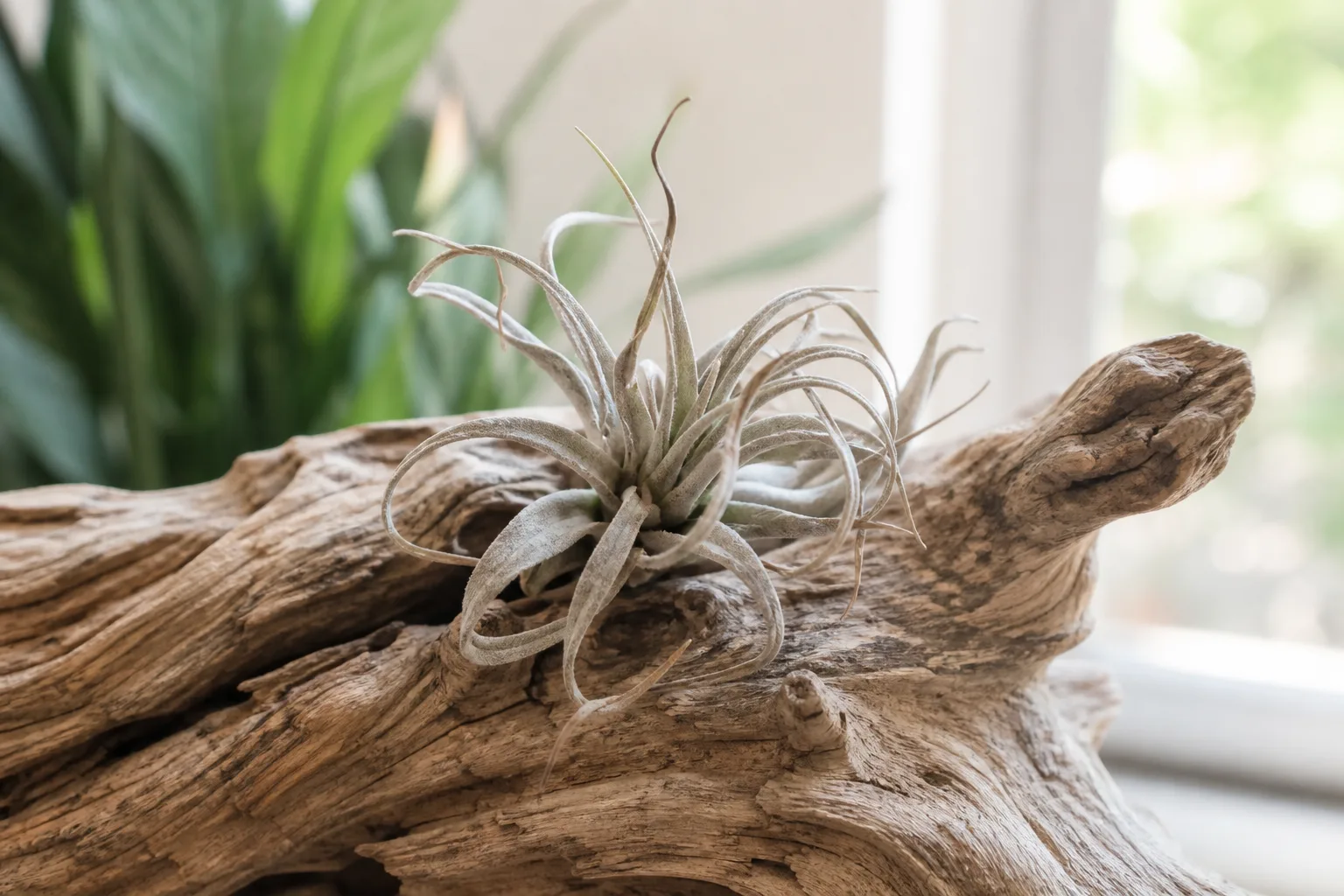
Underwatering on Tillandsia: Causes, Checks & Fixes
This guide covers underwatering on Tillandsia. See also the general Underwatering guide, watering, and light pages for this plant.
Underwatering on Tillandsia: Causes, Checks & Fixes
Quick answer
Underwatering on Tillandsia (Tillandsia spp.) is chronic thirst at the leaf level-trichomes that never received a full drink, not a failure of roots in soil. Air plants absorb moisture through foliar trichomes, and when soak gaps stretch too long, mist replaces submersion, or dry heated air pulls water faster than you replace it, leaves curl inward, dull to gray-green, and feel papery or stiff.
First step: remove the plant from its mount or globe, give a full 20-to-30-minute room-temperature submersion soak, then shake and dry it upside down in bright airflow until the base is dry to the touch-within about four hours. Do not mist harder on day one. Do not soak a soft, dark, smelly crown-that is wet stress, not drought.
How this page differs from sibling guides: Crispy leaves on Tillandsia covers papery texture across multiple causes-sun scorch, salt burn, low humidity, and dehydration. This page is the dehydration-only deep dive when inward curl, dull color, and thirst rhythm are the primary story. Baseline soak technique lives in the Tillandsia watering guide; wet-base mistakes route to overwatering and crown rot.
Judge recovery by reopened curl, plumper leaf tone, and firm new center growth-not by old tips turning green again.
What underwatering looks like on Tillandsia
Underwatered tillandsias show a dry pattern on a firm base. Tillandsia has no functional soil root zone-inspect leaf curl, trichome color, texture, and plant weight instead of anchor roots, which are gripping tools only.
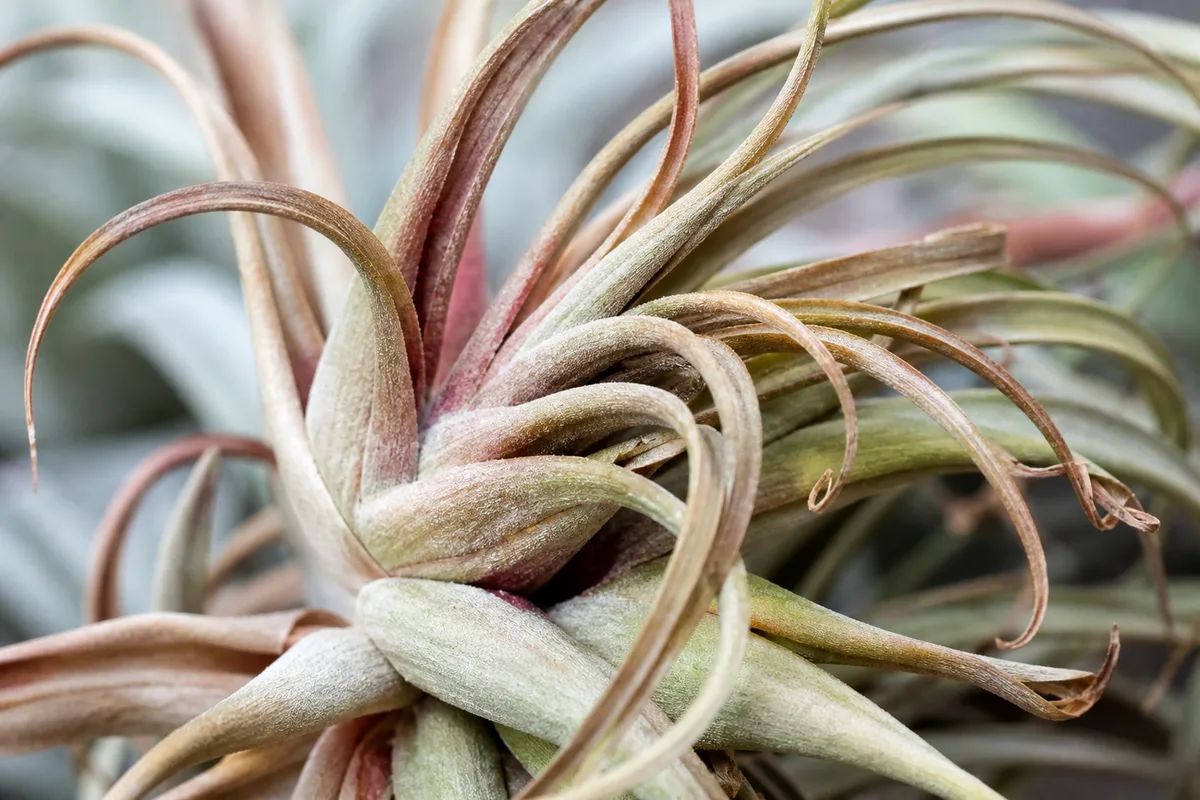
Underwatering symptoms on Tillandsia - compare with healthy tissue on the same plant.
Early dehydration (correctable with one rescue soak):
- Inward leaf curl along the blade-leaves pull closed to slow water loss; UF/IFAS notes curled or rolled leaves indicate dehydration
- Dull gray-green or flat silver color-loss of the plump, frosted saturation healthy trichomes show when charged
- Papery or stiff leaf feel-still intact, not mushy; may snap if bent sharply when severely dry
- Lighter weight in your hand compared to a hydrated specimen of the same size
- Brown, brittle tips on outer leaves-especially on narrow-leaved mesic types near heat vents
Species-specific patterns:
- Tillandsia ionantha - graceful outward curve tightens into a narrow tube; inner leaves may look smaller while the base stays firm and pale
- Tillandsia xerographica - wide leaves narrow and twist; heavy silver trichomes mask thirst longer than ionantha, so curl may appear suddenly after a long dry window
- Tillandsia bulbosa and other mesic green types - smoother leaves dull and wrinkle faster than xeric silvery species in the same room
Established chronic underwatering:
- Mist-only routine failure-owner sprays regularly but never submerges; plant stays chronically curled despite surface wetting
- Mounted or glued displays that block full soaks-dehydration builds over multiple weeks while outer leaves still look vaguely green
- Enclosed glass globes with stagnant dry air-weekly soaks on the calendar while weekday conditions inside the globe still desiccate leaves between baths
- Winter heat without interval adjustment-biweekly rhythm that worked in fall leaves plants curled by January
Healthy tillandsia leaves are firm, appropriately colored for the species (silvery-frosted on xeric types, greener on mesic types), and open or gently curved outward between soaks. Underwatering is inward curl, dull tone, and papery stiffness on a firm dry base-not softness, sour smell, or inner leaves pulling out easily.
Why Tillandsia gets underwatered
Tillandsia is an epiphytic bromeliad that drinks through leaf trichomes, not roots in mix. Underwatering is therefore a trichome recharge failure, not “dry soil around roots.”
Too few full submersion soaks
A 20-to-30-minute weekly or biweekly soak is the baseline that charges every trichome surface. Stretching gaps beyond what your room humidity allows-especially on mesic species in dry winter air-leaves internal moisture depleted while the plant still looks “fine” from across the room. Calendar soaking every other Sunday without checking leaf firmness mid-cycle is a common underwatering path: the schedule says wait; the leaves say drink now.
Mist-only and light spritzing traps
UF/IFAS air plant guidance treats soaking as the primary hydration method. Mist-only care in dry apartments undercharges trichomes while giving the owner a false sense of watering. Light spritzing that barely wets the surface does not replicate the sustained contact a submersion provides. Mist works as a supplement between soaks-not a replacement when leaves are already curled and papery.
Dry air, heat vents, and seasonal shifts
Penn State Extension warns that heating vents and air conditioners can quickly dry out air plants. Winter furnaces and summer AC both lower effective humidity around open shelves. A tillandsia that thrived on biweekly soaks in October may need weekly soaks plus mid-week mist by January-same plant, same soak length, different environmental pull on leaf moisture.
Display mechanics that block full hydration
Wire-mounted clusters, hot-glued wood plaques, and terrariums you cannot easily remove force mist-and-rinse workarounds that rarely match a full bowl soak. Decorative moss or gravel wicking moisture at the base does not hydrate leaves-substrate watering kills air plants while leaves still curl from thirst above.
Xeric vs. mesic interval mismatch
Xeric tillandsias-heavy silver trichomes, stiff leaves-tolerate longer dry windows and may go every 10 to 14 days in bright airy rooms. Mesic tillandsias-greener, smoother leaves-want weekly soaks in average home humidity. Applying xeric timing to Tillandsia ionantha or T. bulbosa in a dry heated room is a predictable underwatering setup.
Lookalike symptoms to rule out
| Pattern | Underwatering | Crown rot / overwatering | Low humidity | Shipping stress | Not enough light |
|---|---|---|---|---|---|
| Leaf feel | Papery, stiff; inward curl | Outer leaves may wilt; base mushy | Firm; tip browning near vents | Outer leaf loss; center firm | Dull, stretched; weak new growth |
| Crown/base | Firm, dry, odor-free | Soft, dark, may smell sour | Firm and dry | Firm; may shed outer sheaths | Firm and dry |
| Timing clue | Long gap since full soak | Recent soak/mist with poor upside-down dry | Worsens when heat runs | Arrives 1–3 days after transit | Builds over weeks in dim corner |
| First fix | Rescue soak + upside-down dry | Stop soaking; dry inverted; see rot guide | Humidifier + supplemental mist | One soak; normal rhythm | Move to brighter filtered light |
If green outer leaves + limp collapsing center appear after recent wet care, suspect overwatering-not drought. If only tips crisp near a register with firm crown, see low humidity. If whole-leaf papery texture might be scorch or salt, route through crispy leaves. General wilt routing lives in the wilting guide.
How to confirm underwatering
Work through these checks in order-change one variable at a time so you know what helped:
- Crown firmness - Press overlapping leaf bases. Firm and dry supports dehydration. Soft, dark, or smelly means wet stress-route to overwatering or root rot, not a longer soak.
- Soak history - When did the plant last have a full submersion soak (20–30 minutes), not mist only? More than 10–14 days on a mesic type in dry air strongly favors thirst.
- Curl pattern - Even inward curl around the rosette with dull color points to dehydration. One-sided bleaching toward a window suggests sun scorch-see crispy-leaves guide.
- Leaf texture and weight - Papery, stiff blades that feel lighter than a hydrated neighbor of the same species confirm trichome moisture loss.
- Room conditions - Hygrometer below 30% RH, plant on a shelf above a heat vent, or furnace running daily? Environmental pull may require shorter soak intervals even if your calendar has not changed.
- Newest growth - Firm crown with one curled outer leaf may be aging. Multiple leaves curling together while center growth stalls needs faster action.
First fix for Tillandsia
If the crown is firm and leaves are curled, dull, or papery from thirst:
Remove the plant from its mount, globe, or wire frame. Give a full submersion soak in room-temperature water for 20 to 30 minutes-or up to one hour for severely dehydrated specimens with tight ionantha tubes. Lift the plant out, hold at the base, turn upside down, and shake vigorously until droplets fly from between the leaves. Rest inverted on a towel or dish drainer in Tillandsia light guide with good airflow until the base is fully dry-within about four hours. Resume your normal weekly or biweekly rhythm from the watering guide.
If the plant is mounted and cannot be submerged:
Heavy mist or a gentle faucet rinse until water runs off all leaf surfaces, then invert or tilt for upside-down drying as far as the mount allows. Accept that mounted plants often need more frequent hydration attention than freestanding ones you can flip after every bath.
Do not on day one:
- Soak a soft dark crown-that worsens rot
- Switch to longer daily soaks as a habit-trichomes recharge in 20–30 minutes; extra hours raise rot risk if drying fails
- Pour water on moss, sand, or soil around the base-the wet collar invites crown rot while leaves still look thirsty
- Fertilize a stressed dehydrated plant-fix hydration first
Step-by-step recovery
After the rescue soak and upside-down dry:
- Wait 24 to 48 hours - Well-hydrated tillandsias often soften and partially reopen visibly once trichomes recharge.
- Reassess curl and color - Firm base plus plumper leaf tone means the soak worked. Continued tight curl means shorten the interval between soaks or add mid-week mist-not another hour-long bath the next day.
- Trim only fully dead tips - Snip crispy brown tips at an angle with clean scissors if you prefer a neater look; skip wholesale leaf removal unless tissue is mushy.
- Fix display mechanics - Take globes and tight holders off the plant during soaks and until fully dry. Upside-down drying is non-negotiable after every rescue soak-UMN Extension notes crowns rot when water is not well drained after watering.
- Monitor new center growth - The next pup or inner leaf should open clean and firm over two to four weeks. Stalled center growth with spreading outer curl means wrong diagnosis or layered stressors.
- Adjust seasonally - Winter heat often needs weekly soaks where biweekly worked in fall.
Recovery timeline
Mild dehydration: Leaves often soften and partially uncurl within 24 to 48 hours after a proper soak and upside-down dry. Old brown tips remain cosmetic.
Moderate tube collapse on ionantha: One rescue soak may not fully reopen the rosette. Repeat the weekly rhythm for two to three cycles before judging failure.
Severe chronic mist-only neglect: Outer leaves may keep permanent curl or tip loss even after hydration returns. Judge success by firm crown and clean new growth, not restored old blades.
What will not recover: Fully desiccated brown tips and papery outer sheaths do not turn green again.
What not to do
- Do not soak a soft, dark, smelly crown - that is rot or overwatering, not drought. See overwatering and root rot.
- Do not interpret a firm dry base as “needs more mist” when leaves are tightly curled-schedule full submersion access.
- Do not use routine multi-hour soaks as everyday care-rescue soaks up to one hour are for severe dehydration only.
- Do not hydrate through moss, sand, or substrate around a mounted tillandsia.
- Do not keep a dehydrated plant in a closed globe without improving soak access and airflow.
- Do not fertilize underwatered tillandsia hoping leaves will reopen faster.
How to prevent underwatering next time
Prevention is the soak-shake-flip-dry loop from the Tillandsia watering guide:
- Soak 20 to 30 minutes weekly for most mesic indoor tillandsias; every 10 to 14 days for xeric silvery types in bright, airy rooms
- Shake upside down after every soak or heavy mist; aim for full dryness within four hours
- Mist two to three times weekly as a supplement in dry air-not a replacement for soaking
- Keep plants in bright filtered light appropriate to the species; brighter rooms may need slightly more frequent hydration
- Run a hygrometer near the display before heating season starts
- Inspect weekly during your soak check-early inward curl corrects with one soak; ignored curl becomes permanent tip loss
When to worry
Escalate beyond routine underwatering fixes if:
- The crown softens, darkens, or smells sour after you soaked-rot progression, not drought
- Center leaves fail to open after two proper soak cycles with firm crown
- Multiple plants in the same dry display curl together while you mist only-systemic soak-access problem
- Curl persists on weekly soaks with good drying-cross-check not enough light or pest stress on spider mites
Healthy tillandsias feel firm at the base, show species-appropriate leaf tone, and produce clean new pups on schedule. Inward curl on a firm crown is a fixable warning-catch it before outer leaves become brittle enough to break.
Related Tillandsia problems
- Tillandsia watering guide - soak rhythm, upside-down drying, species intervals
- Crispy leaves on Tillandsia - papery texture when dehydration is not the only cause
- Overwatering on Tillandsia - soft crown differential
- Root rot on Tillandsia - when crisp outer leaves mask mushy center
- Low humidity on Tillandsia - vent-side tip burn overlap
- Wilting on Tillandsia - symptom routing when dry vs. wet is unclear
- Tillandsia overview - hub link
When to use this page vs other Tillandsia guides
- Tillandsia watering guide - Use for routine moisture checks before assuming underwatering is the main issue.
- Tillandsia problems hub - Browse all 19 common issues on this species.
- Wilting on Tillandsia - Different entry point when symptoms overlap with underwatering.
- Brown Tips on Tillandsia - Different entry point when symptoms overlap with underwatering.
- Yellow Leaves on Tillandsia - Different entry point when symptoms overlap with underwatering.