Drooping Leaves on Tillandsia: Causes, Checks & Fixes
Quick answer
Drooping leaves on Tillandsia usually means a firm-based plant with loose, outward-hanging foliage from low light, slow dehydration, or heat stress-not the tight inward curl or mushy base of acute wilt. First step: squeeze the leaf bases; if firm and dry with open-hanging leaves, check light placement and soak rhythm before assuming crown failure.
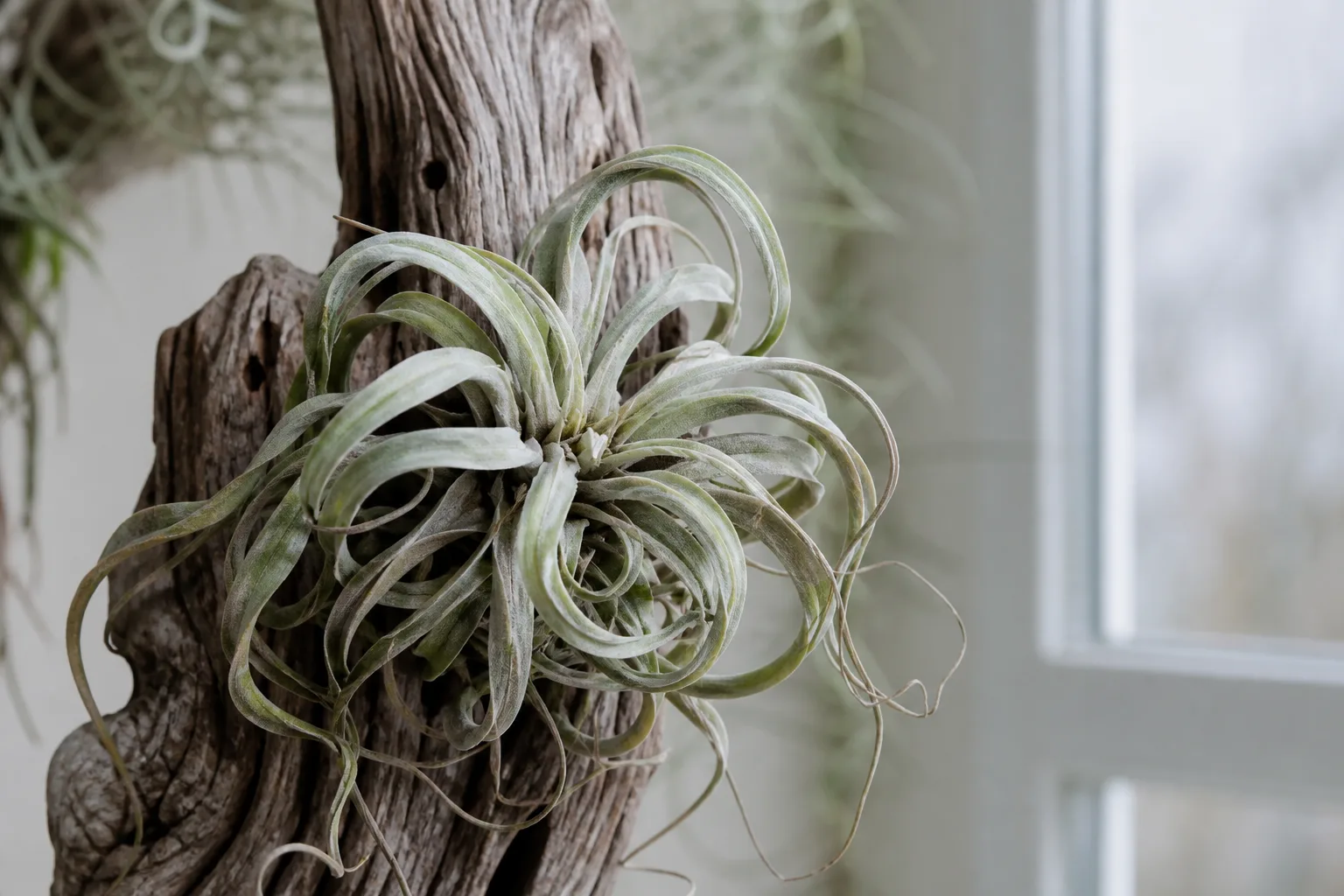
Drooping Leaves on Tillandsia: Causes, Checks & Fixes
This guide covers drooping leaves on Tillandsia. See also the general Drooping Leaves guide, watering, and light pages for this plant.
Drooping Leaves on Tillandsia: Causes, Checks & Fixes
Quick answer
Drooping leaves on Tillandsia (air plants) usually means a firm-based plant with loose, outward-hanging foliage from low light, gradual underwatering, or heat stress-not the tight inward curl or mushy base of acute wilt. First step: squeeze the leaf bases where they overlap; if firm and dry with open-hanging leaves, check light placement and soak rhythm before assuming crown failure.
Scope note: This page covers chronic posture loss-pale stretched hang from dim corners, slow softening from stretched soak intervals, and heat-stress sag on a firm base. If your plant shows tight inward curl, sour smell, soft dark base, or collapse within days of a soak, see wilting on Tillandsia first; that pattern needs dry-vs-wet wilt routing, not a light check alone.
Tillandsia has no soil reservoir and no pot weight to judge. On air plants, leaf arch direction plus base firmness replace the “lift the pot” test used on rooted houseplants. Judge progress by firm new center growth with a normal rosette shape-not by expecting old stretched leaves to stand perfectly upright again.
What drooping leaves look like on Tillandsia
On air plants, drooping is a posture change on a firm base, not a mushy collapse. Four patterns cover most droop cases:
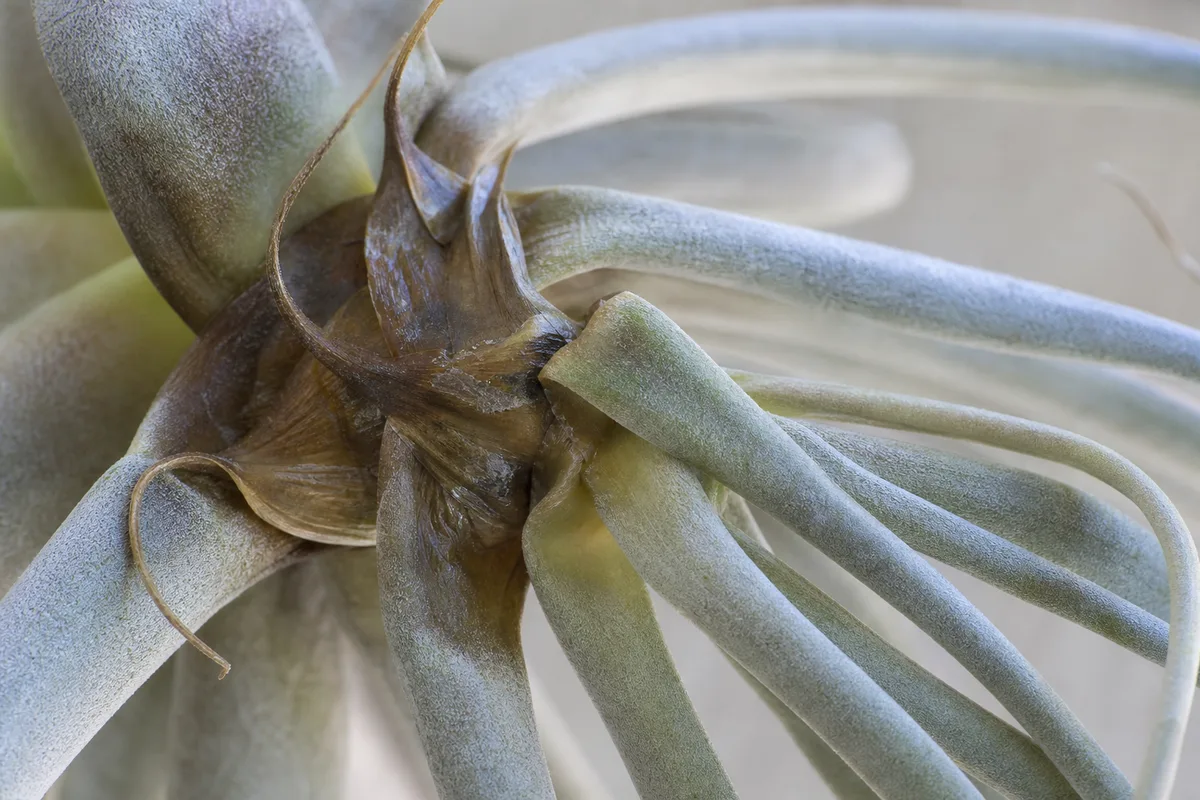
Drooping Leaves symptoms on Tillandsia - compare with healthy tissue on the same plant.
Low-light droop (weak stretch):
- Leaves hang loose and open rather than forming a tight rosette
- Color shifts pale green or washed-out silver
- Growth looks elongated or flattened toward the light source
- Base stays firm and dry; no sour smell
- Common on Tillandsia ionantha and other mesic greens kept on north walls or deep shelves
Gradual thirst droop (slow dehydration):
- Leaves feel soft and papery but hang outward, not curled tight inward
- Trichomes look dull gray-green rather than bright silver
- Base is firm when squeezed-no mush
- Often follows mist-only routines or biweekly soaks stretched too long for a dry heated room
- Differs from acute wilt: no dramatic overnight curl; decline happens over one to three weeks
Heat-stress droop:
- Rosette sags on the side facing a heat vent, radiator, or hot window glass
- Leaves may look slightly wrinkled but base remains firm
- Appears hours to a day after a temperature spike, not days after a missed soak
- Outer leaves droop first; center often stays plumper
Post-soak temporary limpness (not rot):
- Plant looks limp for a few hours right after a soak before drying completes
- Base is wet but not soft; no odor
- Resolves once the plant dries upside down-if limpness persists 24+ hours with damp center, switch to the wilting or overwatering path
Species baseline matters: Tillandsia xerographica and other xeric types naturally hold a wide, sculptural arch when healthy-do not confuse their normal silhouette with problem droop. Tillandsia ionantha should look compact and slightly cupped when hydrated; open floppy ionantha on a firm base almost always means light or water rhythm is off.
Why Tillandsia gets drooping leaves
Tillandsia is an epiphytic bromeliad that absorbs water through leaf trichomes, not roots in soil. Leaves are the entire water and support system-when trichomes run low on moisture or the plant stretches for light, arch collapses before tips brown. That is different from a potted fern losing turgor in dry mix; you cannot lift a pot to diagnose an air plant.
Low light and weak stretch
Air plants need bright filtered light indoors. Mesic species with greener leaves-Tillandsia ionantha, Tillandsia bulbosa, Tillandsia capitata-stretch and flatten when light is too weak. The rosette opens outward, leaves lose their springy curve, and the whole plant looks tired even though the base is firm and you have been soaking on schedule. Chronic dim placement is one of the most common causes of droop mistaken for underwatering.
Gradual underwatering
Droop from slow thirst is not the same as acute wilt. When soak intervals stretch too long-especially mist-only care or 10–14 day gaps in a dry apartment-trichomes gradually deflate. Leaves soften and hang outward before the tight inward curl of emergency dehydration appears. Xeric species tolerate longer dry spells; mesic greens show droop first.
Heat and airflow stress
Forced-air heating, AC blasts, and hot afternoon sun through glass increase transpiration faster than trichomes recharge between soaks. The plant cannot maintain leaf rigidity on the exposed side. Base firmness stays normal; the fix is location, not more water on autopilot.
Display and drying mistakes (early stage)
Returning a plant to a closed globe or upright mount before the base fully dries does not always cause immediate rot. Sometimes it produces limp center leaves that hang for a day or two while moisture trapped at the crown slowly evaporates. Catch this early-fix drying before softness develops. Persistent limpness with odor means crown trouble; see root rot.
Lookalike symptoms to rule out
| Pattern | Key clues | Likely cause | Where to go |
|---|---|---|---|
| Tight inward curl, firm dry base | Papery trichomes, dramatic curl | Acute dehydration / wilt | Wilting → rescue soak |
| Limp flop, soft dark base, sour smell | Center pulls easily | Crown rot / overwatering | Overwatering, root rot |
| Firm base, loose outward hang, pale color | Dim location, stretched growth | Low light droop | This page → light guide |
| Firm base, papery feel, long dry gap | Mist-only or overdue soak | Gradual thirst | Underwatering |
| Brown crispy tips, rosette still firm | Dry air, sunburn, hard water | Tip damage | Brown tips |
| Temporary sag 24–48 h after shipping | Firm base, no odor | Transit stress | Stabilize light/airflow; light soak if dry |
If base firmness and smell disagree with leaf posture, trust the base first. A firm dry base with outward hang is almost never crown rot.
How to confirm the cause
Work through these six checks in order. Each step narrows the cause before you act.
- Base squeeze - Pinch the lowest overlapping leaf bases. Firm and dry supports droop diagnosis (light, thirst, heat). Soft, dark, or smelly means stop-route to wilting or overwatering.
- Leaf direction - Outward open hang on a firm base = this page. Tight inward curl = wilt/thirst emergency.
- Trichome texture - Run a finger along leaves. Dull, papery, gray-green on a firm base = gradual thirst. Bright, plump silver with hang = suspect light or heat.
- Light audit - Is the plant more than 3–4 feet from a bright window, on a north-only sill, or under a shelf? Pale stretched leaves confirm low light.
- Soak rhythm - When did you last fully submerge (not just mist)? Mist-only routines fail indoors for most mesic tillandsias. Compare your interval to the watering guide baseline.
- Heat and display - Note vents, hot glass, or enclosed globes. Heat droop is localized; globe limpness often hits the whole rosette evenly.
Confirmed low-light droop: firm base + pale stretched open rosette + dim placement.
Confirmed gradual thirst: firm base + papery trichomes + overdue soak or mist-only routine.
Confirmed heat droop: firm base + sag on the heat-exposed side + recent temperature change.
Escalate to wilt/rot path: any softness, sour smell, or inward curl regardless of hang direction.
First fix for Tillandsia
Squeeze the base first, then branch on what you find-do not soak on autopilot.
If the base is firm and leaves hang loose (low light)
Move the plant to brighter filtered light before changing water. East windows, filtered west light, or 3–6 feet from a south window suit most mesic tillandsias. Xeric types tolerate more morning sun. Wait one to two weeks and watch new center leaves-they should emerge with a tighter, springier arch. Do not rescue-soak unless trichomes also feel papery.
If the base is firm and trichomes feel papery (gradual thirst)
Run one proper rescue soak-submerge the full plant 20–30 minutes (up to 60 minutes if severely papery), then shake dry and dry upside down within four hours before remounting. Resume weekly soaks (or twice weekly in dry winter air) per the Tillandsia watering guide. Add supplemental misting two to three times weekly only as a bridge-not as a substitute for soaking.
If the base is firm and droop follows heat exposure
Move away from vents, radiators, and hot glass into stable bright indirect light with airflow. Do not increase soak frequency until you see whether posture recovers in 48–72 hours. Extra water on a heat-stressed plant that is not thirsty can keep the base damp too long.
If the base is soft, dark, or smells sour
Stop soaking immediately. Dry upside down in bright airflow. Trim mushy outer leaves if limited. This is not a droop fix-see overwatering and root rot.
Step-by-step recovery
For low-light droop
- Relocate to brighter filtered light without jumping to direct afternoon sun.
- Keep the existing soak rhythm stable for one week-fix light before stacking water changes.
- Watch new center growth for a tighter rosette shape.
- If growth stays pale after two weeks, add a grow light for 10–12 hours daily or move closer to the window with sheer curtain diffusion.
For gradual thirst droop
- Remove from mount; soak fully 20–30 minutes in room-temperature water.
- Shake vigorously, turn upside down, and dry until the base is bone dry-aim for within four hours.
- Resume weekly (or twice-weekly) soaks; mist only between soaks if the room is dry.
- Judge recovery by plumper trichomes and firmer new leaves within 24–48 hours.
For heat-stress droop
- Move off the hot surface or away from the vent.
- Let the plant stabilize 48–72 hours at stable temperature.
- Soak only if trichomes feel papery after relocation-not preemptively.
Recovery timeline
Gradual thirst droop on a firm base often shows plumper leaves within 24–48 hours after a rescue soak and proper upside-down drying.
Low-light droop improves over one to three weeks once brightness increases. Old stretched outer leaves may stay slightly limp; new center growth with normal arch is the success marker.
Heat-stress droop usually resolves within 2–5 days after relocation if the base stayed firm throughout.
Post-soak temporary limpness should clear within 4–8 hours of upside-down drying. Limpness past 24 hours with a damp center warrants the wilt/overwatering path.
Old drooped leaves often do not return to perfect posture. Track new growth firmness and rosette shape, not cosmetic repair of every outer leaf.
What not to do
Do not rescue-soak when the base is soft, dark, or sour-that deepens crown rot. Do not fertilize a drooping tillandsia before light and soak rhythm are stable. Do not plant in soil or wet moss against the base to “support” a limp plant; that traps crown moisture. Do not mist heavily into a closed globe hoping leaves perk up-surface moisture without drying discipline causes rot. Do not assume every hang means thirst; pale stretched leaves on a firm base in a dim corner need light, not another soak. Do not dry upright in a cup or shell after soaking. Do not confuse normal xerographica arch with problem droop-know your species baseline from the overview.
Tillandsia care cross-check
Cross-check against this species’ baseline from the Tillandsia overview:
- Light: Bright indirect indoors; east or filtered west windows; mesic greens need more brightness than many growers assume (light guide)
- Water: Primary 20–30 minute weekly soak; mist two to three times weekly as supplement only; always dry upside down within four hours (watering guide)
- Species type: Silvery fuzzy xeric leaves tolerate longer dry intervals; smooth green mesic types droop faster when soaks stretch
- Display: Open mounts with airflow-not buried substrate or permanently closed globes
If droop returns every cycle, alternate between checking light and soak interval one variable at a time so you know which change helped.
How to prevent drooping leaves next time
Prevent chronic droop by keeping bright enough light that new growth emerges compact, not stretched. Match soak frequency to room dryness-plan twice-weekly soaks for mesic tillandsias in heated winter air rather than stretching to ten days because the calendar allows it.
Always run soak → shake → flip → dry → display. Never skip the flip. Check mid-cycle leaf firmness: papery feel means soak sooner; still damp at the base six hours after drying means fix airflow first.
For decorative globes, open the display for every soak and full dry cycle-or accept higher limpness and rot risk. Inspect bases during every soak so softness is caught while only the center is affected.
When to worry
Escalate from droop to urgent wilt/rot care when:
- The base turns mushy, dark, or smells sour
- Inner leaves pull out easily after a recent soak
- Limpness persists more than 24 hours with a damp center after soaking
- New center growth shrivels despite brighter light and corrected soaks
Lower urgency: firm-base outward hang in a dim room, or slight papery feel after a missed week-act within the week, but you have time to confirm light vs thirst before drastic steps.
Practical checks
Urgency check
Urgent: mushy base, sour smell, center pull-out, post-soak collapse in a closed display. Routine droop: firm-base open hang, pale stretch, or papery trichomes without odor.
Best inspection order
For Tillandsia droop, inspect base firmness → leaf direction (outward vs curl) → trichome texture → light placement → soak timing → heat/airflow exposure before choosing light, soak, or relocation fixes.
Severity note
This issue is marked low to medium for Tillandsia when the base stays firm. Severity rises fast if softness develops-reclassify as wilt/rot immediately.
Droop vs wilt at a glance
| Clue | Drooping (this page) | Wilting (other page) |
|---|---|---|
| Leaf shape | Loose outward hang | Tight inward curl or limp collapse |
| Base | Firm, dry | Soft/dark (wet) or very dry with curl |
| Speed | Gradual over weeks | Often acute within days |
| First action | Light check or soak rhythm | Dry-vs-wet base routing |
Related Tillandsia guides
- Wilting - acute curl, crown flop, and dry-vs-wet routing
- Watering - soak, shake, flip, dry workflow
- Overview - mesic vs xeric framework and trichome basics
- Light - brightness targets and window placement
- Underwatering - chronic thirst and rescue soaks
- Overwatering - trapped water mistakes
- Root rot - advanced crown failure
- Not enough light - stretch and pale growth overlap
- Brown tips - crispy tips with firm rosette