Wilting on Tillandsia: Causes, Checks & Fixes
Quick answer
Wilting on Tillandsia usually means dehydration (tight inward curl, dull silver trichomes, papery leaves) or crown rot from trapped water (limp floppy rosette, soft dark base, sour smell)-not a single disease. First step: squeeze the leaf bases where they overlap; firm and dry means check thirst; soft or mushy means stop soaking and dry upside down immediately.
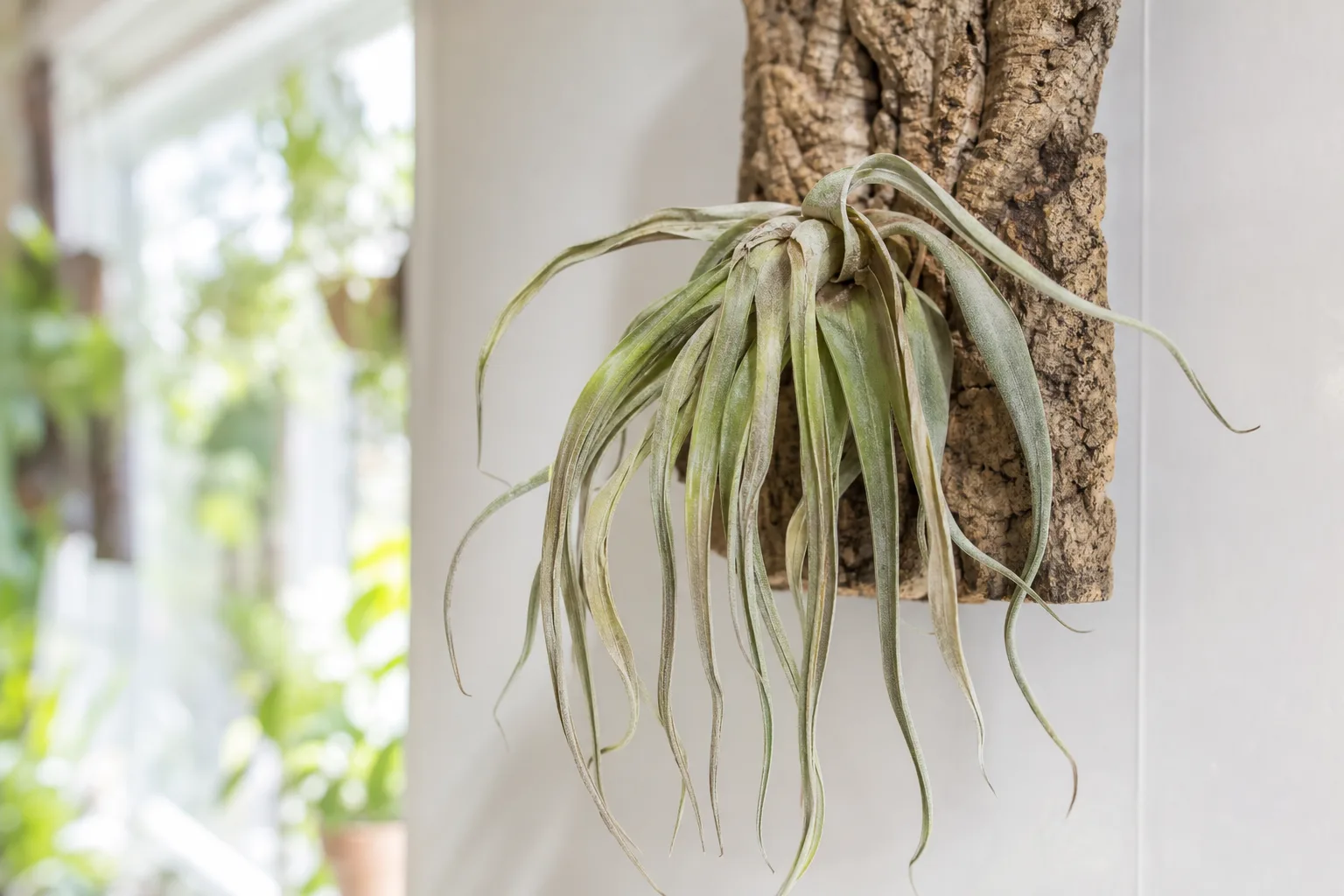
Wilting on Tillandsia: Causes, Checks & Fixes
This guide covers wilting on Tillandsia. See also the general Wilting guide, watering, and light pages for this plant.
Wilting on Tillandsia: Causes, Checks & Fixes
Quick answer
Wilting on Tillandsia (air plants) usually means dehydration (tight inward curl, dull silver trichomes, papery leaves) or crown rot from trapped water (limp floppy rosette, soft dark base, sour smell)-not a single disease. First step: squeeze the leaf bases where they overlap; firm and dry means check thirst; soft or mushy means stop soaking and dry upside down immediately.
Scope note: This page covers acute loss of turgor-curling collapse from thirst, crown flop from rot, shipping sag, and post-soak trapped-water limpness. If your plant has a firm base and leaves simply hang loose without tight curl or mushiness, see drooping leaves on Tillandsia first; that pattern more often tracks low light or gradual thirst rather than emergency wilt.
Tillandsia has no soil reservoir. Leaves and trichomes are the entire water system, so wilt looks different from a potted fern losing turgor in dry mix. Judge progress by firm new center growth after you correct one stressor-not by expecting damaged outer leaves to look perfect again.
What wilting looks like on Tillandsia
On air plants, wilting is a pattern of leaf firmness plus base condition, not a single droopy silhouette. Four patterns cover most cases:
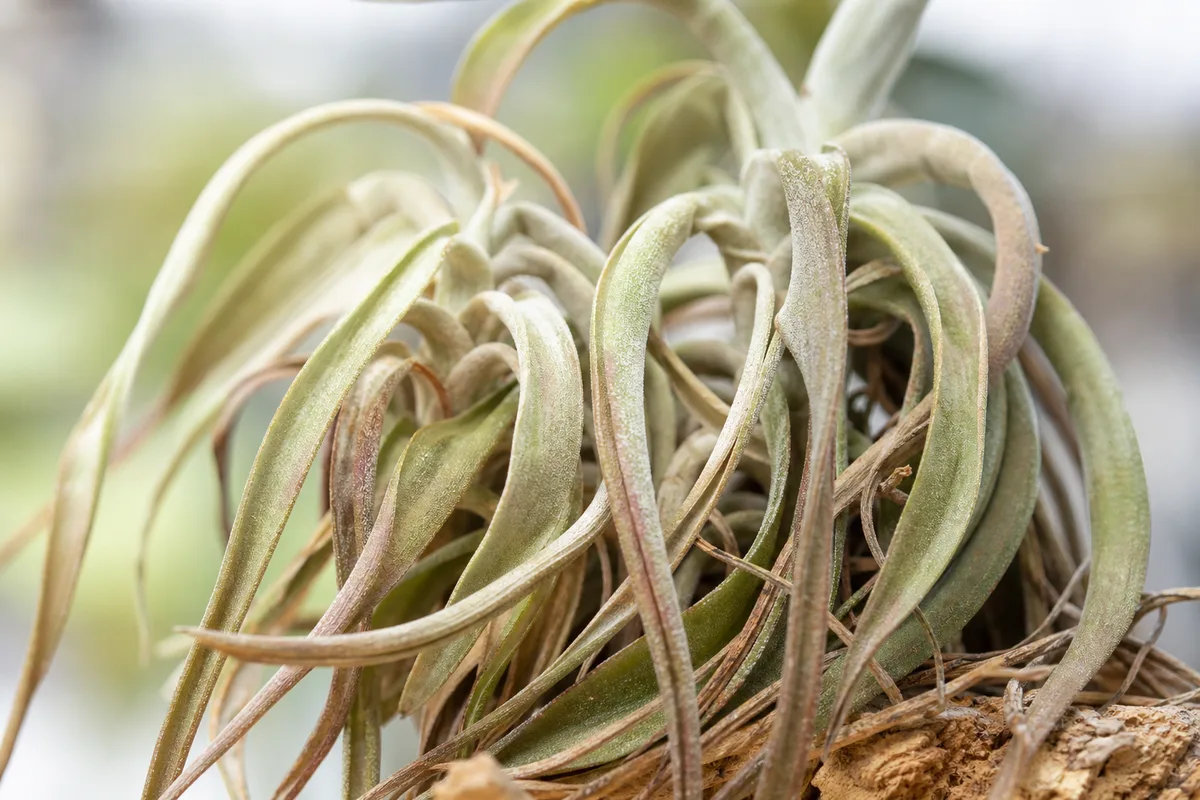
Wilting symptoms on Tillandsia - compare with healthy tissue on the same plant.
Dry wilt (underwatering / chronic thirst):
- Leaves curl tightly inward along their length, especially on Tillandsia ionantha and other mesic types
- Trichomes look dull, flat, or gray-green instead of silvery and plump
- Tissue feels papery or thin when you pinch a leaf tip
- The base stays firm when you squeeze overlapping leaves at the bottom
- Often follows mist-only routines, skipped soaks in heated winter air, or a plant left in a hot, dry window
Wet wilt (crown rot / trapped water):
- The rosette goes limp and floppy-outer leaves may still look green while the center collapses
- The base turns soft, dark, purple, or black and may smell sour or musty
- Inner leaves pull out easily when you tug gently at the center
- Often follows soaking without upside-down drying, returning a damp plant to a closed glass globe, or water pooling in a shell or moss mount
- Can appear one to three days after a soak even when the soak itself seemed normal
Shipping-stress sag (temporary):
- Plant arrives limp and pale after transit but the base feels firm when dry
- No sour smell, no dark mush at the center
- Usually improves within 48–72 hours once light, airflow, and a proper soak-and-dry cycle stabilize
Post-soak trapped-water limpness:
- Plant looked fine before watering; 24 hours after soaking the center leaves go soft while water still sits in the leaf overlap
- Common in enclosed displays you cannot flip upside down
- Early cases may reverse with aggressive shake-and-dry; advanced inner rot does not
Xeric vs mesic baseline matters. Tillandsia xerographica and Tillandsia tectorum normally hold a stiff, silvery form and wilt slowly-they can look merely “less tight” before obvious curl. Greener mesic types like Tillandsia bulbosa show limpness faster when thirsty.
Why Tillandsia gets wilting
Tillandsia is an epiphytic bromeliad that absorbs water through leaf trichomes, not through roots in soil. In nature, rain arrives, trichomes drink, wind and sun dry the plant quickly. Indoors you supply the water and must recreate the drying phase-or wilt follows from both extremes.
Dehydration wilt happens when trichomes cannot pull in enough moisture between drinks. Air plants have no soil buffer; a missed soak in dry forced-air heat can curl leaves within days. Mist-only routines often fail because light spritzing does not fully charge trichomes the way submersion does. Heating-season homes below 30% relative humidity accelerate the same pattern.
Crown-rot wilt happens when water sits in the overlapping leaf bases too long after soaking or heavy misting-surfaces that hold water accelerate crown failure indoors. The rosette shape funnels water toward the center. Without upside-down drying and airflow, fungi attack the meristem. The plant can look wet-wilted-limp despite recent watering-because the crown is failing while outer leaves still hold color.
Less common wilt drivers include recent repotting or remounting shock (firm base, temporary sag), extreme heat with strong sun on dry leaves, and pest stress-but on Tillandsia, dry curl vs wet flop at the base separates the urgent fixes faster than a pest hunt when soil moisture is irrelevant.
Lookalike symptoms to rule out
| What you see | Likely cause | Where to go next |
|---|---|---|
| Tight inward curl, firm dry base | Dehydration | This page → rescue soak; see underwatering |
| Limp flop, soft dark base, sour smell | Crown rot / overwatering | Stop soak; see overwatering and root rot |
| Firm base, loose outward hang, no curl | Low light or gradual thirst | Drooping leaves and light guide |
| Brown crispy tips only, rosette still firm | Dry air, sunburn, or hard water | Brown tips and crispy leaves |
| Temporary limp after delivery, firm base | Shipping stress | Stabilize light/airflow; one proper soak cycle |
| Limp 1–3 days after soak in a globe | Trapped crown water | Upside-down dry; open the display |
How to confirm the cause
Work through this checklist before changing anything. On Tillandsia, base firmness beats leaf appearance.
- Base squeeze test. Pinch the lowest overlapping leaves where they meet. Firm and dry supports dehydration. Soft, mushy, or collapsing supports crown rot-do not soak again yet.
- Trichome look and feel. Dull, flat, gray-green, or papery trichomes with inward curl point to thirst. Silvery plump trichomes on a soft base point to rot, not drought.
- Smell check. Sour or musty odor from the base confirms wet failure. Neutral dry scent with curl confirms dry wilt.
- Recent soak timing. Did limpness appear within 48 hours of soaking or heavy misting? Wet wilt is likely-especially if the plant dried upright in a cup, shell, or closed terrarium.
- Display and airflow. Note enclosed globes, moss mounts, or stagnant corners. Trapped post-soak water is the most common indoor killer.
- Newest center growth. A firm new leaf emerging while outer leaves look rough often means partial stress or old damage-not always emergency. Soft center leaves that pull out mean escalate immediately.
Do not rescue-soak automatically when leaves look tired. On Tillandsia, that reflex worsens crown rot when the base is already soft.
First fix for Tillandsia
Make one targeted correction, wait 48–72 hours, then read the response. Stacking soak changes, pruning, fertilizer, and remounting on the same day hides what helped.
If the base is firm and leaves curl inward (dry wilt):
- Remove the plant from its holder.
- Submerge in room-temperature water for a rescue soak of 30–60 minutes (one time only-not your weekly default).
- Shake vigorously, turn upside down, and dry in bright indirect light with airflow until the base is fully dry-aim for within four hours.
- Resume a normal 20–30 minute weekly soak (or twice weekly in dry winter air) per the Tillandsia watering guide.
If the base is soft, dark, or smells sour (wet wilt / crown rot):
- Stop soaking immediately. Do not mist into the crown.
- Turn the plant upside down in bright, airy light and let it dry completely-often 24–48 hours.
- Gently pull away any mushy inner leaves with clean fingers or sterilized scissors. Stop at firm tissue.
- If rot is advanced (center pulls apart, smell persists), salvage healthy pups at the base and discard the mother plant. See root rot on Tillandsia.
- Remount only on open displays with full base airflow-never a closed globe until you have fixed drying discipline.
If the plant just arrived limp but the base is firm (shipping stress):
- Give bright indirect light and good airflow-not a dark box.
- Wait one day, then run one normal 20–30 minute soak, shake dry upside down, and reassess.
- Do not fertilize or remount repeatedly during the first week.
If limpness followed soaking inside a closed globe (trapped water):
- Remove from the enclosure immediately.
- Shake and dry upside down until bone dry at the base.
- Do not return to the globe until the full soak → shake → flip → dry → display sequence is reliable.
Step-by-step recovery after dehydration
When dry wilt is confirmed and the base is firm:
- Soak the full plant so every leaf surface contacts water.
- Lift out, shake off droplets, and place base-up on a towel or dish rack.
- Confirm dryness at the leaf overlap before remounting.
- Increase soak frequency if your room runs dry-twice weekly in heated winter air is common for mesic types.
- Add supplemental misting two to three times weekly between soaks only if you cannot soak more often-not as a substitute.
Existing curled leaves may stay slightly misshapen. Recovery means new center leaves emerge firm and open.
Recovery timeline
Mild dehydration often shows plumper leaves within 24–48 hours after a rescue soak and proper drying if the base stayed firm throughout.
Mild crown stress caught early-softness limited to one or two inner leaves-may stabilize after one to two weeks of dry upside-down culture and trimmed mush.
Advanced crown rot with a collapsing center rarely recovers the mother plant; pups may take several weeks to establish if separated cleanly.
Old wilted outer leaves often do not return to their original shape. Track new growth and base firmness, not cosmetic repair of damaged tips.
What not to do
Do not fertilize a wilted Tillandsia before the base is firm and the soak-dry rhythm is stable. Do not rescue-soak when the base is already soft-you will push rot deeper. Do not plant in soil or wet moss against the base to “help” hydration; that traps crown moisture. Do not dry upright in a cup, shell, or closed terrarium after soaking. Do not assume wilting is always thirst-limp with sour smell after a recent soak is the opposite problem. Do not remount in a closed globe until the plant has dried fully upside down for at least four hours.
Tillandsia care cross-check
Cross-check recent care against this species’ baseline from the Tillandsia overview:
- Light: Bright indirect indoors; east or filtered west windows; xeric types tolerate more morning sun than mesic greens (light guide)
- Water: Primary 20–30 minute weekly soak; mist two to three times weekly as supplement only; always dry upside down within four hours (watering guide)
- Display: Open mounts, cork, or wire-not buried substrate; globes only if you can flip and dry completely
- Species type: Silvery fuzzy leaves (xeric) need less frequent soaks than smooth green mesic types
If leaves dry slowly after every soak, fix airflow and upside-down drying before changing soak length.
How to prevent wilting next time
Prevent repeat wilt by matching soak frequency to how fast your room dries the plant, not a decorative calendar alone. Check leaf firmness mid-cycle-inward curl means soak sooner; still damp at the base six hours after drying means fix airflow first.
Always run soak → shake → flip → dry → display. Never skip the flip. In winter heating, plan twice-weekly soaks for mesic tillandsias unless your hygrometer shows consistently humid air. Inspect bases during every soak so soft tissue is caught while only the center is affected.
For globe or terrarium styling, open the display for every soak and dry cycle-or accept higher rot risk. The watering guide covers mount-specific workarounds.
When to worry
Treat wilting as urgent on Tillandsia when:
- The base feels mushy, smells sour, or inner leaves pull out easily
- The whole rosette collapses within days of a soak while still damp at the center
- Multiple plants in the same enclosed display wilt together
- New center growth shrivels after you corrected drought
Lower urgency: temporary limpness on arrival with a firm dry base, or slight curl on one outer leaf while the center stays plump-still act within the week, but you have time to confirm dry vs wet before drastic pruning.
Practical checks
Urgency check
Urgent: mushy base, sour smell, center pull-out, post-soak collapse in a closed display. Less urgent: firm-base curl from missed soaks, shipping sag without odor.
Best inspection order
For Tillandsia wilt, inspect base firmness → trichome texture → smell → recent soak timing → display/airflow → center new growth before choosing dry or wet routing.
Severity note
This issue is marked medium for Tillandsia. The real risk depends on whether the meristem is actively rotting vs temporarily thirsty-base squeeze separates them in under a minute.
Wilting diagnosis rule
Do not treat wilt as underwatering until you confirm inward curl with a firm dry base. Do not treat it as overwatering until you confirm soft base, sour smell, or post-soak limpness with trapped water.
Dry vs wet wilt at a glance
| Clue | Dry wilt | Wet wilt |
|---|---|---|
| Leaf shape | Tight inward curl | Limp outward flop |
| Trichomes | Dull, papery, gray-green | May look normal on outer leaves |
| Base | Firm, dry | Soft, dark, smelly |
| Timing | After dry spell / missed soaks | 1–3 days after soak or mist |
| First action | Rescue soak + upside-down dry | Stop water; dry + trim mush |
Related Tillandsia guides
- Watering - soak, shake, flip, dry workflow and crown-rot prevention
- Overview - mesic vs xeric framework and trichome basics
- Light - brightness targets and window placement
- Underwatering - chronic thirst and rescue soaks
- Overwatering - trapped water and soak frequency mistakes
- Root rot - advanced crown failure and pup salvage
- Drooping leaves - firm-base loose hang vs acute wilt