Oxalis Triangularis Care: Light, Water & Tips
Oxalis triangularis
Oxalis triangularis needs bright indirect light for deep purple colour, watering every 5–8 days when top 2–3 cm is dry, and nearly no water during dormancy. Toxic to pets.
Oxalis Triangularis Care: Light, Water & Tips
Start with wateringThe most common care mistake for Oxalis TriangularisWatering guide →Oxalis Triangularis care essentials
Light
bright indirect light, some direct morning sun
Water
Every 5–8 days in active growth - allow top 2–3 cm to dry. Nearly stop during dormancy. Excellent drainage essential at all times.
Soil
Standard potting mix + 20–25 % perlite. Well-draining - essential for corm health. pH 6.0–7.0.
Humidity
Average household humidity (40–50%)
Temperature
15°C to 24°C (60–75°F)
Fertilizer
Feed lightly during active growth. Use monthly during active growth only..
About Oxalis Triangularis
Oxalis Triangularis has a upright growth habit.
| Detail | Information |
|---|---|
| Growth habit | Upright |
| Scientific name | Oxalis triangularis |
Oxalis Triangularis Care: Light, Water & Tips
What Is Oxalis Triangularis?
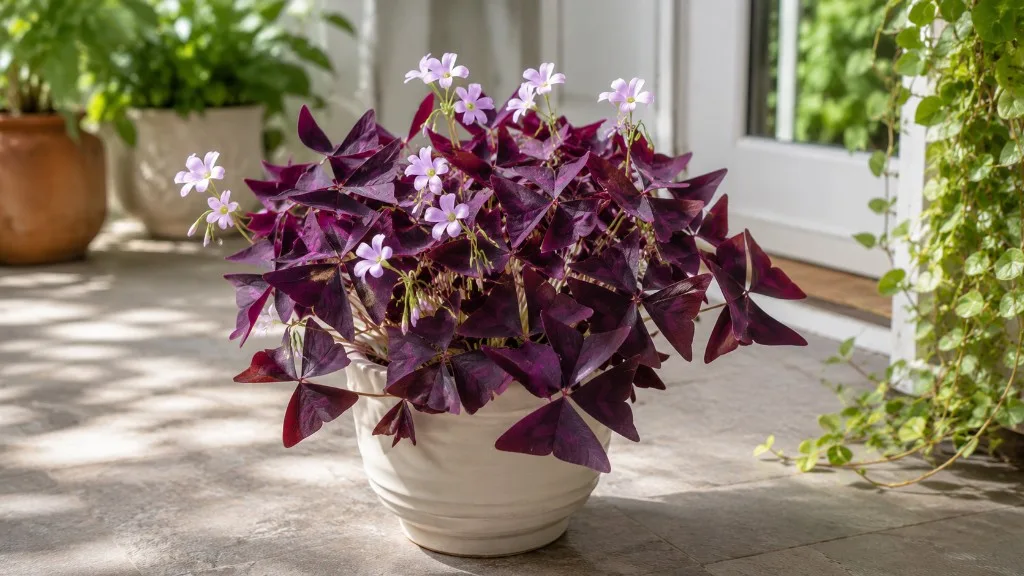
Oxalis triangularis - widely sold as purple shamrock, false shamrock, or love plant - is a South American perennial grown for deep purple, triangular leaflets arranged in groups of three on slender petioles. Unlike a typical foliage houseplant with a woody stem and fibrous roots, Oxalis Triangularis overview grows from an underground corm-like rhizome (often described as an elongated bulb with scale leaves) that stores water and nutrients between growth cycles. Indoors it typically reaches 6 to 12 inches (15 to 30 cm) tall with a similar spread, forming a clump of upright to slightly arching stems topped with butterfly-shaped purple foliage and occasional white to pale pink flowers on thin scapes.
The plant’s most distinctive behavior - and the one that sends new owners to search engines in a panic - is nyctinastic leaf folding. At dusk, or when light drops sharply, the three leaflets fold downward along the central vein and the whole leaf cluster droops as if the plant is wilting. By morning, with adequate light, the leaves reopen flat. That daily rhythm is normal, healthy behavior, not a watering crisis. Confusing nyctinasty with drought stress is one of the most common beginner mistakes with this species.
If you are deciding whether purple shamrock fits your home, the honest summary is this: Oxalis triangularis rewards Oxalis Triangularis light guide, well-drained soil, and a Oxalis Triangularis watering guide that changes with growth phase - and it punishes wet soil during dormancy and fixed calendar watering. It is easier than a finicky fern and harder than a pothos, mainly because it periodically goes dormant and looks dead while resting. The payoff is one of the most striking foliage displays available in a small pot, plus propagation so simple that a single clump can supply gifts for years. One critical caveat for pet owners: the ASPCA lists Oxalis spp. (shamrock plant) as toxic to cats, dogs, and horses due to soluble calcium oxalates, which makes it a poor choice at pet level.
Botanical Background and Corm Structure
Oxalis triangularis belongs to the family Oxalidaceae - the wood sorrel family - which matters for care because these plants share a few baseline patterns: they grow from storage organs rather than conventional taproots, they contain oxalic acid compounds in foliage, and they use dormancy as a survival strategy when light, heat, or moisture stress exceeds what the above-ground growth can sustain. The species is native to southern South America, including Brazil, Argentina, Bolivia, Paraguay, and Peru, according to Flora of North America. In cultivation you will often see the purple-leaved form labeled subsp. papilionacea or the horticultural name ‘Atropurpurea’ - these refer to leaf color variants within the species complex rather than a completely different plant, and care is the same.
Above ground, each leaf is trifoliate: three sessile, obtriangular leaflets per petiole, deep maroon to purple on the upper surface with lighter violet patterning along the veins in many clones. Below ground, the plant anchors with a rhizome or corm roughly 1 to 2 cm in diameter and up to 5 cm long, covered in scale leaves that store reserves. NC State Extension describes this structure as “like an elongated bulb” - functionally, think of it as a battery the plant charges during active growth and draws down during dormancy. That is why watering during rest is so dangerous: the storage organ sits in wet mix with no transpiring leaves to pull water through the system, and rot follows.
Outdoors, Oxalis triangularis is hardy in USDA Zones 8a through 11 in light shade with well-drained soil; the purple-leaved subspecies has received the RHS Award of Garden Merit in mild British climates. Everywhere colder, it is grown as a container houseplant brought indoors before frost. Even in warm zones, many gardeners treat it as an indoor plant because the controlled environment makes dormancy timing more predictable.
Do not confuse Oxalis triangularis with Oxalis regnellii (often sold as green false shamrock with white flowers) or with lucky clover marketing that lumps multiple Oxalis species under one label. Tags that say only “shamrock” or “Oxalis” without a species name still usually respond to the care framework below, but purple color, dormancy frequency, and heat tolerance can vary between species. When in doubt, observe whether the plant folds leaves on a daily light cycle and whether it grows from clustered corms - both point to Oxalis triangularis or a close relative.
Nyctinastic Leaf Folding Explained
The nightly fold of purple shamrock leaves is nyctinasty - a nastic (non-directional) movement driven by changes in turgor pressure in specialized cells at the base of each leaflet called the pulvinus, not by growth. When light levels fall, water moves out of motor cells on one side of the pulvinus, the leaflets fold downward, and the petiole may angle lower. When light returns, the process reverses and the leaves open flat for photosynthesis. The New York Botanical Garden notes that Oxalis leaf movements respond to light cues and circadian rhythm; leaves may also fold under harsh direct sun or mechanical disturbance as a protective response.
For the home grower, three practical takeaways matter. First, folding at night is healthy - if leaves reopen by mid-morning in a bright spot, the plant is functioning normally. Second, folding during the day in low light can mean the plant wants more exposure, or that it is entering dormancy, or that it is stressed by heat - context matters more than the fold alone. Third, do not water reflexively when you see drooping leaves at 9 p.m.; check the same plant after breakfast light before deciding whether moisture is the issue. Wilting from underwatering on Oxalis Triangularis typically persists through the day and pairs with a light, dry pot. Nyctinastic drooping resolves with daylight.
Best Growing Conditions for Oxalis Triangularis
Oxalis triangularis does best when your space approximates the bright, warm-but-not-scorching rhythm of its native range with a potting setup that respects its corm. The four variables that decide almost every outcome are light, water, soil, and temperature. Get those aligned and feeding, Oxalis Triangularis repotting guide, dormancy, and propagation become routine. Get one badly wrong - especially water during dormancy or heavy wet mix - and the corm rots faster than the foliage warns you.
Light Requirements
Oxalis triangularis needs bright indirect light with some direct morning sun. A practical starting point is four or more hours of strong ambient daylight daily - enough that the purple color stays saturated and new leaflets open fully by late morning. East-facing windows are often ideal: gentle direct sun for an hour or two, then bright indirect exposure. North windows work if the room is genuinely bright and you rotate the pot weekly. West- and south-facing exposures can work with a sheer curtain to filter harsh afternoon sun, which can bleach purple pigment and trigger daytime leaf folding as a stress response.
The fastest diagnostic for incorrect light is new growth and leaf color, not yesterday’s leaves. Compact petioles, deep purple leaflets that open flat by midday, and steady corm-driven regrowth mean the plant is probably happy. Pale greenish-purple leaves, smaller new leaflets, and stems that lean hard toward the window mean the plant wants more light. Bleached patches, crisp brown edges on sun-facing leaflets, or leaves that stay folded all day mean it wants less direct exposure or slower acclimation to a brighter spot. Acclimate over one to two weeks when moving from a dim shop shelf to a bright sill - leaflets formed in low light burn easily if you jump straight into unfiltered south-window afternoon sun.
If natural light is weak in winter, a full-spectrum grow light on a 10–12 hour timer, positioned 12–18 inches above the canopy, prevents the pale, slow, dormancy-prone look common on oxalis kept in dim interior rooms from November through February. Purple pigment is light-dependent; a plant that looked vivid on a nursery bench under high light will fade in a dark hallway even if watering is perfect.
Temperature and Humidity
Oxalis triangularis prefers stable temperatures between 60 and 75°F (15 and 24°C) during active growth. Most homes already sit in this band, but problem spots include window ledges below 55°F (13°C) in winter, direct airflow from AC vents, and shelves above radiators where heat spikes above 80°F (27°C). Sustained heat above roughly 80°F can trigger dormancy even when light and water seem adequate - the corm shuts down above-ground growth to protect itself, as Michigan State University Extension notes for purple-leaf shamrock exposed to temperatures above 80 degrees.
Humidity is secondary compared with light and watering. Average household humidity of 40 to 50% is usually sufficient. Very dry winter air below about 30% can encourage spider mites on indoor specimens, especially if the plant sits near a heating vent. Grouping plants, using a pebble tray with the pot elevated above the water line, or running a small humidifier near the plant all help more than misting, which raises humidity briefly and can leave wet foliage that invites fungal spotting if air circulation is poor.
Soil and Drainage
Use a standard houseplant potting mix amended with 20 to 25% perlite for extra drainage and air around the corm. The principle matters more than a branded recipe: the mix should dry noticeably within a few days after a thorough watering during active growth, hold enough moisture that leaflets do not crisp between drinks, and never stay waterlogged for days. A heavy, peat-compacted indoor mix is one of the fastest paths to corm rot because the storage organ sits in stale moisture while leaves still look fine.
Target a slightly acidic to neutral pH around 6.0 to 7.0. Hobbyists rarely need to meter pH for oxalis; the bigger practical issue is drainage holes and empty saucers. Always plant in a container with a drainage hole. Decorative cachepots are fine only if you remove the nursery pot to water and empty runoff every time. NC State Extension recommends a loamy potting mix with good drainage and allowing the surface to dry between waterings - the same logic applies whether you blend your own or buy bagged mix.
Because the plant grows from corms clustered near the soil surface, avoid burying new divisions too deeply. 2 to 3 cm (about 1 inch) of mix above the corm is a workable planting depth for propagation and repotting; too deep slows emergence and keeps the storage organ wet longer than necessary.
How to Water Oxalis Triangularis
The general rule for active growth is: water when the top 2 to 3 cm (roughly 1 inch) of mix feels dry, then soak thoroughly until a small amount runs from the drainage hole and empty the saucer. In warm, bright conditions that often works out to roughly every 5 to 8 days for a 6-inch pot, but your calendar should be a reminder to check, not a rule to follow blindly. Pot size, soil texture, light, and whether the plant is actively growing or entering dormancy all change the interval within days.
Use a finger, a wooden skewer, or pot weight before every watering. A heavy pot with damp cool mix means wait. A light pot with dry mix at depth means water deeply. Because oxalis leaflets fold at night regardless of moisture, always check the pot in daylight before reacting to drooping foliage.
Watering Rhythm During Active Growth
During the warm, bright months when leaflets are opening each morning and new stems emerge from the soil, oxalis uses water steadily. The goal is a consistent dry-down cycle: the mix should approach dryness at the top between waterings, but the corm should not sit in permanently wet mud. Water thoroughly so moisture reaches the full root and corm zone, not just the surface - tiny daily sips wet only the top layer while the center stays parched, producing intermittent wilt that weakens the corm over time.
If you just bought the plant, expect a short adjustment period. Nursery oxalis often arrives in peat-heavy mix under high greenhouse light. Do not compensate for transplant shock by watering more frequently unless the pot is genuinely dry; stabilize light first, then fine-tune the interval based on how fast your specific container dries in your home.
When flower scapes appear - delicate white to pink blooms on thin stalks above the foliage - maintain the same moisture rhythm. Some growers reduce feeding slightly while blooming, but watering should not change unless the plant begins dieback signaling dormancy.
Common Watering Mistakes
The single most damaging mistake is continuing active-growth watering after foliage dieback begins. When oxalis enters dormancy, transpiration drops to nearly zero while the corm still sits in wet mix - that mismatch causes tuber or corm rot, the most common reason a purple shamrock never returns after rest. Taper water as leaves yellow and collapse, then shift to near-zero watering for several weeks while the corm rests.
The second mistake is watering on a fixed schedule without checking the pot. The third is letting the plant sit in a full saucer or cachepot, which suffocates corms within days even if the top of the mix looks fine. The fourth is misreading nyctinastic droop as thirst and adding water at night when the pot is already moist - by morning you have compounded the problem.
People also underwater into forced dormancy. Repeated drought will not always kill the corm, but it triggers rest at the wrong season and weakens the storage organ. If leaflets stay folded through the day and the pot is extremely light, soak thoroughly and watch for reopening over 24 hours. If they stay folded on a heavy wet pot, the problem is excess moisture or rot, not drought.
Understanding Dormancy Cycles
Dormancy is the feature that separates Oxalis triangularis from a typical foliage houseplant - and the feature most ranking pages mention without giving you a usable decision framework. Dormancy is a normal rest period during which the corm stops sending up leaves, often after flowering or in response to shortening days, heat above 80°F, or prolonged dryness. Some plants dormancy every year; others skip a cycle or two depending on conditions. The New York Botanical Garden notes that false shamrock may die back after flowering in some years and not in others, which confuses owners who expect identical behavior annually.
Signs of Dormancy and How to Manage Rest
Dormancy looks dramatic. Stems go limp, leaflets yellow and dry, and the pot appears empty - as if the plant died overnight. Before you discard it, dig gently near the surface with a finger: if corms are firm, not mushy, the plant is likely resting. Dormancy often begins in late summer or autumn after blooming, but heat waves or root stress can trigger it in any season.
When dieback is clearly starting, taper watering over one to two weeks as foliage declines. Remove fully dry, crispy leaves but do not pull green tissue. Move the pot to a cool, dim location - many growers use a shelf in an unheated room kept above freezing, or the back of a closet with occasional light check-ins. Stop fertilizing entirely. For the rest period, water lightly every two to three weeks at most, just enough that the mix does not turn bone dry and desiccate the corm - or follow the stricter approach of no water for three to six weeks if the corm is firm and the mix was barely moist at dormancy entry. Both approaches work; the non-negotiable rule is never keep wet mix around a leafless corm.
After three to six weeks - sometimes longer - check for small pink or white nubs emerging from corms. Move the pot back to bright indirect light, resume light watering, and increase moisture only when new growth is visible. First leaves may be smaller or greener than before; color deepens with light. Do not repot during deep dormancy unless you discover rot; wait until new growth establishes.
If corms are soft, brown, or foul-smelling, that is rot, not dormancy. Trim affected tissue if partial, discard if the entire corm is mushy, and review whether wet mix during rest or chronic overwatering on Oxalis Triangularis caused the failure.
How to Feed Oxalis Triangularis
Oxalis triangularis is a light feeder during active growth only. A balanced water-soluble houseplant fertilizer - for example 10-10-10 - diluted to half the label rate is sufficient. Apply to already-moist soil roughly once monthly from spring through early fall, or every four to six weeks if growth is moderate. If your potting mix contains a slow-release starter charge, hold supplemental feeding for the first month after purchase or repot.
Hold fertilizer entirely during dormancy, after major dieback begins, and while the plant is recovering from corm rot or pest damage. Overfeeding produces salt buildup and weak, floppy growth without improving purple color - light intensity controls pigment more reliably than excess nitrogen.
When new growth resumes after dormancy, wait until several leaflets have opened before the first feed. One modest dose beats a strong dose on a waking corm that is rebuilding roots.
Repotting and Root Health
Repot Oxalis triangularis roughly every one to two years, or when corms crowd the pot surface, roots emerge from drainage holes, or water runs straight through without soaking in. The best timing is early in active growth - just as new stems appear after dormancy or in spring - so the plant has a full bright season to settle.
Choose a pot only one size larger - typically 1 to 2 inches (2.5 to 5 cm) wider. Oversized pots hold excess wet mix around corms that cannot use it, inviting rot after repotting. Use fresh, perlite-amended mix, plant corms at the same depth as before (about 2 to 3 cm of cover), and water lightly for the first week while minor root damage heals. Keep the plant in bright indirect light and withhold fertilizer until new growth is obvious.
Physical signs that repotting is due include corms pushing above the soil line in a crowded clump, roots through drainage holes, and mix that has broken down into fine, water-retentive mud that stays wet for a week after watering. Performance signs include stalled growth for weeks during warm, bright weather despite correct watering, or chronic yellow lower leaves on an otherwise healthy-looking clump that may indicate depleted or compacted mix rather than current care errors.
Do not repot a plant actively collapsing into dormancy - wait until rest completes unless you find rot. Do not repot immediately after purchase unless the mix is clearly failing or waterlogged; oxalis adjusts better when other variables stay stable for the first few weeks.
Propagation Methods for Oxalis Triangularis
The standard home propagation method for Oxalis triangularis is corm division at repotting, not leaf cuttings. Each mature clump produces multiple corms clustered in the pot; separating them gives independent plants genetically identical to the parent.
When repotting during active growth, shake excess mix from the root mass and gently tease corms apart with your fingers. Select firm corms with visible growing points or small nubs. Plant each division in its own small pot with fresh well-draining mix, 2 to 3 cm deep, and water lightly. Keep in bright indirect light at warm room temperatures. New shoots typically appear within two to four weeks according to standard horticultural propagation guidance for the species.
You can also propagate by detaching scale leaves or small offset corms that break away during division; each viable piece with a bud can form a new plant. Seed propagation is possible but unnecessary for home growers and will not match named purple clones.
Do not propagate mushy, diseased, or pest-infested corms - rot spreads to new pots quickly. Do not divide during deep dormancy unless you are inspecting for rot; active growth or early wake-up timing gives the highest success rate.
Common Oxalis Triangularis Problems
Most Oxalis triangularis problems are environmental or phase-related, not mysterious diseases. The plant communicates through leaf color, fold timing, dieback pattern, and pot weight long before corms are beyond saving. The useful habit is to ask “Is this dormancy, moisture, or light?” before reaching for fertilizer or moving the pot again.
Yellow Leaves, Collapse, and Pests
Yellow leaves during active growth can mean overwatering, underwatering, natural aging of older leaflets, heat stress, or the start of dormancy. If yellowing spreads quickly and stems collapse while the pot is wet and heavy, suspect overwatering or corm rot - inspect corms immediately. If yellow leaves are crisp and the pot is light, drought may be the cause. If yellowing follows weeks of strong growth and blooming, dormancy may be starting - taper water instead of increasing it.
Sudden total collapse terrifies new owners but is often normal dormancy entry, especially in late summer or after flowering. Confirm corm firmness before treating the plant as dead. Partial collapse with foul-smelling mix is rot - discard affected corms and repot firm tissue only.
Leaves that stay closed all day in adequate light suggest too much direct sun, heat stress, or impending dormancy - compare with recent temperature and watering history. Leaves that stay open but pale suggest insufficient light.
Brown crispy edges usually point to underwatering, low humidity, or salt buildup from over-fertilizing. Flush the pot with plain water if salts are suspected.
Watch for spider mites in dry indoor air - fine webbing and stippled leaflets are the tell. Fungus gnats indicate overly wet surface mix; let the top layer dry slightly between waterings, especially after wake-up from dormancy when owners tend to overcompensate. Mealybugs hide in leaf axils near the soil line. Catch pests early with weekly inspection. Insecticidal soap and improved airflow handle most infestations if you act before populations spread.
Root or corm rot combined with sour-smelling mix is advanced overwatering damage, often during or after dormancy. Salvage firm corms with clean cuts, dust optional, and restart in fresh mix with strict dry-down discipline. Discard mushy corms - they will not recover.
Is Oxalis Triangularis Safe for Pets?
Oxalis triangularis is toxic to cats, dogs, and horses according to the ASPCA’s shamrock plant listing, which covers Oxalis spp. The listed toxic principle is soluble calcium oxalates (often discussed alongside oxalic acid in horticultural writing). Clinical signs reported by the ASPCA include kidney failure (rare in dogs and cats), tremors, and salivation. The plant is also listed under common names good luck plant and sorrel.
Toxic does not always mean fatal in a nibble, but oxalate plants are particularly problematic because ingestion can cause oral irritation, drooling, vomiting, and reduced appetite, and larger ingestions carry more serious risk. Do not rely on “my pet never chews plants” as a safety plan. Place pots on high shelves, use hanging baskets out of jump range, or choose confirmed non-toxic alternatives if you have a cat that treats houseplants as salad.
The same oxalate chemistry explains why leaves are technically edible in small amounts for humans - some cultures use wood sorrel sparingly as a garnish - but large quantities interfere with calcium absorption and are not recommended. That edibility nuance does not extend to pets; keep the plant out of reach regardless.
If you suspect your pet ingested oxalis, contact your veterinarian or the ASPCA Animal Poison Control Center at (888) 426-4435 (a consultation fee may apply). Bring a photo of the plant or leaf sample to help identification. This is general information, not veterinary advice - when symptoms are severe or persistent, professional care is the right move.
For households with curious pets, purple shamrock belongs in the same caution category as dieffenbachia or philodendron: beautiful at a distance, poor choice at nose level.
Conclusion
Oxalis triangularis is a South American corm-grown perennial prized for deep purple triangular leaflets that fold nightly by nyctinasty and reopen with light. Give it bright indirect light with some morning sun, well-draining perlite-amended mix, thorough watering when the top 2 to 3 cm dries during active growth, and stable temperatures near 60 to 75°F, and it will stay vivid for months - then rest. Dormancy is normal, not death: firm corms in a cool, dim spot with minimal water will return after a few weeks to months when days lengthen and you resume light watering in bright light.
When something looks wrong, read the plant in context: nighttime folding alone is healthy; folding all day on a wet pot means stress or rot; sudden yellow collapse after bloom often means dormancy - check corm firmness before panicking. Divide corms at repotting to propagate, feed lightly only in active growth, and keep the plant away from pets because of soluble calcium oxalates. Master the dry-down rhythm in growth and the dry rest in dormancy, and purple shamrock becomes one of the most rewarding small houseplants you can grow - as long as you do not water it like a fern while it sleeps.
When to use this page vs other Oxalis Triangularis guides
- Oxalis Triangularis overview - Canonical hub for this species - care topics and problems branch from here.
- Oxalis Triangularis problems - Symptom-first path when you already know something is wrong.
Related Oxalis Triangularis guides
- Oxalis Triangularis watering
- Oxalis Triangularis light
- Oxalis Triangularis soil
- Oxalis Triangularis propagation
- Oxalis Triangularis fertilizer
- Oxalis Triangularis repotting
- Oxalis Triangularis pruning
- Yellow Leaves on Oxalis Triangularis
- Root Rot on Oxalis Triangularis
- Slow Growth on Oxalis Triangularis
- Bud Drop on Oxalis Triangularis
- Brown Tips on Oxalis Triangularis
How to care for Oxalis Triangularis?
How much light does Oxalis Triangularis need?
bright indirect light, some direct morning sun
- bright indirect light, some direct morning sun - bright indirect light, some direct morning sun.
When should you water Oxalis Triangularis?
Every 5–8 days in active growth - allow top 2–3 cm to dry. Nearly stop during dormancy. Excellent drainage essential at all times.
- Check top 2 inches - Every 5–8 days in active growth - allow top 2–3 cm to dry.
- Drain excess water - Excellent drainage essential at all times.
What soil works best for Oxalis Triangularis?
Standard potting mix + 20–25 % perlite. Well-draining - essential for corm health. pH 6.0–7.0.
- Well-draining mix - Well-draining - essential for corm health.
Grower notes for Oxalis Triangularis
What matters most with Oxalis Triangularis
Oxalis Triangularis is easiest to grow when you judge the whole plant: new growth, root-zone moisture, light exposure, and how quickly the pot dries after watering. In practice, the care checkpoint is simple: bright indirect light, some direct morning sun. Pair that with standard potting mix + 20–25 % perlite. Well-draining - essential for corm health; pH 6.0–7.0, and avoid changing water, pot size, and placement all at once.
Best placement in a real home
Oxalis Triangularis belongs where bright indirect light, some direct morning sun is realistic for most of the day, not only where the pot looks good. Every 5–8 days in active growth - allow top 2–3 cm to dry. Nearly stop during dormancy. Excellent drainage essential at all times. If the pot stays wet longer than expected, move the plant into better light or reassess the mix before watering again. Humidity target: Average household humidity (40–50%).. Temperature comfort zone: 15°C to 24°C (60–75°F).
Before you buy this plant
Choose Oxalis Triangularis with firm new growth, clean leaf undersides, and soil that does not smell sour or feel compacted. Be cautious if you see yellow-leaves, sticky residue, collapsed crowns, or a pot that is wet in poor light. Cosmetic old-leaf damage is less worrying than weak roots or active pests.
First month after bringing it home
Do not repot Oxalis Triangularis on day one unless the mix is failing or pests are obvious. Quarantine it, learn how fast the pot dries, and keep care boring while it adjusts. Watch especially for yellow-leaves, root-rot, and slow-growth. If problems appear, correct the condition first rather than stacking fertilizer, repotting, and pruning together.
Safety note for Oxalis Triangularis
Oxalis Triangularis is not a plant to keep within reach of pets or children. Treat it as an inaccessible display plant. Use gloves if sap or plant tissue is irritating, and pick a pet-safe alternative for floor pots or low shelves.
How to tell Oxalis Triangularis is settling in
If you plan to multiply it later, common methods include Corm division. If root-rot shows up early, inspect light, watering, and roots before assuming the plant is permanently weak.
Is it pet safe?
Oxalis Triangularis is toxic to cats and dogs and horses.
Contains oxalates; toxic if ingested in large quantities by pets.
Watering Oxalis Triangularis
Every 5–8 days in active growth - allow top 2–3 cm to dry. Nearly stop during dormancy. Excellent drainage essential at all times.
Soil & potting for Oxalis Triangularis
Standard potting mix + 20–25 % perlite. Well-draining - essential for corm health. pH 6.0–7.0.
Humidity & temperature for Oxalis Triangularis
Oxalis Triangularis prefers average household humidity (40–50%), though normal home humidity is usually fine. Keep temperatures around 15°C to 24°C (60–75°F).
| Detail | Information |
|---|---|
| Humidity | Average household humidity (40–50%) - normal home humidity is fine. |
| Ideal temperature | 15°C to 24°C (60–75°F) |
Fertilizer & pruning for Oxalis Triangularis
Use feed lightly during active growth. Use monthly during active growth only.. for Oxalis Triangularis.
| Detail | Information |
|---|---|
| Fertilizer type | Feed lightly during active growth. Use monthly during active growth only.. |
Common problems on Oxalis Triangularis
Likely cause: Oxalis sp. (possibly Oxalis hispidula) Oxalis (UK: / ɒksɑːlɪs / ok-SAH-liss, [1] US: / ˈɒksəlɪs / OK-sə-liss[2]) is a large genus of flowering plants in the wood-sorrel family, Oxalidaceae, comprising over …
Quick fix: Confirm diagnosis on your Oxalis Triangularis, then address the most likely care or pest factor described in current extension guidance.
Full fix guide →Brown Tips
MediumLikely cause: Oxalis care made easy with tips from our Grow-How® Team – learn how to water, light, and troubleshoot your indoor plant.
Quick fix: Confirm diagnosis on your Oxalis Triangularis, then address the most likely care or pest factor described in current extension guidance.
Full fix guide →Bud Drop
LowLikely cause: Insufficient light or cold temperatures
Quick fix: Move to brighter spot; ensure above 15 °C
Full fix guide →Root Rot
HighLikely cause: Corm rot from watering during dormancy
Quick fix: Improve drainage; stop watering during dormancy; inspect corms
Full fix guide →Seedlings Falling Over
MediumLikely cause: Oxalis sp. (possibly Oxalis hispidula) Oxalis (UK: / ɒksɑːlɪs / ok-SAH-liss, [1] US: / ˈɒksəlɪs / OK-sə-liss[2]) is a large genus of flowering plants in the wood-sorrel family, Oxalidaceae, comprising over …
Quick fix: Confirm diagnosis on your Oxalis Triangularis, then address the most likely care or pest factor described in current extension guidance.
Full fix guide →Slow Growth
LowLikely cause: Post-dormancy establishment period - normal
Quick fix: Wait for new shoots post-dormancy; resume normal care
Full fix guide →Yellow Leaves
MediumLikely cause: Entry into dormancy (normal) or overwatering (abnormal)
Quick fix: Check soil moisture; allow dormancy to complete naturally without watering
Full fix guide →