Bud Drop on Oxalis Triangularis: Causes, Checks & Fixes
Quick answer
Bud drop on Oxalis Triangularis usually means buds aborted from light or temperature stress, a recent move, or the plant shifting toward dormancy after bloom. First step: leave the pot in place and confirm bright indirect light with stable temperatures above 15°C (60°F).
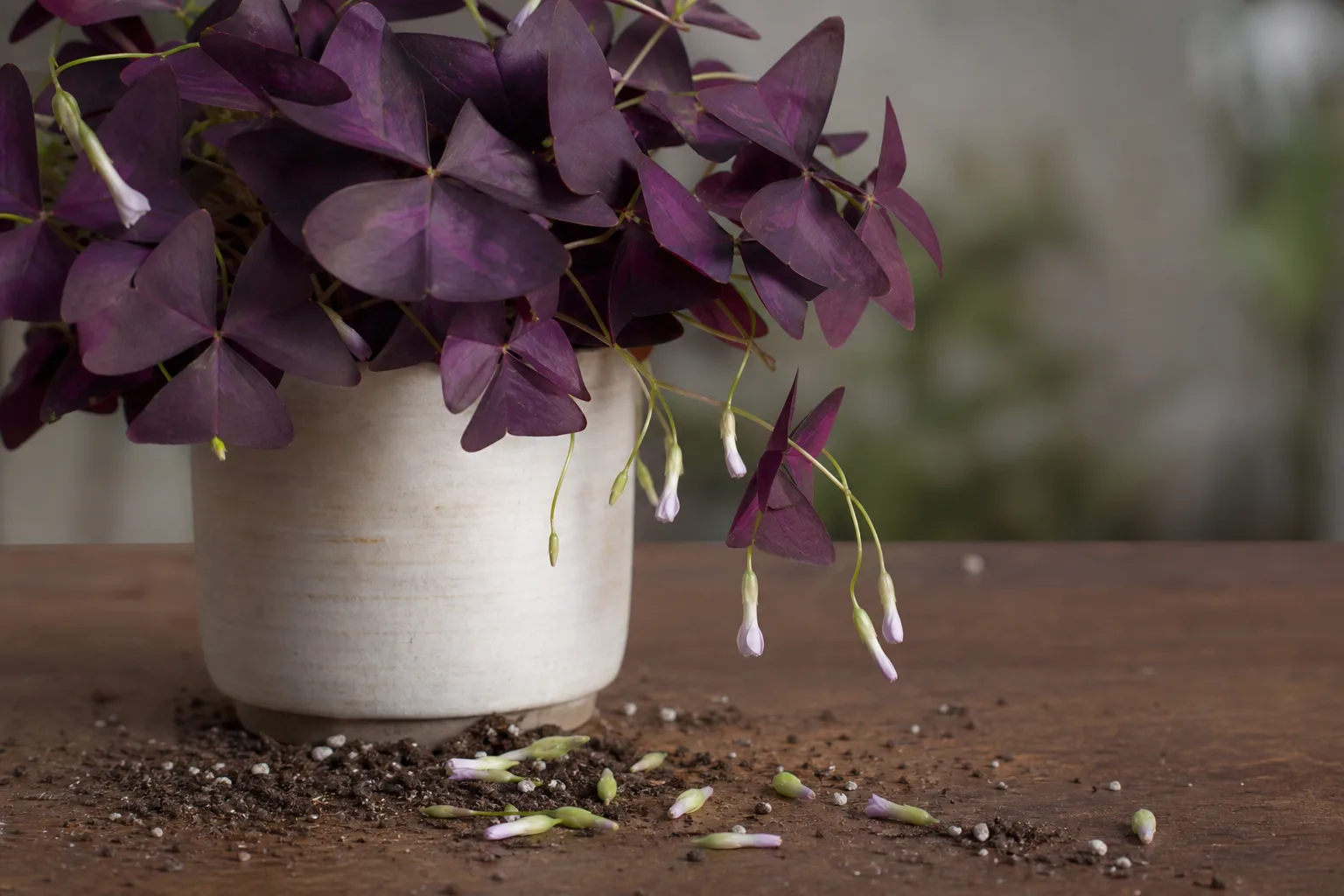
Bud Drop on Oxalis Triangularis: Causes, Checks & Fixes
This guide covers bud drop on Oxalis Triangularis. See also the general Bud Drop guide, watering, and light pages for this plant.
Bud Drop on Oxalis Triangularis: Causes, Checks & Fixes
Quick answer
Bud drop on Oxalis Triangularis (Oxalis triangularis, purple shamrock) is almost always a stress response while buds are forming, not a disease. The plant produces pale pink to lavender, five-petaled flowers on thin stalks held above the triangular foliage in spring and summer. When light is too dim, nights too cold, or the environment shifts suddenly, those buds abort before opening.
First step: leave the pot where it is and verify the basics. Confirm the plant receives Oxalis Triangularis light guide (with optional gentle morning sun) and sits in stable temperatures above 15°C (60°F) away from cold window glass, air-conditioning vents, and radiators. Only after that check should you move it to a brighter east- or west-facing window or shift it away from a draft. Moving a budded purple shamrock again often drops the remaining buds.
What bud drop looks like on Oxalis Triangularis
Healthy Oxalis Triangularis sets buds on slender stems above the leaf mound. The flowers are small, trumpet- to saucer-shaped, and typically white to pale pink or light lavender. NC State Extension notes that these blooms close at night like the leaflets-a photophilic rhythm that is normal, not bud drop.
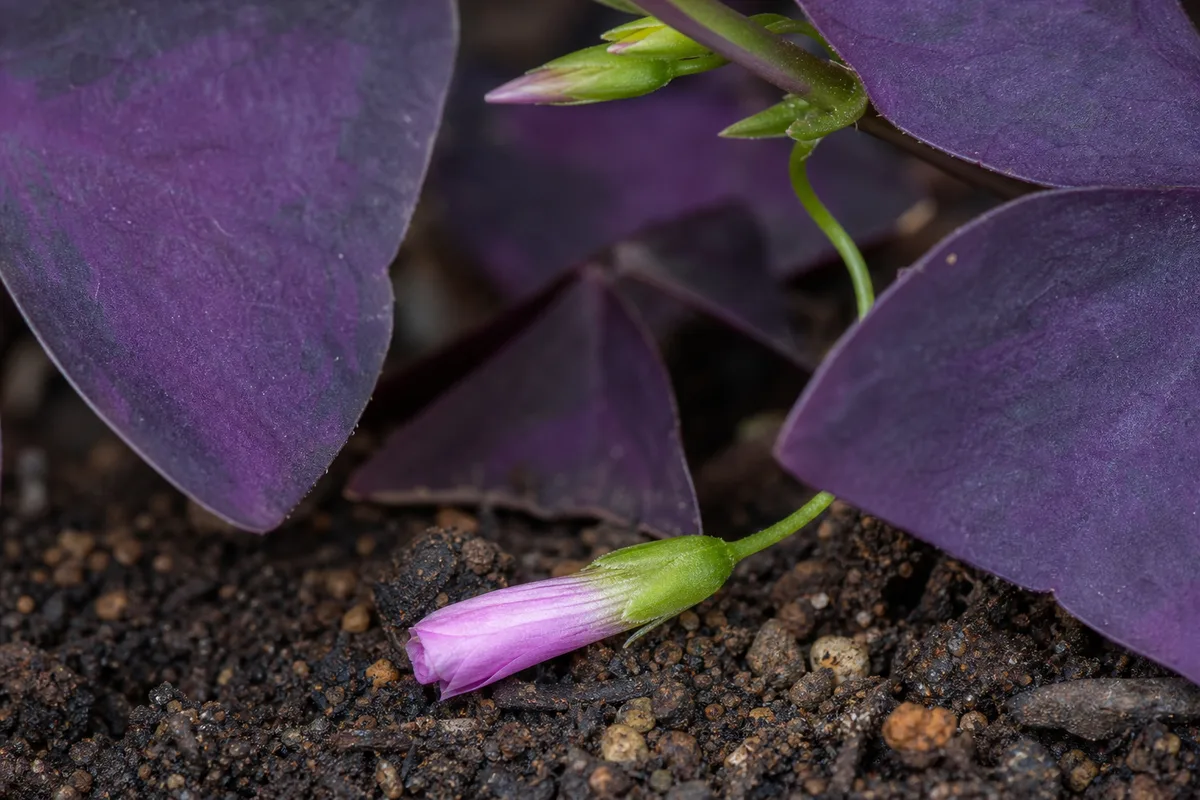
Bud Drop symptoms on Oxalis Triangularis - compare with healthy tissue on the same plant.
Bud drop shows up when:
- Buds turn yellow or brown, shrink, and fall before petals spread
- Only the newest buds abort while older open flowers remain
- Bud stalks dry at the tip and snap off with light touch
- Clusters of buds collapse within days of a move, repot, heat spike, or dry spell
The foliage may still look acceptable when early buds fail-purple shamrock stores energy in underground rhizomes, so the plant can shed flowers before leaves show obvious stress. Do not assume all is well just because the shamrock leaves still fold and unfold on schedule.
Normal versus alarming: One or two dropped buds after shipping or a weekend away is common. Worry when every new bud aborts for two weeks, buds drop together with bleached, collapsing leaves (possible dormancy or heat stress), or wet soil plus yellowing suggests root trouble rather than simple bud stress.
Why Oxalis Triangularis drops buds
Purple shamrock blooms when the plant has enough light energy and stable, cool-to-moderate temperatures during active growth. It is not a low-light bloomer. Most bud loss traces to culture, not infection.
Insufficient light during bud set
Shamrock species including purple-leaf oxalis prefer bright, indirect light. Too little light produces sparse growth and fewer blooms; buds that do form may not have the reserves to finish opening. Leggy stems leaning toward a window are a clue that light-not fertilizer-is the limiting factor.
Cold temperatures and drafts
Oxalis Triangularis grows best around 60–75°F (15–24°C) indoors. Cold window glass, winter sills below 10°C (50°F), or sudden cold drafts can abort buds while leaves still look fine. The species is sensitive to rapid micro-climate changes near heating and cooling vents.
Heat spikes and pre-dormancy stress
Temperatures above 75°F (24°C) for prolonged periods can push purple shamrock toward dormancy, especially after flowering. Bud drop may be the first sign before leaves fade, stop opening in daylight, and die back. That pattern is biological rest-not random failure-though you still want to remove heat stress if bloom was the goal.
Moving or Oxalis Triangularis repotting guide while buds are swelling
Bud drop is common after relocation, repotting, or rotating the pot for even light. Oxalis reacts quickly to disturbance-leaflets fold when touched- and flower buds are similarly sensitive during the swell stage. A plant that bloomed reliably in the nursery pot may drop every bud the first month in your home if light and handling changed at once.
Uneven watering while buds form
During active growth, purple shamrock wants the mix evenly moist with the top 2–3 cm allowed to dry between waterings. Letting the pot go bone dry while buds are forming stresses rhizome-backed growth-premature bud drop is a listed result of excessively dry soil. Conversely, soggy soil weakens roots and can yellow foliage while buds fail-especially if watering did not taper as the plant slowed after bloom.
Entering dormancy after the bloom cycle
Many false shamrock plants rest after flowering, most often in summer though timing varies by plant and year. Bud drop can coincide with the first stage of dormancy when the plant redirects energy underground. If buds fail alongside fading leaves that no longer open in daytime, you may be seeing rest-not a fixable bud problem.
How to confirm the cause
Work through these checks in order before fertilizing, repotting, or pruning heavily:
- Light - Is the plant more than 1–2 m from a window, or in a north room with no supplement? Can you read comfortably without a lamp at midday near the foliage? Dim placement fits light-related bud drop.
- Temperature - Measure overnight low near the pot. Below 15°C (60°F) or touching icy glass supports cold stress. Above 27°C (80°F) with fading leaves suggests heat-linked dormancy.
- Recent changes - Note moves, repots, new grow lights, or holiday travel in the last 14 days. Timing that matches bud loss points to environmental shock.
- Soil moisture - Dry top 2–3 cm after a long dry spell fits drought stress. Wet mix that stays heavy for days fits overwatering on Oxalis Triangularis or post-bloom slowdown watered on an old schedule.
- Leaf pattern - Bud drop with firm rhizomes and green new center leaves is usually recoverable culture stress. Bud drop with sour smell, mushy stems, or widespread yellow on wet soil needs unpotting to inspect rhizomes before you adjust light.
- Bloom history - First bloom after purchase often drops buds while the plant acclimates. Established plants that suddenly abort every bud after years of bloom warrant a harder look at heat, light, or dormancy timing.
If light is adequate, temperatures stable, soil moisture even, and no recent move-but leaves are bleaching and collapsing-suspect dormancy rather than a single missing factor.
First fix for Oxalis Triangularis
Stop moving the plant and stabilize light plus temperature.
Place it where it will stay through the current bloom attempt: bright indirect light within about 0.5–1 m of an east- or west-facing window, or set back from south glass with sheer filtering. Keep overnight temperatures above 15°C (60°F) and away from vents. If the top 2–3 cm of mix is dry, water thoroughly once until drainage runs free; then wait for normal dry-down before the next drink.
Do not repot, rotate daily for photos, or feed until buds either open or clearly abort and new growth looks stable for two weeks.
Step-by-step recovery
After the first stabilization pass, work in this order based on what you confirmed:
- Improve light gradually - If the plant was in a dim spot, move to brighter indirect light over 7–10 days rather than jumping into hot afternoon sun. Scorching leaf margins mean you went too far; pull back to filtered brightness.
- Correct Oxalis Triangularis watering guide - During active growth, water when the top 2–3 cm dries. Never let the pot sit in a full saucer. If the plant is slowing after bloom, taper frequency instead of keeping a summer schedule into rest.
- Hold fertilizer - Skip feed until new buds or healthy center leaves show the plant is actively growing again. Extra nitrogen during stress often pushes foliage, not flowers.
- Manage heat - If room temperatures exceed 27°C (80°F), improve airflow and move the pot away from heat sources. Accept that some purple shamrocks will enter dormancy after flowering regardless.
- Respect dormancy if it has started - When leaves stop opening by day and fade, stop chasing blooms. Taper water, let foliage die back, and rest the rhizomes in a cool, dim spot until new shoots appear-then return to bright light and normal watering.
Recovery timeline
Individual buds that drop will not reopen-that tissue is finished.
If the cause was a one-time move or short dry spell, new bud stalks may appear within 2–4 weeks during active growth. After a serious light correction, expect 3–6 weeks before the next reliable flush because the plant rebuilds energy in the rhizomes first.
If the plant entered post-flowering dormancy, bloom may pause for 1–3 months until new growth emerges. That gap is normal for corm-backed oxalis, not a sign the plant is dead.
Improvement signs: fresh bud stalks above the crown, deep purple new leaflets in bright light, stable daytime leaf opening, and firm rhizomes if you inspect the root zone.
Worsening signs: every bud aborts for multiple cycles, leaves bleach and collapse with hot dry air, or wet soil pairs with mushy rhizomes-escalate to root inspection rather than brighter light alone.
Lookalike symptoms
- Normal nyctinastic closing - Flowers and leaflets fold at night and reopen by day. Closed buds in the evening are not bud drop.
- Post-flowering dormancy - Bleaching leaves, daytime folding that stops, then die-back after a bloom wave. Taper water; do not fight rest with fertilizer.
- Insufficient light without bud drop yet - Long stems, pale green new leaves, no buds at all. Brighter light is the fix before buds even form.
- Thrips or aphids on buds - Streaked, distorted buds with silvery scarring or sticky residue. Inspect with a hand lens; isolate and rinse if pests are active.
- Overwatering during slowdown - Yellow limp leaves on heavy wet mix after bloom. Fix drainage and watering before expecting new buds.
What not to do
Do not move the plant repeatedly trying to find a perfect spot while buds are swelling-each move can reset bud loss. Avoid repotting during visible buds unless the mix is failing or rhizomes are rotting. Do not fertilize heavily to “push” flowers after bud drop; stabilize environment first.
Skip cold windowsills for budded plants in winter. Do not mist buds on a schedule-extra wetness on dense foliage invites fungal issues without fixing dry-air bud aborts tied to heat vents. Do not discard the pot when buds drop once after purchase; rhizomes often recover after acclimation.
How to prevent bud drop next time
Keep purple shamrock in bright indirect light year-round, with gentle morning sun when acclimated. Hold 15°C to 24°C (60–75°F) and avoid vent drafts. Water on dry-down during active growth so moisture stays even through bud set.
Do not repot or relocate while buds are visible. After flowering, watch for dormancy cues and taper water instead of forcing another bloom cycle immediately. If winter light is weak, supplement with a full-spectrum grow light rather than accepting pale growth and aborted buds from October through March.
When to worry
Escalate when all buds abort for two or more cycles, the pot stays below 10°C (50°F), or bud loss comes with sour wet soil and soft rhizomes. Those patterns can overlap with rot risk during post-bloom slowdown.
A few lost buds after one stress event is low urgency. Mass aborts during peak summer bloom in a hot, dry room need heat and watering correction within days-not next month.
Conclusion
Bud drop on Oxalis Triangularis is a diagnostic signal, not a death sentence. Confirm bright indirect light, stable warmth above 15°C, and even moisture while buds form; stop moving the pot until blooms finish or clearly fail. Separate one-time stress from post-flowering dormancy, and measure success by new bud stalks and firm rhizomes-not by reopening fallen buds. Purple shamrock rewards boring, stable care more than aggressive intervention.
When to use this page vs other Oxalis Triangularis guides
- Oxalis Triangularis watering guide - Use for routine moisture checks before assuming bud drop is the main issue.
- Oxalis Triangularis problems hub - Browse all 17 common issues on this species.