Overwatering on Oxalis Triangularis: Causes, Checks & Fixes
Quick answer
Overwatering on Oxalis triangularis usually means soggy mix around resting rhizomes - especially during dormancy die-back. Stop watering immediately, check whether corms are firm or mushy, and let the pot dry before any next drink. Nightly leaf folding alone is normal nyctinasty, not a thirst signal.
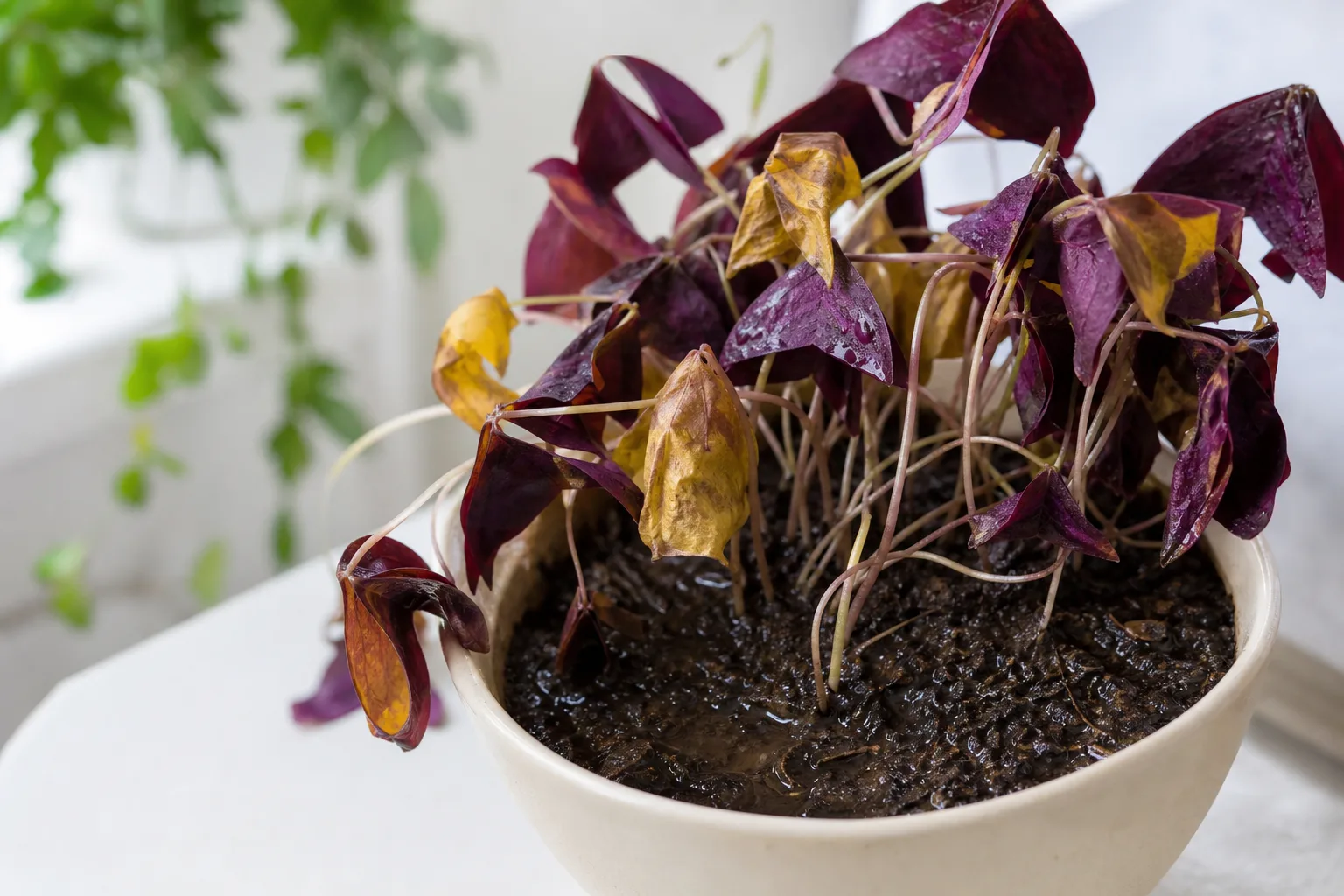
Overwatering on Oxalis Triangularis: Causes, Checks & Fixes
This guide covers overwatering on Oxalis Triangularis. See also the general Overwatering guide, watering, and light pages for this plant.
Overwatering on Oxalis Triangularis: Causes, Checks & Fixes
Quick answer
Overwatering on Oxalis triangularis - purple shamrock, false shamrock, or love plant - is almost never about one extra drink. It is about soggy mix sitting around rhizomes (the corm-like storage structures below the soil) for days while the plant is not using water. That mismatch kills more purple shamrocks than occasional dryness ever will.
The defining trap is watering through dormancy die-back. When foliage yellows and collapses after flowering or seasonal stress, many growers keep watering on the old active-growth schedule. A resting plant does not transpire, so wet soil around dormant rhizomes is the primary route to rhizome rot.
First step: stop watering immediately. Lift the pot, test the top inch of mix, and check whether leaves stay limp through midday - not just folded at night. If soil is wet and the pot is heavy, do not add water, fertilizer, or a reassuring soak. Inspect rhizomes if yellowing spreads while the mix stays damp.
For full watering rhythm by growth phase, see the Oxalis triangularis watering guide. For advanced mushy-corm rescue, see root rot on Oxalis triangularis.
Why Oxalis triangularis gets overwatered
Oxalis triangularis grows from rhizomes with scale leaves that store water and nutrients - functionally like an elongated bulb. That storage means the plant tolerates a missed watering during active growth far better than it tolerates a week of saturated mix. The watering goal is rhythm tied to growth phase, not a fixed calendar.
Several patterns cause chronic wet soil:
Calendar watering without checking the pot. A Tuesday schedule overwaters a dim winter pot and underwatered a bright summer terracotta container in the same home. Oxalis in a 10-cm terracotta pot on a bright sill can dry twice as fast as the same plant in a 15-cm glazed pot across the room.
The dormancy trap. After flowering or when day length drops, foliage yellows, wilts, and dies back - a normal rest period, not death. Continuing active-growth watering while leaves are collapsing keeps rhizomes in wet mix with no transpiring foliage to pull moisture through the system. That is when rot risk peaks.
Nyctinasty confusion. Purple shamrock leaflets fold at dusk and reopen by mid-morning in a daily nyctinastic rhythm - MU Extension describes shamrocks as “rockin’ by day, dozin’ at night.” Owners see drooping leaves at 9 p.m. and add water when the pot is already moist. By morning the mix is waterlogged and the corm sits in anaerobic conditions.
Heavy peat mix, blocked drainage, and cachepots. Peat-heavy indoor mixes compact and hold water at the bottom where rhizomes sit. Saucers left full or decorative outer pots holding runoff re-wet the lowest roots within hours. NYBG warns that wet soil is a quick way to kill a false shamrock - drainage holes and attentive watering matter as much as frequency.
Oversized pots and cool dim rooms. A much larger pot holds unused wet soil around resting rhizomes. Low winter light slows evaporation without slowing a fixed watering habit, so the surface may look dry while the center stays swampy.
Evenly moist mistaken for constantly wet. During active growth, Oxalis wants the mix evenly moist - surface dry-down between drinks, not perpetual dampness. NC State Extension recommends allowing the surface to dry between waterings while keeping the root zone lightly moist. Soggy soil every day crosses that line.
What overwatering looks like on Oxalis triangularis
Overwatering signs depend on whether the plant is in active growth or dormancy die-back. Read soil moisture and timing together - yellowing alone is not enough.
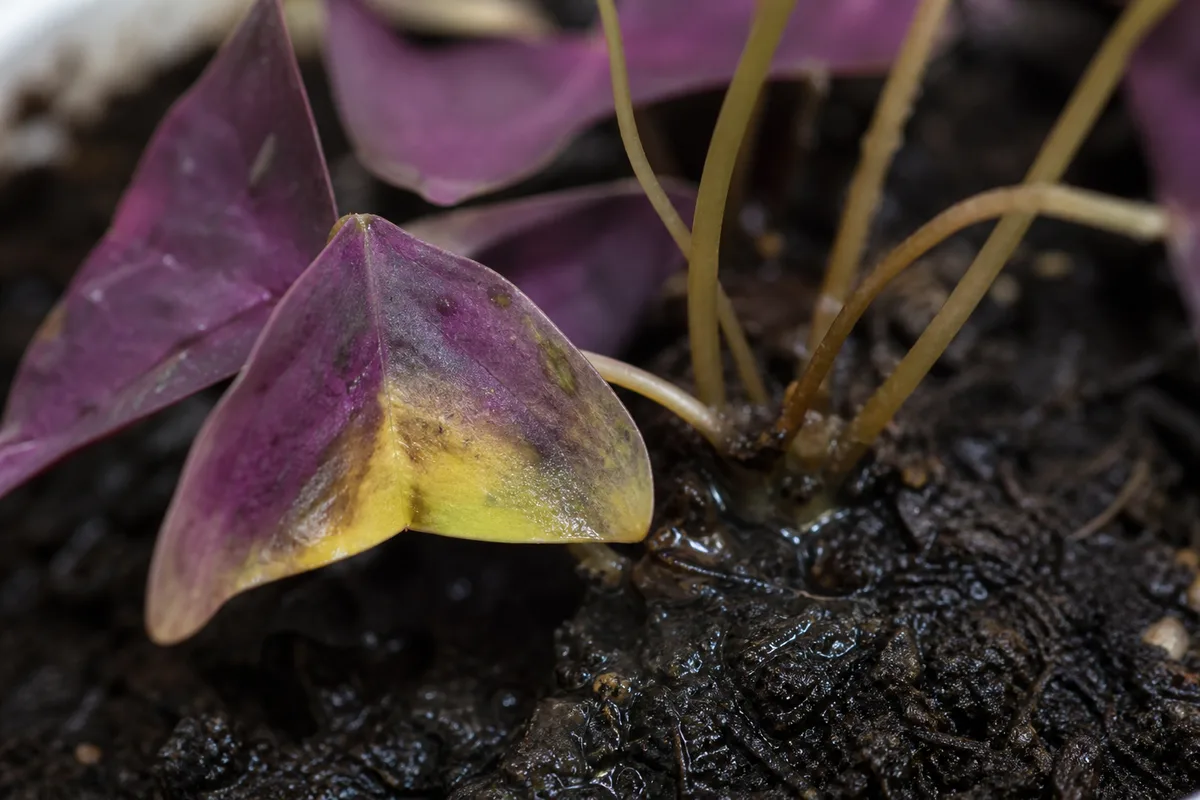
Overwatering symptoms on Oxalis Triangularis - compare with healthy tissue on the same plant.
Active-growth overwatering
During the months when new trifoliate leaves open each morning:
- Widespread yellowing while the mix stays wet and the pot feels heavy
- Soft, collapsing stems that do not recover by midday - unlike normal nyctinastic fold that resolves with daylight
- Sour or musty smell from the pot - anaerobic decomposition, a rot signature
- Fungus gnats hovering at the soil surface when mix never dries - see fungus gnats on Oxalis triangularis if pests persist after you fix moisture
- Mushy, dark rhizomes when you gently unpot - healthy tissue is firm and pale
MU Extension lists yellowing or drooping leaves as usually caused by overwatering or poor drainage on shamrock plants, while noting that sudden leaf drop is most likely dormancy. The trick is pairing leaf pattern with soil state.
Dormancy die-back vs. rot
After flowering or in late summer, many purple shamrocks enter dormancy - foliage yellows and dies back completely. That collapse is normal biology when rhizomes stay firm and you taper watering.
Overwatering during die-back looks different:
- Pot stays heavy and wet while all foliage collapses
- Yellowing accelerates after you keep watering on the old 5-to-8-day rhythm
- Rhizomes feel soft, slimy, or hollow instead of firm
- Sour smell develops - dormancy alone does not smell like swamp
NC State notes Oxalis triangularis may go dormant in autumn or if it gets too hot or dry, and advises cutting back on watering and waiting for new growth. Watering a leafless dormant plant on an active schedule reverses that guidance.
Nyctinasty vs. true wilt
| Clue | Normal nyctinastic fold | Overwatered wilt |
|---|---|---|
| Time of day | Folds after dusk; opens by mid-morning | Limp through midday in wet soil |
| Soil condition | Appropriate moisture for growth phase | Wet, heavy; may smell sour |
| Pot weight | Normal for recent watering | Heavy days after last drink |
| New growth | Steady leaf opening in active phase | Yellowing, collapse, no fresh shoots |
| Rhizomes (if checked) | Firm, pale | Soft, dark, mushy |
Check the same plant after breakfast light, not when leaflets are folded at night. For more on nightly folding biology, see the Oxalis triangularis overview.
How to confirm the cause
Work through these checks in order before Oxalis Triangularis repotting guide, fertilizing, or trimming:
- Pot weight - Lift the container. A noticeably heavy feel many days after watering means saturated mix. A light pot with wilt points toward underwatering, not overwatering.
- Surface and depth moisture - Push a finger or wooden skewer about 2.5 cm (1 in) into the mix. Damp soil with widespread yellowing confirms excess moisture during active growth. During dormancy, even slight dampness while foliage is gone is a warning sign.
- Midday leaf posture - Do leaflets open flat by late morning? Persistent limpness in wet soil supports overwatering. Fold that resolves with light supports nyctinasty.
- Growth phase - Did yellowing follow flowering or seasonal die-back? Is the plant leafless? Dormancy context changes what “too much water” means - taper and stop, do not maintain summer rhythm.
- Rhizome inspection - Gently unpot if signs are worsening. Healthy rhizomes are firm and pale. Rotten ones are brown, black, soft, or slimy and may smell earthy-sour.
- Drainage check - Confirm the hole is open, the saucer is empty, and no cachepot is holding runoff.
Confirmation decision table
| What you see | Most likely cause | First action |
|---|---|---|
| Wet heavy pot, yellow limp stems, firm rhizomes | Mild active-growth overwatering | Stop watering; let top inch dry; improve drainage |
| Die-back after flowering, firm rhizomes, tapering dry mix | Normal dormancy | Taper then stop watering; cool dim rest |
| Wet heavy pot during die-back, soft rhizomes, sour smell | Dormancy overwatering / rot | Stop watering; trim mushy tissue; see root rot |
| Folds at night only, opens by morning, appropriate moisture | Nyctinasty (normal) | No water change; check in daylight next time |
| Light dry pot, crisp wilt through the day | Underwatering | Thorough soak; resume evenly moist rhythm |
If wet soil, heavy pot, and soft rhizomes align, treat overwatering as confirmed and escalate to rhizome rescue if more than a small section is mushy.
First fix for Oxalis triangularis
Stop watering immediately. That single action prevents further oxygen loss around rhizomes and gives you time to read the plant’s growth phase correctly.
Then branch by severity:
Mild active-growth cases
When foliage is still opening each morning, rhizomes are firm, and the problem is recent soggy soil:
- Pause all watering until the top inch of mix dries - often 5–10 days depending on pot size and room conditions.
- Move to brighter indirect light if the plant sits in deep shade - slow evaporation worsens wet soil in winter corners.
- Empty saucers and confirm the drainage hole is clear.
- Resume the evenly moist rhythm only when the surface dry-down test passes - water thoroughly, let drain, empty runoff within 15 minutes per NYBG guidance.
Do not fertilize. Do not repot into a larger container “to help drying” - more wet soil volume usually makes things worse.
Dormancy cases
When foliage is yellowing into die-back but rhizomes still feel firm:
- Taper watering sharply - a light drink every 2–3 weeks at most while some leaves remain, not your old weekly flood.
- Stop completely once above-ground growth has died back - keep the mix nearly dry for roughly 2–12 weeks until new shoots appear.
- Check rhizomes once when foliage is gone - firm tissue means rest; mushy tissue means rot protocol.
Do not discard the pot because soil looks bare. Dormant purple shamrock in a cool dim spot without water is often normal, not dead.
Advanced cases - soft rhizomes
When inspection finds mushy, dark, or foul-smelling rhizomes:
- Unpot and trim all soft tissue with sterile scissors until you reach firm material.
- Callous healthy rhizomes on paper towel in a dry, airy spot for 1–3 days.
- Repot in fresh mix with 20–25% perlite, moderate first watering after 3–5 days, then follow active-growth or dormancy rhythm based on what new growth shows.
Full step-by-step rescue lives on the root rot page - this overwatering guide covers early triage; advanced mushy-corm surgery is documented there to avoid duplicating rescue steps.
Recovery timeline
Mild overwatering during active growth often stabilizes within one to two weeks after the mix dries and you resume the correct evenly moist cycle. Watch for new center growth - fresh trifoliate leaves opening mean roots are functioning again.
Damaged leaves rarely re-green. Older yellow foliage may stay limp until you prune it after recovery is obvious. Judge success by new shoots, not by saving every old leaflet.
Rhizome rot recovery takes longer - commonly several weeks to a full growing season if only partial firm tissue remains. New pink or white nubs at the soil surface are the milestone that tells you the corm survived.
Dormancy after overwatering scare - if you caught the problem early, firm rhizomes may simply rest until seasonal cues trigger regrowth in 1–3 months. Do not water during that wait.
If the whole clump collapses, rhizomes are mostly mush, and no new shoots appear after 8–12 weeks in appropriate conditions, the plant may not be saveable - propagate from any remaining firm scale leaves if present.
What not to do
Do not keep watering because leaves look wilted when soil is already wet - wilt with moist soil often means roots cannot absorb water because they are damaged, not because the plant needs more.
Do not fertilize a waterlogged purple shamrock. Salts stress compromised roots.
Do not repot into dense garden soil, a pot without drainage, or a much larger pot without inspecting rhizomes first.
Do not water on schedule through visible die-back - dormancy requires tapering, then stopping.
Do not mistake nightly folding for thirst and add water at night when the pot is heavy.
Do not throw the plant away during dormancy before checking rhizome firmness - bare soil in a cool closet for a month is often normal rest.
Do not water immediately after trimming rotted rhizomes - calloused dry tissue needs a short rest before the first moderate drink.
How to prevent overwatering next time
Active growth: Water when the top inch (2.5 cm) of mix dries, then soak until drainage runs free and empty the saucer. Most indoor pots in bright conditions need checks every 5–8 days in warm months and 10–14 days when growth slows - but the soil test makes the final call, not the calendar.
Dormancy: When foliage yellows after flowering, taper sharply then stop watering until new shoots emerge. MU Extension advises reducing watering to keep soil barely moist during early rest, then resuming normal care when new growth appears.
Soil and pot: Use standard houseplant mix amended with 20–25% perlite. Plant in a container with a drainage hole sized to the root mass - not dramatically oversized.
Daily habit: Check moisture in daylight, not when leaflets are folded. Use pot weight alongside finger or skewer tests.
Seasonal adjustment: Move watering checks closer together in bright summer sun and farther apart in dim winter rooms - the same volume of water at the wrong season causes rot.
For the complete phase-by-phase watering table, see the watering guide.
Overwatering vs. lookalike problems
| Clue | Overwatering | Dormancy | Underwatering | Root rot (advanced) |
|---|---|---|---|---|
| Leaf pattern | Yellow, limp in wet soil | Die-back after bloom; may fold at night normally | Wilted, often still colored; dry edges | Collapse despite wet soil; base softens |
| Soil | Wet, heavy, may smell sour | Tapering dry; firm rhizomes | Dry top to middle; light pot | Saturated; sour odor |
| Rhizomes | Soft if advanced; firm if caught early | Firm, pale | Firm; may shrivel if prolonged drought | Mostly mushy, dark |
| Night folding | May occur; limpness persists by day | Normal nyctinasty | Folds; slow morning reopen | Wilting overrides normal rhythm |
| First action | Stop water; dry down | Taper then stop | Thorough rehydration | Trim, callous, repot - root rot guide |
Yellowing alone overlaps with yellow leaves on Oxalis triangularis and wilting - soil moisture and rhizome firmness separate overwatering from those symptom pages.
When to worry
Treat as urgent when:
- Rhizomes feel soft or slimy on inspection - rot spreads fast in wet mix
- Sour smell intensifies from the pot
- Stems collapse at the base while soil stays saturated
- Fungus gnats swarm and soil never dries between scheduled waterings - gnats thrive in constantly moist mix
- You have been watering through full die-back for weeks without checking corms
Escalate to full rhizome rescue on the root rot page when more than a small tip of each rhizome is mushy. Contact your local extension office if you need hands-on diagnosis help with a valued specimen.
Conclusion
Overwatering on Oxalis triangularis is a phase mismatch more often than a single bad watering day. Rhizomes store water precisely so the plant survives dry spells - but that same biology makes soggy dormancy mix lethal. The purple shamrock folds its leaves every night whether soil is right or wrong; check the pot in daylight, not at bedtime.
Stop watering when the mix is wet and the plant is dying back. Confirm with pot weight, surface moisture, and rhizome firmness. Resume the evenly moist active-growth rhythm only after the top inch dries and new growth proves roots are working. Respect dormancy, keep drainage holes open, and let the calendar remind you to check - not to pour on autopilot.
When to use this page vs other Oxalis Triangularis guides
- Oxalis Triangularis watering guide - Use for routine moisture checks before assuming overwatering is the main issue.
- Oxalis Triangularis problems hub - Browse all 17 common issues on this species.
- Root Rot on Oxalis Triangularis - Different entry point when symptoms overlap with overwatering.
- Yellow Leaves on Oxalis Triangularis - Different entry point when symptoms overlap with overwatering.
- Wilting on Oxalis Triangularis - Different entry point when symptoms overlap with overwatering.
Related Oxalis Triangularis guides
- Oxalis Triangularis overview
- Oxalis Triangularis watering
- Oxalis Triangularis light
- Oxalis Triangularis soil
- Root Rot on Oxalis Triangularis
- Yellow Leaves on Oxalis Triangularis
- Wilting on Oxalis Triangularis
- Fungus Gnats on Oxalis Triangularis
- Mold on Soil on Oxalis Triangularis
- Drooping Leaves on Oxalis Triangularis
- Oxalis Triangularis problems