Underwatering on Oxalis Triangularis: Causes, Checks & Fixes
Quick answer
Underwatering on Oxalis triangularis shows as a light dry pot and limp leaves through the day-not normal night folding. First step: confirm dry mix 2–3 cm down and firm rhizomes, then bottom-water or top-water thoroughly and drain fully.
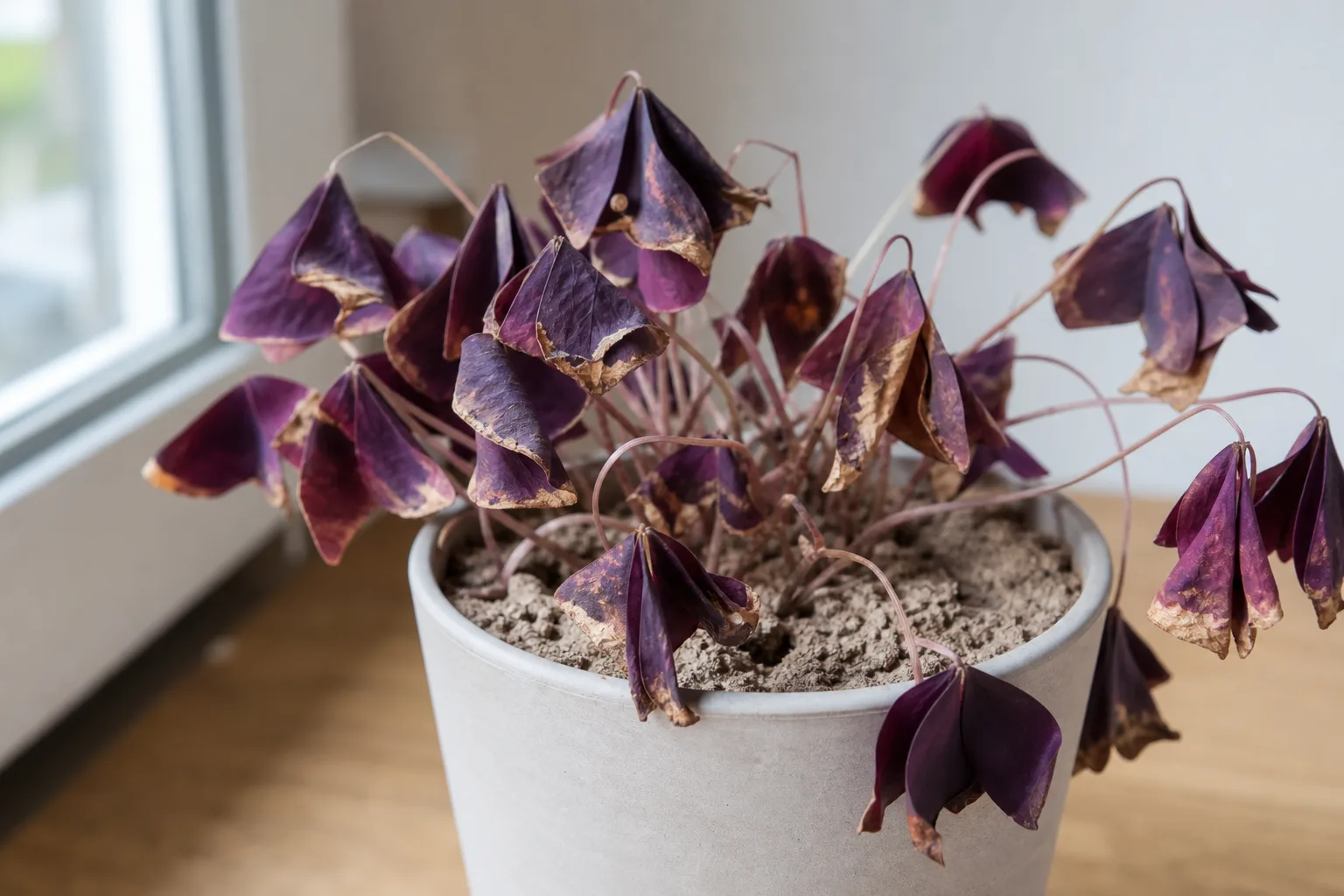
Underwatering on Oxalis Triangularis: Causes, Checks & Fixes
This guide covers underwatering on Oxalis Triangularis. See also the general Underwatering guide, watering, and light pages for this plant.
Underwatering on Oxalis Triangularis: Causes, Checks & Fixes
Quick answer
Underwatering on Oxalis triangularis - purple shamrock, false shamrock, or love plant - is not the same as watching your shamrock fold its leaflets at night. That nightly rhythm is normal nyctinasty. True drought stress shows as limp stems and drooping purple leaves that stay collapsed through daylight hours, a noticeably light pot, and dry mix pulled away from the pot edge.
First step: check soil moisture 2–3 cm deep and lift the pot before you add water. If the mix is dry throughout, the pot feels light, and rhizomes are firm when you inspect, underwatering is likely. If the pot is heavy, soil smells sour, or corms feel soft, stop - that is overwatering or rot, not thirst.
This page focuses on drought triage only. Broader wilt causes - heat stress, repot shock, dormancy entry - are covered on the wilting guide. Ongoing watering rhythm and dormancy protocol live on the Oxalis triangularis watering guide.
What underwatering looks like on Oxalis Triangularis
True underwatering during active growth shows:
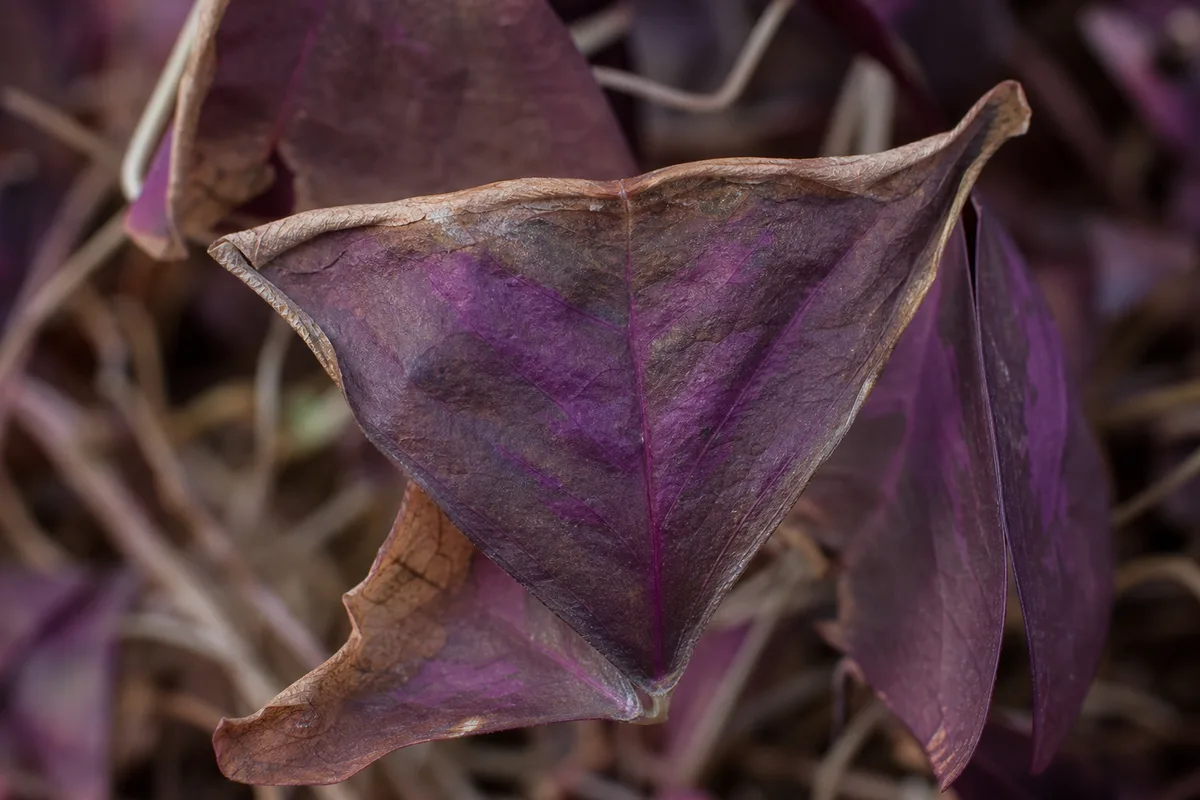
Underwatering symptoms on Oxalis Triangularis - compare with healthy tissue on the same plant.
- Limp, soft stems and drooping purple leaflets that stay collapsed through the day - not reopening by mid-morning
- Dry potting mix that shrinks slightly from the pot wall, sometimes with a pale dusty surface
- A lightweight pot compared with how it feels right after a thorough watering
- Crispy brown edges on older leaflets when drought has persisted
- Firm, pale tan or white rhizomes when you gently tip the plant out - rot would feel mushy instead
What is not underwatering:
- Night folding - Leaflets close at night like butterfly wings at dusk and open again by morning on a well-watered plant. MU Extension describes shamrocks as “rockin’ by day, dozin’ at night”. That rhythm alone is not a thirst signal.
- Brief midday droop in hot sun - Leaves may sag in strong afternoon heat, then firm up by evening if roots and soil moisture are sound.
- Dormancy die-back - Progressive yellowing and collapse with firm rhizomes and seasonal timing after flowering or heat stress. That wants tapered water, not an emergency soak on an active-growth schedule.
Why Oxalis Triangularis gets underwatered
Purple shamrock is a rhizomatous herbaceous perennial whose underground structures store water and nutrients. That storage lets the plant survive a missed watering during active growth better than it survives soggy soil - but extended bone-dry conditions still collapse the thin stems because fine roots cannot supply leaf turgor fast enough. NC State notes wilting may be caused by underwatering on oxalis species when soil dries too far.
Fear of overwatering after past rot
Many growers underwater after a rhizome rot scare. Oxalis is sensitive to excess moisture - NYBG notes wet soil is a quick way to kill a false shamrock - so the pendulum swings from constant wet feet to letting the entire root ball go dust-dry for weeks. During active growth, the plant wants mix that is evenly moist below with the surface allowed to dry between drinks, not a desert cycle.
Small pots, bright light, and skipped checks
Small terracotta pots in Oxalis Triangularis light guide dry faster than large plastic pots in dim corners. Busy schedules, autopilot weekly reminders that do not match your pot’s dry-down rate, and hydrophobic peat mix after a skipped week can all leave the root zone dry while the surface looks merely dull. Heat spikes and AC vents accelerate water loss through thin leaflets.
The dormancy confusion
When foliage yellows into dormancy, the plant stops pulling water from soil. Continuing an active-growth watering calendar while leaves die back can keep rhizomes in wet mix during dormancy - a rot risk, not a thirst fix. Underwatering during true active growth is a different problem from dry rest during dormancy - the confirmation checks differ.
How to confirm the cause
Work through these checks in order before soaking:
- Day versus night leaf position - Do leaflets reopen after sunrise? If yes, you may be seeing normal folding, not drought.
- Soil moisture at 2–3 cm depth - Push a finger or wooden skewer about 1 inch (2.5 cm) deep. Dry throughout with a lightweight pot suggests thirst. Damp deep mix rules out underwatering.
- Pot weight - Lift the pot. A noticeably lighter weight compared with right after watering means the mix has dried down.
- Rhizome firmness - Gently tip the plant out. Healthy rhizomes feel firm, tan or white. Soft, brown, or disintegrating corms point to root rot, not drought.
- Growth phase - Is the plant in active leaf production, or yellowing uniformly into dormancy after flowering?
| Sign | Underwatering | Overwatering / rot | Dormancy |
|---|---|---|---|
| Pot weight | Light, dry | Heavy, wet | Light to moderate, tapering |
| Daytime leaf posture | Limp through day | Limp on wet soil | Progressive yellow collapse |
| Rhizomes | Firm, pale | Soft, dark, sour smell | Firm, resting |
| Soil smell | Neutral, dusty | Sour or musty | Dry, neutral |
| First action | Thorough soak + drain | Stop water, inspect | Taper then stop |
If soil is dry, rhizomes are firm, and only daytime leaves droop during active growth, underwatering is likely. If soil is wet and rhizomes are soft, treat rot as confirmed until inspection proves otherwise - see the overwatering guide.
First fix for Oxalis Triangularis
Bottom-water or top-water thoroughly until the entire root zone is moist, then drain completely - but only after dry soil and firm rhizomes confirm thirst.
Bottom-water and drain protocol
Bottom watering helps when mix has become hydrophobic and repels water from the top, or when you want gentler rehydration after a dry spell:
- Set the pot in a shallow tray of room-temperature water.
- Leave it 15 to 30 minutes until the surface feels slightly moist - the same window used on the watering guide.
- Remove the pot, let excess drain fully, and empty the saucer within about 15 minutes so the lowest roots do not sit in stagnant water.
- Do not leave the pot submerged for hours - that mimics waterlogged conditions that cause rhizome rot.
Top watering works equally well when mix absorbs normally: pour slowly and evenly until water runs from the drainage hole, then empty the saucer.
Do not soak if the pot is heavy, soil is damp 2–3 cm down, or rhizomes feel soft. That deepens rot instead of fixing wilt.
Step-by-step recovery
After the first thorough drink:
- Move out of harsh direct afternoon sun until leaflets firm up - heat increases water loss while roots rehydrate.
- Trim fully brown crispy leaflets; green leaves should stiffen within hours to one day on mild cases.
- Resume the dry-down rhythm: water when the top 2–3 cm is dry during active growth - roughly every 5–8 days for most indoor pots in bright light, adjusting to your container and season per the watering guide.
- Recheck rhizomes if the plant perks up then wilts again within a few days - chronic drought can damage fine roots, and repeat collapse on wet soil means rot inspection, not more water.
Do not fertilize, repot, or mist heavily on day one. Skip daily sips that wet only the surface while the root ball stays dry.
Recovery timeline
Mild underwatering during active growth often shows visible firming within hours to one day after a proper soak and drain.
Heat-stressed drought may need two to three days once temperature and light stabilize.
Chronic drought that has stressed fine roots may take several weeks before new leaflets open reliably; flowering can pause until turgor rebuilds.
Worsening signs: stems soften after rehydration, rhizomes turn mushy on recheck, or the plant wilts again while soil stays wet - escalate to the root rot guide.
Lookalike symptoms to rule out
- Normal nyctinasty - Leaves folded at night, open by morning; no soak needed.
- Dormancy die-back - Progressive yellowing with firm rhizomes; taper water per the watering guide, do not flood.
- Overwatering / corm rot - Wet soil, sour smell, soft corms; limp leaves despite moisture. See overwatering and root rot.
- Heat droop - Brief afternoon sag on otherwise moist soil; move out of hot direct sun.
- Low light weakness - Long pale stems over time; brighten placement gradually - overlaps with wilting causes beyond drought alone.
Mistakes to avoid
Do not water repeatedly because leaves look limp when soil is already wet - that is the fastest route to purple shamrock rhizome rot. Overwatering can cause root rot and mushy stems on oxalis when saturated mix suffocates healthy tissue. Avoid daily shallow sips that never reach the root ball. Do not panic-water during dormancy when foliage is dying back with firm rhizomes; taper instead.
Do not drench daily after one dry spell - that swings care to overwatering. Use room-temperature water rather than cold shock on stressed roots. Do not assume death when the pot looks empty during dormancy; check rhizome firmness first.
Do not keep a fixed calendar without lifting the pot - a Tuesday schedule underwatered one container and overwatered another in the same room.
How to prevent underwatering next time
During active growth, keep the medium evenly moist while allowing the surface to dry slightly between waterings - check the top inch (about 2.5 cm) before every drink, usually on a 5–8-day rhythm in bright indoor light. Use the calendar as a reminder to check, not permission to water.
Build the pot-weight habit: lift after every thorough watering and notice when weight drops. Match pot size and material to your watering consistency - small terracotta in bright light needs more frequent checks than large glazed plastic in a dim corner.
When dormancy begins after flowering or heat stress, taper proactively rather than waiting for full collapse. Full phase tables and dormancy protocol are on the watering guide.
When to worry
Escalate if wet soil pairs with sour smell, soft stems, or mushy rhizomes - rot spreads fast and wants dry inspection, not another soak.
If the plant perks up after watering then wilts again within days while soil stays damp, inspect for root damage or rot rather than watering harder.
If more than half the rhizome mass is mushy after trimming, survival odds drop - save any firm segments separately while you wait for possible sprouting per the root rot guide.
Conclusion
Underwatering on Oxalis triangularis comes down to reading soil moisture, pot weight, and the day–night leaf rhythm before you pour. Thirst wants one thorough soak and drain during active growth; rot wants dry inspection; dormancy wants tapered patience. Get that first check right - and distinguish this drought-first workflow from the broader wilting guide - and purple shamrock recovers far more willingly than most owners expect.
Recommendations were cross-checked against NC State Extension Oxalis triangularis guidance, University of Missouri Extension shamrock watering and nyctinasty, New York Botanical Garden false shamrock care, and LeafyPixels Oxalis triangularis watering, wilting, overwatering, and root rot guides.
When to use this page vs other Oxalis Triangularis guides
- Oxalis Triangularis watering guide - Use for routine moisture checks before assuming underwatering is the main issue.
- Oxalis Triangularis problems hub - Browse all 17 common issues on this species.
- Wilting on Oxalis Triangularis - Different entry point when symptoms overlap with underwatering.
- Brown Tips on Oxalis Triangularis - Different entry point when symptoms overlap with underwatering.
- Yellow Leaves on Oxalis Triangularis - Different entry point when symptoms overlap with underwatering.
Related Oxalis Triangularis guides
- Oxalis Triangularis overview
- Oxalis Triangularis watering
- Oxalis Triangularis light
- Oxalis Triangularis soil
- Wilting on Oxalis Triangularis
- Brown Tips on Oxalis Triangularis
- Yellow Leaves on Oxalis Triangularis
- Overwatering on Oxalis Triangularis
- Drooping Leaves on Oxalis Triangularis
- Oxalis Triangularis problems