Root Rot on Oxalis Triangularis: Causes, Checks & Fixes
Quick answer
Root rot on Oxalis triangularis usually means soggy mix has decayed rhizomes - especially when watered through dormancy die-back. Stop watering, unpot, and press each corm: firm pale tissue may be resting; mushy dark tissue is rot. Trim, callous 1–3 days, then repot in fresh mix with 20–25% perlite.
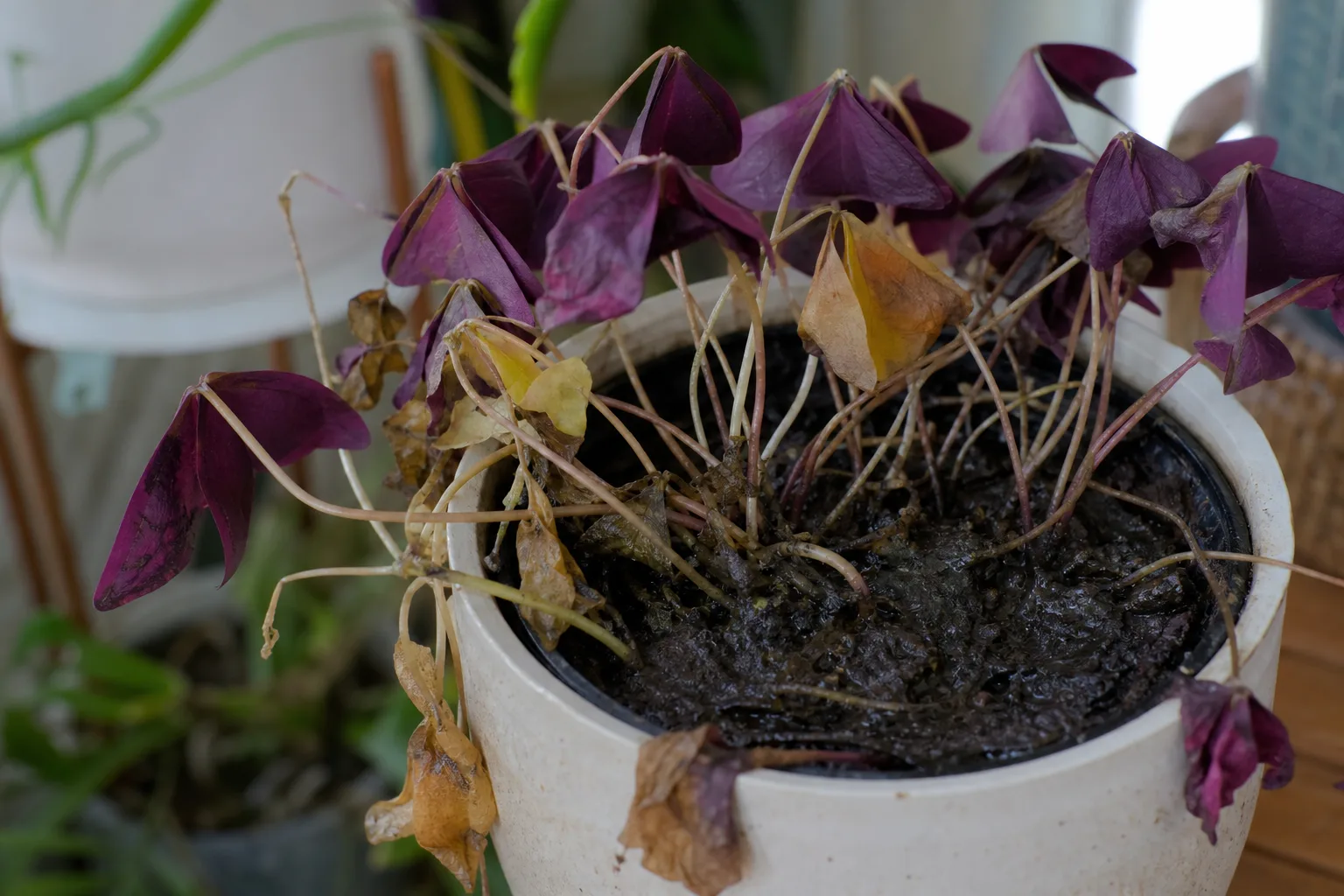
Root Rot on Oxalis Triangularis: Causes, Checks & Fixes
This guide covers root rot on Oxalis Triangularis. See also the general Root Rot guide, watering, and light pages for this plant.
Root Rot on Oxalis Triangularis: Causes, Checks & Fixes
Quick answer
Root rot on Oxalis triangularis - purple shamrock, false shamrock, or love plant - is a rescue guide for confirmed rhizome decay, not early overwatering triage. If stems are still firm and you suspect too much water but have not inspected corms, start with the overwatering guide and its pot-weight checks first. Use this page once mushy tissue, sour-smelling mix, or collapse-on-wet-soil confirms rot.
On Oxalis Triangularis overview, decay almost always follows culture: soil that stays saturated around rhizomes with scale leaves that store water while the plant is not using moisture - especially during dormancy die-back after flowering. A resting purple shamrock does not transpire; wet mix around dormant corms is the primary kill vector.
First step: stop watering immediately. Do not add fertilizer, hydrogen peroxide drenches, or a reassuring soak because leaves look wilted. Gently unpot when you are ready to inspect - firm tan corms in tapering dry mix may be dormancy; mushy dark corms in wet soil are rot.
For full watering rhythm by growth phase, see the Oxalis triangularis watering guide. For early soggy-soil triage before roots decay, see overwatering on Oxalis triangularis.
Is it dormancy or corm rot on Oxalis triangularis?
This is the question that defines purple shamrock care - and the one most growers get wrong. After flowering or when day length drops, foliage yellows, wilts, and dies back over days or weeks. That collapse is normal biology when underground structures stay firm. Continuing to water on an active-growth schedule while leaves disappear keeps rhizomes in anaerobic wet mix - and that is when rot begins.
NC State Extension notes Oxalis triangularis may go dormant in autumn or if it gets too hot or dry, and advises cutting back on watering and waiting for new growth. MU Extension describes the same cycle for shamrock species: reduce watering to keep soil barely moist during early rest, then resume normal care when new shoots emerge.
The corm firmness test
When foliage is collapsing or already gone, gently slide the plant from its pot - ideally when mix is slightly dry, not waterlogged:
| Finding | Most likely diagnosis | What to do |
|---|---|---|
| Rhizomes firm, pale, tan or white; mix tapering dry; no sour smell | Normal dormancy | Taper then stop watering; cool dim rest 2–12 weeks |
| Rhizomes soft, dark, slimy, or hollow; pot heavy and wet; sour smell | Corm rot | Stop water; trim mushy tissue; callous and repot |
| Some corms firm, some mushy | Partial rot | Trim all soft tissue; save firm segments separately |
| Firm rhizomes but you kept weekly watering through die-back | Rot risk - act now | Stop watering immediately; inspect again in 3–5 days |
Decision rule: firm tan corms in drying mix = rest; mushy dark corms in wet mix = rot. Do not discard a leafless pot before this inspection - bare soil in a cool closet for a month is often normal dormancy, not death.
NYBG advises keeping a dormant false shamrock in a cool, dark spot without watering and watching for regrowth over 1–3 months. Watering through that rest period reverses the protocol.
What root and corm rot looks like on purple shamrock
Rot on Oxalis triangularis involves both fine feeder roots and the storage rhizomes (often called corms or bulbs in casual guides). Decay usually starts underground while foliage still looks partially healthy - the plant’s stored water keeps leaves upright briefly after roots fail.
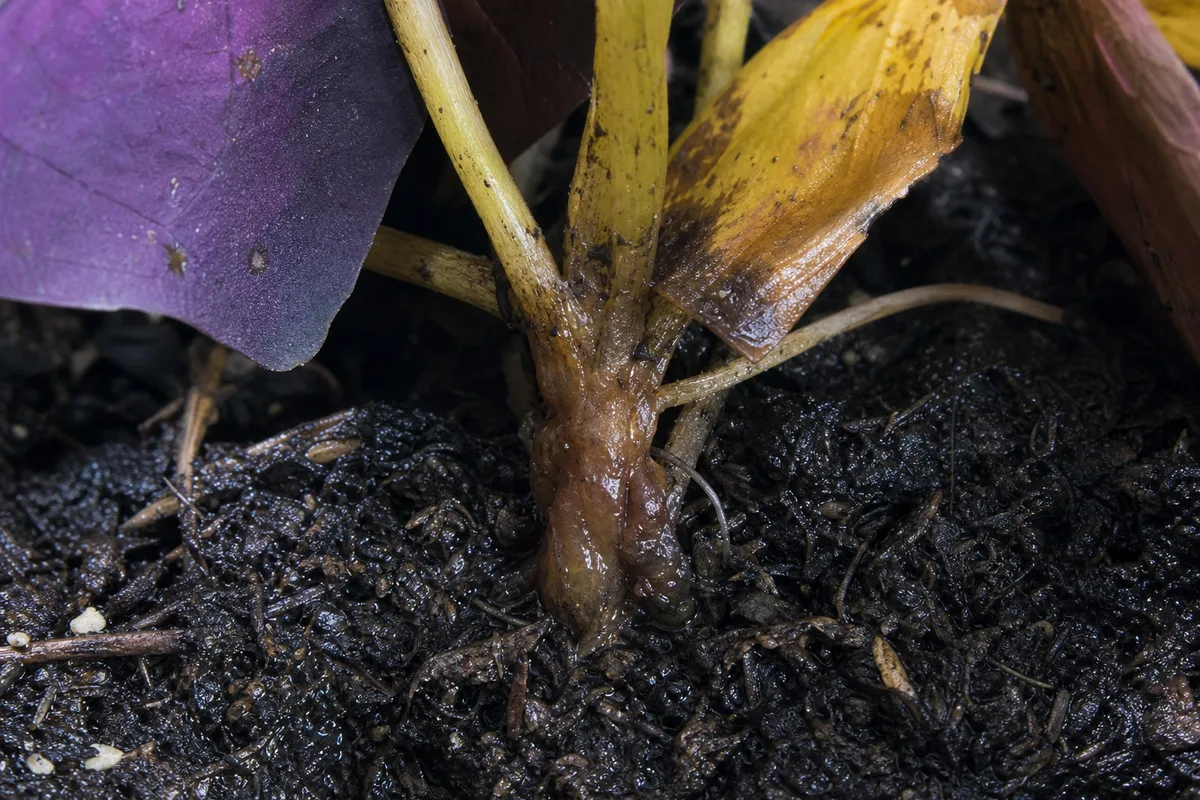
Root Rot symptoms on Oxalis Triangularis - compare with healthy tissue on the same plant.
Early signs
During active growth:
- Lower leaves yellow while the mix stays wet and the pot feels heavy
- Limp stems through midday - not the normal nyctinastic fold that resolves by morning
- Sour or musty smell from the drainage hole - anaerobic decomposition in the root zone
- Persistent fungus gnats when soil never dries - see fungus gnats on Oxalis triangularis if pests remain after moisture fixes
- Wilt despite wet soil - damaged roots cannot move water upward even when the pot is heavy
During dormancy die-back, rot masquerades as normal rest until you inspect:
- Pot stays heavy and wet while all foliage collapses
- Yellowing accelerates after you keep watering on the old rhythm
- Rhizomes turn soft or dark instead of staying firm and pale
- Sour smell develops - dormancy alone does not smell like swamp
Advanced signs
- Mushy stems at the soil line and leaves that brown and collapse without reopening
- Translucent, slimy rhizomes that disintegrate when touched
- Crown softening - the junction where stems meet underground tissue turns wet and dark
- Black slimy tissue mixed with white mold on the soil surface during chronic saturation
Compare with underwatering: a dry lightweight pot, mix pulled from the pot edge, and wilted but firm rhizomes point toward drought - see the underwatering guide. Rot wants dry inspection, not another soak.
Root rot vs. overwatering vs. dormancy - when to adjust watering vs. when to surgery
| Clue | Early overwatering | Normal dormancy | Confirmed corm rot |
|---|---|---|---|
| Leaf pattern | Yellow, limp in wet soil | Die-back after bloom; nyctinasty fold may still look normal at night | Collapse despite wet soil; base softens |
| Soil | Wet, heavy; may not smell yet | Tapering dry; nearly dry when leafless | Saturated; sour odor |
| Rhizomes | Firm if caught early | Firm, pale, odor-free | Soft, dark, mushy, slimy |
| First action | Stop water; dry down - overwatering guide | Taper then stop; cool rest | Trim, callous, repot - this page |
| Recovery window | Days to 2 weeks | 1–3 months rest | Weeks to full season |
Yellowing alone overlaps with yellow leaves on Oxalis triangularis and wilting - rhizome firmness and soil moisture separate rot from those symptom pages.
Why Oxalis triangularis gets corm rot
Rhizome water storage and oxygen needs
Purple shamrock grows from unusually structured rhizomes with scale leaves that store water and nutrients - functionally like an elongated bulb. That storage lets the plant survive missed water during active growth far better than it survives a week of saturated mix. It also means decay can progress underground while foliage still looks acceptable.
Roots and rhizomes need oxygen at the root zone. When mix stays wet for days, air spaces fill with water, anaerobic conditions develop, and tissue decays. NYBG is blunt: wet soil is a quick way to kill a false shamrock plant.
Watering during dormancy die-back
The evenly moist reputation for active growth leads growers to keep watering when foliage yellows after flowering. A dormant plant is not pulling moisture through leaves - extra water has nowhere to go except into rotting tissue. This is the defining Oxalis rot trigger, not a mysterious fungal invasion from nowhere.
Heavy mix, blocked drainage, and calendar watering
Peat-heavy indoor mixes compact and hold water at the bottom where rhizomes sit. Saucers left full, decorative cachepots holding runoff, blocked drainage holes, and oversized pots with unused wet soil all extend saturation. Watering every Tuesday without lifting the pot overwaters a dim winter container while underwatering a bright summer terracotta pot in the same home.
How to confirm the cause
Work through these checks in order:
- Pot weight - A heavy feel many days after watering confirms saturated mix.
- Surface and depth moisture - Push a finger or skewer about 2.5 cm (1 in) into the mix. Damp soil with widespread collapse supports rot risk during active growth; any dampness while foliage is fully gone during dormancy is a warning.
- Midday leaf posture - Do leaflets open flat by late morning? Persistent limpness in wet soil supports rot. Fold that resolves with light is nyctinasty.
- Smell - Sour, swampy, or fermented odor from the pot confirms advanced decay.
- Rhizome inspection - Gently unpot. Healthy tissue is firm and pale. Rotten tissue is brown, black, soft, slimy, or hollow.
- Growth phase context - Did collapse follow flowering or seasonal die-back? Were you watering on an active schedule through that die-back?
Treat rot as confirmed when wet soil, sour smell, and soft rhizomes align - proceed to surgery, not another dry-down wait.
First fix for Oxalis triangularis
Stop watering immediately. That single action halts further oxygen loss around rhizomes.
Then, if inspection confirms mushy tissue:
- Unpot and rinse corms gently so every rhizome is visible.
- Trim all mushy material with sterile scissors until you reach firm tissue.
- Do not water, fertilize, or repot into fresh wet mix yet - callousing comes next.
If rhizomes are still firm and the problem is recent soggy soil without decay, you may be in early overwatering territory - return to the overwatering guide for dry-down triage instead of surgery.
Step-by-step corm recovery
Rhizome rot is serious but not always fatal when firm tissue remains. The goal is to remove infected tissue, dry survivors, and restart in fast-draining soil.
- Stop watering and unpot the plant. Gently remove mix so every rhizome is visible. Work over newspaper - decayed tissue crumbles easily.
- Trim all mushy material. Use clean, sharp scissors or a knife. Cut until you reach firm, pale tissue. Sterilize the blade with rubbing alcohol between cuts if rot is extensive. Discard all soft sections - do not compost infected rhizomes back into houseplant soil.
- Let healthy rhizomes callous. Place firm rhizomes on paper towel in a dry, shaded, airy spot for 1 to 3 days so cut surfaces dry. Skipping this step invites fresh rot in moist mix.
- Repot in fresh, fast-draining mix. Use a clean pot with a drainage hole sized to the trimmed root mass - not dramatically oversized. Standard houseplant mix amended with 20 to 25 percent perlite matches what this species needs. Details on blend and pot sizing are on the soil guide and repotting guide. Set rhizomes at their previous depth; do not bury them deeply.
- Hold off on watering briefly. Wait 3 to 5 days after repotting, then give a moderate watering - not a flood. Let the pot drain fully and empty the saucer within 15 minutes.
- Resume active-growth rhythm only when you see new growth. If the plant enters dormancy during recovery, switch to the dormancy protocol on the watering guide instead of pushing water.
- Propagate backup if needed. Some rot cases leave only a few firm scale leaves or small rhizome sections. NC State notes propagation by dividing the rhizome or breaking off scale leaves - see the propagation guide for technique while the main clump recovers.
Do not reuse sour-smelling mix or the original pot without scrubbing with soapy water and drying - spores and anaerobic bacteria persist in old substrate.
Recovery timeline and what to expect
Example recovery arc: A purple shamrock in a 10 cm (4 in) pot watered weekly through summer die-back looked dead above soil - but unpotting revealed two of five rhizomes mushy while three stayed firm and pale. After trimming all soft tissue, letting survivors callous 48 hours on paper towel, and repotting in a 70/30 houseplant mix and perlite blend in the same-sized clean pot, the first new pink shoots appeared at the soil surface in about three weeks under bright indirect light. That timeline is typical for partial corm loss when firm tissue remains and watering stays restrained until new growth shows.
Mild root damage with firm rhizomes after trim may stabilize within one to two weeks once the root zone dries and damaged tissue is removed.
A typical salvage pattern: A purple shamrock in a 4-inch pot watered every Sunday through summer die-back after bloom. On day 10 of full collapse, unpotting revealed five rhizomes - two mushy and dark, three firm and tan. Trimming soft tissue, callousing survivors 48 hours on paper towel, and repotting in fresh mix with 20–25% perlite produced the first pink nubs at the soil surface in about three weeks. The three firm corms were resting tissue that survived; the two rotted ones would likely have spread if weekly watering had continued through dormancy.
Damaged leaves rarely re-green. Older yellow foliage may stay limp until you prune it after recovery is obvious. Judge success by new center growth - fresh trifoliate leaves opening mean surviving corms are functioning.
Partial corm loss recovery commonly takes several weeks to a full growing season. New pink or white nubs at the soil surface are the milestone that tells you the rhizome survived.
Severe cases - when most rhizomes are mush, the crown softens, or no new shoots appear after 8–12 weeks in appropriate bright indirect light - survival odds drop sharply. Save any firm scale leaves or rhizome segments separately while you wait.
Worsening signs during recovery: stems soften after repotting, rhizomes turn mushy on recheck, sour smell returns while soil stays wet, or the plant wilts again within days of moderate watering - unpot and inspect before adding more moisture.
What not to do
Do not keep watering because leaves look wilted when soil is already wet - wilt with moist soil often means roots cannot absorb water because they are decaying, not because the plant needs more.
Do not fertilize a rotting purple shamrock. Salts stress compromised tissue.
Do not repot into dense garden soil, a pot without drainage, or a much larger pot without trimming mushy rhizomes first.
Do not discard the plant during normal summer die-back without corm inspection - dormancy and rot look similar above soil.
Do not resume active watering schedule until new shoots appear after dormancy or post-rot repotting.
Do not water immediately after trimming rotted rhizomes - calloused dry tissue needs a short rest before the first moderate drink.
Do not mistake nightly leaf folding for thirst and add water when the pot is heavy - purple shamrock folds leaflets at night in normal nyctinasty rhythm even when well watered.
How to prevent corm rot next time
Active growth: Water when the top inch (2.5 cm) of mix dries, then soak until drainage runs free and empty the saucer. Most indoor pots in bright conditions need checks every 5–8 days in warm months and 10–14 days when growth slows - but the soil test makes the final call, not the calendar.
Dormancy: When foliage yellows after flowering, taper sharply then stop watering until new shoots emerge. Resume thorough watering only at the first sign of new growth.
Soil and pot: Use standard houseplant mix amended with 20–25% perlite in a container with a drainage hole sized to the root mass. See the soil guide for blend details.
Light and evaporation: Bright indirect light helps mix dry predictably; dim cool winter rooms slow evaporation without slowing a fixed watering habit - see the light guide for placement.
Daily habit: Check moisture in daylight, not when leaflets are folded. Use pot weight alongside finger or skewer tests.
Fungus gnat crossover: Chronic wet soil breeds gnats - if they persist after moisture fixes, see fungus gnats on Oxalis triangularis.
Prevention rhythm and phase tables live on the watering guide - this page focuses on rescue after confirmed decay.
When to propagate instead of waiting
If more than half the rhizome mass is mushy after trimming, or the main clump shows no new shoots after 8–12 weeks, shift to salvage mode:
- Save every firm scale leaf or rhizome segment in separate small pots with fast-draining mix
- Keep survivors barely moist, not wet, in bright indirect light
- Expect weeks to months before new plantlets appear from scale leaves
Full propagation technique - division timing, scale-leaf placement, and pot sizing - is on the Oxalis triangularis propagation guide.
When to worry
Treat as urgent when:
- Rhizomes feel soft or slimy on inspection - rot spreads fast in wet mix
- Sour smell intensifies from the pot
- Stems collapse at the base while soil stays saturated
- Crown tissue softens at the soil line
- You have been watering through full die-back for weeks without checking corms
Contact your local extension office if you need hands-on diagnosis help with a valued specimen.
Conclusion
Root rot on Oxalis triangularis is almost always a watering-phase mistake - soggy mix around resting rhizomes - not a mysterious disease. The purple shamrock stores water underground precisely so it survives dry spells; that same biology makes dormancy overwatering lethal. Before you trim or repot, confirm rot with the corm firmness test: firm tan tissue in drying mix may be rest; mushy dark tissue in wet soil needs surgery.
Stop watering, inspect every rhizome, trim to firm tissue, callous, and repot in perlite-amended mix. Judge recovery by new shoots, not by saving old leaves. Respect dormancy, keep drainage open, and use the overwatering guide for early triage before decay sets in.
Recommendations were cross-checked against NC State Extension Oxalis triangularis guidance, University of Missouri Extension shamrock watering and dormancy, New York Botanical Garden false shamrock care, Missouri Botanical Garden overwatering resources, and LeafyPixels Oxalis triangularis watering, repotting, soil, propagation, and overwatering guides.
When to use this page vs other Oxalis Triangularis guides
- Oxalis Triangularis watering guide - Use for routine moisture checks before assuming root rot is the main issue.
- Oxalis Triangularis problems hub - Browse all 17 common issues on this species.
- Overwatering on Oxalis Triangularis - Different entry point when symptoms overlap with root rot.
- Yellow Leaves on Oxalis Triangularis - Different entry point when symptoms overlap with root rot.
- Wilting on Oxalis Triangularis - Different entry point when symptoms overlap with root rot.